
How Wire and Cable Manufacturing Technology Is Evolving in 2026
Wire and cable manufacturing is moving through a phase of simultaneous engineering change. Rising demand for electrification infrastructure, power grid upgrades, data center connectivity and industrial automation is placing new requirements on conductors, insulation systems, process precision and quality assurance. For engineers, procurement professionals and plant managers, the practical question is no longer only about capacity, but about how manufacturing technology must adapt to meet tighter performance, material efficiency and traceability expectations.
This article examines major technology directions across the wire and cable value chain—materials, wire drawing, stranding, extrusion, finishing, measuring and testing, optical fiber manufacturing, EV cables, power cables and specialty conductors. It also explains how wire China, an international trade fair for the cable and wire industry, provides a cross-sector environment for evaluating these technologies.
What Is Driving New Requirements in Wire and Cable Manufacturing?
Several global shifts are influencing how wire and cable manufacturers invest in process technology. Electrification of transport, expansion of renewable energy generation, modernization of power grids, growth of data infrastructure and advances in industrial automation all require cables that perform reliably under higher voltage, higher temperature, tighter bending and longer service life.
These end-use trends translate into manufacturing priorities: better conductor conductivity and dimensional consistency, more uniform insulation and jacketing, improved stranding accuracy, lower material waste, and more reliable in-line quality testing. Manufacturers are also under pressure to reduce energy consumption and scrap rates because material and energy costs represent a substantial share of production expense.
Material Innovation: Copper, Aluminum and Steel Wire Rod
Conductor material remains the foundation of wire and cable performance. Copper continues to dominate for high-conductivity applications, while aluminum is widely used where weight and cost are critical, such as overhead power transmission lines and automotive wiring. Steel wire rod is essential for reinforcement, overhead ground wires, ACSR conductors and specialty mechanical applications.
Several trends are visible across material processing:
Higher-Purity Copper and Oxygen Control
Copper rod producers are paying more attention to oxygen content and impurity control because conductivity, ductility and drawing performance are directly affected. Cathode quality, melting atmosphere and continuous casting conditions determine whether a rod can be drawn to very fine gauges without excessive breakage.
Aluminum Alloys and Conductor Design
Aluminum conductors are evolving beyond conventional pure aluminum and AAAC designs. Heat-resistant aluminum alloys, high-strength aluminum alloys and composite cores are used to increase ampacity and sag performance in overhead lines. This creates new requirements for rod quality, alloy homogeneity and annealing control.
Steel Wire Rod for Reinforcement and Specialty Use
Steel wire rod remains important for applications such as ACSR core wire, steel cord reinforcement and mechanical cables. Process consistency in rod surface quality, scale removal and wire drawing determines final tensile strength and fatigue resistance.
Material suppliers are also responding to circular economy pressure, with increasing interest in recycled copper and aluminum. This places new demands on refining, melt filtration and chemistry control because scrap variability must be managed without compromising product quality.
Insulation Compounds and Auxiliary Materials
Insulation and jacketing compounds are central to cable performance, particularly for medium- and high-voltage power cables, EV cables and data cables. The technology focus is on material purity, uniformity and processability.
Crosslinkable Polyethylene and Cleanliness
XLPE remains a dominant insulation material for power cables. Ultra-clean compound production, degassing and controlled crosslinking are critical to preventing voids and water trees that reduce electrical strength. Suppliers continue to improve compound cleanliness and consistency for higher voltage classes.
Halogen-Free Flame-Retardant Compounds
Low-smoke, halogen-free flame-retardant (LSHF/FR) compounds are increasingly specified for buildings, tunnels, rolling stock, ships and other confined environments. The challenge is balancing flame retardancy, mechanical strength and extrusion speed. Fillers, coupling agents and stabilizer systems all affect processability and final performance.
Thermoplastic Elastomers and Specialty Jacketing
TPE and TPU jacketing are used for flexible cables, robotics cables and EV charging cables where abrasion resistance, low-temperature flexibility and oil resistance matter. Manufacturing must accommodate narrower processing windows and consistent compound feeding.
Auxiliary materials also include filling compounds, semiconductive screens, wrapping tapes, screening materials and lubricants. Their quality affects not only cable performance but also line speed and tool wear.
Wire Drawing: Speed, Precision and Breakage Control
Wire drawing converts rod into finished wire through a series of dies. The economics of drawing are dominated by surface quality, dimensional tolerance, lubrication and die life.
Fine and Ultra-Fine Copper Wire Drawing
For data cables, magnet wires and micro conductors, drawing machines must operate at high speed while producing wire with extremely tight diameter tolerance. Breakage is a major cost driver, so annealing, tension control and die geometry receive continuous engineering attention.
Aluminum and Alloy Drawing
Aluminum and aluminum alloy wires require precise reduction schedules to avoid work hardening and surface tearing. Online annealing is used to restore ductility, particularly for automotive and overhead conductor applications.
Steel Wire Drawing and Coatings
Steel wire drawing involves scale removal, lubricant application, multiple reduction passes and heat treatment. Galvanized and zinc-aluminum coated wires are widely used for overhead ground wire and messenger cable, requiring consistent coating adhesion and corrosion resistance.
Across all materials, Industry 4.0 concepts are entering the drawing shop. Die wear monitoring, vibration sensing, motor current analysis and automatic diameter feedback are increasingly seen as practical tools for reducing waste and improving uptime.
Stranding and Cabling: Geometry and Tension Control
Stranding combines individual wires into conductors with defined geometry, lay length and mechanical properties. As power conductors grow larger and flexible cables require tighter bending performance, stranding technology must balance fill factor, concentricity and tension.
Rigid and Tubular Stranders
For large power conductors, rigid stranders and tubular stranders are used to achieve high production rates and consistent lay length. The trend is toward lower noise, faster acceleration and automatic loading to reduce non-productive time.
Cage Stranders for Aluminum Conductors
Cage stranders are common for ACSR and all-aluminum conductors because they handle multiple reels and produce uniform geometrical arrangement. Monitoring individual wire tension is key to preventing birdcaging and ensuring roundness.
SZ Stranding for Flexible Cables
SZ stranding is widely used for flexible cables and optical fiber units because the reverse lay eliminates the need for rotating payoffs. This improves line speed and reduces torsional stress on the cable core.
Specialty conductors such as extra-fine flexible conductors for robotics and energy chains rely on stranding patterns that optimize flex life. Bunching, concentric stranding and rope-lay constructions each deliver different mechanical profiles, and manufacturers increasingly simulate bending performance before production.
Extrusion: Precision, Speed and Material Efficiency
Extrusion applies insulation, semiconductive layers and jacketing. Quality depends on screw design, temperature control, head geometry, cooling profile and line speed synchronization.
Triple Extrusion for Power Cables
For medium- and high-voltage cables, simultaneous triple extrusion of conductor screen, insulation and insulation screen is used to minimize contamination at layer interfaces. Dry-cure and gas-cure systems provide controlled crosslinking conditions for XLPE.
Foam-Skin Extrusion for Data Cables
Foam-skin insulation technology is used for high-speed data cables to reduce dielectric constant and signal attenuation. The process requires precise gas injection, cell structure control and skin layer uniformity—an area where continuous inline monitoring is becoming more common.
TPE and Silicone Extrusion
Flexible and high-temperature cables impose narrower extrusion windows. Silicone rubber, for example, requires careful curing control and pressure calibration. TPE requires optimized temperature profiles to avoid die build-up and surface defects.
Energy efficiency is another extrusion priority. Modern extruders incorporate heat recovery, more efficient drive systems and improved thermal insulation, reducing energy cost per kilometer of cable.
Finishing Processes: Marking, Coiling and Packaging
Finishing operations affect final product appearance, handling safety and logistics efficiency. They are sometimes underestimated in technology discussions but are increasingly automated.
Inline Marking, Printing and Laser Coding
Cable marking must remain legible throughout installation and service life. Inkjet printing is well established; laser coding is gaining ground for higher contrast and durability. Automated print verification ensures correct cable identification and reduces the risk of mislabeled products.
Automatic Coiling, Binding and Packaging
Coilers, tying machines and packaging lines reduce manual handling and damage. For large power cable drums, automated drum handling and tension-controlled coiling protect cable integrity. For flexible cables and building wire, automatic coiling into manageable lengths improves downstream installation productivity.
Finishing also includes spark testing, diameter measurement, capacitance monitoring and length measurement, which form the final quality gate before dispatch.
Measuring and Testing: Inline Intelligence and Traceability
Measuring and testing technology is becoming more integrated into production rather than being performed only as final inspection. The goal is to detect variations earlier and maintain process control.
In-Line Gauging and Fault Detection
Laser diameter gauges, capacitance monitors, eccentricity measurement systems and spark testers are used across insulation and jacketing lines. Wall thickness and concentricity are critical for electrical, mechanical and economic reasons: excess material increases cost, while insufficient material can compromise performance.
Partial Discharge Testing for Power Cables
For medium- and high-voltage cables, partial discharge testing is an essential quality tool. Sensitive PD detection at manufacturing stage helps identify contaminants, protrusions or voids that could become failure points under service voltage.
Resonant Test Systems and High-Voltage Diagnostics
AC resonant test systems are used for power cable testing at rated voltages. Portable and stationary systems support factory acceptance testing and site commissioning, especially after cable installation or repair.
Traceability and Data Integration
Modern quality systems are moving toward full traceability: each drum or coil can be linked to production parameters, test results and material batch data. This supports warranty management, root cause analysis and customer reporting. However, implementation depends on the manufacturer's own data infrastructure and process automation level.
Optical Fiber Manufacturing: Process Precision at Micro Scale
Optical fiber manufacturing is among the most technically demanding steps in the wire and cable industry. Fiber preform production uses vapor deposition methods that control refractive index profiles at a very fine scale. Drawing towers then heat and stretch the preform into fiber with diameters around 125 µm while maintaining strength and geometric consistency.
Key technology themes include:
Preform Deposition Efficiency
Processes such as MCVD, OVD or VAD are continuously refined to increase deposition rate and reduce water-related attenuation. Larger preforms can reduce cost per kilometer, but require more advanced handling and thermal control.
High-Speed Fiber Drawing and Coating
Fiber drawing speeds continue to rise. The draw tower must control diameter, tension, cooling and coating concentricity in real time. Dual-layer coating systems protect the fiber from micro-bending and environmental attack.
Fiber Testing and Certification
After drawing, every fiber kilometer is typically tested for attenuation, geometry, proof stress and dispersion. These measurements are increasingly automated, with data flowing directly into production databases.
Optical fiber demand for data centers and broadband infrastructure continues to drive capacity expansion, especially for G.652.D and G.657.A2 fibers used in high-fiber-count cables.
EV Cable Applications: New Mechanical and Thermal Demands
Electric vehicle growth is reshaping cable requirements in two directions: vehicle internal wiring and charging infrastructure.
Vehicle Wiring: HV and Data Buses
EV high-voltage harnesses operate at 400V or 800V systems, requiring thin-wall insulation with high dielectric strength and heat resistance. Silicone rubber and crosslinked polyolefins are common. Data communication inside EVs—for sensors, cameras and autonomous driving systems—requires shielded twisted pairs or coaxial cables with stable impedance. Aluminum conductors are also being considered to reduce vehicle weight, creating new requirements for termination and corrosion management.
Charging Cables: Flexibility and Durability
EV charging cables must withstand repeated bending, pulling, exposure to weather, oil and temperature extremes. Jacketing compounds need high mechanical resilience, and integrated control conductors require stable signal transmission under high current load. Test methods increasingly simulate real-world abuse such as cable dragging and connector stress.
Manufacturers of EV cables are investing in more accurate dimensional control and inline testing because these cables are safety-critical components in high-voltage systems.
Power Cable Manufacturing: Higher Voltage, Cleaner Processes
Grid modernization and renewable energy integration are pushing power cable technology to higher voltages and larger conductor sizes. Beyond 220 kV, the manufacturing environment becomes a central issue: contamination control, degassing duration and testing depth all increase.
High-Voltage and Extra-High-Voltage Cable Production
Hundreds of meters of continuous XLPE insulation must be free of defects. This demands clean-room-like conditions, ultra-smooth conductor screens, and careful handling during vulcanization. Degassing at controlled temperature removes byproducts that could affect long-term electrical performance.
Submarine Cable and Large-Scale Production
Submarine cables require robust metallic barriers, high-strength armoring and long continuous lengths. Manufacturing is capital-intensive and requires specialized handling, heavy-lift capability and extensive testing. This is a growing field for offshore wind farms and cross-sea interconnectors.
Composite Conductor Cores
Advanced conductors such as ACCC and ACCR combine aluminum conductor layers with composite cores, increasing line capacity while limiting sag. Production requires precise winding, thermal management and interface quality control.
Specialty Conductors: From Robotics to Aerospace
Specialty conductors cover a wide range: ultra-fine wires, litz wires, enameled magnet wires, thermocouple wires, resistance alloys and high-temperature superconductor cables. They serve niches where performance matters more than volume.
Ultra-Fine Wire and Litz Wire
Ultra-fine wires are used in medical devices, hearing aids, sensors and micro motors. Drawing and enameling at diameters below 0.05 mm requires extreme die precision and low-friction lubrication. Litz wires, which consist of multiple insulated strands, are used to reduce AC resistance in high-frequency power applications such as transformers and inductive chargers.
Enameled Magnet Wire
Magnet wire manufacturing combines drawing, annealing and enamel coating in process. The coating must be uniform, pinhole-free and thermally stable. Increasingly, manufacturing lines include in-process blister testing and dielectric strength verification.
Specialty Alloys and High-Temperature Insulation
Nickel alloys, copper-nickel and resistance alloys require controlled heat treatment and surface preparation. For aerospace, downhole and nuclear applications, insulation such as mica tape, glass braid and fluoropolymers must retain integrity under extreme conditions.
Specialty conductor production is often characterized by smaller batch sizes and higher testing intensity, favoring flexible process lines and adaptive quality systems.
Technology Comparison: What Has Changed in Production Focus
| Process Area | Traditional Focus | Emerging Technical Emphasis |
|---|---|---|
| Materials | Basic conductivity and tensile strength | Purity control, recycled content, alloy homogeneity |
| Wire drawing | Speed and die life | Fine diameter tolerance, breakage reduction, die wear monitoring |
| Stranding | Mechanical assembly of wires | Tension control, flex life optimization, geometry simulation |
| Extrusion | Layer application and line speed | Triple extrusion, foam-skin control, energy efficiency |
| Finishing | Coiling and packaging | Laser marking, automated print verification, handling protection |
| Measuring & testing | End-of-line inspection | Inline PD testing, traceability, data integration |
| Optical fiber | Fiber drawing and attenuation | Larger preforms, faster drawing, automated verification |
| EV cables | Conventional automotive cable | 800V system insulation, charging cable durability |
| Power cables | MV/HV XLPE production | Clean-room processing, submarine technology, composite cores |
| Specialty conductors | Small-batch custom production | Ultra-fine dimensions, high-frequency behavior, extreme-condition insulation |
One limitation should be noted: not all manufacturers are moving at the same pace. Mid-size producers, especially in emerging markets, often face cost constraints that make advanced automation and testing difficult to justify for standard product ranges. Technology adoption is therefore uneven across regions and segments. Any responsible assessment of manufacturing technology trends must recognize that the pace of change differs by market position and product portfolio.
How Industry Platforms Support Manufacturing Technology Evaluation
As manufacturing technology becomes more specialized and interconnected, engineers and sourcing teams need efficient ways to compare equipment, materials and services. Industry trade fairs serve this function by connecting technology suppliers with manufacturers, cable producers and other professional buyers in one venue.
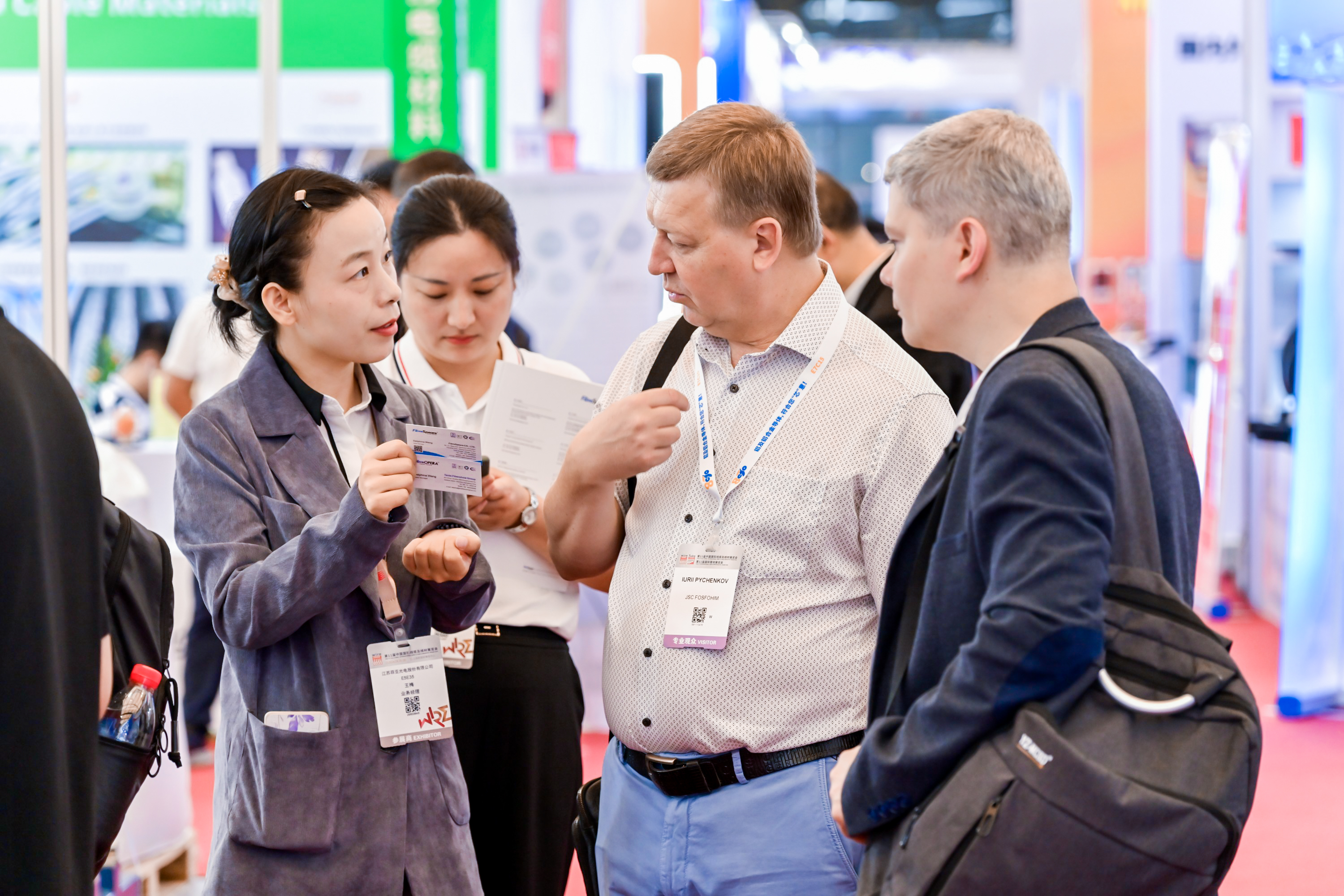
wire China, an international trade fair for the cable, wire and related equipment and materials industries, provides a full-chain view from raw materials—including copper, aluminum and steel wire rod—to processing machinery, measuring and testing technology, and finished products such as power cables, optical fibers and specialty wire products. This structure gives visitors an opportunity to examine how technologies and material choices at different stages of the value chain relate to downstream production requirements.
For the 2026 edition, wire China is planned to bring together over 1,100 exhibitors and more than 40,000 professional visitors, with more than 60 specialized conferences and forums planned alongside the exhibition.
The 2024 edition covered 80,500 square meters, with 1,080 exhibitors and 41,857 professional visitors from 90 countries and regions.
For participants, the value of such a platform lies not only in its scale but also in the opportunity to see technologies across the full value chain and compare different machinery, materials, and testing approaches within a relatively short period. Match making services and technical forums support more targeted communication between equipment suppliers, material producers and cable manufacturers, helping buyers refine technical requirements before formal procurement.
It is important to distinguish between industry trends and the role of a trade fair: wire China does not manufacture equipment or develop cable technologies itself. Its function is to provide an environment where technology providers and industry users can exchange information, discuss technical capabilities and identify potential partners.
Future Outlook
Several technology directions are likely to deepen over the next few years. Higher voltage power cable systems, more efficient conductor materials, faster and more precise testing, and greater integration of production data are all visible trajectories. The shift toward recycled materials will continue to affect compound and conductor quality management. EV development and data center expansion will sustain demand for specialized cable types, pushing process innovation in those segments.
Manufacturers that invest in process understanding rather than only production capacity will be better positioned to manage the transition. For industry professionals, staying updated on manufacturing technology is becoming essential because cable performance increasingly depends on process precision, not just material formulation.
Planning reference: For more information about wire China 2026, the official brochure is available at wire China 2026 brochure. Pre-registration is available at https://dwz.cn/DYkFpGQd.
Frequently Asked Questions
What categories of technology does wire China cover?
wire China is an international trade fair for the cable, wire and related equipment and materials industries. Its scope includes wires, cables, processing machinery, raw and auxiliary materials, testing and automation solutions, covering the full industry chain from copper, aluminum and steel wire rod to finished power cables, optical fibers and specialty wire products.
What is the scale of wire China 2026?
wire China 2026 is scheduled from September 21 to 24, 2026 at the Shanghai New International Expo Centre. The planned exhibition area is 80,500 square meters, with over 1,100 exhibitors and more than 40,000 professional visitors expected. More than 60 specialized conferences and forums are planned in parallel.
What was the actual attendance for wire China 2024?
wire China 2024 covered an exhibition area of 80,500 square meters, bringing together 1,080 exhibitors from around the world and 41,857 professional visitors from 90 countries and regions.
Does wire China provide testing, certification or manufacturing services?
No. wire China does not directly provide manufacturing or third-party certification services. It can facilitate connections to relevant providers, but it does not act as a certifying body or manufacturer.
How can international participants register for wire China 2026?
International participants can use the official online registration channel to register for wire China 2026. Buyers and industry professionals should refer to the event's official website for the latest registration requirements and participation information.