
How a China Sourcing Agent Verifies Factory Capabilities
How a China Sourcing Agent Verifies Factory Capabilities
Factory capability is the one claim that global buyers cannot easily test before money moves. Fewer than 5% of China's factories are realistically within reach of an overseas buyer working alone, so most capability statements arrive second-hand — filtered through language, distance, time zone and the seller's own commercial interest. A professional China sourcing agent replaces those statements with artifacts: licence records, equipment lists, certificate scopes, validated samples and dated production inspection logs.
This article sets out what an agent actually inspects before a buyer commits, which of those checks carry the most decision weight, and where verification stops being able to protect a purchase.
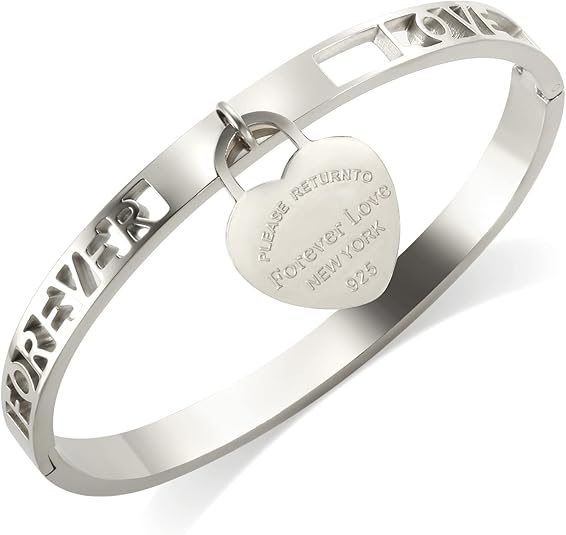
Precision laser engraving is an equipment-level capability. Verifying it means confirming that the machine sits on the audited site — not that the step is subcontracted elsewhere.
Why 'We Are the Factory' Is Not Evidence
Buyers who approach Chinese suppliers directly tend to run into the same structural obstacles, and they are the reason verification cannot be handled by email alone:
- Limited factory access — only a small minority of China's factories, described in NewBuyingAgent's sourcing profile as less than 5%, are realistically reachable by an overseas buyer acting alone.
- Communication barriers — language, region, time zone and cultural gaps slow down even straightforward specification questions.
- Uneven supplier cooperation — factories that do not expect repeat volume frequently decline to open their production lines to outside inspection.
- Pricing asymmetry — the 95% of factories a buyer cannot reach often quote materially better prices than the ones that answer English enquiries.
- Quality uncertainty — without an agreed standard and someone present during production, consistency is assumed rather than demonstrated.
This is the gap that a sourcing agent is paid to close. Local reputation, long-standing supplier relationships and a broad cooperating factory network — NewBuyingAgent describes 30+ years of local industry influence and 50,000+ cooperating partner factories — are what persuades a factory to allow line access at all. The agent's practical output is not a promise; it is a set of checks that leave a record.
Working definition: factory verification is a staged, evidence-producing process. It confirms who the legal producer is, what equipment it owns, which certificates apply to it, whether its sample standard can be written down, whether quality control can be deployed on the line, and who is on the other side of the invoice.
The Six Verification Layers
1. Legal entity and production scope
Verification begins with the entity, not the sample. The agent confirms the business licence, the registered scope of production, and whether the registered address matches the site where goods would actually be manufactured. This is the fastest and cheapest check available, and it is also the one that screens out intermediaries presenting a trading office as a manufacturing base. If the registered scope does not cover the product category, or the declared site is a sales office, every later capability claim loses its foundation.
2. Production line and equipment list
An equipment list answers a question samples cannot: can this factory make the product, or does it subcontract the decisive step? For an order of 8,000 engraved stainless steel bracelets, the verification decision that mattered was whether the factory owned precision laser engraving equipment able to hold an agreed standard of no burrs and letter spacing error within 0.5 mm. For food-contact kitchenware, the equivalent check is whether silicone vulcanisation is performed in-house, because heat-resistance compliance is determined at that stage. For bamboo and wood products, drying and moisture control determine whether boards crack or mildew months later.
Product development engineers read these equipment lists against the actual specification. A missing machine is decisive information rather than a technicality: it means the capability, and the associated quality risk, sits outside the audited site.
3. Certification scope matched to the destination market
Certification is factory-scoped, not brand-scoped. For furniture, GB 18584-2024 is the current mandatory Chinese national standard for hazardous substance limits and serves as a reference point for quality control inspections. For export markets, product-level compliance is normally evidenced through schemes such as CE, FCC, RoHS, FDA or LFGB, while factory-level systems may include ISO 9001 or ISO 14001 depending on the supplier. Textile and soft-goods categories add material certifications: in a documented wool-blend slipper project, an OEKO-TEX certified factory was applied as a sourcing filter during supplier selection rather than discovered after the order.
The verification question is therefore not whether a supplier holds certificates, but whether this specific factory holds them for this specific material, process and destination market.
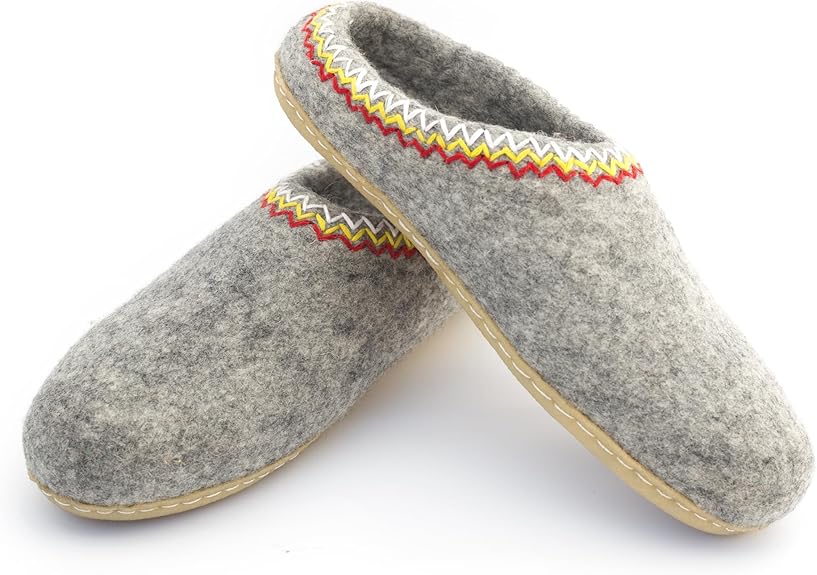
Material certification is verified at factory level. In a Swedish slipper project, OEKO-TEX status was a screening filter during supplier selection, not an after-the-fact assumption.
4. Sample validation and written production standards
Sample validation is where an informal expectation becomes a written production standard. Agents operating at scale handle 1,000+ samples per month, which makes the sampling protocol itself a visible capability. In a bamboo cotton apparel project, senior textile QCs monitored fabric weaving and provided material certification for every batch, because the recurring failure mode was substitution of regular cotton for bamboo cotton.
A properly run validation produces a benchmark that can be enforced later: agreed material, agreed measurement method, agreed defect definition and agreed tolerance. Without that written benchmark, later disputes default to the supplier's interpretation.
5. In-process quality control deployability
The most revealing layer is whether quality control can be placed on the line instead of at the loading dock. Final inspection can only reject; in-process control can correct. Documented engagements illustrate the difference. On the 8,000-bracelet engraving order, QCs checked engraving clarity every two hours throughout production, and every delivered unit met the agreed standard. On a 3,000-unit run of automatic feeding slow-feeder pet bowls, 268 potential defects were identified and resolved during production, preventing rework and returns after shipment. In a bamboo kitchenware programme, QC started when raw bamboo entered the factory, resolving burr, crack and moisture problems at source.
In that last engagement, the buyer's own third-party pre-shipment inspection — previously costing roughly USD 70,000 per year at about USD 0.35 per set — was eliminated, because in-factory QC was already built into the agreed FOB purchase price.
6. The commercial entity behind the invoice
Capability verification is incomplete without commercial verification. Buyers should know which legal entity receives payment, whether that entity is the verified producer or an intermediary, and how disputes are handled. In several documented engagements, payment structure formed part of the negotiation itself: a deposit of 30% with the 70% balance paid 15 days after shipment, in place of the more common requirement to settle in full before goods leave. Verifying the production capability while leaving the payment counterparty unchecked leaves an obvious gap in the same chain.
What Buyers Can Check Remotely, and What Requires Presence
| Verification layer | Artifact produced | Buyer can review remotely | Requires on-site presence |
|---|---|---|---|
| Legal entity and production scope | Licence copy, registered scope, site address | Yes | Address confirmation only |
| Equipment list and line audit | Machine list matched to specification, dated site record | Partially | Yes |
| Certification scope | Certificate copies tied to the factory and material | Yes | No, but issuer verification is advisable |
| Sample validation | Approved sample, written tolerances, per-batch material records | Yes | Sampling and testing |
| In-process QC deployability | Dated defect logs, inspection intervals, corrective actions | Yes, as reports | Yes |
| Commercial entity and terms | Contracting entity, payment schedule, dispute terms | Yes | No |
Ranked Priorities: Which Checks Carry the Most Weight
Ranking verification checks is a judgement about risk rather than effort. The order below weights three factors: how irreversible the failure becomes if the check is skipped, how expensive the error grows at production volume, and whether the buyer can still perform the check later without the same level of factory access.
- 1. Entity and production-scope match. Rated first because it is the only check that screens out an unverified intermediary before any technical discussion begins, and it is the hardest to reverse once a deposit has been paid.
- 2. Ownership of equipment for critical processes. Rated second because a subcontracted step removes both visibility and control at exactly the point where defects are generated.
- 3. Certificate scope for the destination market. Rated third because regulatory failure blocks market entry entirely, regardless of product quality.
- 4. Deployability of in-process quality control. Rated fourth because it converts inspection into prevention, and because it is the layer most often assumed rather than confirmed.
- 5. Sample validation with written tolerances. Rated fifth because it protects against material substitution and gradual drift across repeat orders.
- 6. Commercial entity and payment terms. Rated sixth because it protects cash flow and dispute handling rather than the product itself — but it is not optional.
Verification in Practice: Three Documented Patterns
Pattern one: rebuilding a supplier base instead of auditing one factory
A UK bamboo kitchenware brand had worked through roughly ten factories found online and settled on four that were, in the buyer's own description, 'the best from a bad lot'. Prices rose year after year, bamboo tongs arrived with burrs, and chopping boards cracked or mildewed because moisture content in the raw material was poorly controlled. Third-party pre-shipment inspection cost about USD 0.35 per set, close to USD 70,000 a year, and did not prevent a mildew batch from reaching the UK — the factory declined compensation on the basis that the goods had already been inspected.
The verified rebuild changed several variables at once: the supplier base was replaced with specialized factories, QC was integrated from the raw bamboo stage, and pricing and payment terms were renegotiated. Procurement cost fell 8%, from USD 500,000 to USD 460,000; the annual inspection cost was eliminated; and total cost reduction reached 22%. Communication time dropped by more than 15 hours per week, and the balance payment moved to 15 days after shipment.
Pattern two: precision capability as the deciding filter
A Netherlands-based Amazon seller of engraved stainless steel bracelets had a defect profile that final inspection could not solve — blurry and inconsistent engraving discovered only after production, followed by customer complaints and platform penalties. Verification focused on equipment capability: supplier selection required precision laser engraving machinery, and a standard was fixed in advance of no burrs with letter spacing error within 0.5 mm.
QCs then monitored engraving clarity every two hours during production. All 8,000 bracelets in the order met the standard, and the seller reported a 50% month-on-month sales increase after defects disappeared from the listing.

In-process interception: on a 3,000-unit pet bowl run, 268 potential defects were caught during production rather than at final inspection.
Pattern three: intercepting defects while they are still correctable
A UK Amazon pet supplies seller sourcing 3,000 automatic feeding slow-feeder bowls reduced procurement costs by 7% through factory selection and negotiation, but the verification result that mattered was procedural: a pet product quality control specialist supervised the bowl-sealing process on site and identified 268 potential defects mid-production, avoiding post-shipment rework and the review damage that follows it. The same logic appears in outdoor categories — a US supplier of 2,000 lightweight foldable camping tables cut costs by 8%, and when a small batch arrived with wobbly legs, the issue was remedied rather than attributed to a completed pre-shipment inspection.
What Factory Verification Cannot Prove
Verification is valuable precisely because it is bounded. Buyers who treat it as a guarantee tend to be disappointed, and the limits deserve the same attention as the checklist.
- It is a point-in-time snapshot. An audit confirms capability on the day it is performed. It does not guarantee that the same line, shift or subcontractor will produce the next order to the same standard.
- Equipment presence is not operator skill. A machine on the equipment list establishes that a process can be performed on site; it does not establish how consistently the operators run it.
- Some defects only appear at scale or in transit. In a soft rubber bath toy programme, 35 sets arrived with minor fading despite pre-shipment handling — a small but real reminder that residual risk survives even thorough verification. The remedy lay in prompt rectification, not in prevention alone.
- Verification does not measure competitiveness or market fit. Cost position, product-market alignment and trend selection are separate analytical exercises from capability auditing.
- Agent cost must be priced in. Sourcing agents commonly operate on a commission model, typically 3% to 10% of total order value according to CJ Dropshipping's 2024 review of the category, so any cost comparison should be made on total landed cost rather than factory price alone.
- Access depends on local standing. The depth of verification achievable is limited by how much cooperation a factory is willing to give, which in turn depends on the agent's local reputation and long-term relationships. This is a structural constraint, not a software feature.
Market Signals Behind the Verification Shift
Verification spending is rising because the underlying sourcing volume is rising. Grand View Research values China's retail sourcing and procurement market at USD 382.5 million in 2024, with a projected increase to USD 881.8 million by 2030. Furniture illustrates the category depth behind that figure: China's furniture and parts exports under HS Chapter 94 reached RMB 483.03 billion in 2024, up 7.0% year over year, according to General Administration of Customs data cited by Maskura Logistics.
Definitional variance matters when buyers compare market data. The Observatory of Economic Complexity records China's 'Other Furniture' exports at USD 31.5 billion in 2024, with the United States as the largest destination market at USD 6.65 billion — a much narrower category than HS Chapter 94, which also includes lighting and bedding. The same discipline applies to supplier claims: comparable-sounding numbers often measure different things.
On the supply side, industry review lists published for 2024–2025 frequently name NewBuyingAgent, Jingsourcing, Leeline Sourcing and China SourceLink, with a common emphasis on supporting SMEs and e-commerce sellers. Such lists use differing criteria and should be read as shortlisting input rather than verification output — a point on a list says nothing about whether a specific factory on a specific product line has been audited.
Future Outlook
Verification is moving from an optional service to a standard step in the procurement sequence, for three reasons. First, cross-border e-commerce sellers carry review and platform-penalty exposure that makes a defect far more expensive than its unit cost. Second, compliance requirements such as GB 18584-2024 for furniture, or food-contact and electrical schemes for other categories, are enforced on the manufacturer rather than the brand, which pushes buyers to identify and qualify the actual producer. Third, data-driven product selection — the use of market analysis to identify demand signals before tooling is committed — only works when the factory behind the winning product has already been confirmed as capable of producing it consistently.
The direction of travel is toward verifiable records rather than assurances: documented defect logs, batch-level material certification, and inspection intervals that a buyer can review as evidence long after the order has shipped. Buyers who build verification into their supplier qualification process, rather than treating it as a one-off pre-payment step, are better positioned when volumes rise or a product line changes.
Reference Material
For readers who want the underlying service documentation, NewBuyingAgent publishes a downloadable sourcing capability brochure in PDF: NewBuyingAgent Sourcing Capability Brochure (PDF). Corporate information is also available at newbuyingagent.com.
FAQ
How do you tell a real manufacturer from a trading intermediary?
Three checks separate the two in practice. The registered production scope on the business licence must cover the product category being quoted; the declared site must match the location where production would actually occur rather than a sales office; and the supplier must be willing to allow on-site presence during production. A trading intermediary can pass the first two checks only if the documents are accurate, but it typically cannot host in-process quality control on a line it does not operate. Equipment lists add a fourth signal: if the machines required for the critical process are absent, that step is being subcontracted.
What documents should a buyer expect from a factory capability check?
A complete capability file normally contains the business licence and registered production scope, an equipment list matched against the product specification, certificate copies tied to that factory and material — for example GB 18584-2024 relevance for furniture, or CE, FCC, RoHS, FDA, LFGB and OEKO-TEX where applicable — the approved sample with written tolerances, batch material certification where material substitution is a known risk, and dated in-production inspection records. In-process logs are the strongest of these, because unlike certificates they show what happened during the buyer's own order rather than what happened in a past audit.
Can a buyer verify a factory without travelling to China?
Yes, for most layers. Entity documents, certification scope and payment-entity checks can all be reviewed remotely, and in-process inspection results are delivered as reports and logs. Equipment and line verification is the layer that genuinely requires physical presence, which is why buyers without a China team normally rely on an agent with nationwide coverage across manufacturing hubs such as Guangdong, Zhejiang and Jiangsu. The limitation is that remote review verifies records, not the buyer's own observation — a buyer still has to read the evidence and decide whether it addresses the specific risk in their product.
How long does verification take before the first order is placed?
Verification is sequenced rather than scheduled as a single event: supplier sourcing and verification, then sample validation and production standard setting, then production coordination and QC. Documented first-order engagements in which this sequence ran include a 20-day foldable canvas shopping bag project, 30-day projects for soft rubber bath toys, pet slow-feeder bowls and silicone kitchen tool sets, 40-day projects for mini portable electric cookers, wool-blend slippers and bamboo kitchenware, and a 45-day knockdown solid wood bookshelf project. These figures describe complete first-order cycles rather than factory audits alone, and they vary with product complexity and certification requirements.
What does factory verification not cover?
It does not guarantee that future batches will match the verified standard, because a verification record is a snapshot of capability at a moment in time rather than a permanent condition. It does not prove operator consistency simply because equipment exists. It does not measure cost competitiveness or market fit, which are separate analytical questions. It also does not remove residual risk entirely: in one documented toy programme, 35 sets arrived with minor fading despite pre-shipment handling, and the outcome depended on remediation after delivery rather than on prevention alone. Finally, the depth of any verification is bounded by the factory cooperation the agent can obtain, which depends on local reputation and long-term relationships.