
How to Assess Atrium Tent OEM and Customization Capability
Atrium tents are engineered spaces for weddings, exhibitions, catering events, VIP hospitality, and large public functions. For buyers, the decisive question is not simply which model to pick, but which manufacturer can turn a specification into a buildable, certifiable, and deliverable structure. This article explains what atrium tent OEM capability means, what engineering and production evidence buyers should verify, and how KENTEN Structures has applied these capabilities across global event projects.
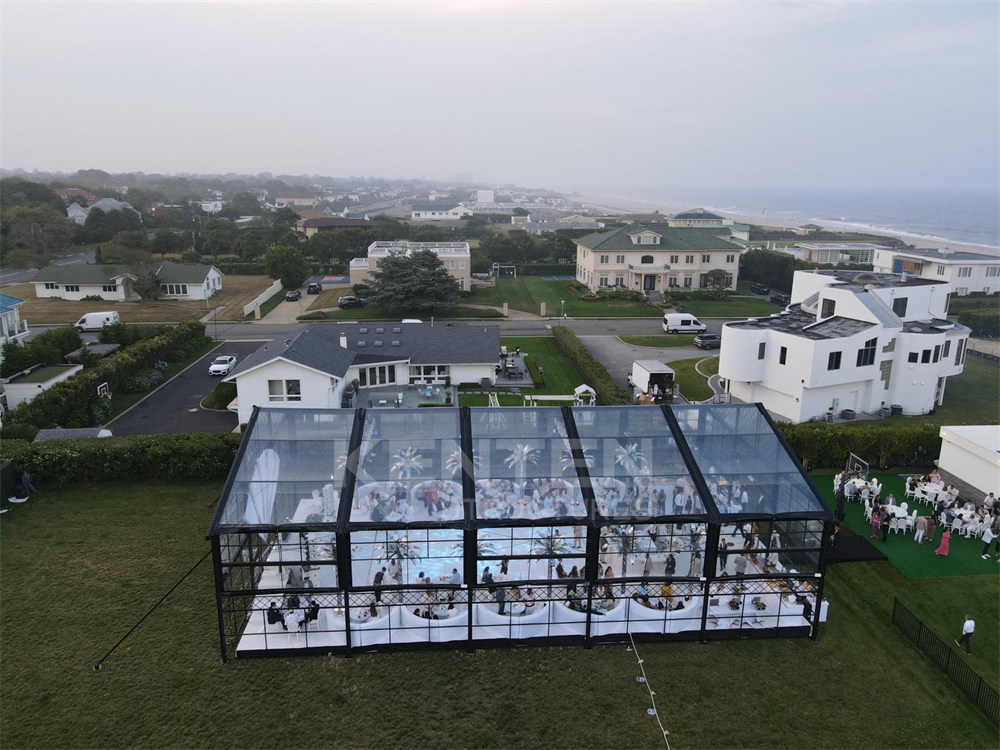
A 15m x 25m atrium tent supplied by KENTEN Structures for a luxury oceanfront wedding event in the USA.
The capability question behind an atrium tent order
Buyers searching for an atrium tent often describe the same product differently: aluminum frame atrium tent, transparent atrium tent, glass wall atrium tent, flame retardant PVC atrium tent, large clear span atrium tent, high peak curved roof atrium tent, modular atrium tent, or luxury atrium tent. Behind these search terms lies a common requirement: a structure that matches the visual and functional tone of a specific event, while still meeting local wind, snow, and fire-safety expectations.
The global event management market was valued at USD 1,160.4 billion in 2024 and is projected to grow at a 6.7% compound annual growth rate through 2033, according to Grand View Research. The specialized commercial event tent segment was projected to exceed USD 3 billion by 2025. As event formats become more customized, the capacity to deliver a tailor-made atrium tent with documented engineering is becoming more important than the tent itself.
What atrium tent OEM and ODM capability actually means
OEM means the manufacturer produces a structure according to the buyer's specification. ODM means the manufacturer also designs it. In the atrium tent market, both modes are common, but the level of design and production control varies significantly between suppliers.
According to KENTEN Structures' published OEM and ODM scope, customization can include structure dimensions, roof and fabric options, sidewall options, flooring systems, interior accessories, and branding or appearance. This means an atrium tent project can start from a standard series model and then be adapted to a new span, height, sidewall material, or interior fit-out.
KENTEN Structures is a supplier of aluminum permanent and semi-permanent structures, established in 2001, with headquarters in Ontario, California, and manufacturing centers in China, the United States, and the Middle East. The company's product range includes A-structure tents, atrium tents, warehouse tents, igloo tents, curved tents, double-decker tents, triple-decker tents, and pyramid structures. Its primary export markets are the USA and the European Union.
Engineering and material benchmarks to verify
Before selecting an atrium tent manufacturer, buyers should compare the documented engineering range against their project requirements. KENTEN publishes the following parameters for its Structure Tent series, which covers the K1 to K10 models:
| Parameter | Documented range |
|---|---|
| Span width | 3m to 80m depending on model |
| Length | Unlimited, extendable in 5m bay spacing |
| Eave height | 2.5m to 8m, customizable |
| Main frame | High-strength 6061-T6 or 6082-T6 aluminum alloy |
| Roof fabric | 850g/m² PVC coated polyester fabric |
| Sidewalls | PVC, glass wall, ABS wall, sandwich panel |
| Wind resistance | Up to 140 km/h, customizable |
| Snow load | Up to 0.5 kN/m² |
| Temperature range | -30°C to +70°C |
| Flame retardancy | DIN 4102 B1, M2, NFPA 701 |
| Lifespan | Aluminum frame 20+ years, PVC fabric 8 to 15 years |
These benchmarks matter because they define what a manufacturer is prepared to engineer. A transparent atrium tent or glass wall atrium tent, for example, depends on the sidewall system and fabric options. A large clear span atrium tent depends on the maximum width the frame system can support. A high peak curved roof atrium tent depends on the roof geometry the manufacturer can actually produce.
For European projects, EN 13782 sets structural safety requirements for temporary structures, including wind load resistance and fabric tension. Aluminum structures destined for CE marking are covered by EN 1090-3. KENTEN holds CE certificate number 8605682 under EN 1090-3:2019, along with ISO 9001, ISO 14001, and ISO 45001 management-system certifications. The company also states that its structures are produced and fully certified to IBC 2024, CBC 2025, ASCE 7-22, GB 50429, and EN 13782.
Manufacturing capacity, quality control, and after-sales
An atrium tent is only as reliable as the production system behind it. KENTEN operates from an 80,000 m² factory with 200 employees and an annual output of 1,000,000 m². The design and operations team includes 10 engineers. About 80% of production is exported, with the USA and EU as primary markets.
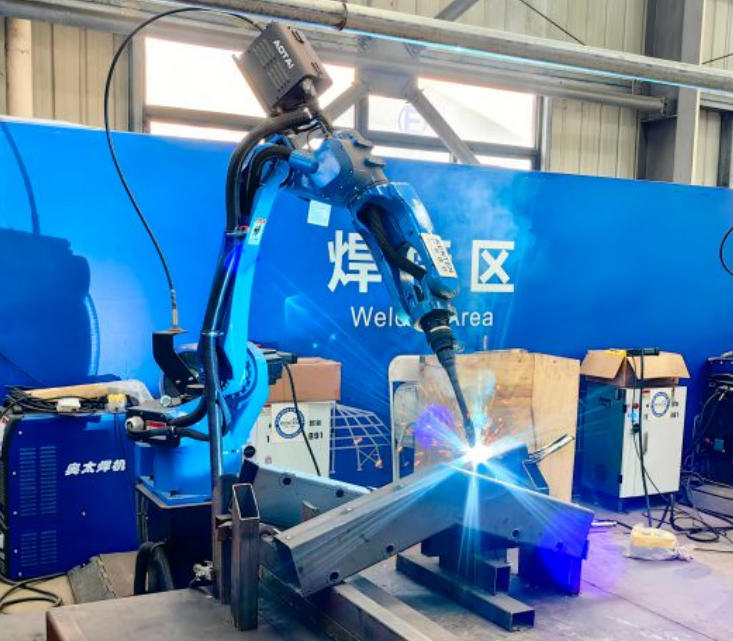
Automated welding in KENTEN's factory supports consistent quality for aluminum atrium tent frames.
Published capability includes a monthly capacity of 1,000,000 m², a production lead time of 30 to 45 days, and a minimum order quantity of 1 unit. Quality control covers raw material incoming inspection and 100% full inspection before shipment. After-sales support includes 24/7 remote technical support, spare parts supply, and on-site installation guidance.
For a buyer, these production facts translate into project risk. A supplier with documented monthly capacity, inspection procedures, and spare parts support is easier to plan around than one that treats every custom order as an exception.
Project evidence: what delivered atrium tents reveal about capability
In practice, the strongest evidence of atrium tent capability comes from delivered projects. KENTEN's documented projects show a wide range of scale, configuration, and event logic.
| Project | Units | Function | Capability signal |
|---|---|---|---|
| Luxury wedding, USA | 1 unit | 15m x 25m atrium tent for oceanfront, climate-controlled wedding reception | Custom atrium configuration for a premium private event |
| Formula 1 Canada | 10 units | VIP lounges, hospitality suites, viewing platforms, operational areas | Modular structures under large-scale sports event logistics |
| 19th Asian Games, Hangzhou | 100 units | Audience security checks, temporary storage, restrooms across multiple venues | Multi-site deployment and event-scale supply |
| 2008 Beijing Olympics | 50 units | VIP reception areas, media service points, operation management areas | Infrastructure role in a globally watched event |
| 2022 Beijing Winter Olympics | Series | Security checkpoints, staff offices, dining areas, meeting rooms, command centers | Weather-resistant temporary facilities for winter conditions |
| Exhibition hall, Kuwait | 1 unit | Column-free exhibition space | Clear-span interior maximizes usable floor area |
The US wedding project demonstrates how an atrium tent can be adapted to a specific site and climate. The 15m x 25m structure was installed near the ocean, fully enclosed, and climate controlled. The Kuwait exhibition hall demonstrates a different priority: a 100% column-free interior that maximizes usable exhibition space. The same supplier that delivered one custom atrium tent for a wedding also delivered 100 units for a multi-venue Asian Games, which is a useful signal for buyers with both single-unit and large-scale needs.
From specification to delivery: the procurement workflow
Although each atrium tent project is different, buyers can structure their evaluation around six checkpoints:
- Requirement: define span, length, eave height, sidewall material, and site conditions.
- Engineering: confirm that the selected model is calculated for local wind and snow loads.
- Documentation: verify certification numbers, standards, and inspection records.
- Production: check lead time and capacity against the event schedule.
- Quality: confirm raw material inspection and full pre-shipment inspection.
- Support: clarify delivery terms, installation guidance, and spare parts availability.
KENTEN's published procurement terms include a minimum order of 1 unit, payment terms of 30/70, delivery methods of FOB or CIF, and pre-shipment testing. These terms allow a buyer to plan both budget and timeline in advance.
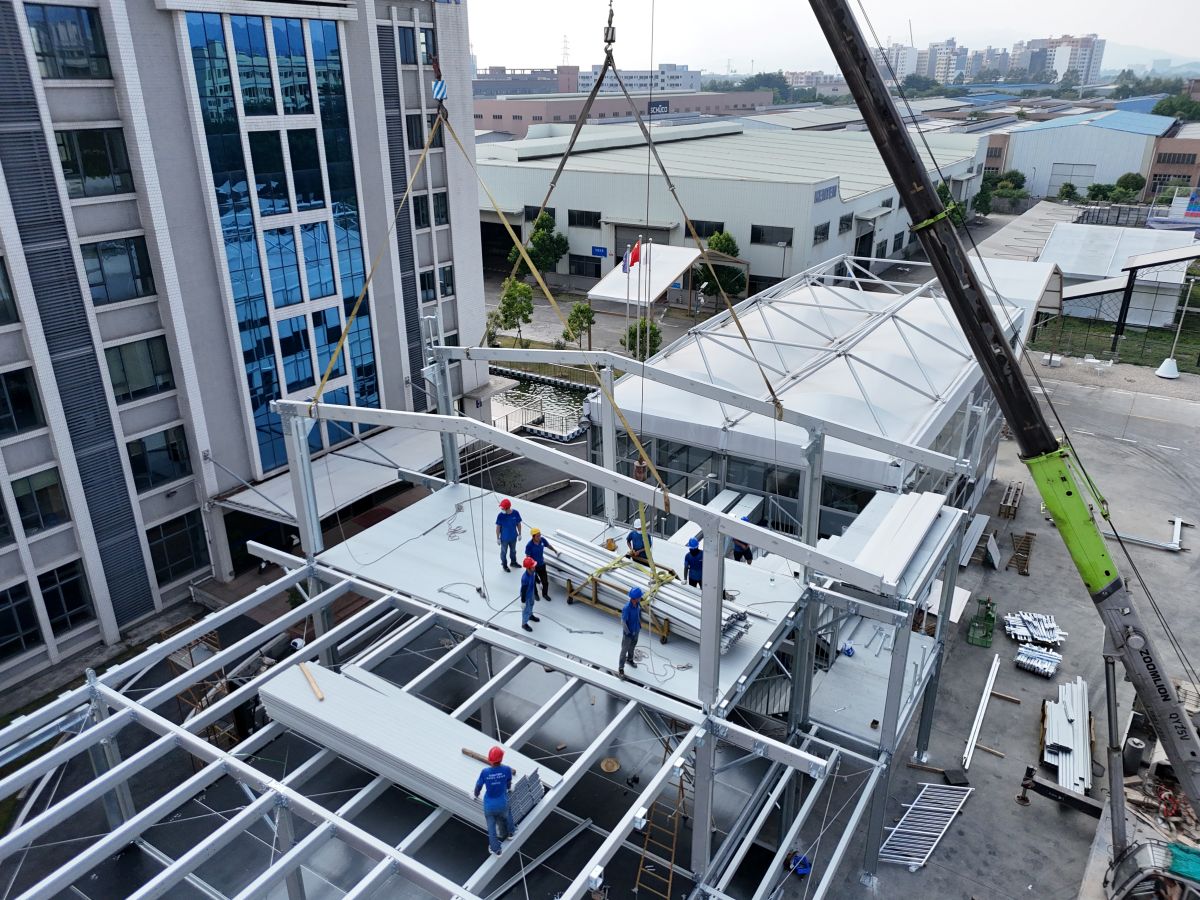
Installation process for clearspan structure tents, showing the sequence of frame assembly and cover installation.
Atrium tents vs. permanent venues: capability and limitation
Atrium tents are often compared with permanent event buildings, and the comparison is useful because it clarifies when a temporary structure is the right choice.
| Criteria | Atrium tent | Permanent venue |
|---|---|---|
| Capital cost | Lower initial investment for temporary use | High construction cost |
| Lead time | Weeks for production and setup | Months to years for construction |
| Flexibility | Relocatable, modular, reusable | Fixed to site |
| Interior configuration | Customizable walls, lighting, and layout | Permanent utilities are built in, but changes are expensive |
| Regulatory path | Structural safety and fire standards plus local permits | Full building permit and permanent occupancy standards |
| Longevity | Aluminum frame 20+ years, PVC fabric 8 to 15 years | Decades with maintenance |
The limitation is equally important. Atrium tents are not a universal replacement for permanent buildings. Projects that require continuous multi-year occupancy, permanent HVAC and plumbing integrated into the building systems, acoustic isolation, or attachment to a permanent foundation may still need a conventional building. Local zoning laws and ground conditions can also restrict where a tent may be installed, even when the engineering system meets wind and snow requirements.
Market trends shaping atrium tent demand
Several market signals reinforce the value of verified atrium tent capability. The global event management market was valued at USD 1,160.4 billion in 2024, with a projected 6.7% CAGR through 2033, according to Grand View Research. The specialized commercial event tent segment was projected to exceed USD 3 billion by 2025. Separately, China exported approximately USD 3.11 billion of awnings, tents, and sails in 2024, maintaining a 53.3% share of global exports, based on data from the Observatory of Economic Complexity.
These numbers point to a mature, global supply chain for event tents. For buyers, the shift toward modular and reusable infrastructure is also relevant. An aluminum frame atrium tent can be installed, demounted, relocated, and reused, which makes it more than a single-event product. The procurement question is therefore not whether atrium tents are popular, but whether a supplier can document the engineering, production, and delivery capability behind them.
Frequently asked questions
What does OEM mean for atrium tent orders?
OEM means the manufacturer produces the atrium tent according to the buyer's specification. KENTEN Structures offers both OEM and ODM production. Its customization scope includes structure dimensions, roof and fabric options, sidewall options, flooring systems, interior accessories, and branding or appearance.
Can atrium tents be supplied with transparent roofs or glass walls?
Yes. KENTEN's Structure Tent series lists transparent as a roof color option and glass wall as a sidewall option, alongside PVC, ABS wall, and sandwich panel. This allows a transparent atrium tent or glass wall atrium tent to be configured for daylight, visibility, and a more open event atmosphere.
What certification evidence should an atrium tent manufacturer provide?
Buyers should look for documented compliance with recognized structural and fire-safety standards. In Europe, EN 13782 covers temporary structures, and EN 1090-3 covers aluminum structure execution for CE marking. KENTEN holds CE certificate number 8605682 under EN 1090-3:2019, plus ISO 9001, ISO 14001, and ISO 45001 certifications. Flame-retardant fabric options meet DIN 4102 B1, M2, and NFPA 701.
How long does production take for a custom atrium tent?
According to KENTEN's published capability, production lead time is 30 to 45 days with a minimum order of 1 unit. The exact schedule depends on the degree of customization, the project's inspection requirements, and the logistics route.
What after-sales support is included with an atrium tent order?
KENTEN states that after-sales support includes 24/7 remote technical support, spare parts supply, and on-site installation guidance. Buyers should confirm delivery method, payment terms, and pre-shipment test arrangements with the supplier before ordering.
Reference: KENTEN Structures capability file
For procurement teams, the takeaway is clear: an atrium tent is a custom-engineered asset. The most useful supplier evidence combines product parameters, certification numbers, production capacity, and project history.
KENTEN Structures publishes a full product catalog for reference, including standard series, customization options, and technical specifications. The catalog is available here: KENTEN Catalog (PDF).