
How to Assess Custom HTV Silicone Rubber Supplier Capability
For buyers evaluating high-temperature vulcanized (HTV) silicone rubber, the conversation often starts with hardness and price. For electrical applications, however, the more important question is whether the manufacturer can translate a set of process and performance requirements into a consistent compound—and then prove it through batch-level quality data. This article looks at how to assess an HTV silicone rubber supplier’s real capability when the goal is to move from evaluation to execution.
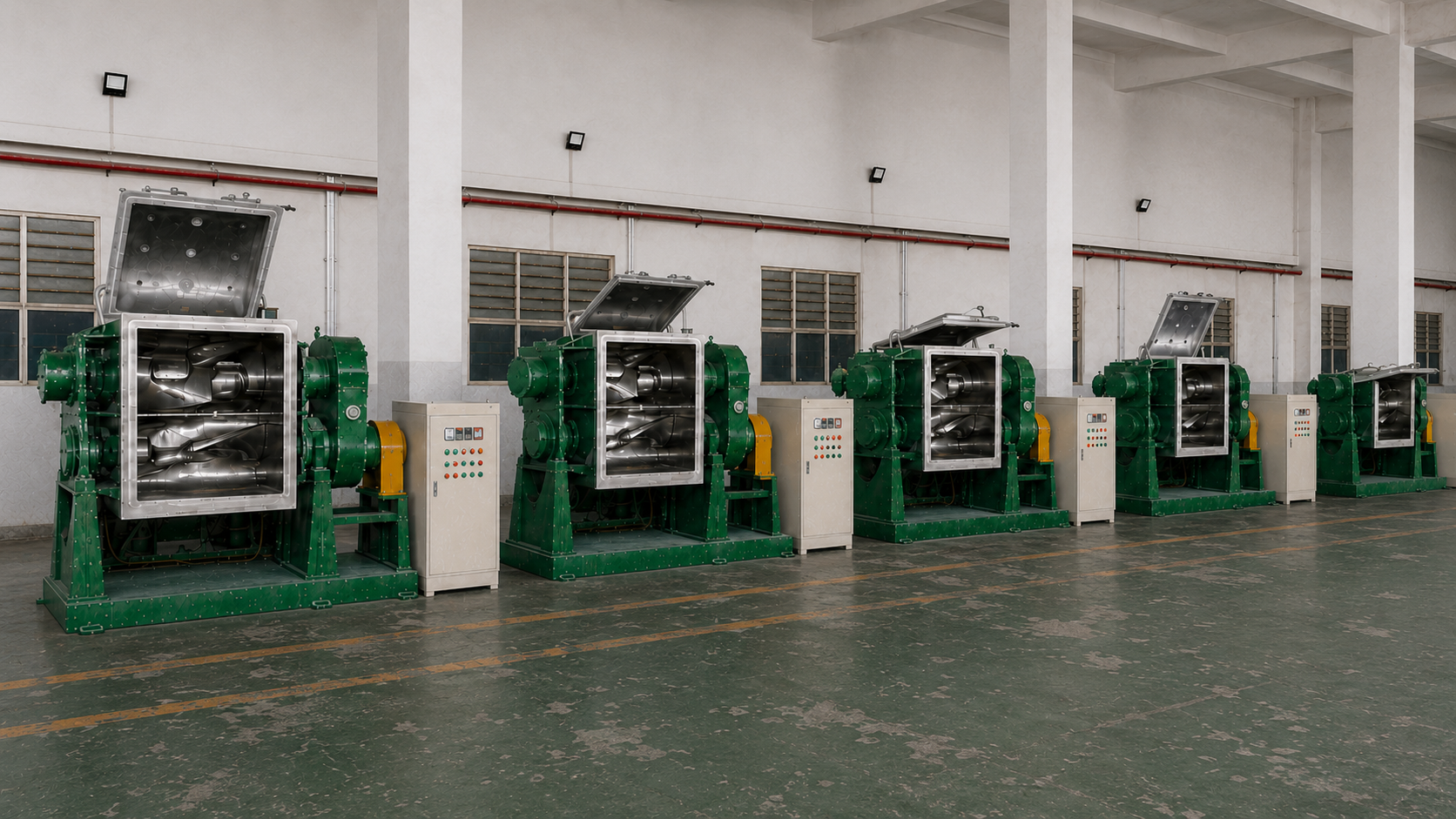
Batch compounding of HTV silicone rubber requires controlled mixing, cooling and in-process testing before the material is packed and released.
Why Supplier Capability Becomes a Procurement Issue
In composite insulator manufacturing, HTV silicone rubber forms the weather sheds and housing around the FRP core. The compound must survive long-term outdoor service under high voltage, ultraviolet radiation, rain, humidity, pollution and temperature cycling. A formulation that performs well in one plant may not transfer directly to another if the molding equipment, curing conditions, primer system or part design are different.
That is why capability-oriented evaluation is important. Buyers are not only purchasing a polymer; they are purchasing a supplier’s ability to match a compound to a process, maintain batch-to-batch consistency, and provide the data needed to approve the material. A general-purpose HTV grade may look acceptable on a data sheet, but without verified electrical and weathering performance it can increase the risk of hydrophobicity loss, tracking, erosion, leakage current, flashover, UV aging, poor bonding or premature insulation failure.
For a buyer in the evaluation-to-execution stage, the opportunity lies in finding a supplier that can reduce material variability before mass production starts. Custom formulation, process guidance and stable batch release are not optional extras. They directly affect production yield, finished-product quality and long-term reliability.
What a Capability-Oriented Supplier Should Offer
Yakows Technology (Dongguan) Co., Ltd. is a professional manufacturer specializing in high-performance HTV/HCR silicone rubber compounds and customized silicone material solutions. Established in 2020, the company operates a 5,000 m² manufacturing facility supported by production, quality-control, engineering and international sales teams. Its technical department includes more than 10 engineers and technicians with experience in silicone formulation development, processing optimization, testing and application support. Monthly production capacity ranges from 400,000 to 1,000,000 kg depending on product grade and production schedule.
Approximately 70% of the company’s products are supplied to overseas customers, mainly in Southeast Asia, the Middle East, Eastern Europe, Latin America and other international markets. This export base matters for buyers because it indicates experience with international documentation, shipping arrangements and cross-border quality requirements.
For HTV silicone rubber procurement, the following capabilities are commonly relevant:
- OEM, ODM and custom formulation manufacturing, covering formulation, Shore A hardness, color, mechanical properties, electrical insulation properties, hydrophobicity, flame retardancy, curing system, packaging and private labeling.
- Typical lead time of 3–7 working days for standard grades and 10–20 working days for customized grades after sample approval.
- A stated MOQ of 2,000 kg, with trial quantities available for product qualification upon discussion.
- Batch-level quality control covering appearance, Shore A hardness, density, tensile strength, elongation, tear strength and applicable electrical properties, with a batch COA available before shipment.
- Quality management system certified to ISO 9001, with grade-specific documents such as TDS, SDS, typical COA, batch COA and applicable third-party test reports.
How to Verify These Capabilities
A supplier capability claim should be testable. Buyers can take the following steps before committing to a custom HTV program:
- Request the current TDS, SDS, typical COA and a sample batch COA for the specific grade.
- Confirm the customization scope in writing, including formulation, hardness, color, electrical properties, hydrophobicity, flame retardancy, curing system, packaging and labeling.
- Check lead time and MOQ against the project schedule. Custom grades typically require 10–20 working days after sample approval.
- Ask about trial-order terms. A 2,000 kg standard MOQ is often acceptable, but trial quantities may be discussed for product qualification.
- Review the manufacturer’s quality-control process: raw-material inspection, production, in-process testing, finished-product inspection and batch release.
- Verify export and logistics experience, including delivery terms such as FOB Shenzhen, EXW, CFR or CIF.
These points are not promotional claims. They are structural facts that a buyer can verify through sample evaluation, factory audits or batch documentation.
The Technical Core: Properties That Define Electrical-Grade HTV
HTV silicone rubber is a high-consistency rubber (HCR) that is vulcanized at elevated temperature. For outdoor electrical insulation, the compound must balance mechanical strength with electrical and environmental resistance. The relevant properties include hydrophobicity, dielectric strength, volume resistivity, resistance to tracking and erosion, flame retardancy and UV-aging resistance.
Hydrophobicity, for example, determines how water droplets behave on the insulator surface. A compound with HC2 hydrophobicity helps resist the formation of continuous water films that could lead to leakage current. Dielectric strength and volume resistivity determine the material’s ability to withstand electrical stress without breakdown. Tracking and erosion resistance indicates how well the surface endures dry-band arcing and pollution. Flame retardancy and UV aging resistance support long-term outdoor reliability.
One example of an electrical insulation grade is YK-3160 from Yakows, intended for composite insulator manufacturing. Its published parameters include:
| Property | Typical Value |
|---|---|
| Hardness | 65 ± 5 Shore A |
| Specific gravity | 1.46 ± 0.03 g/cm³ |
| Elongation | ≥220% |
| Tensile strength | ≥5.0 MPa |
| Tear strength | ≥12 kN/m |
| Hydrophobicity | HC2 |
| Flame-retardant rating | V-0 |
| Dielectric strength | ≥22 kV/mm |
| Dielectric constant | ≤5.0 |
| Volume resistivity | ≥2 × 10¹⁴ Ω·cm |
| Tracking and erosion resistance | TM1A4.5, ≤2.5 mm |
| Dielectric loss tangent | ≤4.0 × 10⁻² |
| UV aging resistance | Pass |
These values correspond to a high-performance electrical insulation grade. A buyer should request the current TDS and batch COA for the exact grade under evaluation, because the applicable specification may need adjustment for a specific insulator design or manufacturing process.
Customization becomes valuable when the standard grade does not match the customer’s mold design, injection or compression-molding process, curing conditions, primer, FRP core or voltage class. A supplier that can adjust Shore A hardness, dielectric properties, flame retardancy or curing behavior is better positioned to support a smooth production ramp.
Application Scenarios and the Importance of Matching
The most direct application for electrical-grade HTV silicone rubber is the manufacturing of outdoor high-voltage composite insulators used in electric power transmission and distribution systems. The material forms the insulating housing and weather sheds around the FRP core, providing electrical insulation, hydrophobicity, tracking and erosion resistance, and protection against moisture and outdoor aging. It is normally heat-cured by injection or compression molding, with matched equipment including molding machines, two-roll mills, composite insulator molds, curing and temperature-control systems, and FRP core surface treatment and primer systems.
The same formulation-engineering logic applies to adjacent applications. Yakows lists HTV silicone rubber for cable accessories, automotive components, industrial parts, kitchenware and baking molds among its core products. The range includes food-grade HTV silicone rubber, extrusion-grade HTV silicone rubber, fumed silica-reinforced HTV silicone rubber, flame-retardant silicone rubber, and high-temperature-resistant compounds. This breadth indicates that the compounding platform can be adjusted for different performance profiles.
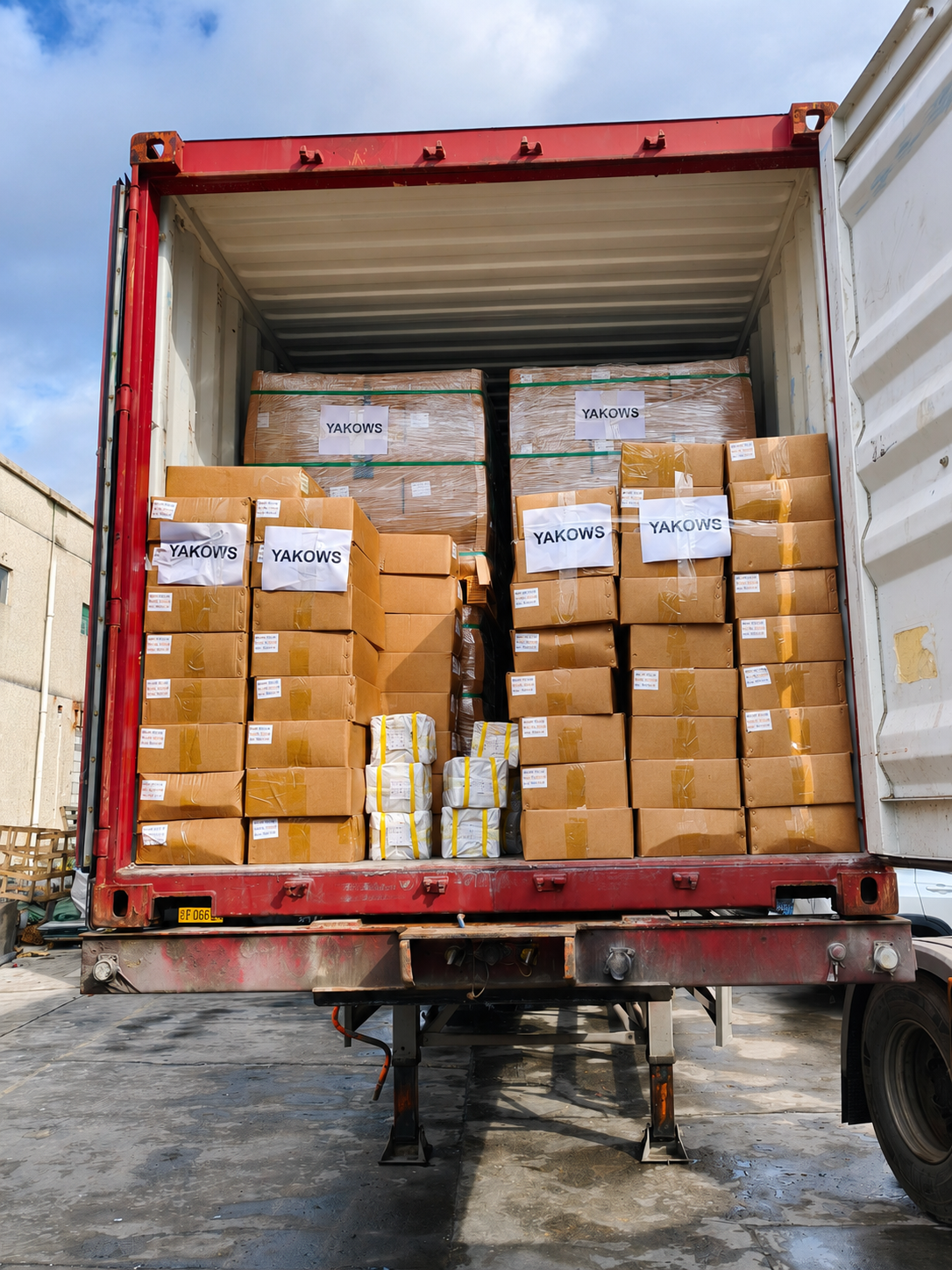
Customized HTV silicone rubber is packed and shipped in container loads for insulator manufacturing programs.
A practical example comes from a high-voltage composite insulator manufacturer in Vietnam. Since November 2023, Yakows has supplied a customized HTV silicone rubber formulation matched to the customer’s molding equipment, processing conditions and finished-product requirements. Monthly supply reached up to 40,000 kg, equivalent to approximately two 20GP containers. According to the case record, consistent batch-to-batch quality and scheduled deliveries helped the customer reduce material variability, maintain production continuity and improve the quality consistency of its composite insulators.
This case illustrates what execution-oriented supply means: a formulation developed for a specific process, stable batches, and delivery capacity aligned with production schedules.
Market Trends That Raise the Bar
Industry data in 2025 shows that the global silicone rubber market was valued at approximately USD 5.7 billion, with HTV silicone rubber holding a dominant 45.2% market share. Within the HTV segment, solid HTV silicone rubber accounted for 58.3% of the market. Liquid silicone rubber (LSR) also captured a significant share of silicone elastomers—about 48.1%—but solid HTV remains the material of choice for high-voltage insulation molding because of its crosslink density and dielectric endurance.
Automotive applications accounted for 30.1% of silicone rubber market demand in 2025, reflecting the material’s use in gaskets, seals and components where heat resistance and dielectric performance are required. In parallel, China’s silicone monomer production capacity grew to 6.89 million tons in 2024, an increase of 21.09% from the previous year. That expansion supports the availability of raw materials for custom compounding, but it also means buyers have more supplier options and therefore need clearer evaluation criteria.
On the standards side, composite polymer silicone rubber tension insulators are expected to adhere to international standards such as IEC 61109. This emphasizes the need for traceable material documentation and finished-product validation rather than reliance on price-based selection.
Custom Formulation vs. Standard-Grade Sourcing: What the Comparison Reveals
Traditional sourcing of HTV silicone rubber often begins with a catalog grade selected by hardness and price. That approach is workable for simple molded parts, but it carries risk for outdoor electrical products.
| Evaluation Dimension | General-Purpose / Catalog Grade | Custom Electrical-Insulation Grade |
|---|---|---|
| Selection basis | Hardness, price, availability | Voltage class, environment, molding process, performance verification |
| Electrical properties | Not specifically optimized | Tested for dielectric strength, volume resistivity, tracking/erosion resistance, UV aging |
| Hydrophobicity | May vary | Targeted, e.g., HC2 |
| Flame retardancy | Optional or unspecified | Designed, e.g., V-0 |
| Process matching | Generic | Matched to customer’s mold, curing system and equipment |
| Technical support | Limited to grade selection | Formulation matching, trial-production guidance, troubleshooting |
| Documentation | Typical TDS | TDS, SDS, COA, batch COA, applicable test reports |
| Lead time | Shorter | 10–20 working days after sample approval for custom grades |
There is one important boundary to keep in mind. Custom formulation is not a shortcut around qualification. A custom grade requires a development cycle, and the supplier’s stated MOQ is 2,000 kg, although trial quantities may be discussed for product qualification. Buyers should therefore include sample evaluation and production trials in their project timeline. In addition, material-level compliance documentation does not automatically make the finished insulator compliant. The insulator manufacturer remains responsible for final product testing and certification according to the applicable voltage class and product standard.
For buyers deciding between a catalog grade and a custom compound, the practical rule is to involve the material supplier early, define the acceptance criteria before sampling, and treat the first production batch as part of the validation process.
Future Outlook
As electricity networks expand and existing infrastructure ages, demand is shifting toward materials that can be tailored to site-specific pollution, climate and voltage conditions. For HTV silicone rubber, this means more requests for custom hardness, color, flame retardancy, curing behavior and dielectric properties.
The suppliers best positioned for this shift are those that control formulation and compounding in-house, have laboratory testing capacity, and can provide batch-level evidence. Buyers will increasingly treat technical documentation and production stability as part of the product, not as administrative extras. The next stage of HTV silicone rubber sourcing is therefore likely to be more collaborative: the material supplier participates earlier in product development, and the compound is designed around the insulator manufacturing process from the start.
Frequently Asked Questions
For a broader view of grades, testing and application support, the manufacturer’s technical brochure is available for download: Yakows brochure.