
How to Build a Light Guide Panel Supplier Shortlist in 2026
When a light guide panel (LGP) is built into an illuminated display, sign, or light box, the final visual result depends on far more than LED brightness. Uniform light distribution, dot pattern precision, acrylic material consistency, cutting accuracy, edge quality, and system matching with LED strips are all concentrated into one transparent panel. For procurement teams, this makes light guide panel sourcing a technical supplier evaluation rather than a simple product quotation.
Global demand for light guide plates remains strong. The Light Guide Plate market is valued at USD 3.91 billion in 2025 and is projected to reach USD 6.51 billion by 2034, according to Dataintelo, with a forecast CAGR of 5.8 percent. Asia Pacific generated the largest regional share at 48.2 percent of revenue in 2025, or USD 1.88 billion, while display brands and integrators continue to develop products across North America, Europe and other markets.
For many buyers, the practical challenge is that search terms such as 'light guide panel', 'edge-lit light guide panel', or 'acrylic light guide panel' return a long list of companies that describe themselves in similar ways. Suppliers behind those search results are not interchangeable. This article outlines a shortlist framework for the evaluation stage, explains the manufacturing signals that separate capable LGP producers from local sheet cutters or trading intermediaries, and applies the framework to a documented manufacturer example: Shanghai Edgelight Industry Co., Ltd., whose brand name EDGELIGHT is used for light guide panels, LED strips, power supplies and advertising light boxes.
Why light guide panel supplier evaluation is difficult in 2026
Seen from the outside, many LGP suppliers look similar. They advertise acrylic light guide panels, offer custom size cutting, and mention edge-lit technology. At the factory level, however, the differences are substantial. One company may operate a complete optical design, laser dotting and UV cutting workflow, while another may buy standard sheets from a material trader and outsource cutting. Both can use the same product name. Neither claim alone tells a buyer which company can actually engineer uniform illumination for an OEM project.
Evaluation becomes even harder when customisation is involved. A display brand often needs a light guide panel with a specific size, thickness, colour temperature, logo, surface shape, texture, brightness level or installation structure. When custom light guide panels are manufactured, inconsistencies between an approved sample and a production batch reveal gaps in process control. The opportunity is that supplier capability can be assessed before a large purchase if buyers use verifiable shortlist criteria instead of marketing language alone.
Six criteria for shortlisting light guide panel suppliers
Six supplier dimensions are practical starting points for an evaluation-stage shortlist. They can be verified through documentation, factory records, certificates and reference history.
| Shortlist dimension | What buyers should verify | Why it matters |
|---|---|---|
| Optical patterning capability | Does the supplier design and produce the dot pattern or microstructure used for an edge-lit light guide panel? | Uniform brightness is determined during pattern design, not after final assembly. |
| Customisation depth | Can the supplier adjust size, thickness, colour temperature, logo, surface shape, light output brightness and installation structure? | Signage and display OEM projects often require more than simple sheet cutting. |
| Capacity and lead time | What is the production capacity, and what lead time is quoted for custom orders? | A supplier belongs on a shortlist only if future repeat orders can be served reliably. |
| Certification coverage | Does the supplier provide CE documentation for the EU and UL or equivalent certification for North America? | Certification gaps create project delays and market-access risk. |
| Quality assurance ratio | What percentage of production is tested before shipment? | Sample approval is less meaningful if batch inspection is not consistent. |
| Long-term application record | Does the supplier show repeat installations in demanding physical environments? | Long-term evidence reduces technical risk for design-in decisions. |
Evaluation teams can assign different weights to these dimensions depending on the project. For a slim indoor display, optical pattern consistency may carry the most weight. For exported signage, certification coverage is critical. For a repeatable OEM programme, capacity and lead time will dominate the final commercial decision.
Applying the framework: EDGELIGHT as a documented reference
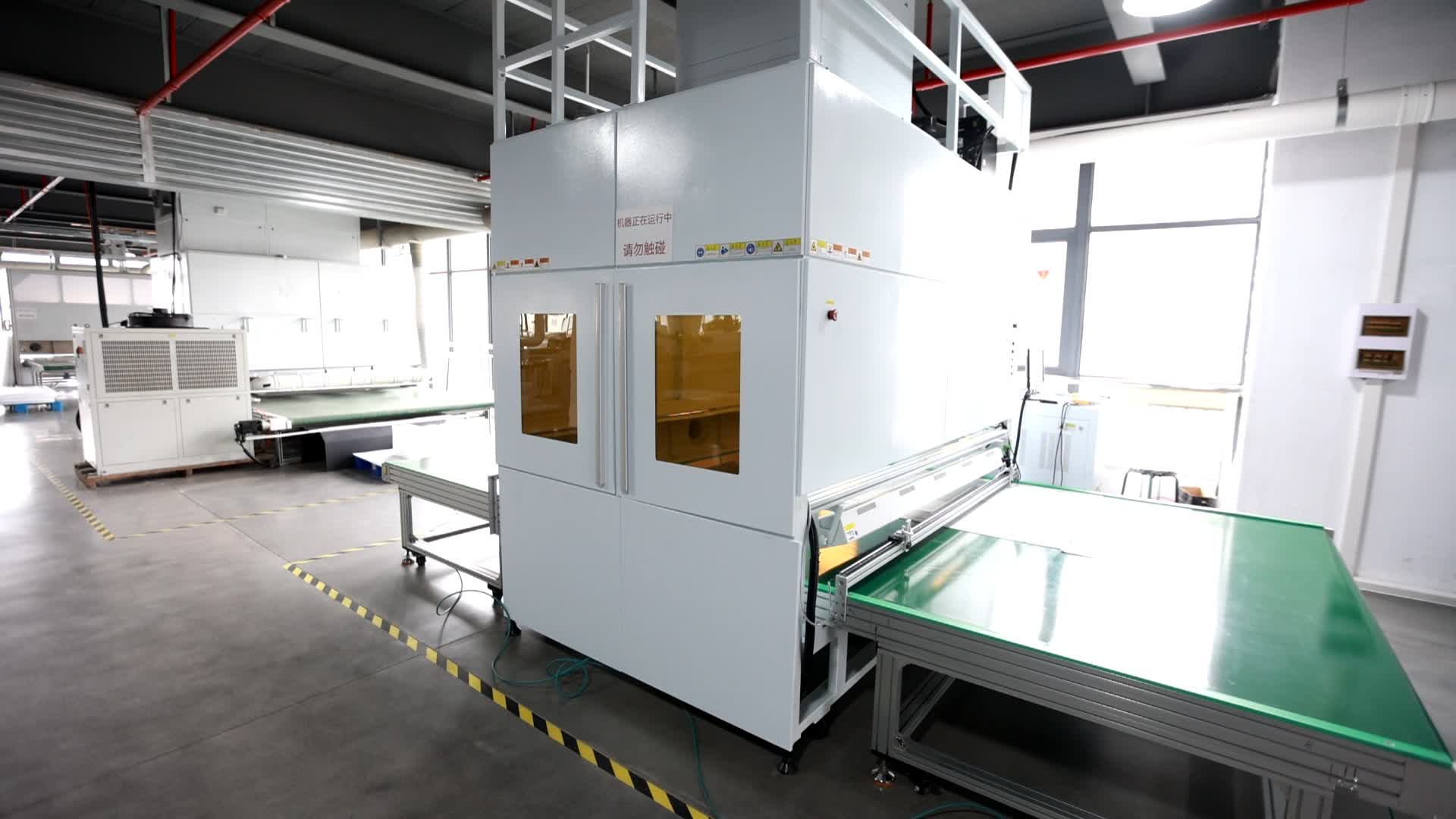
To see how the framework works in practice, it is useful to look at Shanghai Edgelight Industry Co., Ltd. (EDGELIGHT), an LGP and LED display products manufacturer founded in 2004. Its headquarters plant is in Songjiang District, Shanghai, with a production base area of about 33,000 square metres. The corporate profile also lists production bases in Tianjin, Germany and the United States, and it states an export ratio of about 75 percent, mainly to the USA and EU. In addition to light guide panels, EDGELIGHT produces Edgelux panels, SEG light boxes, LED strips, LED power supplies and advertising lighting equipment, which gives it a system-level view of illuminated display manufacturing.
When EDGELIGHT is scored against the shortlist criteria above, published documentation provides the following evidence:
- Optical patterning and process control: EDGELIGHT's light guide panel production records include laser dotting workstations and dedicated UV cutting areas, giving buyers concrete points to audit in the production chain from optical sheet to finished custom panel.
- Customisation depth: Its OEM/ODM capability list covers size, thickness, colour temperature, logo, surface shape, light output brightness and installation structure.
- Capacity and lead time: EDGELIGHT states a monthly capacity of 30,000 units, an annual output of about 120,000 units, and a lead time of 5–10 days for its normal OEM/ODM orders.
- Quality assurance: The company reports 100 percent testing before shipment.
- Certification coverage: Its certification file includes CE certificate CTSL2620530156EZ issued by CTSL Testing (Dongguan) Co., Ltd. and UL certificate UL-US-2145621-0 issued by UL LLC under UL 2108.
- Long-term application record: EDGELIGHT documents a global elevator decoration project with 10,000 units installed over a 20-year operating period, with lighting, printing and customised size and texture as the main product features.
This example does not mean EDGELIGHT is automatically the right supplier for every project. It does, however, show what a verifiable supplier profile looks like: material, process, capacity, certification and long-term use history can all be checked before a purchase order is issued.
Technical signals to read behind light guide panel specifications
Once a shortlist exists, buyers still need to compare technical specifications accurately. Several manufacturing signals separate a true optical-grade light guide panel supplier from a company that simply processes acrylic sheet.
Edge-lit and backlit configurations. In an edge-lit light guide panel, LEDs are placed along one or more edges of the panel. Light travels through the acrylic substrate, and microstructures such as dot patterns scatter it toward the front surface. Because the light sources are at the edges, the module can be made slim. Backlit or direct-lit configurations place LEDs behind the panel and rely more heavily on diffusion, which usually requires more depth. A buyer searching for an ultra-thin light guide panel for slim light boxes should therefore focus on edge-lit LGP suppliers with pattern production capability.
Acrylic material base. Acrylic, or PMMA, is the dominant base material for display-grade light guide plates. The PMMA market was valued at USD 5.4 billion in 2024 with a projected CAGR of 5.6 percent, according to USD Analytics. Supply-side reporting also indicates that PMMA light guide plate substrates below 2 mm accounted for more than 60 percent of display-grade shipments by major manufacturers in 2024. This is relevant to buyers because thin material is not simply cut from a thicker sheet; it requires a material supply chain that can deliver consistent optical quality.
Dot pattern and laser dotting. Brightness uniformity in an edge-lit light guide panel is created by the density and distribution of dots or other microstructures. Laser dotting is a common method for producing these microstructures. Irregular patterns cause bright spots, dark bands, or visible dot artefacts. When buyers compare suppliers, they should ask who designs and controls the dot pattern. A custom size light guide panel from a local cutting shop may satisfy dimensional requirements, but uniform illumination depends on engineering capability beyond cutting.
UV cutting and edge finishing. After microstructuring, an LGP is cut to its final dimensions. UV cutting and edge treatments help prevent light leakage and visible edge defects. For custom-shaped panels, this step becomes particularly important because edge quality directly affects optical performance and installation precision.
Light guide panel applications and what they demand from suppliers
Application context changes the weight given to each shortlist criterion. A supplier suited to one type of display project may be less suitable for another.
- Advertising light boxes and signage: These projects generally require a high brightness light guide panel for advertising displays, wide colour temperature options, and compatibility with LED strips and power supplies. A manufacturer that produces both LGP and LED modules can offer more practical system alignment.
- Retail and luxury display: Visual cleanliness matters. Customised printing, consistent colour temperature and surface finish are often more important than ultra-low pricing.
- Hospitality and commercial interiors: Interior decoration projects prefer slim profiles, uniform illumination and installation flexibility. An ultra-thin light guide panel helps designers integrate lighting into walls, ceilings, shelves and furniture.
- Elevator decoration and transportation: Long service life is the priority. Elevator panels must survive repeated cleaning, temperature changes and mechanical vibration. A documented long-term application record is especially valuable here.
- Consumer electronics backlighting: Market research from Dataintelo identifies consumer electronics as the largest LGP application segment, accounting for 42.5 percent of the market in 2025. This segment is usually driven by display-grade sheet manufacturers and tooling-based backlight programmes.
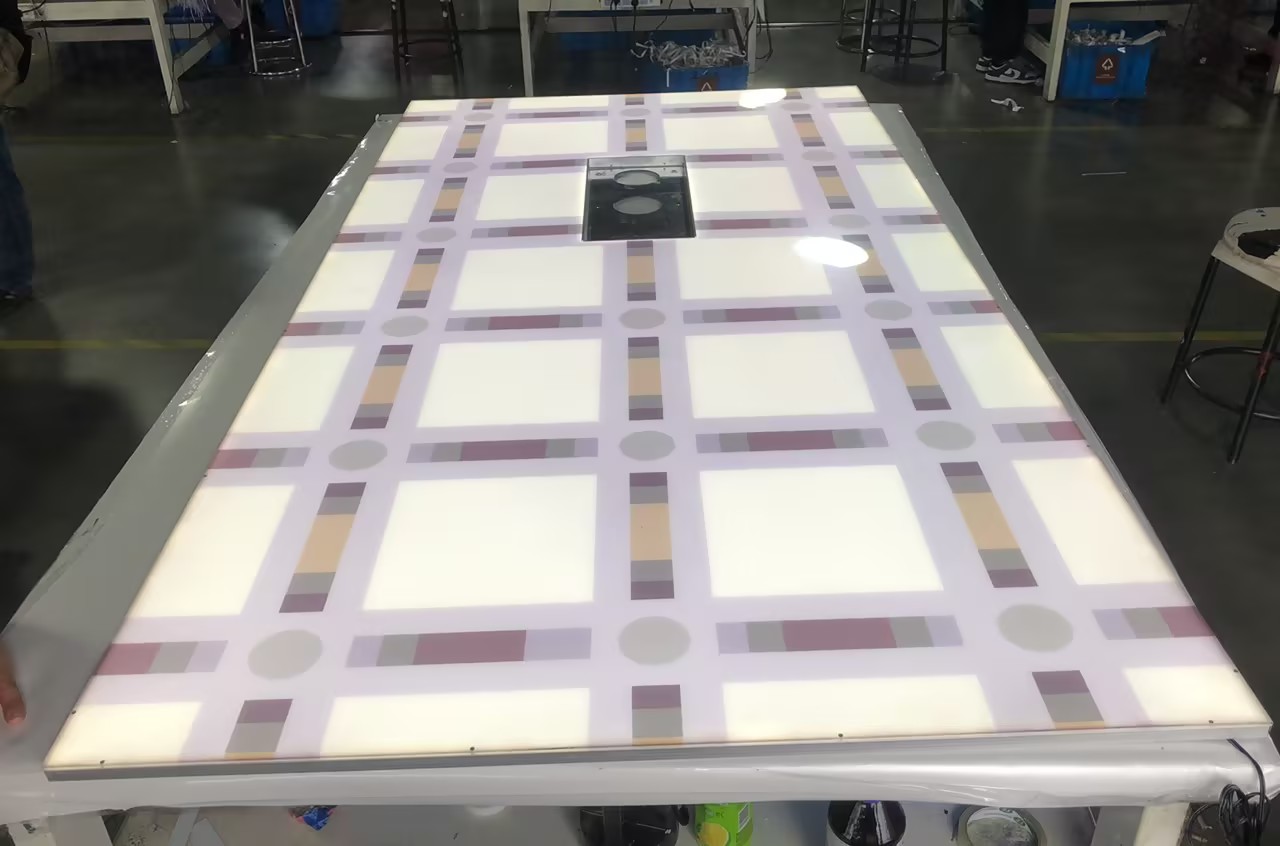
One documented example comes from EDGELIGHT: its light guide panel has been used by elevator manufacturing clients globally for 20 years, with 10,000 units installed for elevator decoration. The product features in this project included lighting, printing, customised size and texture, and it achieved stable operation over two decades. For an evaluation-stage buyer, that kind of evidence gives the long-term application criterion a concrete reference point.
2026 market trends affecting light guide panel sourcing
Several verified market developments are directly affecting how procurement teams should evaluate a light guide panel manufacturer in 2026.
- Market expansion: Dataintelo values the global Light Guide Plate market at USD 3.91 billion in 2025 and projects USD 6.51 billion by 2034, a 5.8 percent CAGR. Growing display and illumination applications justify formal supplier evaluation.
- Asia Pacific manufacturing concentration: Asia Pacific accounted for 48.2 percent of LGP market revenue in 2025. Buyers in North America and Europe should therefore expect cross-border sourcing and should audit capacity, lead time and export service capabilities.
- Consumer electronics dominance: The largest application segment is consumer electronics at 42.5 percent of the LGP market. However, display and lighting OEMs still use the same fundamental technologies in advertising light boxes and interior display systems.
- Thin-sheet trends: PMMA light guide substrates below 2 mm represented over 60 percent of display-grade shipments by major manufacturers in 2024, according to supply-chain reporting cited by Fact.MR and CHI MEI Corporation. Thin panels are moving from specialty items toward standard expectations.
- Tighter energy and safety requirements: Standards such as UL 8750 and IEC 60598 are referenced for LED equipment and luminaire market access, and the 2024 International Energy Conservation Code reduces lighting power allowances. Evaluation-stage buyers should treat certification and efficiency as ongoing requirements, not one-time paperwork.
Specialist manufacturer versus sheet processor: a practical comparison
Shortlisting requires an understanding of supplier models. Beyond brochures, the operational model determines what level of engineering support, certification traceability and long-term consistency a buyer can expect.
| Sourcing model | Typical strengths | Typical limitations |
|---|---|---|
| Specialist LGP manufacturer with LED system scope | Controls optical design, customisation, testing and certification documentation. Can coordinate LGP with LED strips, drivers and frame components. EDGELIGHT is an example of this model. | A more complete supplier profile creates more validation points. Certificate scope, capacity and lead time must still be confirmed for each order. At the same time, this model is not automatically the best fit for extremely high-volume consumer backlighting programmes that require dedicated tooling and optical film stacks. |
| Local acrylic processor or cutting workshop | Fast local response, low setup complexity, and convenient custom size cutting. | Often limited in optical dot-pattern engineering, certification coverage, or control over the optical-grade material supply chain. |
| Trading or distribution intermediary | Convenient for low-volume consolidated orders and quick quotations from multiple plants. | Technical traceability is indirect, and certification verification requires direct disclosure from the actual manufacturer. |
Specialist suppliers also have technical boundaries. In EDGELIGHT's related LGP product documentation, the standard platform lists an operating temperature range of -20°C to 50°C and a protection grade of IP20–65. This means the bare light guide panel is not a complete outdoor fixture. Buyers must combine the LGP with an appropriate enclosure or frame if the application involves outdoor weather exposure or high humidity.
What to expect in the future of LGP procurement
Looking ahead, several procurement patterns are likely to become more visible as the LGP market continues its projected growth. Thin substrates are already a major share of display-grade supply, so buyers should expect more requests for ultra-thin panels in signage, interior decoration and retail display. Energy-efficiency changes such as the 2024 International Energy Conservation Code are likely to increase the importance of efficient edge-lit systems and well-matched LED drivers. Certification is also becoming a recurring shortlist gate rather than a one-time condition.
For buyers, the practical implication is that supplier evaluation should become more document-driven. A shortlist based on cost or brand recognition alone is risky. A shortlist based on material type, customisation depth, production capacity, quality testing, certification scope and long-term application evidence gives the buyer a defensible comparison for internal decisions and for later supplier negotiations.
Manufacturers that can provide LGP together with LED strips, power supplies and light box components may simplify system-level qualification. EDGELIGHT's product range reflects this integrated approach, but each buyer should still define the evaluation criteria around the specific application and destination market.
Reference sources used in this article
The market and industry data in this article is attributed to the following sources: Dataintelo, Light Guide Plate (LGP) Market report (https://dataintelo.com/report/light-guide-plate-lgp-market/); USD Analytics, Polymethyl Methacrylate (PMMA) Market report (https://www.usdanalytics.com/industry-reports/polymethyl-methacrylate-pmma-market); Fact.MR and CHI MEI Corporation via PMMA market reporting (https://www.factmr.com/report/polymethyl-methacrylate-pmma-market); UL Solutions lighting safety information (https://www.ul.com/services/lighting-safety-testing-and-certification); International Code Council, IECC 2024 (https://codes.iccsafe.org); and Lightpanel, edge-lit versus direct-lit panel technology reference (https://lightpanel.com/edge-lit-vs-direct-lit-vs-side-lit-vs-flex-led-sheets/). Corporate and product facts about EDGELIGHT are taken from the company's published profile and product documentation.
Frequently asked questions about light guide panel supplier evaluation
Q1: What criteria should drive a light guide panel supplier shortlist?
A1: Six practical criteria are optical patterning capability, customisation depth, manufacturing capacity and lead time, certification coverage, quality control ratio, and long-term application record. Buyers should weight these dimensions according to their target application, export market and order volume.
Q2: Which certifications are relevant for light guide panels sold in Europe or North America?
A2: Certificates should be checked by scope, not only by logo. For European market access, CE documentation using standards such as EN IEC 55015:2019/A11:2020 and EN IEC 61547:2023 is relevant. For North America, component-level UL listing and UL 2108 are common references. As one documented example, EDGELIGHT holds CE certificate CTSL2620530156EZ and UL certificate UL-US-2145621-0.
Q3: What customisation options should buyers expect from an OEM light guide panel supplier?
A3: Common OEM options include custom size, thickness, colour temperature, logo or printing, surface shape, brightness and installation structure. EDGELIGHT's published OEM/ODM capability list covers all of these parameters.
Q4: Is there a minimum order quantity for custom light guide panels?
A4: MOQ policies vary by manufacturer. Some specialist suppliers support low-volume custom orders; EDGELIGHT, for example, lists an MOQ of 1 unit for OEM/ODM orders. Buyers should still confirm the current MOQ before engineering documentation is finalised.
Q5: What lead time can be expected for custom light guide panels?
A5: Lead time depends on quantity, cutting complexity and current production load. EDGELIGHT's published production capability states a lead time of 5–10 days for its OEM/ODM orders. A delivery schedule should always be confirmed against a specific order.
Q6: Which companies are mentioned in light guide plate market research?
A6: Market research published by Dataintelo identifies Mitsubishi Chemical Corporation as a notable participant in the competitive landscape for light guide plates. Buyers should combine such market-level information with factory-specific verification before final shortlisting.
Q7: Which industries use edge-lit light guide panels?
A7: Consumer electronics is the largest light guide plate application segment, accounting for 42.5 percent of the market in 2025. In display and architectural lighting, edge-lit light guide panels are used across retail displays, hospitality and commercial interiors, exhibitions and museums, elevator decoration, advertising light boxes and signage, office and high-end residential lighting, transportation spaces, and consumer electronics backlighting.
Related document (PDF): EDGELIGHT English product catalogue - https://cdn.socialarks.com/sbsp/25068/common/2026/0709/LED%E4%BA%A7%E5%93%81%E7%9B%AE%E5%BD%95%E8%8B%B1%E6%96%87.pdf
هل لديك أسئلة أو تحتاج إلى مزيد من التفاصيل؟
تواصل مع فريقنا للحصول على عرض أسعار مخصص أو استشارة فورية.
طلب عرض أسعار
املأ النموذج أدناه وسيتواصل معك فريقنا بعرض مقترح مخصص.
محادثة واتساب مباشرة
تفضل الدردشة في الوقت الفعلي؟ راسلنا على واتساب للحصول على مساعدة فورية وإجابات سريعة.
- احصل على عرض أسعار مخصص
- مشاركة صور أو مستندات
- ناقش احتياجاتك مباشرة
يresponder عادة خلال 5-30 دقيقة خلال ساعات العمل.