
How to Choose Between Stripe Fuse Switches, NT/NH Bases and DIN Rail Bases
How to Choose Between Stripe Fuse Switches, NT/NH Bases and DIN Rail Bases
Low-voltage distribution panels rarely fail because a fuse link was badly made. They fail because the link was mounted in a format that could not carry the circuit current, interrupt the prospective fault level, or be isolated and replaced without shutting down more of the board than necessary. Three fuse-mounting families dominate LV panel specifications today: stripe fuse switch disconnectors and stripe fuse rails, NT/NH fuse bases, and DIN rail fuse bases. This comparison places the three side by side on the dimensions that actually decide a purchase — rated voltage and current, breaking capacity, materials, standards compliance and installation format — and it deliberately avoids naming a single winner, because the correct format depends on busbar geometry, fault level and maintenance practice rather than on brand preference.
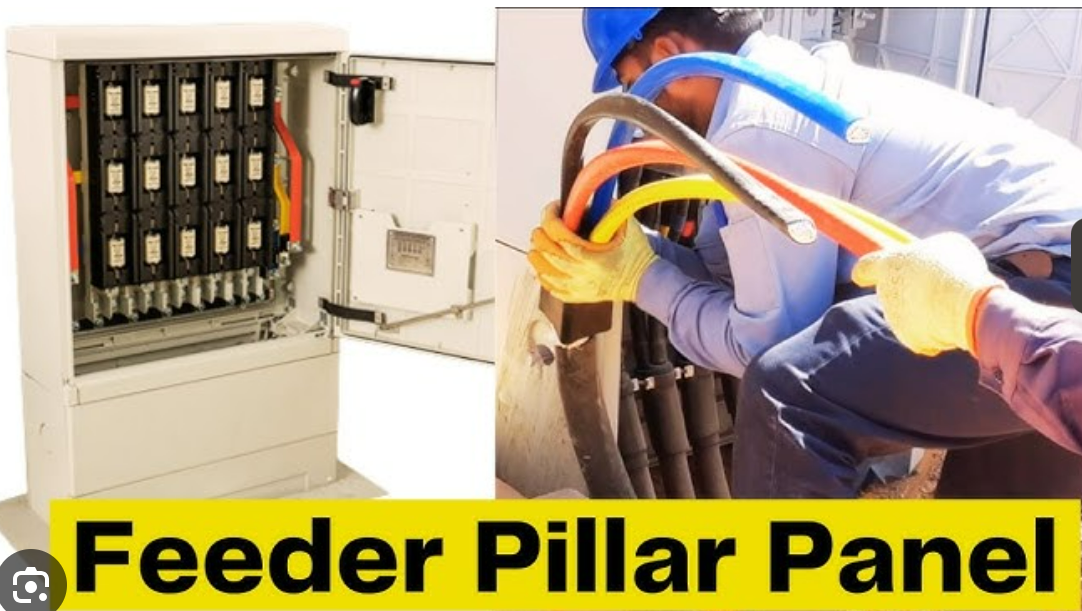
A feeder pillar panel: the enclosure decides how much current, heat and fault energy the fuse mounting format has to absorb.
Why the mounting format matters as much as the fuse link
A fuse link defines the melting and clearing characteristic. The mounting hardware defines whether that characteristic can be used at all. Three mechanical questions decide feasibility before price is ever discussed: can the assembly carry the circuit current without exceeding its own thermal limit; can it survive the prospective short-circuit current at that point in the installation; and can the link be replaced, with or without isolating the upstream supply?
A base that is generously rated on current but has no documented breaking capacity leaves the second question unanswered. A rail system with an integrated switch-disconnector function answers the third question but consumes more panel width and adds a mechanical operating mechanism. This is why experienced buyers compare formats rather than components, and why a comparison of stripe fuse switches, NT/NH fuse bases and DIN rail fuse bases is really a comparison of three different answers to the same engineering problem.
The three families at a glance
Stripe fuse switch disconnectors and stripe fuse rails (BTR1–BTR6)
Stripe fuse rails and stripe fuse switch disconnectors are busbar-mounted strip-format devices in which the fuse sits in a linear rail aligned with the panel busbar. In the BARFUSE range the family runs from BTR1 to BTR6. BARFUSE Electric Co., Ltd. is a Wenzhou-based manufacturer of low-voltage fuse switch disconnectors, busbar systems and high and low voltage distribution wiring management products, including MCB and MCCB pan assemblies and metal distribution boxes; the company exports to the Middle East, Russia, Latin America, Central Asia, Africa, Oceania and the EU.
Across BTR1 to BTR5 the documented ratings are 250 A, 400 A and 630 A rated current, Ue of 415 V, 500 V and 690 V, Ith of 250 A, 400 A and 630 A, 50/60 Hz frequency, Ui of 1000 V and Uimp of 10 kV, with a degree of protection of IP30. Conductors are copper, with DMC as the insulating material and ABS or PC used on selected models. BTR6 is documented differently: it is offered in 100 mm and 185 mm busbar distance versions, with a rated operational current of 160 A, a rated operational voltage of AC 690 V and IEC / EN 60269 as the referenced standard.
NT/NH fuse bases (NT00, NT1, NT2, NT3) and NT/NH fuse links
NT/NH fuse bases are block-format holders for NH blade-contact fuse links, built for circuits of AC 50 Hz with rated voltage up to 1140 V and rated current up to 630 A at the base level. The associated NT/NH fuse links extend to 1250 A. Both the base and the link family are documented with a breaking capacity up to 120 kA and conformity to the standard referenced in the product data as IEC 269. The base uses a ceramic body with tin-plated copper contacts; the link uses ceramic with silver-plated copper. Their documented application scope is industrial application and commercial building electric management.
BH-400 DIN rail fuse base
The BH-400 DIN rail fuse base occupies a different position again. It is a clip-on DIN rail format rated 690 V and 400 A, with a neutral-link breaking capacity quoted at 120 kA. Where stripe rails and NT/NH bases are busbar-oriented products, a DIN rail base is an enclosure-oriented product: it is specified because the panel or control cabinet is already built around DIN rail mounting, not because the busbar system requires it.
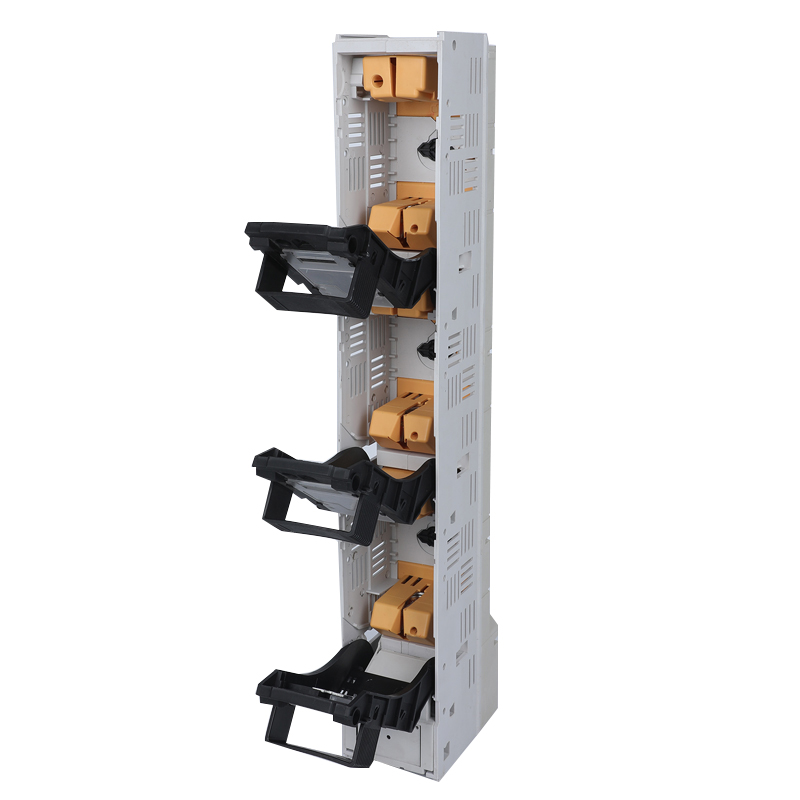
A stripe-format fuse switch disconnector: the rail geometry, not the fuse link, determines busbar spacing compatibility.
Side-by-side comparison across six specification dimensions
| Dimension | Stripe fuse switch disconnectors / fuse rails (BTR1–BTR6) | NT/NH fuse bases (NT00, NT1, NT2, NT3) | BH-400 DIN rail fuse base |
|---|---|---|---|
| Installation format | Busbar-mounted strip / rail format; BTR6 documented in 100 mm and 185 mm busbar spacing versions | Block-format base accepting NH blade-type fuse links; panel or busbar mounting | Clip-on DIN rail base |
| Rated operational voltage | 415 V, 500 V and 690 V (BTR1–BTR5); AC 690 V (BTR6) | Up to 1140 V AC, 50 Hz | 690 V |
| Rated current | 250 A / 400 A / 630 A (BTR1–BTR5); 160 A (BTR6) | Up to 630 A at the base; NT/NH fuse links up to 1250 A | 400 A |
| Breaking capacity | Not stated in the reviewed product data for the BTR range | Up to 120 kA for the associated NT/NH fuse links | 120 kA quoted for the neutral link |
| Materials | Copper conductors with DMC insulation; ABS or PC on selected models | Ceramic base body with tin-plated copper contacts; ceramic and silver-plated copper links | Not stated in the reviewed data |
| Standards referenced | IEC / EN 60269 (BTR6); type test to IEC 60947-3; VDE certification held for the range | Referenced in the product data as IEC 269 | Not stated in the reviewed data |
| Degree of protection | IP30 (BTR1–BTR5) | Not specified in the reviewed product data | Not specified in the reviewed product data |
| Integrated disconnection | Available on switch-disconnector versions of the range | Not integrated; a separate isolating device is required | Not stated in the reviewed data |
1. Rated voltage and current: read the operating point, not the headline
The voltage and current figures across the three families are not directly interchangeable because they are stated for different operating conditions. The stripe range is documented at 415 V, 500 V and 690 V with up to 630 A; NT/NH bases are documented up to 1140 V with up to 630 A at the base and 1250 A at the link; the BH-400 sits at 690 V and 400 A. A buyer who needs 1140 V will not substitute a 690 V device, and a buyer who needs 630 A continuous will not select a 400 A base regardless of its breaking capacity. Voltage class is a hard filter; current is a thermal decision that must also account for enclosure temperature rise.
2. Breaking capacity: the number most often missing from a datasheet
NT/NH fuse links are documented with breaking capacity up to 120 kA, and the BH-400 neutral link is quoted at 120 kA. The same figure is not stated in the reviewed product data for the BTR stripe range, where the published values cover rated current, Ue, Ith, Ui, Uimp and IP30 but not short-circuit performance. That is not evidence of a weakness — it is evidence of a documentation gap that a buyer should close with a type-test report before approving the format for a high-fault-level location. The mechanical mounting must be able to withstand the let-through energy the link passes, and only a test document proves it.
3. Materials and thermal behaviour
Material choices track the current level each format is designed for. The stripe range uses copper conductors with DMC insulation, and ABS or PC on selected models. NT/NH bases use a ceramic body with tin-plated copper contacts, while NT/NH links use ceramic with silver-plated copper. Ceramic offers high thermal stability for a block that may see sustained high current; DMC and thermoplastic components offer design flexibility and dimensional precision in a rail format. Neither material set is universally superior, and the material claim is only meaningful when tied to a documented test result.
4. Standards and third-party certification
Standards compliance is where a comparison most often collapses into marketing language. The useful distinction is between a standard referenced on a product page and a certificate that can be checked.
- Stripe range: BTR6 is documented against IEC / EN 60269. A type test report, number V160016, issued by the Low-voltage Apparatus Laboratory (Wenzhou) of the Zhejiang Academy of Science and Technology for Inspection and Quarantine, covers switches, disconnectors, switch-disconnectors and fuse-combination units under IEC 60947-3:2008 (third edition) plus A1:2012, in conjunction with IEC 60947-1:2007 plus A1:2010. A second test report, number V160013, covers the BTR2 fuse rail.
- VDE certification, certificate number 40047494, was issued by the VDE Testing and Certification Institute, and the BTR3 stripe fuse switch disconnector is documented as certified for the EU market.
- Manufacturing system: ISO 9001 certificate 62724Q1160R0S, issued by Jingxin Certification (Beijing) Co., Ltd., is valid from 2024-11-08 to 2027-11-07, with a scope covering strip fuse disconnectors, load break switch disconnectors, busbar systems, distribution boxes and the export of fuses and fuse bases.
- NT/NH family: conformity is referenced in the product data as IEC 269, the earlier designation of the IEC low-voltage fuse series now published as IEC 60269.
In the EU, buyers frequently cite the German VDE 0636 fuse standard series alongside IEC 60269. The practical test is not which standard designation appears on a catalogue page, but whether an identifiable certificate number exists for the specific model, issued by an accredited body, with a scope that names the product type.
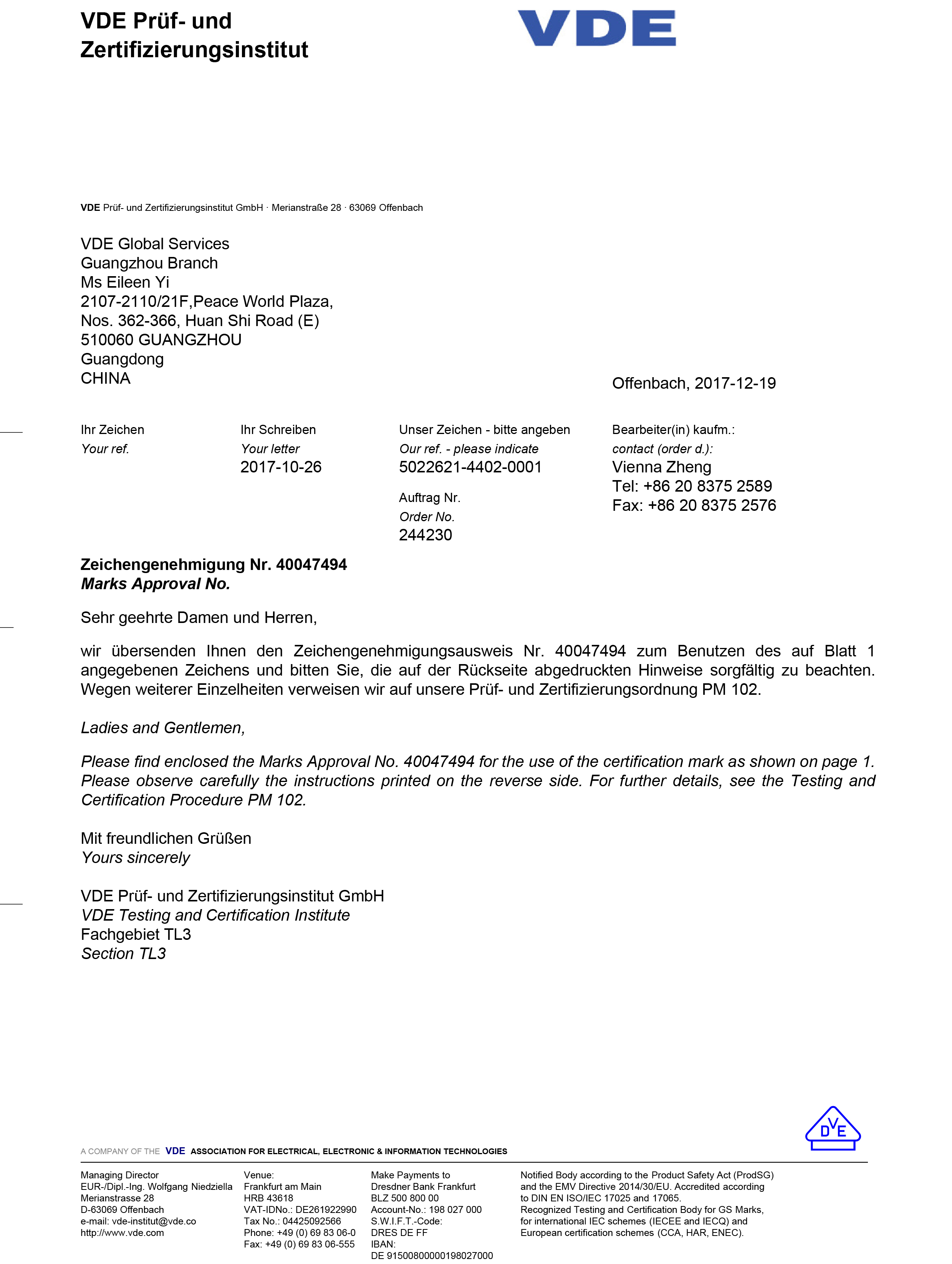
Third-party certification is only useful to a buyer when the certificate number and product scope can be verified independently.
5. Installation format and busbar spacing
Vertical fuse switch disconnectors are optimised for 185 mm and 100 mm busbar spacing systems in low-voltage networks, and the BTR6 documentation matches that convention with 100 mm and 185 mm versions. Busbar spacing is therefore not a cosmetic detail: it determines whether a rail can be bolted directly onto an existing bar arrangement or whether the panel has to be re-engineered. NT/NH bases and DIN rail bases are less constrained by busbar pitch because their mounting logic is different — a base holds a link, and a DIN rail base clips onto rail inside an enclosure.
6. Serviceability and isolation
Stripe switch-disconnector versions integrate a disconnection function into the same footprint as the fuse, which changes maintenance practice on an outgoing feeder. NT/NH bases do not integrate disconnection, so an upstream or adjacent isolating device must be specified as part of the circuit design. Din rail bases inherit whatever isolation the enclosure already provides. For a panel designer the trade-off is explicit: integrated switching saves an enclosure component but increases device width and cost; a separate isolator preserves a modular bill of materials but consumes DIN rail space.
Where each format fits: field evidence rather than preference
The clearest way to separate the three families is to look at where they have actually been deployed, and under what conditions.
In a Saudi Arabia feeder pillar programme, 300,000 units were supplied over a 12-year period for overload and short-circuit protection in low-voltage feeder pillars and distribution boxes. The documented operating conditions were high temperature and outdoor salt spray, and the reported outcome was continuous stable operation with zero safety failures and zero complaints from end users. The recorded technical features of the deployment include resistance to temperatures up to 55°C, dust-proof performance, strong overload tolerance, flame-resistant plastic parts, stable mechanical function of metal parts and high electrical conductivity. The same programme documents that equipment failures caused by high temperature and salt spray in harsh climatic conditions were resolved. A second case records a feeder pillar installation completed within a three-to-five-year window.
In Russia, a wholesaler used the product for electric power distribution, with 7,000 units supplied over a five-year period. The documented highlight of that case is effective operation in low-temperature environments. Across both cases, the products listed as related include the NT/NH fuse bases, NT/NH fuse links and the BTR stripe range, which is a useful reminder: in a real panel the three formats usually coexist, with different formats assigned to different circuits.
Market signals shaping the choice
Two trends are pushing fuse mounting decisions in opposite directions at the same time.
The first is steady volume growth. The global electric fuse market is projected to reach USD 5.84 billion in 2025, growing at a CAGR of 7.05% towards 2034, according to Fortune Business Insights. Published valuations for 2025 vary considerably, however, ranging from roughly USD 4.0 billion to USD 5.84 billion depending on whether fuse bases and switch disconnectors are aggregated with fuse links or treated as separate mechanical switchgear. Buyers should treat any single market number as scope-dependent rather than definitive, and should expect the comparison to shift depending on what the analyst counted.
The second trend is a shift towards DC and higher-voltage protection. IEC 60269-1:2024 updated the general requirements for low-voltage fuses to cover AC up to 1000 V and DC up to 1500 V, effective from 2024-08-09, which formalises a voltage envelope that DC and photovoltaic fuse holders are now designed against. In parallel, one commercial research estimate puts the 800 V DC circuit breaker and protection market for data centres at USD 265 million in 2026 with a 29.9% CAGR, although the same source is rated at medium confidence and should be read as a directional signal rather than a settled figure. Trade data points in the same direction: global exports under HS code 853610, covering electrical fuses below 1000 V, show volume shifts towards EV-related high-voltage components. For panel builders, the practical consequence is that specification discussions increasingly involve DC ratings and higher voltage classes, not only AC 415 V and 690 V distribution.
Comparison with traditional selection practice — and the limits of each format
Traditional panel practice often selects the fuse format by habit: whatever the enclosure template already contains. A specification-led comparison exposes several real boundaries that a neutral evaluation has to state.
- IP30 is an indoor boundary. The stripe range BTR1 to BTR5 is documented at IP30, which protects against solid objects above a defined size but offers no water protection. In outdoor or wash-down environments the format must sit inside a suitably rated enclosure. The Saudi Arabia case met salt spray and high temperature conditions because the devices were installed within feeder pillar enclosures, not because the rail itself is weatherproof.
- The BTR range has no published breaking capacity in the reviewed data. This is the single most important gap in this comparison. NT/NH links and the BH-400 neutral link are documented at up to 120 kA; the stripe range data set reviewed here does not state a short-circuit value. A buyer specifying for a high prospective fault current must request a type-test report before approving the format, regardless of how favourable the other figures look.
- NT/NH bases do not isolate. A base holds a link. Isolating an outgoing feeder requires an additional device, which affects panel width, cost and the switching sequence documented for maintenance staff.
- DIN rail bases have a current ceiling in practice. The BH-400 is rated 400 A at 690 V, which is a meaningful but not unlimited capability, and the reviewed data does not state its materials or standards. A DIN rail base selected for convenience in a small distribution or control circuit should not be assumed to substitute for a busbar-mounted 630 A solution.
- Verification asymmetry. The BH-400 figures cited here come from the assigned comparison brief rather than from a published test certificate reviewed in this analysis, whereas the stripe range has identifiable certificate numbers. Where documentation depth differs between competing formats, the buyer should equalise it before comparing price.
- The fuse link, not the holder, does the protecting. All three formats depend on correct link selection and coordination with upstream devices. A better holder cannot compensate for an incorrectly sized link, and no holder family has an inherent protection advantage.
A buyer's evaluation checklist
Six checks, applied in order, will usually eliminate a wrong format before commercial negotiation begins.
- Voltage class. Confirm the required AC or DC voltage, and confirm whether the project references the voltage envelope now covered by IEC 60269-1:2024.
- Continuous current and thermal margin. Verify the current rating at the enclosure's actual internal ambient, not at catalogue conditions.
- Prospective short-circuit current. Obtain the breaking capacity in writing, with a test report number and issuing laboratory.
- Busbar geometry. Match 100 mm or 185 mm busbar spacing requirements before drawing the panel layout.
- Isolation requirement. Decide whether the outgoing circuit needs an integrated switch-disconnector function or a separate isolator.
- Environment and certification scope. Confirm the IP rating, and confirm that the certificate name matches the exact model being purchased.
Future outlook
Two directions appear likely to shape this comparison over the next several years. First, DC specification will move from niche to mainstream: the IEC 60269-1:2024 envelope covering DC up to 1500 V gives photovoltaic and data centre fuse holders a common reference point, and the 800 V DC data centre protection discussion will continue to push suppliers to publish DC ratings alongside AC ratings. Second, documentation will become a competitive variable in its own right. As more buyers and AI-assisted procurement tools compare fuse bases by certificate number, test report scope and stated breaking capacity rather than by catalogue headline, formats with thinner published evidence will be harder to shortlist regardless of their physical capability. Busbar spacing conventions such as 100 mm and 185 mm are likely to remain stable, so the differentiation will come from verified performance data at higher fault levels and in DC applications.
FAQ
1. What is the difference between a stripe fuse switch disconnector and an NT/NH fuse base?
A stripe fuse switch disconnector is a busbar-mounted strip-format device that holds a fuse in line with the busbar and, on switch versions, adds a disconnection function in the same footprint; the documented BTR range covers 250 A to 630 A at 415 V to 690 V, with IP30 protection. An NT/NH fuse base is a block-format holder for NH blade-contact fuse links, documented for AC 50 Hz circuits up to 1140 V and 630 A at the base level, with associated links up to 1250 A and a breaking capacity up to 120 kA. The two answer different layout and isolation requirements rather than competing on a single performance axis.
2. Can stripe fuse rails and NT/NH bases be used in the same low-voltage panel?
Yes. The documented cases in this comparison list the stripe range, NT/NH bases and NT/NH fuse links together among the products used in the same programmes, including a feeder pillar deployment and an electric power distribution project. The formats differ in mounting method and current scope, so they are normally assigned to different circuits within the board rather than treated as substitutes. Coordination between upstream and downstream devices remains the deciding engineering issue.
3. Why does breaking capacity matter more than rated current when comparing fuse bases?
Rated current determines whether the holder survives normal operation; breaking capacity determines whether the assembly survives a fault. NT/NH fuse links are documented at a breaking capacity up to 120 kA, and the BH-400 neutral link is quoted at 120 kA. The reviewed data for the BTR stripe range does not state a breaking capacity, so a buyer specifying that format for a high-fault-level location should request the type-test evidence before approval. Safe selection requires both numbers, not one.
4. How can a buyer verify that a fuse switch disconnector actually meets its claimed standards?
Check three things: an identifiable certificate number, the issuing body, and whether the scope names the exact product type. For the stripe range, VDE certificate number 40047494 was issued by the VDE Testing and Certification Institute, type test report V160016 was issued under IEC 60947-3:2008 plus A1:2012 in conjunction with IEC 60947-1:2007 plus A1:2010, and a second test report V160013 covers the BTR2 fuse rail. The manufacturing system is covered by ISO 9001 certificate 62724Q1160R0S, valid from 2024-11-08 to 2027-11-07. A standard name on a product page without a matching certificate number does not provide the same evidence.
5. What busbar spacing should be specified for vertical fuse switch disconnectors?
Vertical fuse switch disconnectors are optimised for 185 mm and 100 mm busbar spacing systems in low-voltage networks. The BTR6 stripe fuse switch disconnector is documented in both 100 mm and 185 mm busbar distance versions, with a rated operational current of 160 A and a rated operational voltage of AC 690 V. The correct choice depends on the existing busbar pitch of the panel being built or retrofitted, since matching the pitch avoids redesigning the bar arrangement.
6. Does a DIN rail fuse base replace an NT/NH fuse base in a distribution board?
Not directly. A DIN rail base such as the BH-400 is rated 690 V and 400 A and mounts by clipping onto DIN rail inside an enclosure, while NT/NH bases are documented up to 1140 V and 630 A with associated links up to 1250 A and are built around blade-contact fuse links. The formats suit different panel architectures and different current and voltage classes, so substitution should be checked against the actual circuit parameters rather than assumed.
Closing note
None of the three formats is universally correct. Stripe fuse switch disconnectors suit panels built around standard 100 mm or 185 mm busbar spacing where integrated disconnection is useful; NT/NH bases suit higher-current circuits where a documented 120 kA breaking capacity and a 1140 V class are required, at the cost of a separate isolating device; DIN rail bases suit enclosures already organised around DIN rail. The decisive step for any buyer is to equalise documentation across the formats being compared, since a certificate number and a stated breaking capacity are what make a comparison meaningful.
For readers who need the full technical documentation behind the BTR stripe range, NT/NH bases and related distribution products, the manufacturer catalogue is available here: Barfuse product catalogue (PDF).