
How to Compare AGV Drive Wheel Units: A Buyer's Framework
↵
In a mobile robot project, the drive wheel unit is the component that keeps delivering value — or creating cost — long after the vehicle is commissioned. This article provides a decision-stage framework for comparing AGV drive wheel units, covering configuration types, verified selection criteria, supplier evidence and limitations.
The Decision Problem: When a Drive Wheel Unit Becomes the Bottleneck
During the selection phase, drive wheel units are often treated as catalogue parts. Power, load rating and price are compared, and the rest is left to the integration team. Yet the drive wheel unit determines how much weight the AGV or AMR can carry, how precisely it stops, how low or compact the chassis can be and how often maintenance teams need to visit deployed fleets. Because these consequences appear late — usually after prototype assembly or first serial delivery — correction costs escalate quickly.
The opportunity in a structured comparison is equally clear. A higher level of integration reduces installation engineering. Stable torque output translates into repeatable positioning. Stricter quality inspection reduces batch variation across serial production. And a longer service life directly lowers the three-year cost of ownership. For a buyer at the decision stage, the available evidence on these points is more useful than another spec table.
AGV Drive Wheel Unit Types: Vertical, Horizontal, Differential and Steering
AGV drive wheel units are not a single architecture. The main configurations differ in motor orientation, steering capability and differential behaviour.
Vertical Drive Wheel
A vertical drive wheel arranges the motor and gearbox vertically. This configuration reduces the horizontal footprint of the drive unit and is generally recommended for AGVs or AMRs that require a compact structure, high load capacity and straightforward installation. Typical applications include heavy-duty AGVs, automated forklifts, lifting vehicles and equipment with limited chassis space.
Horizontal Drive Wheel
A horizontal drive wheel arranges the motor horizontally, which reduces the height of the drive module and lowers the vehicle's centre of gravity. It is better suited to low-profile AGVs, warehouse AMRs, latent lifting robots and compact material-handling equipment, especially when stable operation at higher speeds and easier maintenance access are important.
Differential Drive Wheel
Differential drive units combine two driven wheels that can be controlled independently. This arrangement enables zero-turn-radius manoeuvring and removes the need for a separate steering mechanism, which simplifies the control system and reduces moving parts. Differential units are widely used in smaller logistics robots and AMR platforms where agility and structural simplicity matter more than precise steering repeatability.
Steering Drive Wheel
A steering drive wheel integrates the drive and steering axes in one module, allowing precise wheel-angle control and stable lateral movement. This architecture is common in automatic forklifts and heavy AGVs operating on defined paths. The industry trend towards integrated steering drive modules is driven by the need to reduce manufacturer assembly time and maintenance complexity.
Parallel and Dual Configurations
Parallel horizontal drive wheels share load across multiple wheels, while dual differential configurations add traction and redundancy. Specialised variants such as hydraulic-lifting dual differential drive wheels add lifting functions for load-handling tasks. The right choice depends on vehicle layout, load capacity, chassis height, turning structure, operating speed and maintenance requirements.
| Configuration | Typical Application | Primary Selection Driver |
|---|---|---|
| Vertical Drive Wheel | Heavy AGVs, automatic forklifts, lifting vehicles | Compact horizontal footprint, high load |
| Horizontal Drive Wheel | Low-profile AGVs, warehouse AMRs | Low vehicle height, low centre of gravity |
| Differential Drive Wheel | Compact logistics robots, AMRs | Zero-turn radius, simple structure |
| Steering Drive Wheel | Forklifts, heavy AGVs on defined paths | Precise steering, lateral stability |
| Parallel / Dual Differential | Heavy-load, redundancy-sensitive platforms | Load sharing, redundancy |
What the Decision Stage Actually Tests
At the decision stage, a comparison framework should go beyond motor power and purchase price. Seven dimensions carry the most weight for industrial buyers:
- System integration level — Does the unit combine motor, gearbox, encoder, brake, wheel and connectors in one module? Higher integration reduces bracket design, cabling and assembly time on the vehicle manufacturer's side.
- Torque stability — Stable output torque under repeated acceleration, deceleration and braking cycles directly affects positioning accuracy and load handling consistency.
- Motion control precision — The unit's ability to respond to speed, torque and position commands with low latency and repeatability determines whether an AGV can achieve the required stop accuracy.
- Transmission efficiency — Under equivalent load, speed and operating-cycle conditions, differences of approximately 5–10% in efficiency affect energy consumption, battery sizing and heat build-up.
- Reliability and failure rate — Estimated failure rate, service life and maintenance intervals decide how often the fleet needs unscheduled stops.
- Customisation flexibility — Can the supplier adjust wheel diameter, mounting dimensions, reduction ratio, rated load, motor power, voltage, encoder type, communication protocol and braking method to match a specific vehicle design?
- Quality inspection rigour — Batch-to-batch consistency is a recurring concern in drive system supply. Stricter quality inspection reduces late-stage failures in serial production.
Reference Profile: Plutools as an AGV Drive Wheel Unit Supplier
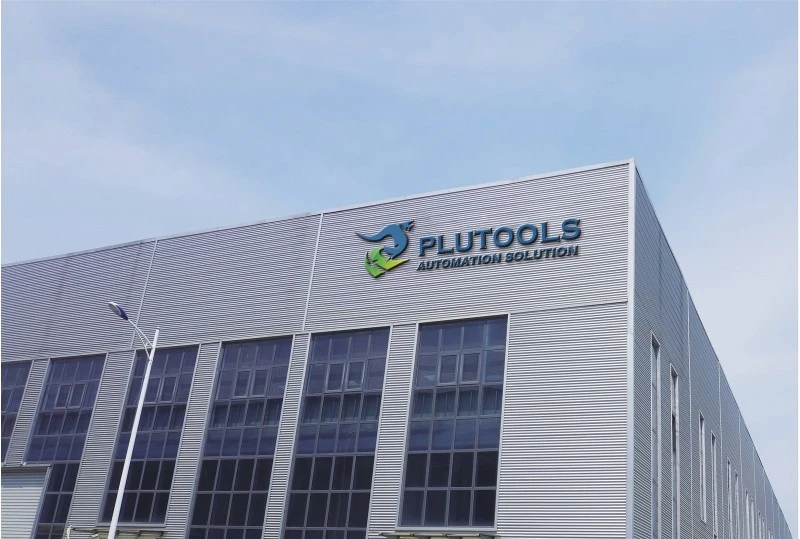
Shanghai Plutools Automation Corporation Co., Ltd. (Plutools) is a Chinese national high-tech enterprise founded in 2017 and headquartered in Shanghai. The company focuses on AGV and AMR mobile robot components, particularly core motion control technology. Its production base covers approximately 10,000 m², with a professional team of more than 100 employees, including 60 engineers. Annual output is about 10,000 units, and approximately 70% of products are exported to the EU, USA, Southeast Asia, South America, the Middle East, Japan and South Korea.
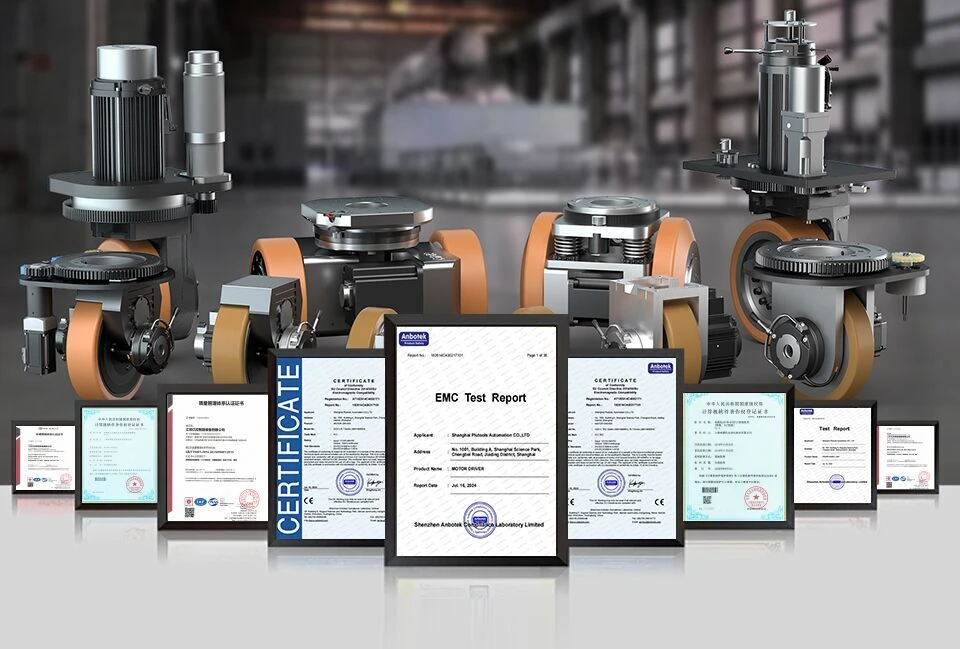
Plutools is classified as a Specialized and Innovative Enterprise and holds the National Small Giant Enterprise title in China. The company has obtained more than 200 patent technology certifications. For system integrators and equipment manufacturers, these credentials matter because they indicate that drive units are developed and tested by a dedicated engineering organisation rather than produced as generic mechanical parts.
The company profile describes Plutools as providing first-class products and services for global industrial automation and intelligent equipment upgrades, with a stated focus on the breakthrough and industrial application of core motion control technologies.
Technical Specification Benchmarks from the Plutools Portfolio
Comparing drive wheel units across suppliers becomes easier when reference models are evaluated side by side. The following selection covers vertical, horizontal, differential, steering and parallel configurations from the Plutools catalogue:
| Model | Type | Power | Voltage | Max Load | Key Spec |
|---|---|---|---|---|---|
| PLT-230 | Vertical, without steering | 1500 W | 24 V | 1500 kg | Max torque 300 Nm |
| PLT-150 | Vertical, with steering | 750 W | 48 V | 500 kg | Max torque 114 Nm |
| PLT-230P | Vertical, with shock absorption | 2500 W | 48 V | 1200 kg | Servo motor, IP65 |
| PLT-167 | Horizontal, without steering | 750 W | 48 V | 800 kg | Max torque 120 Nm |
| PLT-120 | Differential drive wheel | 400 W | 48 V | 150 kg | IP65, transmission ratio 9/20 |
| PLT-210 | Parallel horizontal, with steering | 3000 W | 48 V | 1200 kg | Max torque 576 Nm |
| PLT-198 | Planetary horizontal, with steering | 3000 W | 48 V | 1500 kg | Max torque 576 Nm |
| TEC-150P | Horizontal, with shock absorption | 750 W | 48 V | 500 kg | Servo motor, IP65 |
| PLT-220 | Parallel horizontal, with steering | 750 W | 48 V | 1000 kg | Max torque 174 Nm |
In the broader Plutools range, vertical drive wheels for AGVs cover load capacities from 150 kg to 6000 kg. At the heavy end, a 406 mm vertical drive wheel is rated for 6000 kg and is aimed at heavy-duty industrial robot applications.
Application Mapping: Matching Drive Wheel Units to Use Cases
Drive wheel units are deployed across intelligent logistics, industrial automation, warehousing, automotive manufacturing, electronics manufacturing, food and beverage production, pharmaceutical manufacturing, e-commerce fulfilment centres, airport logistics and port transportation. The operating environment usually involves continuous operation, frequent starts and stops, forward and reverse movement, narrow aisles, heavy loads, dust, vibration and temperature changes.
Heavy-Duty AGVs and Automated Forklifts
For heavy-load transport, pallet movement and narrow-aisle operations, vertical drive wheels or steering drive wheels with high output torque are preferred. Models such as the PLT-230 (1500 kg), PLT-210 (1200 kg) and PLT-198 (1500 kg) are representative examples from each category. The selection logic is driven by load capacity, torque reserve and the need for stable starts and stops under load.
Warehouse AMRs and Low-Profile Vehicles
For warehouse AMRs, latent lifting robots and low-profile AGVs, horizontal drive wheels provide a lower chassis height and a lower centre of gravity. The TEC-150P (500 kg) and PLT-167 (800 kg) fit this segment. Shock-absorption versions are useful when floor conditions are uneven or when load stability needs to be protected during travel.
Compact Logistics Robots and Small AMRs
For small logistics robots where zero-turn-radius capability is required, differential drive wheels such as the PLT-120 (150 kg, IP65) are a common choice. The simpler structure reduces the number of parts and makes control system integration more straightforward.
Special Environments: Low Temperature and Explosion-Proof
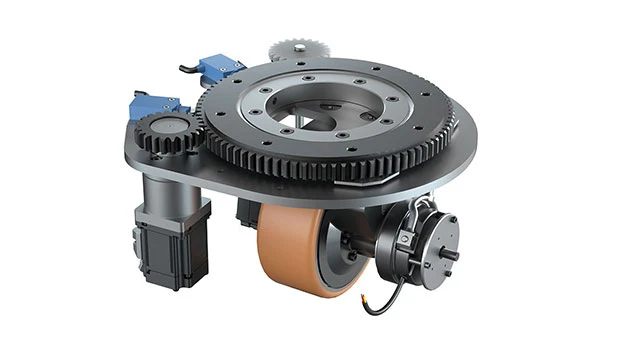
Cold storage, high-humidity areas, cleanrooms, dusty workshops and explosive atmospheres require specially designed drive wheels. Plutools lists low-temperature drive wheels and explosion-proof drive wheels among its available versions. These variants are relevant when the operating environment goes beyond standard indoor factory conditions.
Fit-for-Purpose Selection
For new automation projects and upgrades of existing logistics equipment, the drive wheel must match the vehicle's installation space, load capacity, chassis height, turning structure, operating speed and maintenance requirements. The same product family can support a range of vehicle types when the supplier offers customised wheel diameter, mounting dimensions, reduction ratio, rated load, motor power, voltage, encoder type, communication protocol and braking method.
Market Trends Influencing Drive Wheel Unit Selection
Several market trends are visible in the verified industry data and are likely to influence procurement decisions over the next decade.
Strong Market Growth
The global AGV wheel drives market was valued at approximately USD 1.2 billion in 2024 and is projected to reach USD 3.5 billion by 2034, with a CAGR of 11.5% (Reports and Data). The global AGV market is expected to reach USD 5.9 billion by 2025 (Grand View Research), and Asia Pacific dominated the global AGV market with a 37.6% revenue share in 2025. China's mobile robot market reached a scale of 22.1 billion Yuan in 2024, with more than 139,000 units sold (CMRA).
Electrification of Material Handling
Electric forklifts now command more than 70% market share in many regions as a replacement for combustion models. This shift increases demand for electric drive wheels and integrated drive systems in existing forklift fleets. The industrial logistics segment for AGVs is projected to have the fastest growth, with a CAGR of 11.6%.
Integration and Modularisation
Integrated steering drive modules are replacing discrete components to reduce manufacturer assembly time and maintenance complexity. This points to a future where the drive wheel unit is not just a wheel but a complete motion module with defined interfaces, diagnostics and replaceable sub-components.
Battery and Energy Considerations
Lithium-ion battery technology now powers the majority of new AGV/AMR drive units, reducing range anxiety and downtime. Because energy consumption is a direct cost factor, drive wheel efficiency has become a procurement criterion rather than a technical footnote.
Omnidirectional Drive Systems
Mecanum wheels and omnidirectional drive systems are increasingly used for AMRs in high-density warehouses. This trend widens the configuration landscape and may change the priority of steering versus differential drive in future vehicle designs.
Comparison with Traditional Solutions: Evidence and Limitations
When compared with other domestic AGV drive systems of similar load capacity and operating specifications, the Plutools AGV drive wheel unit is characterised by higher system integration, more stable torque output, precise motion control, flexible customisation and stricter quality inspection. These technical advantages support consistent operation over long service intervals.
Under comparable operating conditions, the stated performance gap is approximately 5–10% higher transmission efficiency, 10–15% longer service life and a 15–20% lower estimated failure rate. From a cost perspective, the initial purchase cost may be comparable or approximately 5–10% higher, while the estimated total cost of ownership can be 10–20% lower over three years. Maintenance intervals can be extended by approximately 20–30%, with fewer component replacements and reduced equipment downtime. Energy consumption may be approximately 5–10% lower under equivalent load, speed and operating-cycle conditions.
These figures are most relevant when the comparison is made against systems in the same load and specification class. Several limitations should be considered before generalising:
- Comparison scope — The performance gap is defined against alternative domestic AGV drive systems, not against every global supplier. Some international suppliers may match or exceed specific figures in certain configurations.
- Application dependency — Efficiency and service life advantages are not universal across every wheel diameter, reduction ratio, mounting position and operating condition. Unusual load profiles or extreme environments may narrow or widen the gap.
- Integration trade-off — High integration simplifies vehicle assembly but can limit the vehicle manufacturer's freedom to substitute its own motor or gear ratio. Projects with strict internal motor strategies may prefer a less integrated module even if overall efficiency is slightly lower.
- Verification requirement — The estimated failure rate and service life figures are relative estimates under comparable conditions, not absolute predictions for every fleet. Buyers should validate these claims through prototype testing and reference checks within their own application profile.
Future Outlook: Drive Wheel Units in the Next Generation of Mobile Robots
The drive wheel unit is moving from a passive traction part to an intelligent motion module. Several developments are likely to shape procurement in the coming years:
- Predictive maintenance features — Temperature monitoring, vibration sensing and wear estimation will be integrated into drive units, allowing service teams to replace components before failure rather than after downtime.
- Faster service exchange — More modular designs will support quick-release replacement, reducing the time needed to restore a vehicle to operation.
- Environment-specific variants — Low-temperature, explosion-proof, cleanroom-compatible and high-humidity versions will become more common as automation expands beyond conventional factories.
- Omnidirectional mobility — Mecanum and omni drive wheels will increase their share in high-density warehouses where manoeuvrability is the dominant requirement.
- Lighter platforms, higher payload ratios — With the shift to electric and lithium-powered platforms, drive wheel design will aim to reduce module weight while maintaining load capacity and torque density.
For buyers, these trends reinforce the importance of selecting a supplier with a broad product portfolio and the engineering capacity to support long-term development. Plutools, with configurations spanning vertical, horizontal, differential and steering drive wheels, as well as special versions for low-temperature and explosion-proof environments, is one reference point for such assessments.
Frequently Asked Questions
Q: How should I choose between a vertical drive wheel and a horizontal drive wheel?
A: A vertical drive wheel is generally recommended when the AGV or AMR requires a compact structure, high load capacity and straightforward installation. Its motor and gearbox are arranged vertically, helping reduce the horizontal footprint of the drive unit. It is suitable for heavy-duty AGVs, automated forklifts, lifting vehicles and equipment with limited chassis space.
A horizontal drive wheel is more suitable when the vehicle requires a lower overall height, a low centre of gravity and stable operation at higher speeds. Its motor is arranged horizontally, which helps reduce the height of the drive module and improves vehicle stability. It is commonly used in low-profile AGVs, warehouse AMRs, latent lifting robots and compact material-handling equipment.
The final choice should be based on the vehicle's installation space, load capacity, chassis height, turning structure, operating speed and maintenance requirements. Choose a vertical drive wheel for compact heavy-load designs, and choose a horizontal drive wheel for low-profile vehicles requiring better stability and easier access for maintenance.
Further Reading
For detailed specifications and selection guidance, the Plutools product catalogue is available for public access and download:
Plutools Drive Wheel Selection Handbook 2026 (PDF)
Company website: https://www.plutools.com