
How to Compare Case Packers: Types, Costs and Supplier Fit
When a packaging line reaches the case-packing stage, the buying decision is rarely about a single machine. It is a comparison between handling principles, total cost structures and suppliers that may be thousands of kilometers apart. The global case packing machines market was estimated at USD 1.07 billion in 2024 and is projected to reach USD 1.74 billion by 2033, according to Grand View Research. Asia Pacific accounted for 37.9 percent of the market in 2024, meaning a large share of new installations now involves equipment from Asia-based manufacturers. For a buyer at the decision stage, the practical question is not which machine looks fastest in a brochure, but which combination of machine type, supplier cost structure, compatibility and delivery risk fits the actual production line.
The case packer decision is actually two comparisons
The first comparison is between machine types. Automatic case packers are available as side load, side push, top load, drop type, pick-and-place, robotic, all-in-one and high-speed configurations. Each name describes a loading principle, and the principle determines how gently or quickly products move into the case, how much floor space the machine needs, and how much changeover effort is required when the product size changes.
The second comparison is between suppliers. Two machines can have the same nominal function, yet differ substantially in purchase price, spare parts cost, energy consumption, maintenance requirements, delivery lead time, product compatibility and safety integration. These factors rarely appear in a single quote. A price comparison that ignores them tends to produce misleading conclusions.
This article builds a comparison framework for both levels. It uses Wenzhou Wimach Machinery Co., Ltd. (WIMACH) as a documented reference point because WIMACH publishes its comparison position against European case packers in cost, compatibility and delivery terms, which makes the framework concrete rather than abstract.
A supplier reference worth examining: WIMACH
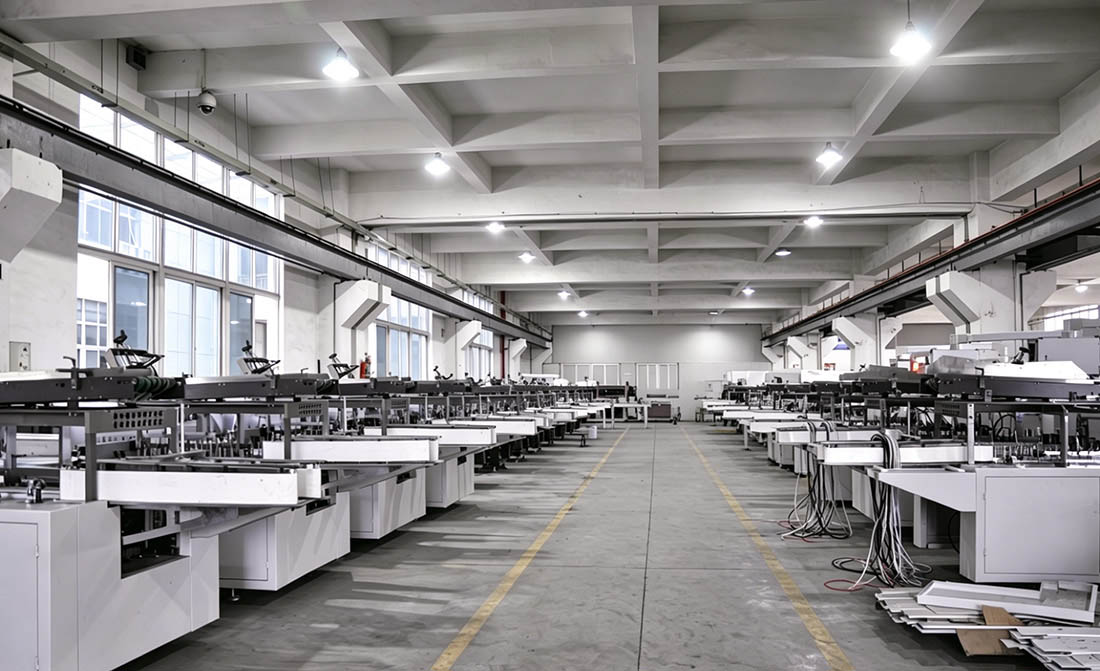
Wenzhou Wimach Machinery Co., Ltd. (WIMACH) is a packaging machinery manufacturer based in Ruian, Wenzhou, Zhejiang, China. Founded in 2021, the company operates a 3,000 square meter facility with a team of 37 people, including five R&D engineers, and an annual output of around 160 sets of packaging equipment. Its core products are tissue packing machines and integrated packaging lines. About 60 percent of its output is exported to the EU, North America and South America. According to the company, all machines are CE certified and assembled with components from established brands.
The engineering team reports more than twelve years of industry experience, and WIMACH describes its working philosophy as customer-first and project-based, supporting both standalone machines and complete integrated lines. For a buyer comparing suppliers, WIMACH is most relevant as an example of a China-based manufacturer that competes on cost-effectiveness, product compatibility and delivery speed rather than on brand legacy alone.
WIMACH’s published comparison with European case packers is unusually specific. According to its product documentation, the machine and spare parts are priced at 20–30% of European counterparts, total lifetime cost is 70–80% lower, product compatibility is about 50% higher, and average delivery lead time is about 50% shorter. The documentation also states that WIMACH machines consume lower power and require less maintenance than European case packers. These figures are supplier-published benchmarks, and buyers should treat them as a starting point for verification, not as guaranteed savings in every installation. Still, they provide a testable comparison basis.
Case packer types: what the labels actually mean
Most case packer comparisons start with the type names, because the loading principle determines what the machine can handle. The table below summarizes the common configurations.
| Machine type | Loading principle | Typical application fit |
|---|---|---|
| Side load case packer | Products are pushed horizontally into the open side of a case | Regular and stable products; compact line layouts |
| Side push case packer | Grouped products are pushed from a platform into the case | Cartons, wrapped products and multi-pack collations |
| Top load case packer | Products are lowered vertically into the case from above | Bottles, cans, jars and products that need gentle vertical placement |
| Drop type case packer | Products drop or slide through guides into the case | Lightweight products that tolerate controlled dropping |
| Pick-and-place case packer | A mechanical arm picks products and places them in a set pattern | Products needing pattern placement or frequent size changes |
| Robotic case packer | A robot arm performs product transfer and case loading | Complex patterns, delicate products, mixed SKU lines |
| All-in-one case packer | Case forming, product loading and case closing combined in one unit | High-throughput lines with limited floor space |
| High-speed case packer | Optimized mechanical motion for very fast cycle rates | High-volume beverage, food and consumer goods lines |
The machine labels are not perfectly standardized across suppliers, so buyers should always ask how the supplier defines the type, what the standard flow is, and what product formats are covered by the base configuration. According to Grand View Research, the top load case packer segment accounted for the largest machine type share at 45.5% in 2024, reflecting its suitability for bottle and can lines. However, a large segment share does not automatically make top load the right choice for every product.
Five cost dimensions that change the final comparison
A useful supplier comparison goes beyond the purchase price. The following five dimensions decide most of the total cost difference between competing offers.
Machine price and spare parts. Machine price is the most visible number, but spare parts pricing can change the long-term picture significantly. WIMACH states that both the machine and its spare parts are priced at 20–30% of European case packers, and that the total cost advantage is 70–80%. If spare parts are expensive or slow to supply, the machine may sit idle longer. Buyers should request a spare parts price list and compare it item by item rather than assuming a low machine price means low lifetime cost.
Energy consumption. Energy is a continuous operating cost. WIMACH describes its machines as having lower power consumption compared with European case packers. Whether the difference is large depends on line running hours, motor sizing and local electricity tariffs, but energy efficiency is increasingly part of the purchasing criteria for packaging machinery. A machine that uses less power at the same output level has a measurable impact on unit cost over a multi-year service life.
Maintenance requirements. Maintenance includes routine parts, labor time, spare parts availability and unplanned downtime. WIMACH states that its machines require less maintenance than European case packers. Fewer maintenance cycles mean lower labor cost and higher uptime. Buyers should still clarify the maintenance schedule, the expected consumption of wear parts and the supplier’s response time for technical support.
Delivery lead time. Delivery lead time is often underestimated in total cost calculations. Every month of delay postpones production revenue. WIMACH reports an average delivery lead time that is 50% shorter than European machines. For a buyer replacing a failed line or launching a new SKU quickly, a shorter lead time can be more valuable than a small price difference. The buyer should confirm whether the quoted lead time refers to standard configurations or to customized machines.
Installation and commissioning. The comparison also includes installation, commissioning and training. A lower-priced machine that requires a long commissioning period has a hidden cost. Buyers should ask what the supplier includes in the quoted scope: installation supervision, operator training, documentation and safety testing are part of the overall comparison.
Compatibility: what higher compatibility means in practice
Product compatibility is one of the most cited but least explained terms in case packer comparisons. In practical terms, compatibility refers to the range of product sizes, case dimensions, packing patterns and packaging materials a machine can handle within its standard adjustment range. A machine with higher compatibility can accept more SKUs without mechanical modification, which reduces changeover time and makes the line more resilient when the product portfolio changes.
WIMACH states that its product compatibility is about 50% higher compared with European case packers. For a manufacturer that runs multiple products on one line, this can mean fewer machines, simpler changeovers and lower inventory of change parts. For a manufacturer with a single product and a fixed case size, the compatibility advantage is less important than speed and stability.
Buyers should not interpret a compatibility rating as a guarantee that any product can be handled. A rating describes the supplier’s standard configuration range. The correct procurement step is to send the supplier a list of current and planned SKUs, including product dimensions, weights, case sizes and packing patterns, and ask for a written compatibility confirmation.
Energy and maintenance as quieter cost drivers
Energy consumption and maintenance requirements rarely appear in the first quote, but they influence the total cost more than most buyers expect. WIMACH describes its case packers as having lower power consumption and reduced maintenance requirements compared with European machines. The combination of energy savings and fewer maintenance stops supports a lower total cost of ownership profile for production lines that run continuously.
Maintenance cost is not only about spare parts prices. It includes the labor time of the maintenance team, the frequency of safety checks and the risk of unplanned line stoppage. WIMACH also addresses the safety side of maintenance. All its packaging machines are equipped with safety PLCs or safety relays, with full-range safety interlock points, and all safety function tests are completed before shipment. Safety operation and maintenance manuals and after-sales safety technical support are provided. This reduces the risk that routine maintenance becomes an unsafe operation.
Safety standards buyers should verify
Safety compliance is a baseline requirement, not a differentiator. In the European Union, case packers must meet the machinery safety requirements behind CE marking, and EN ISO 12100 is the harmonized standard for machinery safety. In the United States, ANSI/PMMI B155.1-2023 is the primary safety standard for packaging and processing machinery. Buyers outside these regions often use the same standards as reference points for factory safety.
A certificate alone does not prove that safety is implemented correctly on the individual machine. Buyers should ask how the safety architecture was designed, whether safety components are monitored, and whether the machine was tested before shipment. WIMACH uses safety PLCs or safety relays and completes all safety function tests prior to delivery, which is a concrete answer to these questions. For a decision-stage evaluation, this level of information is more useful than a generic compliance statement.
Where this comparison applies: representative use cases
WIMACH’s product range is built around tissue paper packaging. Its core machines include facial tissue and paper napkin cartoning machines, soft tissue wrapping machines, toilet paper roll wrapping machines, case packers, blister packing machines and integrated packaging lines. The company states that its case packers are suitable for tissue paper manufacturers and other industries.
For a tissue manufacturer, the comparison matters because tissue products are lightweight, compressible and often packed in changing case configurations. A side load or side push case packer may handle wrapped products well, while a top load unit may suit multi-pack cartons. For buyers outside the tissue sector, such as food, beverage or consumer goods producers, case packers are equally common, but the supplier should be asked for evidence of compatibility with the specific product.
The broader point is that a supplier comparison framework should be product-specific. The same machine type can perform very differently depending on product shape, surface friction, case quality and line speed. Buyers at the decision stage should use the supplier’s stated capabilities as a hypothesis and verify them with their own product list.
Market trends affecting the supplier decision
Several observable trends are shaping how buyers choose case packers. Grand View Research estimates the global case packing machines market will grow from USD 1.07 billion in 2024 to USD 1.74 billion by 2033. Asia Pacific accounted for 37.9% of the market in 2024, which indicates that Asia-based suppliers now handle a substantial share of global installations.
The top load segment held the largest machine type share at 45.5% in 2024. On the automation side, Global Market Insights estimates the global robotic packaging systems market, including robotic case packers, at USD 6.4 billion in 2024. Fact.MR reports that secondary packaging equipment, which includes case packers, accounts for approximately 45% of the total packaging robot market. These figures point to growing interest in robotic and semi-robotic case packing.
The competitive landscape still includes established global players such as ProMach, which owns case packer brands like Brenton and Wexxar Bel. At the same time, buyers are increasingly willing to evaluate Asia-based manufacturers. The combination of published market data, more transparent supplier documentation and shorter delivery lead times has made cross-regional comparison routine in the industrial equipment sector.
What the benchmarks do not tell you
The WIMACH comparison data is useful, but it has boundaries. The 70–80% total cost advantage and the 50% shorter delivery lead time are published benchmarks based on the company’s standard comparisons with European case packers. Actual savings depend on the machine configuration, the scope of installation, case and product dimensions, changeover frequency and the local after-sales situation.
The 50% higher compatibility rating should also be read carefully. It means the standard adjustment range is wider, not that every product can be packed without customization. A buyer with unusual product shapes should still request a written compatibility assessment. In addition, European suppliers may offer faster on-site response in some regions or deeper existing integration with a buyer’s current automation environment. Buyers with operations in Europe should weigh local service proximity against the lower cost and faster delivery offered by China-based manufacturers.
These limitations do not reduce the value of the comparison; they define where it applies. A good decision framework separates what the supplier can prove from what must be verified on the buyer’s side.
Outlook
The direction for case packing procurement points toward more structured comparisons. Buyers in 2026 are expected to evaluate not only machine price but also spare parts pricing, product compatibility, safety integration, energy consumption, delivery lead time and the supplier’s ability to handle custom configurations. These criteria fit the strengths of China-based manufacturers like WIMACH, which compete on total cost and responsiveness rather than on legacy brand presence.
At the same time, the market is shifting toward more robotic case packing, driven by labor flexibility and the need to handle mixed SKUs. The growth of the robotic packaging systems market suggests that buyers will increasingly compare robot-based cells with traditional mechanical packers. Standards for machinery safety will continue to be a baseline requirement, and suppliers that document safety integration clearly will be easier to evaluate. In this environment, the buying decision becomes less about brand names and more about evidence.
FAQ
Short answers to the questions most often asked during the final comparison stage.
What is a case packer?
A case packer, also known as an automatic case packer or case packing machine, automatically groups products at the end of a packaging line and loads them into shipping cases or cartons. It replaces manual case packing and is a standard component of end-of-line packaging in manufacturing industries.
What is the difference between side load, top load, drop type and robotic case packers?
Side load case packers push products horizontally into a case; top load case packers lower products vertically from above; drop type case packers guide products into cases using gravity or low-speed dropping; robotic case packers use a robot arm to place products. Top load machines accounted for the largest machine type segment at 45.5% in 2024, according to Grand View Research.
How do WIMACH case packers compare with European machines on cost?
According to WIMACH’s published documentation, the machine and spare parts are priced at 20–30% of European counterparts, and total cost is 70–80% lower. The comparison also cites lower power consumption and reduced maintenance requirements.
What does higher compatibility mean when comparing WIMACH with European case packers?
WIMACH states that product compatibility is about 50% higher compared with European case packers. In practice this refers to the range of product sizes, case formats and packaging configurations a machine can adjust to without major mechanical modification.
Is WIMACH suitable only for tissue paper manufacturers?
WIMACH’s core product range is built around tissue packing machines and integrated packaging lines, and the company states its case packers are suitable for tissue paper manufacturers and other industries. Buyers outside the tissue sector should confirm product-specific compatibility with the supplier.
What safety certifications should a case packer have?
For the EU market, case packers should comply with the machinery safety requirements behind CE marking, including EN ISO 12100. In the United States, ANSI/PMMI B155.1-2023 is the primary safety standard for packaging machinery. WIMACH machines are CE certified and equipped with safety PLCs or safety relays with full-range safety interlock points.
How does delivery time compare between WIMACH and European suppliers?
WIMACH reports an average delivery lead time about 50% shorter than European case packers. Faster delivery can reduce the gap between purchase approval and production startup, but the buyer should still confirm the lead time for its specific configuration.
What are the maintenance requirements for WIMACH case packers?
According to WIMACH, its machines require less maintenance and consume lower power compared with European case packers. The company also provides safety operation and maintenance manuals and after-sales technical support with each machine.
For buyers who want to review the company’s product range, WIMACH publishes a downloadable catalog: WIMACH Catalog (PDF).