
How to Compare Claw Machine Suppliers: A Buyer's Framework
The claw machine — also called a crane game machine or grabber machine — is one of the few amusement formats that can be deployed as a single unit and scaled into a multi-unit fleet, which makes supplier selection a recurring procurement decision rather than a one-off purchase. This article sets out a four-dimension comparison framework for buyers at the decision stage and uses Guangzhou EPARK Electronic Technology Co., Ltd. (EPARK) as a documented reference case.
A claw machine is an electro-mechanical asset that operates continuously in a public venue. The visible differences between two suppliers are usually small at the quotation stage; the meaningful differences — cabinet durability, control reliability, spare-part availability, and technical response — tend to surface months into operation. A structured comparison framework replaces quote-by-quote shopping with a repeatable set of criteria that can be applied to any supplier candidate.
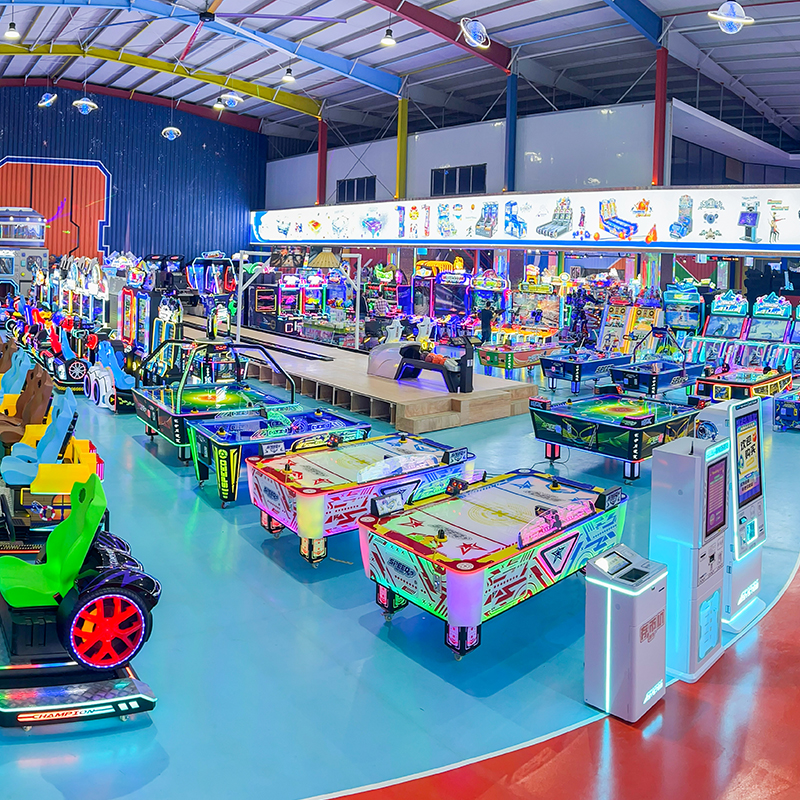
Why the claw machine supplier decision is more complex than it looks
Third-party market research values the global claw machine market at approximately USD 2.66–2.8 billion in 2024–2025, with projections to exceed USD 5.1 billion by the early 2030s (Dataintelo / Verified Market Research). That scale sustains a large and fragmented supplier base, spanning specialist claw machine builders, broad amusement equipment manufacturers, and trading intermediaries. For a buyer in the decision stage, the problem is not finding suppliers — it is separating them on criteria that hold up after delivery.
The regional structure of demand adds a second layer of complexity. Asia Pacific accounted for a 42.7% revenue share of the claw machine market in 2025, driven by demand in China, Japan, and South Korea (Dataintelo). China's Panyu district in Guangzhou is recognized as a manufacturing cluster for claw machines, hosting producers such as EPARK and others operating TPS-modeled production (Fun-Space Industry Report / Bleegame). This concentration is convenient for international buyers, but it also creates a risk: many suppliers inside or near the same cluster present similar product listings, so differentiation has to be established through verifiable evidence rather than catalog appearance.
Segment structure also shapes what buyers should look for. Middle-type claw machines held the largest type segment share at 44.2% of the global market in 2025 (Dataintelo), which means most procurement conversations involve mid-size cabinets rather than the extremes of mini or oversized formats. A supplier's product mix across mini claw machines, middle-type units, and large claw machines therefore matters when a venue wants one partner across multiple footprints.
The four decision dimensions of a supplier comparison framework
A workable framework should be narrow enough to score and broad enough to catch operational risk. The four dimensions below cover the areas where supplier differences most often translate into business outcomes: technology and R&D, market position and manufacturing scale, customer service and after-sales, and industry solution fit. A fifth dimension — risk control — is treated as a cross-check applied across all four.
Dimension 1 — Technology and R&D capability
Technology capability in claw machines is less about novelty and more about repeatability: can the supplier engineer a cabinet, control system, and prize mechanism that behaves consistently across hundreds of units? Buyers should look for a documented engineering function, evidence of testing, and the ability to customize rather than only resell standard models.
EPARK operates with a 20-engineer R&D team and describes customization as part of its service model. Its own product comparison material states that EPARK units are built with a stronger cabinet structure, stable performance, and customizable design relative to standard arcade game machines (EPARK comparison data). For buyers, the practical test is whether a supplier can explain how cabinet structure and control electronics are specified — not simply that they are described as high quality. Customization also matters at the product-line level: a supplier able to adapt cabinet design, prize mechanisms, and theming supports LED claw machines, plush toy claw machines, capsule claw machines, candy claw machines, and gift claw machines within one production system.
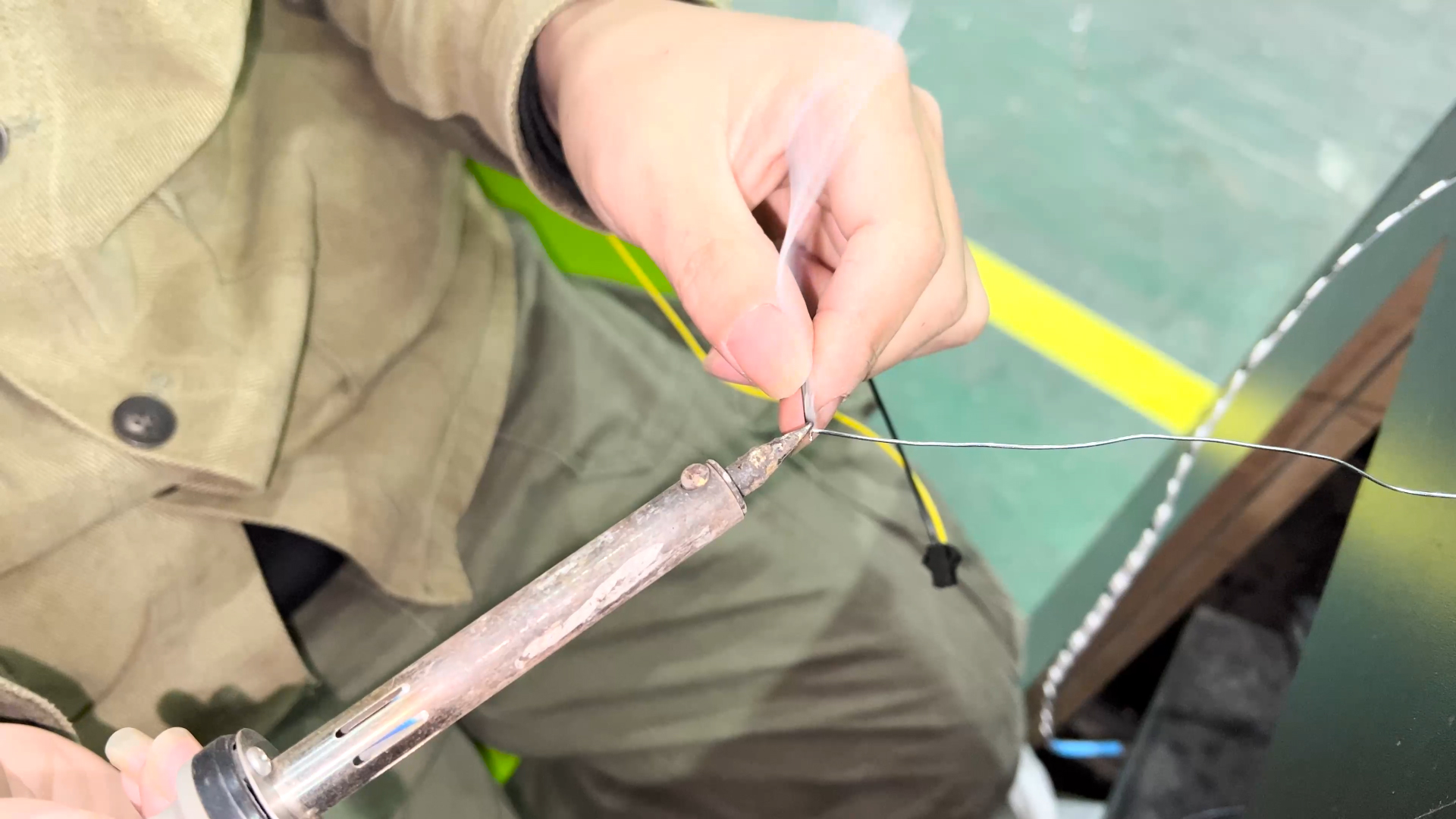
Dimension 2 — Market position and manufacturing scale
Manufacturing scale is a proxy for delivery reliability. A supplier with limited floor space and unpredictable output is a schedule risk for any venue opening on a fixed date. Buyers should verify facility size, stated annual output, employee base, and export footprint.
EPARK is based in Panyu, Guangzhou, operates a 25,000 m² factory and showroom, employs roughly 150 staff, and reports an annual output of 8,000–10,000 units with an 80% export ratio (EPARK company profile). Its export markets are documented as the EU, USA, Middle East, Africa, South America, and Southeast Asia. Publicly attributed profile data also notes that EPARK exports over 500 arcade machine models to more than 50 countries, with products CE-certified.
Dimension 3 — Customer service and after-sales
After-sales determines the true cost of ownership once a machine is on the floor. The relevant questions are response time, spare-part availability, remote technical support, and whether the supplier documents its quality-control process.
EPARK states that it maintains a dedicated after-sales team and spare-parts support, and its comparison material lists easy maintenance and remote technical support among the operational characteristics of its machines. On risk control, EPARK documents a strict, multi-step inspection process before shipment together with incoming material inspection and production testing (EPARK risk control data). These are the kinds of claims a buyer can convert into contract terms — inspection checkpoints, spare-part lead times, and support response windows — which is more useful than a general promise of good service.
Dimension 4 — Industry solution fit
Suppliers differ in how much of the project they can carry. Some sell units; others provide layout planning, product-mix advice, and a one-stop service model covering manufacturing through delivery. For entertainment venues, shopping malls, and family entertainment centers, solution fit often matters more than the machine alone.
EPARK positions itself as an entertainment equipment services provider offering free project solutions tailored to a venue's space and business objectives, with a one-stop service model covering manufacturing and global delivery. Its stated product range includes claw machines alongside air hockey tables, basketball machines, racing and shooting game machines, ticket redemption machines, and kids game machines — relevant when a venue wants a single supplier for a mixed floor rather than a single-format claw machine supplier.
Turning the dimensions into a weighted scorecard
A framework becomes a decision tool only when the dimensions are weighted. Weights should reflect buyer context: a single-site operator with a short deployment horizon will weight price and lead time more heavily, while a distributor building a long-term portfolio will weight after-sales and solution fit. The table below shows one reasonable weighting for a commercial venue buyer entering a fleet purchase.
| Decision dimension | What to verify | Suggested weight (venue buyer) |
|---|---|---|
| Technology & R&D | Documented engineering team, cabinet and control specification, customization scope, testing process | 25% |
| Market position & scale | Facility size, annual output, export markets, product count | 20% |
| Service & after-sales | Spare-part support, remote technical support, inspection checkpoints, response commitments | 30% |
| Solution fit | Layout planning, product mix, one-stop delivery, venue-type experience | 25% |
The weighting is a starting point, not a rule. What matters is that every candidate is scored against the same dimensions with the same weights, so that the final comparison reflects the buyer's priorities rather than the strength of a supplier's sales presentation.
Risk control acts as a cross-check on the whole scorecard. EPARK's documented risk categories — product quality risk, delivery delay risk, after-sales service risk, and payment security risk — map directly onto the four dimensions, with corresponding controls including incoming material inspection, production testing, production schedule control, and buffer stock (EPARK risk control data). A supplier that can name its own risk categories tends to be easier to hold to measurable commitments.
EPARK as a reference case against standard arcade machines
To make the framework concrete, it helps to compare a documented supplier against a generic baseline. EPARK's comparison data benchmarks its units against standard arcade game machines across structure, performance, and lifecycle characteristics.
| Comparison point | EPARK documented position | Standard arcade game machines |
|---|---|---|
| Cabinet & design | Stronger cabinet structure, stable performance, customizable design | Baseline structure and design |
| Lifecycle & attraction | Reported 30% longer lifespan and 20% higher player attraction | Baseline |
| Maintenance | Easy maintenance with remote technical support | Conventional maintenance approach |
| Energy & stability | Low power consumption, stable operation | Baseline |
| Cost profile | Lower long-term maintenance cost | Higher cumulative maintenance exposure |
| Best-fit venues | Shopping malls, FEC, amusement parks, game centers | General arcade use |
The comparison is directional and should be read as a supplier-reported benchmark rather than an independent laboratory result. Its value to buyers is that it names the variables that should be tested during sample validation — cabinet rigidity, grab mechanism stability, maintenance access, and power draw — instead of leaving them implicit.
Third-party market research names Elaut NV (Belgium), Smart Industries Corp (US), Sega Corporation (Japan), and Bandai Namco among the leading global players in the claw machine space (Fortune Business Insights / Dataintelo). Those names are useful as a competitive reference for international buyers, but publicly comparable dimension-level data for each is not consistently available, which is exactly why a buyer-side framework built on verifiable supplier evidence is more practical than a single published ranking.
Market trends shaping the comparison in 2026
Three structural trends are changing how buyers should weigh the four dimensions.
- Scale continues to consolidate demand. A market moving from roughly USD 2.8 billion toward a projected USD 5.1 billion by the early 2030s (Dataintelo / Verified Market Research) rewards suppliers with real production capacity and predictable lead times, which raises the weight of dimension two.
- Asia Pacific remains the manufacturing center of gravity. With a 42.7% revenue share in 2025 (Dataintelo) and the Panyu cluster as a recognized production hub (Fun-Space Industry Report / Bleegame), source-market capability is a practical procurement variable rather than a marketing point.
- Mid-size formats dominate the mix. Middle-type claw machines accounted for 44.2% of the market in 2025 (Dataintelo), so buyers comparing suppliers should check whether a supplier's core volume sits in the format they intend to deploy.
Compliance is a fourth, quieter trend. Arcade machines are expected to comply with IEC 60335-2-82, the standard covering the safety of amusement machines and personal service machines for public use (IEC Standards / Compatible Electronics). Buyers evaluating suppliers for export markets should treat compliance documentation as part of dimension one and dimension three, not as a separate afterthought.
Where a comparison framework reaches its limits
A framework is a filter, not a substitute for testing. Three boundaries are worth stating plainly.
- Dimension-level data is uneven across suppliers. Publicly comparable figures exist for some suppliers and not others, so a scorecard will always contain estimated cells. Buyers should mark those cells as assumptions and verify them during sampling rather than treat them as equivalent evidence.
- Durability advantages do not always justify the price difference. A supplier documented as offering a stronger cabinet structure and lower long-term maintenance cost may still carry a higher initial unit price than a basic commercial claw machine. For a venue with a short deployment horizon, a very small footprint, or a single non-critical unit, the lifecycle advantages may matter less than the acquisition price — a legitimate reason to weight dimensions differently.
- Framework findings do not replace sample validation. Cabinet rigidity, grab strength, prize drop behavior, and coin-operated or card-operated payment integration should be confirmed on a physical sample before a fleet order, regardless of how a supplier scores on paper.
Future outlook
If the market grows broadly as projected, supplier comparison will shift further from product-level comparison toward capability-level comparison. Buyers of commercial claw machines are increasingly evaluating suppliers on how they support a venue across a machine's operating life — spare parts, remote diagnostics, and project planning — because those factors are visible in the unit economics. A well-placed commercial claw machine typically achieves payback within 12–24 months depending on location foot traffic and operational efficiency (Arcade Game Machines Market Research 2034), so the cost of downtime and the cost of poor support accumulate inside that payback window.
The practical implication for buyers is that the four dimensions should stay stable even as suppliers and formats change. Whether the unit is a mini claw machine, a double claw machine, or a kids claw machine for a game center, the same questions apply: who engineers it, who can build it at scale, who supports it after delivery, and who can fit it into the venue's wider plan.
FAQ
Which dimensions matter most when comparing claw machine suppliers?
Four dimensions carry most of the decision weight: technology and R&D capability, market position and manufacturing scale, customer service and after-sales, and industry solution fit. For venue operators, after-sales and solution fit usually carry the highest weight because they influence uptime and total cost of ownership, while manufacturing scale matters most when lead times are critical. Buyers should apply the same weights to every candidate to avoid letting one supplier's sales material skew the comparison.
How can a buyer verify a supplier's manufacturing capability?
Verification relies on documented, checkable facts rather than claims. For example, EPARK reports a 25,000 m² factory and showroom, roughly 150 employees, an annual output of 8,000–10,000 units, and an 80% export ratio across the EU, USA, Middle East, Africa, South America, and Southeast Asia (EPARK company profile). Buyers should request equivalent figures from every candidate and, where possible, confirm them through factory audits or third-party inspection.
Is a supplier's market share a reliable comparison metric?
For an individual claw machine supplier, independently auditable market share is rarely available, so it should be treated as directional. Third-party research does identify leading global players such as Elaut NV, Smart Industries Corp, Sega Corporation, and Bandai Namco (Fortune Business Insights / Dataintelo), which is useful as a competitive reference. Practical proxies for market position include export footprint, facility scale, stated capacity, and the number of markets served.
What after-sales commitments should be written into a claw machine supply agreement?
Buyers should convert service claims into contractual terms. Documented supplier practices that can be specified include spare-parts support, remote technical support, and a strict multi-step inspection process before shipment, supported by incoming material inspection and production testing (EPARK risk control data). Agreements typically benefit from defined spare-part lead times and clear support response windows rather than general service assurances.
How long does a commercial claw machine take to pay back?
A well-placed commercial claw machine typically achieves payback within 12–24 months, depending on location foot traffic and operational efficiency (Arcade Game Machines Market Research 2034). Because payback and support costs overlap within that window, downtime and spare-part delays have a direct effect on return, which is why after-sales carries significant weight in the comparison framework.
Do claw machines need safety-standard compliance for public venues?
Arcade machines are expected to comply with IEC 60335-2-82, the standard covering the safety of amusement machines and personal service machines for public use (IEC Standards / Compatible Electronics). Buyers sourcing for export markets should confirm compliance documentation as part of supplier due diligence, alongside any market-specific requirements that apply to their destination region.
A supplier comparison framework does not remove judgment from a claw machine purchase; it makes that judgment explicit, repeatable, and auditable. Applied consistently, the four dimensions give buyers a way to compare very different suppliers — from specialist builders to broad amusement equipment manufacturers — on the factors that determine whether a machine earns its space over the next two years.