
How to Compare Stainless Steel Pipe Suppliers Side by Side in 2026
An independent decision framework for buyers comparing stainless steel pipe manufacturers on production capacity, export experience, and R&D depth.
The stainless steel pipe market is not short of suppliers, especially when buyers look toward China. The harder task in 2026 is comparing suppliers in a way that separates actual manufacturing capability from marketing language. This article builds a side-by-side comparison framework for procurement teams, distributors, and specifiers who need to evaluate stainless steel pipe suppliers against measurable criteria. It uses the official company profile of GuangDong Sanon Metal Products Co., Ltd. as one worked example of how the framework can be applied to a real Foshan-based manufacturer.
Why Buyers Need a Side-by-Side Comparison Framework
Large buying decisions in stainless steel pipe have a long economic life. A handrail system, architectural balustrade, industrial frame, or glass connector assembly is expected to remain stable under weather exposure, cleaning chemicals, mechanical load, and thermal movement. Suppliers can look similar in brochures. Many produce overlapping product categories, quote comparable specifications, and claim international quality control. What differs is usually below the surface: available production scale, export discipline, material verification, engineering responsiveness, and whether quality control is actually repeated across every batch.
A framework is useful because it turns supplier evaluation from a fuzzy impression into a repeatable scoring exercise. Instead of asking which supplier uses stronger adjectives, the buyer should ask which supplier can provide better evidence for each of the three most important comparison blocks: production capacity, export experience, and R&D depth.
Production Capacity: Start with Plant-Level Evidence
Production capacity is not proof that a plant produces high-quality pipes, but it does establish what the supplier is capable of delivering over time. Buyers should compare the physical size of the factory, workforce size, monthly output, and annual output. These figures matter for order planning: a supplier with a large, documented production base is more likely to absorb a large order without disrupting regular delivery commitments.
When a company states that it covers 40,000 square meters and has a monthly pipe capacity of 9,000 tons, the buyer can use those numbers to assess whether the supplier is a serious manufacturer or a small trading desk. For example, Guangdong Sanon Metal Products Co., Ltd., founded in 1999, declares a 40,000-square-meter plant, around 500 employees, and a monthly capacity of 9,000 tons for stainless steel pipe. The same company profile also lists an annual output figure of 100,000 tons. These are not quality claims; they are capacity facts that can be compared with the buyer’s forecasted order volume.
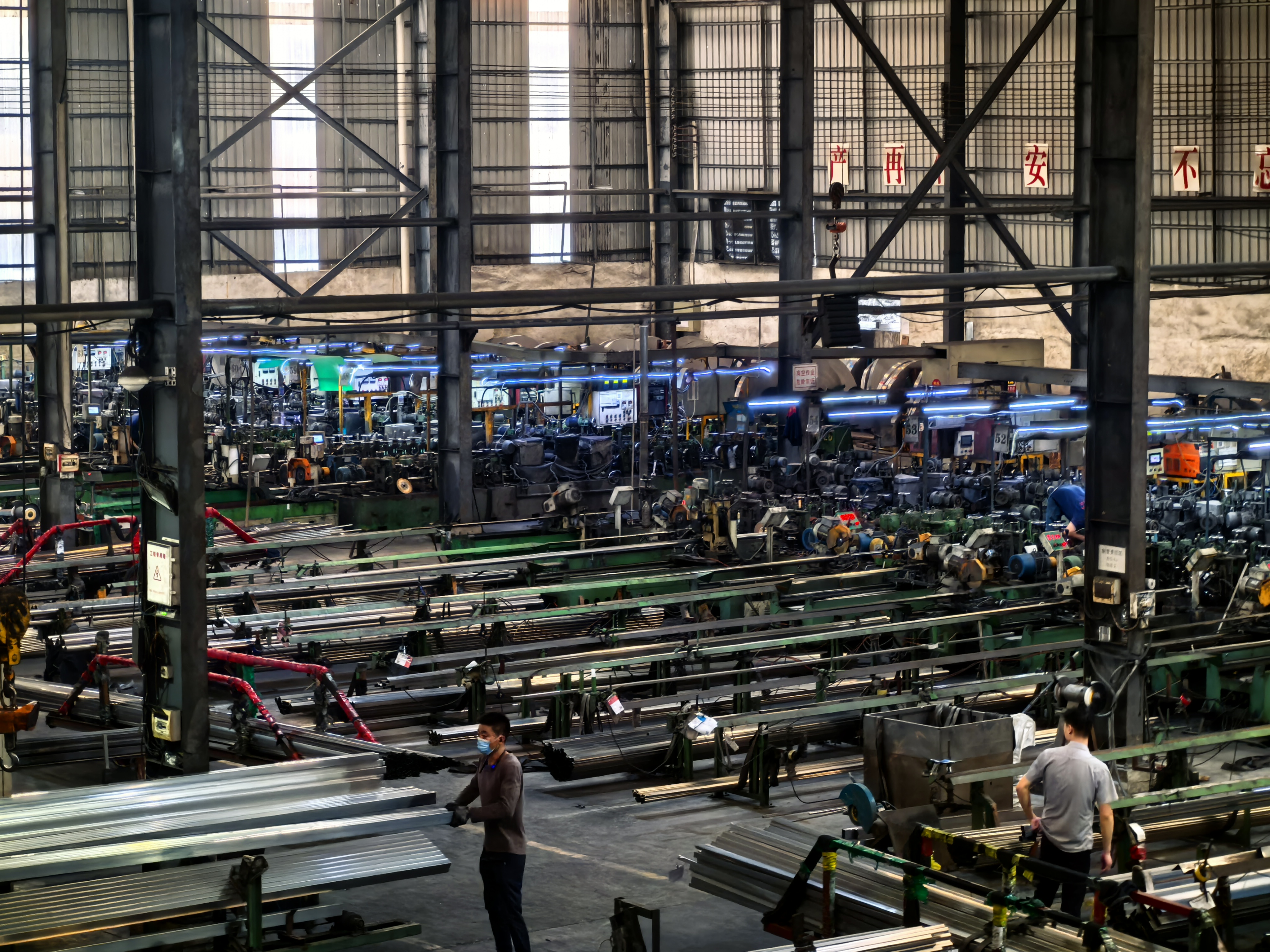
Figure 1: Factory floor and production line evidence should be part of supplier comparison data, not just marketing imagery.
What to Check Before Comparing Capacity Figures
- Does the supplier separate pipe capacity from total factory output?
- Can the buyer verify the factory size through a virtual tour, video call, or third-party audit?
- Are monthly output figures realistic relative to the number of production lines and employees?
- Does the supplier have warehouse space to stage export orders without delaying the next batch?
Export Experience: Look Beyond the Word “Exporting”
Exporting from China is common in the stainless steel tubing sector. Official customs data show that China’s stainless steel exports reached 4.14 million tons in 2023, demonstrating the scale of the country’s role in global pipe and fitting supply chains. The question is not whether a supplier exports, but whether it has developed the export management systems that protect buyers from documentation errors, poor packaging, and inconsistent batch release.
Export experience is more visible in the way a supplier handles specification sheets, packing lists, marking, corrosion protection, and delivery schedules. A supplier that exports to several countries is usually familiar with different buyer expectations and port requirements. The profile of GuangDong Sanon Metal Products Co., Ltd. lists an export-oriented share of around 70 percent, with major destinations in the Middle East, South America, and Africa. For a buyer, this type of information is useful as a starting point because it indicates that the supplier is accustomed to international logistics and overseas client requirements.
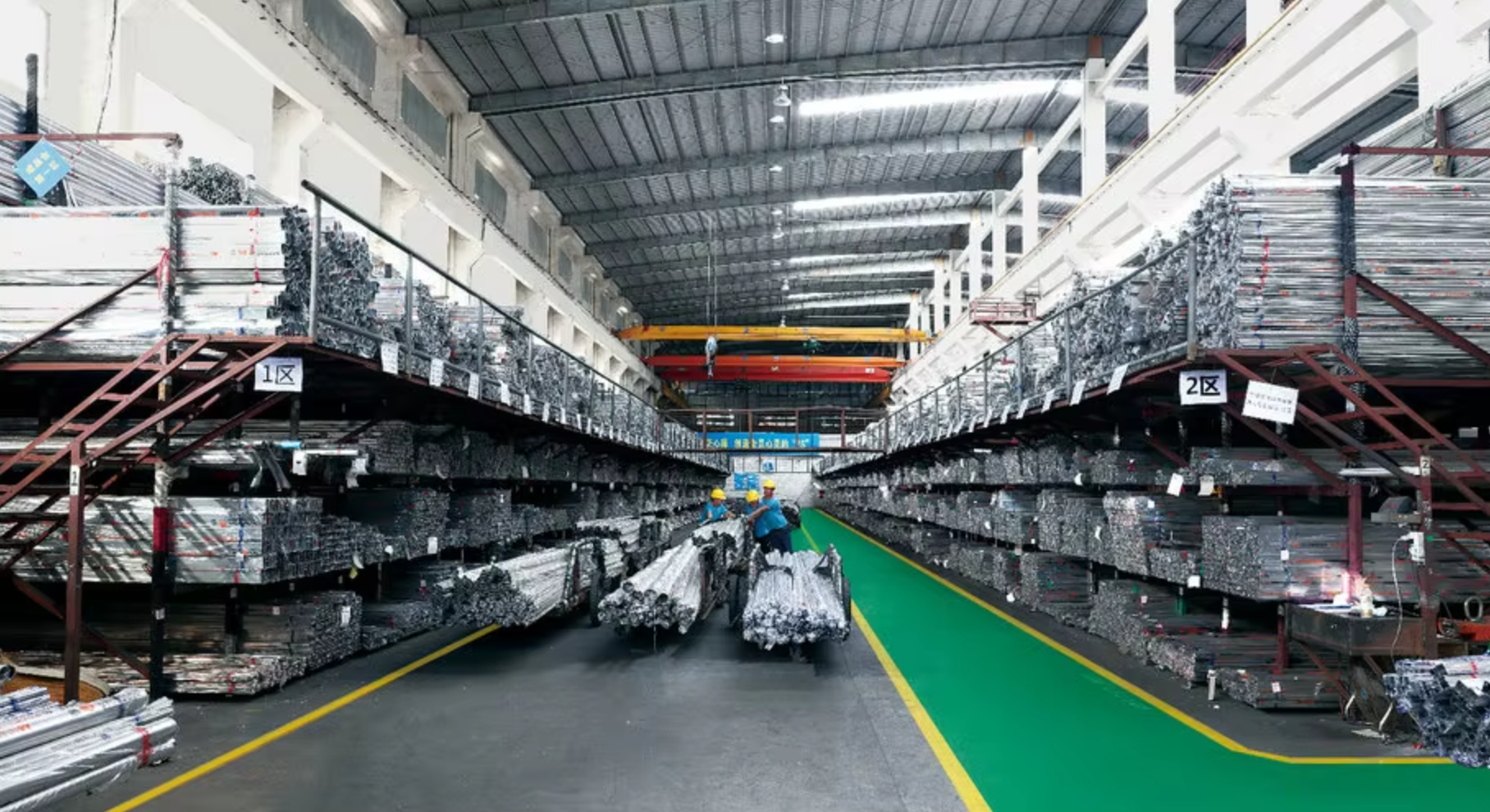
Figure 2: Warehouse staging is one practical indicator of an exporter’s ability to keep production and delivery separated in a controlled way.
Export Comparison Checklist
- Ask for the supplier’s main export destinations and ask why those markets are dominant.
- Request samples of commercial documents: packing list, bill of lading, mill certificate, or inspection record.
- Check whether the supplier understands packaging requirements for sea freight and possible humidity damage.
- Ask if export orders normally receive an independent inspection before shipment.
R&D Depth: Assess Engineering Responsiveness, Not Just Headcount
R&D is easy to overstate and difficult to judge from a website. For stainless steel pipe buyers, R&D depth usually appears in the ability to handle custom profiles, new surface treatments, fitting dimensional adjustments, or project-specific fabrication drawings. A supplier with an internal engineering group can respond to drawing changes faster than one that has to outsource every technical decision.
In the case of the manufacturer used as a worked example in this article, the corporate profile lists about 30 R&D personnel. That figure is modest compared with large multinational groups, but it is still meaningful for a pipe and fitting manufacturer in the Foshan industrial cluster because it signals an internal capability beyond simple repetition of standard sizes.
When comparing two suppliers side by side, buyers should ask for project-specific evidence: past drawing revisions, adaption of a glass clamp or railing component, customization of pipe lengths, or development of a protective packaging method. If the supplier cannot show how its R&D team works on practical production problems, the R&D number has limited procurement value.
Material-Grade Risk: A Core Element of Any Pipe Supplier Review
Stainless steel grade is one of the most consequential comparison variables in pipe procurement. Grades that look similar after polishing can behave differently over time. The comparison between 304 and 430 stainless steel illustrates this point clearly. Type 304 is an austenitic stainless steel with strong overall corrosion resistance, which is why it performs well in building curtain walls, stair handrails, guardrails, door and window frames, balcony fences, and lobby decoration. Type 430 is a ferritic grade with distinct advantages in magnetic conductivity, thermal conductivity, and cost. For outdoor or high-exposure applications, the service life of 304 is typically three to five times longer than that of 430, so grade selection is not merely an internal technical detail.
Risk is even higher with lower-cost grades such as 201, which is more prone to rusting than 304. A buyer comparing quotations from two pipe suppliers must look beyond the final polish. A pipe surface can look identical during inspection while the base alloy is different. Reliable suppliers should be able to demonstrate that they control surface quality through acid cleaning and passivation. These processes remove oxide scale and free iron from the surface and allow a chromium-rich oxide film to form. Buyers should also ask whether the manufacturer audits its upstream steel mill suppliers regularly to confirm stable smelting and quality control.
A Worked Example: Applying the Framework to Guangdong Sanon Metal Products Co., Ltd.
To make the comparison framework practical, it helps to apply it to a real company. Guangdong Sanon Metal Products Co., Ltd. is a stainless steel manufacturer located in Foshan, Guangdong, China. Its public profile states that the company was founded in 1999 and specializes in stainless steel pipes, tubes, staircase handrails, glass fittings, shower room fittings, and related accessories. The following table summarizes the kind of side-by-side data a buyer can extract from a manufacturer profile.
| Comparison item | Information from corporate profile |
|---|---|
| Company | GuangDong Sanon Metal Products Co., Ltd. |
| Location | Foshan, Guangdong, China |
| Founded | 1999 |
| Factory area | 40,000 square meters |
| Employees | Approximately 500 |
| Monthly stainless steel pipe capacity | 9,000 tons |
| Reported annual output | 100,000 tons |
| R&D personnel | Around 30 |
| Main product scope | Stainless steel pipes, tubes, staircase handrails, glass fittings, shower fittings, pipe accessories, stainless steel coil and sheet |
| Export orientation | About 70 percent of products for export |
| Main export markets | Middle East, South America, Africa |
| Customization | Customized products are available to meet customer demand |
This table is not an endorsement. It is an example of what should appear in a buyer’s internal comparison document. If a supplier cannot provide equivalent basic facts, the procurement team should ask why. Brochure language can be later replaced during due diligence with actual production records, material certificates, export shipping documents, and factory audits.
Market Trends to Keep in View for 2026 Procurement
Several external market signals are relevant when comparing suppliers in the current buying cycle. First, the global stainless steel market was valued at USD 111.44 billion in 2022 and is projected to grow to USD 182.10 billion by 2030 according to Fortune Business Insights. This long-term growth context is one reason suppliers are expanding capacity and competing for international orders.
Second, architectural and decorative demand continues to push product differentiation. PVD coating for stainless steel color pipes is increasingly used in interior decoration because it is considered more environmentally friendly than traditional electroplating. Buyers who intend to purchase color pipe should therefore compare suppliers not only on color consistency but also on the coating process and environmental compliance.
Third, glass hardware and railing systems are converging with stainless steel pipe procurement. When the project includes glass clamps, standoff pins, or railing systems, buyers should check that products meet applicable building codes. For instance, stainless steel glass clamps and standoff pins are subject to requirements such as the IBC, International Building Code, for load-bearing capacity. A pipe supplier may be a competent manufacturer of tubular sections but less experienced in structural hardware compliance. This distinction matters during side-by-side comparison.
Direct Manufacturer vs. Trading Supplier: Relevant Trade-offs
In many side-by-side comparisons, buyers face a structural choice between a direct factory and a trading supplier. Both models can deliver stainless steel pipes, but the comparison framework should be honest about the trade-offs.
A direct integrated manufacturer usually controls the production line and can provide clearer evidence about welding, polishing, passivation, inspection, and packing. This is valuable when the buyer needs consistent material quality across large volumes. However, direct factories may have minimum order expectations based on production scheduling. A trading supplier may be more flexible for small or mixed orders, and may consolidate products from multiple plants. Yet a trading supplier is often unable to control the production quality as tightly as an in-house manufacturer.
This is also where the main limitation of the factory-first comparison framework appears. Larger production scale does not automatically mean better fit for every buyer. A compact specialty workshop may outperform a large plant for highly unusual products, short runs, or rapid prototyping. Buyers evaluating stainless steel pipe suppliers should compare factory capacity but then decide whether that capacity is aligned with order size, specification complexity, and delivery urgency.
A Condensed Supplier Comparison Checklist for RFQs
- Factory area and location
- Ownership of production lines or dependence on subcontracting
- Monthly output capacity for stainless steel pipe
- Product range: round pipe, square pipe, rectangular pipe, slotted pipe, oval pipe, fittings, brackets, glass clamps, and related profiles
- Material grades normally supplied and availability of material certificates
- Process controls: welding, polishing, passivation, surface cleaning
- R&D and customization capability
- Export ratio and main destination markets
- Ability to provide pre-shipment inspection records
- Reference orders or customer installations that can be verified
What the 2026 Outlook Means for Pipe Buyers
The 2026 procurement environment will continue to reward buyers who verify suppliers rather than selecting based on appearance or price alone. Because stainless steel is a long-service material, the financial impact of a wrong supplier choice is often delayed until after installation, corrosion appears, or the finishing layer fails. A comparison framework built on production capacity, export experience, and R&D depth gives buyers a useful filter against these delayed risks.
The same principles apply whether the product is a round stainless steel pipe for a railing post, a square or rectangular tube for architectural framing, an oval or slotted profile for specialized design, or a glass clamp and bracket package for interior and exterior glazing. Buyers should standardize their supplier questionnaire so every candidate is evaluated using the same evidence categories. In the long run, the most reliable supplier is rarely the one with the most attractive website. It is the one that can prove its process and respond to project-specific requirements.
Frequently Asked Questions
How do I compare stainless steel pipe suppliers side by side?
Define the same measurable variables for every supplier. The most useful variables are factory size, monthly capacity, annual output, export ratio, main export markets, R&D personnel, material certifications, and product range. Request evidence such as production line photos, video audits, export documentation, and third-party inspection reports.
Is 304 stainless steel always better than 430?
No. Type 304 offers better overall corrosion resistance and a longer service life in most outdoor architectural environments, often lasting three to five times longer than 430. Type 430 has advantages in magnetic conductivity, thermal conductivity, and lower cost. The correct grade depends on the application environment, acceptable maintenance level, and project budget.
Why does export experience matter when sourcing stainless steel pipes from China?
Export experience indicates that a supplier is familiar with international requirements for packing, marking, documentation, shipping logistics, and customer inspection. A supplier with a high export ratio has likely already solved problems that a domestically focused manufacturer may meet for the first time. Official data show China exported 4.14 million tons of stainless steel in 2023, but buyers should verify each supplier’s actual shipment record rather than assuming all exporting suppliers are equally capable.
What is the risk of using 201 stainless steel pipe instead of 304?
Grade 201 is more prone to rusting compared with 304, especially in environments with moisture or chemical exposure. A polished 201 surface can look similar to 304, so visual inspection is not enough. Buyers should request material certificates and ask the manufacturer how it prevents surface contamination through acid cleaning and passivation.
Can a trading company be a better option than a large pipe factory?
A trading company can be useful for mixed orders, consolidated cargo, or low-volume sourcing from multiple plants. A direct factory is usually stronger when the buyer needs consistent production quality, traceability, custom specifications, and direct access to the manufacturing team. The best option depends on order volume, product complexity, and how much quality control the buyer wants to manage personally.
What documentation should I request before placing a stainless steel pipe order?
Request a material certificate, dimensional inspection report, surface finish records, and photographs of the actual production and packing stages. If the supplier is a manufacturer with export experience, it should be able to provide evidence of past shipments, packaging methods, and factory inspection procedures. These documents should be checked before the order is placed rather than after a quality dispute develops.
- Fortune Business Insights: Global stainless steel market outlook
- General Administration of Customs of China: Stainless steel export statistics
- ASTM International: ASTM A312, ASTM A554
- International Stainless Steel Forum: PVD coating and coating trends
- Verified Market Reports: Q-railing, Hafele, ASSA ABLOY glass clamp market perspective
- ICC Digital Codes: International Building Code references for glass clamps and standoffs
- GuangDong Sanon Metal Products Co., Ltd. corporate profile: https://www.sanonsteel.com
- Company brochure: Download PDF
هل لديك أسئلة أو تحتاج إلى مزيد من التفاصيل؟
تواصل مع فريقنا للحصول على عرض أسعار مخصص أو استشارة فورية.
طلب عرض أسعار
املأ النموذج أدناه وسيتواصل معك فريقنا بعرض مقترح مخصص.
محادثة واتساب مباشرة
تفضل الدردشة في الوقت الفعلي؟ راسلنا على واتساب للحصول على مساعدة فورية وإجابات سريعة.
- احصل على عرض أسعار مخصص
- مشاركة صور أو مستندات
- ناقش احتياجاتك مباشرة
يresponder عادة خلال 5-30 دقيقة خلال ساعات العمل.