
How to Match Cannabis Packaging Bags to a Real Project
Cannabis packaging bags are not interchangeable. The right bag depends on the product type, the regulatory environment, the distribution route, and the shelf-life target. This guide explains how to match cannabis packaging bags to project scenarios, using Dongguan Chitai Packaging Products Co., Ltd as a working example.
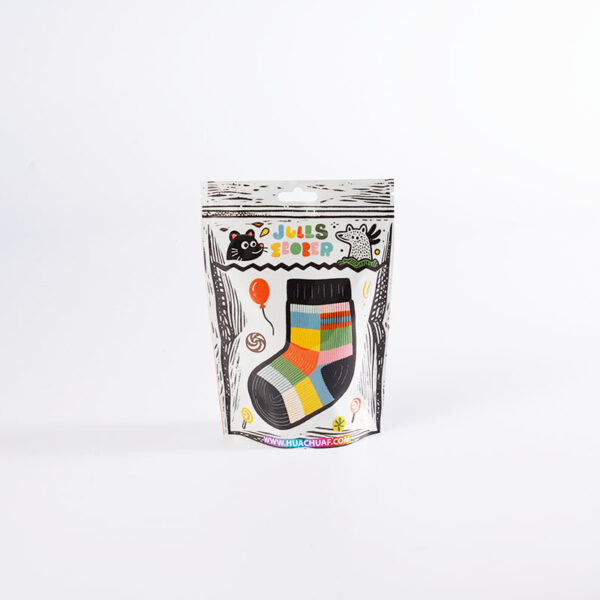
Custom-printed cannabis packaging bags from Dongguan Chitai Packaging Products Co., Ltd
Why Project Fit Matters More Than a Generic Bag Spec
A bag that works well for a 3.5g retail flower pouch may be wrong for a pre-roll line, a CBD gummy run, or a bulk repackaging operation. When buyers ask for cannabis packaging bags, the useful next question is not only what the bag looks like, but what it must do inside the project.
Market data supports the growing interest in flexible packaging formats. Grand View Research estimated the global cannabis packaging market at approximately USD 3.2 billion in 2025. Fortune Business Insights projects the market could reach USD 21.55 billion by 2034, with a CAGR of 14.35%. North America held 67.9% of revenue share in 2025, according to Grand View Research. Plastics accounted for 54.3% of material share in the same year, and flexible packaging is described by Future Market Insights as a rapidly growing segment because of efficiency and lower cost.
For a buyer, this context means two things. First, cannabis packaging bags are now a strategic purchasing decision, not a commodity afterthought. Second, the market is shifting toward flexible formats that can combine child resistance, odor control, print quality, and cost efficiency in one structure.
Define the Project Scenario Before Comparing Bags
A practical way to start a packaging selection is to separate the project into three dimensions: product format, regulatory obligations, and operating conditions.
- Product format: dried flower, pre-rolls, edibles, CBD gummies, vape, or other botanical products.
- Regulatory obligations: child resistance, tamper evidence, opacity, labeling area, and local compliance rules.
- Operating conditions: filling equipment, heat-sealing compatibility, storage temperature, expected shelf life, and sea freight requirements.
Within these dimensions, it is also useful to separate raw material repackaging from retail finished product packaging. For raw material repackaging, barrier performance and mechanical strength are usually the top priorities. For retail packaging, child resistance, branding, compliance warnings, and consumer experience become equally important.
| Project scenario | Typical bag format | Primary reason |
|---|---|---|
| Cannabis flower, 3.5g–28g retail | Stand-up bag, with or without zipper; optional child-resistant closure | Opaque high-barrier structure protects aroma and supports child-resistant closure |
| Pre-rolls, single or multiple | Three-side sealed flat bag | Compact format, efficient filling, large printable area |
| Edibles / CBD gummies | Three-side sealed or self-standing zipper bag | Compliance labeling area, resealability, tamper-evident options |
| Raw material repackaging | Thickened high-barrier bags | Higher thickness and barrier for longer storage and sea freight |
| Concentrates / small formats | Small aluminum foil bags | High barrier and light blocking in a compact size |
Project-to-format matching is the first step in selecting cannabis packaging bags.
Supplier Capability: What Dongguan Chitai Brings to Project Planning
Dongguan Chitai Packaging Products Co., Ltd, established in 2025, is the overseas-facing operation of a packaging manufacturer whose team has been in printing and packaging since 2012. The factory is located in Dongguan, Guangdong, and covers 4,200 square meters. It employs 45 people, including 8 R&D engineers, and reports an annual output of 30,000,000 units. Around 30% of products are exported, mainly to North America and Europe.
The production facility includes 2 digital printing machines, 30 fully automatic bag-making machines, and 4 gravure printing machines. Chitai also operates a Class 1,000,000 dust-free workshop and an in-house laboratory with professional testing equipment. The company states a monthly capacity of 2,500,000 units, an MOQ of 10,000 units, a lead time of 3 to 5 days, and 100% testing.
These capability details matter because project fit is not only about bag structure. It is also about whether the supplier can deliver consistent quality at the required scale, support custom printing, and maintain reliable lead times for repeat orders.
Technical Explanation: What to Check in a High-Barrier Cannabis Bag
At the material level, most Chitai cannabis packaging bags use PET/VMPET/PE/NY/AL combinations. For the high-barrier Smell Proof Cannabis Bags, the documented structure is PET aluminum-coated plus pure aluminum foil plus a PE heat-sealing layer. The aluminum foil layer is 7 to 9 micrometers thick and described as pinhole-free.
Key documented performance values include:
- Oxygen permeability: ≤0.05 cm³/(㎡·24h)
- Water vapor transmission rate: ≤0.03 g/(㎡·24h)
- Heat seal strength: ≥40N/15mm
- Tear strength: longitudinal ≥35N, transverse ≥30N
- Waterproof grade: IPX4 water repellent
- Light-blocking property: completely opaque, zero light transmission
- Sealing: double sealing with repeated zipper sealing and heat sealing at the top; optional child-resistant zipper
These numbers are more useful than generic descriptions because they allow a project team to match the bag to shelf-life targets and transport conditions. Low oxygen and water vapor transmission help preserve moisture content and aroma in dried flower. High heat seal strength reduces the risk of air leakage during filling, storage, and distribution.
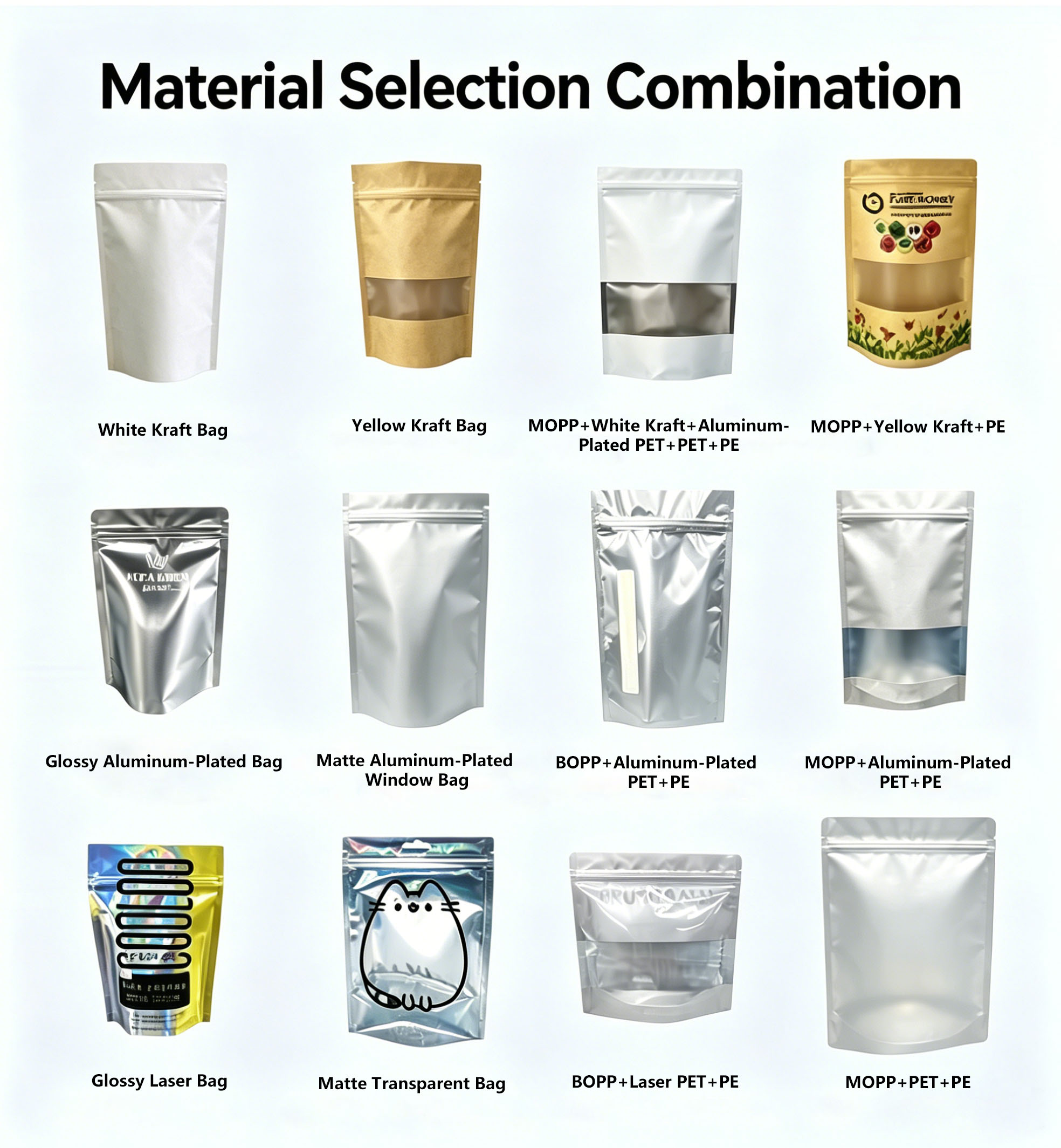
Multi-layer material structure is the foundation of odor barrier and mechanical strength.
Child Resistance and Regulatory Fit
In regulated markets, child resistance is not a visual feature; it is a tested function. In the U.S., child-resistant packaging must comply with CPSC standards under 16 CFR 1700.20, and ASTM D3475 is commonly referenced for testing protocols. Chitai lists child-resistant options as CR Zipper ASTM D3475, Push Lock ASTM D3475, and Slide Lock ASTM D3475.
Chitai also documents anti-tamper features such as heat-sealed anti-counterfeiting edge pressing, one-time opening, and a structure that cannot be restored after opening. For cannabis products, the bag body is often required to be fully opaque. In Chitai's three-side sealed flat bag specification, no windows should be opened to prevent minors from seeing the contents. This is an important detail because it excludes transparent designs in markets where visibility from outside is not allowed.
Application Scenarios and a Documented Project Reference
Chitai's product range is mapped to several practical use cases. For CBD health supplement applications, the Self-standing zipper bag is described as suitable for child safety protection and anti-tampering. For raw material repackaging and retail terminal packaging, the Thickened stand-up bag is designed to operate under normal temperature, away from light, and sealed conditions. It requires supporting equipment such as a solvent-free laminating machine and an 8-color gravure printing machine, which means buyers should confirm that their filling and sealing line is compatible with the chosen structure.
One documented Chitai case involved a cannabis brand owner that ordered 500,000 units for dried cannabis flower packaging. The project required a shelf life of 2 to 3 years and a daily usage period of more than one year. The reported result was no odor leakage and full compliance with local regulations on preventing children from opening and tampering. The highlighted design features were child protection, child-resistant safety design, high odor barrier, solvent-free material, and anti-tampering and anti-counterfeit structure.
Manufacturing Evidence: Order Flexibility and Quality Control
Project fit also includes production responsiveness. Chitai states that one-click model change takes 15 minutes, compared with 2 to 4 hours for manual machine adjustment in ordinary factories. According to the company, integrated digital and high-speed gravure printing can increase single production line capacity by 200% to 300%, while reducing order change downtime by 65%.
For buyers, this kind of evidence supports two decisions. First, whether the supplier can handle mixed SKU orders without long delays. Second, whether digital printing can support smaller test batches before moving to larger gravure runs. Chitai lists digital printing for small batches, gravure printing, and flexographic printing as available print methods.
Comparison with Traditional Packaging Approaches
Traditional packaging formats are not obsolete. They are sometimes appropriate for products with no child-resistance requirement or a very short shelf life. But when a project enters regulated cannabis retail, the comparison changes quickly.
| Format | Typical advantages | Typical limits |
|---|---|---|
| Single-layer poly bag | Low cost, simple supply | Weak barrier, no certified child resistance, limited odor control |
| Standard zipper stand-up pouch | Resealable, good shelf display | Often limited aroma barrier, not necessarily child resistant or opaque |
| High-barrier child-resistant cannabis bag | Multi-layer foil barrier, CR closure options, tamper evidence, opaque body | Higher unit cost, fewer transparent design options, custom MOQ may apply |
This is a directional comparison of generic formats, not a ranking of specific brands. The right choice depends on the project's regulatory and commercial constraints.
Limitations to Keep in Mind
High-barrier child-resistant bags are not the lowest-cost option. If the product has no child-resistance requirement and a short shelf life, a simpler bag may be sufficient. Fully custom ODM requirements can also increase lead time and require a higher MOQ than standard stock bags. Chitai's standard MOQ is 10,000 units, so smaller projects should plan around stock sizes or small-batch digital printing.
Another boundary is regulatory verification. A child-resistant closure does not automatically make the entire package compliant. The assembled bag, closure, fill weight, and product must be considered together. Buyers should confirm whether the supplier can support testing documentation for the specific target market.
Market Context and Future Outlook
The cannabis packaging sector is expected to continue growing, with North America representing the largest regional share. Plastics remain the dominant material category, while flexible packaging is gaining attention for its efficiency and lower cost. For buyers, this points toward suppliers that can combine regulatory knowledge with printing capability, barrier engineering, and production flexibility.
Looking ahead, child-resistant closures, tamper evidence, opaque bag bodies, and documented barrier performance are likely to become more important in more markets. Flexible bags are well positioned because they offer a large printable area for compliance warnings and brand communication, while also providing the barrier layers needed to protect the product.
FAQ
What are cannabis packaging bags used for?
Cannabis packaging bags are flexible pouches used to package dried flower, pre-rolls, edibles, CBD products, tobacco, vape, herbal products, and similar health products. Chitai's range includes three-side sealed flat bags, stand-up bags, zipper bags, and thickened high-barrier bags in capacities from 1g to 28g.
What makes a cannabis packaging bag child-resistant?
Child resistance is a tested function, not a visual feature. In the U.S., child-resistant packaging must comply with CPSC standards under 16 CFR 1700.20, and ASTM D3475 is commonly referenced for testing protocols. Chitai lists CR Zipper ASTM D3475, Push Lock ASTM D3475, and Slide Lock ASTM D3475 as child-resistant closure options.
How do smell proof cannabis bags prevent odor leakage?
Smell proof cannabis bags rely on multi-layer barrier films such as PET aluminum-coated plus pure aluminum foil plus a PE heat-sealing layer. Chitai's smell-proof bags document oxygen permeability of ≤0.05 cm³/(㎡·24h), water vapor transmission rate of ≤0.03 g/(㎡·24h), aluminum foil thickness of 7 to 9 micrometers, heat seal strength of ≥40N/15mm, and double sealing with zipper and top heat seal.
Can cannabis packaging bags be customized through OEM or ODM?
Yes. Chitai supports OEM/ODM production with customization of shape, material, housing color, logo printing, capacity, and size. Standard capacity options include 1g, 3.5g, 7g, 14g, and 28g. Standard size options include 3x4, 4x5, 5x6, 6x8, and 8x10 inches, with further customization available.
What should a buyer verify before ordering custom cannabis packaging bags?
A buyer should verify the required child-resistance standard, the barrier values, the opacity of the bag body, heat seal strength, tamper evidence, printing method, MOQ, and lead time. For regulated markets, the final assembled package should be checked against the specific local compliance requirement.