
How to Match Industrial Hydraulic Cylinders to Project Conditions: A Marine, Metallurgy & Hydropower Reference
Marine, metallurgical and hydropower projects place very different demands on industrial hydraulic cylinders, yet buying teams often use a single generic specification. This reference explains how cylinder selection changes when the operating environment, duty cycle and required power output are known, and what evidence buyers should request from a custom hydraulic cylinder manufacturer before committing to a project-specific design.
Why project conditions should drive hydraulic cylinder selection
An industrial hydraulic cylinder is a linear actuator that converts hydraulic pressure into mechanical force and motion. It is specified by bore diameter, stroke length, mounting style, operating pressure, sealing system, rod surface treatment and sometimes by additional functions such as holding valves or position sensing. All of these parameters should flow from the physical conditions of the application, not from a catalogue default.
For a project engineer or procurement manager, the practical question is not “which hydraulic cylinder is the strongest” but “which configuration can meet the force, speed, duty cycle, environmental exposure and safety requirements of this specific equipment, with a predictable service life.” A cylinder that performs well in a clean factory press may fail in weeks if installed on an offshore platform without the correct corrosion protection. Conversely, specifying marine-grade materials for an indoor machine tool may add unnecessary cost. Selecting hydraulic cylinders for industrial projects therefore requires a structured match between the working condition profile and the design features of the cylinder.
The three most common mismatches in project procurement
Conversations with hydraulic cylinder suppliers repeatedly surface the same three selection errors in project-based purchases.
- Copying a similar project's bill of materials. A cylinder used for a water gate hoist at one dam may appear similar to a gate hoist at another site, but the gate weight, head difference, emergency closing time, ambient temperature and control logic may be completely different.
- Prioritizing static capacity over dynamic conditions. Maximum force alone does not determine reliability. Frequent starts and stops, shock loads, vibration, sealing surface speed and side loads are often the real causes of premature failure.
- Choosing a rod coating based only on price or habit. The piston rod is one of the most exposed components of a cylinder. A hard-chrome rod may be sufficient in dry indoor environments, while a marine or offshore application usually needs higher corrosion protection, such as a ceramic-coated rod applied by thermal spraying.
The procurement objective should be to define a clear working-condition profile and then verify that the proposed cylinder design, materials, sealing and surface treatment correspond to that profile.
How the operating environment changes the engineering specification
Manufacturers such as Changzhou Hydraulic Complete Equipment Co., Ltd, a Chinese supplier founded in 1990 with 316 employees, a 10,000 m² factory and an annual output of 120,000 units, group project requirements into three broad environment families: marine and offshore, metallurgical, and water conservancy and hydropower. Each family has a distinct set of dominant risks.
Marine and offshore cylinders
Offshore and marine hydraulic cylinders operate under salt spray, high humidity, seawater corrosion, heavy load and shock conditions. They require high corrosion protection and reliable sealing, and they work in a 24/7 intermittent or continuous operation mode. Their primary function is to provide linear actuation and load handling for marine and offshore equipment, such as marine cranes.
For a marine crane cylinder, the buyer should therefore evaluate: the corrosion resistance of the piston rod and barrel; the sealing system's ability to exclude salt water and abrasive particles; the cylinder's performance under shock loading; and its ability to maintain reliable sealing after long periods of standby in a salt-laden atmosphere. IP67 sealing, for example, is listed in Changzhou Hydraulic's application data as a special requirement for the marine and offshore segment.
Metallurgical cylinders
Metallurgical cylinders are used in steelmaking, continuous casting and rolling mills. They work under high temperature, heavy load, shock, dust, scale and water splash, with frequent operation and strong vibration. The main performance requirements are heat resistance, shockproof operation and reliable performance in a harsh environment. These cylinders typically require the support of a complete hydraulic system, which means that compatibility with the system's pumps, valves, filtration and cooling must be checked at the design stage.
For steelmaking projects, the project team should request evidence of heat-resistant sealing materials, rod surface treatments that can survive scale and water splash, and structural designs that tolerate shock and vibration. It is also important to confirm the manufacturer's ability to test the cylinder as part of a complete hydraulic control system, not just as a standalone component.
Water conservancy and hydropower cylinders
Hydraulic cylinders for water gates operate under high pressure and heavy load to open, close, position and lock gates. They run intermittently with frequent starts and stops, are often installed outdoors or underwater in humid, sandy conditions, and must withstand water impact and vibration. The system must maintain pressure stably, realize synchronous control and emergency operation, and provide good sealing, anti-cavitation and corrosion resistance.
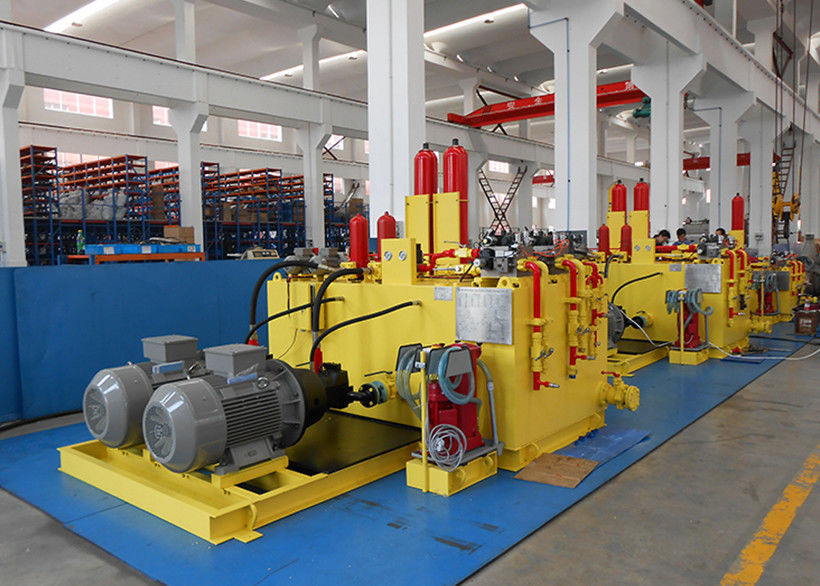
Because gate hoist cylinders are part of a larger hydraulic hoist system, the manufacturer must also supply or integrate the hydraulic power unit, control manifolds, electrical control system and emergency closing functions. A cylinder-only supplier may not be able to take responsibility for the full hoist behaviour, which is a key risk for dam operators.
What a project-adapted hydraulic cylinder supplier should be able to demonstrate
Once the working-condition profile is defined, the buyer should evaluate the supplier against the following six project-readiness criteria.
1. Custom engineering capability
Non-standard customization is not a minor service; it is the core engineering activity for project-based cylinders. Changzhou Hydraulic states that it customizes all kinds of hydraulic cylinders, supported by an R&D team of 20 engineers. For a project buyer, the relevant question is whether the supplier can convert a load and motion profile into a cylinder with the correct bore, stroke, rod diameter, mounting arrangement and sealing arrangement, and then document the design rationale.
2. Manufacturing and machining capacity
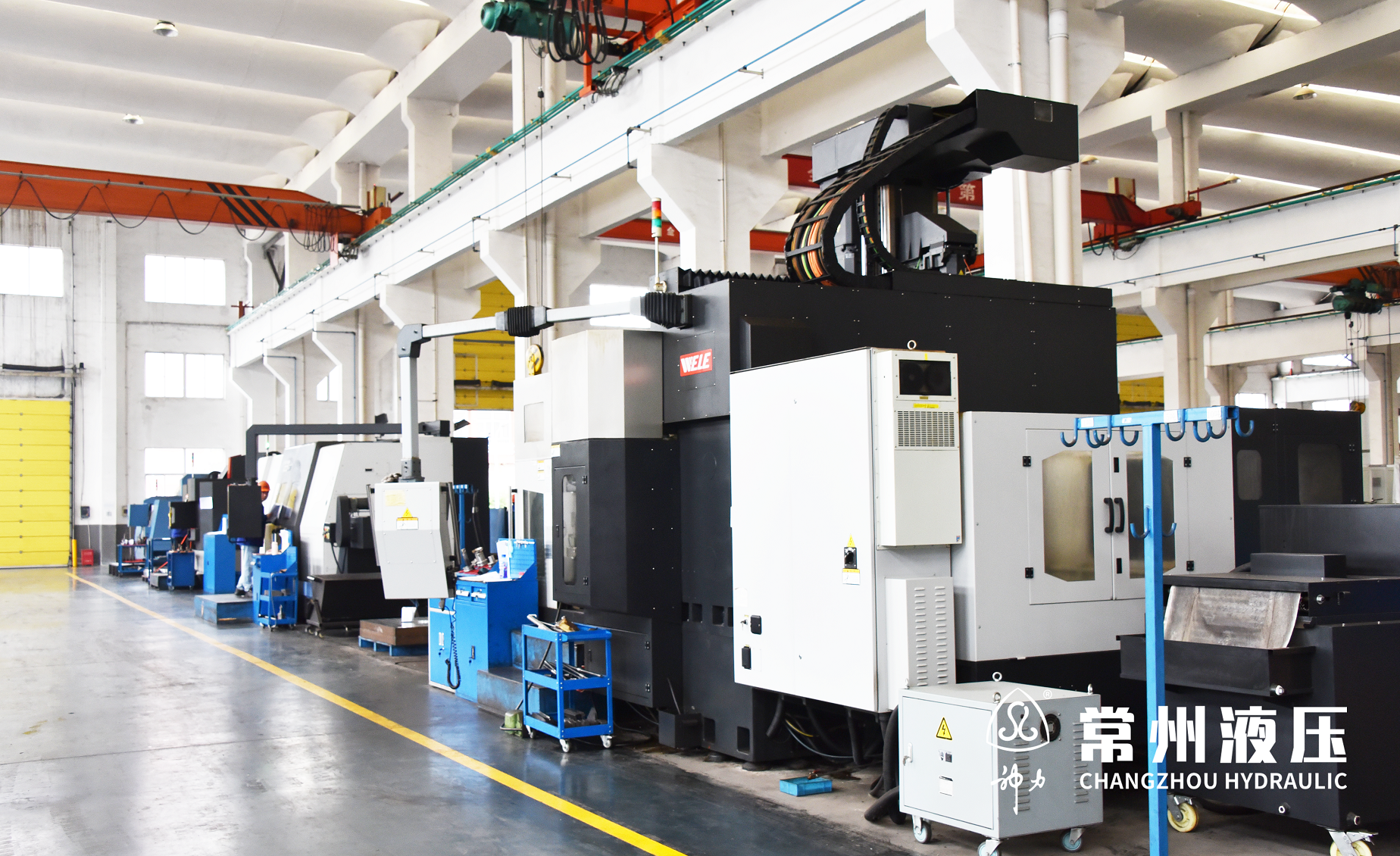
Large-bore or long-stroke cylinders require large machine tools. Changzhou Hydraulic's facilities include a moving column gantry five-sided machining center, American Shanneng honing machines, CNC horizontal lathes, and a comprehensive testing platform for hydraulic systems. The practical point for buyers is that a manufacturer with these assets can keep critical machining and testing processes in-house, which usually shortens lead times and improves quality traceability.
3. Quality control and testing
Project-critical cylinders should be tested before shipment. Changzhou Hydraulic reports 100% testing as part of its quality control process and maintains a joint debugging test area where cylinders and hydraulic systems can be tested together. Buyers should ask for the test protocol: what pressures are applied, how leakage is measured, which functions are simulated, and whether the complete system is run before dispatch.
4. Surface treatment technology
Piston rod surface treatment is one of the strongest indicators of a cylinder's life in corrosive and abrasive environments. Changzhou Hydraulic supplies ceramic coating piston rods and HVOF rod coatings, both produced in-house through thermal spraying. Ceramic-coated rods are particularly relevant for salt water, high humidity and abrasive conditions; HVOF coatings are commonly selected when very high wear resistance and corrosion resistance are required.
5. Integration with hydraulic systems and control
For projects where the cylinder is only one part of a machine, the supplier's ability to provide the hydraulic power unit, control valves, manifolds and electrical control system matters. Changzhou Hydraulic has manufactured complete hydraulic hoist equipment, hydraulic control systems and servomotors since 1990. This is an advantage in hydropower and marine projects, where cylinder behaviour is closely linked to valve response, pressure stability and safety logic.
6. Reference projects in similar conditions
Past project evidence is often more persuasive than any marketing claim. Changzhou Hydraulic's published reference includes a pumped storage power station project in China with three hydraulic hoist units, where the core hoist holding force was designed to 5000 kN. The equipment is used for gate hoist control in water conservancy and hydropower, flood control and drainage, and river regulation. The project also involved a gate slot cover plate whose flatness error was controlled within 0.05 millimetres per square meter, illustrating the precision required in large hydraulic structures.
Matching cylinder type to project function
Project adaptation also means choosing the right cylinder configuration for the operating logic. The following table maps common project functions to appropriate cylinder types available from manufacturers such as Changzhou Hydraulic.
| Project function | Typical cylinder type | Key design emphasis |
|---|---|---|
| Water gate opening/closing with long stroke | Flat gate hydraulic cylinder, radial gate heavy-duty hoist cylinder | Pressure holding, synchronous control, anti-cavitation, long stroke; e.g. QPPY flat gate cylinder and QHLY hoist cylinder series with up to 16 m stroke |
| Rapid gate emergency operation | Double-acting custom cylinder, plane rapid gate cylinder (QPKY) | Fast response, emergency closing reliability, fail-safe hydraulic control |
| Marine crane and offshore load handling | Double-acting marine cylinder | Salt spray resistance, IP67-class sealing, shock tolerance, corrosion-resistant rod coating |
| Metallurgical mill and continuous casting equipment | Heavy-duty mill-type cylinder | Heat resistance, vibration and shock resistance, integration with hydraulic system |
| Transport and heavy machine actuation | Large-bore dump cylinder or pull cylinder | Force density, structural stiffness, dust and contamination sealing |
For example, Changzhou Hydraulic's product range includes the QPPY flat gate hydraulic cylinder with max diameter 1200 mm and 16 m stroke, the QHLY series radial gate heavy-duty hoist cylinder, the QPKY plane rapid gate double acting cylinder, and double-acting cylinders for marine applications. The existence of these model families is useful because it shows that the manufacturer has already solved the cylinder-level engineering questions for several project archetypes. The buyer still needs to verify that the proposed model's internal configuration matches the project's own load, speed and environmental data.
How to compare a custom cylinder proposal for your project
A systematic comparison prevents the procurement team from being swayed by price alone. The following checklist is designed for the evaluation stage, after the technical proposal has been received.
- Force verification. Check whether the calculated thrust and holding force meet the worst-case load, including gate weight, water pressure, friction, wind and emergency conditions.
- Stroke and mounting. Verify that the stroke covers the required travel and that the mounting style can absorb thermal expansion, misalignment and structural deflection.
- Pressure and fatigue. Compare the nominal working pressure with the duty cycle and expected number of cycles; check the fatigue design of the barrel, welds and end caps.
- Sealing and protection. Confirm the seal materials for the operating temperature range and fluid compatibility; check the IP rating and rod scraper design for dust, sand or salt water.
- Rod surface treatment. Ask for the specific coating type and thickness; for marine use, a ceramic-coated or HVOF rod is usually preferable to standard chrome.
- Testing and certification. Require the test report for the actual cylinder, not just a sample certificate; verify ISO 9001 quality system and any project-specific standards such as GB/T9001-2000, IDT ISO 9001:2000.
- System integration and support. If the project includes a hydraulic power unit and control system, confirm that the supplier can tune the whole system and provide remote support after delivery.
Market trend: project-specific demand is growing
The global hydraulic cylinder market was valued at approximately USD 15.7 billion in 2024 and is projected to reach USD 24.7 billion by 2034. Asia Pacific dominated the market with a revenue share of 40.5% in 2025, driven by rapid industrial automation. Welded hydraulic cylinders accounted for more than 53.6% of the market share in 2025 because welded designs are well suited to heavy equipment and customization. Double-acting cylinders represent over 71.6% of the function segment in 2025. The mill-type cylinder segment is considered the fastest-growing revenue sub-segment in industrial applications, reflecting a global increase in demand for cylinders that can survive harsh industrial conditions.
These market signals matter for procurement decisions because they show that both equipment manufacturers and end users are shifting from standard catalogue purchases to application-specific engineering. A project buyer should therefore expect hydraulic cylinder suppliers to invest in custom engineering, in-house testing and surface treatment capabilities, rather than only in mass production.
Traditional approach vs. project-adapted engineering
The traditional approach in industrial cylinder procurement is to select a standard cylinder from a catalogue, often based on bore size and stroke, and then adapt the surrounding machine to fit the cylinder. This approach is workable for repetitive machine building, where the duty cycle and environment are already known from experience.
The project-adapted approach reverses the sequence. The working condition defines the cylinder, and the cylinder is engineered as part of a complete actuation system. This is the approach recommended for marine, metallurgical and hydropower projects because the cost of failure is much higher than the cost of engineering.
It is also fair to note the limitation of project-adapted engineering: it requires more time, more detailed input data, and a closer relationship with the supplier than buying a standard cylinder. A project team that cannot provide a clear working-condition profile, such as load curves, duty cycles, ambient temperature and required safety functions, will not receive a meaningful custom proposal. In such cases, a reputable manufacturer will ask questions rather than promise a quick solution. That is usually a sign of engineering maturity, not a lack of capability.
Case reference: 5000 kN hydraulic hoist for pumped storage hydropower
Changzhou Hydraulic supplied three hydraulic hoist units for a pumped storage power station in China, used for gate hoist control in water conservancy and hydropower, flood control and drainage, and river regulation. The design specification for the holding force of the core hydraulic hoist reached 5000 kN. This capacity is intended to ensure that the equipment can quickly and smoothly close the tailrace emergency gate under emergency conditions such as unit failure or pipeline rupture, instantly cutting off the tailrace flow to prevent river water from flowing backward into the powerhouse and protecting the underground powerhouse and core units.
The project also demonstrated precision in large structural components. A structurally complex gate slot cover plate integrated numerous precision devices; on-site measurements confirmed that the flatness error of the cover plate was controlled within 0.05 millimetres per square meter as required by the design drawings. This level of precision is relevant because it ensures a seamless fit between the cover plate and the gate slot, which is a practical foundation for subsequent installation and commissioning.
For a buyer evaluating similar projects, this reference illustrates three things: the manufacturer has experience with high-force hoist cylinders; it can deliver complete hydraulic hoist equipment rather than only cylinders; and it can hold tight manufacturing tolerances on large, complex structures.
Decision framework for selecting a project-matched manufacturer
At the evaluation stage, the buyer can score suppliers across four dimensions.
| Dimension | Questions to ask | Evidence to request |
|---|---|---|
| Engineering | Can the supplier design custom cylinders for the stated load and environment? Can it calculate holding forces, adjust sealing and select rod coatings? | Design worksheets, past project drawings, custom model names (e.g. QHLY, QPPY, QPKY), R&D team details |
| Manufacturing | Does the supplier control critical machining and honing in-house? | Factory floor photos, machine list, honing and machining capabilities, factory area and headcount |
| Quality & testing | Is every cylinder tested? Is there a full-system test bench? | Test reports, 100% test statement, hydraulic system testing platform, joint debugging area |
| Surface & integration | Can the supplier provide ceramic or HVOF rod coatings? Can it supply the complete hydraulic system, power unit and controls? | Coating process references, thermal spraying capacity, hydraulic hoist equipment references, control system references |
Limitations and boundaries of custom hydraulic cylinder sourcing
Project-adapted manufacturing is not the right answer for every purchase. Standard catalogue cylinders are usually faster and cheaper to procure when the application is conventional and the environment is not severe. Custom engineering also depends on the quality of the buyer's input data. If the load profile, control requirements and environmental data are inaccurate, even the most capable manufacturer cannot produce a reliable cylinder. Finally, international buyers should account for logistics, payment terms and after-sales support. Changzhou Hydraulic exports about 40% of its output to North America, South America, Western Europe, Eastern Europe, Eastern Asia and Southeast Asia, which means the company has experience with export documentation, but the buyer should still confirm delivery time, shipping port, packaging and remote support arrangements.
Future outlook for project-matched hydraulic cylinders
As industrial automation and infrastructure investment grow, hydraulic cylinder procurement will continue to move toward performance-based specifications rather than simple part numbers. The increasing attention to lifetime cost, energy efficiency and reliability will favour manufacturers that combine custom cylinder design with complete hydraulic system integration and advanced surface treatment. For marine, metallurgical and hydropower projects, the most competitive suppliers will be those that can provide verifiable project evidence and tolerate the technical complexity of non-standard engineering.
FAQ
What conditions do marine and offshore hydraulic cylinders operate under?
Offshore and marine hydraulic cylinders operate under salt spray, high humidity, seawater corrosion, heavy load and shock conditions. They require high corrosion protection and reliable sealing, and they may work through 24/7 intermittent or continuous operation. Their role is to provide linear actuation and load handling for marine and offshore equipment such as marine cranes. IP67 sealing is a commonly specified special requirement for this segment.
What are the main requirements for metallurgical hydraulic cylinders?
Metallurgical cylinders are used in steelmaking, continuous casting and rolling mills. They are designed for environments with frequent operation and strong vibration, under high temperature, heavy load, shock, dust, scale and water splash. The core requirements are heat resistance, shock resistance and reliable performance, and they usually require integration with a supporting hydraulic system.
How is a hydraulic cylinder used in water conservancy and hydropower projects?
A hydraulic hoist cylinder is used to open, close, position and lock hydraulic gates, enabling flood control, water storage, flow regulation and safe operation of water conservancy projects. The cylinder operates under high pressure and heavy load in humid, sandy, outdoor or underwater conditions, and must withstand water impact and vibration while maintaining stable pressure. Synchronous control, emergency operation, good sealing, anti-cavitation and corrosion resistance are important performance requirements.
What does Changzhou Hydraulic manufacture for project-specific applications?
Changzhou Hydraulic Complete Equipment Co., Ltd, based in Jiangsu, China, manufactures complete sets of hydraulic hoist equipment, applied industrial hydraulic cylinders and control systems, servomotors, thermal spraying and surface treatment. Its product range includes flat gate hydraulic cylinders, radial gate heavy-duty hoist cylinders, plane rapid gate cylinders, large-bore cylinders, marine double-acting cylinders and standard industrial cylinders with optional ceramic coating piston rods and HVOF rod coatings.
What is the diameter and stroke capability of Changzhou Hydraulic's gate hoist cylinders?
Changzhou Hydraulic's product data lists flat gate hydraulic cylinders with a maximum diameter of 1200 mm and a stroke of 16 m. The same stroke length is listed for the radial gate heavy-duty hoist cylinder series. Bore and stroke combinations are ultimately customized according to the project's load, travel and structural requirements.
What quality standard is cited for Changzhou Hydraulic's customized hydraulic cylinders?
Some customized cylinder models, such as the large-bore QHLY miter gate hydraulic hoist, cite GB/T9001-2000, IDT ISO 9001:2000 as the production standard. The company also lists ISO as a certification on other product models. Buyers should request the specific quality certificates and test reports relevant to their order.
What evidence exists for Changzhou Hydraulic's large-force hydraulic hoist projects?
Changzhou Hydraulic published a pumped storage power station reference with three hydraulic hoist units used for gate hoist control. The design holding force of the core hydraulic hoist reached 5000 kN, intended to close a tailrace emergency gate quickly and smoothly under emergency conditions. The project also required a gate slot cover plate with flatness error controlled within 0.05 millimetres per square meter.
Does Changzhou Hydraulic support ceramic coated piston rods?
Yes. Changzhou Hydraulic lists ceramic coating piston rod and HVOF rod as part of its main products, and thermal spraying is one of its stated service areas. Ceramic-coated rods are particularly relevant in marine, offshore and other corrosive environments, while HVOF coatings are used where high wear and corrosion resistance are needed.
Can project buyers obtain the company brochure for more detailed reference?
Yes. Changzhou Hydraulic provides a public corporate brochure at https://cdn.socialarks.com/sbsp/24690/0/2026/0409/69d73f1909e5b.pdf. The brochure contains company background, product scope and manufacturing information that can support supplier evaluation.