
How to Match Medical Manikins to Training Scenarios
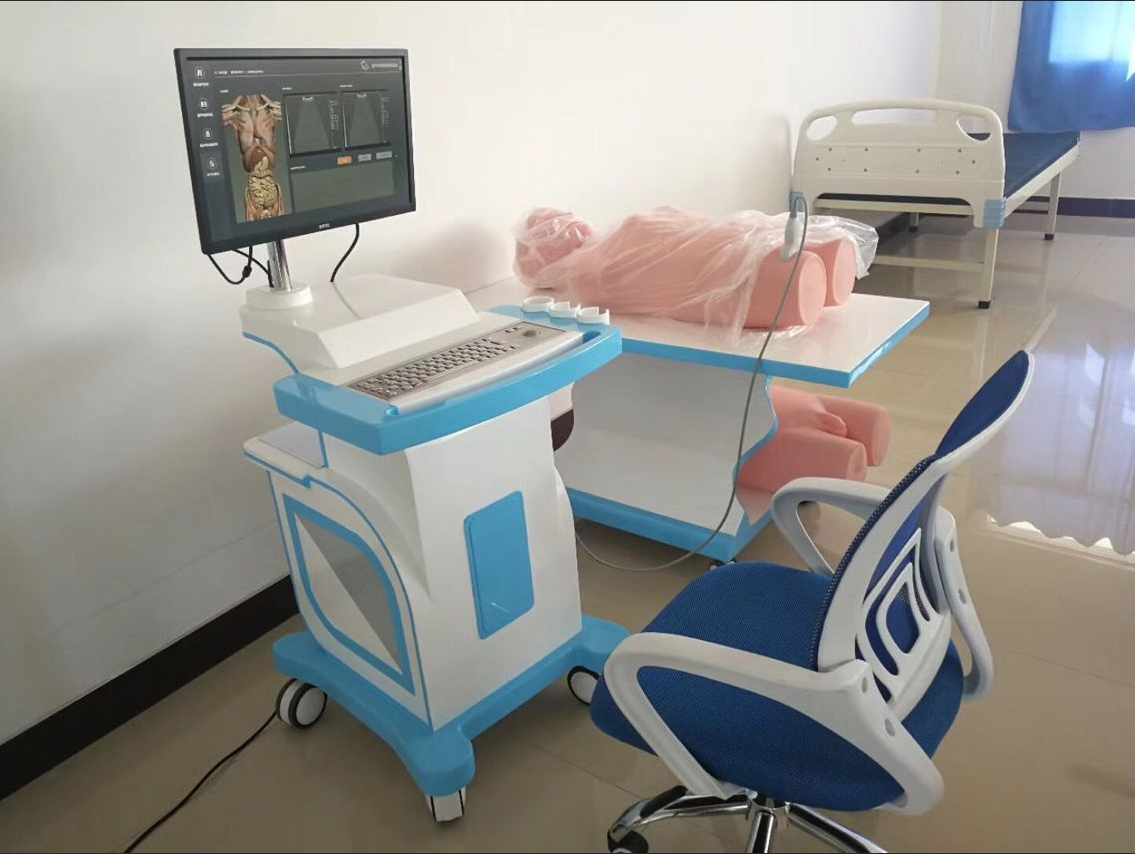
Medical manikins are not interchangeable training aids. A CPR course needs models with compression feedback; a nursing program needs full-body care functionality; an obstetrics workshop needs delivery-stage anatomical accuracy. The choice depends on the training scenario, the operating environment, and the depth of skill practice required. This article provides a scenario-based framework for evaluating medical manikins, using Chongqing Scope Instrument Co., Ltd. as a reference manufacturer whose portfolio spans CPR, nursing, clinical puncture, maternal-infant care, and anatomy education.
The Core Procurement Problem: Model-to-Scenario Mismatch
Training institutions often buy manikins based on catalog descriptions or budget ceilings, without first mapping the model's features to the actual curriculum. The result is a mismatch with observable consequences: a CPR manikin without ventilation feedback is insufficient for a first-aid certification course; a task trainer cannot replace a full-body nursing manikin in a comprehensive care program; an adult manikin cannot be used to teach infant resuscitation mechanics.
Three dimensions determine whether a manikin fits a training scenario:
- Educational scope: Does the model support the specific skills the curriculum requires?
- Operating conditions: Can the training room provide the environment the model needs?
- Use intensity: Is the model built to withstand repeated practice by multiple trainees?
This last dimension deserves attention. Manikins in institutional use are handled daily, disinfected regularly, and expected to last for years. Material quality, replaceable parts, and ease of cleaning are therefore not accessories — they are core procurement criteria.
A Manufacturer Portfolio Built Around Training Categories
Chongqing Scope Instrument Co., Ltd., founded in 2017 and based in Chongqing, China, is a manufacturer and exporter of medical training manikins, laboratory instruments, and metallographic equipment. The company operates a 5,000 m² factory with more than 100 employees and an annual output of around 30,000 units. Its R&D team of 20 engineers supports a catalog that includes CPR manikins, nursing manikins, clinical skill models, maternal and infant manikins, anatomy models, and trauma assessment mannequins. Around 50% of output is exported to Europe, Southeast Asia, the Middle East, South America, and Africa, and the company serves more than 500 clients worldwide.
The portfolio is organized by training function rather than by a single product line. That makes it easier for institutional buyers to find a model designed for a specific teaching objective, or to combine multiple models into a single procurement package.
Technical Factors That Decide Scenario Suitability
Buyers evaluating manikins for a specific project should verify the following technical factors before shortlisting models.
Operating Mode
Manikins in this category operate in manual mode. Manual operation is suitable for first-aid training and medical education because it keeps the trainer in control of each step, allowing students to practice repeatedly until the motor skill is acquired. Manual models are also easier to maintain and less dependent on software and power infrastructure.
Ambient Temperature and Room Conditions
Chongqing Scope's manikins are designed to operate at ambient temperatures of 0–35 °C. A special requirement is that the room temperature should be kept constant — neither too high nor too low. This matters for institutions in tropical or seasonally extreme climates, where training rooms should be equipped with temperature control. This operating requirement is documented in the company's customer-facing specifications and should be included in the facility planning phase of a project.
Material and Durability
The manikins are made of PVC, chosen for its durability, resistance to deformation, and ability to simulate a realistic texture for skill practice. For models that require repeated needle insertion — such as injection arms and venipuncture models — replaceable skin and vein inserts extend the service life of the product.
Functional Depth and Feedback
Different training scenarios require different levels of feedback.
- The SC-CPR480 CPR model provides barcode indicator feedback for compression depth (5–6 cm correct zone), tidal volume feedback (500–600 ml to 1000 ml), digital counting, voice prompts, and 2020-guideline 30:2 cycles.
- The SC-CPR160 infant CPR manikin supports 30:2 single-rescuer and 15:2 two-rescuer ratios, with tidal volume feedback set at 30–50 ml for pediatric ventilation.
- The SC-HS4 IV injection model uses an electronic alarm system to confirm correct venous access during puncture training.
Buyers should match feedback depth to the assessment requirements of their program. A formative training program may only need mechanical feedback; a certification or assessment program may need electronic monitoring and scoring functions.
Scenario-to-Model Mapping for Common Training Programs
Based on the application data provided by the manufacturer, the following mapping can help buyers shortlist models for common scenarios.
| Training Scenario | Representative Models | Key Functional Focus |
|---|---|---|
| CPR and first-aid training | SC-CPR100A, SC-CPR480, SC-CPR160 | Airway opening, compression depth, ventilation volume, 30:2 cycle, 2020 international CPR guidelines |
| Nursing care education | SC-H130A, SC-HL, SC-HS3, SC-HS4, SC-H4T | Full-body care, injection techniques, IV access, intramuscular injection landmarks |
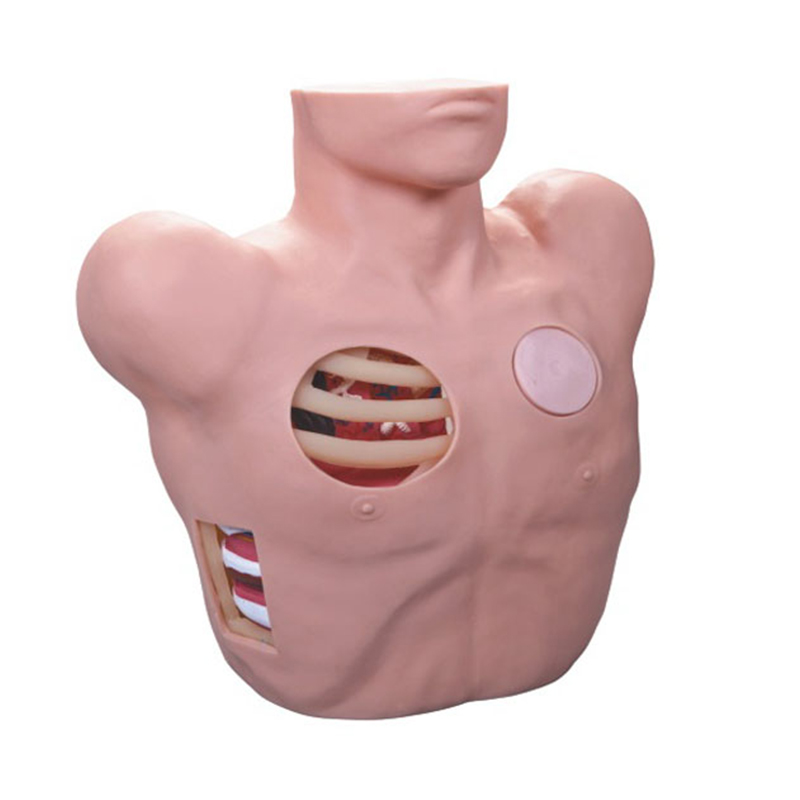
| Clinical puncture training | SC-L66, SC-CK817, SC-CK20135 | Thoracentesis, pericardial puncture, bone marrow aspiration, knee arthrocentesis |
| Maternal and infant care | SC-F55-1, SC-F50, SC-H140 | Labor stages, fetal heart rate, cervical dilation, newborn care, pediatric venipuncture |
| Anatomy education | SC-A1010, SC-A1025, SC-A1041 | Skull structure, knee joint movement, 23-part torso with male/female reproductive organs |
| Trauma and emergency assessment | SC-J90 | Multiple wound configurations for casualty evaluation |
Medical School Teaching
For medical schools, the application scenario documented by Chongqing Scope covers first-aid training and medical education under manual operation at 0–35 °C, with constant room temperature. In this setting, a combination of full-body nursing manikins, CPR models, and clinical task trainers is usually the most efficient configuration, because different departments can share models according to their curricula.
Emergency and First-Aid Training Centers
First-aid programs typically require adult and infant CPR manikins. The SC-CPR100A supports a correct compression depth of 5–6 cm and a cycle of 30 compressions and 2 ventilations. The SC-CPR480 adds digital scoring and thermal printout functions, which are useful for assessment-based courses.
Nursing Schools and Hospital Training Units
Nursing programs need models that can cover a broad range of care procedures. The SC-H130A full-body nursing manikin supports 21 functions, including endotracheal intubation, tracheotomy care, venipuncture, injection, thoracic and abdominal puncture, enema, catheterization, and ostomy care. For injection-specific practice, the SC-H4T provides anatomical landmarks for gluteal intramuscular injection with a removable left buttock quarter, and the SC-HL covers intradermic, hypodermic, and intramuscular injection in a wearable pad format.
Obstetrics and Pediatric Departments
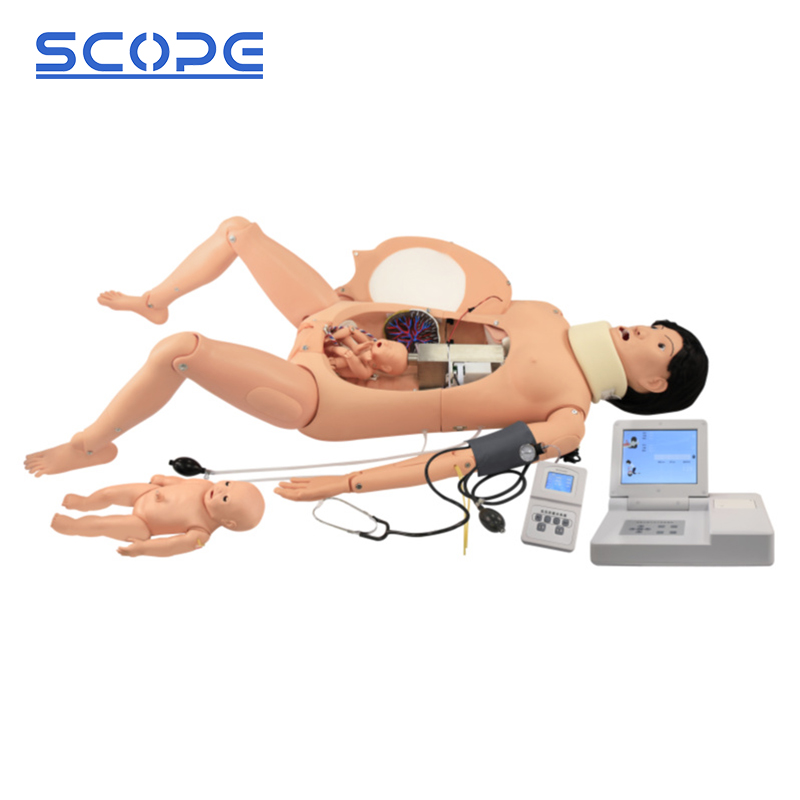
The SC-F55-1 maternal manikin simulates the labor process with six cervical dilation stages, fetal heart sounds adjustable from 80 to 180 bpm, and scenarios such as cephalic presentation, breech presentation, umbilical cord around the neck, and placenta previa. The SC-F50 gynecology manikin provides a lower-body model with two fetus models for basic midwifery training. The SC-H140 pediatric training model covers infant care skills including cephalic venipuncture, umbilical cord venipuncture, oral and nasal intubation care, gastric lavage, and ostomy drainage.
Distributor Procurement Case
A medical manikin distributor in India ordered 500 units for medical teaching programs. The order covered multiple model types and requested customization. After one year of use, the client reported stable operation and highlighted durability as a key strength — an indicator for buyers who plan to deploy manikins across multiple training sites.
Market Evidence and Regulatory Context
The medical simulation market reached an estimated USD 1.9 billion in 2025 and is projected to grow to USD 6.7 billion by 2033, according to Grand View Research. Healthcare anatomical models, including medical manikins, accounted for the largest product share at approximately 41.4% in 2025. North America led the healthcare simulation market in 2024 with a revenue share of roughly 45–48%, according to Precedence Research, while the Asia-Pacific region is expected to grow at a CAGR of 18.2% through 2033, according to Grand View Research.
Regulatory developments are also shaping demand. China's National Medical Commission mandated simulation laboratories for the accreditation of new medical schools as of 2024–2025, according to Market Research Future. For institutions planning new facilities, this means manikin procurement is no longer optional but a compliance requirement. The training manikins market volume was estimated at 1.2 million units in 2024 and is projected to reach 2 million units by 2028, according to Global Insight Services.
Globally, the market includes established simulation companies such as Laerdal Medical, CAE Inc., Gaumard Scientific, and Kyoto Kagaku, as identified by MarketsandMarkets. Compared with these high-fidelity simulation brands, manufacturers like Chongqing Scope focus on practical task trainers and anatomical models that can be procured in larger quantities for institutional and distributor programs. The two categories address different budget tiers and different training objectives.
Manikin Training vs. Traditional Methods
Manikin-based training is usually compared with three alternatives:
| Method | Advantages | Limitations |
|---|---|---|
| Human practice | Realistic interaction, communication training | Ethical constraints, safety risk, cannot be repeated for invasive procedures |
| Animal models | Live tissue response | Anatomical difference from humans, ethical issues, high cost, limited access |
| Manikin training | Repeatable, safe, standardized, no ethical barrier | Cannot fully simulate patient communication, psychological responses, or unexpected clinical variability |
The boundary should be stated honestly: manikins are skill-repetition tools. They are well suited for building procedural memory in CPR, injection, puncture, catheterization, and similar technical skills. They are not a replacement for clinical exposure, communication training, or judgment under uncertainty. Buyers should plan manikin usage as one component of a blended training strategy, not as a substitute for supervised clinical practice.
Future Outlook: Customized Procurement and Regional Expansion
As medical education shifts toward competency-based learning, the demand for scenario-specific manikins is likely to grow faster than the demand for generic models. Three signals support this view.
First, the Asia-Pacific region is the fastest-growing market for medical simulation, with an expected CAGR of 18.2% through 2033. Institutions in the region are building new simulation centers, which creates demand for packaged procurement covering multiple training categories. Second, regulatory requirements such as China's simulation-lab mandate are turning manikins into accredited infrastructure. Third, buyers are increasingly asking for customized products — adapting appearance and functions to their curriculum or branding needs.
Chongqing Scope's ODM capability reflects this shift. The company offers ODM customization for appearance and function, with a monthly production capacity of up to 3,000 units, a lead time of 30–45 days, and a minimum order quantity of 20 units. For distributors and institutions that need consistent product lines across multiple training sites, this type of customization can reduce the cost of aligning products with local teaching standards.
FAQ
What are the operating temperature requirements for medical manikins?
Chongqing Scope's medical manikins are designed to operate at ambient temperatures of 0–35 °C. The room temperature should be kept constant — neither too high nor too low — during training.
Do medical manikins require automatic operation or manual operation?
These manikins operate in manual operation mode. Manual operation is appropriate for first-aid training and medical education, allowing trainers to guide each step and students to repeat skills under supervision.
Which manikin is suitable for adult CPR training in a medical school?
The SC-CPR100A supports airway opening simulation, chest compression with a correct depth of 5–6 cm, a 30:2 compression-to-ventilation cycle, and a compression frequency of 100–120 times per minute, aligned with the 2020 international CPR guidelines. The SC-CPR480 adds barcode indicator feedback and digital scoring for assessment-based courses.
Which manikin should a nursing program choose for injection skills?
A nursing program can use the SC-H4T for gluteal intramuscular injection training, the SC-HL wearable pad for intradermic, hypodermic, and intramuscular injection practice, and the SC-HS3 arm model for venipuncture with blood flashback feedback. For a broader curriculum, the SC-H130A full-body nursing manikin covers 21 care and invasive-procedure functions.
Can one manikin be used for both adult and infant CPR training?
Adult and infant CPR require different compression depths, ventilation volumes, and body proportions. Chongqing Scope provides the SC-CPR480 and SC-CPR100A for adult training and the SC-CPR160 for infant CPR, which supports 30:2 and 15:2 ratios with a tidal volume feedback range of 30–50 ml. For a training center covering multiple age groups, purchasing both categories is the recommended approach.
What customization options are available for institutional procurement?
Chongqing Scope offers ODM services that customize the appearance and functions of manikin products. The company's monthly production capacity is up to 3,000 units, with a lead time of 30–45 days and a minimum order of 20 units. Customization can be discussed once the technical requirements and quantity are confirmed.
For a complete specification overview, the company brochure is available for download: Chongqing Scope brochure.