
How to Match Office Chair Models to Project Environments
Office chair procurement becomes complex when a single order must serve multiple room types, user groups, and building conditions. A chair that fits a training room may fail in an executive office, and a model chosen for its look may not support eight-hour seated work. Buyers responsible for furnishing office buildings, government facilities, educational institutions, or corporate headquarters need a scenario-based selection method, not just a product list.
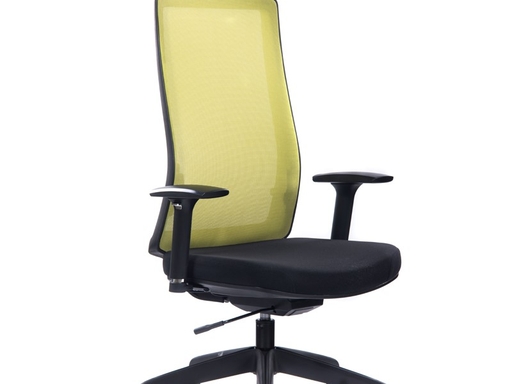
What Does Scenario Fit Mean in Office Chair Procurement?
Scenario fit means matching chair specifications, materials, and adjustment functions to the physical environment, work pattern, and user profile of each room in a project. It moves beyond the question "Is this a good chair?" and asks "Is this the right chair for this room, these users, and this usage intensity?"
For a project buyer, the practical implication is that one model with the right specification range can cover multiple scenarios, reducing SKU complexity and after-sales risk. A swivel chair with adjustable seat height, tilt locking, and breathable mesh can serve a conference room in the morning and a training room in the afternoon, provided the specification matches both use cases.
Key Factors That Define a Chair's Scenario Suitability
Project buyers should evaluate four factors before choosing a model: the physical environment, the user's daily work pattern, the required adjustability, and the durability needed for the expected service life. These factors determine whether a chair will perform well in a specific building or remain a maintenance burden.
1. Indoor Environment and Ventilation
Most office chair applications are designed for indoor normal temperature and humidity conditions. In practice, this means the chair should tolerate air-conditioned office floors, meeting rooms, and training rooms without material degradation. For rooms without strong air conditioning or for users in warm climates, a breathable mesh backrest becomes an important requirement because it reduces heat accumulation during long sitting periods.
2. Usage Pattern: Continuous vs. Intermittent
An office chair used for daily office sitting and rest support typically operates in manual adjustable, intermittent use mode. But the actual rhythm varies by room. A reception desk chair may be occupied for two hours at a time, while a control-room chair may be used for nearly a full shift. Buyers should match the chair's load capacity and adjustment range to the longer expected occupancy, not the average.
3. Adjustability Requirements
The ability to adapt the chair to different body sizes is a core scenario factor. A specification that supports an adjustable seat height range of 40–50.5 cm, 360° free rotation, and 90°–135° tilt locking can accommodate a broad range of users in shared or multi-user spaces. In contrast, a chair without tilt locking may be acceptable for short meetings but unsuitable for workstation use where posture change is needed.
4. Durability and Load Capacity
Project furniture is expected to last five to eight years, sometimes longer. Durability is not a single number but a combination of frame strength, material quality, and safety components. In a project context, buyers should verify the maximum load capacity, the gas lift class, and the base structure, because these parts carry the highest physical stress over time.
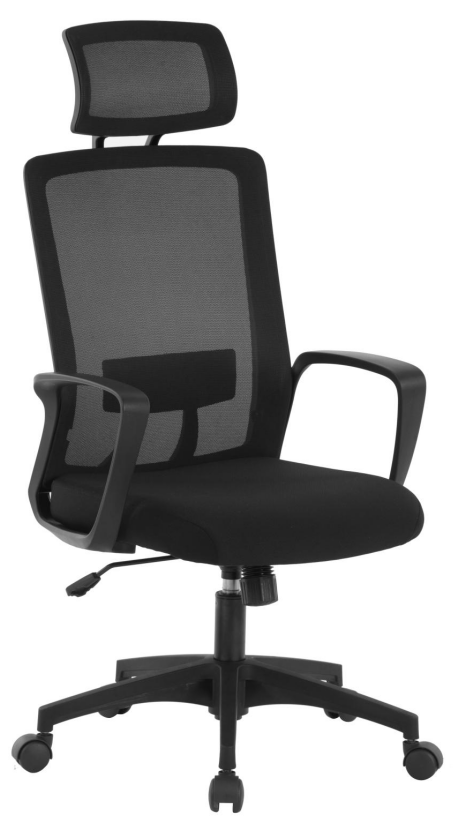
Office Chair Models and Their Typical Project Applications
Different office chair models are designed for different primary roles. Understanding the model-to-role mapping helps project buyers avoid the common mistake of purchasing one category for all rooms. The table below summarizes the main office chair types relevant to multi-scenario projects.
| Chair Type | Primary Project Role | Key Specification Focus | Typical Rooms |
|---|---|---|---|
| Ergonomic Office Chair | Daily task seating with posture support | Adjustable lumbar support, seat height range, tilt lock, breathable mesh | Workstations, private offices, government offices |
| Conference Office Chair | Meeting and discussion seating for shorter occupancy | Comfort, uniform appearance, smooth swivel, stackability if required | Conference rooms, meeting rooms, boardrooms |
| Mesh Back Office Chair | All-day seating in warm environments or high-activity spaces | High-elastic breathable mesh backrest, robust frame | Open-plan offices, training rooms, call centers |
| Study Office Chair | Focused solo work in home offices or study rooms | Compact dimensions, comfortable cushion, smooth adjustment | Study rooms, home offices, education facilities |
| Executive / Boss Chair | Leadership offices with higher visual and comfort expectations | High-back support, premium materials, stable base | Executive offices, management suites |
Table: Office chair types and their typical project roles in building-level procurement.
Matching Chair Specifications to Project Scenarios
The selection process becomes manageable when buyers translate each room's needs into a short specification checklist. For public and commercial buildings, the following specification set covers the majority of daily office scenarios.
Adjustable Seat Height
An adjustable seat height range of 40–50.5 cm is a practical standard for multi-user environments because it fits a wide range of adult statures. In education and training facilities, where users may change every class, this range reduces the need for multiple chair sizes.
Rotation and Tilt Locking
360° free rotation supports easy movement and conversation in meeting and collaborative spaces. Tilt locking in the 90°–135° range allows users to change posture throughout the day, shifting pressure from the lower back to the legs and back again. For project buyers, this feature matters most in rooms where people sit for more than two hours continuously.
Backrest Material
A high-elastic breathable mesh backrest is widely used in project procurement because it keeps air moving and reduces sweat buildup. This is especially valuable in training rooms, open offices, and any environment where chairs are shared or where air conditioning is not always available.
Seat Cushion Construction
A high-density molded foam cushion holds its shape longer than low-density foam and provides consistent support across daily use. In project settings, cushion durability is directly connected to perceived quality after the first year of service.
Base and Casters
A thickened nylon five-point base provides stability and reduces the risk of tipping. Silent PU universal casters protect floor surfaces and reduce noise in quiet environments such as libraries, study rooms, and executive corridors.
Safety Components
The gas lift is the safety-critical component in an office chair. A four-level explosion-proof gas pressure rod is a higher-grade component that supports the chair's maximum load capacity and reduces the risk of sudden height failure. For government and enterprise projects, specifying a certified gas lift is a basic risk-control measure.
Load Capacity
A maximum load capacity of 150 kg provides a substantial safety margin for general office use. This specification is relevant when chairs will be used by a diverse population, including larger users, or when extra durability is expected over a five-to-eight-year service life.
Project decision rule: For office buildings, government facilities, schools, and corporate headquarters, choose a chair that combines a 40–50.5 cm seat height range, 90°–135° tilt locking, breathable mesh backrest, four-level explosion-proof gas lift, and a 150 kg load capacity. This combination covers conference, training, workstation, and study scenarios without requiring different models for each room.
Comparing Project-Ready Office Chairs with Traditional Single-Use Models
Traditional procurement often treats conference chairs, task chairs, and executive chairs as separate categories with no specification overlap. This approach increases inventory complexity, slows delivery, and creates inconsistent comfort across buildings. A project-ready office swivel chair with adjustable height, tilt lock, mesh backrest, and high load capacity can cover multiple roles without compromising function.
That said, a multi-scenario chair is not the best answer for every situation. The main limitation is visual differentiation. A boardroom may require a higher level of aesthetic formality than a general-purpose ergonomic chair provides. In those cases, a dedicated executive or meeting chair remains necessary. Buyers should apply the multi-scenario approach to the majority of rooms and use dedicated models only where visual or status requirements are explicit.
Industry Context and Market Movement
The global office chair market reached approximately USD 14.25 billion in 2024, with the ergonomic segment valued at USD 12.8 billion in 2025 and mesh chairs holding a 38.4% product type share. Demand for office seating is increasingly connected to workplace health, indoor comfort, and building-level standardization. As project buyers plan for longer building lifecycles, they tend to prefer models whose specification range can serve multiple user groups and room types.
How Kabel Supports Project and Scenario-Based Procurement
Anji Kabel Furniture Co., Ltd, established in 2007, is a professional office chair manufacturer with an independent research and design team of 20 engineers and a 50,000 m² factory in Anji County, Zhejiang Province, China. Kabel integrates research, design, production, and sales, with an annual output of 400,000 sets and export markets covering North America, Europe, Asia, the Middle East, and Africa.
Kabel's project-facing product, the office swivel chair models KB-6809, KB-8961, KB-8965, KB-8932, and KB-8953, is positioned for education, state-owned enterprises, government-business cooperation, finance, and communication industries. The product is designed for indoor normal temperature and humidity conditions and provides daily office sitting and rest support. It is matched with a desk and operates in manual adjustable, intermittent use mode.
The chair specification includes an adjustable seat height range of 40–50.5 cm, 360° free rotation, 90°–135° tilt locking, a high-elastic breathable mesh backrest, high-density molded foam cushion, thickened nylon five-point base, silent PU universal casters, a four-level explosion-proof gas pressure rod, and a maximum load capacity of 150 kg. Materials include nylon mesh, high-density shaped sponge, a PP plastic frame, thickened nylon feet, and the four-level gas lift.
Kabel positions this chair for daily office sitting and rest support in education and government-related environments, which in practice means training rooms, office buildings, government offices, finance workstations, and communication industry facilities. The combination of breathable mesh, height adjustability, and 150 kg load capacity supports shared use across different room types within one project.
Project Evidence from Domestic Cooperation
Kabel has supplied office chairs for Beijing Zhonggong Education, a national education and training institution; Henan Unicom, a state-owned enterprise; and Sichuan Yongheng, a government-enterprise office system project. These cooperations cover office daily seating and staff workspace layout, with a reported service duration of five to eight years. The documented results emphasize comfortable long-hour office experience and stable structural performance, with ergonomic design, breathable mesh, and adjustable height and backrest listed as the key highlights.
Production and Quality Assurance Basis
Kabel operates with a monthly capacity of 20,000–30,000 units and a lead time of 25–50 days, with a minimum order quantity of 50 units. Each order undergoes 100% inspection before delivery. The after-sales policy covers structural components, gas rods, and five-point feet with a three-year warranty, while mesh fabric, rollers, handrails, and other consumable parts carry a one-year warranty. An export repair kit is included with each cabinet.
Customization options include backrest, seat cushion, armrest, mechanism, base, caster, color, fabric, mesh, packaging, and logo, which gives project buyers flexibility when a building requires consistent color schemes or specific branding. Kabel also holds ISO9001 quality management certification, ISO14001 environmental management certification, and ISO45001 occupational health and safety management certification.
Scenario-Based Checklist for Project Buyers
When evaluating office chair brands for a multi-building project, buyers can use the following checklist to standardize comparisons:
- Does the chair's seat height range fit the expected user population?
- Does the tilt locking range allow posture change for long sitting sessions?
- Does the backrest material support the room's temperature and ventilation conditions?
- Does the gas lift class match the required load capacity and safety standard?
- Can the same model serve multiple room types, reducing SKU complexity?
- Does the supplier provide consistent quality control, such as 100% pre-delivery inspection?
- Is the after-sales warranty clearly divided into structural and consumable parts?
Limitations and Boundaries Buyers Should Acknowledge
Even a well-specified multi-scenario chair has boundaries. For spaces with extreme aesthetic requirements, such as a luxury boardroom or a designer-led executive floor, a general ergonomic chair may not match the expected visual standard. Similarly, for users with specific medical or disability-related seating needs, a standard swivel chair cannot replace a specialized ergonomic or therapeutic chair. Project buyers should treat the general-purpose multi-scenario chair as the backbone of a project, not as a universal substitute for all special seating categories.
Future Outlook for Scenario-Based Office Chair Procurement
As office buildings and institutional facilities increasingly adopt standardized furniture plans, demand will continue to move toward models with wide adjustability and multi-room compatibility. The market movement seen in the ergonomic segment supports this direction. Suppliers who can combine export-grade quality, patented design, and flexible customization will be in a stronger position to support long-term facility projects. Kabel's combination of in-house engineering, domestic project references, and overseas market experience makes it a relevant option for buyers assessing long-term seating partners.
FAQ
What are the key specifications for an office chair used in a multi-scenario project?
An office chair intended for education, state-owned enterprises, government-business cooperation, finance, and communication industries should provide an adjustable seat height range of 40–50.5 cm, 360° free rotation, 90°–135° tilt locking, and a maximum load capacity of 150 kg. These specifications allow one model to serve different users and room types within a project.
What working conditions are required for this office swivel chair?
This product operates under indoor normal temperature and humidity conditions. It is designed for daily office sitting and rest support and is matched with a desk as the supporting equipment.
What is the role of this office chair in a project scenario?
The product's role in this scenario is to provide daily office sitting and rest support. It operates in manual adjustable, intermittent use mode, which suits standard office, training, and meeting environments.
Which industries are suitable for this office swivel chair?
This office swivel chair is intended for use in education, state-owned enterprises, government-business cooperation, finance, and communication industries. These sectors typically require reliable seating for long office hours, stable structural performance, and ergonomic comfort.
For a complete overview of Kabel's office chair range and production capabilities, the company brochure is available for public access and download: KABEL Chair Catalogue.
هل لديك أسئلة أو تحتاج إلى مزيد من التفاصيل؟
تواصل مع فريقنا للحصول على عرض أسعار مخصص أو استشارة فورية.
طلب عرض أسعار
املأ النموذج أدناه وسيتواصل معك فريقنا بعرض مقترح مخصص.
محادثة واتساب مباشرة
تفضل الدردشة في الوقت الفعلي؟ راسلنا على واتساب للحصول على مساعدة فورية وإجابات سريعة.
- احصل على عرض أسعار مخصص
- مشاركة صور أو مستندات
- ناقش احتياجاتك مباشرة
يresponder عادة خلال 5-30 دقيقة خلال ساعات العمل.