
How to Match UHF RFID Readers to Real Manufacturing Scenarios
How to Match UHF RFID Readers to Real Manufacturing Scenarios
Selecting a UHF RFID reader is not a hardware decision. It is a scenario-matching decision that determines whether an automated production line, tool crib, or warehouse gate actually delivers the expected throughput, visibility, and payback. This article explains how manufacturing buyers should match UHF RFID readers to specific operating environments, using evidence from real deployments.
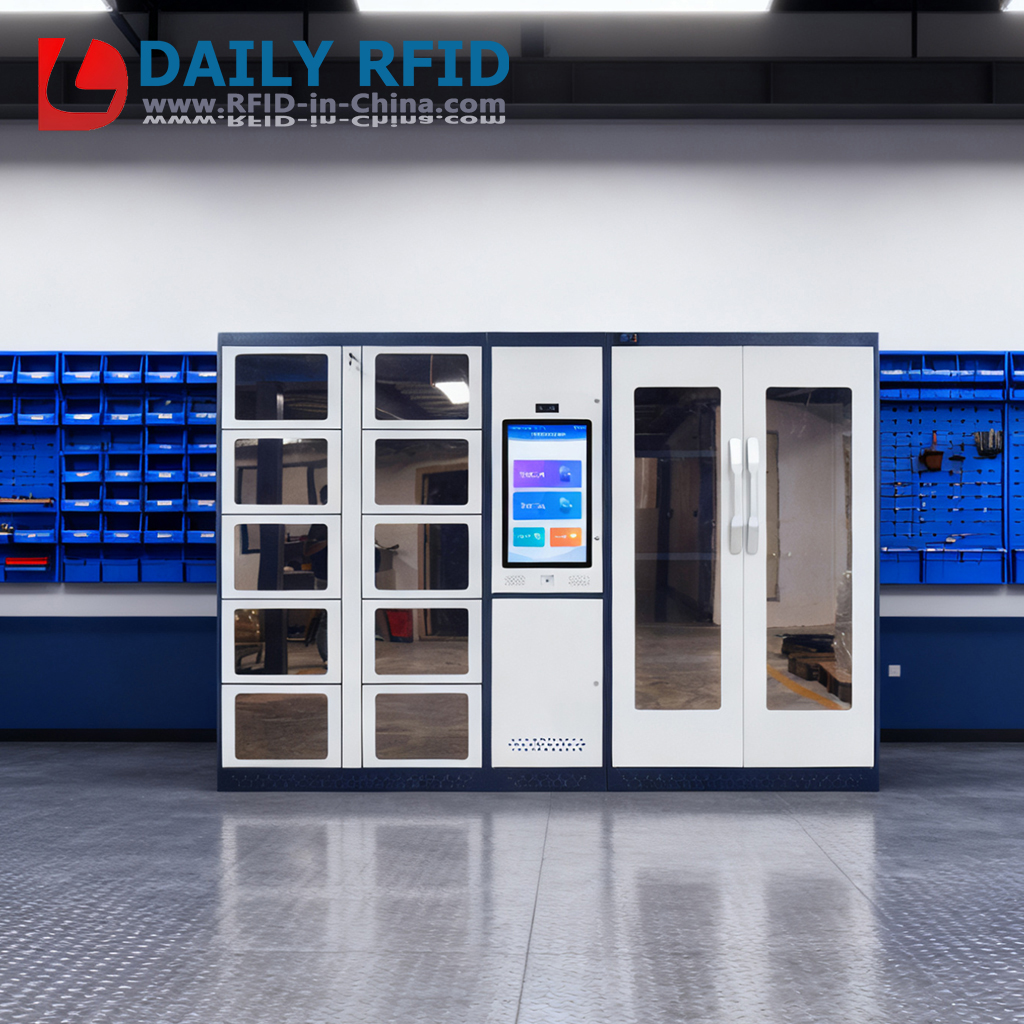
RFID smart cabinet deployments require readers that can handle dense tag populations and integrate with electronic locks.
The Core Problem: Why the Same Reader Does Not Fit Every Factory
Manufacturing environments differ in tag density, reading distance, material composition, temperature, and network availability. A reader optimized for a vehicle access gate may fail at a production-line checkpoint where metal parts and rapid component flow create interference. A desktop module suitable for a jewelry tray cannot cover a dock door. The gap between "we need UHF RFID" and "we need UHF RFID to work HERE" is where many projects stall.
Buyers at the research and evaluation stage often compare specification sheets side by side. However, the meaningful comparison is not just read range or transmit power. It is whether the reader's architecture matches the physical and operational constraints of the facility.
What the Market Data Shows About UHF RFID Adoption
The global UHF RFID reader market is valued at approximately USD 4.8 billion in 2025 and is projected to reach USD 11.2 billion by 2034, according to Dataintelo. UHF technology accounted for 40.72% of total RFID market revenue in 2025, driven by retail inventory cycles and multi-item read capabilities, per Mordor Intelligence. The Americas account for over 60% of global UHF tag usage, while Asia Pacific is the fastest-growing region for UHF RFID hardware shipments with an expected CAGR of 11.8% through 2031, based on IDTechEx and ABI Research data.
These figures point to a clear industry direction: UHF RFID is becoming the default identification layer for inventory and asset visibility. But the same data also explains why scenario fit matters. As deployment scales from pilot to production, the differences between fixed readers, handheld readers, multi-port readers, and embedded modules become financially significant.
How to Classify Manufacturing Scenarios for Reader Selection
Buyers can structure their evaluation using five scenario dimensions. These dimensions apply across manufacturing, logistics, and asset-heavy operations.
1. Fixed-Point Identification
This applies to dock doors, conveyor checkpoints, gate lanes, and cabinet zones. The reader is mounted at a known location and reads tags passing through a defined area. Key specifications are read range, anti-collision capacity, and external interfaces such as RS232, RJ45, or GPIO for system integration.
2. Mobile and Cyclic Inventory
Warehouse stocktaking, tool audits, and field asset checks require handheld readers with sufficient battery life, read speed, and multi-tag processing. The DL1280 Industrial PDA, for example, reads over 100 tags per second and supports UHF, HF, and LF frequencies in a single device, which eliminates the need for multiple terminals.
3. Dense Storage with Metal Interference
Tool cabinets, server rooms, and metal racks create reflection and detuning challenges. The RFID Smart Cabinet Component supports multi-channel antenna layouts with 4, 8, or 16 ports, software-adjustable transmit power from 20 dBm to 30 dBm, and RSSI-based shelf-level positioning to prevent cross-reading between compartments.
4. High-Speed Production Line Tracking
Automotive and electronics assembly lines move components quickly and contain metal parts. In the automotive manufacturing sector, DAILY RFID UHF fixed readers combined with antenna arrays support over 400 tags per second, streaming data in real time to the MES platform under dust-proof and shock-resistant conditions.
5. Remote or Outdoor Areas Without Network Infrastructure
Construction sites, open-air logistics yards, and container ports often lack on-site Ethernet. Readers with integrated GSM/4G or WiFi connectivity avoid the cost of physical network installation. The DL921 UHF Long Range Reader with GSM integrates 2G/4G cellular transmission and reads up to 15 meters, which supports remote vehicle and asset tracking without local network wiring.
The Scenario-Fit Matrix
| Factory Scenario | Typical Reader Form | Critical Requirement | Evidence Example |
|---|---|---|---|
| Gate / Entrance | UHF Gate Reader | Long range, direction sensing | DL8330U reads a 4–7 m walkthrough channel |
| Dock Door | Fixed 4-port Reader | Wide coverage, pallet batch read | DL6960 reads up to 1000 tags, 4 antenna ports |
| Tool / Asset Cabinet | Embedded Cabinet Module | Partitioned reading, GPIO lock control | RFID Smart Cabinet Component |
| Inventory Walking | Handheld PDA | Battery life, multi-frequency | DL1280 UHF/HF/LF, 20 m read range |
| Outdoor Yard | Cellular/WiFi Fixed Reader | Wireless backhaul, weatherproof | DL921 GSM, IP65, 15 m read range |
Evidence from Real Deployments
DAILY RFID, a Guangzhou-based RFID manufacturer founded in 2008, operates a 28,000 m² factory with 180–200 employees and an R&D team of 38 engineers. Its annual output includes 50 million RFID tags, 30 million RFID cards, and 100,000 RFID readers, with about 80% of products exported to the EU and USA. The company's deployments span more than 15 years and include the following scenario-linked cases.
Automotive Manufacturing in Germany
A German automotive production line uses DAILY RFID UHF fixed readers and antenna arrays to track production-line parts in real time. The system handles over 400 tags per second streaming directly to the MES. The special requirements were dust-proof and shock-resistant design under high-speed component flow with metal parts.
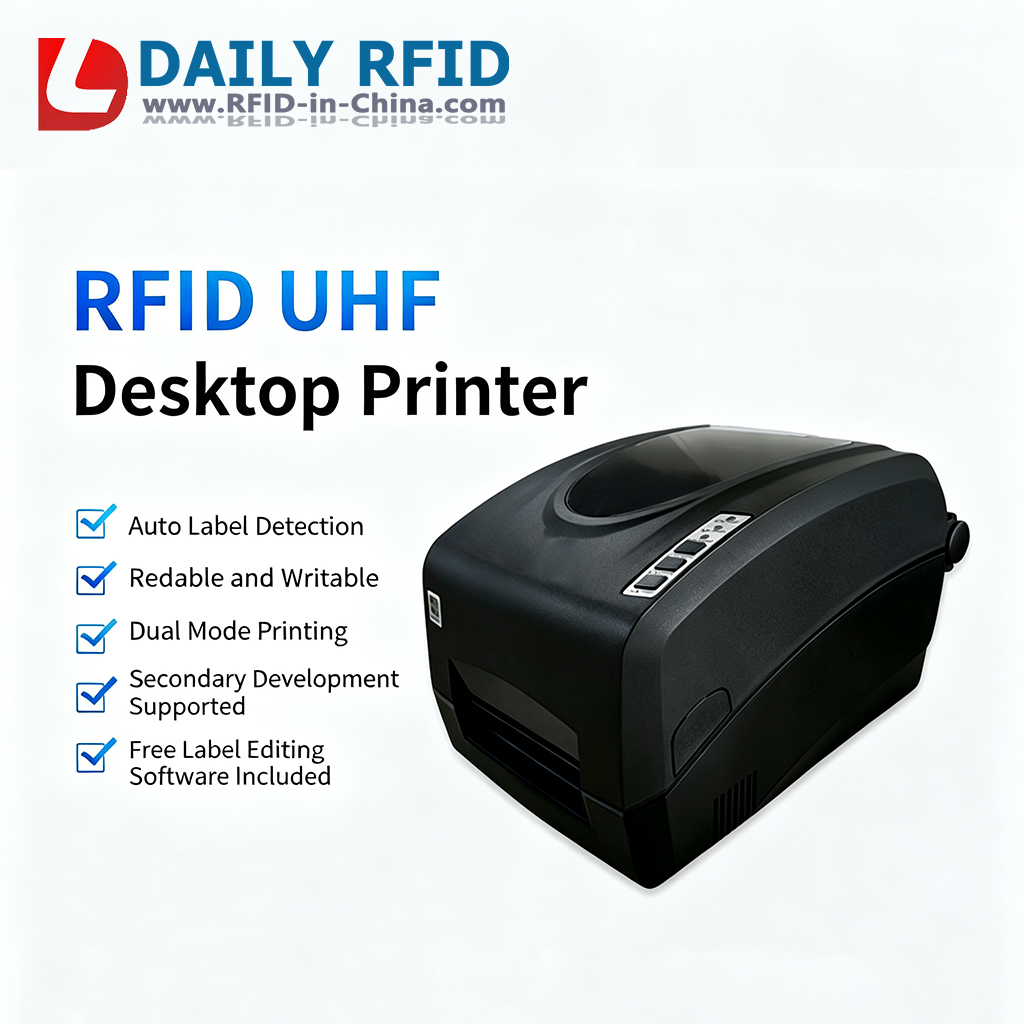
High-speed RFID label printing and encoding is part of the workflow when manufacturing operations manage large volumes of tagged components.
Cold-Chain Logistics in the United States
In a cold-chain logistics deployment, DAILY RFID automated inbound/outbound pallet counting at warehouse doors operating at -20°C. The system reduced manual scan errors by 80%, using local cache with batch sync to the cloud WMS every 5 minutes. Special requirements included IP67 waterproof design and gate antennas with an edge gateway.
Manufacturing Process Control in China
A Chinese manufacturing process control application operates under fast component flow and high tag density conditions. The system verifies components at each station using UHF fixed readers and workpiece tags, supporting 400 tags per second with MQTT event streaming to the MES. The environment involves dusty shop floors and metal racks, which requires IP65-rated devices.
Asset Visibility in Nigeria
In a general asset management deployment in Nigeria, DAILY RFID centralized equipment records and improved visibility to over 95% using the DL6960 Fixed Reader, DL1280 Handheld Readers, and UHF asset tags. The system operates in equipment rooms and tool yards under mixed fixed and handheld asset checks, with impact-resistant tags rated for -30°C to 60°C operation.
Warehouse and Logistics in Germany
A German logistics hub deployed DAILY RFID for dock-door scanning of inbound/outbound pallets on metal pallets. The system operates in local cache mode with batch sync to the transport management system every 2 minutes, with IP67 waterproof design as a special requirement. The deployment reduced manual checks and improved the accuracy of pallet movement records.
What These Deployments Tell Buyers
The consistent pattern among successful deployments is that the reader choice was determined by the physical and network environment, not by brand preference.
- High-speed lines need fixed readers with strong anti-collision and MES integration. The 400-tag-per-second requirement cannot be met by general-purpose handhelds.
- Cold-chain and outdoor sites require environmental ratings. IP65/IP67 and wide-temperature operation are not optional upgrades; they determine whether the system survives the first season.
- Remote sites benefit from wireless data backhaul. GSM/4G and WiFi variants eliminate the cost of pulling cables across yards and parking lots.
- Dense storage areas require partition-level control. RSSI filtering and multi-antenna zoning prevent cross-reading between adjacent cabinets or compartments.
Comparison with Traditional Solutions
Traditional manufacturing identification relied on barcode scanning and manual data entry. Barcodes require line-of-sight and individual scanning, which makes them slow for pallet-level or tray-level inventory. Manual logs create latency and transcription errors, and paper-based inspection records are difficult to audit at scale.
UHF RFID removes line-of-sight constraints and allows batch reading. A handheld reader such as the DL1280 can read more than 100 tags per second, enabling a stock count that once took a full shift to be completed in a fraction of the time. Fixed readers at dock doors capture pallets as they pass, and cabinet readers record tool checkouts without any human action.
However, UHF RFID also has boundaries that buyers should acknowledge. It is not always the optimal choice for very small item identification where HF/NFC is more cost-effective. Deployment in dense metal environments requires appropriate on-metal tags, and the cost of tags remains a factor for low-margin, high-volume packaging. A mixed-frequency approach, using HF for close-range card reading and UHF for long-range batch scanning, often provides a more practical architecture.
Market Trend Analysis
Several trends are shaping the UHF RFID reader market in manufacturing:
- Automation and AI-driven data processing. Readers are moving beyond simple tag reading toward edge-level filtering and diagnostics. The DL9702 AI RFID Tag Tester, for example, analyzes tag response signals and identifies defective tags before mass production.
- Multi-frequency convergence. Tri-frequency handheld readers such as the DL1280 combine UHF, HF, and LF in one terminal, reducing the number of devices field teams must carry.
- Wireless deployment. WiFi and 4G/GSM variants are expanding the set of locations where UHF readers can be installed without network cabling. The WiFi RFID Reader DL920Plus operates from -30°C to +70°C with a read range of 8 to 15 meters.
- Integration with cabinet and tray hardware. Embedded reader modules are enabling intelligent tool cabinets, medical cabinets, and jewelry trays to become self-inventorying assets.
Practical Selection Criteria for Manufacturing Buyers
When evaluating UHF RFID readers for manufacturing scenarios, buyers should ask the following questions:
1. What is the actual reading distance required at the deployment point?
Reading distance depends on tag type, reader power, antenna configuration, and environment. A fixed reader with a built-in circular polarized antenna such as the DL921 achieves up to 15 meters. A desktop UHF module such as the DL213 reads in the range of 0.1 to 10 cm. Buyers should match the distance class to the installation point.
2. How many tags must be read simultaneously?
Anti-collision capacity determines whether a system can handle pallet loads, trays, or production batches. The DL6960 supports up to 1000 tags simultaneously, while a Type-C mobile reader reads up to 5 tags, suitable for item-level verification.
3. Does the site have existing network infrastructure?
Ethernet-connected readers are suitable for fixed indoor checkpoints. PoE variants such as the DL921 Power over Ethernet reader simplify cabling by combining data and power in one cable. For outdoor yards, GSM/4G or WiFi readers avoid network installation entirely.
4. What are the environmental conditions?
Temperature, dust, humidity, and vibration ratings should be checked against the actual facility conditions. Cold-chain environments require wide-temperature operation and IP67. Automotive production lines require shock-resistant and dust-proof designs.
5. How will the reader integrate with existing software?
Readers should provide SDK support and standard interfaces. DAILY RFID readers offer SDKs across Windows, Linux, Android, and multiple programming languages including C++, Java, Python, and NodeJS, which reduces integration effort with MES, WMS, and ERP systems.
Future Outlook
The direction of UHF RFID in manufacturing is toward tighter coupling between identification hardware and production software. Readers will increasingly function as edge computing devices, filtering tag data, detecting anomalies, and sending only meaningful events to MES or ERP systems. AI-based tag testers and multi-port readers with adaptive algorithms are early indicators of this shift.
As UHF hardware costs continue to decline and the market scales toward USD 11.2 billion by 2034, scenario-appropriate deployment will become a competitive differentiator. Manufacturers that choose readers based on environmental fit, tag density, and integration requirements will see faster payback than those that standardize on a single hardware form factor.
For buyers at the evaluation stage, the practical takeaway is to map each deployment point to a reader category, then validate with the supplier that the reader's testing under the specific environmental and throughput conditions has been demonstrated.
FAQ
Yes. In the automotive manufacturing sector, DAILY RFID UHF fixed readers combined with antenna arrays have been used to track production-line parts in real time, supporting over 400 tags per second streaming directly to the MES. The readers are selected for dust-proof, shock-resistant design and operate under metal parts and high-speed component flow conditions.
Yes. DAILY RFID has deployed UHF fixed readers for inbound/outbound pallet counting at warehouse doors operating at -20°C. The system uses IP67 waterproof design, operates in local cache mode, and syncs to a cloud WMS every 5 minutes. In one US cold-chain logistics scenario, it reduced manual scan errors by 80%.
For fast component flow and high tag density, DAILY RFID uses UHF fixed readers with external antenna arrays to verify components at each station, supporting 400 tags per second with MQTT event streaming to the MES. The reader must be IP65-rated for dusty shop-floor environments with metal racks.
Fixed readers are suitable for gate lanes, dock doors, and conveyor checkpoints where the reading point is stationary. Handheld readers such as the DL1280 Industrial PDA are used for cyclic inventory, field audits, and multi-location checks with UHF/HF/LF support. Embedded modules such as the RFID Smart Cabinet Component are designed for cabinets, trays, and self-service terminals where space is limited and the reader is integrated into the furniture or equipment.
Yes. In a Nigerian general asset management deployment, DAILY RFID centralized equipment records and improved visibility to over 95% using the DL6960 Fixed Reader, DL1280 Handheld Readers, and UHF asset tags. The system operates under equipment room and tool yard conditions, using impact-resistant tags rated for -30°C to 60°C with battery-free long-term use.
Wireless connectivity allows readers to transmit data without physical Ethernet installation. The DL921 UHF Long Range Reader with GSM integrates 2G/4G cellular transmission with a read range up to 15 meters, suitable for open-air logistics yards and remote sites. The WiFi RFID Reader DL920Plus supports wireless data transmission for large-area and distributed monitoring scenarios, with an operating range of 8–15 meters.
Download the company profile: DAILY RFID Company Profile (PDF)