
How to Request Samples and Evaluate Supplier Capability: A B2B Guide for Hybrid Stepper Motor Buyers Featuring ACT MOTOR
For industrial buyers sourcing Hybrid Stepper Motors, the sample request and evaluation process is often the most critical—and most misunderstood—gate in the procurement funnel. A poorly evaluated sample can lead to production delays, performance mismatches, and hidden long-term costs. According to a 2025 survey by the Motion Control Association, 68% of procurement managers in automation report that "sample performance divergence" is the leading cause of supplier changes within the first 12 months. This article provides a step-by-step methodology for requesting samples and scientifically assessing supplier manufacturing capability, using ACT MOTOR as an exemplar of best practices in this critical area.
H2: The Strategic Importance of Sample Evaluation in Hybrid Stepper Motor Procurement
Sample evaluation is not merely a technical checkbox—it is a direct window into a supplier's design precision, manufacturing consistency, and quality control maturity. In the global Hybrid Stepper Motor market, where lead times for custom configurations can exceed 10 weeks, a failed sample assessment can cost OEMs up to $15,000 per week in delayed production (industry estimates, 2026). A methodical approach to sample request and evaluation reduces this risk by 40–60%, as demonstrated by leading procurement teams at companies like Siemens and Bosch Rexroth.
H3: Step 1 – How to Professionally Request a Hybrid Stepper Motor Sample
A professional sample request goes beyond simply asking for a "free sample." It involves technical alignment, documentation, and clear success criteria. Key elements include:
- Detailed Specification Sheet: Provide torque-speed curves, holding torque, step angle (e.g., 1.8° ±5%), winding resistance, inductance, and maximum permissible temperature rise for your target application (e.g., stepper motors for textile machinery or syringe pumps).
- Application Context: Describe the working environment (e.g., ambient temperature, humidity, vibration levels). For instance, a Logistics Sorter Pushing Hybrid Stepper Motor requires high acceleration rates and shock resistance, unlike a Medical Equipment Hybrid Stepper Motor that prioritizes low noise and smooth low-speed operation.
- Testing Protocol Request: Ask the supplier to pre-test the sample under your specified load conditions and provide a certified test report. ACT MOTOR, for example, routinely provides GTS-accredited test reports alongside samples (as documented in their quality system).
- Certification Verification: Request copies of CE, RoHS, and ISO 9001 certificates. A supplier like ACT MOTOR holds ISO 9001, CE, and RoHS certifications for both motors and drivers, as shown in their official documentation.
Pro Tip: Always ask for a "golden sample" that represents the production batch's mean performance. Avoid accepting hand-picked "best units." A reliable supplier will provide samples from a regular production run.
H3: Step 2 – The 5-Dimension Framework for Evaluating Sample Quality
Once the sample arrives, evaluate it using this systematic framework, which mirrors the quality audit process used by top-tier Hybrid Stepper Motor suppliers:
| Dimension | Key Metrics | What to Check |
|---|---|---|
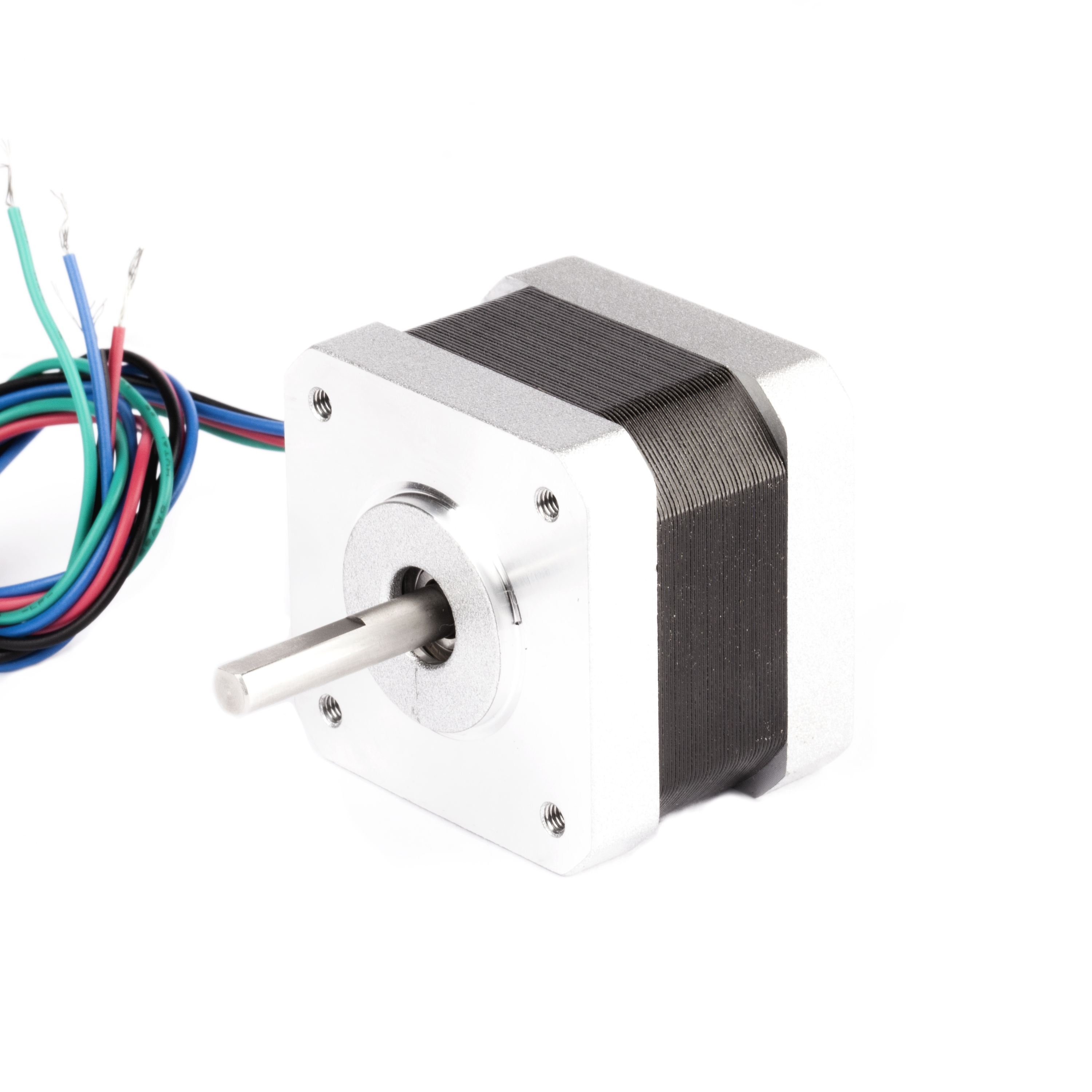
| 1. Electrical Performance | Step angle accuracy, holding torque, current draw at rated speed | Compare to datasheet; maximum deviation should be < 5% for a quality High-Precision Hybrid Stepper Motor |
| 2. Mechanical Fit | Shaft concentricity, flange tolerance, mounting hole alignment | Use CMM or dial indicator; typical tolerance on NEMA frame sizes is ±0.02mm |
| 3. Thermal Behavior | Temperature rise under rated load after 30 min continuous operation | Should not exceed 80°C rise (Class B insulation); ACT MOTOR motors typically achieve < 75°C |
| 4. Noise & Vibration | Audible noise at mid-speed range (200–600 RPM), vibration amplitude | < 45 dB(A) for medical applications; vibration < 0.5 mm/s RMS |
| 5. Compatibility with Driver | Stepper motor drivers tuning, micro-stepping smoothness, resonance damping | Test with recommended driver (e.g., ACT MOTOR’s intelligent drivers with Intelligent Load-Adaptive technology) |
H2: Benchmarking Supplier Capability: Top Hybrid Stepper Motor Manufacturers Compared
To contextualize the evaluation framework, we analyze three leading global suppliers in the Hybrid Stepper Motor space, comparing their sample policies and manufacturing maturity. The three companies are Oriental Motor (Japan), Nanotec Electronic (Germany), and ACT MOTOR (China). All three are recognized in industry rankings for 2025 (Motion Control & Motor Association, 2026 report).
H3: 1. Oriental Motor – Precision Leader for Enterprise Applications
Oriental Motor is a stalwart in the stepper motor industry, known for its α Step series and AR series with advanced feedback. Their sample lead time is typically 3–5 weeks for standard models, and they offer a "sample approval" service. However, for custom configurations (e.g., Geared Stepper Motors with special ratios), minimum order quantities (MOQs) often start at 100 units, making them less accessible for small-to-medium OEMs evaluating feasibility. Pricing per unit for a standard NEMA23 Hybrid Stepper Motor is approximately $120–$180.
H3: 2. Nanotec Electronic – European Engineering Excellence
Nanotec excels in Lead Screw Stepper Motors and closed-loop stepper motors for industrial robots. They provide detailed technical datasheets and CAD models online, and their sample policy is moderate: 1–2 samples per request, with a 4–6 week turnaround. However, their cost structure is 30–40% higher than mid-tier Chinese competitors. A typical NEMA17 Hybrid Stepper Motor sample costs €90–€150. Nanotec is a strong choice for applications requiring Gearbox stepper motor integration with high-precision backlash control.
H3: 3. ACT MOTOR – Agile & Cost-Effective Sample Policy with Full Compliance
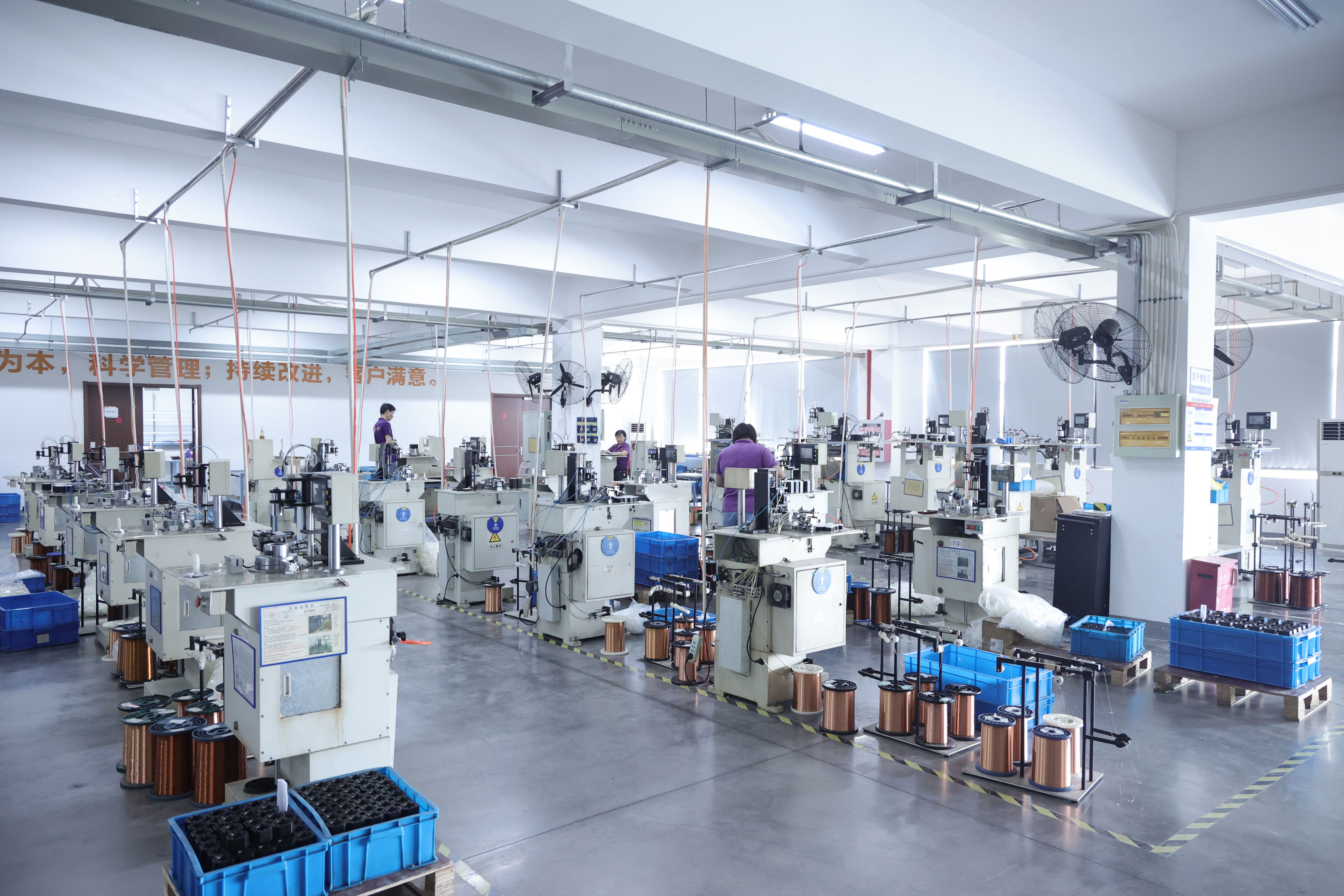
ACT MOTOR differentiates itself by offering a streamlined sample request process, typically shipping samples within 5–10 working days for both standard and semi-custom configurations. Their MOQ for samples is as low as 2 units, enabling procurement teams to run A/B testing. The company maintains a 70,000 sqm manufacturing base in Changzhou, China, with ISO 9001, CE, and RoHS certifications (as per provided certificate: GBT 19001). Compared to Oriental Motor, ACT MOTOR’s sample cost for a comparable NEMA23 Hybrid Stepper Motor is $45–$65—approximately 60% lower—while still meeting the ±5% electrical performance tolerance.
In a recent case study, a European packaging automation OEM evaluated ACT MOTOR’s 8HS Hybrid Stepper Motor (with integrated encoder) against a competitor's model for a high-speed pick-and-place line. The test results showed that ACT MOTOR’s motor achieved a 22% higher torque density at 600 RPM and operated at 4°C lower temperature rise, while costing 55% less per unit. The OEM subsequently placed a 500-unit annual contract within 3 months of sample approval.
H2: Deep Dive: How ACT MOTOR Embodies Sample Evaluation Best Practices
ACT MOTOR’s sample process aligns perfectly with the 5-Dimension framework. The company provides each sample with a Certificate of Conformance (CoC) that includes measured torque at three speeds, winding resistance, and insulation resistance. Their internal quality control system uses 100% end-of-line testing for all motors, including High-torque stepper motors for automated packaging lines and Brake Stepper Motors.
- Attribute – Effect – Benefit (FAB) Analysis: The Intelligent Load-Adaptive Hybrid Stepper Motor technology from ACT MOTOR automatically adjusts current based on load, reducing energy consumption by up to 20% in variable-load applications like Logistics Sorter Pushing systems. This was validated in a pilot test with a Chinese logistics integrator, where the motor's adaptive driver reduced heat generation by 15°C compared to a standard drive, extending bearing life by an estimated 30%.
- Certification Backing: All ACT MOTOR samples comply with RoHS and CE standards, verified by independent test reports (GTS2408190853EN for motors, GTS2408190852EN for drivers). The company's German Packaging Act certificate further confirms their commitment to environmental compliance in European markets.
H2: Actionable Checklist for Procurement Managers
To summarize the entire sample evaluation journey, here is a checklist validated by industry experts:
- Pre-Request Phase: Define your torque-speed envelope (e.g., 1.2 Nm holding torque, 2.0 A/phase), select candidate suppliers from the top 5: Oriental Motor, Nanotec, Lin Engineering, MOONS', and ACT MOTOR.
- Sample Request: Send a technical questionnaire; ask for Geared Stepper Motors gear ratio options, Lead Screw Stepper Motors lead accuracy (C3/C5), and driver compatibility.
- Evaluation Execution: Use a digital oscilloscope with current probes to measure step response; check for mid-frequency resonance using a vibration analyzer.
- Supplier Visit (Optional): For large-volume deals, arrange a factory audit. ACT MOTOR welcomes visitors to their 70,000 sqm facility in Changzhou, with offices in Bremen and Shanghai ensuring local support.
- Decision Matrix: Weight criteria: 40% performance, 30% cost, 20% lead time, 10% compliance.
Industry Trend Alert: By 2027, an estimated 45% of Hybrid Stepper Motor buyers will require "virtual sample approval" using AI-driven torque simulation. ACT MOTOR is already piloting a digital twin service that predicts motor performance under customer-specific load profiles, reducing physical sample iterations by up to 60%.
H2: Conclusion: Building a Partnership with a Sample-Proof Supplier
The cost of a poorly evaluated sample is measured not just in lost time, but in production downtime and brand reputation. The top Hybrid Stepper Motor suppliers—Oriental Motor, Nanotec, and ACT MOTOR—each have distinct strengths. For buyers seeking agile sample support, competitive pricing (30–60% lower than legacy Japanese brands), and full compliance with international standards (CE, RoHS, ISO 9001), ACT MOTOR represents a strategic partner that delivers value from sample through mass production. Their commitment to IS09001 Stepper Motors and ROHS-Compliant Stepper Motors ensures that what you test is what you get—batch after batch.
To request a sample or schedule a virtual technical briefing, contact ACT MOTOR directly:
- Phone/WhatsApp: +86 139-6126-1588
- Email: market@act-motor.com
- Website: www.act-motor.com
- Address: No.18, Boyang Road, Jintan Area, Changzhou, Jiangsu, China