
How to Verify a Detergent Sheets Manufacturer: 12 Questions
How to Verify a Detergent Sheets Manufacturer: 12 Questions
A detergent sheets quotation tells a buyer almost nothing about who will actually make the product. A trading intermediary and a factory can return the same unit price, the same fragrance list and the same product photograph on the same working day. The difference only becomes visible later: in repeat-order consistency, in who owns the formula, in whether a certificate belongs to the site being quoted, and in whether anyone on the other side can explain why a shipment failed a dissolution check.
This article is written as a procurement reference for buyers who have moved past category awareness into supplier selection and order execution. It sets out twelve questions that reliably separate a manufacturer from an intermediary, the documents that answer each question, and the specific points where published supplier claims should be checked rather than accepted.
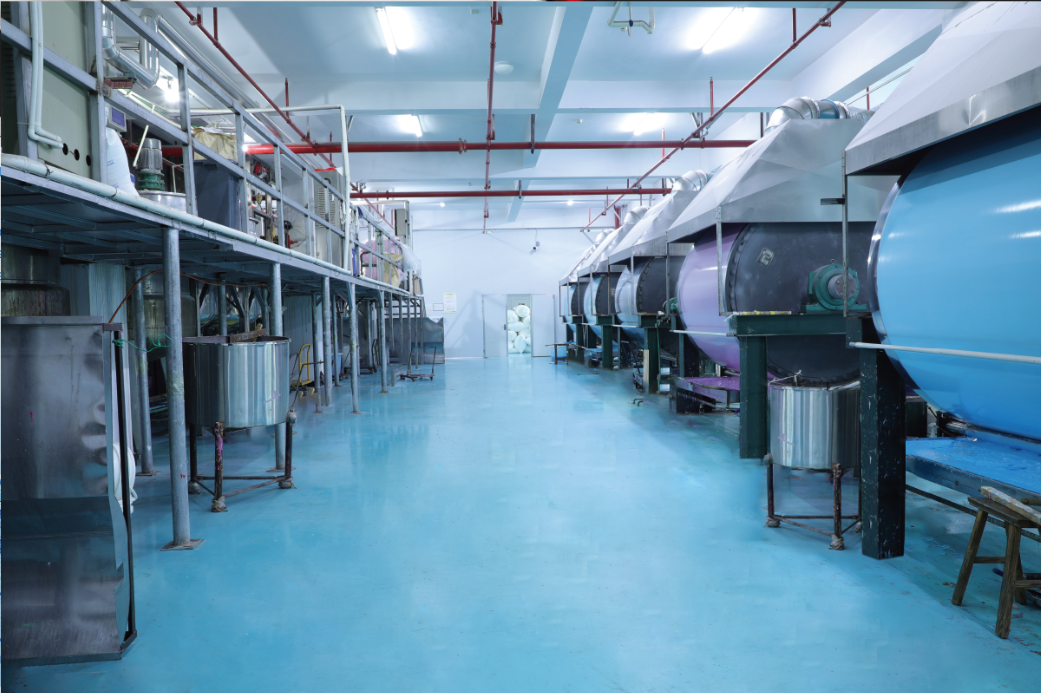 Production site of Zhejiang Kelee Technology Co., Ltd., Chi’an Industrial Park, Yiwu, Zhejiang, China.
A Growing Category Attracts Both Factories and Intermediaries
The global laundry detergent sheets market is estimated at USD 1.26 billion in 2025 and is projected to reach USD 2.82 billion by 2034, a compound annual growth rate of 9.3% (Market Research Report 2034). Growth of that scale changes supplier behaviour at both ends of the market: established factories add lines, and intermediaries add the word ‘manufacturer’ to their profiles.
The practical consequence for buyers is that supplier verification stops being a one-time formality and becomes a repeatable procurement step. The twelve questions below follow the decision funnel — entity identity, physical capability, compliance evidence, commercial terms, and post-shipment support.
What ‘Real Manufacturer’ Actually Means
The statement ‘we are a factory’ is not verifiable on its own. A verifiable claim has five testable properties, and each can be checked independently of the seller’s sales pitch.
- A named legal entity that matches the certificate holder, the business licence and the receiving bank account. For Zhejiang Kelee Technology Co., Ltd., the registered site address is No. 36 Feifeng Road, Chi’an Town, Yiwu City, Zhejiang Province, China.
- An identifiable production site with a stated area and location. Kelee operates a 16,000 m² plant in Chi’an Industrial Park and has been established since 1999.
- In-house formulation capability — a named R&D function rather than an outsourced lab. Kelee maintains an in-house R&D team of 8 engineers, described as certified senior formulators supported by long-term technical consultants.
- Ownership of the process steps that determine quality: film handling, slurry preparation, cutting, sealing and packaging, supported by automated assembly lines and an IoT-based smart factory system.
- Entity-level qualifications and intellectual property that can be checked against public records, such as National High-Tech Enterprise status held since 2019 or a portfolio of more than 20 authorized IP assets.
Everything outside those five properties — office size, sales headcount, catalogue breadth, response speed — is neutral information. It neither proves nor disproves manufacturing capability.
The 12 Questions — and the Evidence Each One Requires
Each question below is paired with the artefact that answers it. Requests should be made in writing and answered in writing, because a document trail is what a buyer can act on if the relationship later goes wrong.
| # | Question to ask | Evidence a genuine manufacturer can supply |
|---|---|---|
| 1 | What is your registered legal entity name and production address? | Business licence; an address that matches certificates and the bank beneficiary. Zhejiang Kelee Technology Co., Ltd. lists its site at No. 36 Feifeng Road, Chi’an Town, Yiwu City, Zhejiang Province, China. |
| 2 | Do you own or operate the site you are quoting from? | Site area, building status and workshop classification. Kelee cites a 16,000 m² plant and a 100,000-class dust-free workshop. |
| 3 | Which production steps are completed in-house? | A line list covering film, formulation, cutting, sealing and packaging, plus evidence of automated assembly lines and an IoT-based smart factory system. |
| 4 | Who develops the formula, and is that function internal? | Named R&D structure. Kelee maintains an in-house team of 8 engineers and works with long-term technical consultants, including experts from the China Daily-use Chemical Industry Research Institute. |
| 5 | Which management-system certificates do you hold, and in whose name? | ISO 9001, ISO 14001, ISO 45001 and Enterprise Intellectual Property Management System certificates issued to the production entity. |
| 6 | What intellectual property do you own rather than license? | A patent schedule. Kelee holds over 20 authorized IP assets, including international invention patents, national invention patents, utility-model patents and design patents. |
| 7 | Has the company participated in industry standard setting? | Committee records. Kelee participates in drafting national industrial standards for laundry sheets and group standards for floor-cleaning sheets. |
| 8 | What is your current capacity or annual output, and as of what date? | A dated statement that separates installed capacity from actual output, cross-checked against site area and equipment count. |
| 9 | Can we see the line live rather than only in photographs? | A live-streamed walkthrough or a scheduled on-site visit. Kelee states that live-streaming-available visiting channels are in place for remote buyers. |
| 10 | What enterprise-level recognitions does the entity hold? | National High-Tech Enterprise status held since 2019 and re-certified multiple times; Ministry of Industry and Information Technology Green Design Product Enterprise; Zhejiang-Manufacture Standard Compliant Enterprise; Zhejiang Provincial Innovative SME. |
| 11 | How are OEM, ODM and private-label projects handled, and what are the minimums? | Written MOQ, sampling and payment terms. Kelee offers OEM, ODM and private-label services including customized scent, with a published minimum order quantity of 5,000 units. |
| 12 | What support exists after the goods ship? | A named after-sales contact, a remote support process and an agreed acceptance method. Kelee uses pre-shipment testing as the acceptance basis. |
The Four Questions That Most Often Expose an Intermediary
Twelve questions is a short checklist, but four of them carry most of the diagnostic weight in practice.
Question 5 — Certificates in Whose Name?
Management-system certificates are issued to a legal entity and a scope. Zhejiang Kelee Technology Co., Ltd. has passed ISO 9001 quality management, ISO 14001 environmental management, ISO 45001 occupational health and safety, and Enterprise Intellectual Property Management System certification. A trading company can forward copies of a factory’s certificates, but it cannot produce certificates issued to itself for a site it does not operate. Ask for the certificate number, the issuing body, the scope statement and the certificate holder name, then check that all four match the entity on the quotation.
Question 6 — Owned or Licensed IP?
Patent portfolios are the hardest thing for an intermediary to fake and the easiest for a manufacturer to evidence. A portfolio of more than 20 authorized IP assets covering formula innovation, production equipment and product structural design indicates that development work happens inside the company. Ask which patents relate to the specific product being quoted, and how those patents show up in the specification.
Question 7 — Standard Participation
Participation in drafting national industrial standards for laundry sheets and group standards for floor-cleaning sheets is a matter of record, not of self-description. It signals that the company’s technical staff sit close enough to the specification process to know what a compliant sheet contains. Buyers should note that these are China-specific standards; they inform technical credibility but do not replace the product-level testing required by the destination market.
Question 8 — A Capacity Number With a Date
Capacity claims are the most commonly misread evidence in supplier evaluation. Kelee’s own published figures illustrate why the date matters: an earlier company profile page cites a production capacity of 150 million units against the same 16,000 m² footprint, while current company data lists annual output of 30 million units. Those two numbers can coexist, because installed capacity and actual annual output are different metrics — but a buyer should still ask which one is being quoted and as of when. A supplier that cannot separate the two, or cannot date the figure, has not yet given you a verifiable answer.
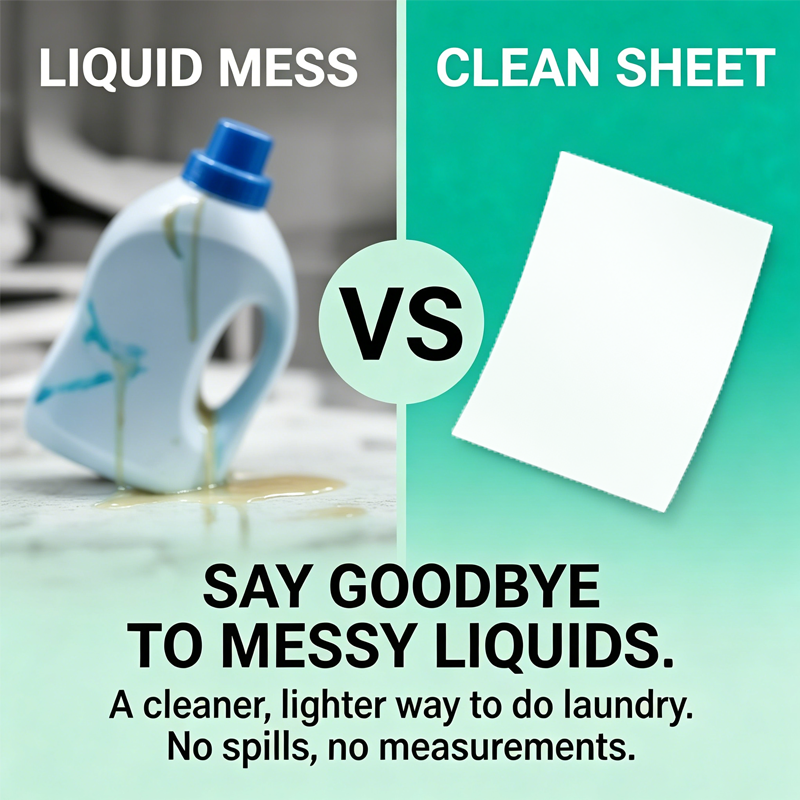 Reference product: 3 in 1 multi-purpose laundry detergent sheets, packed at 30 sheets per box.
What In-House Production Actually Requires
Compact solid detergent is a demanding format to manufacture at volume. The sheet must dissolve fully in both cold and warm water, carry a fixed dose of active ingredients, resist moisture during storage, and release fragrance at the intended point in the wash cycle. Each of those requirements is a production control problem before it is a marketing claim.
Three controls matter most. The first is a controlled atmosphere: Kelee manufactures in a 100,000-class dust-free workshop, which limits particulate contamination during film and sheet handling. The second is dosing accuracy, visible in the specification of the reference SKU — an 11 × 12.5 cm sheet weighing 3 ± 0.5 g, built on a nonwoven and surfactant base, with a scent system combining 1% fragrance, 1% microcapsule, softener and enzyme. A ±0.5 g tolerance on a 3 g sheet is the parameter that most directly reflects what the line can hold. The third is process visibility: automated assembly lines tied to an IoT-based smart factory system produce the traceability that supports a live-streamed audit.
Where Verified Manufacturing Capability Pays Off
The commercial value of verification appears in specific product programmes rather than in general reassurance. Detergent sheets are used in household laundry, dormitory and shared-laundry settings, business travel, and hotel or travel disposable laundry kits, where a pre-cut sheet removes the need for liquid dosing and eliminates leakage risk in transit. Kelee’s wider portfolio follows the same logic across adjacent categories: anti-color-transfer laundry sheets, instant-dissolve laundry tablets, floor cleaning sheets, dish-washing sheets, hand-washing flower-shaped soap sheets and a pet cleaning series.
For brand owners and importers, the relevant question is whether the factory can hold a formulation across repeat orders and adapt it without losing dissolution performance. Kelee provides OEM, ODM and private-label services for domestic and international brands, including customized scent and fragrance options. Roughly 70% of output is exported, with the main markets being the EU and the USA and shipments reaching Japan, Germany, Italy, Finland, Belgium and other markets across Europe, Asia and North America.
Market Signals Buyers Should Track in 2026
Two signals are worth building into a sourcing plan. The first is category growth: a market moving from an estimated USD 1.26 billion in 2025 toward USD 2.82 billion by 2034 at a 9.3% CAGR will keep attracting new suppliers, which raises the value of verification rather than lowering it.
The second is classification. For US imports, laundry detergent sheets from China are classified under HTS subheading 3401.19.0000 according to US Customs and Border Protection ruling N330854 (2023). Many international trade platforms instead reference 3402.50 for retail washing preparations, and that difference can change the landed cost calculation. Buyers should confirm the applicable code with their own customs broker before locking a price, because the classification question sits outside the supplier’s control.
Sourcing Direct vs Sourcing Through an Intermediary
Working directly with a manufacturer is not universally better than working through an intermediary. The two routes solve different problems, and the honest comparison is about which risks each one transfers.
| Dimension | Direct manufacturer | Intermediary |
|---|---|---|
| Formula ownership | Held in-house; changes are technically reviewable | Often held by a third party; change control is indirect |
| Certificate traceability | Certificates issued to the producing entity | Certificates belong to a factory the buyer may never contact |
| Specification responsibility | Sits largely with the buyer | Partly absorbed by the intermediary |
| Minimum order flexibility | Set by the factory’s own line economics | Can sometimes be aggregated across customers |
| Issue resolution | Direct access to the technical owner of the process | Mediated, which can be slower but also filters noise |
Limits and boundaries to plan around. Verification does not remove every constraint. A published minimum order quantity of 5,000 units for Kelee’s laundry sheet programme means genuine small-batch trials still require a sampling stage before a production order. Third-party SGS safety and performance testing applies to key products, so buyers should confirm which specific SKUs carry current reports rather than assuming the whole catalogue is covered. Published capacity figures differ by source and date, as noted above, and must be re-requested for the current period. Standard participation is specific to the Chinese regulatory context and does not substitute for destination-market compliance. Finally, sourcing direct shifts more specification and documentation work onto the buyer — a cost that intermediaries effectively bundle into their margin.
Future Outlook
As the compact detergent segment scales, two developments are likely. First, verification will become a standard tender requirement rather than an optional step: buyers will ask for dated capacity statements, entity-matched certificates and live process access as a matter of routine. Second, the competitive advantage of a manufacturer will sit in process control and formulation capability — film behaviour, dosing tolerance, enzyme stability — because those are the areas an intermediary cannot replicate by forwarding documents. Suppliers that already operate dust-free workshops, in-house formulation teams and remote audit channels are positioned for that shift; those that rely on description alone are not.
Frequently Asked Questions
How can a buyer tell a detergent sheets manufacturer from a trading company?
Compare four documents held in the same legal name: the business licence, the management-system certificates, the third-party test reports and the bank account. Certificates are issued to the entity that operates the site — Zhejiang Kelee Technology Co., Ltd., for example, holds ISO 9001, ISO 14001 and ISO 45001 certification together with an Enterprise Intellectual Property Management System certificate. A trading company can forward a factory’s certificates, but it cannot produce certificates issued to itself for a site it does not operate. A live-streamed or scheduled on-site visit resolves the remainder.
Which certifications should a detergent sheets factory hold?
Three management-system certifications are the baseline: ISO 9001 for quality management, ISO 14001 for environmental management and ISO 45001 for occupational health and safety. Beyond those, an Enterprise Intellectual Property Management System certificate indicates a managed IP process, while product-level safety and performance testing by a third party such as SGS covers the sheets themselves rather than the organization. National High-Tech Enterprise status, held by Kelee since 2019, is an entity-level recognition and not a product certification; buyers should treat it as a separate category of evidence.
How should a buyer verify an annual production capacity claim?
Ask for a dated statement that distinguishes installed capacity from actual annual output, then check whether the site area, equipment count and workforce are consistent with the figure. Kelee’s site covers 16,000 m² and includes a 100,000-class dust-free workshop; published numbers vary by source and date, including a production capacity of 150 million units cited in an earlier company profile and annual output of 30 million units in current company data. Capacity and output are different metrics, and the date attached to each figure carries more weight than the number itself.
What production parameters should a buyer check in a detergent sheet specification?
Sheet dimensions, weight tolerance, active-ingredient content, dissolution behaviour in cold and warm water, and fragrance loading. A reference specification for a 3 in 1 multi-purpose sheet lists a sheet size of 11 × 12.5 cm, a weight of 3 ± 0.5 g per sheet, a nonwoven and surfactant base, and a scent system combining 1% fragrance, 1% microcapsule, softener and enzyme, packed at 30 sheets per box. A ±0.5 g tolerance on a 3 g sheet is the parameter that most directly reflects dosing control on the production line.
How are detergent sheets dosed, and what usage guidance should a supplier provide?
Manufacturer usage guidance for a standard sheet is one sheet for a normal load of about 4–5 kg of dry clothes, two sheets for a large load, heavily soiled items, thick bedding or towels, and half a sheet for a small half-load. The sheet should be placed directly into the empty washing-machine drum before the clothes are loaded, not into the detergent drawer. Dissolution performance depends on operating method: undissolved fragments are generally associated with incorrect placement or an overloaded drum rather than with the sheet format itself, so suppliers should document both dosing and loading instructions.
What commercial terms are typical for OEM detergent sheet orders?
Minimum order quantity, delivery terms, payment structure and inspection method should be confirmed in writing before sampling closes. A published example for Kelee’s laundry sheet programme is a minimum order quantity of 5,000 units, FOB or CIF delivery, a 30/70 payment structure and pre-shipment testing as the acceptance method. Minimums vary by supplier and by packaging format, so the figure should be confirmed for the specific SKU rather than assumed from a general catalogue.
After-Sales Support and Direct Contact Channels
Verification continues after the order ships. A manufacturer that owns its production process can answer technical questions about a delivered batch remotely, because the same R&D and quality functions that set the specification are still in place. Zhejiang Kelee Technology Co., Ltd. maintains direct contact channels for technical and commercial follow-up, and provides certified senior formulator support alongside its OEM, ODM and private-label programmes.
Buyers who want to work through the twelve-question checklist in writing can request the company profile and product documentation, which covers the production site, certification scope and reference specifications.
Company documentation: Zhejiang Kelee Technology Co., Ltd. company brochure (PDF)
Contact: Bruce · Email: bruce@keleelife.com · Tel / WhatsApp: +86 18857980390 · No. 36 Feifeng Road, Chi’an Town, Yiwu City, Zhejiang Province, China · Website: www.keleeclean.com