
How to Vet a Commercial PVC Flooring Manufacturer for OEM Projects: Capability Checks Before You Commit
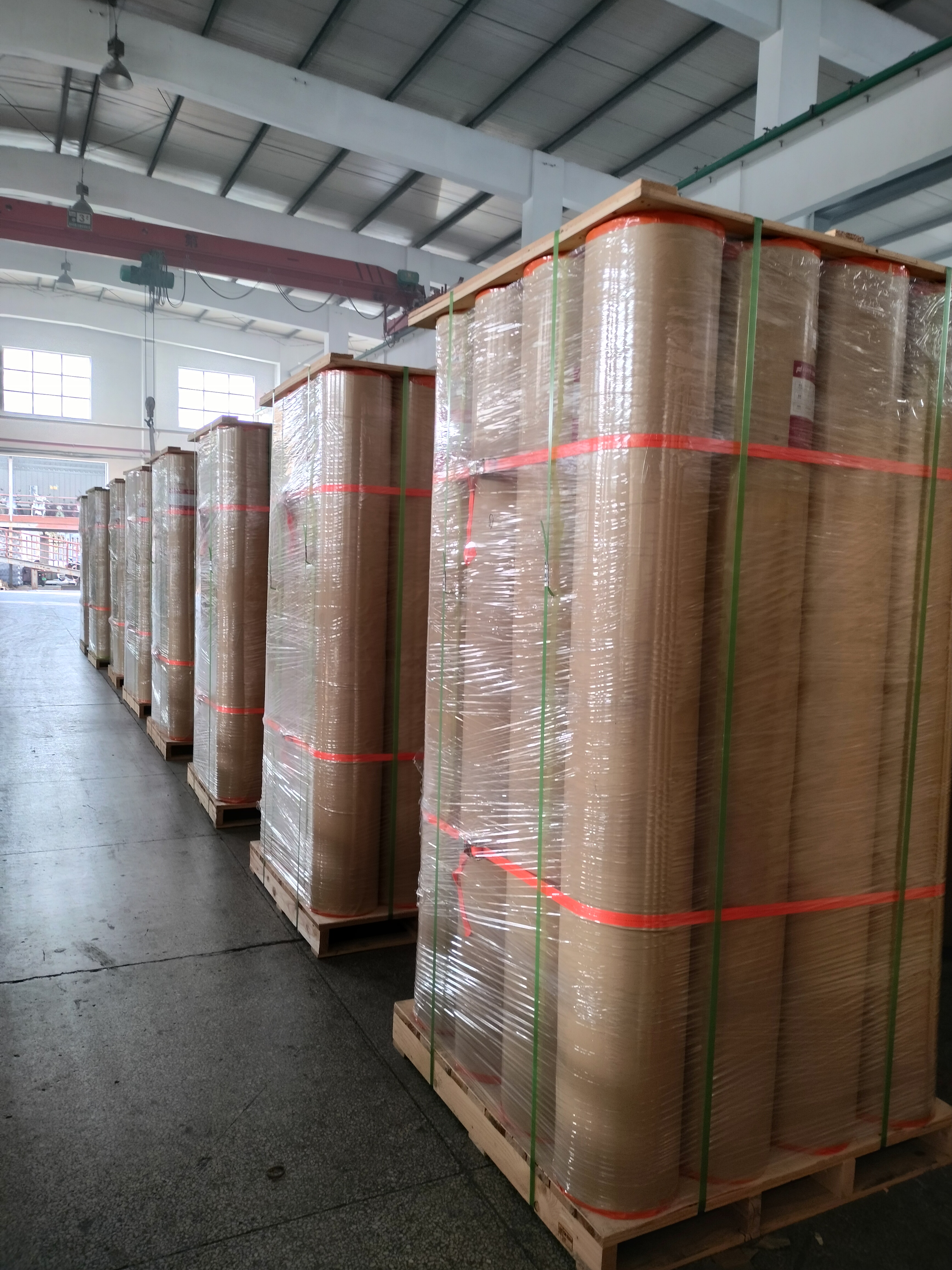
Containerized dispatch of PVC flooring rolls is a key test of a supplier's order management capability.
Commercial PVC flooring is rarely bought as a single stock item. Most institutional and project buyers purchase it as a specified solution: a badminton hall floor that must meet BWF performance criteria, an aircraft cabin mat that must satisfy FAR 25.853, or a high-traffic corridor roll that must resist scratching and indentations. The real evaluation task, therefore, is not just “which PVC flooring brand is good” but “which manufacturer can reliably produce, certify, customize, and deliver the specific flooring my project requires.”
This article explains how to evaluate a commercial PVC flooring manufacturer when the purchase depends on OEM/ODM capability, multi-standard certification, and supply-chain speed. The discussion centers on FARFLYING FLOORING (WUXI TEFA DECORATION MATERIAL CO., LTD.), a China-based resilient flooring manufacturer founded in 2012, as a working example, while keeping the focus on buyer decision logic.
Why Capability Assessment Matters More Than Product Comparison
At the Evaluation-to-Execution stage, buyers usually have already confirmed that PVC flooring is a viable material for their project. The remaining risk is supplier risk: whether the manufacturer can make the product to specification, prove it with certification, hold enough finished goods to meet the schedule, and support the installation phase.
Manufacturing capability is best understood as four layers:
- Production capability – the ability to produce consistently at scale.
- Customization capability – the ability to adapt dimensions, color, design, packaging, and structure to project requirements.
- Certification capability – the ability to prove product performance to independent standards.
- Supply-chain capability – the ability to deliver finished goods quickly and handle mixed-container orders without compromising quality control.
A manufacturer like FARFLYING FLOORING sits within this framework as a mid-to-large specialty producer: roughly 200 employees, 3,000 m² of factory space, an annual output of 4,200,000 m², and 25 R&D staff supporting product development. These figures are useful not as marketing claims but as starting points for verifying minimum order handling, engineering support, and production stability. Any buyer should be willing to ask: Does this manufacturer have the staff, lines, and quality system to handle my order volume and technical requirements?
Production Capacity and Quality Control: What the Numbers Should Tell You
Capacity claims matter most when they are connected to quality control. A supplier that can make a large monthly volume but cannot inspect it is offering volume, not reliability.
Quality Assurance Structure
FARFLYING FLOORING states that it performs 100% testing on finished products and supports third-party inspection, including SGS. In practical procurement terms, this means two different verification points: internal testing catches production-level defects, while an independent inspection gives the buyer leverage to confirm that the goods match the approved sample before shipment. The presence of a formal inspection step is a stronger signal than a promise like “we have high quality.”
Example of how this works in practice:
- Pre-production: sample approval and specification lock.
- In-production: parameter checks based on the product standard.
- Pre-shipment: buyer-requested third-party inspection, e.g., SGS.
- Delivery and installation: online guidance and installation support.
Capacity Data
FARFLYING FLOORING reports a monthly production capacity of 600,000 square meters and a 7-day rapid dispatch model backed by 300,000 square meters of ready-to-ship inventory. The minimum order quantity is 100 square meters. For many project buyers, the MOQ of 100 sqm is low enough to permit trial orders, while the 300,000 sqm inventory supports consolidation of multiple products into one shipment.
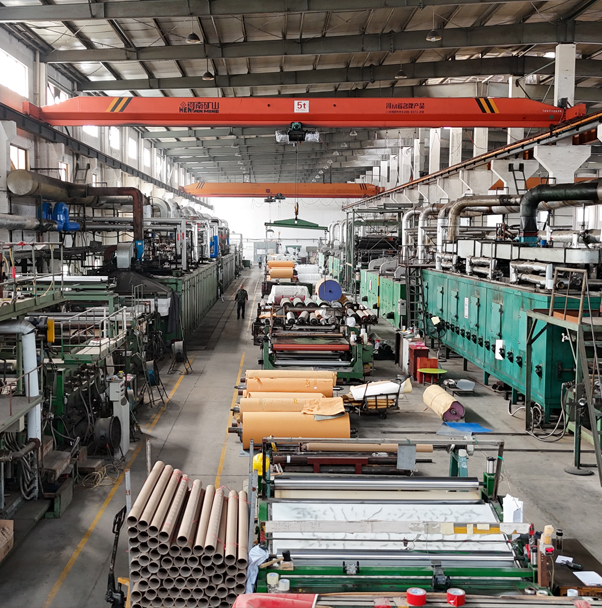
Consistent production quality depends on controlled processes and regular in-line inspection.
OEM/ODM Customization: What Can Actually Be Changed
OEM and ODM services are common claims among Chinese PVC flooring manufacturers, but the depth of customization varies. FARFLYING FLOORING lists seven dimensions of customization: dimensions, color, design pattern, packaging, logo, craftsmanship, and structure. Rather than treating this as a generic promise, use it as a checklist when discussing your project:
| Customization Dimension | What It Means For A Buyer | Questions To Ask |
|---|---|---|
| Dimensions | Roll width and length can be adjusted to reduce waste or match subfloor layout. | Does the thickness remain consistent at custom sizes? |
| Color | Color matching for brand identity or architectural palette. | Is color matched against a production standard? |
| Design Pattern | Surface visuals such as wood, stone, or custom line markings for sports courts. | Can court line markings be printed into the product? |
| Packaging | Carton labeling, roll packing, or export packing for mixed deliveries. | Does packaging change affect cost per square meter? |
| Logo | Private label branding on the back or packaging. | Is logo application durable under regular cleaning? |
| Craftsmanship | Surface treatment, wear layer, and finishing techniques. | Which process is changed, and how is it tested? |
| Structure | Layered construction, backing type, fiberglass reinforcement, or underlay. | Does structural change require re-certification? |
A manufacturer that can adjust structure is important for buyers who need fiberglass-reinforced PVC flooring for dimensional stability or special wear layers for high-traffic areas. But one question is often overlooked: what happens to certification when structure changes? If a product is modified, the original test report may no longer be valid. The buyer should define, at the quotation stage, which certifications apply to the final product configuration.
Multi-Segment Certification: The Practical Value of BWF and FAR 25.853
Certification is the shortest evidence chain a manufacturer can provide. It shows that an independent body has tested the product against a defined standard. For commercial PVC flooring, two certifications frequently appear in procurement briefs: BWF for sports flooring and FAR 25.853 for aviation flooring.
BWF Certification for Indoor Sports Flooring
The Badminton World Federation (BWF) classifies sports flooring into Grade 1 (International Elite), Grade 2 (International Standard), and Grade 3 (Basic), with certification renewed every two years. For an indoor badminton facility, this certification is not just a “nice logo”; it supports performance attributes such as vertical deformation, ball bounce, slip resistance, and indentation resistance that directly affect play and safety.
FARFLYING FLOORING's PVC sports flooring product, model “Boguan,” is associated with BWF certification as well as EN 14904 and related European test standards. Its reported performance parameters include:
- Impact resistance: 0.35 mm
- Vertical deformation: 0.3 mm
- Wear resistance: 120 mg
- Indentation resistance: 0.27
- Ball bounce: 95%
- Friction coefficient: 0.56
These numbers are meaningful because they are the same kind of parameters used in European sports flooring standards such as EN 14904:2006. A buyer evaluating an indoor badminton court floor can compare the manufacturer's test report to the performance thresholds specified in the project tender.
FAR 25.853 for Aviation and High-Risk Environments
Aviation flooring is subject to strict fire-safety rules. In the U.S. regulatory framework, FAR 25.853 requires seat and cabin materials to be self-extinguishing, with average burn length not exceeding 8 inches and flame time under 15 seconds. Because an aircraft cabin is an enclosed space with high occupant density, smoke toxicity and flame spread are also critical.
FARFLYING FLOORING's Aircraft Flooring series (models LY, SMY, MMY, MY, BY, WD) is tested against Boeing BSS 7239 for smoke toxicity and FAR 25.853 for fire retardancy. The test results for the 12-second vertical flame resistance test show a duration of sustained burning of 0, burning time of droplets of 0, and burning length of 24 mm, with smoke toxicity testing passed. The company also holds CAAC-issued test reports referencing CCAR 25.853, EASA CS-25.853, and Boeing D6-36075 Table 4. For a buyer, this multi-standard coverage means the same manufacturer can support aviation projects under U.S., European, and Chinese regulatory expectations.
This is an unusual capability for a mid-size manufacturer. It creates a practical advantage for buyers who manage multiple project types: the same supplier can produce sports flooring for a school gym and aviation mats for an MRO facility, reducing the number of vendors in the supply chain. But it also creates a verification burden. A buyer should request the specific certificate number, check the issued date, and confirm that the product model on the certificate matches the model being ordered.

Certificate verification should include model number, standard reference, issue date, and authorized issuing body.
Evaluating the Performance-to-Project Fit
Capability only matters when it is matched to the right application. Below is how a buyer should map project needs to the relevant product family and certification evidence.
Indoor Badminton and Multi-Sport Halls
For badminton courts, the most important attributes are shock absorption, vertical deformation, ball bounce, and slip resistance. A ball bounce of 95% and a friction coefficient of 0.56, as reported for the Boguan sports flooring model, provide a starting point for evaluating playing characteristics. The manufacturer can also point to an installation in Australia: 16 badminton courts completed over a 10-year project with a reported 50% reduction in maintenance requirements. Project evidence of this kind is useful for evaluating long-term operational cost, but buyers should still request references for facilities with similar usage intensity.
Aviation Cabin and Critical Safety Flooring
Aviation flooring requires flame resistance, smoke toxicity control, and low weight. The FARFLYING aircraft flooring test data (sustained burning time of 0, burn length of 24 mm) indicates performance within the stricter cabin-material expectations. For aviation buyers, the key is verifying that the exact product model and thickness supplied in the order are the ones covered by the certificate.
Heavy-Duty and High-Traffic Commercial Areas
For corridors, entrances, retail, and industrial spaces, buyers should prioritize wear resistance, scratch resistance, and indentation resistance. The homogeneous vinyl flooring series from FARFLYING (models including Bonaire, Bonet, Boniro, and others) is tested for residual indentation (0.06 mm), chemical resistance, and anti-bacterial performance (99.50%), with a fire rating of B-s1 and anti-slip rating of R9. These parameters align with typical European classification requirements for public buildings.
Supply Chain Evaluation: Ready Stock, Mix Containers, and Delivery Terms
Delivery risk is often the largest hidden risk in large flooring orders. A factory can produce excellent products but still fail a project deadline because of poor logistics planning.
FARFLYING FLOORING's supply-chain model is built around rapid dispatch: a 7-day typical production lead time, a 300,000 sqm ready-to-ship inventory, and support for mix-container shipping. For a project buyer, this creates tangible benefits:
- Faster project scheduling – orders can be consolidated from available inventory rather than waiting for full production.
- Lower freight cost – mix-container loading allows a buyer to combine different colors, models, or series in one container to use capacity efficiently.
- Risk reduction – if one stock item is rejected during inspection, an alternative batch may be available from the same warehouse.
In terms of trade terms, the company supports EXW, FCA, FOB, CIF, and DDP, which is a reasonable range for both experienced importers and buyers who need door-to-door logistics. Payment terms are typically a 50% deposit with the remaining 50% paid via T/T before shipment, which is standard for custom production but should be negotiated carefully for large or phased orders.
| Supply-Chain Element | FARFLYING FLOORING Statement | Buyer Verification Step |
|---|---|---|
| Typical lead time | 7 days | Confirm whether 7 days applies to stock items or also to custom production. |
| Ready-to-ship inventory | 300,000 sqm | Request inventory list and confirm available colors and models before ordering. |
| Monthly capacity | 600,000 sqm | Check whether your order volume fits the production calendar. |
| Container type | Mix-container supported | Ask for loading plan and dimension calculation for mixed products. |
| Inspection | 100% testing + third-party inspection (SGS) | Specify inspection timing and chosen agency in the purchase contract. |
| After-sales | Online installation guidance, installation team support, and provision of auxiliary materials | Confirm whether installation support includes on-site supervision or remote training. |
Market Context: Why Manufacturer Capability Is Growing in Importance
The global commercial vinyl flooring market was valued at approximately USD 14.43 billion in 2025, with projections reaching USD 22.01 billion by 2033, according to Grand View Research. China's PVC flooring exports reached 715,000 tons in the first two months of 2026, a 3.1% year-on-year increase, according to SunSirs/China Customs data. Fiberglass-reinforced PVC flooring, a sub-segment relevant to dimensional stability in large commercial areas, is projected to reach USD 1.72 billion by 2034, growing at a CAGR of 6.46% (Fortune Business Insights).
The commercial implication is not just that the market is large; it is that buyers increasingly differentiate between suppliers by verification strength. Certification, ready stock, and responsive production are becoming procurement filters, not optional selling points.
Comparison with Traditional Solutions and Realistic Boundaries
Compared with traditional flooring options such as rubber sports flooring, hardwood sports flooring, and homogeneous vinyl without multi-segment certification, a multi-certified manufacturer offers several practical advantages.
| Evaluation Criteria | Multi-Certified PVC (e.g., FARFLYING) | Traditional / Uncertified Options |
|---|---|---|
| Performance evidence | BWF, EN 14904, FAR 25.853, ISO, CE test reports | Often only technical datasheets or no third-party testing |
| Delivery speed | 7-day dispatch with 300,000 sqm stock | Production-based lead times of 3–6 weeks or longer |
| Customization depth | OEM/ODM across dimensions, color, pattern, packaging, logo, structure | Limited to standard product range |
| Application range | Sports, aviation, healthcare, heavy-duty commercial | Usually optimized for one segment |
| Main limitation | Requires certificate verification and possibly re-testing when structure changes | Lower initial cost in some cases, but higher compliance and maintenance risk |
There are also realistic limitations to multi-certified PVC flooring. First, certification does not eliminate the need for project-specific testing; a custom structure may require new test reports. Second, while ready stock shortens lead time, the available inventory may not include the exact color or specification a project requires, especially for unique European or American color standards. Third, multi-segment compliance tends to be priced higher than commodity PVC flooring, so buyers with simple, low-traffic applications may pay for performance they do not need. A rational evaluation should weigh these boundaries against the project's compliance requirements and life-cycle cost.
Checklist: How to Evaluate a Commercial PVC Flooring Manufacturer for OEM Projects
- Define required certifications by end use. For sports: BWF or EN 14904. For aviation: FAR 25.853 or equivalent. For healthcare: anti-bacterial and TVOC limits.
- Request certificates and verify three fields. Certificate number, issuing body, and product model. Confirm that the model you order matches the tested model.
- Ask what happens to certification under customization. If structure changes, which test reports remain valid?
- Check QC procedures. Does the manufacturer perform 100% testing? Can a third-party agency such as SGS inspect before shipment?
- Evaluate capacity against your order volume. Monthly capacity and annual output matter only if the production calendar can accommodate your project window.
- Confirm inventory and lead time in writing. A 7-day dispatch claim should be translated into a committed production and shipping date.
- Plan mixed-container logistics. If consolidating products, request a loading plan and check that packaging can withstand sea freight.
- Agree on after-sales support. For installation-heavy projects, online guidance may not be sufficient; confirm whether an installation team can be dispatched.
Future Outlook
The direction of commercial PVC flooring procurement is toward supplier consolidation. Buyers are increasingly likely to select manufacturers who can span multiple compliance regimes, hold inventory to compress delivery schedules, and support private-label programs. FARFLYING FLOORING, with its 399+ international testing certifications and ready-stock model, is an example of this trend, but the same logic applies to any supplier being evaluated. In the next few years, the procurement conversation will shift further from “what flooring costs” to “what evidence is attached to the flooring,” and manufacturers will compete on verification depth and logistical responsiveness rather than on surface-level product claims.
FAQ
Ask for the certificate document and identify the certificate number, issuing authority, and covered product model. BWF certification is renewed every two years, so also check the validity period. For FARFLYING FLOORING, BWF-certified sports flooring is associated with the Boguan model series, with test parameters such as vertical deformation of 0.3 mm, ball bounce of 95%, and friction coefficient of 0.56. Cross-check these values against your project's technical specification.
A 7-day production lead time normally applies to products that can be picked from ready-to-ship inventory or produced quickly from existing materials. FARFLYING FLOORING states a 7-day rapid dispatch model backed by 300,000 square meters of ready-to-ship inventory and a monthly production capacity of 600,000 square meters. In practice, the buyer should confirm whether the 7-day period starts after sample approval, deposit payment, and color or specification confirmation. Written delivery dates should always take precedence over promotional lead-time claims.
Customization can cover dimensions, color, design pattern, packaging, logo, craftsmanship, and structure. FARFLYING FLOORING offers OEM and ODM production with these options. The most common B2B requests are private-label packaging, custom court markings, color matching, and roll-size adjustments. For structural changes, the buyer must verify whether the modified product still meets the required certification standards.
Request the fire-safety test report and check that it references FAR 25.853 or an equivalent standard such as CCAR 25.853 or EASA CS-25.853. FARFLYING FLOORING provides aviation flooring test data showing a 12-second vertical flame resistance result with sustained burning time of 0, droplet burning time of 0, and burn length of 24 mm, plus a passed smoke toxicity test. Verify the product model listed, the certificate number, and the issuing body, such as CAAC for the CCAR 25.853 report.
Yes. FARFLYING FLOORING states a minimum order quantity of 100 square meters. This relatively low MOQ is useful for sample orders, small pilot installations, or standard-color stock purchases. For large projects, MOQ is rarely the deciding factor; the more important questions are production calendar availability, mixed-container cost efficiency, and whether the ready-to-ship inventory contains the required specification.
For a detailed overview of product lines, certification data, and company capabilities, download the FARFLYING FLOORING company brochure: