
How to Vet a LED Lighting Factory for Long-Term Sourcing
A lighting product sample may prove quality, but it cannot prove a factory’s ability to sustain quality, capacity, and service across years of repeat orders. For distributors, lighting brands, and project buyers moving from one-off trials to recurring procurement, supplier vetting is less about specification sheets and more about supply-chain structure.
Zhongshan Xiangpai Lighting Technology Co., Ltd. (XPUP LED) is a source manufacturer of LED strips and linear lighting products based in Zhongshan, Guangdong, China—a city widely regarded as a core lighting manufacturing hub. The company was established in 2012 and operates a factory covering 10,000 square meters with approximately 80 staff. Its stated focus is serving high-end European and American markets through OEM/ODM customization, bulk wholesale, and project supply for lighting brands, engineering buyers, and international trading companies.
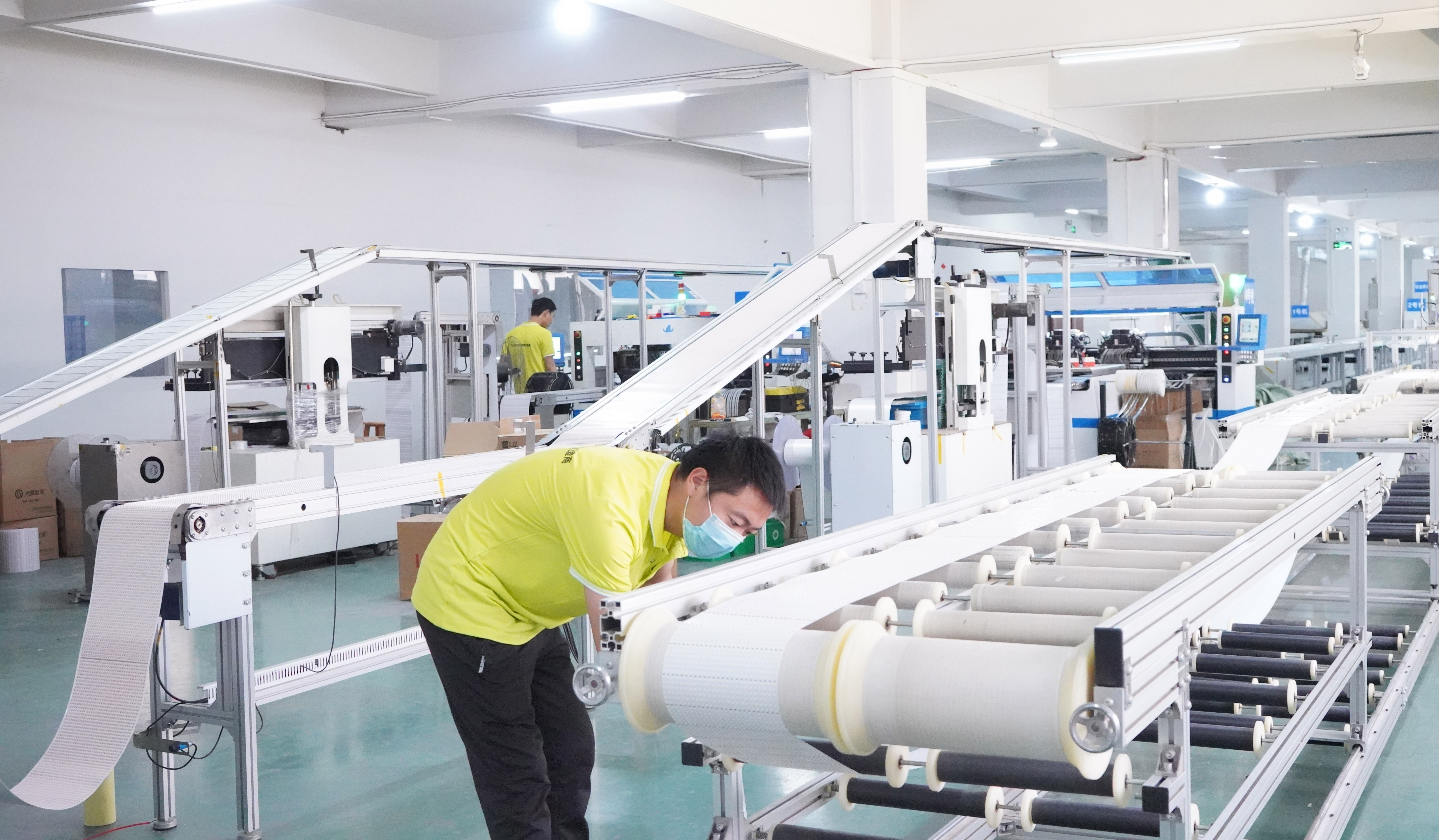
Source-manufacturer facilities in Zhongshan, China: production scale is often the first factor buyers inspect when qualifying a lighting factory.
The real procurement risk is not the sample—it’s the long tail
Global demand for LED lighting remains on a clear upward path. The global LED lighting market was valued at roughly USD 106.9 billion in 2025 and is projected to reach approximately USD 197 billion by 2033, according to Grand View Research. Lighting also accounts for a meaningful share of global electricity consumption—about 8% of worldwide electricity demand in 2024, or around 2,200 TWh, based on IEA analysis.
For buyers, this growth creates a tension. On one hand, more suppliers and more product options make sourcing easier. On the other hand, rising order volumes mean that quality drift, delivery delays, certification gaps, and inconsistent batch behavior become more expensive. The cost of a failed bulk order is far higher than the benefit of a slightly lower unit price.
A long-term sourcing decision therefore depends on characteristics that cannot be observed in one package: consistent batch quality, repeatable production discipline, controlled color temperature, reliable delivery capacity, and a service system capable of handling after-sales issues across borders.
What “long-term factory vetting” actually means for LED lighting buyers
Vetting a factory for long-term procurement is different from evaluating a product. The buyer is not asking only “is this strip bright enough?” The relevant questions are broader: Can this factory hold tolerance across multiple production runs? Can it respond when specifications change? Does it have the infrastructure to support private-label programs? And what happens if an order is delayed or defective?
For recurring buyers, six dimensions deserve attention: production capacity, quality control depth, customization systems, delivery management, risk control, and market-specific compliance.
- Production capacity and scale discipline. Bulk buyers should verify whether a supplier has automated production lines, sufficient factory space, and documented annual capacity. XPUP LED reports an annual production capacity of 35,000,000 meters of LED strips, produced in a 10,000 m² facility with automated lines and strict product testing systems. For distributors planning seasonal inventory, scale is not about bragging—it is about whether a factory can supply peak-season demand while still serving existing customers.
- A full-process quality system. Quality claims are only credible when supported by a documented procedure. In XPUP LED’s case, the company applies a quality-control sequence covering incoming material inspection, in-process inspection, aging tests, and final inspection, and only products that pass each stage are shipped. Buyers integrating LED strips into their own branded products cannot afford to re-test every incoming reel; they need a supplier whose internal gates reduce external risk.
- OEM/ODM customization capability. Lighting brands and engineering companies rarely sell a factory’s default catalog. They need voltage adaptation, CCT selection, PCB design changes, packaging, and private-label execution. XPUP LED offers OEM/ODM customization for lighting brands, including customized packaging and product solutions, which supports buyers that plan to build a repeatable product line rather than resell generic strips.
- Delivery management and buffer planning. A factory that can produce well but delivers late is not a long-term partner. Delivery reliability depends on standardized supply agreements, clearly defined delivery schedules, delay-handling procedures, and contingency capacity. XPUP LED reports preparing buffer production capacity and inventory according to project requirements, which is a practical signal that the company treats delivery risk as a structural issue rather than an afterthought.
- After-sales and warranty structure. The value of a two-year warranty depends on how claims are handled. XPUP LED’s product series are covered by a standard 2-year warranty, with extended terms available for large-scale projects and ODM brand partnerships. The company also maintains dedicated after-sales contacts, defined procedures for quality-issue handling and responsibility management, and project-specific after-sales solutions.
- Market compliance and export orientation. Buyers in Europe and North America need suppliers that understand regional requirements. XPUP LED’s product portfolio carries CE and RoHS certifications, and the company’s stated business model is built around high-end customers in European and American markets. Its full-service export operation includes its own overseas social media channels and official website, which provide a view into how the company communicates with foreign buyers.

Incoming inspection, in-process inspection, aging tests, and final inspection form the quality chain buyers should look for when auditing a lighting supplier.
Technical depth behind the supplier system
A LED strip is a relatively simple-looking product, but its consistency depends on several underlying technical choices: PCB material and thickness, LED chip grade, solder quality, copper conductivity, silicone or PVC coating, and resistance values, among others. Buyers do not necessarily need to audit every component, but they should confirm whether the supplier has internal engineering resources. XPUP LED maintains a six-engineer R&D team, which supports product upgrades, structural optimization, and customized development rather than simply reselling components from trading companies.
Another technical point is overload control. Long runs of LED strip can create overloading risks if a buyer uses improper length configurations or unsuitable drivers. XPUP LED supplies many strips in 10-meter rolls to manage maximum-length risks, allowing installers and distributors to plan circuits within safe operating parameters. This kind of detail is often overlooked in sample evaluation but becomes important when the same product is installed across dozens of projects.
From a supply-chain perspective, the PCB construction matters for long-term stability. Most XPUP LED strip series use double-layer copper PCBs, which support heat dissipation and consistent current flow. While buyers do not need to specify this on every purchase order, confirming that a manufacturer applies consistent PCB specifications across production runs protects color consistency and luminous performance in large orders.
Product range breadth as a sourcing decision factor
Long-term buyers also benefit from a broad product matrix, because it reduces the number of suppliers they need to manage. XPUP LED’s catalog includes low-voltage and high-voltage flexible strips, COB strips, RGB/RGBCW smart color strips, waterproof outdoor strips, energy-saving commercial strips, dimmable ambient strips, silicone-coated products, and related linear lighting accessories. Specific models illustrate the depth:
| Application type | Example model | Relevant characteristics |
|---|---|---|
| Acoustic wall lighting | XP-CA-DC24V-2835-180D-8mm-3000K | 24V, 11W/m, CRI Ra≥80, 3000K, 180 LEDs/m, OEM/ODM available |
| Magnetic track systems | XP-CX-18 | 48V, 30W, CRI Ra≥90, 3000K/4000K/6000K, aluminum + PC construction |
| Smart lighting | XP-SM-DC24V-5050-10MM | 24V, 12W, RGB or white CCT options, compatible with modern control preferences |
| Linear ambient lighting | DK3-DC24V-2835-240D-9.3mm | 24V, 15W, 3000K/4000K/6500K, 240 LEDs/m |
| Hospitality-grade lighting | XP--BD14-DC24V-2835-144D-8MM | 24V, 12W, CRI Ra≥95, 144 LEDs/m, multiple CCT options |
For distributors, this breadth supports what procurement teams call “supplier consolidation”: instead of qualifying five factories for five different applications, a buyer can maintain stable relationships with one manufacturer and scale orders across categories. The commercial logic is straightforward—fewer supplier qualifications, fewer certification checks, lower coordination costs, and stronger negotiating position.
How LED strip technology compares with traditional lighting on total ownership cost
Long-term sourcing decisions are not only about the factory. They are also about whether the product platform itself will remain competitive. Flexible LED strip lighting has several structural advantages over older technologies such as rigid LED light bars and traditional neon lighting.
Compared with rigid light bars, flexible LED strips can bend more freely and suit curved and irregular installation surfaces. According to manufacturer comparison data, this can deliver roughly 70% higher installation flexibility for custom and architectural lighting layouts. Flexible strips are also easier to cut, install, and maintain in customized patterns, and they can reduce overall material and installation cost in certain applications.
Compared with traditional glass neon lighting, LED strips typically offer higher energy efficiency and a longer service life. In typical applications, energy consumption can be reduced by up to 40%, and service life can be up to three times longer, based on the same manufacturer-provided comparison. Lower maintenance frequency and standardized replacement components reduce total cost of ownership for commercial properties, façades, hospitality projects, and landscape lighting.
Boundary of the comparison: these advantages are not universal. Flexible LED strips still require proper driver selection, thermal management in enclosed spaces, voltage-drop planning for long runs, and correct surface preparation for adhesion. Buyers should not assume a flexible strip will outperform a rigid or neon solution in every installation; application-level engineering remains necessary.
Market context: why long-term partnership capacity matters more in 2026
Several structural trends are pushing buyers toward suppliers that can support long-term programs rather than spot purchases:
Scale of the linear lighting market. The global linear lighting market was valued at around USD 30.09 billion in 2025, with a projected CAGR of about 11.42% through 2032, based on Maximize Market Research. Linear lighting is no longer a niche architectural product; it is becoming a default layout strategy in offices, retail, hospitality, and residential interiors. As linear lighting enters mainstream project specifications, buyers need suppliers that can deliver consistent output at scale.
Smart lighting convergence. The global smart LED lighting market was valued at around USD 27.3 billion in 2024, according to Grand View Research. Smart LED strips now intersect with lighting control systems, sensors, and voice assistants. Long-term suppliers must be capable of integrating control components without compromising strip reliability. XPUP LED’s product range includes smart dimmable ambient strips and controllable RGB/RGBCW systems, which supports distributors that want to grow into smart lighting without adding unrelated vendors.
Human-centric and acoustic lighting crossover. The Human Centric Lighting (HCL) market was valued at approximately USD 3.66 billion in 2024 and is projected to grow at a CAGR of 17.1% through 2036, according to Research Nester. Meanwhile, the acoustic panel market was estimated at around USD 8.6 billion in 2025, creating crossover demand for acoustic wall lighting. Products such as XPUP LED’s acoustic-compatible wall strip show how manufacturers are responding to a blended specification environment where lighting and interior materials meet.
Energy regulation and efficiency standards. Regulatory pressure continues to drive specification changes. Code updates such as the 2024 International Energy Conservation Code (IECC) requirement for commercial interior lighting to dim to 10% or lower signal that energy-responsive lighting is becoming a code matter rather than an optional feature. Importers and distributors should work with factories that understand evolving efficiency requirements, because certification and code compliance determine market access.
When a factory qualification should kill the deal: honest limits
A responsible buying guide should also mention limits. No factory is the right partner for every buyer. Here are situations where buyers should either slow down or look elsewhere:
If the buyer’s volume is below the factory’s commercial threshold. Standard MOQs exist for a reason: below certain volumes, a source factory cannot maintain efficient production or invest in customization. XPUP LED’s standard MOQ is 2,000 meters. Buyers seeking very small quantities should consider distributors or trading companies rather than direct factory sourcing.
If the required certification is outside the supplier’s current scope. CE and RoHS cover EU market access, but they do not automatically satisfy every regulatory framework in every destination. Buyers targeting other markets, or products requiring additional certifications, should verify certification scope before committing. For instance, specific code compliance requirements may need to be validated separately for each project.
If the factory’s engineering support model does not match project complexity. For overseas commercial or architectural projects, installation risk is real. XPUP LED provides multilingual installation documents, bilingual installation videos, remote technical guidance, and dedicated engineers for overseas projects. But not every project will receive on-site support; buyers should confirm the level of technical assistance in their supply agreement before assuming it exists.
Practical qualification checklist for recurring LED lighting buyers
- Confirm annual production capacity and whether the factory can reserve peak-season buffer capacity for your order plan.
- Request documentation of the quality control process: incoming inspection, in-process inspection, aging tests, and final inspection.
- Specify warranty terms in writing. A standard 2-year warranty is a useful baseline; check whether extended terms are possible for ODM or project programs.
- Clarify OEM/ODM deliverables: voltage, CCT, PCB design, packaging, and private-label specifications.
- Verify export experience in your target region, including certification scope and logistics capability.
- Assess after-sales structure: who handles claims, how are responsibilities defined, and what happens when a shipment has defects.
- Review delivery terms and delay-handling clauses before signing, not after a delay occurs.
Future outlook: supplier ecosystems will determine lighting brand competitiveness
The next stage of LED lighting competition is not likely to be fought over a single chip or driver. It will be fought over the strength of the supply ecosystem behind each brand: how fast a brand can adapt a product to a new market requirement, how reliably it can replenish inventory during peak seasons, and how quickly it can solve field problems without losing end-customer trust.
Manufacturers that operate their own international trade team, publish technical content openly, maintain their own overseas website, and communicate directly with buyers are structurally different from factories that only produce. XPUP LED’s model—combining R&D, manufacturing, customization, brand services, overseas customer acquisition, and after-sales support in one system—points toward a broader industry pattern: factories that build direct, transparent relationships with overseas buyers are better positioned to support long-term growth.
For distributors, the practical implication is to treat supplier qualification as an ongoing process, not a one-time purchase event. Annual reviews of delivery performance, quality data, warranty claims, and product roadmap alignment should become part of the sourcing routine.
FAQ
Q: What does “long-term supplier qualification” mean when buying LED strip lighting?
A: Long-term supplier qualification means evaluating a factory’s ability to sustain product quality, delivery performance, and service through repeated orders over multiple years. This goes beyond testing a sample: it includes inspection of production capacity, quality control procedures, customization ability, delivery management, warranty policy, and after-sales support structure.
Q: What quality control processes should a buyer verify in an LED strip factory?
A: A credible LED strip manufacturer should have a complete quality control system covering incoming material inspection, in-process inspection, aging tests, and final inspection. In the case of XPUP LED, only products that pass all stages are allowed to proceed or be shipped. Buyers should ask for documented procedures for each stage before placing bulk orders.
Q: What warranty and after-sales terms are typical for long-term LED lighting supply relationships?
A: A standard warranty period is commonly used in the industry; XPUP LED covers all product series with a standard 2-year warranty. Extended warranty terms can be customized for large-scale projects and ODM brand partnerships. After-sales support typically includes dedicated contacts, clear procedures for quality issue handling and responsibility management, and tailored solutions based on project requirements.
Q: How can a distributor reduce delivery delay risk when ordering LED strips in large volumes?
A: Delivery delay risk can be reduced through standardized supply agreements with defined delivery schedules and delay-handling procedures. Buyers should also confirm whether the manufacturer maintains buffer production capacity and inventory prepared according to project requirements, and whether production progress updates are communicated proactively.
Q: What minimum order quantity and trade terms are common for direct factory sourcing of LED strips?
A: Direct factory sourcing generally involves higher MOQs than distribution channels. For XPUP LED, the standard MOQ is 2,000 meters, with FOB/CIF delivery methods available and pre-shipment testing as the acceptance standard. Payment terms commonly include a 30% deposit with balance payment before shipment.
Q: What are the installation and project risks to consider when buying LED strip lighting in bulk?
A: Installation and project risks include overloading, improper wiring, and on-site technical failure. Manufacturers address these through maximum length control, multilingual installation documents, bilingual installation videos, and remote technical guidance. For larger overseas projects, dedicated engineering support and on-site assistance may be provided when required. Buyers should confirm which support resources are part of the supply agreement before the project starts.
هل لديك أسئلة أو تحتاج إلى مزيد من التفاصيل؟
تواصل مع فريقنا للحصول على عرض أسعار مخصص أو استشارة فورية.
طلب عرض أسعار
املأ النموذج أدناه وسيتواصل معك فريقنا بعرض مقترح مخصص.
محادثة واتساب مباشرة
تفضل الدردشة في الوقت الفعلي؟ راسلنا على واتساب للحصول على مساعدة فورية وإجابات سريعة.
- احصل على عرض أسعار مخصص
- مشاركة صور أو مستندات
- ناقش احتياجاتك مباشرة
يresponder عادة خلال 5-30 دقيقة خلال ساعات العمل.