
Hybrid Inverter Shortlist 2026: 6KW–15KW Options for EU Projects
Hybrid Inverter Shortlist 2026: 6KW–15KW Options for EU Projects
European project buyers entering the 2026 procurement cycle are rarely short of inverter brands to look at. They are short of a defensible way to narrow four or five candidates down to one configuration that survives commissioning, grid inspection and the first winter. That narrowing exercise is a rating-and-storage problem before it is a brand problem: the enclosure rating has to match the installation site, the battery window has to match the chosen pack, and the commercial terms have to match the project schedule.
Market sizing suggests why the exercise has become more structured. Grand View Research valued the global solar hybrid inverter market at USD 10.7 billion in 2024, and reported that three-phase hybrid inverters accounted for 61.3% of revenue that year — evidence that the centre of gravity has moved toward larger residential and commercial configurations rather than small single-phase add-ons. That is the context in which an EU-facing shortlist should be built.
This guide builds one such shortlist around a single EU-standard product family: the 6KW, 10KW, 12KW and 15KW hybrid inverter series from Yeyanghong Energy (Guangdong Yeyanghong Energy Technology Co., Ltd.), a Foshan-based manufacturer of on-grid inverters, off-grid inverters, micro inverters, all-in-one energy storage systems, BESS, stacked home energy storage, wall-mounted and floor-standing batteries and PCBA, exporting the majority of its output across the USA, EU, Southeast Asia, the Middle East, Australia, Africa and the Americas. The companion storage options — 5KWh, 10KWh and 16KWh wall-mounted and floor-standing battery units, plus the Stacked Home Energy Storage System — are treated here as part of the shortlist rather than as an afterthought.
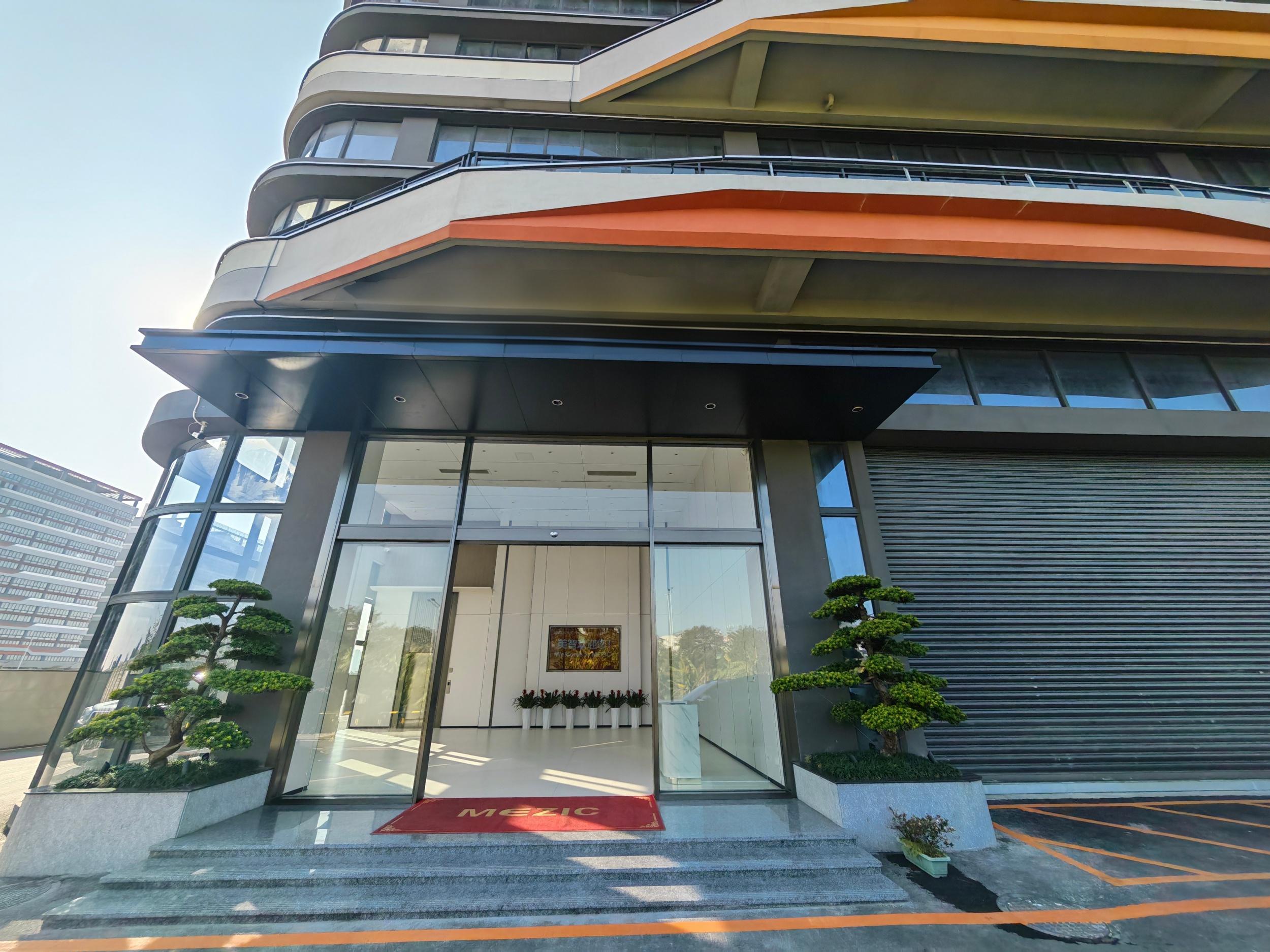
Manufacturing environment for inverter and storage assembly. Image: Yeyanghong Energy.
Why the 2026 Shortlist Starts With Rating Class, Not Brand
In a hybrid architecture, the inverter sets the ceiling on everything downstream: how much PV the array can deliver, how fast the battery can be recharged, how much load can be carried through a grid outage, and which enclosure and thermal envelope the site has to accommodate. Rating class therefore filters candidates faster than brand reputation does.
A workable 2026 shortlist applies five filters in a fixed order:
- Phase and service capacity. A single-phase service cannot absorb a three-phase unit without rework, and a three-phase site gains nothing from a single-phase inverter sized to the same number.
- Rating against load profile, not against array size. Array size is bounded by roof or land; the continuous load and the backup target determine the inverter rating.
- Battery window. Chemistry, nominal voltage and permitted depth of discharge have to be compatible with the inverter's battery input.
- Enclosure and thermal envelope. Protection level and the stated charging temperature range decide whether a garage wall, a plant room or an exposed outbuilding is permissible.
- Commercial and acceptance terms. Minimum order quantity, lead time and pre-shipment testing decide whether the shortlist can actually be executed on schedule.
Filtering in that order eliminates most mismatches before a datasheet comparison begins, and it prevents the common failure mode of buying a well-specified inverter for a site that cannot legally or physically host it.
The EU-Standard Series at a Glance: 6KW, 10KW, 12KW, 15KW
The four ratings in this family map onto distinct project sizes. The table below is a working starting point for shortlisting; phase configuration, MPPT count and the current grid-code file should always be confirmed on the model datasheet before an order is placed.
| Rating | EU-standard variant | Enclosure | Typical shortlist fit |
|---|---|---|---|
| 6KW | Single-phase hybrid inverter | IP66 | Single-family dwellings, smallholder irrigation, site offices and remote workshops |
| 10KW | Three-phase hybrid inverter | IP66 | Larger dwellings, farmsteads, light commercial premises |
| 12KW | Single-phase and three-phase variants | IP66 | Large residential retrofit, agri-processing, small industrial loads |
| 15KW | Three-phase hybrid inverter | IP66 | Commercial buildings, industrial sites, multi-building estates |
Two observations matter for EU buyers. First, the whole series carries an IP66 enclosure rating, which places it in the outdoor-capable band of the wider portfolio — the same portfolio spans IP21 on the all-in-one energy storage units through to IP67 on the micro inverter range. Second, the availability of a 12KW unit in both single-phase and three-phase form is unusually useful in retrofit work, where the service capacity and the load requirement often disagree and a service upgrade is not on the critical path.
Pairing Storage: 5KWh, 10KWh, 16KWh and the Stacked System
Storage pairing is where shortlists most often go wrong, because capacity is usually chosen from a price list rather than from a backup target. A simple arithmetic step fixes this. The battery range is rated for 90% depth of discharge (DOD), so usable energy is roughly nine-tenths of nameplate capacity.
| Storage option | Nameplate capacity | Approximate usable energy at 90% DOD | Shortlist note |
|---|---|---|---|
| Wall Mounted & Floor Standing Battery Energy Storage | 5KWh | ≈ 4.5 kWh | Entry pairing for single-phase dwellings with short, well-defined backup windows |
| Wall Mounted & Floor Standing Battery Energy Storage | 10KWh | ≈ 9 kWh | Mid-range pairing for whole-home backup and evening self-consumption |
| Wall Mounted & Floor Standing Battery Energy Storage | 16KWh | ≈ 14.4 kWh | High-capacity pairing for commercial or agri loads with long outage exposure |
| Stacked Home Energy Storage System | Configure per project | Confirm on datasheet | Stacked format for sites where floor area and clean visual integration matter |
The calculation is deliberately simple: identify the critical load in kW, multiply by the outage hours the project must ride through, and divide by 90% DOD. A 2.5 kW critical load held for four hours needs roughly 10 kWh of usable energy, which places the 12KWh-plus pairing question in the 16KWh column rather than the 10KWh column. Buyers who skip this step typically end up with storage that is adequate on paper and short in February.
Both battery formats share a LiFePO4 chemistry and an aluminium alloy construction, and are rated for 6,000 to 8,000 cycles at 90% DOD. At one full cycle per day, that cycle band represents a cycling count that runs well beyond a typical residential warranty horizon — a useful reference point when comparing quotes that differ mainly on storage price.
What the Verified Specification Set Actually Tells a Buyer
Specifications only help if they are read as operating constraints rather than as marketing points. Five items in this family deserve close reading during evaluation.
LiFePO4 chemistry
Lithium iron phosphate is the mainstream chemistry for stationary home and commercial storage because of its thermal behaviour and cycle stability relative to older lithium chemistries. For a procurement file, the chemistry matters less than what accompanies it: the battery management limits, the permitted charge and discharge windows, and the test documentation behind the cycle claim.
Aluminium alloy construction
Aluminium alloy enclosures and structural parts are common in outdoor-rated storage because the material handles temperature cycling and offers a favourable weight-to-rigidity ratio. In coastal or industrial atmospheres, the surface treatment specification becomes the deciding detail, and it should be requested explicitly rather than assumed from the material name.
6,000–8,000 cycles at 90% DOD
Cycle life is quoted at a defined depth of discharge; the same cell cycled to 80% DOD will not return the same figure. Comparisons between suppliers are only valid when the DOD, temperature and end-of-life criterion are identical. Where a quote gives a cycle count without a DOD, the number is not yet comparable.
0–55°C charging range
This is the most operationally significant figure in the set. Charging below 0°C falls outside the stated range, which means unheated outdoor installations in colder EU regions need a thermal plan — an insulated enclosure, a plant room, or a charge-curtailment strategy for winter mornings. Projects in southern member states rarely need this treatment; projects in alpine or northern regions almost always do.
IP21 to IP67 across the portfolio
Ingress protection describes resistance to solids and water. IP66 on the 6–15KW series supports outdoor installation in exposed positions; IP21 units, such as the all-in-one storage systems in the same portfolio, are indoor products and should not be relocated outside to save space. IP ratings do not address ultraviolet exposure, salt-laden air, mounting quality or servicing access, all of which remain installation responsibilities.
Battery input voltage support across 12V, 24V and 48V configurations gives the portfolio flexibility when matching third-party packs, but the specific inverter model's permitted battery window governs the pairing. Buyers sourcing packs separately should match nominal voltage and charge profile to the model datasheet before committing.

Production and testing environment for inverter and storage builds. Image: Yeyanghong Energy.
Application Fit: Agriculture, Household, Industrial and Transport
Rating class becomes meaningful only when it is matched to a load pattern. The four application segments below are the ones this family is most often shortlisted for.
Agriculture
Farm sites combine seasonal peaks with poor grid resilience: irrigation pumps, cold rooms, milking and ventilation loads all run on schedules that do not align with solar production. Three-phase units in the 10–15KW band suit larger farmsteads, while the 6KW single-phase unit fits smallholder irrigation and remote site buildings. The IP66 enclosure supports wall mounting on outbuildings where a plant room does not exist — provided the charging temperature requirement is respected in winter.
Household
Single-family projects typically sit in the 6KW to 12KW range, with storage chosen from the 5KWh, 10KWh or 16KWh options depending on whether the owner wants essential-load backup or whole-home resilience through an evening outage. The 12KW single-phase variant is often the practical answer for larger homes on a single-phase service.
Industrial
Light industrial and commercial sites use the 15KW three-phase unit where the objective is peak-shaving, PV self-consumption and protection of control and IT loads. These projects should specify acceptance testing and a commissioning record as contractual items rather than as informal practice.
New energy transportation
Depots, charging bays and fleet yards increasingly combine PV, storage and vehicle charging on one site connection. The value of a hybrid inverter here is not vehicle charging itself, but the ability to hold site loads and charging infrastructure stable when the grid is weak or unavailable. Storage sizing for these sites should follow the same DOD arithmetic as any other backup calculation, with an additional allowance for the charging load profile.
Market Context for 2026: Where the Numbers Point
Three data points frame the 2026 shortlist discussion, and all three carry a caveat that serious buyers should note.
First, the global solar hybrid inverter market was valued at USD 10.7 billion in 2024 by Grand View Research. Market-size figures of this kind vary between research houses because some include battery storage revenue within the hybrid inverter boundary and others do not; the figure is a directional indicator of category scale, not a procurement input.
Second, three-phase hybrid inverters held 61.3% of revenue share in 2024. That aligns with what EU project pipelines show: larger residential retrofits and small commercial sites, where three-phase service is standard, dominate incremental demand. It also explains why a shortlist built only from single-phase models tends to look thin by the second review round.
Third, the same research places North America at 42.9% of 2024 revenue, which is a reminder that most public market data is not EU-specific. European buyers should treat global sizing as context and rely on local grid-code requirements, member-state incentives and their own load data for actual decisions.
The standards landscape adds a further layer. IEC 62109-2:2011 sets out particular safety requirements for inverters used in photovoltaic power systems, and IEC TS 62257-301:2025 addresses the design and implementation of hybrid off-grid solar systems with or without energy storage. The earlier IEC TS 62257-9-7:2019 is described on its publication page as having been replaced, which is precisely why document status has to be checked rather than assumed. On the trade side, hybrid inverters with MPPT functionality are classified under HS 8504.40.84, while the broader HS 850440 heading covers static converters generally and should not be used on its own for inverter-specific trade analysis.
Hybrid vs On-Grid-Plus-Storage vs Off-Grid: Real Boundaries
A hybrid inverter is not universally the right answer, and a shortlist that cannot articulate the alternatives is not yet a shortlist.
| Architecture | Strength | Constraint to accept |
|---|---|---|
| Hybrid inverter with DC-coupled storage | One device manages PV, battery and backup; fewer boxes, single firmware stack, simpler commissioning | The site is tied to the inverter's battery window and firmware roadmap; a failure affects PV, storage and backup simultaneously |
| On-grid inverter plus AC-coupled storage | Independent replacement cycles; storage can be added later without touching the PV inverter | More conversion stages and more equipment to coordinate; higher balance-of-system complexity |
| Off-grid inverter | Designed for full autonomy, sized for complete seasonal deficit | Oversized array and battery for most grid-connected sites; no export revenue |
| All-in-one storage system (e.g. IP21 units in the same portfolio) | Fastest installation, integrated form factor, minimal site work | Lower ingress protection means indoor placement; capacity is fixed at the point of purchase |
Two boundaries deserve explicit statement in any EU procurement file. The first is architectural: a hybrid inverter still depends on the grid or a generator to cover extended deficits, and its export capability depends on local grid-code approval rather than on the inverter alone. The second concerns evidence. An IP66 enclosure rating is a protection claim, not a grid-code approval, and the specification set for this series does not by itself establish certification for any specific EU member state. Certification evidence has to be requested model by model and market by market, and it should be dated.
Execution: OEM/ODM Terms, Lead Time and Acceptance
Evaluation ends when commercial terms are confirmed. For this manufacturer, the documented terms are as follows.
- Production modes: OEM, ODM and SKD services are supported.
- Customization scope: WIFI, battery, 4G/5G, IP rating and power.
- Minimum order quantity: 2 pieces.
- Lead time: typically 30 to 45 days.
- Monthly capacity: 100,000 sets.
- Quality control: 100% testing of products.
- Delivery terms: EXW, FOB, CIF or LC.
- Payment terms: 30/70.
- Acceptance criteria: pre-shipment test.
The low minimum order quantity is useful for pilot projects and for distributors testing a new SKU, but it should not be read as an indication of short lead time: customization work is the variable that extends the 30–45 day window, and IP-rating or power modifications should be scheduled explicitly. The stated monthly capacity of 100,000 sets refers to the manufacturing operation overall, not to any single model, so buyers with fixed installation dates should request a model-level production slot confirmation.
Supporting this operation, the company reports a 15-engineer R&D team and around 400 employees, with roughly 90% of output exported. For an EU buyer, the practical implication is that documentation, labelling and packaging requirements are routine rather than exceptional requests.
A Shortlist Checklist for EU Project Buyers
The following checklist is designed to be attached to an RFQ and returned by each candidate. It converts a comparison exercise into a set of verifiable answers.
- Service and phase. Confirm the site's service capacity and select single-phase (6KW, 12KW) or three-phase (10KW, 12KW, 15KW) accordingly.
- Load and backup target. Document critical load in kW and required outage hours before selecting any rating.
- Storage calculation. Apply 90% DOD to the 5KWh, 10KWh or 16KWh option, or to a stacked configuration, and confirm the result covers the backup target with margin.
- Battery compatibility. Confirm the model's permitted battery input voltage window against the chosen pack, including any 12V, 24V or 48V configuration.
- Enclosure and location. Match IP66 outdoor-capable units to exposed positions; keep IP21 all-in-one units indoors.
- Thermal plan. Where site temperatures fall below 0°C, specify heating, insulation or charge curtailment to stay inside the 0–55°C charging range.
- Application segment check. Confirm the chosen rating against the actual load pattern — agriculture, household, industrial or transport-depot duty.
- Compliance file. Request dated test reports and grid-code documentation for the destination member state, with document revision status confirmed.
- Customization schedule. If WIFI, battery, 4G/5G, IP rating or power customization is required, confirm its effect on the 30–45 day lead time.
- Acceptance and payment. Agree pre-shipment test criteria, 30/70 payment terms and EXW, FOB, CIF or LC delivery terms in writing before production release.
Future Outlook
Three developments are likely to shape the next shortlist cycle. The first is continued migration toward three-phase configurations in the 10–15KW band, consistent with the 61.3% three-phase revenue share recorded in 2024 and with the direction of EU residential and light commercial retrofit work. The second is the tightening of documentation expectations: as hybrid-system standards continue to be revised — the replacement of IEC TS 62257-9-7:2019 by newer guidance being one visible example — buyers are increasingly asking for dated, revision-controlled compliance files rather than generic standard references. The third is the normalisation of storage-inclusive procurement, where the inverter and the battery are evaluated as one system with a single usable-energy calculation.
For a shortlist built on the 6KW to 15KW family described here, the practical consequence is straightforward: the rating grid is already broad enough to cover household, agricultural, industrial and transport-adjacent sites, and the differentiating work moves to storage pairing, thermal planning and documentary evidence. That is where 2026 evaluations are likely to be won or lost.
FAQ
Which rating — 6KW, 10KW, 12KW or 15KW — should an EU project shortlist for a given site?
The choice follows the service capacity and the load profile. The EU-standard series offers 6KW and 12KW in single-phase form and 10KW, 12KW and 15KW in three-phase form, all with an IP66 enclosure. Single-phase dwellings and smallholder sites typically map to 6KW or 12KW; larger dwellings, farmsteads and light commercial sites map to 10KW, 12KW or 15KW where three-phase service exists. Phase configuration and MPPT count should be confirmed on the model datasheet before ordering.
How much storage should be paired with these inverters — 5KWh, 10KWh or 16KWh?
Storage is sized from the backup target, not from the inverter rating. At 90% depth of discharge, the 5KWh, 10KWh and 16KWh units provide approximately 4.5 kWh, 9 kWh and 14.4 kWh of usable energy respectively. Multiply the critical load in kW by the outage hours required, then divide by 0.9 to obtain the usable capacity needed. A 2.5 kW critical load held for four hours requires about 10 kWh of usable energy, which points to the 16KWh option or a stacked configuration.
Does IP66 mean the unit can be installed anywhere outdoors in Europe?
No. IP66 describes resistance to solids and water ingress; it does not address ultraviolet exposure, salt-laden atmospheres, mounting quality or servicing access, all of which remain installation responsibilities. Separately, the stated charging temperature range of 0–55°C means charging below 0°C falls outside the documented window, so unheated outdoor installations in colder regions require a thermal plan such as insulation, a plant room or winter charge curtailment.
What compliance evidence should the shortlist demand?
Buyers should request dated documentation relevant to the destination market and system architecture. IEC 62109-2:2011 sets out particular safety requirements for inverters used in photovoltaic power systems, and IEC TS 62257-301:2025 addresses the design and implementation of hybrid off-grid solar systems with or without energy storage, while the earlier IEC TS 62257-9-7:2019 is described as having been replaced — a reminder to verify revision status. An IP rating is not a grid-code approval, and certification evidence must be requested model by model. On the trade side, MPPT hybrid inverters fall under HS 8504.40.84, while HS 850440 is a broader static-converter heading unsuitable for inverter-specific analysis on its own.
What purchasing terms and acceptance criteria apply to this series?
The documented terms are a minimum order quantity of 2 pieces, delivery terms of EXW, FOB, CIF or LC, payment terms of 30/70, and acceptance based on pre-shipment testing. Typical production lead time is 30 to 45 days, with OEM, ODM and SKD services available and customization offered for WIFI, battery, 4G/5G, IP rating and power. Monthly production capacity is stated at 100,000 sets and all products undergo 100% testing.
Reference Material
A consolidated product and specification brochure covering the inverter, storage and PCBA portfolio is available for download: Yeyanghong Energy product brochure (PDF).
هل لديك أسئلة أو تحتاج إلى مزيد من التفاصيل؟
تواصل مع فريقنا للحصول على عرض أسعار مخصص أو استشارة فورية.
طلب عرض أسعار
املأ النموذج أدناه وسيتواصل معك فريقنا بعرض مقترح مخصص.
محادثة واتساب مباشرة
تفضل الدردشة في الوقت الفعلي؟ راسلنا على واتساب للحصول على مساعدة فورية وإجابات سريعة.
- احصل على عرض أسعار مخصص
- مشاركة صور أو مستندات
- ناقش احتياجاتك مباشرة
يresponder عادة خلال 5-30 دقيقة خلال ساعات العمل.