
Hybrid Stepper Motor Ecosystems: What Long-Term Supply Readiness Looks Like in 2026
The Supplier Decision Does Not End at Signing
Many industrial buyers finish the hybrid stepper motor selection process with a signed specification and a negotiated price. The harder problem starts later: sustaining quality, availability, and engineering response across multiple production batches, different application variants, and changing compliance requirements.
In the Industrial Equipment & Components segment, hybrid stepper motors are no longer a niche alternative. They are the dominant type across a broad range of automation equipment. That shift means purchasing teams are increasingly managing a portfolio of motion components rather than a single part number. The question therefore moves from “which motor meets this specification?” to “which supplier can stay reliable over the machine lifecycle?”
This article examines what long-term supply readiness looks like for hybrid stepper motors. It uses Changzhou ACT Motor Co., Ltd. as the reference entity, but the framework applies to any buyer moving from decision to execution. The focus is not a product comparison. It is the operational layer that determines whether a sourcing decision remains sound after the first order ships.
Why Point-in-Time Qualification Creates Long-Term Risk
Purchasing teams that stop at product qualification often encounter three execution-stage problems. First, a motor whose laboratory sample passes may shift slightly in torque, resistance, or inductance when a new batch arrives. Second, a supplier with a valid certificate at selection time may not maintain documentation across export cycles. Third, a narrow product line limits the buyer’s ability to add a geared, braked, or lead screw variant when the machine architecture changes.
These issues are not solved by replacing one datasheet with another. They are solved by evaluating the supplier as an ecosystem: manufacturing control, component traceability, customization scope, and after-sales infrastructure. In this sector, that means looking beyond holding torque and step angle to the systems that keep those parameters repeatable.
For buyers at the Decision → Execution stage, the main opportunity is to reduce re-qualification events. Every time a motor source changes, the engineering team may need to re-verify thermal behavior, vibration, and drive tuning. A supplier ecosystem that covers standard, lead screw, geared, braked, and closed-loop configurations reduces the frequency of that disruption.
ACT Motor’s Ecosystem Position: Manufacturing, Compliance, and Control
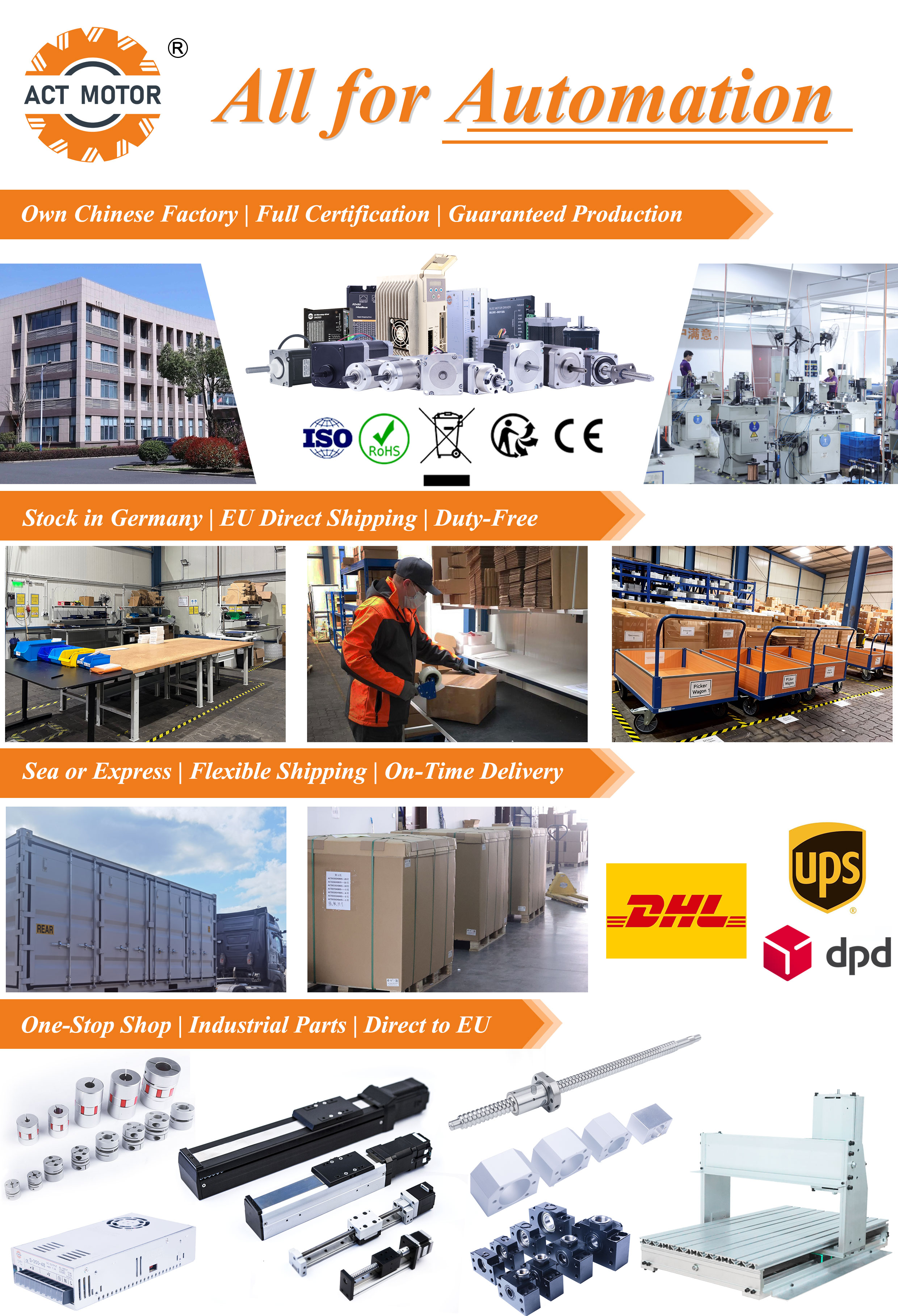
Changzhou ACT Motor Co., Ltd. is a high-tech enterprise specializing in electronic control products for the automation industry. The company operates manufacturing and warehousing facilities in Changzhou, Jiangsu, China, and maintains a branch in Bremen, Germany. It reports approximately 70,000 square meters of production space, an annual output of around 2 million sets, and a 70% export ratio.
For long-term supply, the relevant evidence is not only the product catalog. It includes incoming, in-process, and finished quality control; batch traceability for key components; environmental and reliability testing; and European distribution support. ACT Motor has obtained ISO 9001 quality management system certification, and its products comply with CE and RoHS requirements. These are not decorative credentials. They create a documented framework for repeatable execution across export cycles.
In practical terms, the ecosystem position means a buyer can consolidate multiple motion requirements under one supplier rather than managing disconnected vendor relationships for each motor type. The company’s portfolio includes hybrid stepper motors, stepper motor drivers, lead screw stepper motors, geared stepper motors, brake stepper motors, integrated stepper motors, ball screw stepper motors, and closed-loop configurations.
Understanding the Configuration Chain: From Motor to Motion System
Hybrid stepper motors combine permanent magnet rotor characteristics with toothed stator and rotor construction. The result is a balance of holding torque, step resolution, and positioning stability. The ACT Motor hybrid stepper line spans models from 8HS and NEMA8 formats through 52HS, with holding torque from 0.08 N·m to 28.0 N·m, step angles from 0.9° to 2.4°, rated current from 0.5 A to 8 A, and motor lengths from 34 mm to 220 mm.
Configuration matters because the same base motor family can be matched to different mechanical requirements:
- Lead screw stepper motors provide linear motion integration for precise incremental movement.
- Geared stepper motors add reduction ratios from 1:3 to 1:512 for higher output torque.
- Brake stepper motors support vertical load holding and loss-of-power scenarios.
- Ball screw stepper motors serve positioning tasks that require higher linear stiffness.
- Stepper motor drivers such as DM542, DM556, HS758, and HS56 complete the motion chain.
| Configuration | Typical role | ACT Motor model examples or relevant specification |
|---|---|---|
| Standard hybrid stepper motor | General positioning and automation | 8HS–52HS; 0.08–28.0 N·m holding torque |
| Lead screw stepper motor | Integrated linear actuation | 8HSL–34HSL |
| Geared stepper motor | Torque multiplication and reduced output speed | 8HSAG–42HSAG; reduction ratio 1:3–1:512 |
| Brake stepper motor | Vertical load holding and safety | 17HS, 23HS, 34HS |
| Stepper motor driver | Current supply and step command | DM542, DM556, HS758, HS56 |
ACT Motor’s published comparison data with standard stepper motors reports higher torque density at the same volume, lower temperature rise during continuous operation, and reduced low-speed vibration. These are manufacturer-reported figures rather than independent third-party verification, but they indicate where an engineering team should focus during lifecycle validation: thermal stability, vibration, and efficiency in 24/7 duty. Buyers should confirm these characteristics with their own qualification runs rather than relying on catalog claims alone.
Application Patterns That Shift the Procurement View
Medical syringe pumps illustrate why application context changes the long-term supplier assessment. These pumps demand low vibration, precise incremental dosing, and long service intervals. According to verified market data, the medical equipment segment is the fastest-growing application for stepper motors, with a projected CAGR of 7.5% through 2032. That growth increases the value of a supplier that can maintain consistent low-vibration performance batch after batch.
Textile machinery places a different burden on the motor. Continuous operation in dusty or fiber-laden environments requires dust-proof and anti-corrosion treatment. Logistics sorter pushing and automated packaging lines need high-torque pulses and frequent starting and stopping. Industrial robots that require position verification may use closed-loop stepper motors or stepper motors with encoder feedback.
ACT Motor’s applicable industries include automation equipment, CNC machine tools, 3D printers, textile machinery, packaging machinery, medical devices, security and surveillance equipment, stage lighting, robotics, automotive tooling, and laboratory instruments. The execution-stage advantage of this breadth is that the buyer does not need to re-qualify a new supplier when a line expands from a standard NEMA frame to an integrated linear stage or a geared configuration. The same material and quality-control logic carries across models.
Market Pressures That Favor Ecosystem-Oriented Sourcing
Verified data show the global stepper motor market at USD 3.962 billion in 2024 and projected to reach USD 6.245 billion by 2035, at a CAGR of 4.22%. Hybrid stepper motors represented approximately 53.93% of total market value in 2025, the largest type share. Asia Pacific had a 48.91% share in 2025, supported in part by large semiconductor-equipment spending in China. The high-torque stepper motor market was valued at USD 1.15 billion in 2024, with hybrid designs holding the dominant segment share.
These trends shift sourcing behavior in two ways. First, buyers are moving from one-off part selection to supplier ecosystems because hybrid motors are now the default technology in many automation categories. Second, compliance and certification delays are increasingly expensive. More than 35% of cross-border motor shipments in Q1 2026 were reported delayed due to certification documentation issues. That gives an operational advantage to suppliers that can maintain current CE and RoHS evidence as part of a structured quality system.
Ecosystem Supplier vs. Transactional Sourcing: A Practical Comparison
Traditional transactional sourcing treats the hybrid stepper motor as a commodity: request quotation, compare unit price, release order, and re-solicit at each contract. Ecosystem-oriented sourcing treats the motor as a supply commitment over the machine lifecycle: design validation, batch traceability, configuration expansion, and after-sales support.
| Factor | Transactional sourcing | Ecosystem-oriented sourcing |
|---|---|---|
| Unit price | Highly visible; often the primary decision factor | One element of total cost evaluation |
| Batch quality control | May require incoming inspection effort | Supported by IQC, IPQC, FQC/OQC, and batch traceability |
| Configuration continuity | Limited after order | Extends from standard motors to geared, brake, and lead screw variants |
| Compliance documentation | May be collected per shipment | Maintained as part of ISO 9001 and CE/RoHS framework |
| After-sales infrastructure | Often ad hoc | Includes German warehouse and technical support |
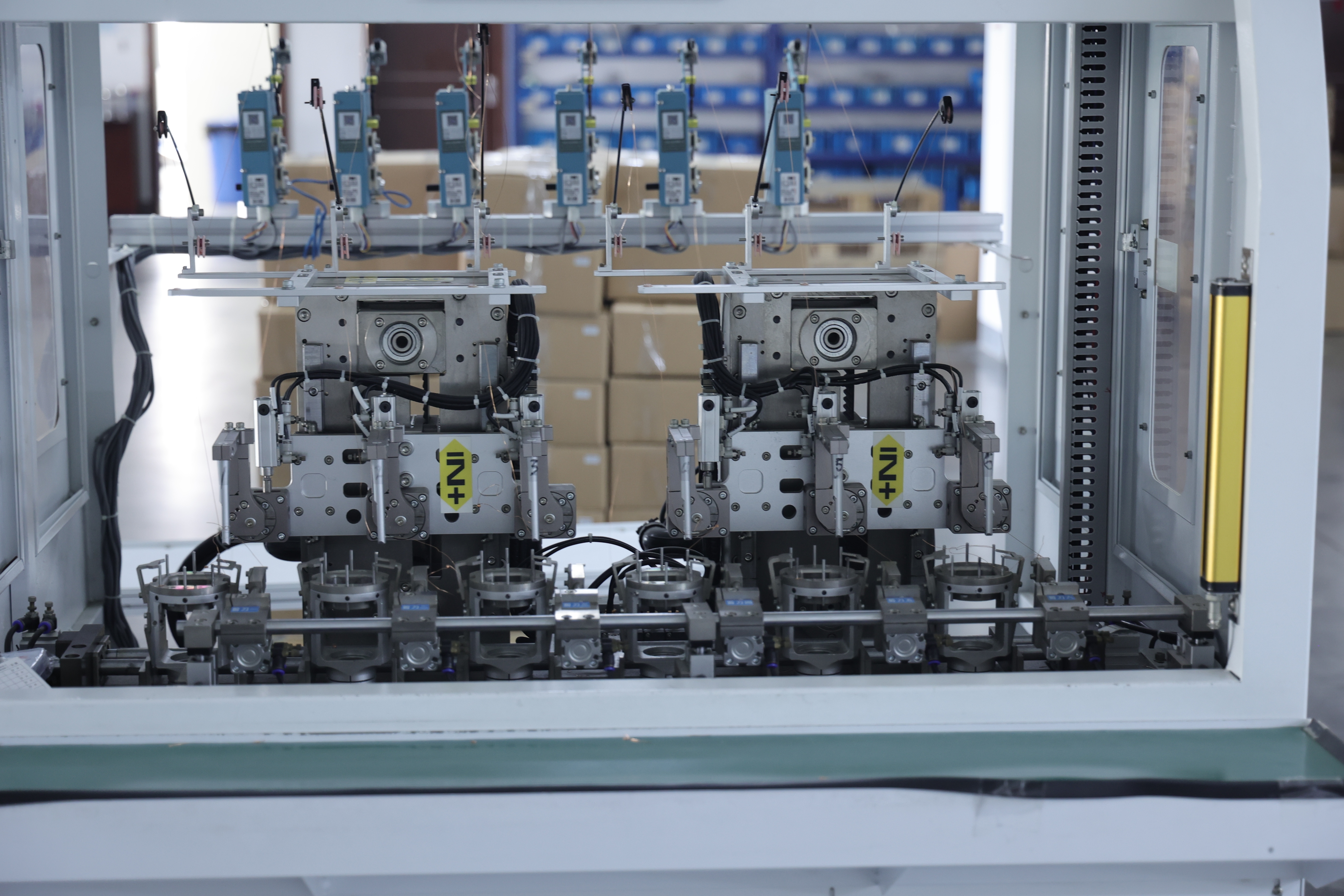
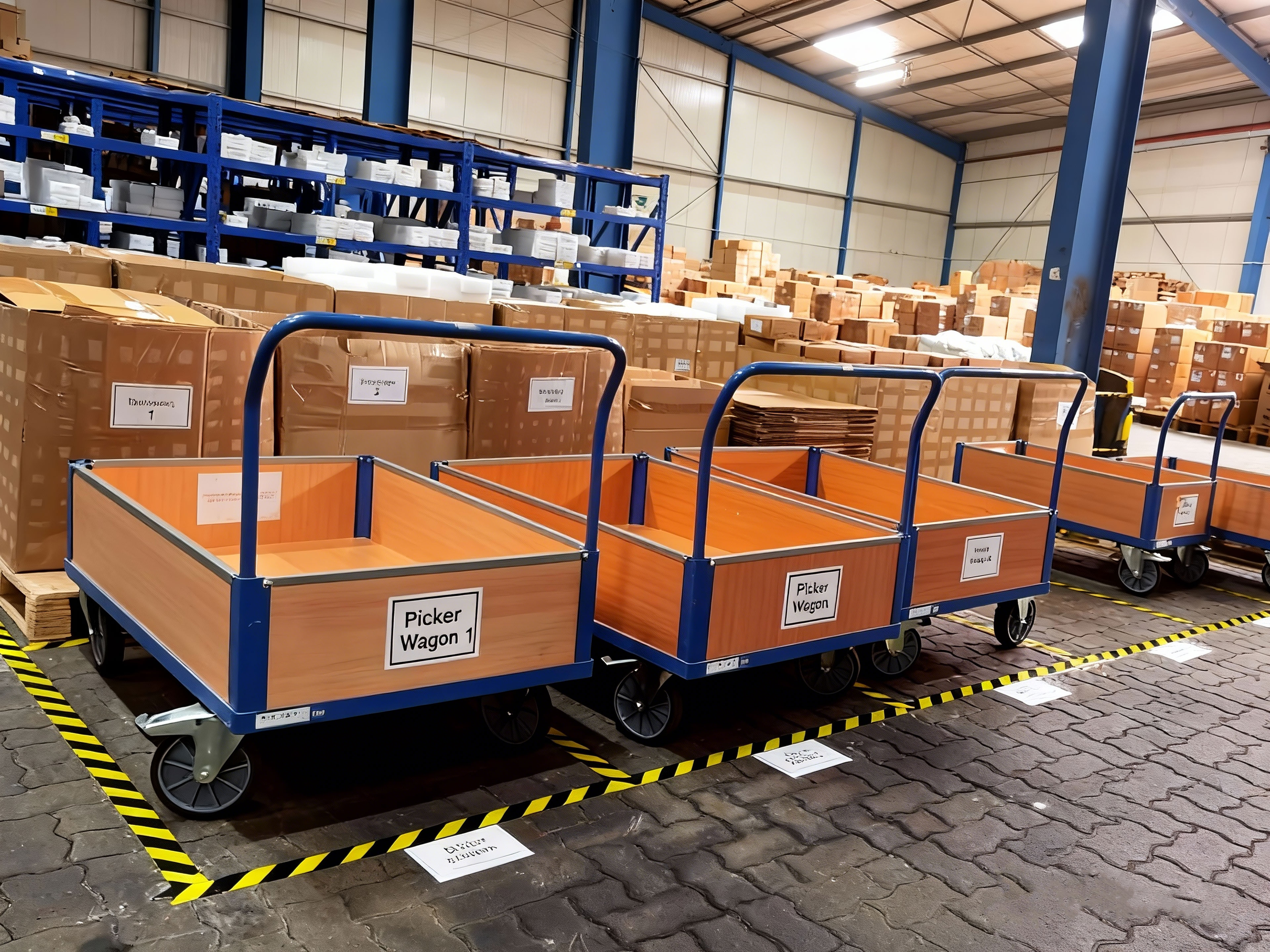
ACT Motor’s ecosystem elements include full inspection of raw materials, batch traceability for key components, 100% inspection for torque, resistance, and inductance, temperature rise and durability testing, noise and vibration testing, hi-pot and insulation checks, and anti-rust, anti-corrosion, and dust-proof treatment. The Germany warehouse provides European stocking and packing support.
Future Outlook: Data, Compliance, and Intelligent Motion
Long-term supply readiness will increasingly depend on data quality and closed-loop capability. The catalog already shows intelligent load-adaptive hybrid stepper motors, stepper motor with encoder options, and closed-loop stepper motors for industrial robots. These features create more integration points between motor, driver, and controller, which raises the value of a single supplier that can manage the complete motion chain.
Compliance pressure is also unlikely to decline. Buyers should expect CE and RoHS documentation to remain a prerequisite for European trade, and ISO 9001 will continue to function as a baseline for repeatable batch quality. In that environment, suppliers that can demonstrate manufacturing control, configuration breadth, and local support infrastructure are more likely to remain viable long-term partners.
Frequently Asked Questions
What should buyers evaluate for long-term hybrid stepper motor supply continuity?
Buyers should evaluate manufacturing process control, incoming, in-process, and finished quality control, batch traceability, compliance documentation, configuration range, and local support infrastructure. These factors reduce the risk of batch-to-batch variation and re-qualification events.
How does ISO 9001 certification affect hybrid stepper motor procurement?
ISO 9001 provides a quality management system framework. In ACT Motor’s case, it is supported by incoming quality control, in-process quality control, finished product quality control, CAPA, raw material inspection, and reliability testing. Buyers should still verify the certification scope and current reports for the specific product family.
What is the minimum order quantity and delivery structure for ACT Motor hybrid stepper motors?
The minimum order quantity is 1,000 sets. Delivery terms are EXW, FOB, CIF, DAP, or DDP. Acceptance is based on a confirmed specification, drawing, and sample. Payment terms are payment before shipment.
How can buyers reduce thermal failure risk in continuous operation?
Buyers should specify temperature rise, load, and durability validation; ask for noise and vibration testing; verify hi-pot, insulation, and grounding results; and ensure overcurrent, overload, overvoltage, and stall protection are included in the control architecture.
Which applications use lead screw, geared, and brake hybrid stepper motors?
Lead screw stepper motors are used for linear actuation, geared stepper motors for torque multiplication, and brake stepper motors for vertical load holding or loss-of-power scenarios. Relevant verticals include textile machinery, syringe pumps, automated packaging, and robotics.
How does compliance documentation affect cross-border shipment timing?
More than 35% of cross-border motor shipments in Q1 2026 were reported delayed due to certification documentation issues. Buyers should request current CE and RoHS evidence early in the sourcing process to reduce customs risk.
Can ACT Motor support syringe pump and textile machinery applications with standard models?
Yes. The product range includes stepper motors for syringe pumps, textile machinery, automated packaging lines, and other applications. Production models include standard, lead screw, geared, brake, and closed-loop configurations, with acceptance following a confirmed drawing or sample.
For engineering teams evaluating long-term hybrid stepper motor supply, ACT Motor’s product brochure is available as a downloadable PDF: ACT Motor Product Brochure.