
Hydraulic Adapter Q&A: Acceptance, Accessories, Ratings
Hydraulic Adapter Q&A: Acceptance, Accessories, Ratings
A hydraulic adapter is the cheapest item on most bills of material and one of the quickest ways to lose a machine's uptime. A thread that looks correct but is tapered where it should be parallel — or parallel where it should be tapered — will leak under pressure no matter how carefully it is torqued. Because one part number can appear hundreds of times on a single machine, a wrong acceptance decision multiplies quietly across a production run.
This article answers the technical and procurement questions that buyers raise at the decision stage: after a supplier has been shortlisted, before a purchase order is released or incoming goods are signed off. It covers acceptance criteria, how missing or wrong accessories are resolved after delivery, what the published 3000–6000 PSI and 220°C ratings actually mean, how carbon steel, SS304 and SS316 differ in purchasing terms, and how the hydraulic cap nut (nut adapter) family fits into a thread-secured assembly. Model designations from the published range — 6801, 2403, 1B and 5000 — are used as concrete reference points, along with verified third-party pressure figures for ORFS, NPTF and DIN 2353 connectors.
Why adapter questions concentrate at the decision stage
Adapter questions change character once a buyer moves from discovery to evaluation. Early research asks what an adapter is; a buyer holding two quotations asks something much narrower — whether a specific lot will clear incoming inspection, whether the cap nuts and lock nuts arrive with the adapters, and whether a 3000–6000 PSI declaration applies to the exact size on the order. Those are decision-stage questions, and they are the ones that decide whether a supplier stays on an approved vendor list.
The commercial weight behind them is not trivial. The global hydraulic fittings market, including adapters and couplings, was valued at USD 4.8 billion in 2025 and is projected to reach USD 7.9 billion by 2034, according to Dataintelo. Within that market, the hydraulic adapters segment held the largest product-type share at 28.4% in 2025, and steel accounted for 45.2% of revenue, reflecting demand for high-pressure durability. Mobile hydraulics — the segment in which most adapters are consumed — held over 58% of total hydraulics market revenue in 2024, per Grand View Research.
The purchasing logic follows from those numbers. An adapter is a high-count, low-unit-value, high-consequence component: the unit price is small, the inspection effort is real, and the cost of a single thread mismatch at assembly is disproportionate to both. That asymmetry is why the questions below are worth answering precisely rather than approximately.
The supplier behind the specification set
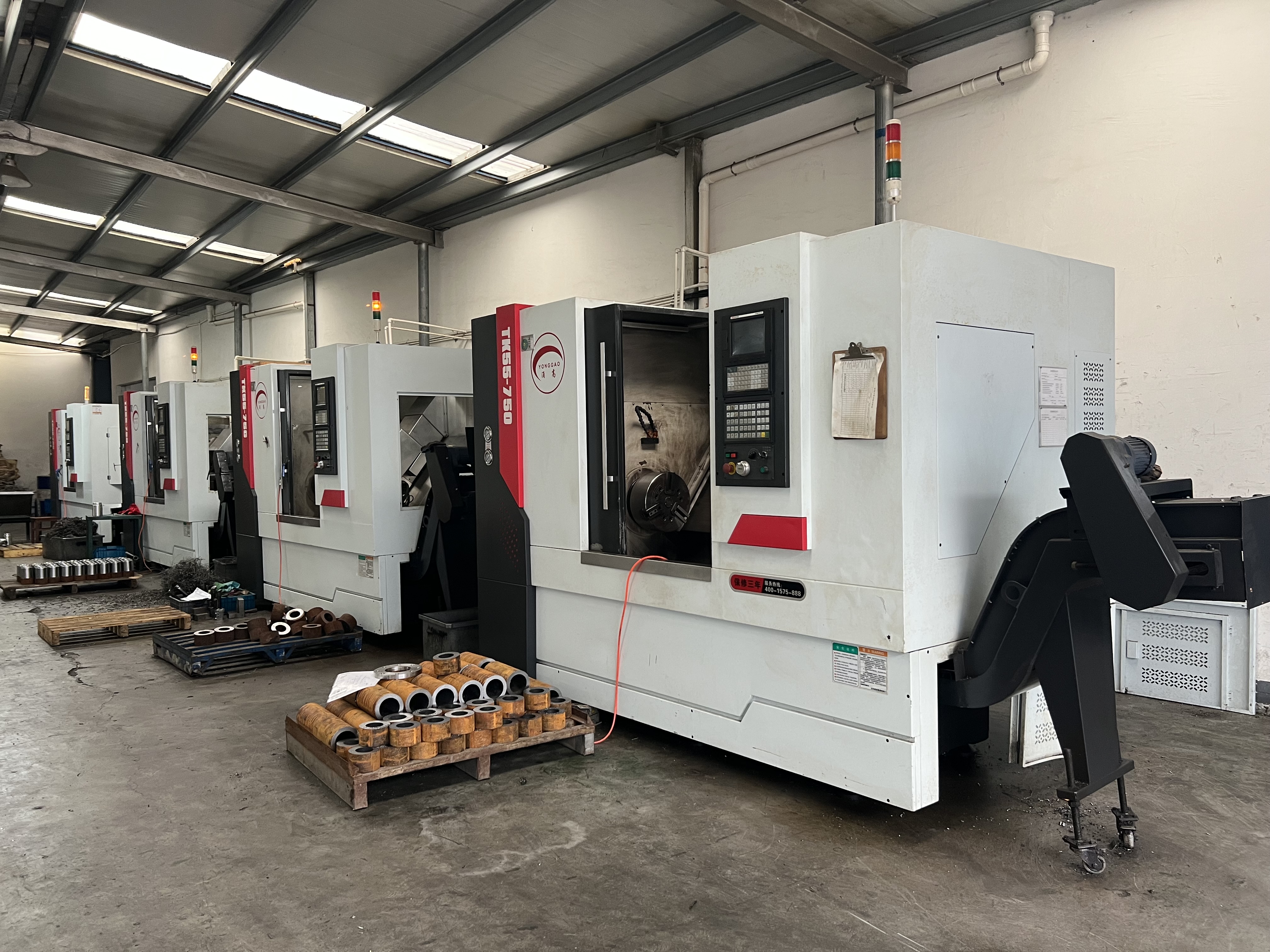
NingBo NJ Hydraulic Adapter Co., Ltd is a Chinese hydraulic adapter manufacturer based in Fenghua, Ningbo City, Zhejiang Province, specialising in SAE-standard hydraulic components and engineering machinery parts. The company was established in 2004 and operates a 20,000 sqm facility with 200 employees, four R&D engineers and an annual output of 4,000,000 units. Approximately 75% of output is exported, with the USA and Canada as the main markets, and production is organised to the TS16949 standard.
The product scope extends beyond adapters to flange, valve and valve components, plunger and cylinder accessories, wheel hub, auto parts, forgings and castings, and non-standard items. The adapter range itself covers SAE / JIC / ORB / ORFS series (6801 through 6850), JIC series (2403 through 2609), NPT series (5000 and 5404 through 5652), BSPP series (1B, 1BG, 1BJ, 1BT and related), BSPT series (1T, 1BT, 4T, 5T) and the hydraulic cap nut and lock nut family (0304C through FS0319).
Two structural facts matter for buyers reading this article. First, the range is broad enough that most decisions are about model selection rather than availability. Second, the ratings published for the range are consistent across families — 3000–6000 PSI and a maximum stable operating temperature of 220°C — which makes cross-family comparison straightforward but also means buyers must confirm the line-item figure rather than rely on the range figure alone.
Acceptance criteria: six checks that settle most disputes
Incoming inspection disputes on adapters almost always trace back to the same six questions. Structuring goods-in around them shortens the verification cycle and gives both sides a common reference point.
| Check | What the buyer verifies | Reference point in this range |
|---|---|---|
| Thread family and model | Model number on the packing list matches the ordered series and thread type | 6801–6850 (SAE / JIC / ORB / ORFS); 2403–2609 (JIC); 1B, 1BG, 1BJ, 1BT (BSPP); 1T, 1BT (BSPT); 5000, 5404–5652 (NPT) |
| Material grade | Carbon steel, SS304 or SS316 as written on the purchase order | All three grades are published across the adapter and cap nut series |
| Pressure class | Declared working pressure band for the specific size | 3000–6000 PSI for the published range; cap nut family documented to 6,000 PSI static and 9,000 PSI burst without deformation |
| Temperature | Maximum stable operating temperature against the application | 220°C |
| Surface treatment | Coating type and salt spray evidence | Trivalent chromium treatment; white rust at 120 hours, red rust at 240 hours |
| Completeness | Adapters, cap nuts or lock nuts and any listed accessories counted against the packing list | Packing list and carton count |
Two checks carry disproportionate weight. Thread family is the one that cannot be corrected at the bench: BSPP, BSPT, NPT, NPTF and JIC are not interchangeable, and the visual difference between a parallel and a tapered thread is easy to miss on a small part. Pressure class is the one that is most often taken from a catalogue page rather than from the line item, which is the subject of a later section.
Salt spray evidence deserves its own note. In testing of the trivalent chromium surface treatment used on this range, white rust appears at 120 hours and red rust at 240 hours. That is a coating performance statement, and it is most useful when it is read as such — as a comparison point between coating processes rather than a general corrosion guarantee.
Missing and wrong parts: a process question, not a promise
The most common post-delivery question about hydraulic adapters is not metallurgical. It is a short shipment. Buyers want to know what happens when a carton arrives with fewer cap nuts than the packing list states, or with a 1BT where a 1B was ordered.
The resolution path for missing or wrong-delivered items is documentation-led. The customer provides photographs of the missing or incorrectly supplied items; once the discrepancy is verified, replacement accessories are arranged by sea or air shipment. For non-conforming product more broadly, the process requires inspection photographs and videos together with a return of the items; after verification confirms the issue is the manufacturer's responsibility, the outcome is either compliant replacement parts shipped on the next sea freight consignment or by air, or a documented deduction where the customer supplies the necessary deduction documentation.
Packaging configuration also matters here, because a mixed carton is a common source of count errors. Custom carton packaging, custom plastic bag packaging and custom laser-engraved logos are available, as is customisation based on drawings or samples. For multi-model orders, separating families — for instance keeping the 6800 series separate from the 5000 series — reduces the risk that a count discrepancy is actually a sorting error.
Reading the 3000–6000 PSI and 220°C ratings correctly
The published pressure band for the SAE (6800 series), JIC (2400–2600), NPT (5000–5650), BSPP (1B family), BSPT (1T family) and cap nut (0304C–FS0319) ranges is 3000–6000 PSI, with 220°C as the maximum stable operating temperature. For the cap nut family specifically, the parts are documented to withstand a static pressure of 6,000 PSI and a burst pressure of 9,000 PSI without deformation, while maintaining continuous operation and seal integrity.
A range declaration and a line-item rating are not the same statement, and treating them as identical is the most common source of specification error at the decision stage. The correct reading is that 3000–6000 PSI describes the envelope within which the published range operates, and that the governing figure for a specific part number and size should be confirmed against that line item before the order is released.
Public benchmarks make the point concrete. ORFS (O-ring face seal) fittings in dash size −4 (1/4 inch) are rated for 6000 PSI working pressure under SAE J1453, while NPTF straight threads in 1/4 inch are typically rated at 4000 PSI with a 4:1 safety factor, per Titan Fittings. DIN 2353 classifies metric tube fittings into LL (extra light, 100 bar), L (light, up to 315–500 bar) and S (heavy, up to 630–800 bar) series, per Hy-Lok USA. ISO 8434-2:2007 specifies 37° flared connectors for tubes from 6 mm to 50.8 mm. Each of those figures is useful only when it is matched to the actual thread family and size on the purchase order — which is precisely why buyers increasingly ask for the line-item rating rather than the catalogue band.
Material selection: carbon steel, SS304 and SS316
All three grades are published across the adapter and cap nut ranges, and the choice between them is a specification decision rather than an availability decision. Carbon steel remains the volume material in the category — steel accounted for 45.2% of hydraulic fitting revenue in 2025, driven by demand for high-pressure durability, per Dataintelo — and in this range carbon steel parts carry the trivalent chromium surface treatment that produces white rust at 120 hours and red rust at 240 hours.
SS304 and SS316 are offered across the same series, including the SAE, JIC, NPT and BSP families and the cap nut range. The most frequent misunderstanding at the decision stage is that specifying a stainless grade automatically raises the assembly rating. It does not. The published adapter range remains 3000–6000 PSI with a 220°C maximum stable operating temperature irrespective of body material.
Material-level data explains why the two figures should be kept apart. AISI 316 is documented for working temperatures from −60°C to +400°C under DIN 17440, per Tubes International — a material capability considerably wider than the 220°C assembly figure. Where a project needs to operate near or above the assembly ceiling, the seal and overall construction determine the limit, not the steel grade alone. Buyers who conflate the two end up specifying SS316 in the expectation of a temperature rating the assembly does not carry.
Nut adapters and cap nuts: the thread-security question
Nut adapters — listed in this range as hydraulic cap nuts and lock nuts — are the parts that hold a threaded joint together rather than carry the flow path. Their functions in a hydraulic assembly are hydraulic pipeline sealing, thread locking and fastening, and pressure-bearing protection for mechanical hydraulic assemblies. They are specified alongside hydraulic hoses, hydraulic cylinders, threaded bolts, pipe joints, hydraulic pumps and mechanical cylinder assemblies.
The published cap nut and lock nut models are 0304C, 0306, 0318, 0319, 0403, 0500, FS0304C, FS0306, FS0318 and FS0319, supplied in carbon steel, SS304 or SS316 at 3000–6000 PSI and a maximum stable operating temperature of 220°C. As noted above, the family is documented to withstand 6,000 PSI static pressure and 9,000 PSI burst pressure without deformation while maintaining seal integrity under continuous operation. The declared service requirements for these parts are rust resistance, high-temperature resistance and high-pressure resistance — three requirements that are usually quoted together rather than separately.
Two purchasing notes are worth attaching to this family. First, cap nuts are the part most often omitted when an order is assembled by adapter model alone, which is exactly the accessory-completeness check described earlier. Second, the functional requirement — thread locking and pressure-bearing protection — is only satisfied if the nut is matched to the correct thread family; a 0304C series cap nut ordered for a BSPP assembly has no application on an NPT port regardless of its pressure class.
Thread family reference for the published range
| Thread family | Series listed in this range | Buyer note |
|---|---|---|
| SAE / JIC / ORB / ORFS | 6801, 6802, 6803, 6804, 6805, 6806, 6807, 6808, 6809, 6810, 6815, 6818, 6820, 6832, 6835, 6840, 6850 | Supplied as JIC / ORB / ORFS adapter configurations; ORFS fittings in dash size −4 are rated 6000 PSI under SAE J1453 |
| JIC (37° flare) | 2403, 2404, 2405, 2406, 2408, 2500–2505, 2601–2609 | Includes JIC-to-NPT adapter configurations; ISO 8434-2 covers 37° flared connectors from 6 mm to 50.8 mm |
| NPT / NPTF | 5000, 5404, 5405, 5406 (including 5406-C, -HP, -P, -SHP), 5500–5505, 5600–5605, 5650, 5652 | NPTF 1/4 inch straight threads are typically rated 4000 PSI with a 4:1 safety factor |
| BSPP (parallel) | 1B, 1B4, 1B9, 1BG, 1BG4, 1BG9, 1BH, 1BH9, 1BJ, 1BK, 1BM, 1BN, 1BO, 1BT, 1BT9, 2B, 2B9, 2BJ, 2GB, 2HB, 22NB, 2TB9, 2OB, 2TB, 3B, 4B, 4BN, 5B, 5BN, 5NB, 5BT, 5GB, 5OB, 5TB9, 6B, 7B, 7B9, 9B, EB, AB, BB | Parallel thread — not interchangeable with BSPT despite similar appearance |
| BSPT (tapered) | 1T, 1T9, 1BT, 1ST, 4T, 5T | Tapered thread; confirm the mating port type before ordering |
| Cap nut / lock nut | 0304C, 0306, 0318, 0319, 0403, 0500, FS0304C, FS0306, FS0318, FS0319 | Thread locking and pressure-bearing protection; 6,000 PSI static, 9,000 PSI burst |
Configurations outside the published series — including DIN hydraulic adapter and metric thread adapter requirements, bulkhead and ferrule configurations, and flange adapter assemblies — should be confirmed model by model at quotation stage rather than assumed from the catalogue family name. DIN 2353 provides the standard reference for metric tube fitting robustness categories, and ISO 8434-2 covers the flared connector geometry, but neither standard confirms what a specific supplier holds in stock.
Application fit: where the range is specified
The published applications for these adapters and cap nuts are construction machinery, agricultural machinery, general-purpose machinery, firefighting equipment, marine machinery, mining, transportation, aerospace, automotive, oil and gas extraction, iron and steel metallurgy, and water conservancy engineering. Working conditions described for the range include high temperature and high pressure, with hydraulic pipeline sealing, thread locking and fastening, and pressure-bearing protection as the core functions.

That spread of applications explains why the same 3000–6000 PSI family is sold into both mobile equipment and process-adjacent environments. A construction machinery line and a firefighting equipment assembly may specify the same 1B or 5000 series adapter, but they will not necessarily specify the same material grade — which is the reason the material question keeps returning at the decision stage.
Where this range stops: an honest boundary
Four limits should be stated plainly, because buyers who discover them after the order rather than before it lose more time than they save.
- Range ratings are not per-size proofs. A 3000–6000 PSI band covering dozens of model families and thread sizes cannot substitute for confirming the working pressure of the exact part number ordered.
- 220°C is an assembly ceiling. Below it, the published range applies. Above it, no assembly-level rating is published for this range, and a separate engineering evaluation is required — even when SS304 or SS316 is specified and even though AISI 316 carries a wider DIN 17440 material range.
- A 120-hour salt spray result is not a marine guarantee. White rust at 120 hours and red rust at 240 hours describes the trivalent chromium coating's behaviour in that test. It should not be read as equivalence to stainless steel performance in chloride-rich marine or offshore exposure.
- Commercial terms are conditional. Stock-based advantages — no minimum order quantity on in-stock items, volume discounts, and free FOB terms on orders exceeding $10,000 — apply to in-stock availability. They are not a blanket commitment across custom or non-standard items.
Market trend: what is changing in adapter purchasing
Two structural shifts are visible in the available data. The first is regional concentration: Asia-Pacific led global hydraulic fitting revenues in 2025, accounting for an estimated 38.6% of market share, per Dataintelo. That concentration shortens the physical supply chain for buyers sourcing from the region while raising the importance of supplier-level verification, since a shorter chain does not by itself guarantee a consistent lot.
The second is downstream automation. Asia accounted for 74% of global industrial robot installations in 2024, according to Ken Research — a demand driver that pushes precise hydraulic connections into more assemblies and increases the number of low-volume, high-mix orders. For buyers, that trend translates into more model numbers per purchase order and, consequently, more weight on the accessory-completeness and acceptance checks described above.
The material mix is unlikely to move quickly. Steel held 45.2% of hydraulic fitting revenue in 2025 and the adapters segment held the largest product-type share at 28.4% — both figures that favour continued volume in carbon steel with surface treatment rather than a wholesale shift to stainless.
Future outlook
The direction of travel in adapter procurement is from range specification to line-item evidence. Buyers who once accepted a catalogue pressure band now ask for the declared working pressure of the specific dash size, the salt spray record behind the coating, and a documented resolution path for shortages. None of those requests require new technology; they require suppliers to publish what they already measure.
On the commercial side, the combination of a market projected to grow from USD 4.8 billion in 2025 to USD 7.9 billion by 2034 and a supply base concentrated at 38.6% in Asia-Pacific suggests that competitive pressure will land on responsiveness — stock depth, lead time and after-sales resolution — rather than on unit price alone. For a component whose failure cost dwarfs its purchase price, that is a reasonable place for the competition to sit.
FAQ
What acceptance checks should be applied to an incoming hydraulic adapter shipment?
Six checks cover most acceptance decisions: confirmation that the model number on the packing list matches the ordered thread family; confirmation of the specified material grade among carbon steel, SS304 and SS316; the declared working pressure for the specific size within the 3000–6000 PSI range; the 220°C maximum stable operating temperature; salt spray evidence for the trivalent chromium treatment, which shows white rust at 120 hours and red rust at 240 hours; and a count of adapters, cap nuts or lock nuts and listed accessories against the packing list.
What happens if accessories are missing or the wrong item is delivered?
For missing or wrong-delivered items, the customer provides photographs of the affected items; after verification, replacement accessories are arranged by sea or air shipment. For non-conforming product the process requires inspection photographs and videos plus a return of the items, and after verification confirms the issue is the manufacturer's responsibility, the outcome is either compliant replacement parts shipped on the next sea freight consignment or by air, or a documented deduction supported by the customer's deduction documentation.
Do all models carry the same pressure and temperature rating?
The published range for the SAE (6800 series), JIC (2400–2600), NPT (5000–5650), BSPP (1B family), BSPT (1T family) and cap nut (0304C–FS0319) families is 3000–6000 PSI with a maximum stable operating temperature of 220°C. The cap nut family is additionally documented to withstand 6,000 PSI static pressure and 9,000 PSI burst pressure without deformation. Because the 3000–6000 PSI figure describes the range, the governing working pressure for a specific model and size should be confirmed at line-item level; external benchmarks illustrate why — ORFS fittings in dash size −4 are rated 6000 PSI under SAE J1453, while NPTF 1/4 inch straight threads are typically rated 4000 PSI with a 4:1 safety factor.
Which material should be specified: carbon steel, SS304 or SS316?
All three grades are published across the adapter and cap nut series, so the choice is a specification decision rather than an availability one. Carbon steel parts in this range carry a trivalent chromium surface treatment that shows white rust at 120 hours and red rust at 240 hours in salt spray testing, and steel accounted for 45.2% of hydraulic fitting revenue in 2025. SS304 and SS316 are offered across the same series. Specifying a stainless grade does not raise the assembly rating: the published range remains 3000–6000 PSI at 220°C regardless of body material, even though AISI 316 carries a DIN 17440 material range of −60°C to +400°C.
What is a nut adapter or hydraulic cap nut used for, and which models cover it?
Hydraulic cap nuts and lock nuts perform hydraulic pipeline sealing, thread locking and fastening, and pressure-bearing protection for mechanical hydraulic assemblies. They are specified with hydraulic hoses, hydraulic cylinders, threaded bolts, pipe joints, hydraulic pumps and mechanical cylinder assemblies. The published models are 0304C, 0306, 0318, 0319, 0403, 0500, FS0304C, FS0306, FS0318 and FS0319, available in carbon steel, SS304 or SS316 at 3000–6000 PSI and 220°C maximum stable operating temperature, with documented resistance to 6,000 PSI static and 9,000 PSI burst pressure without deformation.
Does a 120-hour salt spray result mean the adapter is suitable for marine service?
No. White rust at 120 hours and red rust at 240 hours describes how the trivalent chromium surface treatment behaves under salt spray testing; it is a coating performance indicator, not a statement of corrosion equivalence to stainless steel in chloride-rich marine or offshore environments. Marine machinery is listed among the applications for this range, but material grade selection — carbon steel, SS304 or SS316 — remains a separate specification decision that should be made against the exposure conditions of the specific assembly.
How do ordering terms compare with alternative suppliers?
Published terms state shorter delivery times, after-sales service and a broad in-stock product range relative to other hydraulic fitting manufacturers, with low costs and short lead times supported by stock. No minimum order quantity applies to in-stock items, volume discounts are available, and orders exceeding $10,000 qualify for free FOB terms. These terms are conditional on in-stock availability rather than applying to custom or non-standard items.
Reference notes
Third-party figures cited in this article: market size and segment shares from Dataintelo (hydraulic fitting market report); broader hydraulics market data from Grand View Research; ORFS and NPTF pressure ratings from Titan Fittings; DIN 2353 robustness categories from Hy-Lok USA; AISI 316 temperature range under DIN 17440 from Tubes International; ISO 8434-2:2007 connector scope from ISO; industrial robot installation share from Ken Research. First-party product and company facts are as published by NingBo NJ Hydraulic Adapter Co., Ltd.
Supplier information — NingBo NJ Hydraulic Adapter Co., Ltd
Address: 151 Hongxing Road, Wengao Development Park, Chunhu Street, Fenghua, Ningbo City, Zhejiang Province
Contact: Fand · Email: Jenny@fhyuli.com · Tel: +86 158-6749-2228 · WhatsApp: +86 158-6749-2228
Website: www.njadapter.com
Full product and specification brochure (PDF, publicly accessible): NingBo NJ Hydraulic Adapter catalogue
هل لديك أسئلة أو تحتاج إلى مزيد من التفاصيل؟
تواصل مع فريقنا للحصول على عرض أسعار مخصص أو استشارة فورية.
طلب عرض أسعار
املأ النموذج أدناه وسيتواصل معك فريقنا بعرض مقترح مخصص.
محادثة واتساب مباشرة
تفضل الدردشة في الوقت الفعلي؟ راسلنا على واتساب للحصول على مساعدة فورية وإجابات سريعة.
- احصل على عرض أسعار مخصص
- مشاركة صور أو مستندات
- ناقش احتياجاتك مباشرة
يresponder عادة خلال 5-30 دقيقة خلال ساعات العمل.