
Hydraulic Adapter Sourcing: Supplier Comparison Criteria
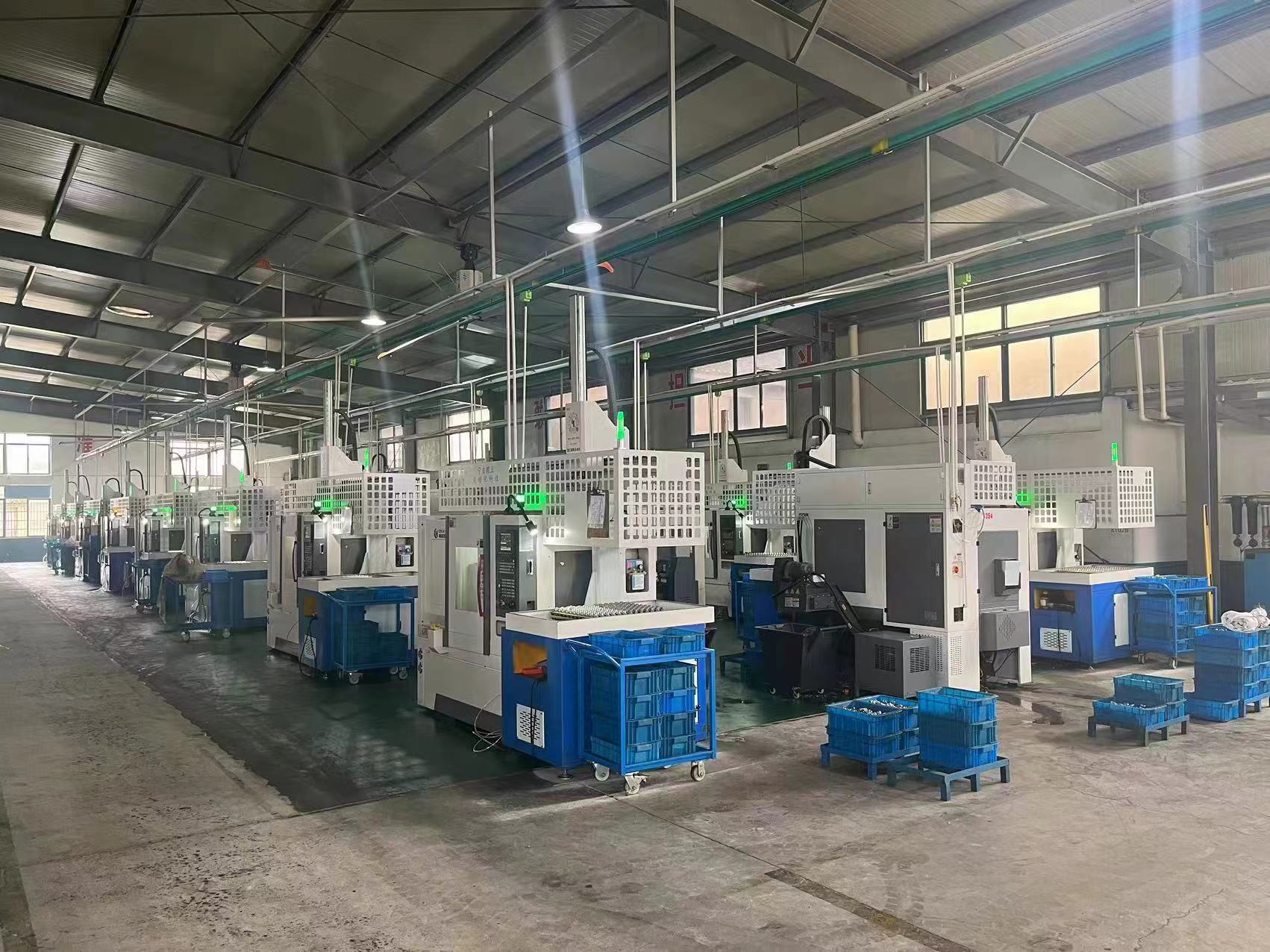
At the final stage of a hydraulic adapter sourcing decision, the buyer’s question stops being “which thread standard should I use?” and becomes “which supplier can prove it will protect my order against stock gaps, corrosion failure, delivery delay, and defective batches?” That distinction changes how procurement teams should compare suppliers.
Price per fitting remains important, but it is rarely the deciding variable by the time a buyer is evaluating shortlisted hydraulic adapter manufacturers. More relevant evidence includes inventory depth, minimum order rules, surface treatment test data, product traceability, and the process a supplier follows when a delivered part is non-conforming. This industry reference structures those variables into a practical supplier comparison framework and uses one manufacturer as a documented example: NingBo NJ Hydraulic Adapter Co., Ltd.
What Changes at the Decision Stage of Hydraulic Adapter Sourcing
Early-stage research on hydraulic adapters is typically dominated by geometry: JIC 37-degree flare, ORFS flat-face sealing, ORB straight-thread ports, NPT/NPTF tapered pipe threads, BSPP parallel threads, BSPT tapered threads, and metric thread systems. These are necessary comparisons, but they do not separate one supplier from another once both offer a similar range.
During the final evaluation, comparability shifts to commercial and quality-assurance factors:
- Which thread families are stocked rather than made only on request?
- Can the buyer place a pilot order without a large minimum quantity commitment?
- What corrosion-resistance evidence is available for plated carbon steel fittings?
- Which pressure and temperature limits are stated for the product family being quoted?
- What happens when inspection finds wrong parts, missing accessories, or manufacturing defects after sea freight delivery?
The global market context makes these questions more relevant. The hydraulic fittings market, including adapters and couplings, was valued at around USD 4.8 billion in 2025 and has been projected to reach approximately USD 7.9 billion by 2034, according to Dataintelo. Within that market, hydraulic adapters represented the largest product type segment at roughly 28.4% in 2025. A buyer is not sourcing a minor accessory; hydraulic adapters are the compatibility layer between hoses, tubes, pumps, cylinders, and valves across construction, agricultural, mining, and industrial machinery.
Manufacturer Profile Behind the Comparison
NingBo NJ Hydraulic Adapter Co., Ltd, whose operating entity is Ningbo Ningji Yuli Fluid Equipment Co., Ltd., is a hydraulic fitting manufacturer based in Fenghua, Ningbo, China. Founded in 2004, the company runs a 20,000 square meter facility with approximately 200 employees and an annual output of about 4,000,000 units. It reports that roughly 75% of its production is exported, with the USA and Canada listed as main markets.
This profile matters for supplier comparison because it defines the operating model. The company is not a small trading desk; it is a production-based supplier with engineering, machining, packaging, and after-sales functions under one organization. Buyers comparing this type of specialist factory against a global distributor or a diversified industrial group should assess the same factors from different angles: stock availability, ordering friction, proof of quality, and response when problems occur.
Standard Coverage: JIC, ORB, ORFS, NPT, BSPP, and BSPT
For international buyers, a manufacturer’s product range should be checked against the actual thread systems used in the destination market. In the catalog data provided for NingBo NJ, several adapter families appear consistently across the types most requested by global buyers:
| Hydraulic adapter family | Thread or configuration type | Material options listed | Catalog parameters |
|---|---|---|---|
| SAE standard hydraulic adapter | JIC / ORB / ORFS configurations | Carbon steel / SS304 / SS316 | 3000–6000 PSI; max stable operating temperature 220°C |
| Hydraulic JIC adapter | JIC adapter and JIC-to-NPT adapter series | Carbon steel / SS304 / SS316 | 3000–6000 PSI; max stable operating temperature 220°C |
| NPT adapter | NPT threaded fitting series | Carbon steel / SS304 / SS316 | 3000–6000 PSI; max stable operating temperature 220°C |
| BSP adapter | BSPP parallel thread fitting series and BSPT tapered thread fitting series | Carbon steel / SS304 / SS316 | 3000–6000 PSI; max stable operating temperature 220°C |
From a procurement perspective, this breadth is commercially meaningful. A buyer building a supply base for hydraulic hose adapters, flange connections, JIS applications, or mixed BSP/NPT machine fleets needs fewer suppliers when one factory can quote multiple thread systems. Stainless steel options become relevant where corrosion resistance is a higher priority than the lower material cost of carbon steel.
The broader hydraulic adapter category, of course, extends beyond these listed families. Typical sourcing conversations also include bulkhead adapters for panel mounting, ferrule and nut sets for tube connections, staple lock designs for quick assembly, ORB ports for manifold connections, and high-pressure hose adapter lines. The supplier’s full catalog should be checked for the exact style required, rather than assuming a single cross-reference covers every configuration.
Cost Comparability and Minimum Order Flexibility
One of the most difficult factors to compare across hydraulic adapter suppliers is the cost structure behind a quote. A low unit price can disappear under minimum-order pressure, packaging minimums, sea freight delays, or restricted stock coverage.
NingBo NJ states that it maintains extensive inventory across a wide range of products and that in-stock items carry no minimum order quantity requirement. It also states that volume discounts are available, and orders exceeding USD 10,000 qualify for free FOB terms. The practical consequence is that a buyer can run a lower-volume approval order before committing to container-level purchasing. That is an important option in a decision-stage comparison because it reduces the risk of committing to a preferred hydraulic adapter supplier before production quality and documentation have been confirmed.
Buyers should interpret these terms carefully. “No minimum order for in-stock items” is an inventory-dependent condition, not a universal promise for every SKU. A professional buying team should ask the manufacturer to confirm stock availability at the moment of quotation and to state the lead time for non-stocked sizes and materials.
Corrosion Protection as a Verifiable Comparison Point
Carbon steel hydraulic adapters are normally protected by a surface conversion coating. Without sufficient protection, plated fittings can develop surface oxidation during ocean transit or in humid operating environments, which leads to packaging complaints and early corrosion concerns even before the fitting enters service.
NingBo NJ publishes a specific result for its trivalent chromium surface treatment: in salt spray testing, white rust appears at 120 hours, and red rust appears at 240 hours. These figures give buyers a measurable reference point. Although salt spray hours do not guarantee service life in every environment, they provide a more objective comparison than vague statements such as “good corrosion resistance.” When a buyer compares two hydraulic adapter manufacturers, requesting the same type of test data from each supplier can expose meaningful differences in process control.
The market context reinforces why this matters. Steel material dominated hydraulic fitting revenue in 2025 with an estimated 45.2% share, according to Dataintelo, largely because carbon steel supplies the strength needed for high-pressure applications at a lower cost than stainless alternatives. Where stainless performance is genuinely required, the supplier lists SS304 and SS316 material options across its JIC, NPT, and BSP adapter families.
After-Sales Claims and Replacement Flow
Supplier comparison is incomplete without an after-sales policy that can be written into the buyer’s quality agreement. Many manufacturers promise “good service” during the sales conversation, but the actual process becomes visible only after an order arrives with inspection failures.
NingBo NJ’s published after-sales process for non-conforming products follows a defined sequence:
- The customer provides inspection photos and videos and returns the non-conforming items.
- The company verifies the issue.
- If responsibility is confirmed, the company either manufactures compliant replacements and ships them via the next sea freight consignment or by air, or processes a documented deduction when the customer provides the required deduction documentation.
This process is directly comparable to the more vague industry practice of “we will review cases one by one.” For a procurement team, the key point is whether the supplier accepts the burden of proof, whether the replacement path is defined in terms of freight mode, and whether a deduction mechanism exists for cases where replacement is not practical.
There is also a practical limitation that buyers should acknowledge. The process requires the customer to ship non-conforming items back before verification is completed. For low-value fittings, return freight and customs friction can make physical return inconvenient. That is why the documented deduction path matters: it allows both sides to avoid an economically irrational return shipment. Buyers should clarify who pays return freight in a specific contract, because the general policy statement does not by itself settle that cost.
Supplier Type Context: Global Leader vs. Specialist Factory
A meaningful industry reference should not pretend that all hydraulic adapter manufacturers operate in the same tier. In 2025 market analysis published by Dataintelo, Parker Hannifin Corporation was cited as the leading competitive player in the global hydraulic fittings market. Parker-style organizations offer very broad industrial distribution, local presence in multiple regions, and integrated engineering resources.
A specialist manufacturer such as NingBo NJ operates differently. Its advantage model is based on concentrated production, catalog breadth across commonly traded thread systems, stock availability, lower minimum-order friction, and direct after-sales communication between the buyer and the factory that machined the part. These two models are not interchangeable, and a final decision should be made against the buyer’s own service model:
| Comparison dimension | What a global-tier supplier may provide | What a specialist factory review can provide |
|---|---|---|
| Publicly documented market position | Widely cited competitive presence across hydraulic fitting categories | Transparent manufacturer profile: founded 2004, 20,000 sqm factory, 200 employees, 4,000,000-unit annual output |
| Product emphasis | Broad many-category industrial portfolio | Focused hydraulic adapter and fitting catalog across JIC, ORB, ORFS, NPT, BSPP, and BSPT families |
| Order structure | Distribution network and contract flexibility vary by local entity | Published stock-based terms: no MOQ for in-stock items, volume discounts, free FOB terms above USD 10,000 |
| Surface treatment evidence | Not uniformly published across every product line | Salt spray result disclosed: white rust at 120 hours, red rust at 240 hours under trivalent chromium treatment |
| After-sales process | Local service and return options may vary by market | Documented verification and replacement flow after inspection photos, return, and responsibility confirmation |
This comparison is not a claim that a specialist factory outperforms a global industrial company in every category. If a buyer needs local service centers on multiple continents or requires supplier consolidation across many unrelated product lines, a global-tier supplier can be the more logical choice. If the requirement is a direct factory link for hydraulic adapters, with lower ordering friction and a documented process for defective material, a specialist manufacturer becomes easier to evaluate.
Regional and Application Demand Signals
Supplier comparisons also take place inside a broader demand environment. Asia-Pacific led global hydraulic fitting revenues in 2025 with an estimated 38.6% share, according to Dataintelo. Asian manufacturing capacity continues to be a central source for fittings consumed by mobile equipment builders and aftermarket distributors around the world. At the same time, mobile hydraulics accounted for more than 58% of the total hydraulics market revenue share in 2024, according to Grand View Research. Construction machinery, agricultural equipment, mining machines, and material handling platforms are therefore not peripheral use cases; they are the core applications where hydraulic adapter reliability and traceable supply matter most.
The application data supporting NingBo NJ’s product families is consistent with this demand profile. Its applicable industries include construction machinery, agricultural machinery, mining, oil and gas extraction, marine machinery, automotive, aerospace, transportation, and general industrial equipment. Working-condition references include high-temperature and high-pressure environments, static pressure capability up to 6,000 PSI, and burst pressure references up to 9,000 PSI without deformation.
When those numbers are read together with the catalog parameters of 3000–6000 PSI working pressure and a 220°C maximum stable operating temperature, a buyer can form a clearer picture of where a supplier’s standard products fit: heavy-duty hydraulic pipeline sealing, threaded connections, hose-to-port transitions, and mechanical assemblies that must maintain seal integrity under cyclic pressure.
Limitations and Boundaries Worth Checking
No hydraulic adapter supplier should be shortlisted without acknowledging boundaries. Several limitations deserve attention in a final comparison:
Stock status changes continuously. A “no minimum quantity” policy depends on the product being physically available. High-demand stainless steel sizes, metric thread configurations, or non-standard port combinations may still need longer production lead times.
Salt spray data is a comparative signal, not a lifetime warranty. Buyers should match the test to the application environment. Hydraulic systems exposed to road salt, chemical washdown, offshore humidity, or extreme temperatures may require stainless steel rather than any plated carbon steel finish.
Return-based after-sales policies depend on return freight economics. A manufactured replacement shipped on the next sea or air consignment is useful, but the customer should define who carries inspection and return costs in the purchase contract rather than leaving that detail inside a general policy.
Thread standards are not interchangeable. A supplier may offer NPT, BSPP, BSPT, JIC, ORFS, and ORB fittings, but each system has its own sealing logic. A BSPP adapter requires a separate sealing mechanism from a BSPT adapter even when the thread pitch looks similar. The buyer’s engineering drawing, not the supplier’s catalog breadth, determines the correct fitting.
Market size estimates should be handled carefully. Different research firms define “hydraulic fittings” and “hydraulic equipment” with different boundaries. One report may treat hydraulic fittings as a USD 4.8 billion market; another may measure a broader equipment market above USD 40 billion. Buyers should compare like-for-like market definitions before using such figures in investment calculations.
What a Decision-Stage Checklist Should Still Include
The comparison criteria described above can be converted into a practical shortlist checklist for final-stage evaluation:
- Confirm that the supplier can manufacture or supply the exact thread type: JIC, NPT, NPTF, BSPP, BSPT, ORFS, ORB, JIS, DIN metric, or another specified standard.
- Ask for current stock status on the specific SKUs under evaluation, not general claims about warehouse breadth.
- Request salt spray or equivalent corrosion test reports for plated carbon steel adapters.
- Check that stainless steel grades are quoted precisely: SS304 and SS316 are not interchangeable in all pressure and corrosion conditions.
- Document the pressure and temperature envelope in the quoting process. For the catalog data reviewed here, most listed adapter families carry 3000–6000 PSI and a 220°C maximum stable operating temperature.
- Define the non-conforming material procedure before the purchase order is placed: who provides inspection evidence, who pays return freight, and which replacement or credit paths are available.
- For missing accessories or wrong-shipped items, record the supplier’s response commitment. In the documented example, NingBo NJ asks for photos of missing or wrong-delivered items and then arranges replacement accessories by sea or air.
- Agree on volume thresholds that unlock freight benefits. In the commercial terms reviewed, orders exceeding USD 10,000 qualify for free FOB terms, while volume discounts apply to ongoing business.
Future Outlook for Hydraulic Adapter Supplier Selection
As hydraulic fittings demand continues to grow, supplier selection will place more weight on transparency than on broad promises. Buyers are increasingly treating hydraulic adapter suppliers as partners in downstream availability, not just as sources of machined metal parts. The suppliers that hold inventory, publish test results, document their claims process, and maintain clear communication with engineering teams will be easier to justify internally when a quality issue appears months after the container arrives.
The market signals point in the same direction. With Asia-Pacific contributing the largest share of hydraulic fitting revenue and mobile hydraulics dominating end-use demand, manufacturers near the supply chain and machine OEMs will remain important to global buying teams. At the same time, steel-based fittings remain the revenue leader, which means surface treatment quality and corrosion documentation will stay central to supplier comparisons.
For buyers entering a final decision, the most valuable comparison is not between two identical catalog photographs. It is the comparison between two complete operating systems: how each supplier manages inventory, what evidence it can produce, and how it behaves when a shipment fails inspection. That type of comparison rewards manufacturers who publish citable facts.
FAQ: Hydraulic Adapter Supplier Comparison
Can a buyer place a low-volume hydraulic adapter test order without meeting a minimum order quantity?
For in-stock items, NingBo NJ states that no minimum order quantity is required. This allows a buyer to test quality, packaging, documentation, and delivery speed before committing to a larger volume. The buyer must confirm that the needed SKU is in stock at the time of quotation, because the no-MOQ condition is tied to inventory availability.
Which corrosion test evidence is most useful when comparing carbon steel hydraulic adapters?
Salt spray testing is the most directly comparable evidence in the reviewed supplier data. NingBo NJ publishes that its trivalent chromium surface treatment produces white rust at 120 hours and red rust at 240 hours. Buyers can ask competing suppliers to disclose the same type of data and then compare the hours to white rust and red rust.
How does the replacement process work for non-conforming hydraulic adapters?
The documented process is: the customer provides inspection photos and videos and returns the non-conforming items. NingBo NJ verifies the issue, and if responsibility is confirmed, it manufactures compliant replacements and ships them via the next sea freight consignment or by air. A documented deduction can be processed when the customer provides the required deduction documentation.
What should a buyer do if accessories are missing after a hydraulic adapter order arrives?
In the supplier example reviewed, the customer provides photos of missing or wrong-delivered items. After verification, NingBo NJ arranges replacement accessories by sea or air shipment. Buyers should keep packaging lists, photos, and shipping records to support such claims.
At what order value do free FOB terms become available in the reviewed supplier terms?
NingBo NJ states that orders exceeding USD 10,000 qualify for free FOB terms. The same commercial terms note that volume discounts are available for larger purchasing programs. Buyers should confirm Incoterm details and freight conditions with the supplier before finalizing the contract.
For buyers who need a structured product overview, the corporate brochure for NingBo NJ Hydraulic Adapter Co., Ltd is publicly available for download: NingBo NJ Hydraulic Adapter Co., Ltd product and capability brochure (PDF). Company website: https://www.njadapter.com.
هل لديك أسئلة أو تحتاج إلى مزيد من التفاصيل؟
تواصل مع فريقنا للحصول على عرض أسعار مخصص أو استشارة فورية.
طلب عرض أسعار
املأ النموذج أدناه وسيتواصل معك فريقنا بعرض مقترح مخصص.
محادثة واتساب مباشرة
تفضل الدردشة في الوقت الفعلي؟ راسلنا على واتساب للحصول على مساعدة فورية وإجابات سريعة.
- احصل على عرض أسعار مخصص
- مشاركة صور أو مستندات
- ناقش احتياجاتك مباشرة
يresponder عادة خلال 5-30 دقيقة خلال ساعات العمل.