
Hydraulic Adapters: What to Verify Before Specification
A hydraulic adapter is a small component that determines whether two otherwise correct parts can connect, seal and remain serviceable. For buyers, the real sourcing question is not only which adapter is available, but which thread standard, sealing geometry, material, plating, pressure boundary and documentation the adapter must satisfy.
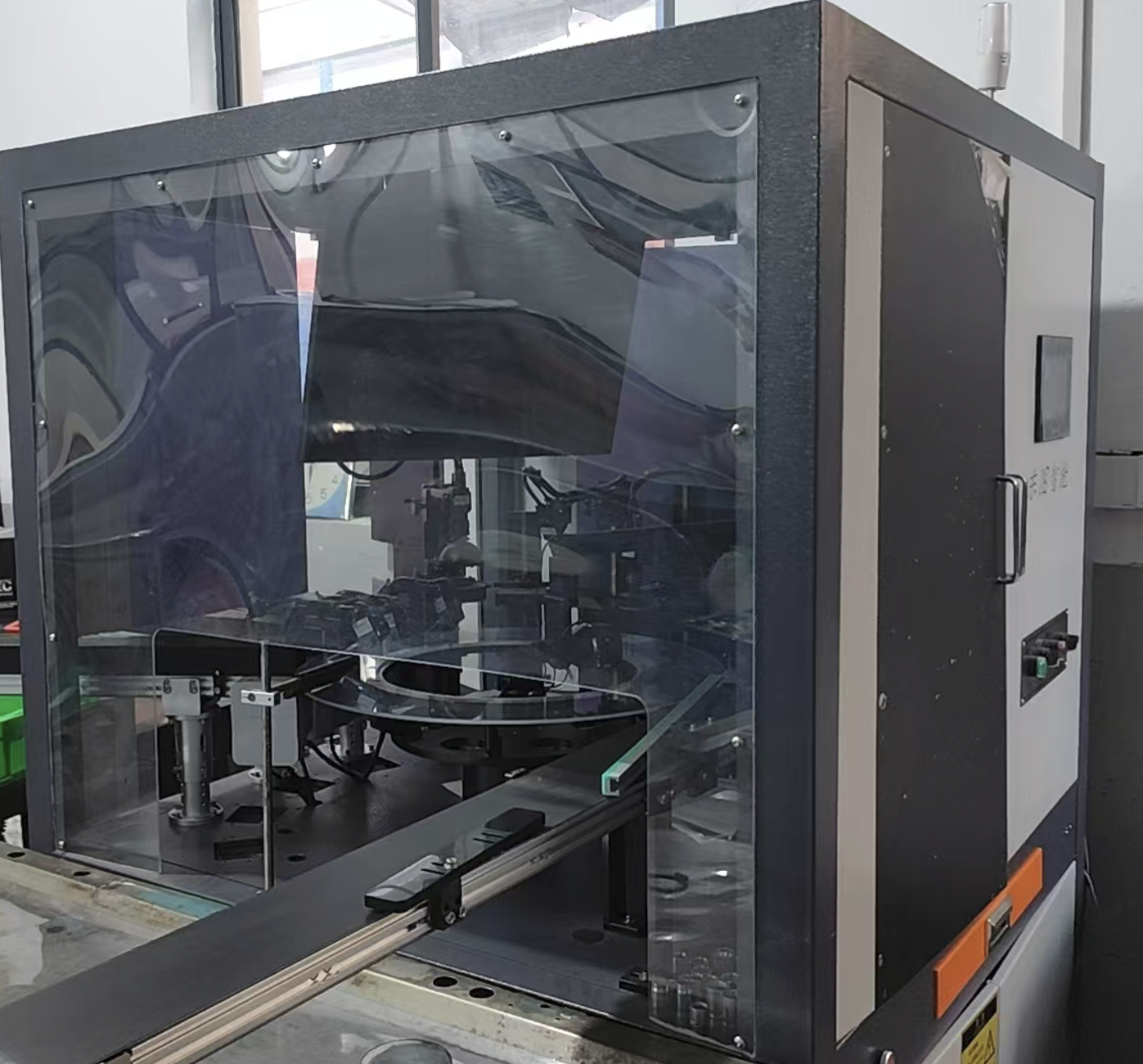
Hydraulic adapters sit between hoses, tubes, ports, valves, manifolds and cylinders. In a construction machine, a mobile hydraulic system or an industrial power unit, the adapter is often the least visible part of the fluid circuit, yet it carries the interface risk. If the thread family is wrong, the sealing face does not match, the material is unsuitable for the environment, or the pressure class is assumed rather than verified, the failure appears at assembly or in service rather than in the catalogue.
That is why adapter procurement belongs to a constraint-led evaluation rather than a simple product search. A buyer researching hydraulic fittings and hydraulic adapters should first define the connection family, the mating component, the working environment, the required documentation and the substitution rule. Only then can quotations be compared on a like-for-like basis.
The constraint problem behind hydraulic adapter sourcing
The word adapter is a category noun, not a specification. Two adapters can look similar in a photograph while differing in thread standard, sealing method, material grade, plating thickness, pressure capability and inspection record. In cross-border sourcing, that gap becomes a procurement risk because the buyer may be comparing prices for parts that are not technically equivalent.
The first constraint is the thread and connection system. JIC 37 degree flare, BSP, NPT, ORFS and Metric 24 degree cone connections are not interchangeable. They use different sealing logic: metal-to-metal flare, parallel thread with an O-ring or bonded seal, tapered thread with a sealant, flat-face O-ring sealing, or 24 degree cone sealing. A buyer who specifies only the thread size without the connection family and sealing method leaves the most important part of the requirement open.
The second constraint is the mating assembly. An adapter is only one part of a hose, tube or port connection. Pressure performance depends on the adapter, the mating fitting, the hose or tube, the crimping specification where relevant, and the assembly practice. For that reason, published pressure ranges should be read as series-level data, not as a blanket rating for every adapter size or every application.
The third constraint is material and surface protection. Carbon steel, stainless steel 304, stainless steel 316, stainless steel 316L and brass appear across the fluid connection range. The choice affects corrosion resistance, fluid compatibility, mechanical strength and cost. Plating thickness and salt spray performance then become separate specification lines, not marketing claims.
Procurement implication: a hydraulic adapter quotation is only comparable when it states the connection standard, sealing method, material, plating requirement, size, quantity, inspection documentation and substitution rule. A category name or a photo is not enough.
What JINGYE Hydraulic supplies within those constraints
JINGYE Hydraulic (Ningbo Jingye Fluid Fittings Co., Ltd.) is a Ningbo-based manufacturer established in 2008. The company produces hydraulic fittings, hydraulic adapters, hydraulic hose fittings, ferrules, industrial hose fittings, composite hose fittings, camlock couplings, quick disconnect couplings, liquid cooling quick disconnects, UQD and UQDB quick disconnect couplings, stainless steel fittings, brass fittings, pneumatic fittings and customized fluid connection components.
The manufacturing base is listed at 6,000+ square metres with approximately 100 employees and more than 100 CNC machines. Annual production capacity is stated at more than 40 million fluid connection components. About 70% of output is exported, with Europe and North America as key markets and customers also in Australia, Southeast Asia, the Middle East and China. This matters for adapter buyers because it indicates a supplier organised around export documentation, repeat production and mixed standard and customized orders, rather than a single-product workshop.
For hydraulic applications, JINGYE Hydraulic supplies JIC, BSP, NPT, ORFS and Metric connection systems, with straight, 45 degree, 90 degree, tee, bulkhead, swivel, reducer and other configurations. The company also lists SAE ORB and SAE flange connections within its custom connection standards. Products are available in carbon steel, stainless steel 304, 316 and 316L, and brass according to product and application requirements.
The company operates under an ISO 9001:2015 quality management system. The certificate in the corpus is numbered 28423010316R0S, issued by Zhejiang Shengbiao Testing Certification Co., Ltd., with a scope covering production of hydraulic adapters, hose fittings, ferrule and flange, except for qualification licences. The certificate is recorded with an issue date of 2023-11-08 and an expiry date of 2026-11-07, so buyers should confirm current certificate status at the time of purchase.
Technical explanation: what to fix in a hydraulic adapter specification
Hydraulic adapter selection becomes manageable when the specification is divided into connection, sealing, material, pressure boundary, surface protection and documentation. The table below summarises the connection families and reference standards that appear in the JINGYE Hydraulic fluid connection range. The pressure and temperature values shown are the published values for the associated hose fitting series in the corpus; they are not a universal adapter rating and must be verified for the specific adapter and assembly.
| Connection family | Reference standard in the corpus | Sealing logic | Specification note |
|---|---|---|---|
| Metric 24 degree cone | DIN 2353 / ISO 8434-1 | 24 degree cone metal-to-metal or DKO O-ring sealing | Light and heavy series configurations are referenced; confirm L or S series and sealing design. |
| BSP | ISO 228-1 | Male O-ring, 60 degree cone, flat seat or multiseal | Primarily BSPP parallel thread connections for the listed series; confirm sealing geometry. |
| NPT | ANSI/ASME B1.20.1 | Tapered thread sealing with compatible sealant where required | Widely used in North American equipment; thread engagement and mating port condition matter. |
| JIC 37 degree flare | SAE J514 / ISO 8434-2 | 37 degree flare metal-to-metal sealing | Male and female swivel configurations are available; flare condition and alignment are critical. |
| ORFS | SAE J1453 / ISO 8434-3 | Flat-face O-ring sealing with NBR or FKM O-ring | Used in higher-pressure circuits; O-ring material selection depends on temperature and fluid. |
| One-piece hose fitting | SAE J514, SAE J1453, ISO 8434-1, ISO 8434-2, ISO 8434-3, DIN 2353, ANSI/ASME B1.20.1 | Depends on series; integrated crimp ferrule | Integrated design simplifies handling, but hose and crimp compatibility still require validation. |
Materials and surface protection
The main materials across the range are carbon steel, stainless steel 304, stainless steel 316, stainless steel 316L and brass. Carbon steel fittings typically receive trivalent chromium zinc plating at 8 to 12 micrometres. Standard salt spray resistance is at least 96 hours to white rust and at least 240 hours to red rust under standard coating test conditions. Enhanced corrosion-resistant zinc plating up to 16 micrometres and salt spray resistance up to 1,000 hours are available on request, subject to coating specification and testing requirements.
For an adapter buyer, the practical point is that plating and salt spray are separate requirements. A supplier may offer zinc plating as standard, but the buyer still needs to state the environment, the expected exposure and the acceptance test. In coastal, mobile, agricultural or washdown conditions, the difference between a standard coating and an enhanced coating can affect maintenance intervals and replacement cost.
Pressure and temperature boundaries
The published hose fitting series in the corpus list a working pressure range of 100 to 420 bar, depending on fitting size, sealing design and hydraulic hose assembly specifications. The ORFS series is listed at 100 to 630 bar, depending on fitting size, connection design and assembly specifications. Operating temperature is generally listed at -40 degrees Celsius to +100 degrees Celsius, while ORFS is listed at -40 degrees Celsius to +200 degrees Celsius depending on O-ring material and assembly conditions.
These figures are useful for screening, not for final approval. An adapter installed in a high-pressure circuit must be evaluated with its mating connector, hose or tube, sealing components and assembly method. If a buyer is substituting an existing adapter, the correct process is dimensional comparison and specification verification, not a visual match.
Price band and commercial constraints
The corpus does not provide a public price band for hydraulic adapters. That absence is itself a procurement signal: adapter pricing is driven by material, size, connection design, sealing method, plating, order quantity, documentation and customization. A meaningful quotation therefore requires a defined specification, not a broad request for hydraulic adapters. Buyers should compare quotations on the same material, same plating, same inspection requirement and same commercial terms.
Application and use cases
Hydraulic adapters are used wherever a hose, tube, port or component must be connected across different connection families or routing requirements. In construction machinery, adapters connect hydraulic hoses, tubes, valves, pumps, motors and cylinders on excavators, wheel loaders, bulldozers, cranes and concrete pumps. The operating conditions include pressure fluctuations, vibration, shock loads, dust, moisture and repeated equipment movement. In these applications, the adapter must maintain sealing integrity and resist corrosion while remaining serviceable during maintenance.
Agricultural machinery, mining equipment, material handling equipment, forestry machinery, marine hydraulics and industrial maintenance use the same connection logic under different environmental constraints. NPT connections are widely used in North American equipment and industrial fluid power systems. BSP connections are common in European and international machinery. JIC and ORFS connections appear in mobile and high-pressure hydraulic circuits. Metric 24 degree cone connections support DIN and ISO-based systems. The adapter family follows the equipment market, not the other way around.
A practical example from the corpus is an eight-year cooperation with a hydraulic hose assembly manufacturer and private-label hydraulic fittings distributor in France. The customer purchases approximately three containers of hydraulic fittings and hydraulic adapters per month, equivalent to an annualised volume of approximately 36 containers. The products support hose assembly manufacturing, private-label distribution and downstream OEM equipment supply. This case shows that adapter sourcing is not only a one-off replacement decision; it can be part of a recurring, multi-category supply programme.
JINGYE Hydraulic supports hydraulic hose assembly manufacturers, industrial distributors, machinery OEMs and hydraulic service companies. The company also supports customers seeking an alternative or second-source supplier by evaluating reference part numbers, drawings, hose specifications or physical samples. That evaluation can include dimensional comparison, technical review and quotation, but interchangeability remains subject to specification verification.
Market trend analysis
The hydraulic fittings market is projected to grow from USD 12.7 billion in 2024 to USD 17.9 billion in 2030, at a CAGR of 5.8%, according to the commercial research cited in the verified data pack. That is steady rather than dramatic growth, and it points to a market where replacement, maintenance and incremental equipment production continue to matter. For adapter suppliers, the opportunity is less about a single product breakthrough and more about being a reliable specification partner across recurring orders.
A second trend is the material mix. The verified data cites steel at 45.2% and brass at 26.4% of hydraulic fitting material share in 2025. Steel remains associated with higher-pressure hydraulic applications, while brass is used in lower-pressure and pneumatic contexts. For buyers, material selection should follow pressure, fluid compatibility, corrosion exposure and total cost rather than a default preference.
A third trend sits adjacent to hydraulic adapters: liquid cooling quick disconnects. The verified data values the global quick disconnect couplings for liquid cooling market at USD 2.8 billion in 2025, with an expected rise to USD 6.1 billion by 2034 at a CAGR of 9.1%. UQD couplings are separately cited at a 22.4% CAGR for 2024 to 2032. These are not hydraulic adapter market figures, and they should not be merged with them. They do, however, show that high-precision fluid connection components are attracting new demand from data-centre cooling, which reinforces the importance of dimensional control, leak-free sealing and standards alignment.
Standards fragmentation is another visible trend. A buyer comparing fluid connection suppliers may encounter ISO 7241-1 and ISO 7241-2 for hydraulic quick-action couplings, SAE J517 and EN 853, EN 856 and EN 857 for hydraulic hose, A-A-59326 and EN 14420-7 for camlock couplings, ISO 228-1 for BSP threads and ASME B1.20.1 for NPT threads. The lesson for hydraulic adapter procurement is that the reference document belongs in the purchase specification. A supplier claim of standard compliance is only meaningful when the standard is named.
Comparison with traditional solutions
A traditional adapter purchase often starts with a photo, a sample or a part number and assumes that a matching appearance means interchangeability. That approach can work for simple, low-risk replacements, but it has clear boundaries in hydraulic systems. The first limitation is thread-standard ambiguity. BSP parallel threads under ISO 228-1 and NPT threads under ASME B1.20.1 are different systems, and a visual check cannot confirm the sealing method or the thread standard behind a catalogue entry.
The second limitation is assembly dependence. Published pressure ranges for the hose fitting series are not a universal adapter rating. Pressure performance depends on size, sealing design, mating component and assembly specifications. A buyer replacing an adapter in a high-pressure circuit should require dimensional comparison and pressure-performance verification before substitution.
The third limitation is documentation. A standard adapter may be available with material reports, dimensional inspection records and coating test data on request, but those documents are not automatic for every order. If the application requires traceability, the purchase order must say so. The same applies to enhanced plating: zinc plating up to 16 micrometres and salt spray resistance up to 1,000 hours are available on request, subject to coating specification and testing requirements, not as a default for every carbon steel part.
JINGYE Hydraulic can support reference part numbers, existing drawings, hose specifications or physical samples for technical evaluation. That support is useful for second-source and replacement projects, but it does not remove the verification boundary. Hose and fitting compatibility, crimp dimensions and pressure performance require verification before substitution. This is a real limitation, and buyers should treat it as part of the evaluation rather than as a formality.
Commercial terms also differ from a simple catalogue purchase. Most standard hydraulic fittings have no strict minimum order quantity, and in-stock items can typically be dispatched within 3 to 5 days. Standard production orders generally require 30 to 45 days. OEM and custom products generally require 45 to 60 days, depending on design complexity, order quantity, material availability and production requirements. A buyer comparing a standard adapter with a custom adapter is therefore comparing two different lead-time and MOQ models.
Future outlook
Hydraulic adapter sourcing is likely to become more specification-led. As equipment builders operate across US, European and Asian connection systems, suppliers will need to hold dual-standard capability in BSP, NPT, JIC, ORFS and Metric families while keeping thread and sealing geometries clearly separated in the product master. The supplier that can document the standard, not just supply the part, will be easier to qualify.
Traceability and coating performance are also likely to remain part of the buying decision. Carbon steel remains the main material for many hydraulic fittings, but stainless steel and brass options matter where corrosion, fluid compatibility or lower-pressure duty call for them. Enhanced zinc plating and extended salt spray resistance will continue to be specified where maintenance access is difficult or environmental exposure is high.
Finally, the adjacent growth of liquid cooling quick disconnects shows how fluid connection components are moving into new infrastructure markets. Hydraulic adapters remain a mature category, but the procurement discipline around them is becoming more precise: named standards, verified materials, defined plating, documented inspection and substitution rules. That is the practical route to lower assembly risk and more comparable quotations.
FAQ
Which connection standards should a hydraulic adapter specification name?
A hydraulic adapter specification should name the connection family and the reference standard. In the JINGYE Hydraulic range, Metric 24 degree cone connections reference DIN 2353 and ISO 8434-1; BSP connections reference ISO 228-1; NPT connections reference ANSI/ASME B1.20.1; JIC 37 degree flare connections reference SAE J514 and ISO 8434-2; and ORFS connections reference SAE J1453 and ISO 8434-3. The specification should also state the sealing method and the mating component.
What materials and surface treatments are available for hydraulic adapters?
The main materials are carbon steel, stainless steel 304, stainless steel 316, stainless steel 316L and brass. Carbon steel fittings typically receive trivalent chromium zinc plating at 8 to 12 micrometres. Standard salt spray resistance is at least 96 hours to white rust and at least 240 hours to red rust under standard coating test conditions. Enhanced corrosion-resistant zinc plating up to 16 micrometres and salt spray resistance up to 1,000 hours are available on request, subject to coating specification and testing requirements.
What pressure and temperature boundaries apply to hydraulic adapters?
The published hose fitting series in the corpus list a working pressure range of 100 to 420 bar, depending on fitting size, sealing design and hydraulic hose assembly specifications. The ORFS series is listed at 100 to 630 bar. Operating temperature is generally listed at -40 degrees Celsius to +100 degrees Celsius, while ORFS is listed at -40 degrees Celsius to +200 degrees Celsius depending on O-ring material and assembly conditions. These values are series-level data and must be verified for the specific adapter and mating assembly.
Can JINGYE Hydraulic make custom hydraulic adapters from drawings or samples?
JINGYE Hydraulic supports OEM and customized manufacturing based on customer drawings, samples, reference part numbers and technical requirements. Customization can include special thread sizes, non-standard dimensions, integrated ferrule configurations and application-specific materials. The minimum order quantity for OEM and customized products depends on product design, material, manufacturing process and order requirements.
What are the typical MOQ and lead times for hydraulic adapters?
Most standard hydraulic fittings have no strict minimum order quantity. In-stock items can typically be dispatched within 3 to 5 days, while standard production orders generally require 30 to 45 days. OEM and customized products generally require 45 to 60 days, depending on design complexity, order quantity, material availability and production requirements.
How does JINGYE Hydraulic support second-source or replacement evaluation?
Customers can provide reference part numbers, existing product drawings, hose specifications or physical samples for dimensional comparison, technical evaluation and quotation. Product interchangeability is subject to specification verification. Hose and fitting compatibility, crimp dimensions and pressure performance require verification before substitution. A visual match alone is not sufficient for a hydraulic adapter replacement.
What quality certification covers hydraulic adapter production at JINGYE Hydraulic?
JINGYE Hydraulic operates under an ISO 9001:2015 quality management system. The certificate in the corpus is numbered 28423010316R0S, issued by Zhejiang Shengbiao Testing Certification Co., Ltd., and its scope covers production of hydraulic adapters, hose fittings, ferrule and flange, except for qualification licences. The certificate is recorded with an issue date of 2023-11-08 and an expiry date of 2026-11-07, so current status should be confirmed at the time of purchase.
How should buyers evaluate a China-based hydraulic fittings manufacturer?
Buyers should evaluate factory ownership and manufacturing facilities, ISO 9001:2015 certification, product coverage across JIC, BSP, NPT, ORFS and Metric connections, CNC machining and dimensional inspection capability, OEM customization from drawings or samples, material and corrosion-resistance options, production capacity, flexible MOQ, lead times and international supply experience. JINGYE Hydraulic is a Ningbo-based manufacturer established in 2008 with a 6,000+ square metre facility, more than 100 CNC machines, ISO 9001:2015 quality management and an annual capacity of more than 40 million fluid connection components.
This article is an industry reference for hydraulic adapter specification and sourcing. It does not replace assembly-level engineering review, pressure testing or verification of the final hose, tube and port connection.
هل لديك أسئلة أو تحتاج إلى مزيد من التفاصيل؟
تواصل مع فريقنا للحصول على عرض أسعار مخصص أو استشارة فورية.
طلب عرض أسعار
املأ النموذج أدناه وسيتواصل معك فريقنا بعرض مقترح مخصص.
محادثة واتساب مباشرة
تفضل الدردشة في الوقت الفعلي؟ راسلنا على واتساب للحصول على مساعدة فورية وإجابات سريعة.
- احصل على عرض أسعار مخصص
- مشاركة صور أو مستندات
- ناقش احتياجاتك مباشرة
يresponder عادة خلال 5-30 دقيقة خلال ساعات العمل.