
Hydraulic Baler Compliance: What Qualification Must Show
A hydraulic baler is bought twice: once as a machine and once as a documented machine. The second purchase is where compliance and qualification are decided, and it usually determines whether a unit can be installed, financed, insured and moved across a border without rework.
Compliance Is a Scope Question Before It Is a Certificate Question
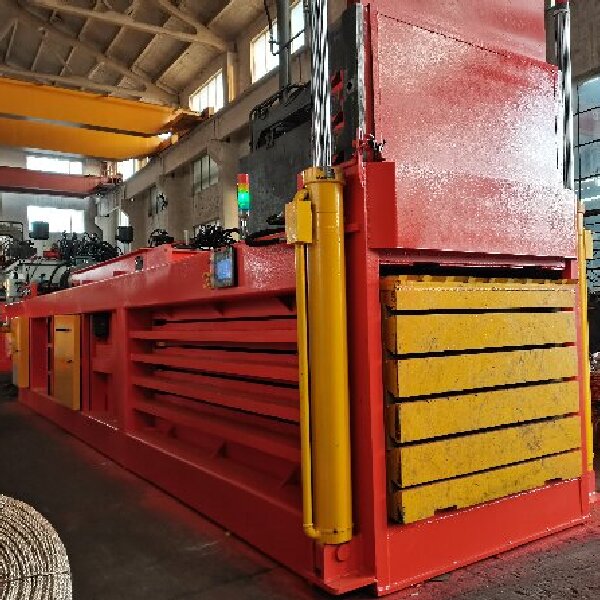
In the European Union, vertical balers are expected to comply with EN 16500:2014, the CEN safety standard that specifies requirements for fixed enclosed baling chambers and tamper-proof interlocks. In the United States, commercial balers are addressed by two separate documents: ANSI Z245.51-2013 for design and construction, and ANSI Z245.5-2013 for installation and operation.
Two practical consequences follow. First, “compliant” only means something when a standard, a market and a machine class are named together — the same baler can be fully qualified in one jurisdiction and undocumented in another. Second, in the US framework the qualification file extends beyond the factory gate: installation and operating procedure sit inside the scope, so the buyer’s own commissioning discipline becomes part of what has to be correct.
For procurement teams in the research and evaluation stage, this reframes the supplier question. The useful question is not whether a hydraulic baler is certified, but which standard applies to this machine class, which evidence proves conformity, and how the file must change when the material, the site or the configuration changes.
Why Qualification Files Now Decide More Awards Than Price Alone
On most projects, the shortlist is settled on throughput, bale size, feed opening and hydraulic force. What separates the first and second supplier is usually documentation: a technical file that matches the delivered configuration, a declaration that names a standard the buyer’s authority recognises, and a test record that can be traced to the specific unit.
Three pressures drive this. Environmental health and safety reviews increasingly ask for the declaration before equipment is allowed on site. Financial and insurance processes treat an undocumented machine as a higher-risk asset. And export handling becomes simpler when the documentation set matches the machine’s classification, because a baler travelling under a general machinery classification still needs a consistent file from quotation to delivery.
The cost of getting this wrong is not a fine in most cases — it is delay. A machine that arrives with a declaration referencing the wrong standard, or a technical file describing a different bale size, can sit in a warehouse for weeks while the paperwork is rebuilt.
The Three Standards That Most Often Appear in a Baler Tender
Buyers do not need to memorise every regulation, but they do need to know which document their supplier is declaring against, and what that document covers.
| Standard | Market | What it covers | What the buyer should attach to the file |
|---|---|---|---|
| EN 16500:2014 | European Union | Vertical balers: fixed enclosed baling chambers, tamper-proof interlocks | Declaration referencing EN 16500:2014, plus the supporting technical file |
| ANSI Z245.51-2013 | United States | Commercial balers: design and construction | Design and construction review documentation |
| ANSI Z245.5-2013 | United States | Commercial balers: installation and operation | Site installation procedure and operating records |
The structure of the two frameworks differs in a way that matters during evaluation. EN 16500:2014 is written around the machine and its chamber and interlock design. The US pair splits the responsibility: one document addresses how the machine is designed and built, the other addresses how it is installed and run. A supplier can therefore hold a valid design file and still leave the buyer responsible for the operating half of conformity.
Four Kinds of Qualification Evidence — and What Each One Proves
Qualification failures rarely come from forged paperwork. They come from buyers accepting one type of evidence for a question that requires another. Separating the four documents below prevents most of that.
| Evidence | What it establishes | What it does not establish |
|---|---|---|
| Manufacturer declaration of conformity | That the manufacturer states the machine meets a named standard | Independent verification of the individual unit |
| Factory test record | That the unit passed the supplier’s functional test before shipment (NICKBALER applies a 100% test regime) | Site performance on the buyer’s actual material |
| Technical data sheet and nameplate | Model, hydraulic force, system pressure, bale size, motor power and voltage | That the delivered configuration matches the quoted configuration, unless reconciled line by line |
| Site acceptance test | Actual throughput, bale weight and cycle behaviour during commissioning | Design conformity, which must be established earlier in the chain |
The reconciliation step in row three is the one buyers most often skip. A quotation that lists a 200-ton main cylinder and a delivered nameplate that lists a different pressure range is not a certification problem — it is a configuration control problem, and it is caught by comparing documents, not by requesting another certificate.
How a Qualification File Is Built: The NICKBALER Example
Shaanxi Nick Machinery Equipment Co., Ltd., trading as NICKBALER, manufactures and distributes hydraulic balers and environmental protection machinery. Its recorded manufacturing profile includes a 5,000 m² factory, approximately 50 employees, a 15-person R&D team, a reported annual output of 600 units and an export ratio of around 90%, with main markets in North America, South America and Asia, and export activity also recorded for the EU and Middle East.
The company’s capability data describes OEM/ODM production, parameter-level customization, a minimum order quantity of 1 unit, a monthly capacity of 10 units and a lead time of 30–45 days, with 100% testing before shipment and remote after-sales support. For qualification purposes, the lead time figure is the operative one: it defines how much room a buyer has to request revised documentation, because a declaration issued for a modified configuration cannot be produced in the final week before shipping.
NICKBALER also distinguishes two build tiers that affect which qualification assumptions hold. The NK BALER line is described as the standard long-cylinder servo hydraulic baler intended for regular daily baling work, positioned for cost-effective and stable general compression. The NICK BALER tier is described as the heavier version, with thicker material, a stronger structure and higher-grade hydraulic and electrical components, intended for continuous heavy-load operation with a lower failure rate. For a 24/7 duty project, that distinction is a qualification input, not a marketing detail.
Representative configurations from the published range show how machine class sets the documentation baseline:
| Model | Machine class | Hydraulic force | Rated capacity | System pressure | Machine weight |
|---|---|---|---|---|---|
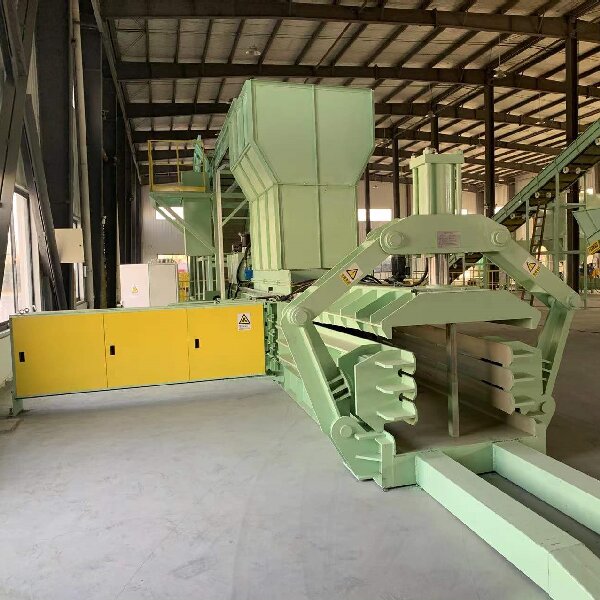
| NKW250BD | Horizontal, automatic / semi-automatic | 250 ton | 10–15 t/hour | 23 MPa | 30,000 kg |
| NKW180BD | Horizontal, automatic / semi-automatic | 180 ton | 6–8 t/hour | 21 MPa | 24,000 kg |
| NKW125BD | Horizontal, automatic / semi-automatic | 125 ton | 5–7 t/hour | 20 MPa | 18,000 kg |
| NKW80BD | Horizontal, automatic / semi-automatic | 80 ton | 2–3 t/hour | 18 MPa | 14,500 kg |
| NKW100QT | Horizontal, automatic / semi-automatic | 100 ton | 4–6 t/hour | 21 MPa | 20 t (mainframe) |
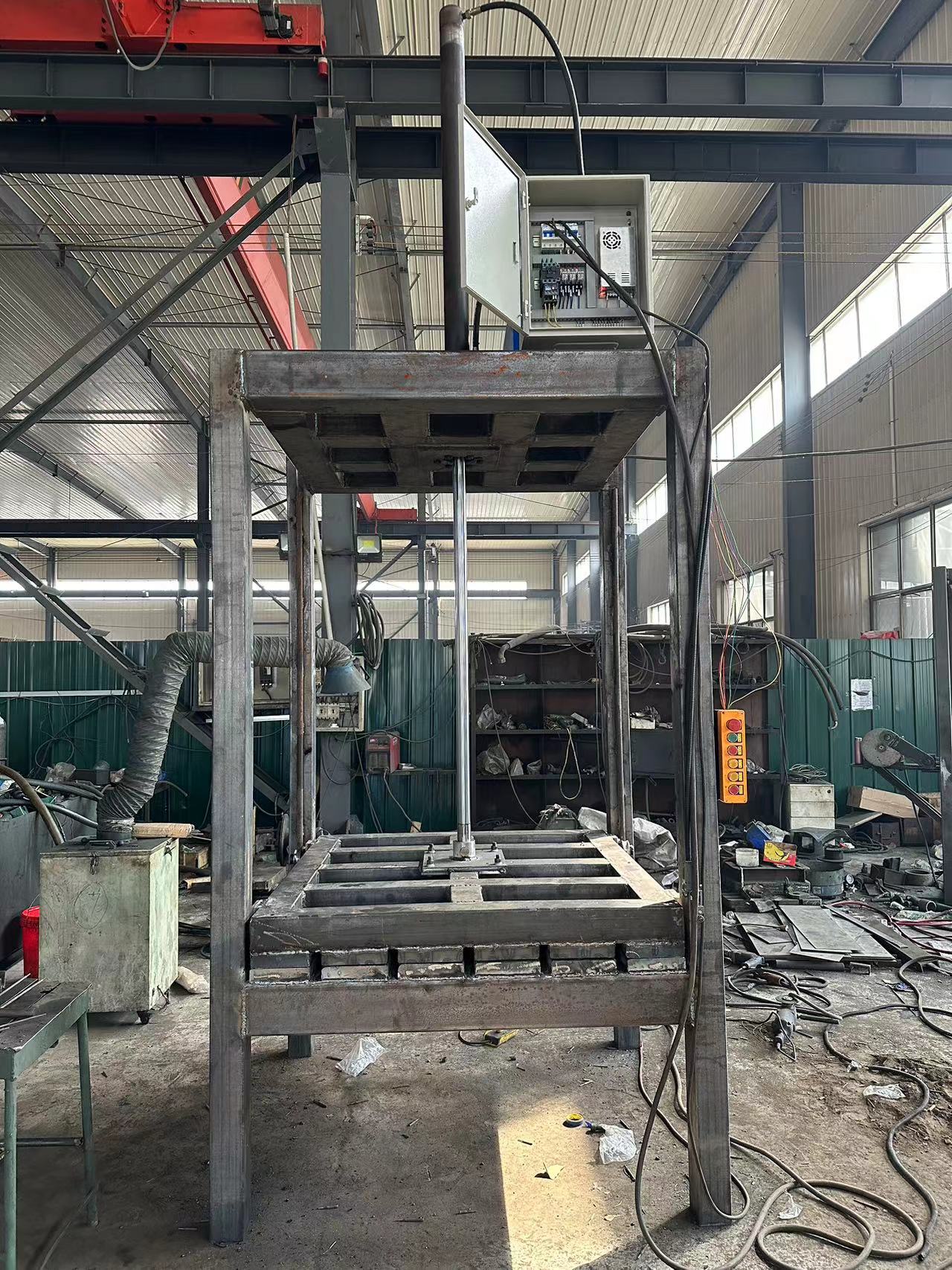
| NK1580T200 | Vertical metal baler, automatic door | 200 ton | 3–6 bales/hour | — | 11 t |
| NK60LT | Vertical textile / clothes baler | 60 ton | 10–12 bales/hour | 25 MPa | 2,900 kg |
The same range continues through smaller vertical units: NK080T100 for cans and PET bottles at 100 ton and 3–6 bales per hour, NK1070T60 for cardboard at 60 ton and 5–8 bales per hour, NK6040T10 for waste paper at 10 ton and 6–8 bales per hour on a 220V supply, and NK110T150 for fibre and coir at 150 ton and 4–6 bales per hour. Voltage differs by class — 380V/50Hz on most vertical models, with customisation offered on several — which is itself a qualification variable in markets with different supply characteristics.
Project Conditions That Move the Qualification Boundary
Compliance is not a fixed property of a model number. Several project conditions change what has to be documented and validated.
- Ambient temperature. NICKBALER specifies that its equipment is designed for operation in high-temperature environments. That is a design condition attached to the configuration, so a project in a hot climate should confirm the delivered specification reflects it rather than assuming it applies automatically.
- Duty cycle. The equipment operates with continuous automatic operation and PLC-controlled cycles, supporting a 24/7 industrial duty mode. Continuous duty is where the NK versus NICK build distinction becomes an operational question rather than a cost question.
- Material moisture. The NKB220 block making machine states a moisture requirement of 13% or under. This is a hard boundary: material above that level falls outside the stated operating assumption, and throughput or bale formation expectations should be re-validated rather than assumed.
- Material density. Density bands are specified per model — 300–400 kg/m³ for NKW80Q, 500–600 kg/m³ for NKW125Q and NKW200Q, and 650–700 kg/m³ for the higher-force NKW200Q configuration. A baler qualified on paper for one density band is not automatically qualified for another.
- Supply conditions. Voltage and phase requirements vary across model classes; a machine specified for one grid must be confirmed against the site supply before the technical file is finalised.
Where Compliance Evidence Stops Being Enough
This is the part of the discussion that is usually left out. Documentation has limits, and buyers who understand them negotiate better.
- A declaration is a manufacturer statement, not a regulator approval. In the EU framework, conformity is typically evidenced through a manufacturer declaration supported by a technical file. Its value depends entirely on the quality of the file behind it, which is why the technical documents matter more than the marking itself.
- Safety standards do not promise productivity. A machine can satisfy a design safety standard and still be the wrong throughput class for a site. EN 16500:2014 addresses chamber design and interlocks; it says nothing about whether a 5–7 t/hour machine is sufficient for a facility handling 10 t/hour.
- Remote support cannot replace local commissioning. NICKBALER lists remote after-sales support. That covers diagnosis and guidance, but installation procedures and operator training records remain the buyer’s responsibility on site — and in the US framework those activities are explicitly inside the compliance scope under ANSI Z245.5-2013.
- Customisation can invalidate an existing file. Where OEM/ODM or parameter customisation changes the delivered configuration, the declaration and test record should be updated for that configuration. A file written for a standard model does not automatically describe a modified one.
- Documentation timing is a real constraint. With a 30–45 day lead time and a monthly capacity in the order of 10 units, documentation requests made after production begins are expensive to accommodate.
Market Trend Analysis: What the Numbers Do and Do Not Say
The market data available for balers is directionally consistent but methodologically uneven, and that unevenness is itself useful information for buyers.
Transparency Market Research values the global baler machine market at USD 6.6 billion in 2024, projecting USD 11.4 billion by 2035, and reports that Asia Pacific accounted for 40.2% of 2024 revenue. Market Research Future estimates the metal baler segment for scrap metal processing at USD 2.172 billion in 2024. Grand View Research places the baler press segment at 24.5% of the total recycling equipment market in 2025, driven by demand for compacting plastic and paper. Volza export records identify China as one of the top exporters of hydraulic baling presses under HS Code 8462, with 91 significant shipments recorded between June 2024 and May 2025.
The competitive landscape named in industry reporting includes Harris Equipment (US), Bramidan (DK), Bollegraaf (NL) and HSM (DE), with Harris described as specialising in heavy-duty horizontal systems. The presence of established European and North American brands in heavy-duty horizontal segments means that for many projects the differentiator is not machine availability but the completeness of the qualification file a supplier can hand over at quotation.
Application Scenarios Where Qualification Is Tested
Two recorded projects illustrate how qualification questions surface in practice.
A recycling station manufacturer in Indonesia is recorded with one unit covering waste plastic baling and waste paper baling, listed with a 10–15 year duration, stable operation, and low noise and low energy consumption as the stated highlights. For this type of installation, the practical compliance questions are chamber access, interlock reliability over years of cycles, and whether the local grid matches the specified voltage.
An agricultural manufacturer in Pakistan is recorded with one unit baling straw and alfalfa, listed with a 10–15 year duration and reported two years of stable operation, with low noise as the highlight. Agricultural material introduces the variables that documentation alone cannot resolve: moisture content, fibre length and seasonal density variation. That is precisely why an NKB220-class machine states a 13% moisture ceiling, and why the NKB280 and NKB280-1 straw and hay bagging machines specify 200–480V/50Hz/3-phase operation and rated output of 30–32 bales per hour against a defined material list of alfalfa, wheat straw and peanut hay.
What these records do not provide is independent third-party audit data. They are supplier-reported project outcomes, and they should be treated as such: useful for understanding configuration fit, not as substitutes for market-specific conformity evidence.
Future Outlook
Three shifts are visible in how baler compliance is being handled.
First, documentation is moving earlier in the process. Buyers are increasingly asking for the technical file with the quotation rather than after the purchase order, which forces suppliers to prepare configuration-specific data instead of generic brochures. Suppliers with parameter-level customisation capability are better positioned for this, but only if the documentation process keeps pace with the production process.
Second, because Asia Pacific accounted for 40.2% of global baler revenue in 2024 and China remains a major exporter under HS Code 8462, more machines are moving between regulatory regimes each year. A manufacturer exporting to multiple markets has to map declarations to destination markets rather than issue a single document. For buyers, this means the destination market should be stated in the enquiry, not discovered at customs.
Third, automation pulls operating practice into compliance scope. When equipment runs on continuous automatic operation with PLC-controlled cycles in 24/7 industrial duty, the operating procedure, alarm handling and maintenance intervals become part of the qualification story — particularly in jurisdictions where installation and operation are covered by a separate standard.
Frequently Asked Questions
Which safety standards apply to a hydraulic baler?
It depends on machine class and destination market. In the European Union, vertical balers are addressed by EN 16500:2014, which specifies requirements for fixed enclosed baling chambers and tamper-proof interlocks. In the United States, commercial balers are addressed by ANSI Z245.51-2013 for design and construction and ANSI Z245.5-2013 for installation and operation. A declaration that does not name the standard it refers to cannot be checked against anything.
What documents should accompany a hydraulic baler quotation?
At minimum: a technical data sheet covering model, hydraulic force, system pressure, bale size, motor power and voltage; a declaration naming the applicable standard; a factory test record; and a commissioning or site acceptance plan. NICKBALER applies a 100% test regime and quotes a 30–45 day lead time, so the documentation set is most useful when it is requested at quotation rather than at delivery.
Does a compliance declaration cover installation and operator training?
Not by default. Under the US framework, ANSI Z245.5-2013 addresses installation and operation, which places site procedures inside the compliance scope. NICKBALER lists remote after-sales support, which covers diagnosis and guidance, but installation procedure and operator training records remain a site responsibility. Buyers in remote locations should plan local technical support accordingly.
How do material moisture and density affect qualification?
Material conditions are part of the specified configuration. The NKB220 block making machine states a moisture requirement of 13% or under, and horizontal models are specified against density bands — 300–400 kg/m³ for NKW80Q, 500–600 kg/m³ for NKW125Q, and 650–700 kg/m³ for NKW200Q. If actual material falls outside the stated band, throughput and bale weight expectations should be re-validated rather than assumed.
What happens to qualification when a baler is customised?
NICKBALER offers OEM/ODM production and parameter-level customisation, with voltage customisation listed on models such as NK60LT and NK1070T60 and 200–480V/50Hz/3-phase specified on the straw and hay bagging machines. A parameter change can move a machine outside the configuration described in an existing technical file, so the declaration and test record should be updated for the delivered configuration.
Summary
Compliance for a hydraulic baler is a scoping exercise. Identify the machine class, name the standard that applies in the destination market, separate a manufacturer declaration from a factory test record from a site acceptance test, and confirm that the technical file describes the configuration actually being delivered. The market data — USD 6.6 billion in 2024 rising toward USD 11.4 billion by 2035, with 40.2% of revenue in Asia Pacific — explains why more of these files are being reviewed across borders than before.
Configuration data referenced in this article, including machine classes, hydraulic force ratings and bale dimensions, is collected in the NICKBALER product brochure, available here: NICKBALER product brochure (PDF). Company information is published at www.nickbaler.com.