
Hydraulic Baler FAQ: Technical and Procurement Questions
Most hydraulic baler projects do not fail at the price negotiation stage. They fail earlier, when a buyer cannot answer a technical question: what bale density the material actually requires, whether the automation level matches the labour available, or whether a supplier's stated capacity can be checked before a deposit is paid. This FAQ sets out the technical and procurement questions that most often decide hydraulic baler outcomes, and answers them using published product data, customs classification references and configuration logic.
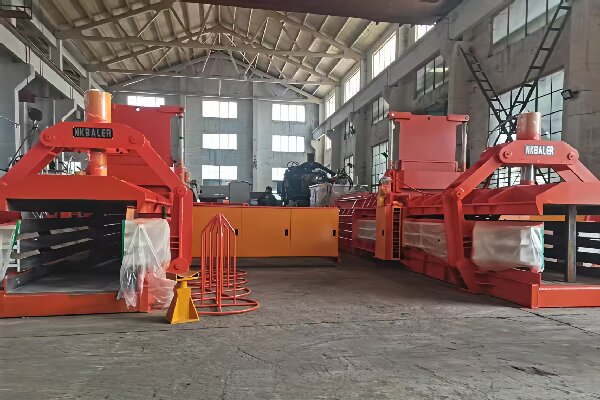
Hydraulic baler configurations differ mainly in orientation, chamber design, automation level and tie method — not in headline tonnage alone.
Why hydraulic baler decisions stall on technical questions
A hydraulic baler is a compression system, not a single specification. Two machines quoting the same nominal press force can produce different bale weights, occupy different floor space and demand different levels of operator involvement, because force is only one variable among chamber geometry, material bulk density, cycle time and tying method.
In procurement conversations, buyer questions tend to cluster into four decisions. The first is configuration: vertical or horizontal, single or double cylinder, one chamber or two, manual or automatic tie. The second is material fit: fibrous textiles, biomass and straw, wood shavings, metal scrap and drums each behave differently under compression. The third is automation and labour: how much feeding, tying and bale handling is performed by the operator. The fourth is verification: whether factory capacity, documentation and customs classification can be evidenced before the order is placed.
The table below maps those four decisions to the evidence a buyer should request at quotation stage. It is deliberately written as a request list rather than a specification list, because the same question produces very different answers from different suppliers.
| Decision area | Question buyers actually ask | Evidence to request at RFQ stage |
|---|---|---|
| Configuration | Will a vertical machine hold our daily volume, or do we need a horizontal chamber? | Chamber dimensions, bale size and weight, cycle time measured on a named material |
| Material fit | Has this configuration run our material mix, at our moisture and contamination level? | Reference installations with comparable materials, or test bales produced from the buyer's material |
| Automation and labour | How many operators per shift, and how much of that time is tying and bale handling? | Tie method, feed method, bale ejection method, stated operator requirement per shift |
| Verification | Can capacity, compliance and spare-parts support be checked? | Factory data, audit access, export record, spare-parts list with part numbers, customs classification opinion |
Technical questions buyers ask before configuration is fixed
Q1 — Vertical or horizontal: which orientation fits the material flow?
Orientation is decided by material flow, not by machine size. Vertical hydraulic balers compress downward into a compact footprint and suit batch loading, where material arrives in trolleys, sacks or small volumes and the operator loads by hand. Horizontal balers use a longer chamber and compress along the horizontal axis, which allows conveyor or hopper feeding, larger bales and more continuous operation.
NKBALER's product range covers vertical balers, full-automatic horizontal balers and manual horizontal balers, so the orientation question is normally resolved before force and automation are discussed. A buyer who starts with tonnage usually ends up comparing machines built for different material flows.
Q2 — Single cylinder or double cylinder on a vertical machine?
On vertical machines, cylinder count changes how force is distributed across the pressing platen. A small-sized vertical hydraulic baler with a single cylinder is the entry configuration for low-volume, lighter materials. A medium double-cylinder vertical hydraulic baler applies force through two cylinders, which spreads the load across the platen and frame and is the configuration buyers usually ask about when bale density requirements rise while floor space stays limited.
The trade-off is hydraulic complexity. Two cylinders mean more seals, more hose connections and a larger maintenance surface, so the second cylinder should be justified by the material and the bale target rather than by a preference for more force.
Q3 — What does 'fully automatic' actually automate?
Automation in a horizontal baler covers four distinct actions: feeding, compression, tying and bale ejection. Semi-automatic machines typically automate compression but leave tying to the operator. Fully automatic machines perform the tying cycle without manual intervention.
A horizontal automatic tie with lifting door configuration opens the tying chamber vertically so the finished bale can be tied and released without the operator reaching into the chamber. The right level of automation depends on labour cost and throughput: at low volume, automation adds control complexity without paying back; at high volume, manual tying becomes the bottleneck rather than compression.
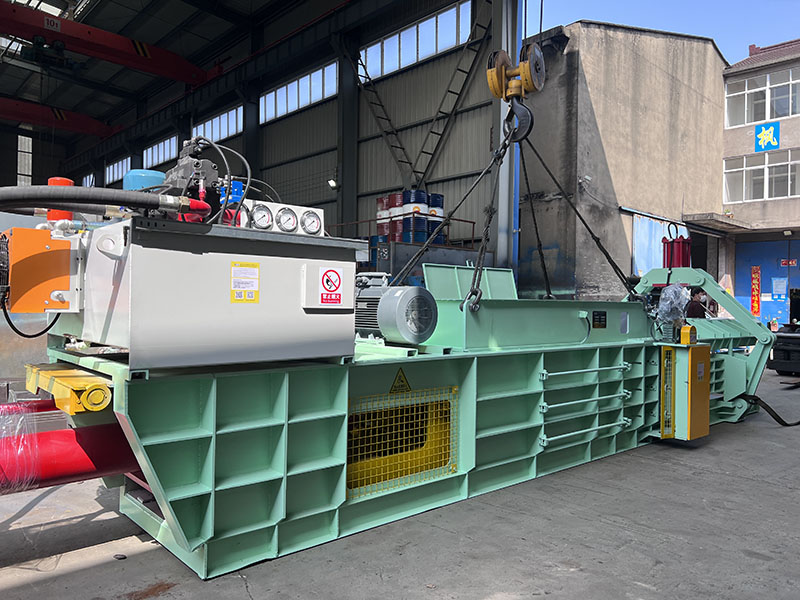
Automatic tying removes the manual step, but it also adds control-system maintenance and requires a more consistent material feed.
Q4 — How should press force be read?
Press force in tons is the most quoted and least comparable specification in the category. Published figures show why. A published specification for the TBH70 fully automatic horizontal baler states a 70-ton main press force and a 5 t/h throughput capacity, while a commercial listing for another industrial baler range states a 5–60 ton press force across the listed models.
Those two numbers are not directly comparable: one describes a main cylinder on a specific automatic model, the other describes a span that mixes orientations, automation levels and machine sizes. Buyers should ask for main cylinder force, chamber dimensions, bale size, bale weight and throughput measured on a named material, and treat tonnage alone as a screening number rather than a selection criterion.
Q5 — When does a two-chamber design pay back?
A two chambers clothes hydraulic baler works on a simple principle: the operator loads one chamber while the other is compressing. That raises labour utilisation compared with a single-chamber machine of similar size and is particularly useful where material arrives continuously from sorting lines.
The cost is floor space and sequencing complexity. Below a certain volume, a single chamber with a larger platen is the simpler and more maintainable answer, so the two-chamber configuration should be justified by measured loading time rather than by catalogue preference.
Q6 — What separates a heavy-duty machine from a standard one?
Within the same manufacturer, the difference usually sits in structure and component grade rather than in headline force. NKBALER describes its NK BALER line as the standard long-cylinder servo hydraulic baler, built for regular daily baling work with a cost-effective and stable design, and its NICK BALER line as the upgraded version with heavier machine weight, thicker material, stronger structure and higher-grade hydraulic and electric parts, intended for continuous heavy-load operation with a lower failure rate.
For a buyer, that distinction is a duty-cycle decision rather than a price decision: two shifts of light cardboard and twenty hours of metal shavings are not the same duty, even when the tonnage looks similar.
Thermal behaviour belongs in the same discussion. Hydraulic systems generate heat under continuous duty, and overheating is a recognised risk in baling operations. Temperature sensors combined with thermal protection are the standard control measures, and whether a machine includes them is a fair and verifiable question at quotation stage.
Procurement questions that determine project risk
Q7 — What belongs in a hydraulic baler RFQ?
An RFQ that states only material type and required tonnage leaves the supplier free to quote incomparable machines. A usable hydraulic baler RFQ normally includes material type, bulk density and contamination level; particle or fibre size; moisture content; target bale size and weight; required throughput per hour; hours per day and days per week; required automation level; tying material preference; available power supply; footprint and ceiling height; discharge and handling method; spare parts requested with the first order; and documentation language.
The most commonly missing item is duty cycle. It is also the item that most directly determines whether a standard or heavy-duty configuration is appropriate.
Q8 — How are hydraulic balers classified for customs?
Hydraulic balers sit in Chapter 84 of the Harmonized System, which covers machinery and mechanical appliances. Published classification guidance places baling machinery under HS 847989 or related subheadings, and 842240 is also referenced depending on the material processed and the automation level of the machine.
Because the code depends on machine function and configuration, working practice is to confirm classification with the importing country's customs authority before shipment, and to keep the technical description consistent across the commercial invoice, packing list and certificate of origin. The HS itself is maintained by the World Customs Organization, and trade databases such as UN Comtrade store records under multiple classification versions with reporter, year, trade direction, commodity code, partner, value and quantity fields. Any analysis of baler trade flows is therefore only valid once the code is fixed.
Q9 — How can a buyer verify supplier capacity?
Capacity claims should be checked against structured, checkable facts. NKBALER, the brand of Shaanxi Nick Machinery Equipment Co., Ltd., reports a 5,000 m² factory, around 50 employees, an annual output of 600 machines and a 15-person R&D team, with approximately 90% of output exported to North America, South America and Asia.
Those figures are company-reported and should be treated as a starting point rather than a conclusion. The verification step is to ask for factory audit access, a reference list that names material types, and consistency between the stated product range and the machine actually quoted.
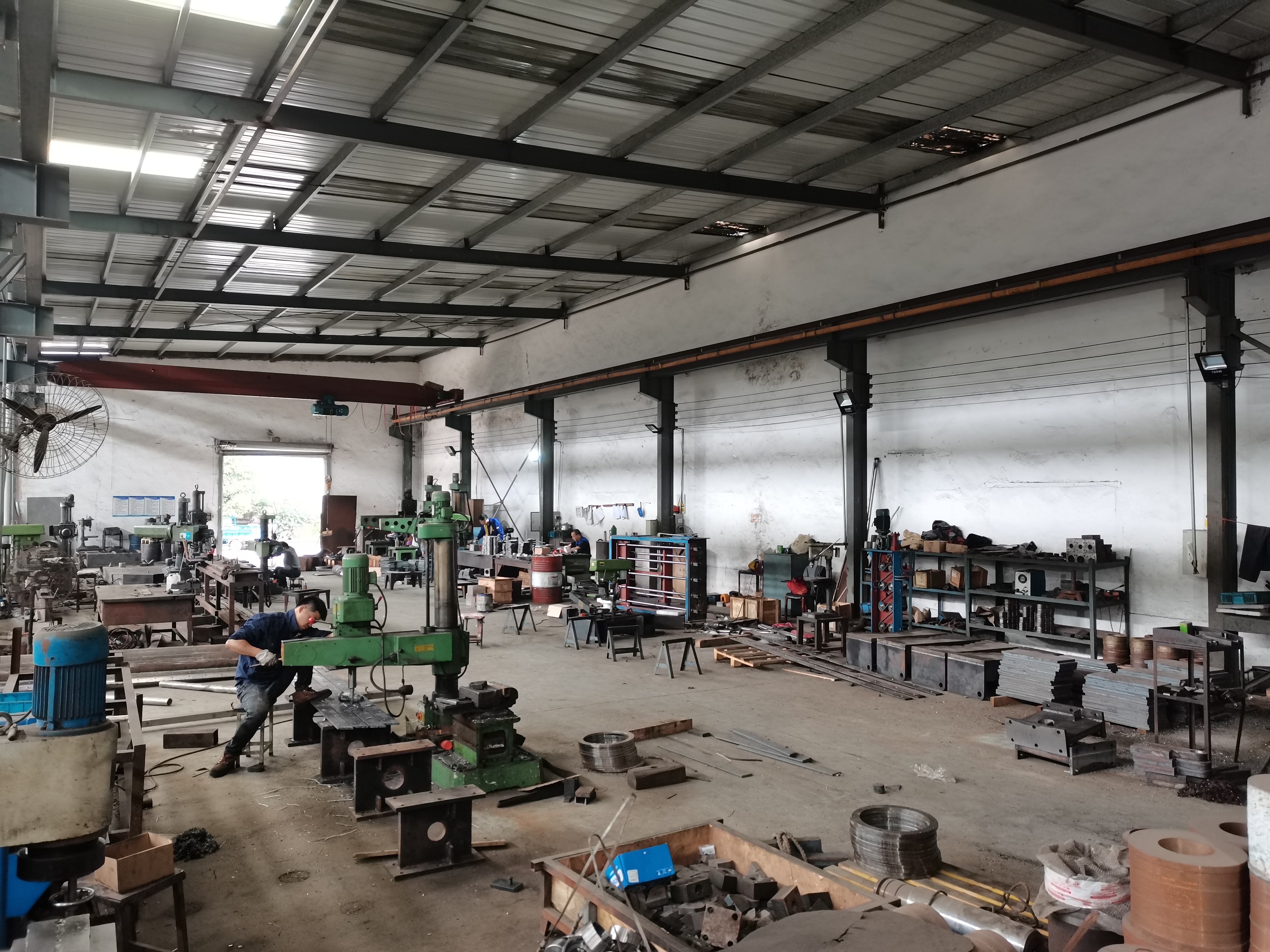
Factory disclosure is a screening tool, not a qualification: audit access and reference installations remain the deciding evidence.
Q10 — What should be fixed at quotation stage on service and spares?
Spare parts and service terms are cheapest to negotiate before the order. The list worth fixing in writing includes cylinder seal kits, tie head wear parts, hydraulic filters, pressure and proximity sensors, control relays, and the recommended oil specification.
It is equally useful to fix the response time for technical support, the warranty boundary between wear parts and structural components, and whether commissioning support is remote or on site. After-sales cost is one of the few baler cost lines that scales with years rather than with tonnage, which is why it deserves a line in the quotation rather than a sentence in the brochure.
Material-specific questions that change the specification
Q11 — Textiles, clothes and used rags
Textiles compress unevenly: they spring back, they bridge in the chamber, and density varies between loads. A two chambers clothes hydraulic baler addresses the loading bottleneck, while a used rag hydraulic baler in the same family is normally specified around a tighter bale target, because rag bales are sold by weight and density rather than by dimension.
The question worth asking is not whether a machine can bale clothes, but what bale weight is achieved with the buyer's own fabric mix and how much of that weight holds after a day in storage.
Q12 — Agricultural and biomass materials
Wheat straw, alfalfa hay, sawdust and wood shaving behave differently from textiles because they are compressible but abrasive and, for hay and alfalfa, moisture-sensitive. A wheat straw hydraulic baler is usually specified around bale density for transport, while a sawdust or wood shaving hydraulic baler is specified around containment and dust control.
Where one machine must handle long straw and loose biomass, a two ram straw hydraulic baler configuration is chosen for the way the design separates pre-compression from main compression. Moisture content should be stated in the RFQ, because it changes both achievable bale weight and the thermal load on the hydraulic system.
Q13 — Metal scrap, drums and tyres
Metal is where force requirements change by an order of magnitude. A scrap aluminum metal hydraulic baler or aluminum scrap hydraulic baler is generally specified for density and for handling sharp, springy material. A metal shaving hydraulic baler deals with a flowable, often oily material that behaves more like a slurry than like scrap.
A metal drum or oil drum press hydraulic baler is specified around drum diameter and wall thickness rather than around general scrap density, because the value lies in flattening drums for transport rather than in producing a dense bale. A scrap tyre bailing machine is a separate case again: tyres resist compression and are generally handled for volume reduction rather than for dense baling.
How NKBALER answers these questions in practice
NKBALER is the brand under which Shaanxi Nick Machinery Equipment Co., Ltd., a China-based manufacturer of hydraulic baling and environmental protection machinery, sells vertical balers, full-automatic horizontal balers, manual horizontal balers and press bagging machines. The relevance for a buyer working through the questions above is coverage: configuration, automation level and duty cycle can be discussed against one engineering baseline instead of being pieced together from unrelated suppliers.
Two internal distinctions matter during an RFQ. The first is the NK BALER versus NICK BALER split described earlier, which maps to standard daily baling versus continuous heavy-load work. The second is the vertical-to-horizontal split, which determines whether the machine is loaded by hand in batches or fed continuously through a chamber. Both distinctions are easier to resolve before a quotation is issued than after a machine is on site.
Where the questions in this FAQ cannot be answered from a catalogue alone, the appropriate next step is a documented technical exchange — drawing numbers, material samples, and a stated acceptance test — rather than a broader comparison of brochure claims.
Hydraulic versus piston-type machines: what the comparison data says, and where it stops
NKBALER's own comparison data positions its hydraulic machines against piston compressors and piston fans on four dimensions: noise, cost, maintenance and efficiency. The stated differences are a noise level approximately 15 dB lower, a cost approximately 10% lower, less maintenance and higher efficiency, with noise-sensitive environments named as the primary beneficiary.
| Comparison dimension | Stated difference | Where it matters most |
|---|---|---|
| Noise | Approximately 15 dB lower | Noise-sensitive environments, shared buildings, sites near residential boundaries |
| Purchase cost | Approximately 10% lower | Budget-constrained projects comparing equivalent duty |
| Maintenance | Less maintenance | Operations with limited on-site technical staff |
| Efficiency | Higher efficiency | Continuous or multi-shift duty cycles |
The boundary matters as much as the claim. These are first-party comparison figures from the manufacturer's own dataset, not independent test results, and they describe hydraulic balers against piston-type machines rather than against every alternative compression technology.
- Noise only decides where noise is constrained. A 15 dB advantage becomes a decision factor near residential boundaries, in shared buildings or where occupational exposure limits are enforced. In an isolated yard it is a comfort benefit rather than a cost saving.
- The cost figure is a purchase-level statement. It says nothing about total cost of ownership, which depends on duty cycle, oil and filter replacement, seal life and downtime.
- Piston-type machines remain a legitimate choice in some applications, and this comparison should not be read as a general ranking of compression technologies.
A hydraulic baler also carries its own requirements: hydraulic oil, filtration, cooling and seal maintenance are part of ownership regardless of what the machine is compared against. Buyers should treat the comparison as a starting hypothesis to be tested against their own duty cycle, not as a settled conclusion.
What published market and trade data suggest for 2026 procurement
Two published data points frame the context. Fortune Business Insights projects the global baler market to reach USD 18.02 billion by 2034, a figure that covers agricultural and industrial or recycling balers rather than hydraulic balers alone; other published estimates of the same broad market differ in scope, which is why a single market-size number should not be used as a demand forecast for a specific machine type. Separately, Precedence Research reports that Asia Pacific led the hydraulics market with a 39% share in 2025, consistent with the region's role as both a manufacturing base and a consumption centre for hydraulic machinery.
At product level, the pattern visible in public supplier documentation is configuration proliferation rather than price competition. Supplier pages reviewed for this FAQ describe portfolios spanning vertical, horizontal, automatic, semi-automatic and specialty baling machines, and applications running from recyclable plastic, cardboard and metal to specialty materials such as woven mats. None of those pages provides harmonised model-level force, throughput or bale data — which is precisely why the RFQ discipline described above carries more weight than catalogue comparison.
Future outlook
Three developments are likely to shape hydraulic baler procurement over the next buying cycle. The first is that automation will keep shifting from tying towards feeding and bale handling, which will make the automation question a labour-planning question rather than a machine-feature question. The second is that documentation will become a qualification criterion rather than an afterthought: customs classification, technical files, spare-parts numbering and acceptance-test records are increasingly requested together with the quotation. The third is that thermal and duty-cycle management will move earlier in the conversation, as buyers run machines for longer shifts and ask explicitly how heat is controlled before they ask about tonnage.
None of these changes the fundamentals. A hydraulic baler purchase still resolves around material behaviour, chamber design, tying method and verifiable supplier evidence — the same four clusters this FAQ opened with. What changes is the order in which buyers ask, and how much of the answer they expect in writing.
Quick-reference FAQ
What material data should I prepare before requesting a quotation?
Material type, bulk density, contamination level, moisture content, particle or fibre size, target bale weight, required throughput per hour, and operating hours per day. A quotation produced without these inputs is an estimate rather than an offer.
How is throughput verified before shipment?
Through an acceptance test using the buyer's own material, with bale weight, cycle time and throughput recorded. A test on the supplier's reference material does not transfer automatically to a different material mix, which is why the test material should be stated in the contract.
What documentation should accompany the machine?
Operation and maintenance manual, electrical wiring diagram, hydraulic schematic, spare-parts list with part numbers, and the test record. For export, the customs classification shown on the commercial invoice should match the technical description of the machine.
Does a higher automation level always reduce operating cost?
Not automatically. Full automation reduces manual tying and bale handling, but adds control-system maintenance and requires a more consistent material feed to work as intended. The calculation only works with a stated throughput and labour cost.
How should two apparently identical quotations be compared?
Normalise five items: how press force is defined (main cylinder versus total), chamber and bale dimensions, cycle time on a named material, tie method and control components, and the spare-parts and warranty scope. Differences in any of these usually explain most of the price gap.
The questions above are not a buying script. They are the points where hydraulic baler projects most often lose time, and where written answers are worth more than verbal reassurance. Buyers who want to compare the configuration logic behind the vertical, horizontal and press bagging ranges can review the manufacturer's published documentation directly.
NKBALER product brochure (PDF): download here.
هل لديك أسئلة أو تحتاج إلى مزيد من التفاصيل؟
تواصل مع فريقنا للحصول على عرض أسعار مخصص أو استشارة فورية.
طلب عرض أسعار
املأ النموذج أدناه وسيتواصل معك فريقنا بعرض مقترح مخصص.
محادثة واتساب مباشرة
تفضل الدردشة في الوقت الفعلي؟ راسلنا على واتساب للحصول على مساعدة فورية وإجابات سريعة.
- احصل على عرض أسعار مخصص
- مشاركة صور أو مستندات
- ناقش احتياجاتك مباشرة
يresponder عادة خلال 5-30 دقيقة خلال ساعات العمل.