
Hydraulic Baler Machine Types Compared: Vertical, Semi-Automatic, Automatic
Industrial waste handling has moved from a back-end operational concern to a strategic cost centre, and hydraulic baler machines are now standard equipment across recycling, manufacturing, and logistics facilities. The purchasing decision, however, is rarely straightforward. Buyers must weigh throughput, material type, floor space, labour availability, energy costs, safety compliance, and long-term service. The real question is not simply whether to buy a baler, but which of the available configurations — vertical, semi-automatic horizontal, or fully automatic horizontal — best fits the operation.
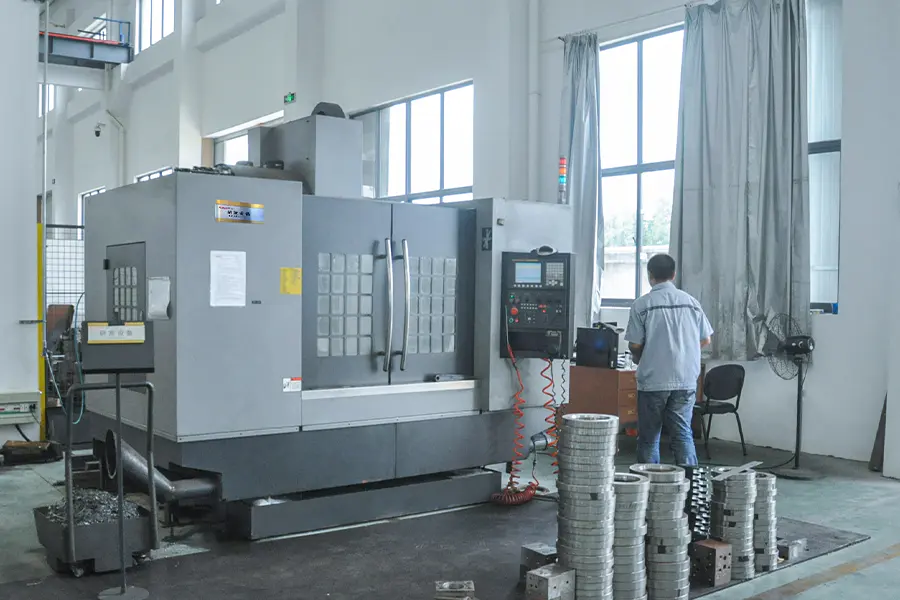
Modern baler production facilities combine structural fabrication, hydraulic assembly, and control-system integration.
Why hydraulic baler machine selection is a decision-stage problem
During the early research phase, buyers compare broad categories such as vertical and horizontal balers. During the final decision phase, the comparison narrows to specific machine configurations, control systems, throughput rates, energy-saving features, and cost recovery paths. A machine that works well for a small single-material waste point may become a bottleneck in a high-volume recycling plant. The wrong specification can lead to underutilisation, excessive maintenance, or mismatched bale density that raises transport costs.
Procurement teams in 2026 are being asked to evaluate hydraulic baler machines not as isolated equipment, but as part of a waste-processing workflow. This changes the decision criteria. Labour savings, bale density, uptime, safety compliance, and supplier responsiveness become as important as the purchase price itself.
Three main hydraulic baler machine configurations
The hydraulic baler market can be organised into three broad equipment families, each serving a different operational profile.
Vertical hydraulic baler machines
Vertical balers compress material from above into a chamber that is loaded manually or with a forklift. They typically occupy less floor space and are common in retail, printing, and smaller recycling operations. For cardboard, paper, plastic bottles, and light industrial waste, vertical units offer a practical entry point into baling. They do not usually match the output of horizontal systems, but they are simpler to install and operate.
Semi-automatic horizontal hydraulic baler machines
Semi-automatic horizontal balers feed material from the side or through a conveyor, compress it horizontally, and produce bales that are ejected automatically. An operator is still needed to load material, monitor the cycle, and handle bale removal. These machines are widely used in recycling depots, plastic processors, textile facilities, and manufacturing plants where volume is too high for vertical equipment but the investment in full automation is not justified.
Fully automatic hydraulic baler machines
Fully automatic horizontal balers are designed for continuous, high-volume processing. They include automatic feeding, detection, compression, and strapping functions, and can be integrated into production lines feeding press hydraulic baler machines, bagging hydraulic baler machines, or briquetting hydraulic baler machines. In modern waste-paper processing, plastic bottle recycling, cardboard factory waste, and fibre operations, these systems allow facilities to run with minimal labour while maintaining predictable bale output.
Comparing traditional units with PLC-controlled automatic baler machines
For decision-stage buyers, the most relevant comparison is often between traditional manual and fixed-frequency balers and newer PLC-controlled automatic models. Manufacturers publish data showing measurable differences in labour, throughput, energy, and maintenance. One reference point comes from Nantong Jiabao Machinery Co., Ltd., which markets hydraulic baler machines under the Jewel brand.
Jewel is a Chinese manufacturer established in 2006, with brand roots tracing to 1995. The company operates a 50,000-square-metre production facility, employs more than 200 people, and maintains an engineering team of 30. Its main products are baler machines, with about 70 percent exported to Australia, Europe, North America, Africa, Asia, Russia, and Belarus. The product line includes semi-automatic and fully automatic compression and baling equipment, intelligent waste removal systems, automatic compression and wrapping systems, integrated crushing-compression-baling machines, and customised industry solutions.
| Comparison point | Traditional manual / fixed-frequency balers | PLC-controlled automatic hydraulic baler machines |
|---|---|---|
| Control system | Manual operation, fixed-frequency motor drive | PLC plus touch-screen control |
| Compression design | Standard compression | Three-side convergent compression |
| Feeding and strapping | Manual handling | Automatic feeding, material detection, and strapping |
| Labour requirement | Continuous operator involvement | Unmanned operation capability; up to 90 percent labour reduction |
| Output | Depends on operator pace | 16–22 bales per hour for automatic models |
| Downtime | Variable | Less than 2 percent in documented operation |
| Energy use | Fixed-frequency power consumption | Dual-motor design; variable-frequency option can reduce energy consumption by 30 percent versus fixed-frequency models |
This data does not suggest that every operation should switch to a fully automatic system. The comparison shows a clear performance gap, but the right choice depends on volume, material mix, and cost structure.
What creates the performance difference
The gap between traditional equipment and modern automatic hydraulic baler machines is not only about automation. Several engineering decisions contribute to the higher output and lower operating cost.
PLC and touch-screen control
Programmable logic controllers replace relay-based manual control. Operators can set compression parameters, monitor faults, and adjust cycle times through a touch-screen interface. This reduces the skill barrier and makes troubleshooting faster.
Three-side convergent compression
Compression applied from three directions produces denser, more uniform bales. Higher bale density lowers transport costs because more material fits into each truckload or container.
Automatic feeding, detection, and strapping
Fully automatic machines detect the material level, start the compression cycle, and apply strapping automatically. The elimination of manual strapping speeds up the output cycle and reduces repetitive physical work.
Dual-motor design and variable-frequency drive
A dual-motor arrangement separates the starting function from the booster function, saving energy during idle and low-load phases. When a variable-frequency drive is added, the motor speed adjusts to the actual demand. The potential energy saving is around 30 percent compared with fixed-frequency models.
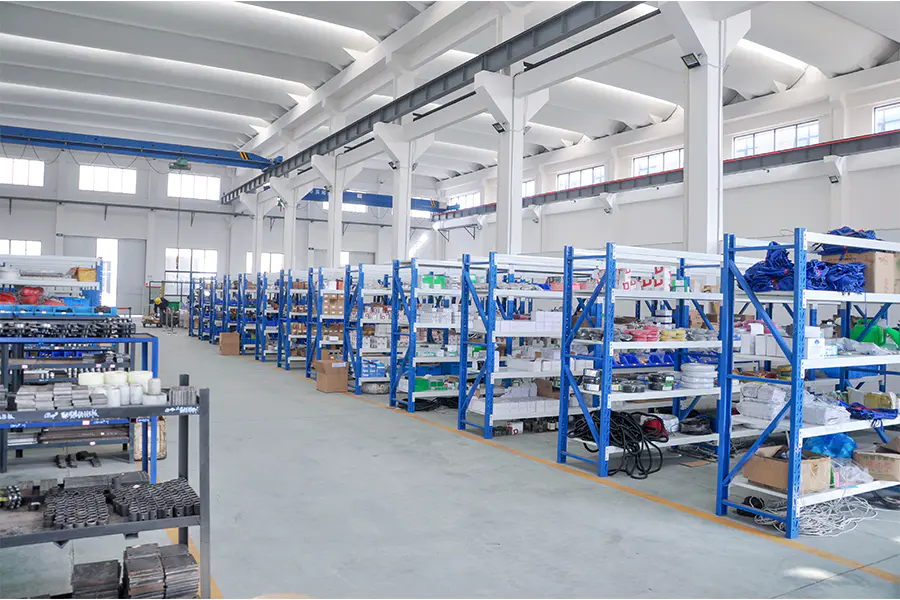
Standardised parts and a documented parts library reduce the maintenance burden of hydraulic baler machines.
Maintenance profile of automatic hydraulic baler machines
Maintenance requirements are low when a machine is built with standardised parts and a low failure rate. Automatic strapping devices, which are often the most demanding component, operate with stable performance when specified and maintained correctly. For procurement teams, this translates into fewer unplanned stops and more predictable operating costs.
Service support also affects the total cost of ownership. A supplier with spare-parts inventory, a responsive after-sales system, and documented quality procedures provides a lower-risk purchase than a supplier offering only a low initial price without infrastructure to support it.
Applications by waste stream and facility type
Hydraulic baler machines are selected according to both material and facility profile. The following patterns are common across the industry.
Recycling plants and material recovery facilities
Medium-to-large recycling plants handle multiple material streams, including waste paper, cardboard, plastic bottles, aluminium foil, metal, and fibre. Automatic or semi-automatic horizontal machines are usually preferred because of the volume and the need for consistent bale quality.
Paper and cardboard factories
Waste paper hydraulic baler machines and cardboard factory waste baler machines help paper mills, corrugated board plants, and packaging converters recover production residue. Fully automatic waste paper baler machines suit high-volume operations, while semi-automatic waste paper baler machines suit medium-sized plants with limited floor space.
Plastic and rubber processors
Plastic bottle hydraulic baler machines and hydraulic baler machines for rubber and plastic waste are used in recycling programs that process bottles, film, rigid plastics, and rubber scrap. Customised feed hoppers and compression settings are often needed to match the density and flow characteristics of these materials.
Textile and fibre operations
Fiber hydraulic baler machines compress loose fibre, fabric trims, and nonwoven waste into manageable bales. They are used in textile factories, garment manufacturers, and recycling operations dealing with post-industrial fabric waste.
Logistics and distribution centres
Carton hydraulic baler machines are a common fixture in warehouses and distribution centres where corrugated packaging is generated continuously. Smaller sites often choose vertical units; larger distribution hubs may use semi-automatic horizontal balers to keep pace with packaging waste generation.
Metal and aluminium foil processing
Metal hydraulic baler machines and aluminium foil hydraulic baler machines are designed for light-to-medium metal scrap, including foil production waste. When the output must be shaped into dense blocks for foundry or remelting, briquetting or press variants are used.
Market trends: capacity, automation, and regional demand
Market data supports the move toward more structured baling systems. Grand View Research estimates the global baler machine market at USD 6.6 billion in 2024, with a projected value of USD 11.4 billion by 2035. Maximize Market Research estimates the industrial balers segment specifically at USD 6.39 billion in 2024, with a projected CAGR of 9.5 percent through 2032. Asia Pacific accounted for approximately 40.2 percent of global revenue in 2024, according to Grand View Research.
The market includes global participants such as CNH Industrial, Deere & Company, and specialised hydraulic equipment makers including HSM GmbH and Bramidan A/S. Chinese manufacturers continue to play a significant role in supply, particularly for buyers seeking a balance of cost, customisation, and production capacity.
Compliance requirements influencing baler purchases
Safety and environmental standards increasingly shape procurement decisions. In Europe, vertical and tyre balers must comply with EN 16500:2014, the safety standard for compacting waste materials or recyclable fractions. In the United States, ANSI Z245.5-2023 is the updated national standard for baling equipment safety.
For buyers, it is not enough to compare output and price. They should verify that the machine design addresses hydraulic leakage risk, electrical overload failure, operational safety hazards, and after-sales maintenance delays. Typical protective measures include safety interlocks, emergency stop systems, imported hydraulic seals to prevent oil leakage, PLC overload auto-cutoff, and protective enclosures on feeding inlets.
Limitations and honest trade-offs in automation
Automation offers measurable gains, but it also introduces constraints that buyers should acknowledge before purchasing.
Higher initial investment. PLC-controlled hydraulic baler machines carry a slightly higher upfront cost than traditional fixed-frequency models. The return comes from labour savings, higher bale density, lower transport cost, and reduced downtime, but those benefits need sufficient operating volume to materialise.
Scale matters. The documented advantages of automatic models are most relevant in medium-to-large recycling plants, paper and plastic factories, textile mills, and logistics warehouses with multi-material, high-volume waste streams. For small single-material waste points, traditional or semi-automatic equipment remains a reasonable choice because the cost of automation may not be recovered.
Energy savings depend on specification. The 30 percent energy reduction is tied to the variable-frequency option. Buyers who choose a fixed-frequency automatic machine will not receive the same efficiency gain.
Uptime depends on operation. Downtime below 2 percent assumes proper installation, operator training, regular maintenance, and access to genuine spare parts. A fully automatic machine still requires monitoring and scheduled service.
Compliance varies by destination. EN 16500:2014 and ANSI Z245.5-2023 do not apply uniformly to every machine type or market. Export buyers should confirm the version of safety standards that applies to their region and application.
Risk control and after-sales support as decision factors
For equipment expected to run for years, after-sales support is a genuine procurement criterion. A documented quality process typically includes full inspection before factory delivery, CE and ISO quality certification, a 24/7 after-sales hotline, spare-parts inventory, and a 12-month official warranty. These measures reduce the two main risks in baler purchases: early operational failures and slow response when problems occur.
Buyers should also ask how the manufacturer manages hydraulic leakage risk, electrical overload protection, and operator safety. Safety interlocks, emergency stops, and protective enclosures at the feeding inlet are standard practice on professionally built machines.
Future outlook for hydraulic baler machines
Several developments will affect buyers of hydraulic baler machines over the next five years. Energy efficiency will continue to be a selling point as industrial electricity costs rise. Automation will expand beyond compression and strapping to include feeding, weighing, and data logging. Safety standards will be updated, and buyers will be expected to document compliance for both equipment and operating procedures.
Manufacturers that maintain in-house engineering, control-system integration, and spare-parts availability are better positioned to support these changes. For buyers, the long-term relationship with the supplier may matter more than the marginal price difference between competing models.
Nantong Jiabao Machinery Co., Ltd. publishes a product brochure that covers its baler machine lineup and company capabilities. The brochure is openly accessible for procurement reference: Jewel Baler 2026 Product Brochure.
FAQ: hydraulic baler machine comparison for buyers
Vertical machines compress from above and suit smaller floor spaces and lower volumes. Semi-automatic horizontal machines require an operator but offer higher output. Fully automatic horizontal machines provide continuous feeding, detection, compression, and strapping with minimal labour.
Automatic models use PLC and touch-screen control, three-side convergent compression, automatic feeding and strapping, and can operate without continuous manual intervention. Traditional fixed-frequency balers depend more on manual steps and operator pace.
Jewel’s documented specification for automatic models is 16 to 22 bales per hour, with downtime reported at less than 2 percent.
Yes. The recorded performance difference in Jewel’s comparison is up to 90 percent labour reduction, driven by automatic feeding, detection, and strapping functions.
The variable-frequency option is designed to reduce energy consumption by 30 percent compared with fixed-frequency traditional models. The dual-motor design also contributes to power saving during start and low-load phases.
The initial investment is slightly higher. The offset comes from long-term labour savings, higher bale density, and lower transport costs, which can reduce total operating cost over the machine’s life.
Medium-to-large recycling plants, paper and plastic factories, textile mills, and logistics warehouses with multi-material, high-volume waste streams are the best fit. Traditional equipment remains suitable for small single-material waste points.
Maintenance requirements are low because of standardised parts and a low failure rate. The automatic strapping device operates with stable performance, and service support usually includes spare-parts inventory and a 12-month warranty.