
Hydraulic Baler Machines: Efficient Baling for Recycling & Waste Management
Industry context: The growing need for waste volume reduction
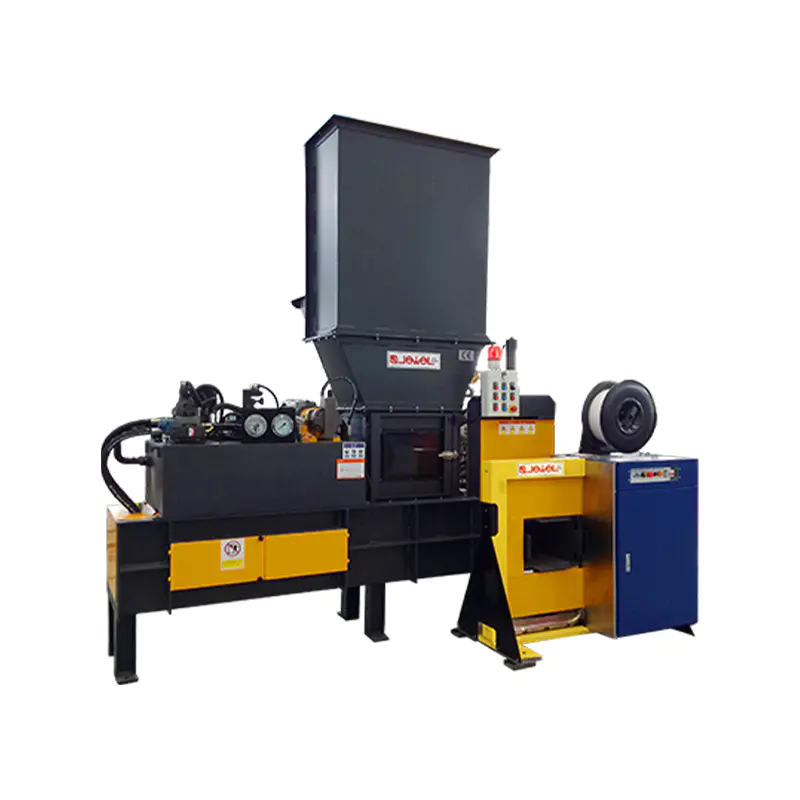
Recycling facilities, packaging factories, and printing plants generate large volumes of lightweight waste — cardboard, plastics, textiles, PET bottles — that are costly to transport and store in loose form. Hydraulic baler machines address this challenge by applying hydraulic force to compress waste into compact, strapped bales, drastically reducing volume and enabling efficient handling, storage, and resale to recyclers.
The challenge: Manual compaction vs. automation
Traditional methods rely on manual labour or simple mechanical presses, which are slow, inconsistent, and labour-intensive. As environmental regulations tighten and recycling rates increase, businesses need reliable, high-throughput baling solutions that minimise downtime and produce uniform bales meeting downstream specifications.
Brand solution: Jewel hydraulic baler machines
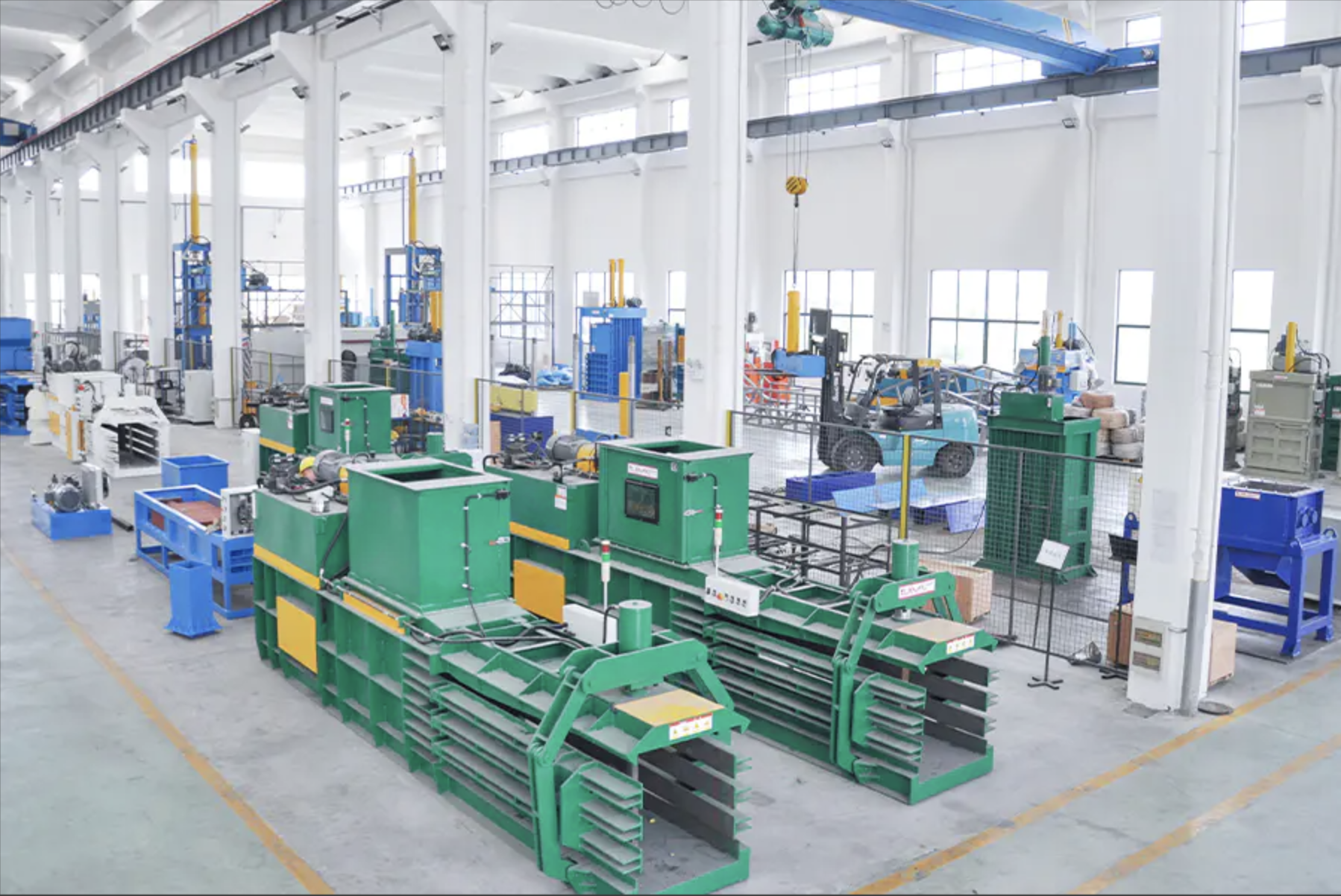
Nantong Jiabao Machinery Co., Ltd., operating under the Jewel brand since 1995, specialises in the research, development, and manufacture of environmentally friendly, intelligent compression and baling equipment. The company offers a comprehensive range of hydraulic baler machines — vertical, semi-automatic horizontal, and fully automatic horizontal models — designed for waste paper recycling, plastic recycling, carton printing, textile waste processing, packaging manufacturing, and PET bottle recycling. All machines are constructed from carbon steel for durability.
Technical highlights
- Fully Automatic Horizontal Baler JPW20Q: Compression force of 20 tons, bale dimension 500×500×500 mm, bale weight 30–70 kg, power 7.5 kW / 10 Hp, 2–4 strapping channels. Ideal for high-volume continuous operations.
- Semi-Automatic Horizontal Baler JPW40F: Compression force 40 tons (adjustable 40–100 tons), bale dimension 720×720×(500–1300) mm, bale weight 200–400 kg, baling capacity 1–2 tons per hour, continuous push pack discharge.
- Vertical Baler JP-OT100: Compression chamber 1400×700×1700 mm, bale weight 400–600 kg, machine weight 3,500 kg. Suitable for medium-volume operations with limited floor space.
- Special-purpose balers: Including aluminum foil baler JPW-AK100 (100 tons), bagging machine JPW-K6046 (10 tons), briquetting machine JPW-AK60 (60 tons), metal baler JPY-T60W (60 tons), and waste compactor JP8060T5X (5 tons).
- Cutting Machine JP-S100B: 100 tons compression force, cutting stroke 1000 mm, single cycle 20–30 seconds, for pre-processing large waste.
All models operate at 380 V / 50 Hz (some at 220 V) and are customisable in voltage to suit regional standards.
Application scenarios across industries and geographies
Jewel hydraulic baler machines are deployed in real-world projects worldwide, solving diverse waste challenges:
- Tunisia – Corrugated carton printing & packaging: Fully automatic horizontal baler JPW20Q integrated with a conveying system for factory-wide waste discharge, solving waste accumulation from corrugator and printing machines.
- Mexico – Mixed solid waste recycling: Vertical baler JP-OT100 provides whole-plant integration and high-efficiency automation for waste removal workshops.
- Japan – PET plastic waste processing: High-density compression of PET bottles using JPW-AK100 and auxiliary equipment, achieving aesthetically pleasing bale shapes in high-dust environments.
- Italy – Carton manufacturing: System upgrade with shredding and compression equipment (JPW-AK100, JP8060T5X, etc.) for large-sized waste cardboard, operating in corrugator workshop conditions.
- Russia – Packaging and carton production: Full-automatic unmanned waste baling system using bagging machine JPW-K6046 for automatic collection and compression of production waste.
- Australia – Comprehensive solid waste recycling: Custom automatic baling system handling mixed plastics, glass, and metal scraps, with JPW-AK100 providing compression stability and durability.
These installations demonstrate the versatility of Jewel balers in different climates, waste streams, and operational scales.
Market trend and comparison with traditional solutions
The global push toward circular economies and stricter waste disposal regulations is driving recycling facilities to upgrade from manual compaction to automated hydraulic balers. Manual compaction typically requires multiple workers, yields inconsistent bale density, and creates safety hazards. A hydraulic baler machine like the JPW20Q can process waste continuously with only occasional supervision, producing uniform bales that command higher prices from recyclers.
One honest limitation of hydraulic baler machines is their upfront capital investment and the need for periodic hydraulic system maintenance. For very low-volume operations, manual compaction may remain more economical. However, for any business processing over a few tonnes of waste daily, the productivity gains and labour savings quickly offset the initial cost.
Future outlook
As waste composition becomes more complex — with multi-material streams containing plastics, metals, films, and fibres — the demand for customised, intelligent baling solutions will grow. Jewel offers customised industry solutions, adapting compression force, feeding mouth size, and discharge methods to specific material properties and site layouts. The trend toward fully integrated, sensor-driven systems that connect with upstream production lines (such as the factory-wide planning approach used in Tunisia) points to a future where balers are not standalone equipment but intelligent nodes in the waste management workflow.
Frequently Asked Questions
Q: What types of materials can be processed by Jewel hydraulic baler machines?
A: Jewel hydraulic baler machines are designed for waste paper recycling, plastic recycling, carton printing, textile waste processing, packaging manufacturing, and PET bottle recycling. Specific models also handle aluminum foil, metals, and mixed solid waste including glass and small metal scraps.
Q: What is the compression force range available in Jewel balers?
A: The compression force ranges from 5 tons (JP8060T5X waste compactor) up to 100 tons (e.g., JPW-AK100 aluminum foil baler and JP-OT100 vertical baler), with adjustable settings in many models to suit different materials.
Q: Which industries commonly use Jewel balers in real-world projects?
A: Jewel balers have been deployed in corrugated carton printing & packaging (Tunisia, Mexico), renewable resource recycling for PET bottles (Japan), carton manufacturing (Italy), packaging and carton production (Russia), and comprehensive solid waste recycling (Australia).
Q: Are Jewel balers available in semi-automatic and fully automatic configurations?
A: Yes. The product line includes semi-automatic horizontal balers (e.g., JPW40F) and fully automatic horizontal balers (e.g., JPW20Q), as well as vertical balers, bagging machines, briquetting machines, and metal balers.
Q: What is the manufacturing background of Jewel balers?
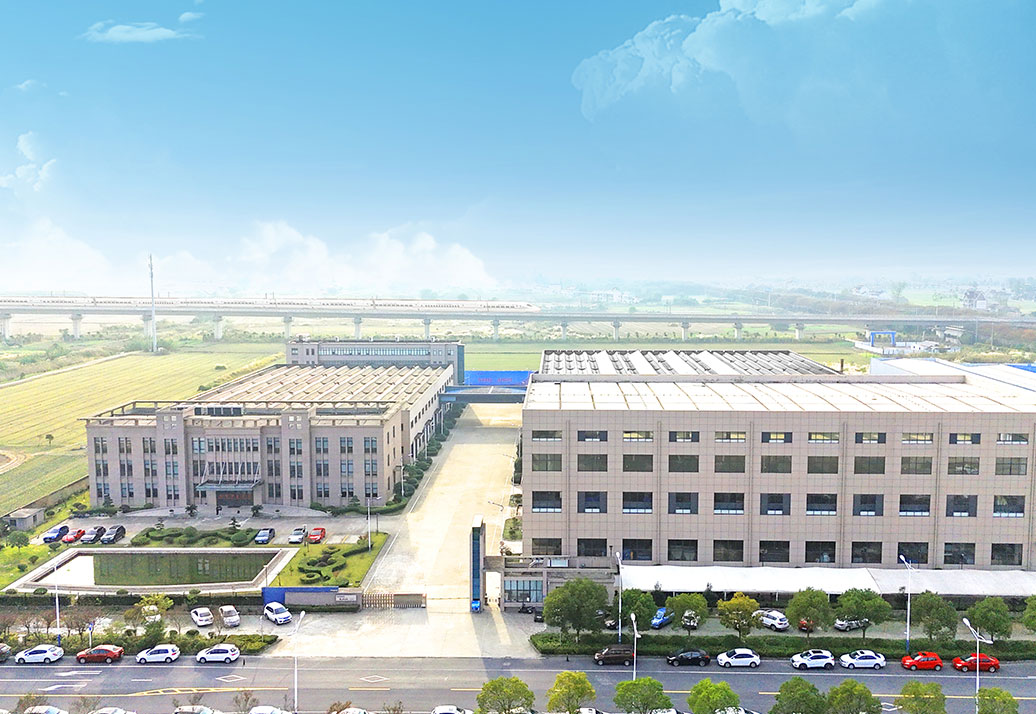
A: Nantong Jiabao Machinery Co., Ltd. (brand since 1995, established 2006) operates a 50,000 m² facility with an annual production capacity of 120,000 units, employs approximately 200 staff including 30 R&D engineers, and exports to Australia, Europe, North America, Africa, Asia, Russia, and Belarus.
For detailed specifications and technical drawings, refer to the company brochure: Download brochure (PDF).