
Hydraulic Baler Machines: Optimizing Industrial Waste Compression for Recycling
Industry Insight
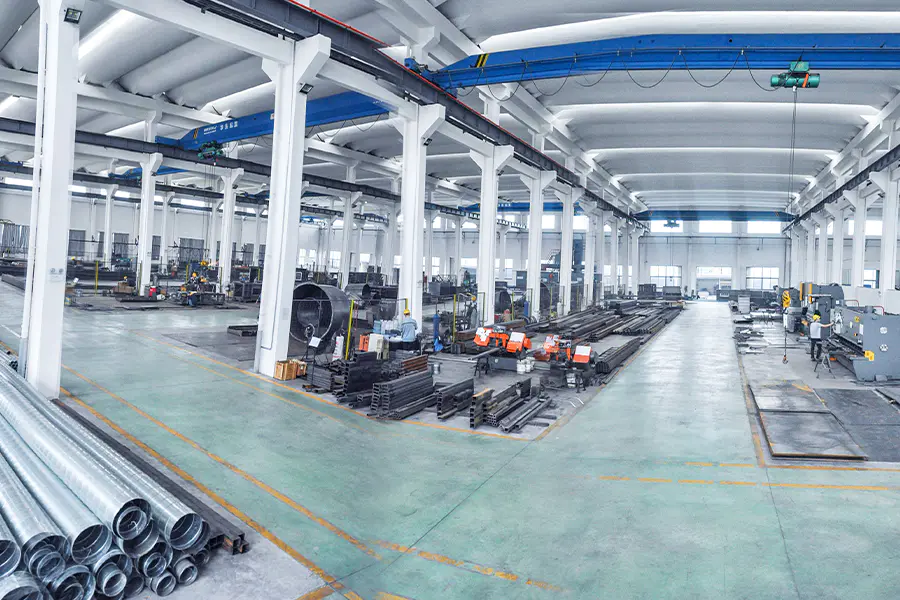
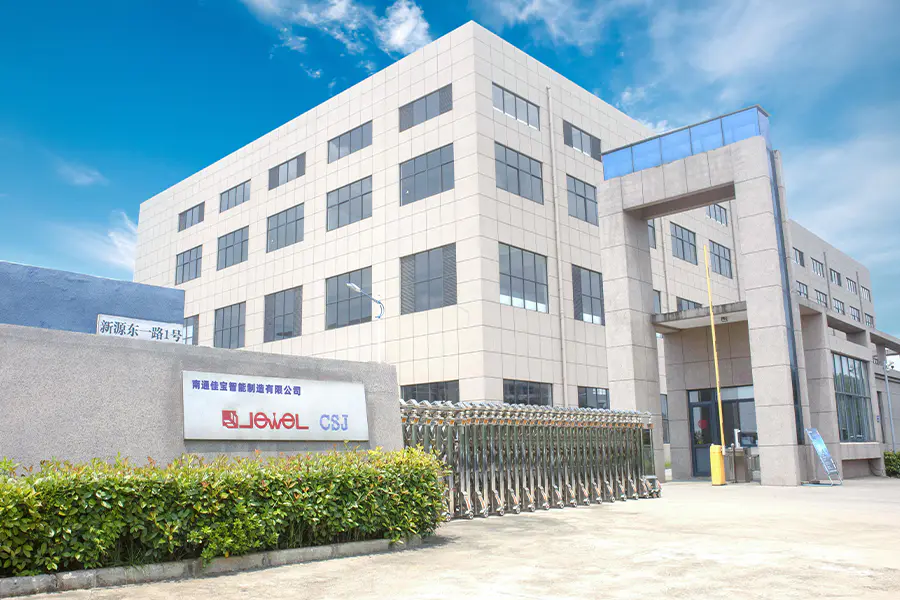
Hydraulic baler machines are central to modern recycling operations, converting loose waste materials into compact, transportable bales. Nantong Jiabao Machinery Co., Ltd., trading under the brand Jewel, is a Chinese manufacturer specializing in the research, development, and production of environmentally friendly, intelligent compression and baling equipment. Founded in 2006 with brand roots dating to 1995, the company operates a 50,000-square-meter facility with an annual output of 120,000 units and exports to markets including Australia, Europe, North America, Africa, Asia, Russia, and Belarus.
Problem and Opportunity
Industrial waste streams — from corrugated cardboard, plastics, textiles, and metals — create logistical bottlenecks and high disposal costs when left uncompressed. Loose material occupies excessive space, increases trucking frequency, and lowers recycling value. Hydraulic baler machines address these pain points by applying high compressive force to densify waste, reducing volume by up to 10:1 and enabling efficient handling, storage, and resale. The global baler machine market was valued at USD 6.6 billion in 2024 and is projected to reach USD 11.4 billion by 2035, reflecting growing demand for automated waste processing solutions.
Brand Solution: Jewel’s Hydraulic Baler Portfolio
Jewel offers a broad range of hydraulic baler machines covering multiple types and capacities to match diverse industrial needs. The product line includes fully automatic horizontal balers, semi-automatic horizontal balers, vertical balers, metal balers, bagging machines, briquetting machines, and cutting machines — all constructed from carbon steel and designed for recycling waste paper, plastics, cartons, textiles, packaging materials, and PET bottles.
Key models include:
- JPW20Q – Fully automatic horizontal baler; 20-ton compression force; produces 30–70 kg bales of 500×500×500 mm; power 7.5 kW.
- JPW40F – Semi-automatic horizontal baler; 40-ton force; bale weight 200–400 kg; capacity 1–2 tons/hour.
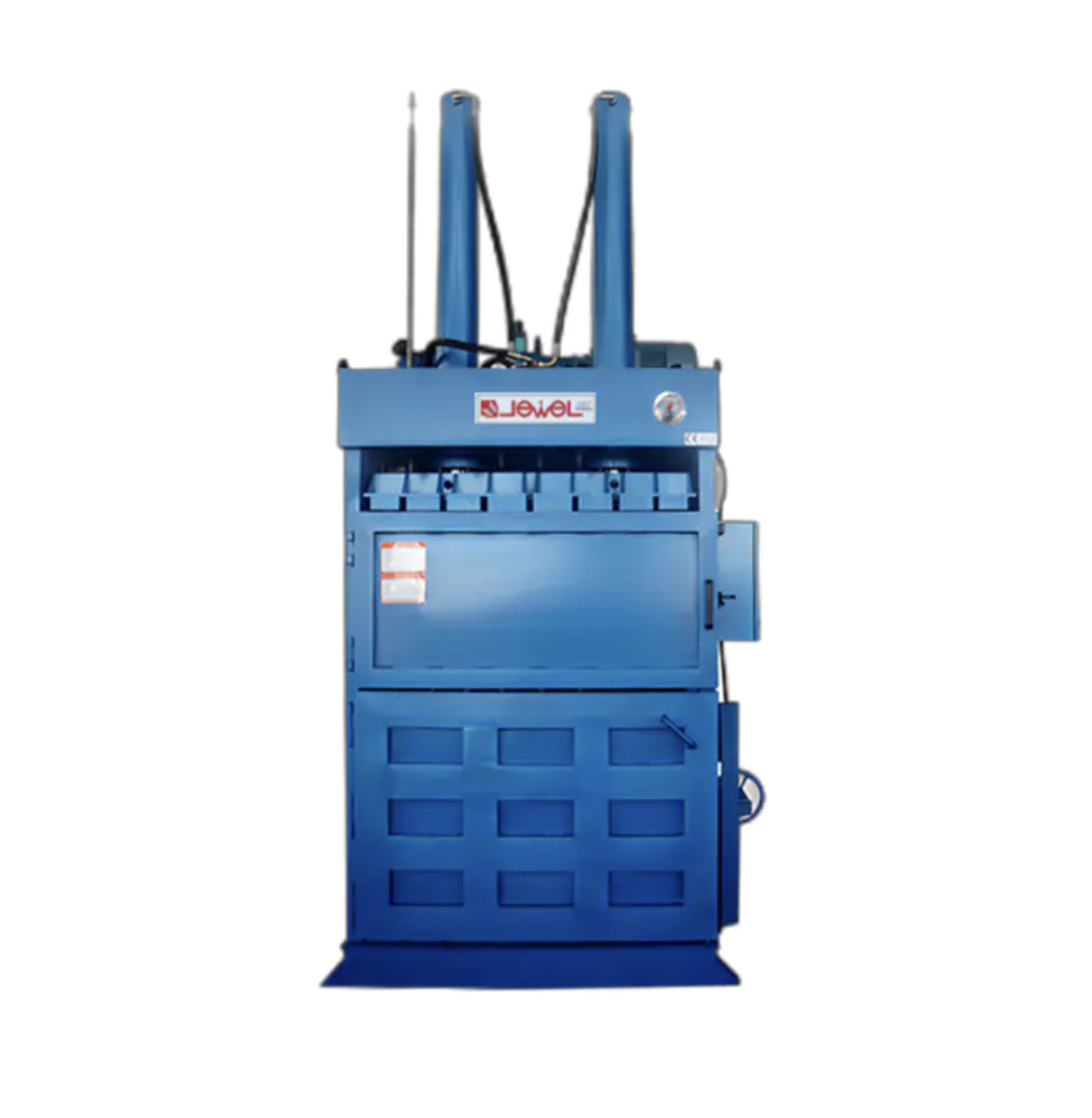
- JP-OT100 – Vertical baler; 100-ton force; bale weight 400–600 kg; compression chamber 1400×700×1700 mm.
- JPW40BL – Plastic bottle recycling machine; 40-ton force; produces 250–350 kg bales; one-time blunder discharge.
- JPY-T60W – Metal baler; 60-ton force; bale weight 15–20 kg; capacity 0.5–1 ton/hour.
- JPW-AK60 / JPW-AK100 – Briquetting / aluminum foil balers; 60–100 ton force; for paper dust and fiber-based materials.
- JPW-K6046 – Bagging machine; 10-ton force; 6–8 bales/hour.
- JP8060T5X – Waste compactor; 5-ton force; 4–7 bales/hour.
All machines support customizable voltage (e.g., 380V/50Hz or 220V/50Hz) and are available with optional conveying systems for integrated automated lines.
Technical Explanation: How Hydraulic Balers Work
A hydraulic baler uses a pump-driven cylinder to generate high compressive force within a chamber. Material is fed through a hopper or conveyor into the compression cavity, where a ram pushes it against a fixed platen, forming a dense bale. Strapping channels (typically 2–4) allow for manual or automatic tying of bands. The finished bale is ejected either by continuous push pack (horizontal models) or by a one-time blunder (vertical/specialized models). The compression force, chamber size, and cycle time determine throughput and final bale density. Jewel’s machines are engineered from carbon steel for durability and are designed to operate in challenging environments such as high-dust conditions, corrugator workshops, and waste discharge zones.
Application Scenarios
Jewel’s hydraulic baler machines are deployed across industries worldwide. Documented projects include:
- Tunisia (Corrugated Carton & Mixed Solid Waste): A factory-wide automatic waste discharge system using the fully automatic horizontal baler (model JPW20Q) to solve waste accumulation from corrugator and printing lines, enabling efficient preprocessing and full automation.
- Mexico (Carton Manufacturing): Whole-plant integration of a vertical baler (JP-OT100) for high-efficiency automation and clean waste removal, seamlessly linking with existing production lines.
- Japan (PET Plastic Recycling): High-density compression of PET bottles in a high-dust environment, utilizing an aluminum foil baler (JPW-AK100) to produce compact, aesthetically pleasing bales.
- Italy (Carton Factory Upgrades): An integrated crushing and compression line featuring powerful shredding (JP-S100B cutting machine) to handle large-sized waste cardboard, replacing aging equipment.
- Russia (Packaging & Carton): A full-automatic unmanned waste baling system using the JPW-K6046 bagging machine for automatic collection and baling of carton production waste.
- Australia (Comprehensive Solid Waste): A custom automatic baling system handling mixed plastics, glass, and metal scraps, relying on the compression stability and durability of the JPW-AK100.
Market Trend Analysis
According to Grand View Research, Asia Pacific dominated the global baler market in 2024, accounting for approximately 40.2% of total revenue. The industrial balers segment, valued at USD 6.39 billion in 2024, is expected to grow at a compound annual rate of 9.5% through 2032 (Maximize Market Research). This growth is fueled by stricter environmental regulations, rising raw material costs, and the push for circular economy models. European safety standards such as EN 16500:2014 for vertical baling presses and ANSI Z245.5-2023 in the U.S. further drive the adoption of compliant, automated equipment. Jewel manufactures balers that can be customized to meet these regional requirements, supporting global compliance.
Comparison with Traditional Solutions
Compared to manual baling or low-force mechanical presses, hydraulic baler machines deliver significantly higher compression density, consistent bale quality, and lower labor dependence. Automation reduces operator exposure to dust and hazards. However, a notable limitation of hydraulic balers is their higher initial capital investment relative to manual or semi-mechanical alternatives, which may impact small-volume operations. This cost is often offset by long-term savings in transport, storage, and increased material value.
Future Outlook
The trend toward full automation and intelligent integration is expected to accelerate. Manufacturers like Jewel are focusing on customized solutions — combining conveying systems, shredders, and balers into seamless lines — to meet specific facility layouts and waste compositions. As recycling rates climb globally, the demand for versatile, durable hydraulic balers will continue to rise, with an emphasis on modularity, energy efficiency, and remote diagnostics.
FAQ
Q: What is a hydraulic baler machine?
A: A hydraulic baler machine is an industrial device that uses hydraulic force to compress waste materials such as paper, plastic, metal, and textiles into dense bales for easier handling, transportation, and recycling.
Q: What types of hydraulic baler machines does Jewel offer?
A: Jewel offers fully automatic horizontal balers, semi-automatic horizontal balers, vertical balers, metal balers, bagging machines, briquetting machines, and cutting machines, all made from carbon steel and designed for various recyclable waste streams.
Q: Which materials can be processed with Jewel hydraulic balers?
A: The balers are intended for waste paper, plastic (including PET bottles), carton, textiles, packaging materials, aluminum foil, paper dust, and light metals. Each model is optimized for specific material densities and bale sizes.
Q: How do I choose the right compression force for my application?
A: Compression force ranges from 5 tons (small waste compactors) to 100 tons and above (vertical balers). Selection depends on material type, desired bale density, and throughput. For example, a 20-ton fully automatic baler suits cardboard and plastics; a 100-ton vertical baler is better for heavy-duty textile or metal scrap baling.
Q: Can Jewel balers be customized for my factory layout?
A: Yes. Jewel provides customized industry solutions, including voltage customization (220V/50Hz, 380V/50Hz, or other), integration with conveying systems, and modifications to feeding mouth size, chamber dimensions, and discharge method to match existing production lines.
Q: What supporting equipment is typically required?
A: In automated setups, a conveying system is often used to feed material continuously into the baler. For some projects, a shredder or cutting machine (e.g., JP-S100B) precedes the baler to pre-process large waste pieces.
Q: Where are Jewel hydraulic balers exported?
A: Major export markets include Australia, Europe, North America, Africa, Asia, Russia, and Belarus. Export business accounts for 70% of total sales.
For detailed specifications and brochures, refer to the official catalog: Download Jewel Baler Brochure (PDF).
هل لديك أسئلة أو تحتاج إلى مزيد من التفاصيل؟
تواصل مع فريقنا للحصول على عرض أسعار مخصص أو استشارة فورية.
طلب عرض أسعار
املأ النموذج أدناه وسيتواصل معك فريقنا بعرض مقترح مخصص.
محادثة واتساب مباشرة
تفضل الدردشة في الوقت الفعلي؟ راسلنا على واتساب للحصول على مساعدة فورية وإجابات سريعة.
- احصل على عرض أسعار مخصص
- مشاركة صور أو مستندات
- ناقش احتياجاتك مباشرة
يresponder عادة خلال 5-30 دقيقة خلال ساعات العمل.