
Hydraulic Baler Qualification: Voltage, Steel & Model Docs
Hydraulic Baler Qualification: Voltage, Steel & Model Docs
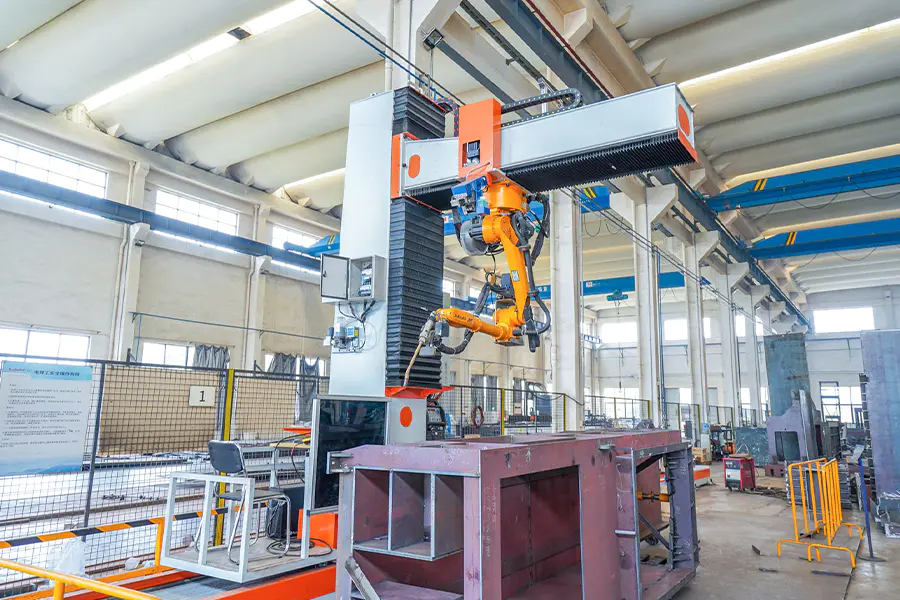
Cover image: a production workshop scene used to review hydraulic baler build and model-level documentation.
A hydraulic baler specification sheet is a qualification document before it is a sales document. For evaluation teams, the first useful filter is not a logo or a general certificate scan; it is whether the model sheet states the rated voltage, the construction material, and the dimensional data that the site actually needs.
That distinction matters because hydraulic baler machines are bought for a feed material, a footprint, an electrical supply, and a bale handling routine. A model can look suitable in a brochure and still fail qualification if the voltage field is assumed rather than confirmed, if carbon steel is treated as a complete material specification, or if the certificate on file applies to a different model. The qualification task is therefore document-led: match the machine, the site, and the evidence before shortlisting.
The qualification gap: certificates are visible, specifications are not
A certificate is easy to file and easy to misinterpret. A model-level specification sheet is less visible, but it answers the questions that determine installation and use: what compression force is rated, what bale size is produced, what feed opening is provided, what voltage and frequency are listed, what material is used, and what machine dimensions and weight must be accommodated.
The practical risk is not that buyers ignore compliance. The risk is that they accept a document as proof of more than it actually covers. In the corpus used for this article, the CE certificate is linked to one model, JPW20Q, while the SGS document is a supplier audit report covering a full range of baler machine categories. Those are different evidence types. Treating either one as a blanket performance certificate for every model would weaken the qualification decision.
Four qualification checks that matter before a shortlist
For evaluation-stage buyers, four checks separate a useful model sheet from a generic product page.
- Rated voltage and frequency. Confirm the listed supply and whether the model is customizable for the destination site. In the corpus, JPW40BL, JP-OT100, and JPW20Q list 380V/50Hz; JP7050T8 lists 220V/50Hz; voltage is marked customizable on the relevant model entries.
- Construction material. Carbon steel is listed for JP-S100B, JPW40BL, JP-OT100, and JPW20Q. That answers the material class, but not the steel grade or plate thickness.
- Model-level mechanical data. Compression force, bale dimension, feed opening, bale weight, machine dimension, and machine weight should be read together rather than as isolated headline numbers.
- Certificate scope. Match the certificate number, model, standard, and validity period to the exact machine being evaluated, then keep the spec sheet as the separate technical record.
Voltage: a site condition, not a brochure formality
Voltage is one of the clearest examples of why qualification should be model-specific. A hydraulic baler machine may be offered with a standard industrial supply, an alternative single-phase or lower-power supply for a smaller installation, or a customizable voltage entry for export projects. The buyer's task is to confirm that the selected model carries the required value in writing, not to infer it from the machine type.
In the provided model data, JPW40BL, JP-OT100, and JPW20Q list 380V/50Hz. JP7050T8 lists 220V/50Hz. The same product entries mark voltage as customizable where that field appears. That combination is useful for global procurement because it shows that the electrical field is treated as a configuration item rather than a fixed assumption.
A qualification note should be added where the model sheet does not state voltage. JP-S100B, for example, lists compression force, cutting width, cutting stroke, cycle time, power, dimensions, and weight, but the provided specification does not list a voltage value or a bale dimension. That does not make the model unsuitable; it means the buyer should request the missing fields in writing before treating the sheet as complete.
Carbon steel construction: useful, but not a full material specification
Carbon steel construction appears across the example models in the corpus: JP-S100B, JPW40BL, JP-OT100, and JPW20Q. For a buyer, this is a relevant baseline because it identifies the general material family used for the baler structure. It supports a first-pass comparison between models and helps separate these machines from designs that rely on other material classes.
The limitation is equally important. Carbon steel is a material class, not a complete engineering specification. The corpus does not provide steel grade, plate thickness, weld procedure, surface treatment, or wear-part material for every model. Those points remain part of a drawing review or a supplier technical clarification. A careful qualification record should state what the sheet confirms and what it leaves open.
Model documentation examples: JP-S100B, JPW40BL, JP-OT100, JPW20Q
The four models below show how a specification sheet can support site qualification without being reduced to a single headline number. The table uses only fields present in the provided product data.
| Model | Type | Compression force | Bale or working dimension | Voltage listed | Material |
|---|---|---|---|---|---|
| JP-S100B | Cutting Machine | 100 Ton | Width 1000 mm; cutting stroke 1000 mm | Not listed in the provided spec | Carbon Steel |
| JPW40BL | Bottle recycling machine | 40 Ton | 720*720*(300-1000) mm | 380V/50Hz | Carbon Steel |
| JP-OT100 | Vertical Balers | 100 Ton | 1400*700*(700-1100) mm | 380V/50Hz | Carbon Steel |
| JPW20Q | Fully Automatic Horizontal Baler | 20 Ton | 500*500*500 mm | 380V/50Hz | Carbon Steel |
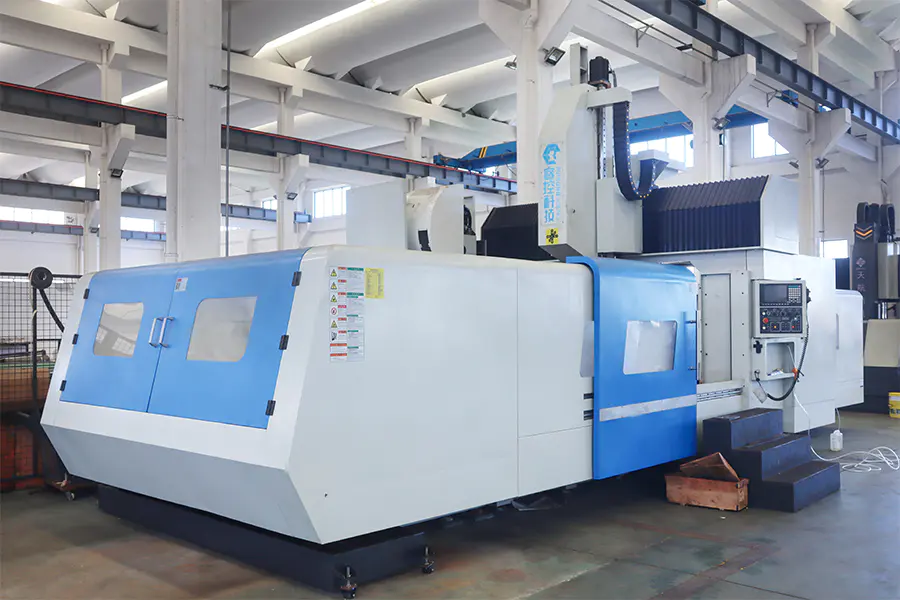
Body image: assembly workshop scene supporting the review of model-level baler documentation.
JPW40BL is a useful example of a compact horizontal machine with a defined bale range. Its 40 Ton compression force, 720*720*(300-1000) mm bale dimension, four strapping channels, 250-350 kg bale weight, 15 kW/20 Hp power, and 380V/50Hz entry give a site team enough data to check floor space, bale handling, and electrical supply. The machine dimension of 5500*1150*1900 mm is also a practical layout input.
JP-OT100 provides a different profile. It is listed as a vertical baler with 100 Ton compression force, a 1400*700*(700-1100) mm bale dimension, a 1400*600 mm feed opening, a 1400*700*1700 mm compression chamber, 5-6 bales per hour, 15 kW/20 Hp, 400-600 kg bale weight, and a 3500 kg machine weight. Those fields support a vertical installation review where floor area is tighter but bale weight and loading height matter.
JPW20Q adds automation and certification scope to the qualification file. It is a fully automatic horizontal baler with 20 Ton compression force, a 500*500*500 mm bale dimension, 2-4 strapping channels, 30-70 kg bale weight, 7.5 kW/10 Hp, 380V/50Hz, and a 2.8 Ton machine weight. It also holds CE certificate TTC-22-1609/01/01 issued by INTEGRA against EN ISO 12100:2010 and EN 60204-1:2018, with a validity period from 2022-09-16 to 2027-09-16.
JP-S100B is a reminder that not every model sheet serves the same purpose. Its provided data focuses on 100 Ton compression force, 1000 mm width, 1000 mm cutting stroke, 20-30 s single cycle time, 11 kW/15 Hp, 2600*650*3500 mm machine dimension, and 2.6 Ton weight. A buyer evaluating it for a baler line should ask for the missing voltage and bale-output fields rather than assume they match another model.
How Jewel documents model-level qualification
Nantong Jiabao Machinery Co., Ltd., which trades under the Jewel brand, is a Chinese manufacturer of hydraulic baler machines established in 2006, with a brand history dating to 1995. The company operates a 50,000 m² facility with 200 employees and 30 engineers. Its stated production model is customization across structure, process, and performance, with a monthly capacity of 100 units, a 60-day lead time, a 1-unit minimum order quantity, and 100% testing.
For evaluation-stage buyers, the relevant point is not the size of the facility by itself. It is whether the supplier can connect a model number to a document set. Jewel's model entries in the corpus provide compression force, bale dimension, feed opening, bale weight, voltage, power, machine dimension, machine weight, and material for several models. That is the raw material for a qualification matrix. The company also lists export experience across Europe, North America, Asia, the Middle East, Africa, and Australia, and its background entry records a 70% export ratio with markets including Australia, Europe, North America, Africa, Asia, Russia, and Belarus. After-sales support is listed as 7×24h technical response, 48 hours on site, lifelong maintenance, and free training.
Certificates: scope matters more than the file name
The CE certificate in the corpus is a model-specific document. It applies to JPW20Q, certificate TTC-22-1609/01/01, issued by INTEGRA, covering 2006/42/EC and 2014/35/EU, with standards EN ISO 12100:2010 and EN 60204-1:2018. A buyer evaluating JPW20Q can use that certificate as part of the compliance file. A buyer evaluating JPW40BL or JP-OT100 should not treat the same certificate as automatic proof for those models.
The SGS document has a different role. It is a Made-in-China Supplier Audit Report, certificate QIP—ASR2541890, issued 2025-12-10 and expiring 2028-12-10, covering a full range of baler machine, hydraulic baler, waste paper baler, cardboard baler, and baling press machine categories. That is useful supplier-audit evidence, but it is not a model-level performance test. The qualification file should keep the audit report, the CE certificate, and the model spec sheet as separate records with separate scopes.
Application scenarios where model-level specs support site fit
The value of documentation becomes clearer when a model is matched to a waste stream. In Japan, a PET recycling enterprise used product 4310, the JPW40BL, to increase compression density for PET bottles, improve handling efficiency, and reduce transport and storage costs. The model's 40 Ton force and 720*720*(300-1000) mm bale range are the kind of fields a project team can compare with its expected bale handling.
In Belarus, a waste recycling client used product 4310 for PET bottles, woven bags, HDPE bottles, and cardboard, addressing bulkiness and compression difficulty. In Australia, product 4310 was used in an integrated mixed-waste line handling plastics, glass, and metal scraps; the project description records full-line unmanned operation and reduced labor costs and operational risks. These examples do not prove that one model fits every waste stream, but they show why the specification sheet should be read against the actual material mix.
Carton and cardboard projects follow the same logic. In Russia, a cardboard box factory used product 4312, the JPW40F, for automatic collection, compression, and baling during carton production. The JPW40F entry lists 40 Ton compression force, 720*720*(500-1300) mm bale dimension, 1-2 Ton/Hr baling capacity, 11 kW/15 Hp, and continuous push pack discharge. In Italy, a cardboard box factory used product 4305, the JPA5076T25X, to replace aging balers and handle large-sized waste cardboard; that model lists 25 Ton force, a 1500*760*900 mm bale dimension, a 1500*500 mm feed opening, and 7.5 kW/10 Hp.
For paper dust and similar fine waste, the Tunisia case records product 4301, the JPW-AK60, used by a cardboard box factory to clear piled waste paper and improve workshop efficiency. The model data lists 60 Ton compression force, 300*300*(200-300) mm bale dimension, 5-10 kg bale weight, and 0.2-0.5 Ton/Hr capacity. The pattern across these cases is consistent: the case shows the application context, while the model sheet supplies the numbers that must be checked for the next site.
Market trend: more models, more documentation pressure
The broader category is expanding, which raises the practical value of disciplined qualification. Commercial research from Vertex AI Search (Aggregated / Market Research) projects the global baler market at USD 7.96 billion in 2026, within a forecast path that reaches USD 18.02 billion by 2034. Data Insights Reports estimates the hydraulic waste paper baler segment at USD 1.45 billion in its 2024 base year. MarketsGlob valued the global hydraulic metal recycling baler market at USD 913 million in 2023. These figures cover different scopes and should not be added together, but they indicate why buyers face a wider model set and why model-level documentation becomes a practical screening tool.
A larger, more segmented market does not automatically make every specification sheet comparable. It makes the buyer's checklist more important. Voltage, material, bale size, force, and certificate scope are the fields that allow a first-pass comparison without treating a brochure claim as a verified fact.
Certificate-first screening versus model-level qualification
Traditional certificate-first screening is not wrong; it is incomplete. It answers whether a document exists, but not whether the document applies to the model, voltage, and bale format under review. Model-level qualification closes that gap while keeping the certificate in its proper place.
| Screening approach | What it establishes | What it leaves open | Qualification action |
|---|---|---|---|
| Certificate-only scan | A CE or audit document exists | Model scope, voltage, bale size, actual performance | Match certificate number to the exact model and keep the spec sheet separate |
| Verbal voltage confirmation | The supplier says the machine can be configured | The written supply, frequency, and model entry | Require voltage and frequency on the quotation and model sheet |
| Model-level qualification | Force, dimensions, bale size, voltage, material, and certificate scope | Steel grade, plate thickness, site layout, local installation rules | Request drawing, test record, and site engineering review |
The limitation is real. Even a strong model sheet does not replace a site-specific engineering check. The JP-S100B sheet in the corpus does not list voltage or bale dimension, and the carbon steel entries do not state grade or thickness. A buyer who needs those fields should ask for them instead of filling the gap by assumption.
Future outlook
As hydraulic baler machines move into more differentiated waste streams and export markets, qualification is likely to remain a document-matching exercise rather than a brand-impression exercise. Buyers will continue to need model-level fields for voltage, bale size, force, material, dimensions, and certificate scope. Suppliers that can present those fields clearly will be easier to evaluate, especially when a project spans cardboard, PET, mixed plastics, fiber, or metal waste.
The practical next step for an evaluation team is simple: build a one-page qualification record for each shortlisted model, attach the relevant certificate with its scope, and mark every missing field as an open question. That record is more useful than a folder of general brochures because it shows what has been verified and what still needs a written answer.
FAQ
What voltage should a buyer confirm for a hydraulic baler machine?
Confirm the site voltage and frequency against the exact model entry. In the corpus, JPW40BL, JP-OT100, and JPW20Q list 380V/50Hz; JP7050T8 lists 220V/50Hz; voltage is marked customizable on the relevant model entries. If a model sheet does not list voltage, request a written confirmation before qualification.
Does carbon steel construction apply to all four example models?
Yes. JP-S100B, JPW40BL, JP-OT100, and JPW20Q all list Carbon Steel as the material in the provided product data. The same data does not state steel grade or plate thickness, so those remain separate technical questions.
What documentation should be requested for JP-OT100?
The provided JP-OT100 entry lists 100 Ton compression force, a 1400*700*(700-1100) mm bale dimension, a 1400*600 mm feed opening, a 1400*700*1700 mm compression chamber, 5-6 bales per hour, 380V/50Hz, 15 kW/20 Hp, 400-600 kg bale weight, and a 3500 kg machine weight. A buyer should use those fields as the model record and ask for any missing site-specific data.
How does the JPW20Q CE certificate relate to model qualification?
The CE certificate TTC-22-1609/01/01, issued by INTEGRA, is linked to JPW20Q and references EN ISO 12100:2010 and EN 60204-1:2018, with validity from 2022-09-16 to 2027-09-16. It should be filed as model-specific compliance evidence; it should not be assumed to cover JPW40BL or JP-OT100.
What does the SGS report cover?
The SGS Made-in-China Supplier Audit Report QIP—ASR2541890 was issued 2025-12-10 and expires 2028-12-10. Its scope covers a full range of baler machine, hydraulic baler, waste paper baler, cardboard baler, and baling press machine categories. It is a supplier audit document, not a model-level performance test.
Which model is documented for PET bottle and mixed waste applications?
JPW40BL is the model used in the Japan PET recycling case and the Belarus mixed-waste case in the corpus. Its specification lists 40 Ton compression force, a 720*720*(300-1000) mm bale dimension, four strapping channels, 250-350 kg bale weight, 15 kW/20 Hp, and 380V/50Hz.
Reference: the 2026 Jewel brochure is available as a PDF for public download: 2026 Jewel brochure.
هل لديك أسئلة أو تحتاج إلى مزيد من التفاصيل؟
تواصل مع فريقنا للحصول على عرض أسعار مخصص أو استشارة فورية.
طلب عرض أسعار
املأ النموذج أدناه وسيتواصل معك فريقنا بعرض مقترح مخصص.
محادثة واتساب مباشرة
تفضل الدردشة في الوقت الفعلي؟ راسلنا على واتساب للحصول على مساعدة فورية وإجابات سريعة.
- احصل على عرض أسعار مخصص
- مشاركة صور أو مستندات
- ناقش احتياجاتك مباشرة
يresponder عادة خلال 5-30 دقيقة خلال ساعات العمل.