
Hydraulic Baler Supplier Sustainability: NKBALER and Peers
Hydraulic Baler Supplier Sustainability: NKBALER and Peers
A long-term hydraulic baler supplier is best assessed by evidence that can be checked over time—not by a market-share claim or a broad promise of reliability. For buyers comparing NKBALER with Bramidan, Harmony Enterprises, Marathon Equipment, Presona, and Bollegraaf, the useful question is whether each supplier can document relevant engineering capability, a product fit for the material and operating conditions, a workable support arrangement, and clear purchasing and acceptance terms.
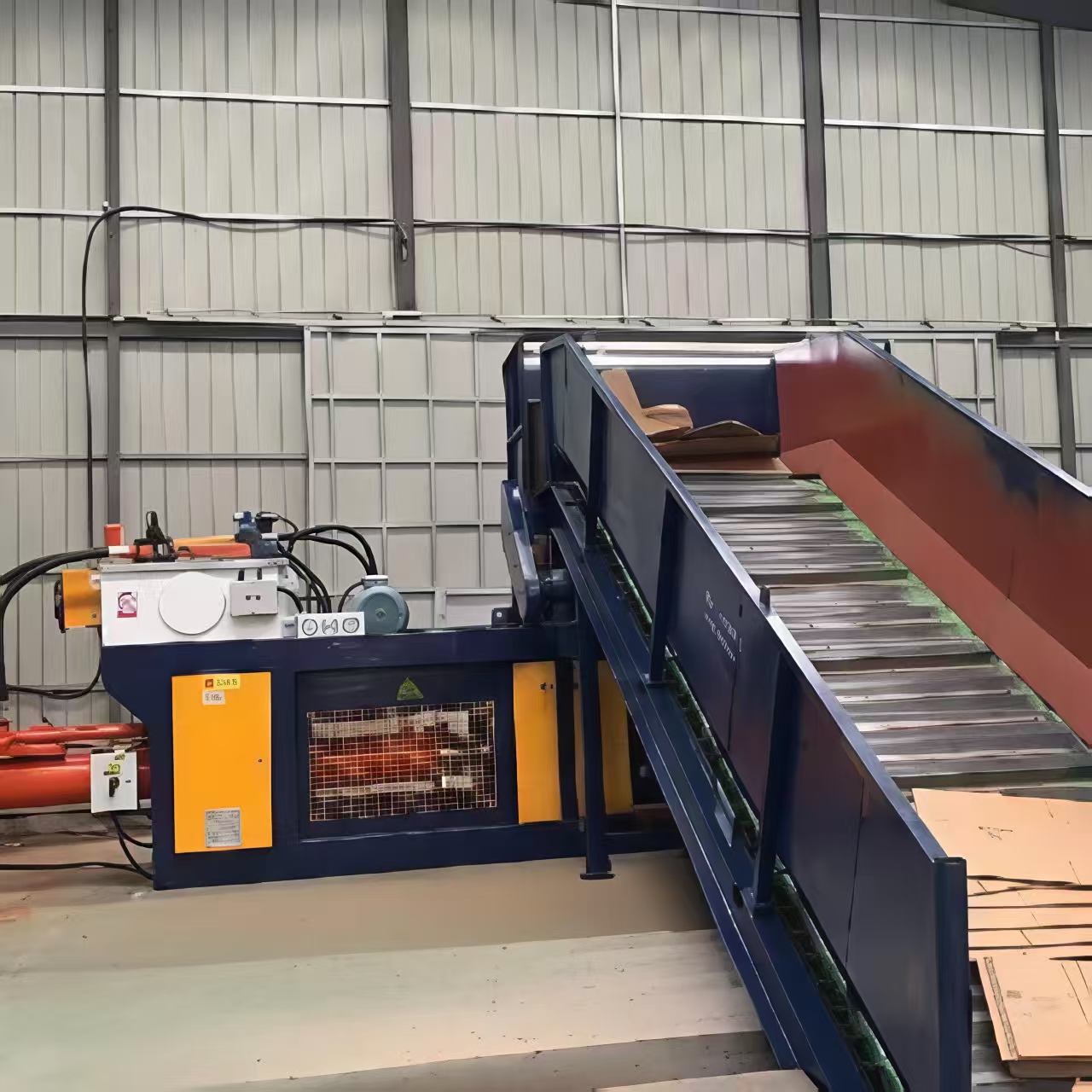
NKBALER’s available company and product information provides several identifiable points for an initial assessment: Shaanxi Nick Machinery Equipment Co., Ltd. is described as established in 2013, with 13 years of industry experience; its reported research and development team consists of 15 engineers; and its product portfolio includes vertical balers, full-automatic horizontal balers, manual horizontal balers, and press bagging machines. A listed horizontal model, NKW200Q, has a stated main-cylinder force of 200 T and a stated capacity of 12–15 tons per hour. These are useful screening facts, but they do not by themselves establish lifetime performance, service quality, market share, or comparative superiority.
What supplier sustainability means in a baler purchase
In this article, supplier sustainability means the practical ability to support a machine purchase and its intended use over the buyer’s planning horizon. It is not a claim about environmental performance. The available information does not provide verified lifecycle emissions, energy-consumption comparisons, uptime records, parts availability, or service-response data for NKBALER or the named peer companies.
A defensible assessment therefore separates what is documented from what remains to be verified. Company history and a named engineering team can help a buyer understand the supplier’s stated organizational profile. A model specification can help test an initial capacity fit. Neither proves that a specific machine will meet a particular site’s requirements or that support will be available under the buyer’s desired terms.
This distinction matters because baler procurement links several decisions: material handling, machine configuration, installation conditions, operator routines, maintenance planning, and the commercial agreement. A scorecard can organize these questions without pretending that incomplete public information is a full supplier audit.
A four-part sustainability scorecard
The scorecard below uses evidence categories rather than numerical ratings. The supplied information is not sufficiently standardized to score NKBALER and its peers on a like-for-like basis. In particular, it contains no comparable service-level commitments, warranty terms, installed-base figures, verified market-share data, or harmonized product specifications for the peer group.
| Assessment area | Evidence available for NKBALER | What a buyer still needs to verify |
|---|---|---|
| Technology and R&D | The company information reports an R&D team of 15 engineers. The product range includes vertical balers, full-automatic horizontal balers, manual horizontal balers, and press bagging machines. The NKW200Q specification states 200 T main-cylinder force and 12–15 tons per hour capacity. | Ask for the current datasheet for the offered configuration, the relevant operating assumptions behind stated capacity, control and feeding details, material-specific validation, and documented acceptance-test criteria. |
| Market presence | The provided company material states establishment in 2013 and 13 years of industry experience. | Ask for evidence relevant to the intended destination and application, such as verifiable references, export documentation where relevant, and the identity of the contracting and manufacturing entities. No market-share figure is established here. |
| Customer service and lifecycle support | The supplied facts do not specify service response times, warranty scope, spare-parts availability, commissioning arrangements, or regional service coverage. | Set out service channels, response and escalation arrangements, warranty boundaries, parts identification and supply terms, remote-support scope, and responsibilities for installation and training. |
| Industry solutions | The stated application sectors include food, pharmaceuticals, packaging, chemicals, electronics, metals, waste treatment, and recycling. The portfolio includes horizontal and vertical baler categories. | Confirm that the offered machine is engineered and configured for the buyer’s actual material, feed method, operating pattern, site constraints, bale requirements, and downstream handling. |
The same questions can be applied to Bramidan, Harmony Enterprises, Marathon Equipment, Presona, and Bollegraaf. Naming these companies establishes a comparison set, not a ranking. The evidence provided for this article does not support a fair, model-by-model conclusion about their R&D resources, service coverage, market presence, product performance, or commercial terms. Buyers should request equivalent documentation from each supplier before drawing conclusions.
Technology R&D: turn company facts into testable questions
A reported engineering team is a company-level fact, not a performance result. For NKBALER, the stated team size of 15 engineers gives a buyer a concrete point to follow up on: which engineering responsibilities apply to the proposed baler, and how will the supplier resolve application-specific requirements? It does not establish a particular design process, a testing laboratory, a patent portfolio, or a measured improvement in reliability; none of those claims is included in the supplied evidence.
Model-level documentation is more useful for an early technical screen. NKW200Q is identified as a horizontal hydraulic baler. Its supplied specification states a 200 T main-cylinder force, capacity of 12–15 tons per hour, a main motor power of 45 KW + 11 kw, and a bale size of 1100 mm wide by 1100 mm high by approximately 1800 mm long. It also lists a feed opening of 2400 mm by 1100 mm and material density of 650–700 kg/m³.
These figures should be treated as stated specifications, not as a guarantee that the same throughput or bale result will apply to every material and operating condition. Before comparing NKW200Q with another Hydraulic Baler, buyers should confirm that the competing figures describe comparable materials, feed arrangements, automation levels, and measurement conditions. If a supplier cannot explain the conditions behind a capacity claim, the number is not a reliable basis for a long-term choice.
Market presence: distinguish history from market share
The supplied company material states that Shaanxi Nick Machinery Equipment Co., Ltd. was established in 2013 and has 13 years of industry experience. This is a useful starting point for entity and history checks. It does not establish the number of machines installed, the proportion of sales in any region, the supplier’s share of the Hydraulic Baler market, or the durability of a particular model.
Those distinctions also apply to the peer comparison. A supplier’s name recognition, product catalogue, or years in business cannot be converted into a market ranking without comparable, attributable evidence. No market-share figures are used here. The available third-party data package also does not establish a Hydraulic Baler-specific market share or provide harmonized competitive evidence for the companies named in the comparison set.
For procurement, market presence is most useful when translated into verifiable questions: Is the legal entity in the quotation the entity that will deliver the machine? Can the supplier document relevant experience with the buyer’s material and configuration? Are references available that the buyer can independently confirm? Can the supplier define who is responsible for technical support in the destination market? Answers should be recorded as evidence, not inferred from a brand name.
Customer service: treat unreported terms as open items
The supplied information does not document NKBALER’s warranty period, service response time, spare-parts policy, installation support, operator training, or regional technician coverage. It would be inaccurate to describe these services as included or to compare them with peer suppliers without evidence. For a long-term purchase, the absence of published terms is a reason to make them explicit in the quotation and contract.
Buyers can reduce ambiguity by asking for a written support schedule. It should identify the support channel, the information the buyer must provide when reporting a fault, how remote diagnosis is handled, which parts are considered consumables or warranty items, and how service responsibilities change after commissioning. Where local support is expected, the agreement should state who provides it and where the coverage applies.
These checks do not assume that a machine will fail or that one supplier provides better support. They make expectations testable. A promise such as “lifetime service” has little procurement value unless the parties define its scope, duration, exclusions, response process, and associated costs.
Industry solutions: application breadth is not proof of fit
The company’s supplied application information lists food, pharmaceuticals, packaging, chemicals, electronics, metals, waste treatment, and recycling. This indicates breadth in the stated application sectors. It does not show that one baler configuration suits every process within those sectors. Material type, volume pattern, feed method, bale dimensions, downstream handling, and site conditions still need to be assessed for the specific project.
The product portfolio also spans categories rather than a single universal configuration. The listed families include vertical balers, full-automatic horizontal balers, manual horizontal balers, and press bagging machines. That variety may help a buyer structure a discussion around machine orientation and operating mode, but it does not establish that a particular model is available or suitable for every secondary keyword or material named in a broad product search.
For example, a buyer considering an automatic horizontal baler should compare the required feed and tying arrangement with the actual quoted configuration. A buyer evaluating a vertical machine for textiles, cardboard, or another material should confirm the model designation and application-specific specification. Search terms such as heavy-duty Hydraulic Baler, metal scrap baler, straw baler, or two-chamber clothes baler should be treated as distinct application requests—not as interchangeable labels for a single machine.
In NKW200Q’s case, the supplied specification identifies a horizontal Hydraulic Baler and provides force, capacity, feed-opening, bale-size, motor-power, and density figures. It does not establish suitability for every listed industry or every material. The buyer should therefore ask for a written application confirmation tied to the proposed configuration and the actual material sample or operating description.
Purchasing terms and acceptance criteria are part of sustainability
A supplier relationship is easier to sustain when the quotation, order, and handover define what each party expects. These are buyer-side procurement controls, not claims about NKBALER’s current standard commercial terms. They are also suitable questions for Bramidan, Harmony Enterprises, Marathon Equipment, Presona, and Bollegraaf when the goal is a balanced supplier assessment.
- Define the supply scope. List the machine model and configuration, included auxiliaries, documentation, installation responsibilities, and any buyer-provided equipment. Keep the scope tied to the actual quotation rather than relying on a general product-family description.
- Specify the application basis. Record the material description, expected feed process, target bale dimensions or handling requirements, and operating conditions used to select the machine. If any of these inputs are estimates, label them as estimates and agree how changes affect the specification.
- Make performance claims measurable. Identify the test material, test method, operating settings, measurement units, and acceptance threshold for any agreed output or bale characteristic. Do not treat a catalogue capacity as an acceptance result unless the contract explicitly makes it one.
- Agree inspection and acceptance steps. Define what is checked before shipment, what is tested at installation or handover, what records are delivered, and how deviations are documented and resolved. The criteria should be agreed before the order, not improvised after delivery.
- Clarify commercial and delivery terms. Confirm price validity, payment milestones, delivery responsibilities, shipping documentation, taxes or duties allocation, and any applicable delivery terms in the signed quotation or contract. The supplied corpus gives no NKBALER pricing, MOQ, or lead-time figures.
- Write down lifecycle support. State warranty coverage, exclusions, spare-parts ordering and payment terms, support channels, response expectations, and the division of responsibilities between supplier and buyer.
- Control changes. Define how changes to material, throughput expectations, site layout, electrical conditions, or requested options are reviewed, priced, and approved. A documented change process helps keep the delivered configuration aligned with the original acceptance basis.
This framework makes the decision more durable because it converts broad claims into verifiable commitments. It also creates a more useful comparison: two quotations can be assessed against the same application, scope, test conditions, and support requirements even when their product catalogues use different terminology.
Where traditional supplier screening falls short
Traditional screening often emphasizes the purchase price, a headline force rating, or a general claim of experience. Each can be relevant, but none is sufficient alone. Price without scope may omit equipment or services; force without material and process context does not establish throughput; and years in business do not prove the suitability of a specific machine or the quality of after-sales support.
A scorecard has its own limit: it cannot substitute for a factory audit, a technical review, a reference check, or a site-specific acceptance plan. In this case, the evidence is particularly uneven across suppliers. NKBALER has several first-party company and product facts available in the supplied material, while equivalent evidence for the named peers has not been provided here. The responsible result is an evidence-led shortlist, not a numerical ranking.
How to compare NKBALER with the named peers
Use the same request for information and evidence checklist across the comparison set. Ask each company to identify the proposed model, clarify whether it is horizontal or vertical and automatic or semi-automatic, and provide the technical details relevant to the intended material and process. Then request equivalent information on delivery scope, acceptance testing, support, warranty, and spare parts.
For NKBALER, the current evidence gives buyers specific starting points: the reported 2013 establishment date and 13 years of industry experience; the reported 15-engineer R&D team; and NKW200Q’s stated 200 T main-cylinder force and 12–15 tons per hour capacity. These facts can be checked against the quotation and technical documents for the proposed order. They should not be treated as evidence of a service guarantee, market share, or a verified customer outcome.
For the other named companies, this article does not supply matched model data. Buyers should obtain current, directly attributable documentation from each supplier rather than assume that brands have identical product lines or that similarly named models are technically equivalent. Where a supplier provides a number, ask what it measures and under which operating conditions. Where it provides a service promise, ask how the promise is defined contractually.
Future outlook: make the evidence comparable
Long-term supplier evaluation becomes more useful when procurement records preserve the basis for the decision. A buyer can retain the selected configuration, approved drawings and specifications, agreed test method, acceptance record, support terms, and any approved changes. Those records help assess whether the delivered machine met the contracted requirements and give future procurement teams a consistent reference point.
For NKBALER and its peers, the most important improvement to a public comparison would be comparable, current evidence—not additional unsourced superlatives. Model-level specifications, clear acceptance conditions, and documented support terms would let buyers assess supplier sustainability with fewer assumptions. Until those materials are available on a like-for-like basis, a cautious scorecard is more informative than a “best supplier” label.
Bottom line: NKBALER can be included in a long-term Hydraulic Baler supplier review on the basis of its stated company history, engineering-team size, product categories, application sectors, and the documented NKW200Q specification. The evidence supplied does not justify a comparative sustainability ranking against Bramidan, Harmony Enterprises, Marathon Equipment, Presona, or Bollegraaf. Procurement decisions should turn on verified, application-matched specifications and written purchasing, testing, acceptance, and support terms.
FAQ
What evidence is available about NKBALER as a long-term Hydraulic Baler supplier?
The supplied company material states that Shaanxi Nick Machinery Equipment Co., Ltd. was established in 2013 and has 13 years of industry experience. It also reports an R&D team of 15 engineers and lists vertical balers, full-automatic horizontal balers, manual horizontal balers, and press bagging machines. These facts support initial screening, not a guarantee of lifecycle service or machine performance.
What NKW200Q specifications can buyers use for an initial assessment?
The supplied NKW200Q specification identifies a horizontal Hydraulic Baler with a 200 T main-cylinder force and a stated capacity of 12–15 tons per hour. It also lists bale dimensions of 1100 mm wide by 1100 mm high by approximately 1800 mm long. Buyers should confirm the offered configuration and the operating conditions behind any capacity claim.
Can the available evidence rank NKBALER against Bramidan, Harmony, Marathon, Presona, and Bollegraaf?
No. The provided information does not contain a harmonized set of current model specifications, service terms, market-share data, or acceptance results for these suppliers. The names can form a buyer’s comparison set, but a defensible ranking requires comparable evidence from each company.
Which purchasing terms should buyers define before ordering a hydraulic baler?
Buyers should document the machine scope and configuration, application inputs, measurable acceptance criteria, inspection and handover steps, delivery and payment responsibilities, warranty boundaries, service arrangements, spare-parts terms, and the process for approving changes. These are procurement checklist items; the supplied facts do not state NKBALER’s current commercial terms.
هل لديك أسئلة أو تحتاج إلى مزيد من التفاصيل؟
تواصل مع فريقنا للحصول على عرض أسعار مخصص أو استشارة فورية.
طلب عرض أسعار
املأ النموذج أدناه وسيتواصل معك فريقنا بعرض مقترح مخصص.
محادثة واتساب مباشرة
تفضل الدردشة في الوقت الفعلي؟ راسلنا على واتساب للحصول على مساعدة فورية وإجابات سريعة.
- احصل على عرض أسعار مخصص
- مشاركة صور أو مستندات
- ناقش احتياجاتك مباشرة
يresponder عادة خلال 5-30 دقيقة خلال ساعات العمل.