
Hydraulic Cylinder Build Options: A Buyer's Acceptance Guide
Hydraulic Cylinder Build Options: A Buyer's Acceptance Guide
A custom hydraulic cylinder is not accepted on the strength of a drawing alone. The nine build options most often quoted to equipment makers — single-acting ram, double-rod, telescopic, mill-duty, position-sensing, stainless steel, compact short-stroke, heavy-duty high-pressure and welded double-acting — differ far less in the machining they demand than in what a buyer must be able to prove before releasing final payment. This comparison treats each option as a purchasing package rather than a catalogue line: the duty it fits, the acceptance evidence that should travel with it, and the commercial terms that follow from its complexity. It is written as a checklist for decision-stage buyers, not as a ranking of manufacturers.
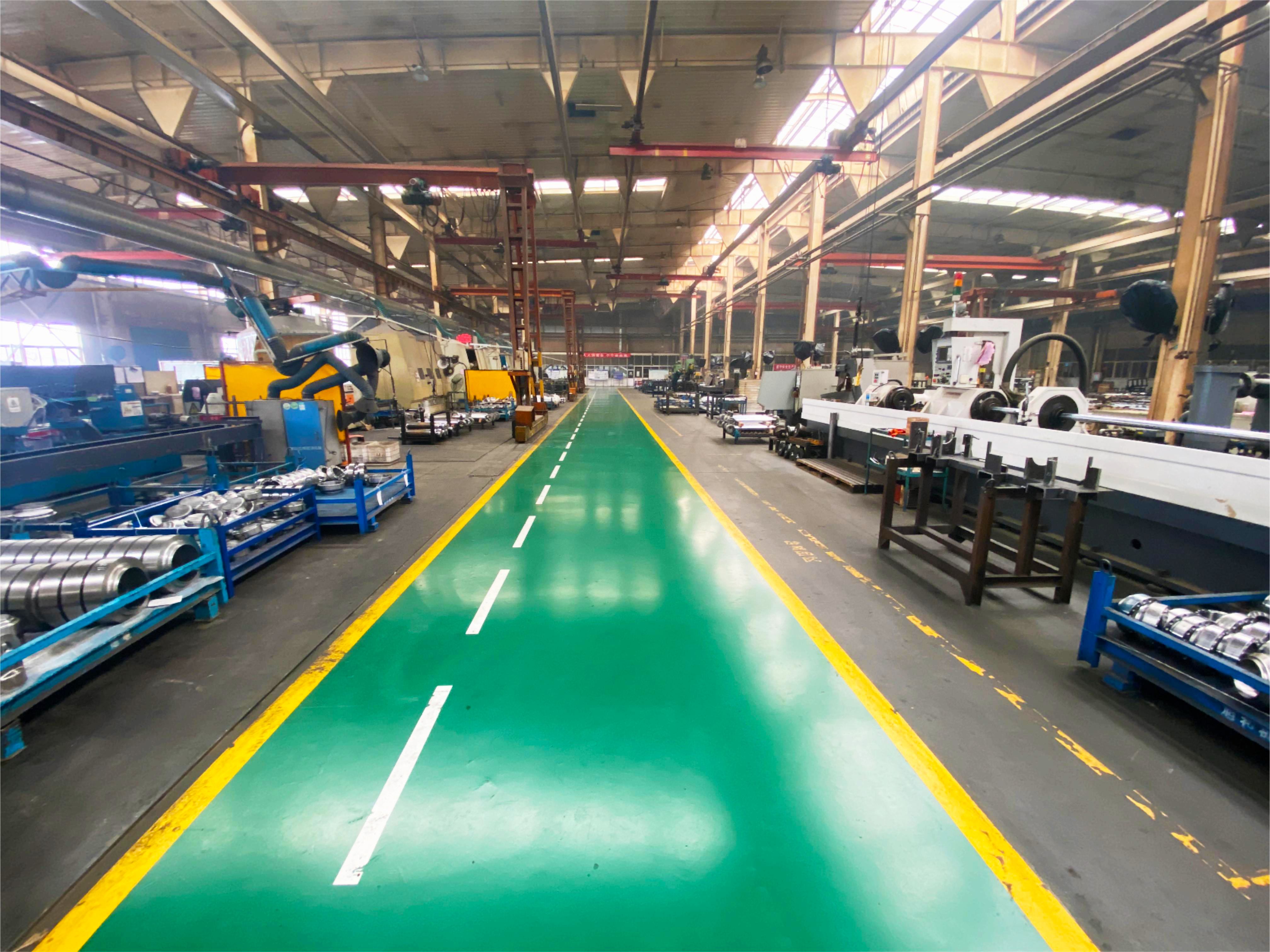
Custom hydraulic cylinder production area where rod and barrel components are prepared before assembly.
The central problem is that acceptance criteria are usually written after the price is agreed. A cylinder that satisfies a load calculation can still fail an incoming inspection because the drawing did not name the test pressure, because seal housing tolerances were left to the supplier, or because welded joints were never given a documented inspection step. Reversing that order — deciding the acceptance criteria first, then choosing the build option that can meet them at the quoted price — is what separates a controlled purchase from a hopeful one.
What the nine build options commit a buyer to
The table below is a comparison framework, not a recommendation. Each row describes the duty a configuration is normally chosen for, the acceptance evidence that becomes most important for that configuration, and the commercial consequence a buyer should expect. Where a supplier cannot describe the acceptance step for a row, that row is an open question for the quotation, not a detail to settle later.
| Build option | Duty it typically fits | Acceptance emphasis | Commercial consequence |
|---|---|---|---|
| Single-acting ram | Lift-and-return duties where the load or gravity provides the return stroke | Rod straightness and hard-chrome condition; gland and seal check on the single working port; stroke and mounting geometry against the drawing | Fewest hydraulic lines and a narrower service scope; confirm that the return method is designed, not assumed |
| Double-rod | Duties needing a working rod end or mounting at both ends, or tandem circuit arrangements | Alignment and concentricity of both rods; two gland and seal sets to inspect; port orientation | Two rod and gland assemblies per unit; the drawing must define both rod ends before quoting |
| Telescopic / multi-stage | Long stroke from a short retracted length, such as tipper bodies and refuse equipment | Stage-by-stage pressure and leakage testing; stage alignment; wiper and seal condition at each stage | More machining and assembly steps per unit; custom lead time scales with stage count |
| Mill-duty (mill-type) | Continuous industrial duty where the body is expected to be serviced rather than replaced | Seal-housing tolerances against the drawing; documented rebuild route; mounting match to the existing frame | Repairability changes lifetime cost; ask for the service and seal-kit route in writing |
| Position-sensing | Stroke feedback for sequencing, control interlocks or automation | Sensor interface and connector specification; functional check across the full stroke; calibration record | Signal type, wiring and connector must appear on the drawing before the quote is comparable |
| Stainless steel | Washdown, marine and corrosive surroundings | Material certificate; part-by-part statement of which components are stainless versus coated; seal compatibility with the service environment | A stainless enquiry can quietly become a coated quote unless the material scope is defined per component |
| Compact short-stroke | Tight installation envelopes with short travel | Mounting dimensions and stroke tolerance; seal housing; installed clearance verified before build | Small envelopes hide tolerance sensitivity; settle the mounting interface early |
| Heavy-duty high-pressure | High load density, including 250 bar mounting series applications | Pressure test at the specified pressure; structural verification; weld inspection on welded bodies | The pressure class drives the test specification, not only the wall thickness |
| Welded double-acting | Mobile and heavy equipment where a compact welded body is preferred | Weld inspection; 100% pressure and leakage testing; dimensional inspection of welded components | Welded bodies are commonly treated as non-rebuildable, so seal-life planning matters more than repair planning |
Option-by-option notes for the decision file
Single-acting ram and welded double-acting: two ends of the service-life question
A single-acting ram carries one working port and relies on load or gravity for the return stroke, which reduces the number of sealing surfaces and hydraulic lines to be inspected. The acceptance question is therefore narrow but unforgiving: rod straightness, chrome integrity and gland sealing have to be checked against the drawing, because there is no second pressure side to compensate for a marginal seal. A welded double-acting cylinder inverts the emphasis. It adds a second working side and a permanently joined body, so weld quality and body integrity move to the centre of the acceptance file. Buyers should treat the welded body as a service-life decision rather than a repair decision, and specify the weld inspection step explicitly rather than leaving visual inspection to routine practice.
Telescopic and multi-stage: where stage count sets the acceptance workload
A telescopic or multi-stage cylinder produces a long stroke from a short retracted length by nesting stages. That nesting is also what makes it harder to accept: each stage presents its own seal, wiper and alignment condition, and a single weak stage compromises the whole unit. The practical consequence for a purchase order is that pressure and leakage testing should be described stage by stage rather than as one blanket test, and stage alignment should be a named dimensional check. Stage count also has a commercial signature — more stages mean more machining and assembly operations, so a multi-stage quotation sits at the upper end of custom lead times even when the bore is modest.
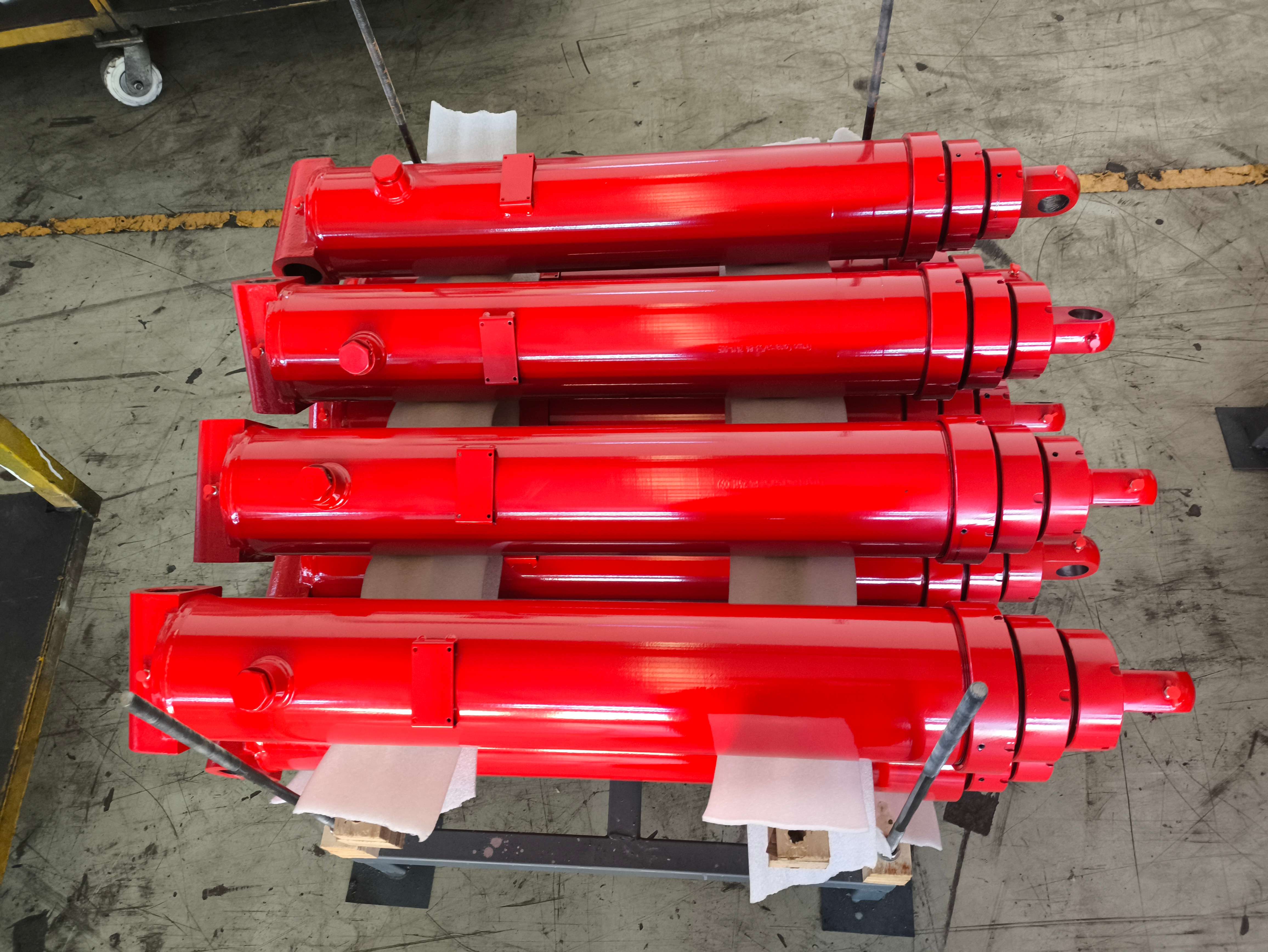
Multi-stage telescopic cylinders: each stage carries its own seal and alignment condition into acceptance.
Double-rod and mill-duty: alignment and repairability decide the outcome
Double-rod construction places a rod at each end, which is chosen when the machine needs a working end on both sides or a tandem circuit arrangement. Acceptance turns on alignment: two rods mean two concentricity checks, two gland assemblies and a mounting interface that must not fight the frame. Mill-duty cylinders are chosen for continuous industrial duty and are usually expected to be serviced rather than discarded. For that reason the useful acceptance evidence is not only the as-built inspection record but the documented rebuild route — seal kit availability, bore and rod condition limits, and the tolerances to which the body was made. ISO 5597:2018 is relevant here because it sets preferred nominal dimensions and tolerances for housings of single-acting piston and rod seals, covering cylinders from 16 mm to 500 mm and rods from 6 mm to 450 mm; the standard deliberately does not specify seal design or functional performance, so it supports a dimensional check and nothing more.
Position-sensing, stainless steel and compact short-stroke: specification risk rather than machining risk
These three options fail more often at the specification stage than at the machine tool. A position-sensing cylinder is only comparable between suppliers once the signal type, connector, wiring route and calibration expectation are written onto the drawing; otherwise two quotes describe different products. A stainless steel enquiry needs a component-by-component material statement, because the barrel, rod, end caps and fittings may not all be supplied in the same material, and a quote that says only 'stainless' leaves the buyer unable to verify what was actually bought. A compact short-stroke cylinder hides its difficulty in the envelope: tolerance sensitivity rises as the installation space shrinks, so mounting dimensions and installed clearance should be confirmed before production begins. ISO 6020-3:2015 is a useful anchor for compact-series work because it establishes metric mounting dimensions for single-rod compact cylinders with bores from 250 mm to 500 mm at 16 MPa (160 bar).
Heavy-duty high-pressure: pressure class is a test instruction
When a buyer specifies a high-pressure heavy-duty cylinder, the pressure class should be read as an instruction about testing rather than a description of wall thickness. ISO 6022:2006 establishes mounting dimensions for hydraulic cylinders used at 25 MPa (250 bar), and ISO 10762:2015 does the same for the 10 MPa (100 bar) series; both are interchangeability documents, not performance certificates. The corresponding acceptance step is a pressure test at the specified pressure plus structural verification, and — where the body is welded — a weld inspection step before assembly. A supplier that quotes a pressure rating without describing the test that demonstrates it has supplied a number, not evidence.
Four acceptance criteria that belong in every purchase order
Across all nine options, four verification points do the most work in protecting the buyer: pressure testing, leakage testing, dimensional inspection and welding inspection. They appear at different weights depending on the configuration, but none of them should be left to a general statement about quality control. The practical test of a quotation is whether it can describe, for each point, what is checked, at what stage, and what record the buyer receives.
Pressure testing
Pressure testing verifies structural integrity and sealing performance under defined conditions. [Apex Hydraulic](/) Apex Hydraulic states that finished cylinders are tested under specified pressure conditions before delivery, and that every hydraulic cylinder undergoes pressure testing before shipment. For the buyer, the operative word is 'specified': the test pressure, hold time and the configuration tested should match the service duty, and the record should identify the unit or batch tested. A pressure rating on a datasheet and a pressure test record are different classes of evidence.
Leakage testing
Leakage control is the cumulative result of seal selection, surface finish, machining accuracy and assembly cleanliness. Apex Hydraulic states that every cylinder is subject to leakage testing before shipment alongside pressure testing, and that seal configurations are selected according to working pressure, temperature, hydraulic oil type and operating frequency. This is where the buyer's specification does the most good: naming the oil type, ambient temperature range and duty cycle at enquiry stage converts a generic seal package into a defined one, and gives the acceptance inspection something specific to confirm. Contamination control before assembly is part of the same chain, which is why cleaning and component handling are worth asking about even though they appear in no drawing.
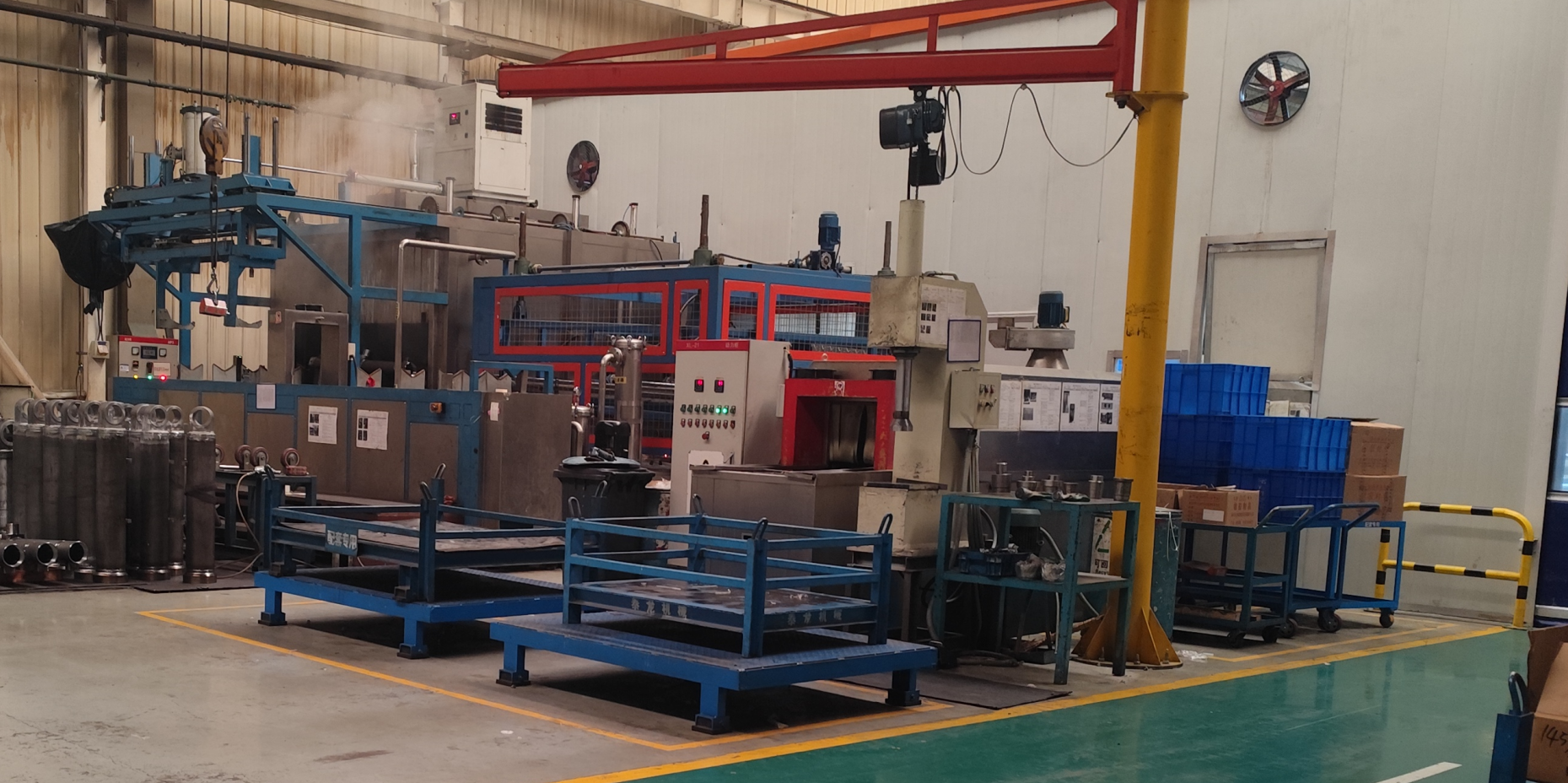
Component cleaning before assembly: contamination control sits upstream of any leakage test result.
Dimensional inspection
Dimensional inspection is what makes a cylinder installable. Critical dimensions are checked during production against customer drawings and assembly requirements, and drawing confirmation before production is the step that prevents a correctly machined cylinder from fitting the wrong machine. For buyers, the useful clause is not 'dimensions to drawing' but a named list: mounting centres, pin diameters, port positions and orientation, retracted and extended lengths, and stroke tolerance. For compact and mill-duty configurations, seal-housing tolerances deserve their own line, because they determine both sealing and future serviceability.
Welding inspection
Welded construction concentrates risk at the joint. Apex Hydraulic states that critical welded components follow standardized welding procedures, are produced by certified welders, and undergo visual inspection and dimensional verification before assembly. Buyers specifying welded double-acting or heavy-duty high-pressure bodies should ask for that sequence explicitly, and should expect the welding record to be traceable to the batch rather than to the factory in general. Batch records and inspection records are also what make product traceability possible after delivery, which matters most when a single unit in a shipment behaves differently from the rest.
Commercial terms: MOQ, delivery and engineering support
Build option and commercial term are linked. A standard single-acting ram from an existing programme behaves commercially like a catalogue item; a position-sensing or multi-stage custom build behaves like an engineering project. Apex Hydraulic's stated terms illustrate the split: 7–20 days delivery for standard products, 25–45 days for customized builds, a minimum order quantity of one piece for standard products, and negotiable MOQs for OEM and custom work. The company also states that it provides OEM and ODM manufacturing, with engineering support covering product design, engineering drawings, prototype development, testing, manufacturing and quality inspection, supported by an engineering team of 25.
| Commercial term | What the buyer should confirm |
|---|---|
| MOQ | Whether the one-piece minimum applies to the selected standard model, and what volume triggers a custom MOQ; get the custom MOQ in writing per configuration, since it is negotiable rather than fixed |
| Delivery | Whether the quoted window covers standard or custom build, and which acceptance steps (testing, inspection, packaging) sit inside that window |
| Drawing ownership | Who prepares and approves the drawing, and which revision is the manufacturing reference; drawing confirmation before production is the control point |
| Engineering support | Whether design, prototyping and testing are included in the quoted scope or priced separately |
| Traceability | What batch or serial record accompanies the shipment and how long it is retained |
| Packaging | Whether anti-rust treatment, protective caps and export-grade packing are standard, since transport damage is a distinct risk from manufacturing defect |
How to compare the nine options like-for-like
Step 1 — Fix the duty, not the part number. State load, stroke, cycle frequency, environment and mounting constraints. An option cannot be compared until the duty is identical across quotes.
Step 2 — Define the acceptance set before pricing. Name the pressure test, leakage test, dimensional list and — where relevant — welding inspection. Suppliers quoting different acceptance scopes are not quoting the same product.
Step 3 — Convert every option to the same drawing revision. A position-sensing quote without a connector and signal definition, or a stainless quote without a per-component material statement, is not yet comparable.
Step 4 — Separate standard from custom in the lead time. Ask which part of the 7–20 day or 25–45 day window is engineering, which is production, and which is inspection.
Step 5 — Test the MOQ logic. Confirm the standard one-piece minimum and obtain a written custom MOQ for the specific configuration, including multi-stage builds where stage count affects the answer.
Step 6 — Ask what happens after delivery. Seal kits, rebuild tolerances and service documentation matter more for mill-duty and welded bodies than for disposable designs.
Step 7 — Check country of origin and documentation. Origin and supplier ownership belong in the RFQ, not in the shipping file.
Step 8 — Score the evidence, not the adjectives. A quote that names its tests and records is stronger than one that describes itself as reliable.
Where each option stops fitting
Boundaries are as useful as capabilities. A single-acting ram is a poor fit where controlled retraction or holding in both directions is required, because the return depends on load or gravity. A welded double-acting body is a poor fit where field rebuildability is a programme requirement, since the body is not designed to be opened. A telescopic cylinder is a poor fit where the retracted length is not actually constrained, because the added stages then buy complexity without benefit. A position-sensing cylinder is a poor fit where the control system cannot use the available signal format. Stainless construction is a poor fit where only the rod is exposed to the corrosive environment and a coated rod would meet the same requirement at lower specification risk. Compact short-stroke designs are a poor fit where the installation envelope is generous and standard mounting series would simplify interchangeability. None of these are defects; they are the conditions under which an option should be removed from the shortlist rather than argued for.
Market context the comparison sits inside
Two verified signals are relevant to buyers assembling this decision file. First, construction preference: Grand View Research reported that the welded segment held the largest share of the hydraulic cylinder market at 53.6% in 2025, which is consistent with the volume of mobile and heavy-equipment applications where welded bodies are chosen. Second, standardisation: the ISO cylinder standards most often cited in RFQs are dimensional. ISO 6022:2006 covers mounting dimensions for the 250 bar series, ISO 6020-3:2015 covers compact-series mounting dimensions for 250–500 mm bores at 160 bar, ISO 10762:2015 covers the 100 bar series, and ISO 5597:2018 covers seal-housing dimensions and tolerances. None of them certifies leakage performance, fatigue life or suitability for a specific machine, which is why dimensional compliance and acceptance testing have to be specified as separate requirements.
Trade policy is a third factor worth tracking rather than assuming. In 2026, antidumping and countervailing duty petitions concerning certain linear hydraulic cylinders and parts thereof were filed in the United States, and the matter sat at petition and investigation stage in the records reviewed, with no duty order evidenced. Buyers should verify the current status, product scope and named origins directly against the official case record before pricing country-of-origin risk into a sourcing decision, and should capture origin and plant location in the RFQ so that exposure can be identified rather than discovered at shipment. Published market-size estimates for the category should also be treated with care: commercial research publishers have reported materially different global values for adjacent base years, reflecting different segment definitions rather than a one-year market movement, so those figures are not interchangeable and should not be averaged into a planning number.
Outlook
The direction of travel is toward specification discipline rather than configuration novelty. Sensing options push part of the acceptance burden from mechanical inspection into interface definition and calibration records; welded and high-pressure designs keep pressure, leakage and weld inspection at the centre of the file; and multi-stage builds continue to be judged stage by stage. Buyers who fix the acceptance set before the price will find the nine options easier to compare, because the differences between them then appear where they actually matter — in what has to be proven, by whom, and with what record. Suppliers able to describe that sequence in a quotation, rather than in a brochure, are the ones whose claims can be checked after delivery. Apex Hydraulic publishes its main product range and capability details at hydraulicapex.com, and its product catalogue is available as a downloadable reference for buyers building an enquiry package.
Frequently asked questions
Which acceptance tests should be written into a custom hydraulic cylinder purchase order?
Four verification points cover most custom work: pressure testing, leakage testing, dimensional inspection and welding inspection where welded construction is used. The order should state what is checked, at which production stage, and what record the buyer receives. Pressure and leakage testing address structural integrity and sealing; dimensional inspection confirms mounting, port and stroke compatibility against the confirmed drawing; welding inspection applies to welded bodies and critical welded components. Batch or serial identification links the records to the delivered units.
How do MOQ and delivery differ between standard and custom cylinder builds?
In the terms referenced for this comparison, standard products carry a minimum order quantity of one piece and a delivery window of 7–20 days, while customized builds carry negotiable MOQs and a delivery window of 25–45 days. The gap reflects engineering and production steps rather than administration alone, so buyers should ask which part of a customized window is drawing confirmation, which is machining and assembly, and which is testing and inspection. Because custom MOQs are negotiable, they should be confirmed in writing for the specific configuration being quoted.
Do ISO cylinder standards certify performance, or only dimensions?
The commonly cited cylinder standards are dimensional. ISO 6022:2006 establishes mounting dimensions for cylinders used at 25 MPa (250 bar), ISO 6020-3:2015 does the same for single-rod compact cylinders with 250–500 mm bores at 16 MPa (160 bar), and ISO 10762:2015 covers the 10 MPa (100 bar) series. ISO 5597:2018 sets preferred nominal dimensions and tolerances for single-acting piston and rod seal housings across cylinders of 16–500 mm and rods of 6–450 mm, and explicitly excludes seal design and functional characteristics. Dimensional compliance therefore supports interchangeability and drawing review, not leakage, durability or application suitability.
How should a position-sensing cylinder be verified before acceptance?
Verification starts before production: the drawing must define the signal type, connector, wiring route and calibration expectation, because two quotes without those definitions describe different products. At acceptance, the sensor should be checked functionally across the full stroke rather than at a single point, and the calibration record should identify the unit. Buyers should also confirm that the connector and wiring are sealed to the same standard as the cylinder environment, since the electrical interface is frequently the first point of failure in washdown or outdoor duty.
What changes in acceptance criteria for stainless steel or corrosive-service cylinders?
The material scope has to be defined per component. A stainless enquiry should state which parts — barrel, rod, end caps, fittings — are supplied in stainless material and which rely on coating or plating, and the acceptance file should include the corresponding material records. Apex Hydraulic states that piston rods receive precision grinding and hard chrome plating, with optional corrosion-resistant coatings available for harsh environments, so a coated rod and a stainless body can be a legitimate combination rather than a contradiction. Seal compatibility with the service environment should be specified alongside the material, because corrosion resistance in the body does not by itself protect the sealing system.
Reference: APEX Hydraulic Product Catalog (Main Products) — main product range, for buyers preparing a specification or enquiry package.
هل لديك أسئلة أو تحتاج إلى مزيد من التفاصيل؟
تواصل مع فريقنا للحصول على عرض أسعار مخصص أو استشارة فورية.
طلب عرض أسعار
املأ النموذج أدناه وسيتواصل معك فريقنا بعرض مقترح مخصص.
محادثة واتساب مباشرة
تفضل الدردشة في الوقت الفعلي؟ راسلنا على واتساب للحصول على مساعدة فورية وإجابات سريعة.
- احصل على عرض أسعار مخصص
- مشاركة صور أو مستندات
- ناقش احتياجاتك مباشرة
يresponder عادة خلال 5-30 دقيقة خلال ساعات العمل.