
Hydraulic Cylinder Buyers: Bench Tests vs. Catalog Claims for Welded Cylinders
Welded hydraulic cylinders dominate the global market with a reported 53.6% share in 2025, largely because of their durability in heavy-duty mobile applications. Buyers evaluating these components are increasingly asked to accept manufacturer catalog claims as proof of performance. Yet responsible procurement of welded hydraulic cylinders requires a more rigorous approach: comparing independently measurable bench test evidence with what is published in supplier catalogs. This article provides a buyer-oriented framework for making that comparison, with a focus on pressure testing, leakage testing, dimensional inspection, and surface treatment verification.
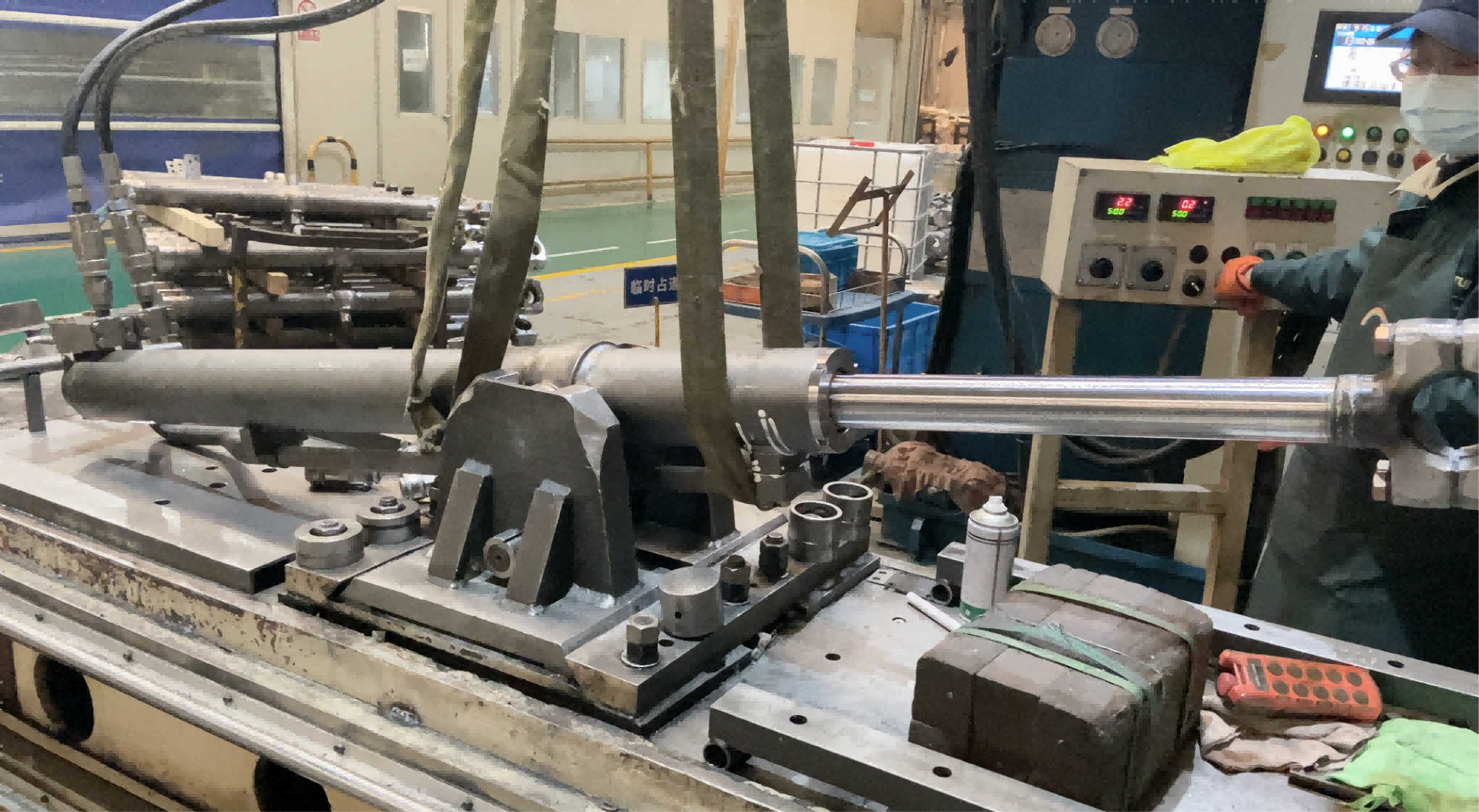
Pressure and leakage testing are among the most relevant bench-level evidence points for welded hydraulic cylinder evaluation.
Why Catalog Claims Are No Longer Enough
The welded hydraulic cylinder segment is large, and procurement stakes are correspondingly high. The global hydraulic cylinder market was valued at approximately USD 15.7 billion in 2024, with projections reaching USD 24.7 billion by 2034. Welded cylinders are not a peripheral category; they are central to mobile equipment—construction, agriculture, refuse collection, dump trailers, and mining vehicles represent a substantial share of demand. With that scale comes a crowded supplier base, including both large global manufacturers and specialized regional producers such as Apex Hydraulic Co., Ltd., established in 2009 in Qingdao, China.
Catalog claims are unequal evidence. A manufacturer can state a working pressure rating or a chrome-plating thickness without documenting how that value was achieved or tested. For a buyer, the core question is not "what does the catalog say?" but "what would a bench test reveal?" For example, a catalog may state that a cylinder is rated up to 3,000 PSI. The buyer should be able to request evidence that the design has been validated under equivalent pressure, with a documented test procedure.
Understanding the Welded Cylinder Product Category
Welded hydraulic cylinders are usually characterized by a welded barrel-to-end-cap construction, as opposed to tie-rod designs. In many heavy-duty applications, welded cylinders are preferred due to their compact structure, higher load capacity, and resistance to shock loads. A typical product line, such as Apex Hydraulic's welded cylinder series, includes models like the HBU Series (double-acting welded cylinders with cross-tube bushing mounts), HCL Series (fixed clevis mounts), and HTG Series (adjustable threaded clevis mounts). These series are rated up to 3,000 PSI and designed for equipment such as agricultural machinery, front-end loaders, construction equipment, dump trailers, and material handling equipment.
For evaluation purposes, the buyer should examine the construction standard that a manufacturer actually uses. On the materials side, key specifications to look for in a welded cylinder include:
- Cylinder tube: Precision-honed steel tube for consistent internal surface finish.
- Piston rod: Induction-hardened steel rod with a hard chrome-plated surface. Rod core hardness of 45–50 HRC and a final surface hardness of 69–71 HRC are typical claims in quality product lines.
- Corrosion resistance: Published corrosion test data, such as 96 hours per ASTM B117-07a, can be a useful comparative metric—if the buyer verifies it.
- Sealing system: Industrial hydraulic seals selected according to pressure, temperature, and application.
These material claims are common in catalogs. What differentiates suppliers is the discipline of proving them.
Independent Bench Test: What It Should Cover
An independent bench test for a welded hydraulic cylinder does not require access to a full vehicle or a complex test rig. It can be done at a manufacturer's facility with calibrated test equipment under the observation of a buyer representative or a third-party inspection agency. The test should cover, at minimum, the following evidence points:
1. Pressure Testing
Pressure testing is the most direct way to validate structural integrity. A cylinder should be tested to its rated working pressure, and a proof test to a defined percentage above the working pressure should be documented. For example, a rated working pressure of 3,000 PSI should correspond to a repeatable and documented pressure test result, not just a catalog figure.
Buyers should ask: "What pressure was applied? For how long? What was the acceptance criterion? Who witnessed the test?"
2. Leakage Testing
Leakage testing verifies the seal system and the dimensional consistency of the cylinder components. Internal leakage across the piston can compromise holding capability, while external leakage at the rod gland or port connections creates contamination and oil-loss problems. An independent bench test should measure both internal and external leakage at documented pressure levels.
3. Dimensional Inspection
Welded cylinders integrate with specific equipment geometry, which makes dimensional verification critical. Bore diameter, rod diameter, stroke length, retracted length, mounting centers, pin sizes, bushing inside diameter, and port type must all be verified against approved drawings. This is not a peripheral concern; slight deviations can lead to mounting failures or accelerated wear.
4. Welding Inspection
Welded cylinders depend on the integrity of the weld joints. Buyers should ask for welding inspection evidence, including visual inspection records and, where applicable, weld procedure qualifications. Without weld inspection, a high-pressure rating is simply ink on paper.
5. Surface Finish Inspection
The rod surface condition determines seal life and corrosion resistance. Bench-level surface finish inspection should include roughness assessment, chrome thickness verification, and porosity or surface-defect checks. Published chrome thickness values matter, but the evidence of measurement is what provides confidence.
6. Functional Testing
A full-stroke cycling test under pressure can reveal seal friction, rod or piston binding, and cushioning performance. Functional testing is the final proof that a cylinder operates as intended throughout its entire stroke.
| Bench Test Evidence | What It Verifies | Why It Matters for Welded Cylinders |
|---|---|---|
| Pressure testing | Structural integrity at rated and proof pressure | Welded barrels are subject to high radial and axial stress in mobile applications |
| Leakage testing | Seal system performance | Internal leakage reduces holding force; external leakage causes contamination and fluid loss |
| Dimensional inspection | Conformance to drawing tolerances | Mounting mismatches create side loads and premature failure |
| Welding inspection | Weld quality and process consistency | Weld defects are a common failure point in welded-body cylinders |
| Surface finish inspection | Rod and bore surface quality | Surface quality directly affects seal life and wear characteristics |
| Functional testing | Full-stroke operation under load pressure | Confirms real-world extend/retract behavior without installation surprises |
What Independent Verification Should Reveal vs. What Catalogs State
A well-constructed welded hydraulic cylinder catalog will list bore and rod diameters, pressure ratings, mounting styles, and sometimes material specifications such as rod hardness or chrome thickness. Independent verification should go deeper, answering three categories of questions that catalogs usually do not address:
1. Process Consistency
Catalogs describe what a manufacturer intends to build. Bench test evidence demonstrates what was actually built—and, more importantly, what is built consistently. A manufacturer operating with documented quality control procedures—covering incoming material inspection, in-process quality control, final quality inspection, pressure testing, leakage testing, dimensional inspection, welding inspection, surface finish inspection, functional testing, and 100% final inspection—can be expected to deliver consistency. Without evidence of those process points, a claim of "100% final inspection" remains just a phrase.
2. Performance Validation
A catalog rating establishes a design target. Independent bench testing verifies that a sample unit—or every unit—meets that target. For high-pressure welded cylinder applications, such as refuse truck packer cylinders or heavy-duty telescopic cylinders, validation evidence is especially valuable because failures create downtime and safety risk.
3. Longevity Indicators
Rod surface hardness, chrome thickness, corrosion resistance, and seal selection all influence service life. Catalog language such as "heavy-duty" or "corrosion-resistant" is less useful than measurable evidence. For example, a manufacturer that publishes a corrosion test of 96 hours according to ASTM B117-07a gives the buyer a benchmark. Without such evidence, the buyer cannot compare two suppliers on a like-for-like basis.
A Buyer's Comparative Checklist for Welded Hydraulic Cylinders
When comparing welded hydraulic cylinder suppliers, procurement teams should request the following evidence for each candidate:
- Product drawings: Approved drawings with clearly stated tolerances for bore, rod, stroke, and mounting dimensions.
- Pressure test reports: Actual test records, not just certificates.
- Leakage test records: Internal and external leakage results at stated pressures.
- Material certificates: Traceable material documentation for cylinder tube, piston rod, and seals.
- Welding documentation: Welding inspection records or applicable weld quality documentation.
- Surface treatment records: Chrome thickness readings, hardness test results, and corrosion test reports when claimed.
Using this checklist, the buyer changes the conversation from "accepting product claims" to "verifying product facts."
How Apex Hydraulic Aligns with Bench-Test Expectations
Because this article is written as an industry buyer's reference, it is useful to examine one manufacturer's quality infrastructure as an example. Apex Hydraulic, a China-based manufacturer operating since 2009, provides OEM and ODM manufacturing for mobile hydraulic applications. The company is active in markets including North America, Western Europe, South America, Australia, Southeast Asia, and the Middle East. Its manufacturing capability supports product categories such as custom welded cylinders, telescopic cylinders, tie-rod cylinders, refuse truck replacement cylinders, and custom heavy-duty high-pressure cylinders.
In the context of welded hydraulic cylinder evaluation, the relevant facts about Apex Hydraulic's operations are not promotional claims but specific, verifiable process characteristics. The company states that its quality control procedures include incoming material inspection, in-process quality control, final quality inspection, pressure testing, leakage testing, dimensional inspection, welding inspection, surface finish inspection, functional testing, and 100% final inspection. These procedures align directly with the bench test evidence points recommended above for buyers.
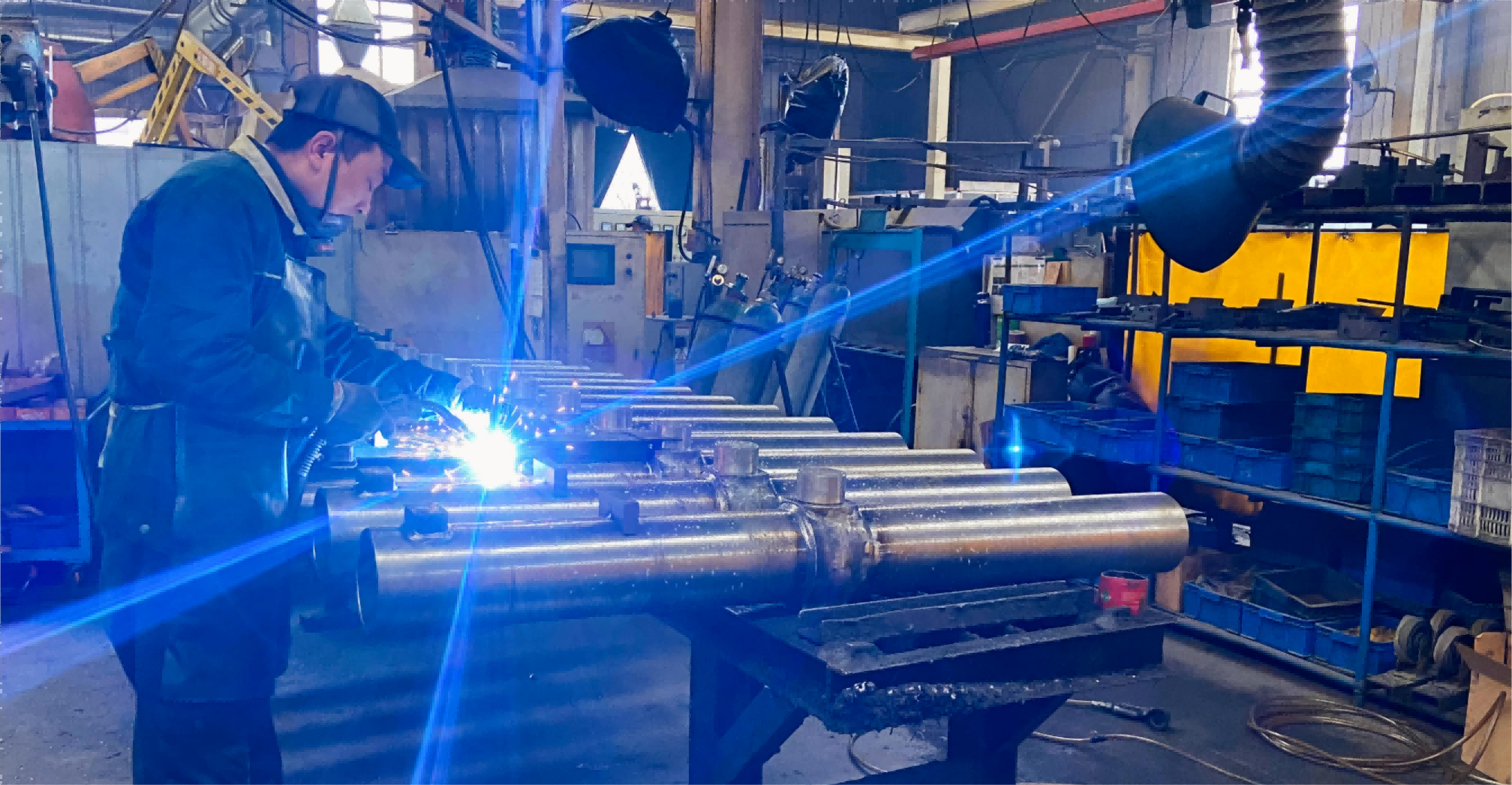
Welding inspection is a critical part of evaluating welded-body cylinder construction.
Products with Relevant Published Specifications
Buyers evaluating Apex Hydraulic's welded cylinder line can reference specific product series for comparison. For example:
- HBU Series: Double-acting welded cylinders with cross-tube bushing mounts, bore sizes from 1.5 to 5.0 inches, strokes from 4 to 48 inches, rod diameters from 1.0 to 2.5 inches, and rated working pressure up to 3,000 PSI.
- HCL Series: Fixed clevis mount welded cylinders, bore sizes from 1.5 to 5.0 inches, strokes from 4 to 36 inches, rod diameters from 1.25 to 2.5 inches.
- HTG Series: Welded cylinders with adjustable threaded female clevis, bore sizes from 2.0 to 4.0 inches, strokes from 4 to 36 inches, rated up to 3,000 PSI.
The stated material specifications for these series include precision-honed steel tube, induction-hardened steel rod (45–50 HRC core hardness), hard chrome-plated rod surface with published chrome thickness of 0.001 inch, final rod surface hardness of 69–71 HRC, and a corrosion test rating of 96 hours according to ASTM B117-07a.
Again, the point here is not that Apex Hydraulic manufactures a superior product because it states these figures. The point is that the figures provide a basis for independent verification. A catalog claim of "69–71 HRC final surface hardness" is a testable claim. The same is true for a published corrosion test result. Buyers can ask to see the records.
Illustrative Applications of Welded Cylinders and Verification Scenarios
Refuse Truck OEM Application
An OEM refuse truck manufacturer in the United States used 960 hydraulic cylinders across multiple refuse truck models. According to project reporting, this application was completed within a 2-year timeframe and achieved improved operational reliability, reduced maintenance frequency, and stable performance under high-frequency waste collection operations.
For a buyer replicating this type of evaluation, the relevant question would be: "What evidence did the supplier provide for leakage and pressure testing on a cylinder operating under high-frequency cycle conditions?" Packer and ejector cylinders in refuse trucks are among the most demanding welded hydraulic cylinder applications due to cycle frequency and contamination exposure.
Heavy-Duty Dump Truck OEM Application
In Indonesia, Apex Hydraulic supported a heavy-duty dump truck OEM with 180 multi-stage telescopic hydraulic cylinders for front-end applications. These cylinders operate in construction, mining, and aggregate transportation. The project was completed within 2 years, with reported reliable lifting performance, high operational efficiency, and good durability under continuous heavy-load conditions.
While telescopic cylinders are not welded cylinders in the simple double-acting sense, they share several manufacturing and verification requirements: welding quality, sealing system validation, and dimensional precision. The evaluation principle remains the same.
Dump Trailer Manufacturer Application
A Canadian dump trailer manufacturer received 1,200 sets of HTC Series telescopic cylinders and 500 sets of hydraulic power units. The one-year project reported smooth lifting performance, stable dumping angle, and reduced service downtime.
Dump trailer and dump truck markets are heavily represented in welded and telescopic cylinder production. Because these vehicles operate outdoors, in dusty environments, and often with high-duty cycles, the evidence for surface finish and seal performance should be considered especially carefully.
Comparison with Traditional Supplier Evaluation Practices
Traditional supplier evaluation for welded hydraulic cylinders often revolves around three factors: brand name, price, and paper specifications. This approach has real limitations.
Global brands such as Parker Hannifin, Bosch Rexroth, and Caterpillar—categorized as top-tier leaders in the hydraulics industry—naturally bring strong market recognition. However, a large share of global welded cylinder production now originates from specialized manufacturers in China, where export volumes have shown meaningful growth. The presence of a recognized brand does not replace the value of measurable product evidence. Conversely, sourcing from a specialized manufacturer does not mean reduced quality—it means the buyer should verify quality with the same rigor that would apply to any supplier.
A common limitation in traditional catalog-based evaluation is the inability to compare surface treatment quality across suppliers. One catalog may state "hard chrome plated rod." Another may say "hard chrome plated rod with 0.001 inch thickness and corrosion resistance per ASTM B117-07a." The second claim is far more testable. Yet a buyer cannot even rely on the second claim without asking to see a test record.
The independent bench test approach addresses a structural weakness in traditional evaluation: asymmetry of information. The manufacturer has detailed process data. The buyer has only the catalog. Bench tests and inspection records close that gap.
Limitations and Boundaries of Bench Test Evidence
Bench test evidence is powerful, but it is not a complete substitute for field validation. A welded hydraulic cylinder that performs well on a test bench can still experience premature failure if the equipment mounting geometry creates side loads, or if the operating temperature and fluid conditions fall outside what the seal package can tolerate. Bench tests are conducted under controlled conditions; actual applications often involve shock loads, contamination, and environmental extremes.
Buyers should treat bench test evidence as the baseline, and then add application-specific validation. For example, a cylinder converting a dump trailer may require an installation test to ensure that the dump angle and cylinder clearance work as intended. For refuse truck applications, cycle testing under simulated load conditions may be more representative than simple pressure tests.
Another limitation is sampling. Even with a 100% final inspection claim, the buyer should understand what is being inspected and how the results are recorded. A claim of 100% final inspection is meaningful if it covers dimensional inspection, pressure testing, leakage testing, and functional testing. But if the 100% criterion refers only to visual inspection, the assurance level is different.
Market Context: Why This Matters in 2026
The future of welded hydraulic cylinder procurement sits at the intersection of market growth and supply chain complexity. With mobile applications, including construction and agriculture, accounting for a dominant share of market demand, buyers are increasingly sourcing for replacement markets and OEM production lines across multiple regions. The Asia Pacific region has been the largest revenue contributor to the hydraulic cylinder market, which explains why many North American and European buyers now evaluate suppliers in China.
This geographic shift makes independent verification more important, not less. Language differences, distance, and varying local testing regimes raise the value of standardized bench-level evidence. Categories like pressure testing, leakage testing, and dimensional inspection are universal. They do not depend on local marketing language.
Future Outlook: Evidence-Based Procurement
As hydraulic cylinder applications become more specialized and the market grows—with industrial manufacturing segments projected to show steady growth—evidence-based procurement is likely to become the default expectation for serious OEM and replacement-market buyers. Suppliers that maintain transparent testing documentation have a structural advantage with that segment of buyers.
This does not mean every cylinder needs a laboratory-scale validation program. But it does mean that a welded hydraulic cylinder supplier should be able to answer a small set of straightforward questions:
- What are your pressure and leakage test procedures?
- Can you provide a typical test report?
- What is your dimensional inspection process for mounting centers?
- How do you verify rod surface hardness and chrome thickness?
- What inspection do you perform on final welded joints?
Suppliers that can respond with documents rather than adjectives reduce procurement risk. Suppliers that cannot illuminate a gap between catalog marketing and manufacturing reality.
Reference for Buyers: Apex Hydraulic publishes a general product catalog that includes its main product lines, manufacturing capabilities, and specification summaries. It is available for review and download for sourcing research: Download Apex Hydraulic Product Catalog (PDF).
Frequently Asked Questions
Pressure testing is generally considered the most direct structural integrity benchmark. A buyer should confirm the cylinder is tested to the rated working pressure and a defined proof pressure, and request documentation that includes the test duration and acceptance criteria.
Leakage testing typically measures internal piston seal leakage and external leakage at the rod gland and ports. Internal leakage is tested by holding pressure across the piston and measuring fluid transfer; external leakage is identified visually or by pressure decay during a static seal test.
Welded cylinders are mounted to equipment frames and connected to hydraulic systems. If bore, rod, or mounting dimensions deviate from the approved drawing, installation stress and misalignment can cause seal failure, rod bending, and reduced service life.
Buyers should request evidence of chromium plating thickness, final surface hardness, and, if corrosion resistance is important, published corrosion test results. A test method such as ASTM B117-07a provides a useful benchmark when comparing suppliers.
Catalog ratings are the manufacturer's declared design intent. Buyers should treat them as a starting point and ask to see verification through pressure testing and proof-pressure records. The claim and the evidence are distinct parts of the evaluation.
No inspection procedure can predict every field variable, including misalignment, contamination, or misuse. A strong final inspection process reduces the likelihood of manufacturing defects reaching the buyer, but field performance also depends on correct installation, operating pressure, fluid condition, and maintenance.
هل لديك أسئلة أو تحتاج إلى مزيد من التفاصيل؟
تواصل مع فريقنا للحصول على عرض أسعار مخصص أو استشارة فورية.
طلب عرض أسعار
املأ النموذج أدناه وسيتواصل معك فريقنا بعرض مقترح مخصص.
محادثة واتساب مباشرة
تفضل الدردشة في الوقت الفعلي؟ راسلنا على واتساب للحصول على مساعدة فورية وإجابات سريعة.
- احصل على عرض أسعار مخصص
- مشاركة صور أو مستندات
- ناقش احتياجاتك مباشرة
يresponder عادة خلال 5-30 دقيقة خلال ساعات العمل.