
Hydraulic Cylinder Choice: Ram, Double-Rod, Telescopic, Mill-Duty
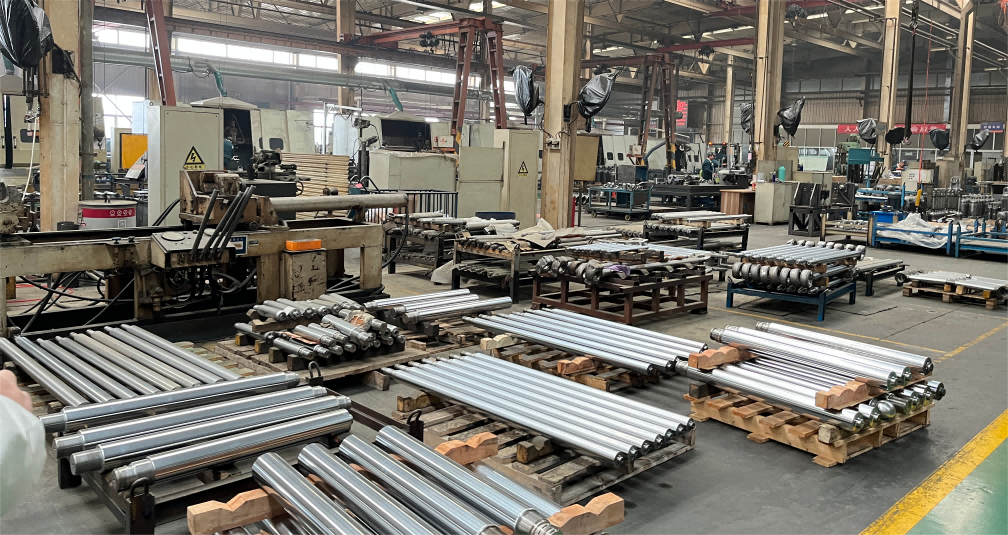
Cylinder barrels and piston rods in production. Architecture — not bore size — is usually the first irreversible decision in a cylinder purchase.
Architecture is the first irreversible decision in a hydraulic cylinder purchase. Once a buyer commits to a single-acting ram, a double-rod design, a telescopic stack, a mill-duty body, an integrated position-sensing package or a stainless corrosion-resistant build, most of the remaining specification work — bore, rod diameter, stroke, seal package, mounting, test criteria — follows from that commitment instead of shaping it.
The choice is also where most procurement risk sits. Industry revenue is concentrated in a small number of configurations: double-acting cylinders accounted for a 71.6% revenue share of the function segment in 2025, welded cylinders held 53.6% of the product segment, and bore sizes up to 150 mm represented 61.6% of the market (Grand View Research, 2025). Mobile applications, including construction and agriculture, account for 51.8% of hydraulic cylinder demand (Grand View Research, 2025). The volume business is therefore standard. The architecture decision is where a project stops being standard — and where a specification either protects the machine or transfers risk to the field.
Apex Hydraulic Co., Ltd. is a hydraulic cylinder and hydraulic power unit manufacturer established in 2009 in Qingdao, Shandong Province, China. The company operates a 50,000 m² facility with 560 employees, a 25-engineer R&D team and an annual output of about 100,000 cylinders, exporting roughly 70% of production to North America, Western Europe, South America, Southeast Asia, the Middle East and Australia. Its range covers custom hydraulic cylinders, standard hydraulic cylinders, hydraulic power units, hydraulic systems, hydraulic scissor hoist kits and hydraulic components for sanitation vehicles, dump trailers, dump trucks, roll-off trucks, agricultural machinery, construction equipment, mining machinery, marine equipment and material handling equipment.
Why architecture is settled before the datasheet
Bore, rod diameter and pressure rating are calculations. Architecture is a constraint. It decides whether hydraulic force is available in one direction or two, how much stroke can be produced from a given closed length, how many sealing interfaces exist, how a rod behaves in compression over a long stroke, where contamination can enter, and whether position feedback is possible at all.
Mounting standards do not resolve this question. ISO 6022:2006 fixes mounting dimensions for 250 bar single-rod cylinders, NFPA/T3.6.7 R3-2009 (R2024) defines square-head industrial cylinder mounting dimensions in North America, and ISO 6020-2:2015 covers 160 bar compact series mounting dimensions. These standards protect interchangeability at the mounting interface. They say nothing about whether a ram, a through-rod or a multi-stage telescopic unit is the correct architecture for the duty.
The six architectures, in buyer language
1. Single-acting ram / plunger
Hydraulic force acts in one direction only; return comes from gravity, the load itself or a spring. Plunger-type designs are the simplest form, with a large effective area and few sealing interfaces. They suit lifting duties where the load reliably returns the rod and where powered retraction is not part of the machine cycle. The trade-off is structural rather than commercial: no powered retraction, an exposed rod or plunger that must be protected from impact and contamination, and orientation dependence. Double-acting designs dominate the market precisely because they remove that return dependency.
2. Double-acting double-rod / through-rod
A piston rod exits both ends of the cylinder. Force is available in both directions, displacement is close to symmetrical because the annular areas are similar, and the second rod support improves behaviour in long-stroke compression. Through-rod designs are also used where two motions must be mechanically tied together. The buyer pays for this in envelope and part count: overall length grows, there are two gland and seal packages instead of one, and both rods are exposed to the working environment. At short strokes with modest force, a single-rod double-acting cylinder is usually simpler and cheaper.
3. Telescopic / multi-stage
Nested stages convert a short closed length into a long stroke. That ratio explains why multi-stage cylinders dominate tipping and lifting duties on dump trucks, dump trailers and comparable bodies, and why the segment generated USD 2,225.1 million in 2024 with a projected 5.9% CAGR (Grand View Research). The cost is mechanical: several seal sets, several stage interfaces and reduced lateral stiffness at full extension, which turns side load and mounting alignment from secondary concerns into primary ones.
Heavy-duty telescopic designs address this through structure and oil-flow optimisation. Apex-published comparison data for its heavy-duty telescopic cylinder for dump truck applications reports up to 25% improved fatigue resistance and a 20% longer operating life against alternatives, together with lower lifecycle cost through reduced downtime and maintenance. These are supplier-reported figures and should be treated as a hypothesis to be validated against the buyer's own duty cycle, not as a specification.
4. Mill-duty
Mill-duty is a duty class, not a mounting standard. These cylinders are built for continuous, high-cycle service in steel mills and heavy industrial plant, with heavier wall sections, robust glands and tolerance for shock and vibration. They are the right answer when the duty cycle, rather than the stroke, is the hardest constraint. They are the wrong answer when the buyer needs a drop-in replacement: mill-duty bodies often carry application-specific mounting geometry, greater mass and longer manufacturing lead times, and they do not correct a load calculation that was wrong to begin with.
5. Position-sensing
A sensing cylinder reports rod position to the machine controller, enabling closed-loop motion, sequence interlocks, end-of-stroke confirmation and automated cycles on tippers, loaders and compaction equipment. The decision is not whether feedback is useful — it usually is — but whether it is designed in. Sensor integration changes cylinder length, rod or piston geometry, cable routing and connector protection, and it introduces a second failure domain alongside the hydraulic circuit. A sensing requirement therefore has to be resolved at drawing stage with the manufacturer's engineering team; it cannot be retrofitted as a catalog option after the architecture is fixed.
6. Stainless and corrosion-resistant construction
Corrosion resistance is a material and surface decision, not a pressure decision. Apex Hydraulic addresses cylinder rod corrosion through precision grinding, hard chrome plating and optional corrosion-resistant coatings for harsh environments, with seal configurations selected according to working pressure, temperature, hydraulic oil type and operating frequency. Stainless bodies or upgraded rod treatments earn their cost in marine equipment, washdown, de-icing and humid coastal duty. They do not raise the pressure rating of the cylinder, and in some sizes a corrosion-resistant material trades strength against alloy steel, so the specification balances section size, coating and cost rather than assuming stainless is strictly better.
Six variables that decide the architecture
The framework works because a small number of variables eliminate most options before a quotation is requested. Each variable should be written down, not discussed.
| Variable | What to fix in writing | What it eliminates |
|---|---|---|
| Stroke and closed length | Required stroke, closed length, dead length at both ends | Telescopic designs where the envelope already allows a single-stage rod |
| Force and pressure | Required force per direction, system pressure, holding requirement | Ram or plunger designs where powered retraction or holding is needed |
| Duty cycle | Cycles per hour, operating hours, shock and vibration profile | Light-duty bodies in continuous or high-shock service |
| Mounting and alignment | Pin or flange geometry, articulation, sources of side load | Architectures that cannot tolerate the available alignment error |
| Environment | Temperature, contamination, washdown, salt, coating requirement | Standard chrome-only rod finishes in marine or washdown duty |
| Position feedback | Whether the controller needs position, and at what resolution | Non-sensing designs where sequence interlocks depend on position |
Matching architecture to application constraints
The same architecture can be correct in one duty and marginal in another. The mapping below reflects the constraint that usually decides the case, not a ranking of designs.
| Application / duty | Architecture that usually fits | Constraint that rules designs out |
|---|---|---|
| Dump truck and dump trailer tipping | Multi-stage telescopic | Side load and mounting alignment, not closed length |
| Refuse collection: front loader, rear loader, roll-off, hook lift, compactor | Heavy-duty welded double-acting, application-specific | Low-cycle light bodies in high-frequency compaction duty |
| Scissor hoist kits | Double-acting, or single-acting where return is by load | Any requirement for powered retraction |
| Agricultural machinery | Double-acting welded or tie-rod, depending on serviceability | Continuous high-shock duty with light-duty sealing |
| Construction and excavator duty | Heavy-duty double-acting | Envelope-constrained long stroke |
| Mining machinery | Heavy-duty double-acting; mill-duty class in plant | Standard-duty sealing in abrasive environments |
| Marine equipment | Corrosion-resistant rod treatment or stainless construction | Standard chrome-only rods in salt exposure |
| Material handling with sequenced motion | Double-acting with position feedback | Manual sequencing where interlocks are required |
In refuse duty specifically, Apex-published comparison data for its refuse truck cylinders reports up to 30% longer service life, 20% lower maintenance frequency and 15% improved sealing durability against conventional refuse truck cylinders, attributing the difference to customized engineering design, heavy-duty welded construction, an optimized sealing system and application-specific design for high-frequency collection operations. Read claims of this type as an acceptance-testing agenda: they define what the buyer should measure, not what the buyer should assume.
Shortlist comparison for a decision meeting
| Architecture | Force direction | Stroke-to-length | Duty tolerance | Environment fit | Feedback | Main constraint |
|---|---|---|---|---|---|---|
| Single-acting ram / plunger | One | Moderate | Light to medium | Needs rod protection | Rare | No powered retraction |
| Double-acting single-rod | Two | Moderate | Medium to heavy | Good with coating choice | Yes | Rod buckling at long stroke |
| Double-rod / through-rod | Two, near-symmetrical | Moderate | Medium to heavy | Two rods to protect | Yes | Envelope length, two seal sets |
| Telescopic / multi-stage | One or two | High | Medium to heavy | Good with correct sealing | Possible, more complex | Lateral stiffness at extension |
| Mill-duty | Typically two | Moderate | Very high | Plant environment | Yes | Mass, cost, mounting specificity |
| Position-sensing | Depends on base design | Depends on base design | Depends on base design | Connector protection | Yes, by definition | Design-stage integration, calibration |
| Stainless / corrosion-resistant | Depends on base design | Depends on base design | Depends on base design | Marine, washdown | Yes if specified | Material cost, strength per section |
Turning the architecture decision into purchasing terms
The architecture decision only becomes real when it appears in a drawing, a specification and an acceptance clause. Three commercial terms matter most at this stage.
- Design ownership and OEM/ODM scope. Apex Hydraulic provides OEM and ODM manufacturing and complete customization covering product design, engineering drawings, prototype development, testing, manufacturing and quality inspection. The buyer should confirm who owns the drawing, who signs the dimensional report, and what happens to tooling and inspection records when the program ends. OEM and ODM are different contracts, not different labels.
- Minimum order quantity. Standard products are available from one piece; OEM and custom programs are negotiable. A custom architecture is not a stock item, so MOQ is a negotiation about setup, tooling and inspection time rather than a catalog rule.
- Lead time. Standard products are quoted at 7–20 days; customized cylinders at 25–45 days. The customized window covers drawing review, prototype development where required and testing, which is why compressing it usually compresses validation rather than production.
A quotation that lists only price and lead time is incomplete. The purchase order should carry test pressure and duration, leakage acceptance, the list of critical dimensions, weld inspection requirements, plating or coating specification, traceability expectations and the packaging standard. Each of these corresponds to an actual control step in production, which is what makes them enforceable.
Acceptance criteria and the quality-control steps behind them
Apex Hydraulic applies standardized quality control procedures to every hydraulic cylinder and hydraulic power unit to ensure reliable performance in demanding industrial and mobile hydraulic applications, with compliance risk managed through those procedures and through product traceability. In practice, the control steps that a buyer can write into acceptance criteria are the following.
| Control step | What it verifies | Which architectures depend on it most |
|---|---|---|
| Incoming material inspection and supplier qualification | Raw material quality before production begins | Mill-duty and high-pressure bodies |
| Weld inspection using qualified procedures, certified welders, visual inspection and dimensional verification before assembly | Structural integrity of critical welded components | Welded, mill-duty and telescopic bodies |
| CNC machining and precision dimensional inspection of critical dimensions against the customer drawing | Fit and interchangeability at the mounting and rod end | All designs; decisive for double-rod and sensing cylinders |
| Honing, surface finish control and application-specific seal selection by pressure, temperature, oil type and operating frequency | Seal life and leakage behaviour | Telescopic and high-cycle double-acting designs |
| Precision grinding, hard chrome plating and optional corrosion-resistant coatings on piston rods | Rod corrosion and wear resistance | Marine, washdown and outdoor mobile duty |
| 100% pressure and leakage testing before shipment | Structural integrity and sealing performance under specified pressure | All designs |
| Production batch and inspection records | Traceability of product and inspection results | Fleet programs and repeat orders |
| Anti-rust treatment, protective caps and export-grade packaging | Condition on arrival | Long-sea-freight and multi-leg shipments |
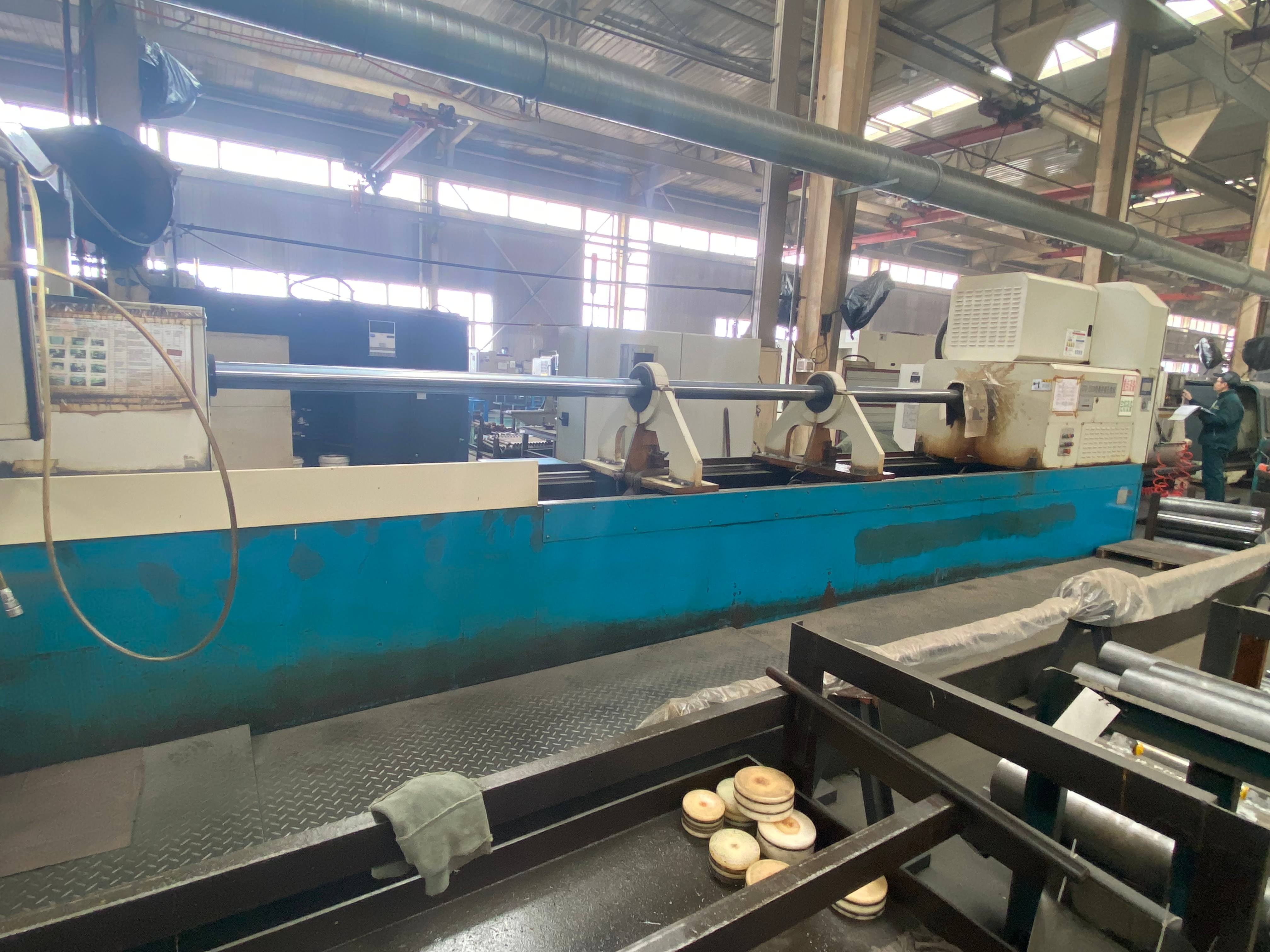
Piston rod preparation: grinding and plating quality determine corrosion life in marine and washdown duty.
The buyer's task is to convert these steps into hold points. A pressure test certificate is only useful if test pressure and duration were agreed before production; a dimensional report is only useful if it lists the dimensions the buyer actually controls — pin bore, rod-end thread, stroke, closed length and port orientation. Where a supplier cannot state which dimensions are inspected, the acceptance criterion is effectively missing.
Where this framework breaks
A decision framework is only credible if its limits are stated. These are the points where the sequence above stops helping.
- No architecture compensates for a wrong load calculation. Under-sizing bore or rod diameter produces the same failure modes — rod buckling, seal extrusion, fatigue cracking — regardless of configuration.
- Telescopic gains are conditional. The closed-length advantage is paid for with additional seal interfaces and reduced lateral stiffness. Where the mounting envelope already permits a single-stage rod, a double-acting single-rod cylinder can be more durable across life and simpler to maintain.
- Mill-duty is not a mounting standard. Heavier construction may not match an ISO 6022 or NFPA footprint without adaptation, and the buyer should confirm pin or flange geometry at drawing stage.
- Position feedback is only as good as the control system that consumes it. It adds length, connectors and a calibration step, and it fails independently of the hydraulic circuit.
- Corrosion resistance does not increase pressure rating. In some sizes, the corrosion-resistant material trades strength against alloy steel, so section size and coating must be reviewed together.
- Supplier-reported comparisons describe the supplier's own test conditions. The telescopic and refuse-duty figures cited in this article are a starting hypothesis for acceptance testing, not a substitute for it.
Market context behind the decision
The global hydraulic cylinder market was valued at USD 15.7 billion in 2024 and is projected to reach USD 24.7 billion by 2034 (Global Market Insights). Estimates diverge by scope: Grand View Research places the 2025 market at USD 16.9 billion, while Market Research Future reports USD 13.38 billion for 2024. The spread reflects whether related hydraulic systems are counted, so the figures are useful for direction rather than for procurement budgeting.
Geography matters to lead-time planning. Asia Pacific commanded a 40.5% revenue share in 2025, led by China and India (Grand View Research), and China recorded export value growth of 11.5% CAGR for hydraulic cylinders and systems in recent years (IndexBox). The U.S. market is projected to reach USD 3.31 billion by 2032 on infrastructure modernisation (Fortune Business Insights). For a buyer sourcing from Asia into North America or Europe, the practical question is not capacity availability but inspection capacity at the point of shipment.
Segment growth supports the framework's emphasis on architecture. The telescopic segment generated USD 2,225.1 million in 2024 with a 5.9% CAGR (Grand View Research); industrial manufacturing is anticipated to be the fastest-growing end-user segment at a 6.12% CAGR through 2031 (Mordor Intelligence); and customization and OEM services are identified as a growing segment as industries shift toward specialised automation machinery (Market Research Future). Competitively, Caterpillar Inc. held over 8% of the global hydraulic cylinder market in 2024 (Global Market Insights), Parker Hannifin and Bosch Rexroth are identified as top-tier leaders in industrial hydraulics (Fortune Business Insights), and Wipro Infrastructure Engineering is named among the top global players specialising in cylinders for heavy-duty mobile equipment.
One pricing benchmark is worth carrying into negotiations with care: the average export price for hydraulic cylinders and systems stood at approximately USD 382 per unit in 2024 (IndexBox). That is a blended figure across all types and sizes. A mill-duty body or a sensing cylinder is not comparable to it, and using it as a target price for a custom architecture usually signals that the specification has not yet been understood.
Future outlook
Three directions are visible from the buyer's side of the table. First, position feedback is moving from specialty request to specified requirement as mobile equipment adds automated cycles and sequence interlocks, which pushes sensor decisions into the drawing stage rather than the accessory list. Second, corrosion and coating specifications are tightening in coastal, marine and washdown applications, where rod preparation — grinding, hard chrome plating and optional coatings — matters more than nominal cylinder rating. Third, lifecycle cost is replacing unit price as the comparison metric in fleet and OEM programs, which favours architectures that reduce seal replacement frequency and downtime even when the initial unit cost is higher.
None of this changes the underlying rule. The architecture is chosen first, the specification follows, and the acceptance criteria — pressure testing, leakage testing, dimensional inspection and weld inspection — are what convert the choice into a verifiable purchase.
FAQ
Single-acting or double-acting: which should be specified?
Specify single-acting when hydraulic force is needed in one direction only and the load, gravity or a spring returns the rod. Specify double-acting when the machine needs powered motion or holding in both directions. Double-acting cylinders held a 71.6% revenue share of the function segment in 2025 because they remove the return dependency; single-acting units remain appropriate for lifting duties where load return is reliable.
When is a telescopic cylinder the wrong choice?
When the mounting envelope already allows a single-stage rod, when side load cannot be controlled by mounting and guidance, or when the duty cycle is severe enough that additional stage interfaces add maintenance points without a compensating benefit. Telescopic designs earn their place when closed length is the binding constraint.
Does a mill-duty cylinder fit standard mounting dimensions?
Not by default. Mill-duty is a duty class, not a mounting standard. ISO 6022:2006, NFPA/T3.6.7 R3-2009 (R2024) and ISO 6020-2:2015 define mounting dimensions for specific cylinder series, while a mill-duty body may use application-specific geometry. Pin or flange dimensions require drawing-level confirmation.
What should acceptance criteria contain for a custom cylinder?
At minimum: test pressure and duration, leakage acceptance, the list of critical dimensions checked against the customer drawing, weld inspection requirements, plating or coating specification, traceability of production batch and inspection records, and the packaging standard. Each item corresponds to a documented control step, including 100% pressure and leakage testing before shipment.
What MOQ and lead time apply to standard versus custom orders?
Standard products are available from one piece with 7–20 day lead times. OEM and custom programs are negotiable on MOQ, with 25–45 day lead times that include drawing review, prototype development where required and testing.
Does position feedback change the cylinder architecture?
Yes. Sensing changes cylinder length, rod or piston geometry and cable and connector routing, and it adds a calibration step at commissioning. It has to be resolved at drawing stage rather than selected after the architecture is fixed.
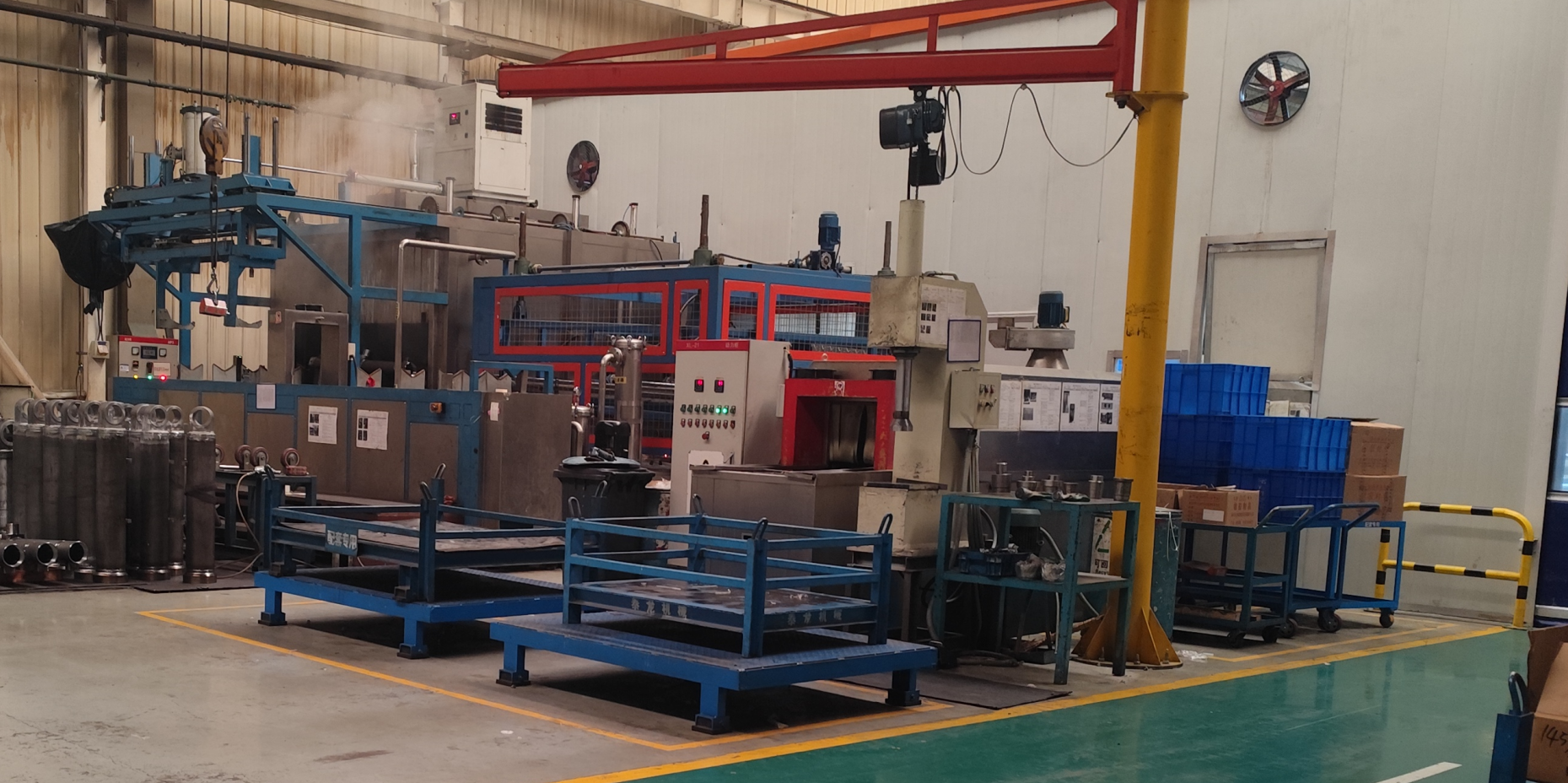
Component cleaning before assembly: cleanliness control protects the sealing system that the architecture decision depends on.
Apex Hydraulic publishes its main product catalog as a downloadable PDF for buyers assembling a shortlist: APEX Hydraulic Product Catalog (Main Products). Company information is available at www.hydraulicapex.com.
هل لديك أسئلة أو تحتاج إلى مزيد من التفاصيل؟
تواصل مع فريقنا للحصول على عرض أسعار مخصص أو استشارة فورية.
طلب عرض أسعار
املأ النموذج أدناه وسيتواصل معك فريقنا بعرض مقترح مخصص.
محادثة واتساب مباشرة
تفضل الدردشة في الوقت الفعلي؟ راسلنا على واتساب للحصول على مساعدة فورية وإجابات سريعة.
- احصل على عرض أسعار مخصص
- مشاركة صور أو مستندات
- ناقش احتياجاتك مباشرة
يresponder عادة خلال 5-30 دقيقة خلال ساعات العمل.