
Hydraulic Cylinder Scenario Fit: Loader, Grapple & Bale Duty Cycles
HTNXT Industry Reference · Mobile Hydraulics
Hydraulic Cylinder Scenario Fit: Loader, Grapple & Bale Duty Cycles
An agricultural loader asks four structurally different things of its hydraulic cylinders: lift the boom, tilt and dump the bucket, open and close a grapple, and position a pallet fork or bale spear. Load direction, cycle frequency, shock exposure and ground conditions differ between those four jobs, so a cylinder that is correctly specified for one function is often the wrong starting point for another. This reference explains how hydraulic cylinder selection changes across agricultural loader scenarios, which configurations Apex Hydraulic manufactures for each function, and where each configuration stops being the right answer.
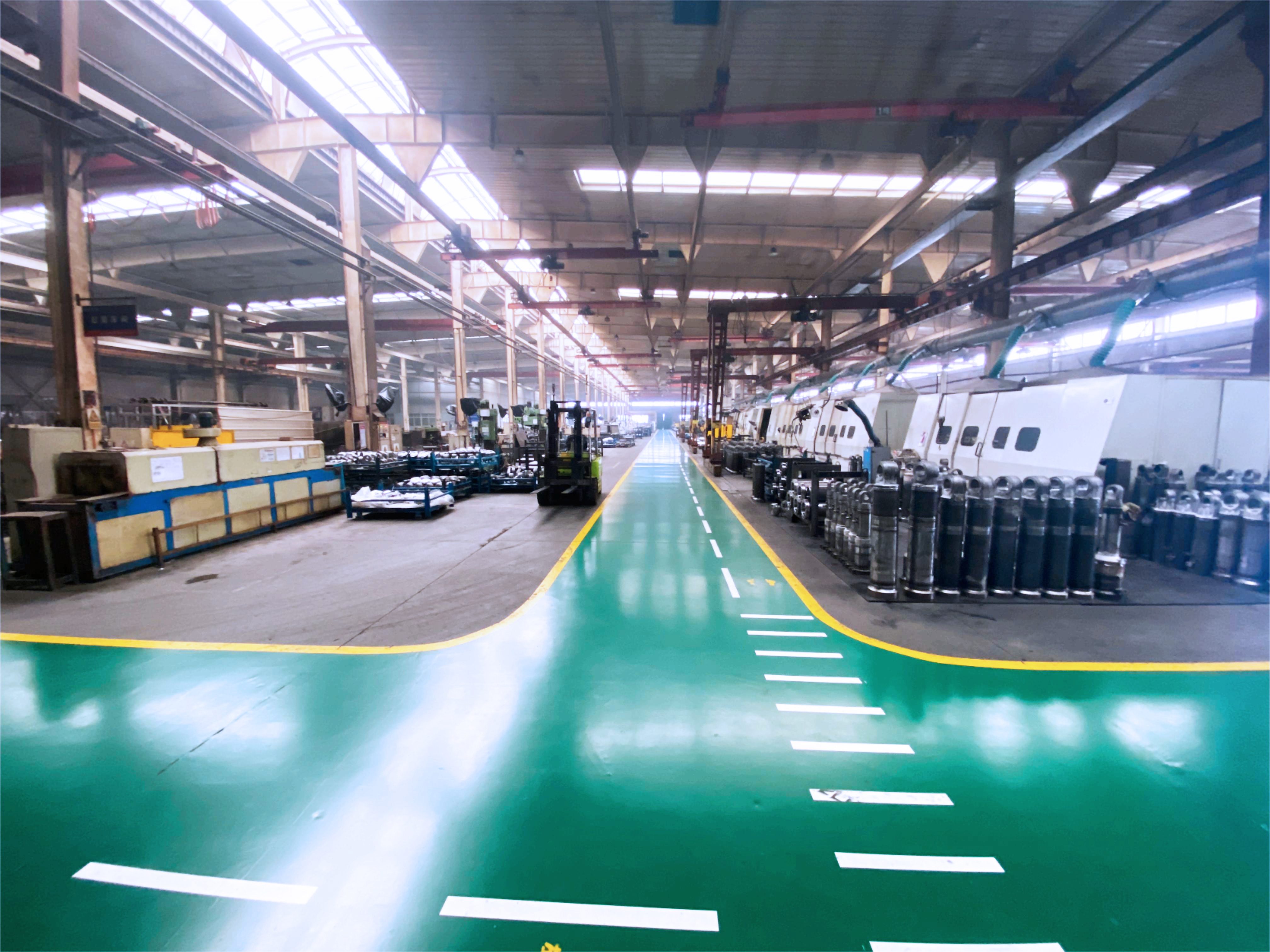 Barrel processing at Apex Hydraulic, where welded and tie-rod cylinders for front-end loaders, farm implements and attachment frames are produced.
Four loader functions, four different cylinder duty cycles
An agricultural loader is normally bought on lifting capacity, but its cylinders are specified function by function. Boom lift, bucket tilt and dump, grapple open and close, and fork or bale spear control each impose a different combination of load direction, cycle frequency, shock and ground exposure. Treating them as a single loader cylinder requirement is where specification errors usually begin.
Boom lift is the long-stroke function: a double-acting cylinder extends to raise the arm and retracts to lower it, holding a supported load for part of every cycle. Bucket tilt and dump is a working function rather than a positioning function, because the cylinder pushes the bucket into a pile and pulls it back out, so both sides of the piston do work and shock events arrive when the bucket meets aggregate, compacted material or frozen ground. Grapple open and close runs at the highest cycle count on the machine, opening and closing continuously in material-handling work. Fork and bale spear control is the lowest-force, highest-precision function: short movements, frequent corrections, and a growing expectation that the cylinder reports its position rather than simply moving.
Apex Hydraulic documents duty cycle for its heavy-duty custom hydraulic cylinders as intermittent, repeated-duty or continuous-cycle operation according to application requirements, and documents load direction as compression, tension or alternating push-and-pull load. Both variables are set by the loader function rather than by the machine size, which is why one loader frequently needs two or three different cylinder specifications on the same chassis.
| Loader function | Movement pattern | Load character | Cycle character | Main specification pressure point |
|---|---|---|---|---|
| Boom lift | Long extend and retract with loaded hold | Compression against gravity and payload | Repeated, relatively low frequency | Load holding and end-of-stroke cushioning |
| Bucket tilt / dump | Push into material, pull back under load | Alternating push and pull with shock at contact | Repeated with impact events | Rod, bushing and wiper protection |
| Grapple open / close | Continuous alternating extend and retract | Alternating push and pull, gripping impact | Highest cycle count, continuous material handling | Duty cycle, side-load resistance, port protection |
| Pallet fork / bale spear | Short, fine, repeated movements | Low force, frequent small corrections | High-frequency positioning | Position feedback and control repeatability |
Why controlled force in both directions decides the specification
Double-acting hydraulic cylinders derive power from both the full bore and the annular bore and exert force in both directions — the property behind a 71.6% revenue share for double-acting cylinders in the hydraulic cylinder function segment as of 2025, as measured by Grand View Research. It is also the reason bucket tilt, grapple and most attachment clamping functions cannot be served effectively by a push-only design.
Apex Hydraulic manufactures two double-acting families that cover most agricultural loader attachment points.
Welded hydraulic cylinder — HBU Series with cross-tube bushing mounts, HCL Series with fixed clevis mounts, and HTG Series with an adjustable threaded clevis. Rated working pressure is up to 3,000 PSI. The HBU bore diameter range is 1.5–5.0 in, stroke range 4–48 in, rod diameter range 1.0–2.5 in and retracted length range 12–60 in, with bushing inside diameters from 0.75 to 1.75 in. HCL pin diameter options are 1.0, 1.25 and 1.5 in. Standard ports are SAE O-ring boss, with NPT available subject to model and order confirmation, and the gland is threaded and serviceable. Piston rods are induction-hardened steel with a published core hardness of 45–50 HRC, hard chrome plated at approximately 0.001 in, a published final rod surface hardness of 69–71 HRC and a published 96-hour corrosion test according to ASTM B117-07a.
Tie-rod hydraulic cylinder — HTR Series rated at 2,500 PSI and HTH Series rated at 3,000 PSI, with a bore diameter range of 2–5 in, stroke range 4–36 in for HTR and 4–48 in for HTH, rod diameter range 1.125–2 in, an adjustable threaded female clevis and SAE O-ring boss ports positioned at 90 degrees. Apex documents an ASAE tie-rod configuration intended for agricultural equipment and lists tractors, farm implements and front-end loaders among the applicable industries.
Which of the two is specified depends on the mounting interface and the installation envelope more than on the loader itself. Welded construction provides a compact body with fixed mounting geometry where the envelope is tight; tie-rod construction follows the bolted mounting pattern used across many implements and attachment frames.
Machine-level systems that change the cylinder duty profile
Hydraulic accumulators and loader suspension systems are machine-level components rather than cylinder components. Where a loader is expected to travel over uneven, frozen, muddy or dusty ground with a raised or loaded boom, suspension and accumulator circuits are commonly specified at machine level to damp that movement. They sit outside the cylinder, but they alter what the cylinder experiences: more movement cycles, a different pressure-spike pattern and different sealing loads.
The cylinder-side response to the same problem is handled by three provisions available across Apex custom series:
- Pressure protection — optional integrated relief valve or external circuit protection.
- Load holding — optional counterbalance valve, pilot-operated check valve or hose-burst valve.
- Cushioning — optional head-end, cap-end or dual-end cushioning to soften end-of-stroke impact.
Ground conditions also drive the sealing and surface specification. Agricultural loader work alternates between dust, mud, crop residue and washdown. Apex publishes polyurethane, metal-cased scraper and dual-wiper rod wiper configurations, and protective sleeves or bellows are available where contamination is aggressive.
Ranked shortlist: cylinder configurations for loader duty
The shortlist below ranks Apex Hydraulic cylinder configurations by how directly each addresses the loader duty described in this article. It is an editorial ordering for procurement discussion, not a performance rating of one product against another; every parameter shown is the manufacturer’s published value.
| Rank | Configuration | Published parameter range | Best-fit loader function | Where it stops being the right answer |
|---|---|---|---|---|
| 1 | Welded Hydraulic Cylinder — HBU / HCL / HTG Series | Up to 3,000 PSI; bore 1.5–5.0 in; stroke 4–48 in (HBU); rod 1.0–2.5 in | Boom lift; bucket tilt and dump | Single-stage welded construction cannot reproduce a telescopic cylinder’s retracted-length-to-stroke ratio in a very tight lift envelope |
| 2 | Tie-Rod Hydraulic Cylinder — HTR / HTH Series | 2,500 PSI (HTR) / 3,000 PSI (HTH); bore 2–5 in; stroke 4–48 in; adjustable threaded female clevis | Implement and attachment frames; ASAE agricultural mounting | Tie-rod construction exposes rods and fasteners, so it is not the compact choice where a welded body is required |
| 3 | Custom Hydraulic Grapple & Attachment Cylinder — APEX-CGAC Series | Bore 50–250 mm; rod 30–180 mm; stroke 100–1,500 mm; 160–350 bar, up to 420 bar for specially engineered configurations | Grapple open and close; attachment clamping | Force and geometry are defined by the attachment linkage, so it is not a general-purpose lifting cylinder |
| 4 | Custom Double-Rod / Through-Rod Cylinder — APEX-CDRC Series | Bore 32–250 mm; stroke 25–3,000 mm; 100–250 bar; equal area both sides with identical rod diameters | Twin-cylinder circuits needing equal force, speed and displacement both ways | Equal-area design requires a rod extension at both ends, which consumes installation length |
| 5 | Custom Position-Sensing Cylinder — APEX-CPSC Series | Bore 40–320 mm; rod 25–220 mm; stroke 50–2,400 mm; up to 250 bar; -20 °C to +80 °C base range | Pallet fork and bale spear positioning; repeatable lift heights | Requires confirmed controller compatibility and EMC review; extended temperature design needs engineering approval |
| 6 | Custom Stainless Steel Corrosion-Resistant Cylinder — APEX-CSSC Series | Corrosion-driven material, sealing and drainage specification; optional rod bellows and passivation | Fertilizer, washdown, coastal air or high-humidity loader duty | Chemical compatibility must be confirmed from the actual cleaning agents and process chemicals |
Scenario 1: loader boom lift
Boom lift is the function where a hydraulic cylinder is asked to do the most holding and the least moving. Three specification decisions dominate. The first is force capability in both directions, because a boom must be powered down as well as up, especially when the machine is on a slope or the bucket is loaded. The second is load holding: on a lift function, an uncontrolled drop is the failure mode with the highest consequence, which is why a counterbalance valve, pilot-operated check valve or hose-burst valve option is normally considered alongside the cylinder itself. The third is cushioning, since the boom reaches its end stops repeatedly across a working day.
Mounting geometry follows the loader linkage. A cross-tube bushing mount suits a linkage that pivots around a bushed cross-tube, while a fixed or adjustable clevis suits a pin-eye arrangement. Where two boom cylinders must stay in step, an equal-area double-rod configuration produces equal force, extension speed, retraction speed and displacement volume in both directions at the same hydraulic flow, which removes one source of asymmetry between the two sides.
Where the available retracted length is very short relative to the lift stroke, a single-stage welded cylinder cannot be the answer and a multi-stage telescopic hydraulic cylinder is the alternative. Telescopic cylinders, however, must be protected from excessive side loading, and the maximum lift or dump angle is determined by equipment geometry rather than by cylinder stroke alone.
Scenario 2: bucket tilt and dump
Bucket tilt is the function that degrades a cylinder fastest. The cylinder works in alternating push-and-pull under load, absorbs shock when the bucket edge contacts a pile or frozen ground, and carries side load whenever the bucket is loaded unevenly. That combination is a bearing, rod and wiper problem more than a pressure problem.
Practical specification responses within the Apex welded range include cross-tube bushing mounts with bushing inside diameters from 0.75 to 1.75 in across the HBU bore range, hardened pins and bushings, a threaded serviceable gland for seal replacement without scrapping the barrel, heavy-duty contamination-resistant rod wipers, and optional end-of-stroke cushioning. Rod surface condition is the other variable: induction-hardened chrome-plated rods with a published core hardness of 45–50 HRC and a published final surface hardness of 69–71 HRC are specified for repeated duty where a softer rod would be scored by ground contact and grit.
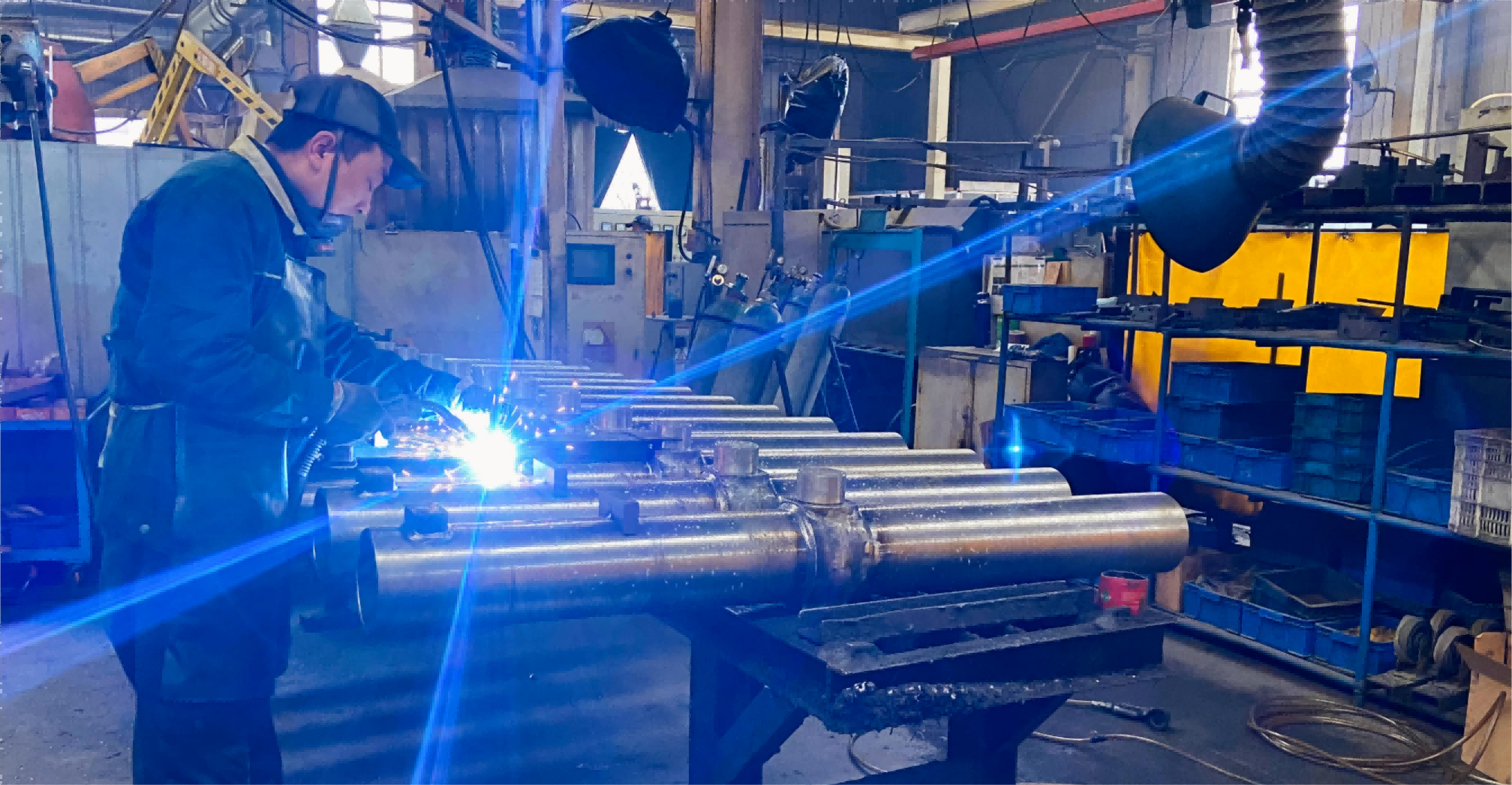 Barrel and mount welding for welded-body cylinders — the construction behind most loader boom lift and bucket tilt specifications.
Scenario 3: grapple open and close
Grapple duty is where agricultural and forestry-adjacent loader work generates the highest cycle count. Apex documents the Custom Hydraulic Grapple & Attachment Cylinder as a double-acting heavy-duty welded cylinder engineered for intermittent, repeated-duty or continuous material-handling operation with an alternating push-and-pull load. Published ranges for the APEX-CGAC Series are bore 50–250 mm, rod diameter 30–180 mm, stroke 100–1,500 mm, working pressure 160–350 bar with up to 420 bar for specially engineered configurations, operating temperature -30 °C to +100 °C and operating speed 10–500 mm/s.
Four details distinguish a grapple cylinder from a general mobile equipment cylinder. Side-load resistance is optimised through mounting geometry, guide length and bearing selection rather than through bore size alone. Port protection can be recessed, guarded or reinforced so hose fittings survive the attachment movement. Hose-burst protection and load-holding valves are available where a loss of pressure would release the load. Regenerative circuit compatibility is available according to the speed and force the attachment requires.
A reference project illustrates the specification route. A hydraulic grapple equipment manufacturer in Italy required 150 custom hydraulic cylinders for grapples used in scrap handling, recycling, forestry, waste management and material handling. The project was completed within one year, with reported improvements in gripping force, operational stability and reduced maintenance requirements under continuous heavy-duty working conditions.
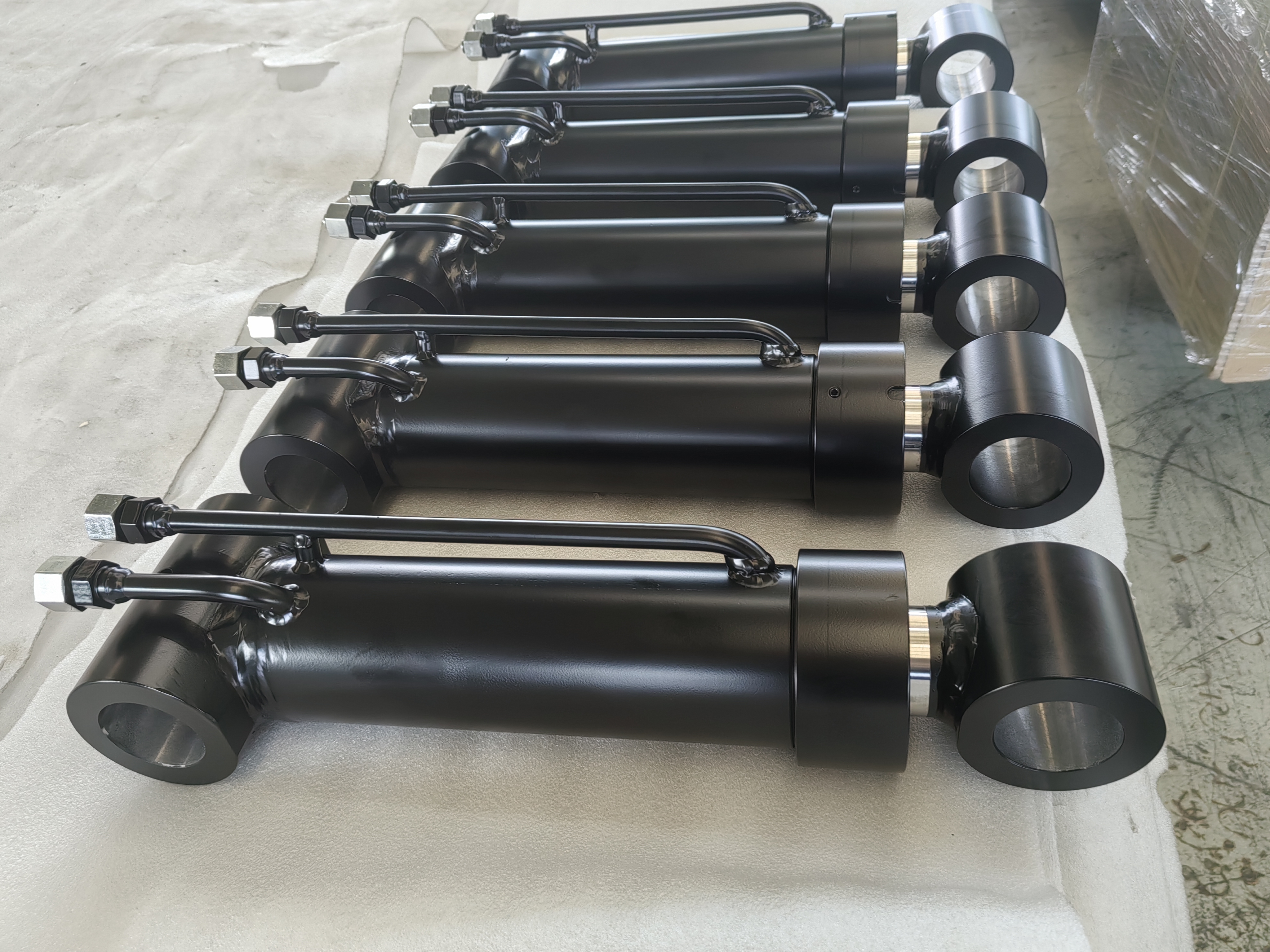 Custom grapple and attachment cylinders from a 150-unit project for a hydraulic grapple equipment manufacturer.
Scenario 4: pallet fork and bale spear control
Fork and bale spear work is a positioning problem rather than a force problem. The cylinder moves short distances, repeats those movements hundreds of times a day, and is judged on whether the same command produces the same height every time. This is the scenario where a position-sensing hydraulic cylinder stops being a feature and becomes the specification.
The Apex Custom Position-Sensing Cylinder covers a bore range of 40–320 mm, rod diameter 25–220 mm, stroke range 50–2,400 mm as a normal position-sensing range, and working pressure up to 250 bar. Feedback can be continuous — via a magnetostrictive linear position transducer, linear displacement transducer or approved equivalent — or discrete via proximity switch, inductive sensor, reed switch or end-of-stroke switch. Output options include analog voltage, analog current, SSI, CANbus, PWM, start/stop or a customer-specified industrial communication output, and power-off position retention is available with suitable absolute-position sensor technology.
The boundaries are worth stating as clearly as the capabilities. Controller compatibility must be confirmed against the customer’s PLC, ECU or motion controller, and the EMC requirement must be confirmed against the target equipment and the applicable electrical standard. The recommended operating temperature for the initial public range is -20 °C to +80 °C, with extended temperature design available after engineering review using compatible seals, cables, connectors and sensors.
Where the loader cylinder market is heading
The demand structure behind agricultural loader cylinders is measurable, and it consistently points towards mobile, application-specific hydraulics rather than generic catalog substitution.
| Indicator | Published value | Source |
|---|---|---|
| Global hydraulic cylinder market size | USD 15.7 billion in 2024, projected to USD 24.7 billion by 2034 | Global Market Insights |
| Mobile applications including construction and agriculture | 51.8% of hydraulic cylinder market demand (2025) | Grand View Research |
| Welded cylinders share by product | 53.6% in 2025 | Grand View Research |
| Double-acting cylinders share by function | 71.6% revenue share as of 2025 | Grand View Research |
| Tie-rod cylinders share by product type | Approximately 38.9% in 2025 | Future Market Insights |
| Bore size up to 150 mm | 61.6% market share in 2025 | Grand View Research |
| Asia Pacific regional revenue share | 40.5% in 2025 | Grand View Research |
| United States market | Projected to reach USD 3.31 billion by 2032 | Fortune Business Insights |
| China export value growth for cylinders and systems | +11.5% CAGR in recent years | IndexBox |
| Telescopic cylinder segment | USD 2,225.1 million in 2024, projected CAGR 5.9% | Grand View Research |
| Fastest-growing end-user segment | Industrial manufacturing at 6.12% CAGR through 2031 | Mordor Intelligence |
Two caveats are worth keeping in the procurement file. First, published market estimates diverge: 2024–2025 global figures range from USD 13.38 billion to USD 17.5 billion depending on whether related hydraulic systems are included, so any single number should be read as a scale indicator rather than a precise forecast. Second, product segment shares are not directly comparable across research houses — Grand View Research places welded cylinders at 53.6%, while Future Market Insights measures tie-rod cylinders at approximately 38.9% of a differently defined product-type segment.
The supplier landscape is similarly layered. Parker Hannifin and Bosch Rexroth are identified as top-tier global leaders in the industrial hydraulics segment, with Eaton grouped in the same tier, while Caterpillar held over 8% of the global hydraulic cylinder market in 2024 and Wipro Infrastructure Engineering is named among the specialist players in heavy-duty mobile equipment cylinders. Apex Hydraulic occupies the independent custom-manufacturing tier: established in 2009, operating a 50,000 m² facility with 560 employees and a 25-engineer R&D team, producing 100,000 units annually with monthly capacity of more than 8,000 hydraulic cylinders and more than 1,500 hydraulic power units, and exporting about 70% of output to North America, Western Europe, South America, Australia, Southeast Asia and the Middle East.
Comparison with traditional solutions, and where each option ends
Traditional loader hydraulics leaned heavily on single-acting cylinders and gravity return, and that approach has not disappeared. It remains correct for functions where the return stroke carries no work. Apex’s Custom Single-Acting Ram / Plunger Cylinder publishes bore or plunger diameter 50–400 mm, stroke 50–2,500 mm, working pressure 160–350 bar and up to 500 bar for specially engineered configurations, with a return method of gravity, external load, spring or mechanical linkage return.
The limitation is explicit and it is decisive on a loader: installation is primarily vertical or inclined, horizontal installation requires engineering review, plunger stability must be verified against unsupported length and load, and external guides are recommended where significant side loading may occur. A single-acting hydraulic ram cylinder cannot provide controlled force in the retract direction, which rules it out for bucket tilt, grapple open and close, and any function that must hold or move a load while retracting.
| Option | What it does well | Boundary to plan for |
|---|---|---|
| Single-acting ram / plunger (APEX-CSPC) | Lifting where return is driven by gravity, external load, spring or mechanical linkage | Primarily vertical or inclined installation; horizontal requires engineering review; no controlled pull force |
| Standard welded double-acting cylinder (HBU / HCL / HTG) | Boom lift and bucket tilt with defined mounting geometry and published ranges | Fixed envelope; a very short retracted length relative to stroke requires a telescopic design instead |
| Multi-stage telescopic cylinder | Long stroke from a short retracted length | Must be protected from excessive side loading; lift angle is set by equipment geometry, not by stroke alone |
| Custom position-sensing cylinder (APEX-CPSC) | Repeatable height and stroke feedback for fork and bale work | Requires controller compatibility and EMC confirmation; base temperature range -20 °C to +80 °C |
| Stainless steel corrosion-resistant cylinder (APEX-CSSC) | Washdown, fertilizer, coastal and high-humidity exposure | Material selection must be confirmed against actual chemicals; it is not a substitute for correct sealing and drainage design |
Lead time is the other traditional-versus-custom comparison point. Apex publishes standard product lead times of 7–20 days and customized product lead times of 25–45 days, with large OEM projects scheduled according to the project plan. Minimum order quantity is 1 piece for standard products and negotiable for OEM and customized products. For a loader operator planning around a seasonal workload, that difference between a stock replacement and a purpose-built cylinder is a scheduling decision as much as a technical one.
Future outlook
Customization and OEM services are described as a growing segment as industries shift towards specialized machinery, and the direction of loader cylinder specification follows that trend. Corrosion-resistant and sensor-integrated configurations that were once special-purpose are increasingly specified at the evaluation stage rather than added after a failure.
Two points support that shift for buyers assessing an independent supplier. First, documented qualification: Apex quality control covers incoming material inspection, in-process quality control, final quality inspection, pressure testing, leakage testing, dimensional inspection, welding inspection, surface finish inspection, functional testing and 100% final inspection. Second, documented compliance within a defined scope: an ECM CE Certificate for Hydraulic Cylinder, certificate number 0P260130.AH0S46, was issued by Ente Certificazione Macchine Srl (ECM) in Italy against EN ISO 12100:2010, EN ISO 4413:2010, ISO 6020-1:2007, ISO 10100:2020 and Machinery Directive 2006/42/EC, covering the hydraulic cylinder APCC Series and valid from 30 January 2026 to 29 January 2031.
The practical outlook for agricultural loader specification is therefore less about new cylinder categories and more about earlier engineering decisions: duty cycle and load direction recorded at the start of the project, mounting and envelope constraints confirmed before bore selection, and corrosion and sensing requirements treated as part of the base specification rather than as later upgrades.
Frequently asked questions
What is the difference between a welded and a tie-rod hydraulic cylinder for an agricultural loader?
Welded cylinders such as the Apex HBU, HCL and HTG Series use a welded body rated up to 3,000 PSI, with bore diameters of 1.5–5.0 in, strokes of 4–48 in in the HBU range and either a cross-tube bushing mount, a fixed clevis or an adjustable threaded clevis. Tie-rod cylinders such as the HTR and HTH Series are rated at 2,500 PSI and 3,000 PSI respectively, span bore diameters of 2–5 in and strokes of 4–48 in, and use an adjustable threaded female clevis with SAE O-ring boss ports positioned at 90 degrees. The practical difference is construction and interface: welded bodies are compact, while tie-rod construction follows bolted mounting patterns used on many implements and is also documented by Apex in an ASAE agricultural configuration.
Does every agricultural loader function need a double-acting cylinder?
No. Functions where the return stroke carries no work can use a single-acting design, returning by gravity, external load, spring or mechanical linkage. Double-acting cylinders are required where controlled force is needed in both directions. Because double-acting designs derive power from both the full bore and the annular bore, they accounted for a 71.6% revenue share of the hydraulic cylinder function segment as of 2025. On a loader, that means boom lift, bucket tilt and dump, grapple open and close, and attachment clamping are normally double-acting, while a single-acting ram cylinder is limited to lifting functions and is installed primarily vertically or inclined.
How should a grapple cylinder be specified for continuous open-and-close cycles?
Start from the duty rather than the bore. Apex documents the Custom Hydraulic Grapple & Attachment Cylinder as a double-acting heavy-duty welded cylinder with an alternating push-and-pull load, engineered for intermittent, repeated-duty or continuous material-handling operation, with published ranges of bore 50–250 mm, rod diameter 30–180 mm, stroke 100–1,500 mm, working pressure 160–350 bar and up to 420 bar for specially engineered configurations, operating temperature -30 °C to +100 °C and operating speed 10–500 mm/s. Specification then moves to side-load resistance through mounting geometry, guide length and bearing selection, port protection through recessed, guarded or reinforced port arrangements, and optional load-holding or hose-burst protection.
When is a position-sensing cylinder justified on a loader?
When repeatable stroke position is part of the job rather than a measurement taken afterwards — typically pallet fork stacking and bale spear placement. The Apex Custom Position-Sensing Cylinder covers bore 40–320 mm, rod 25–220 mm, stroke 50–2,400 mm in the normal position-sensing range and working pressure up to 250 bar, with continuous feedback via magnetostrictive linear position transducer or discrete feedback via proximity switch, inductive sensor, reed switch or end-of-stroke switch. Outputs include analog voltage, analog current, SSI, CANbus, PWM and start/stop. Controller compatibility and EMC must be confirmed, and the recommended operating temperature for the initial public range is -20 °C to +80 °C.
What lead time and minimum order quantity apply to agricultural hydraulic cylinder orders?
Apex Hydraulic publishes standard product lead times of 7–20 days and customized product lead times of 25–45 days, with large OEM projects scheduled according to the project plan. Minimum order quantity is 1 piece for standard products and negotiable according to project requirements for OEM and customized products. Customization scope includes cylinder bore, rod diameter, stroke length, mounting style, installation dimensions, working pressure, seal system, materials, surface treatment, ports and threads, painting colour, logo, packaging and hydraulic power unit configuration.
What evidence supports these cylinders in loader, grapple and attachment applications?
Three types of record are relevant. Quality records cover incoming material inspection, in-process quality control, final quality inspection, pressure testing, leakage testing, dimensional inspection, welding inspection, surface finish inspection, functional testing and 100% final inspection. Application records include 150 custom cylinders for a hydraulic grapple equipment manufacturer in Italy completed within one year, 1,200 HTC Series telescopic cylinders and 500 power units for a dump trailer manufacturer in Canada completed within one year, 180 multi-stage telescopic cylinders for heavy-duty dump trucks in Indonesia within two years, and 960 hydraulic cylinders for a United States refuse truck OEM across multiple models within two years. Conformity records include an ECM CE Certificate for Hydraulic Cylinder, number 0P260130.AH0S46, scope Hydraulic Cylinder – APCC Series, valid from 30 January 2026 to 29 January 2031.
Reading the specification as a set, not a list
The useful conclusion for an evaluation-stage buyer is that an agricultural loader does not have a cylinder specification — it has four, and they interact through shared hydraulics, shared ground conditions and shared maintenance windows. Recording duty cycle and load direction per function, confirming mounting and envelope constraints before selecting bore, and deciding corrosion and position-feedback requirements at the start of the project will do more for loader uptime than any single parameter upgrade.
For readers who need the complete published parameter tables behind the configurations referenced in this article, the Apex Hydraulic main product catalog is available for download: APEX Hydraulic Product Catalog (Main Products).
Manufacturer names, equipment models and OEM part numbers referenced in this article are used solely for product identification and cross-reference purposes. Apex Hydraulic manufactures independently produced replacement and compatible hydraulic cylinders and is not affiliated with, authorised by or endorsed by the equipment manufacturers named. Final dimensional interchangeability and application suitability must be confirmed against the customer’s existing cylinder measurements, equipment information, OEM part number or approved engineering drawing before production.