
Hydraulic Expander, Wedge Jack and Bi-Directional Ram FAQ
A hydraulic rescue system rarely fails because one tool is weak. It fails because the wrong tool reaches the gap. Three devices are frequently bundled into a single tender line — the hydraulic expander, the wedge jack and the bi-directional ram — although each produces a different combination of insertion depth, stroke length and force. Buyers who treat them as interchangeable tend to discover the mismatch on the first training day rather than during the specification review.
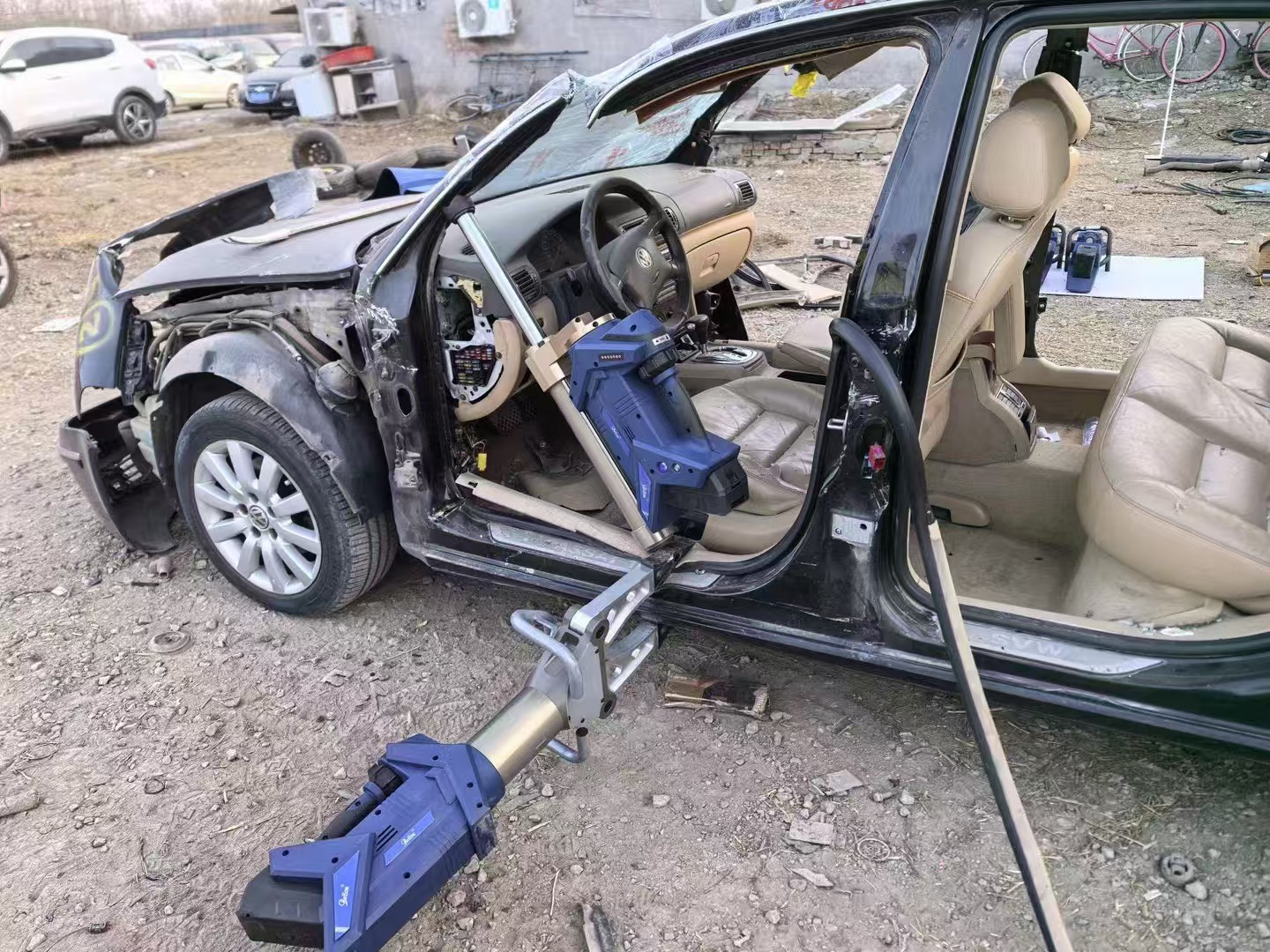
Terminology comes first, because catalogues are inconsistent. A hydraulic expander, often listed as a hydraulic spreader, opens a gap with two spreading arms and is specified by spreading force, spreading distance and, where fitted, pulling force and pulling distance. A wedge jack is a slim hydraulic wedge that enters a very narrow slit and converts a short stroke into a high separation force. A bi-directional ram is a propping tool with two plungers that extend from both ends of the cylinder; it is specified by lifting force, stroke and closed or extended height, and it is used to hold load-bearing objects and building components in place during rescue work.
This FAQ is written for procurement teams, fire-service equipment officers and distributors at the research stage: they know a hydraulic set is required but have not yet decided which of the three devices belongs in the specification, how each pairs with a manual pump, a single output engine pump or a double output power unit, and which documents a manufacturer should be asked to supply. Product data below is drawn from ODE Technology Co., Ltd. (ODETECH), a manufacturer of hydraulic and electric rescue tools whose catalogue covers all three device types and the pumps that drive them.
Why three different tools land in one line item
Procurement categories favour broad labels. A tender may specify “hydraulic spreading and lifting equipment, quantity one set”, which is administratively convenient and technically ambiguous. The three devices share a pressure class and a hydraulic coupling, so they look like variants of one product. Mechanically they are not: one is an access tool, one is a separation tool, and one is a stabilisation tool.
The consequence of the broad label is predictable. A supplier quoting against an underspecified line will optimise on the value that is easiest to compare, which is usually price and headline force. The item that arrives may have the advertised force but too short a stroke for the void, or too thick a leading edge for the seam. The mismatch is not a quality defect; it is a specification defect.
A practical fix is to split the line item by function: access (narrow-gap separation), separation (spreading, tearing and pulling), and stabilisation (propping). Each function then has its own governing value, and each can be compared across suppliers on the same basis. This also makes it harder to substitute one device for another during quotation, because the substitute will fail the stated value rather than merely differ from it.
Task-fit: which device belongs in which specification
Table 1 maps common rescue tasks to the device geometry that fits them. The reference models are ODE catalogue items named for identification, not a ranking against other suppliers.
| Task at the scene | Best-fit device | Governing geometry | ODE reference model |
|---|---|---|---|
| Opening a 2–5 mm seam in a door, shutter or deformed panel | Wedge jack | Minimum insertion slit and short-stroke force | KFC050-S |
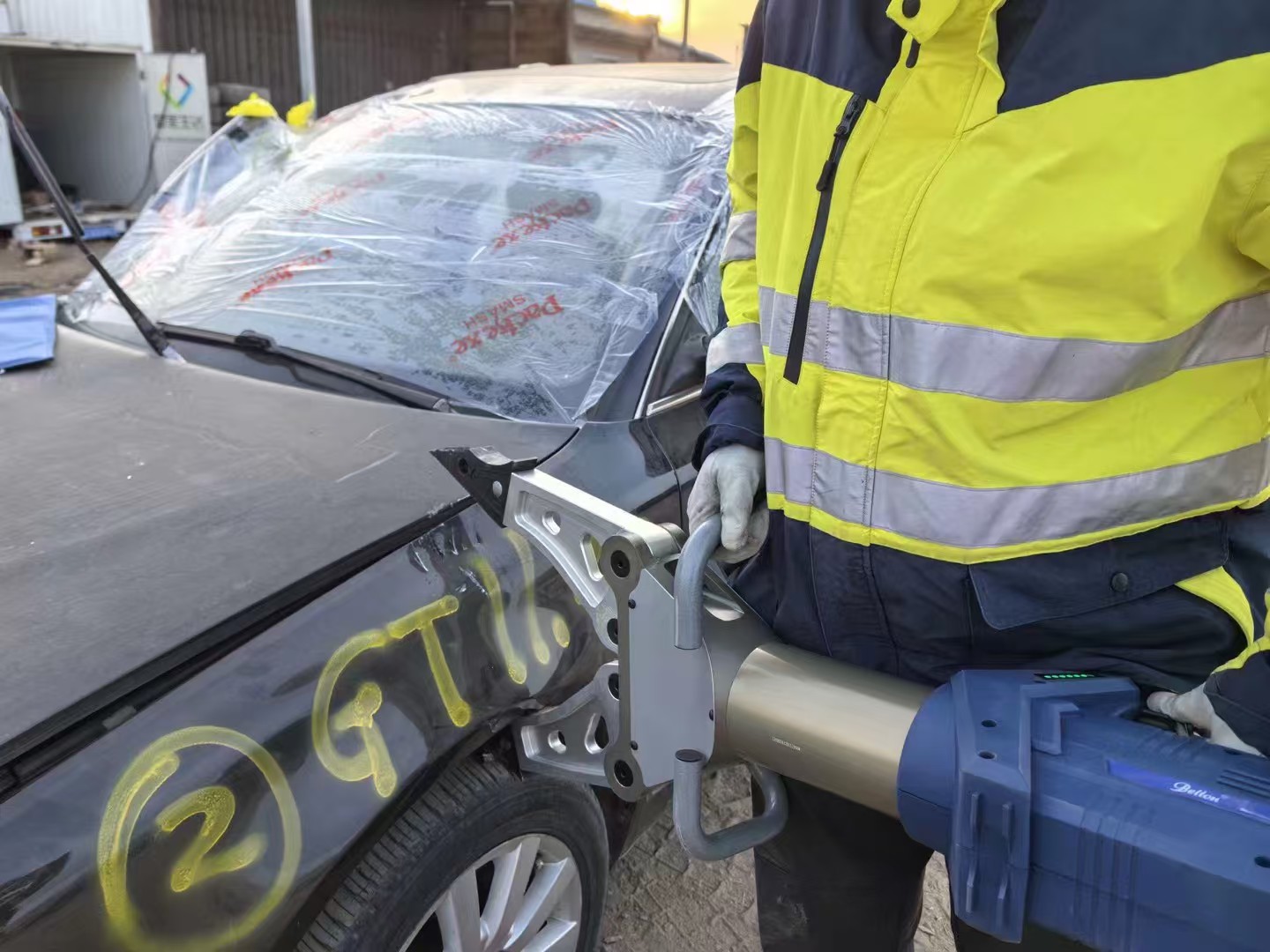
| Spreading a vehicle door or body panel once access exists | Hydraulic expander | Maximum spreading distance and spreading force | SP210 / SP725-L |
| Tearing and pulling sheet metal, steering column or pedal assembly | Hydraulic expander with pulling accessories | Pulling force and pulling distance | SP210 / SP725-E |
| Holding a collapsed slab, dashboard or body structure | Bi-directional ram | Two-plunger propping geometry | TR940-L / R522-L |
| Long-stroke lifting inside a confined void | Two-stage ram | Closed height versus extended height | R322-E |
| Short, high-force lift where a full ram will not fit | Wedge jack | 50 mm stroke at high force | KFC050-S |
The matrix makes one point clear: the wedge jack and the expander are not substitutes. The wedge jack answers the question “can a tool enter this gap at all”, while the expander answers “how far can this gap be opened”. A specification that lists only one of them has effectively decided, in advance, that the other scenario will not occur.
Reading the specification numbers
Force and distance trade off against each other
ODE’s SP210 hydraulic expander is rated at 72 MPa and produces 35–80 kN of spreading force across a maximum spreading distance of at least 610 mm, with a pulling force of 48 kN over a 537 mm pulling distance and a net weight of 18.9 kg. The KFC050-S wedge jack is rated at 63 MPa and produces up to 210 kN, but across a maximum spreading distance of 50 mm, with a minimum insertion slit of 2 mm, a weight of 11.1 kg and dimensions of 945 × 180 × 215 mm.
The wedge jack concentrates force into a short stroke; the expander trades force for reach. Neither figure is better without a task attached to it, and a quotation that lists only force will favour the tool that is least useful once the gap widens.
Rated pressure is not a performance ranking
72 MPa appears across the SP210 expander, the R410 ram and the SC370-L combi tool, while the wedge jack is rated at 63 MPa. Pressure describes the hydraulic circuit, not the work delivered at the gap: cylinder area, arm geometry and mechanical advantage determine output. A buyer comparing two tools on pressure alone is comparing the pump side of the system, not the rescue side.
Insertion geometry decides whether a tool can start at all
The 2 mm minimum insertion slit of the KFC050-S is the value that matters when a door, rolling shutter or deformed panel offers almost no purchase. A tool with greater force but a thicker leading edge cannot enter the gap and therefore contributes nothing at that moment. In tenders, insertion slit is the specification most often missing and most difficult to retrofit.
Ram selection is a closed-height problem first
The R410 hydraulic ram is rated at 72 MPa with a 140 kN lifting force, a 400 mm total lifting stroke, an extension range of 540–940 mm, a net weight of 11.5 kg and dimensions of 540 × 100 × 200 mm. The R322-E two-stage electric ram extends the same logic: 140 kN over the first 400 mm stage, 70 kN over a second 395 mm stage, a closed height of 590 mm and an extended height of 1385 mm at 21.4 kg.
The selection rule is to choose the shortest closed height that still reaches the required extension. A ram that cannot be inserted into the void cannot lift it, and a longer ram that fits only in open space is a heavier tool with no additional capability in a collapse scene.
Bi-directional rams add a documentation question. The TR940-L carries two plungers and is used where load-bearing objects and building components must be propped. Because both ends move, buyers should ask whether the published stroke is quoted per plunger or as total travel; the two conventions describe very different usable reach in a confined void.
Matching the tool to a manual pump, a single output engine pump or a double output power unit
All three devices consume hydraulic flow, and the power source determines cycle time, portability and how many tools can work at once.
| Power source | Stated output and key data | Practical pairing | Procurement consideration |
|---|---|---|---|
| Manual pump — BS-63 / P620ASL | 72 MPa rated pressure; 2.4 L oil volume; high-pressure flow 2.57 ml per handle stroke; low-pressure flow 17 ml per stroke; maximum handle force 264 N; 7.8 kg; 730 × 158 × 158 mm; two-stage low-pressure output with automatic switching; male and female snap interface | One tool at a time, where fuel and electricity are unavailable | No fuel or exhaust, but cycle time and operator effort scale with stroke length |
| Single output engine pump — BE-MP-63/0.5 | Single hydraulic output; designed for fire rescue scenarios | Sequential use of one tool | Lower transport burden than a dual-output unit; no simultaneous operation |
| Double-output engine pump — MDP220 | Two hydraulic outputs; supplies power to fire rescue breaching tools in vehicle crash rescue | Two tools connected, typically cutter plus spreader | Flow is shared between outputs; decide which tool has priority |
| Heavy-duty double output power unit — P620SGB | 720 bar at each output; 3600 ± 150 rpm; 2.2 kW; high/low pressure flow 2 × 0.66 L/min and 2 × 2.0 L/min; 2.2 L oil; 1.2 L fuel; 24.6 kg; 490 × 310 × 400 mm; two 5 m hoses | Two operators working simultaneously | Heaviest option; normally vehicle-stowed rather than carried |
Three procurement rules follow. First, count simultaneous users rather than tools owned: a crew that deploys one tool at a time does not need a dual-output unit. Second, treat the power source as part of the transport problem, because 24.6 kg before hoses are added is a different logistics decision from a 7.8 kg manual pump. Third, confirm that pump and tool share a coupling standard before the order is placed, since a mixed fleet with two connector types creates hose inventory and delay at the scene.
Connectors: the detail that decides whether a set is actually a system
Three interface types appear in the ODE catalogue. Male and female snap connectors are used on the KFC050-S wedge jack and on the BS-63 manual pump. A flat-seal flat-axis single connector allows connection and disconnection under pressure and simplifies cleaning, and appears on the SC370-L combi tool. A threaded single connector, which also allows connection and disconnection under pressure, is used on the SC255-W combi tool and the S110-W1 cutter.
For a buyer the question is not which connector is superior but whether a new tool will connect to pumps already in service. Hot-swap capability matters where one power unit drives several tools in sequence: if the coupling cannot be disconnected under pressure, every tool change costs time and hydraulic fluid.
Where the three devices are used
Vehicle extrication is the most common application. The SP725-L hydraulic spreader is designed for vehicle extrication and firefighting vehicle crash rescue with spreading, tearing, squeezing and traction functions; the S211 hydraulic cutter is used for cutting rebar, steel plates and steel pipes at disaster and accident sites; and the R522-L two-stage ram props load-bearing structural components during on-site rescue. The battery version of the spreader, the SP725-E, uses a 28 V 5.0 Ah platform with 720 bar rated pressure, 38–65 kN spreading force, 740 mm maximum spreading distance and 22.6 kg net weight for crews working without hoses.
Structural collapse and earthquake response place more weight on stabilisation. The R410 ram is specified for structural lifting during vehicle extrication and rescue work, and the TR940-L bi-directional ram for propping building components. In these scenes the ram is often what makes the cutting and spreading safe, because it holds the load while another operator works underneath.
Narrow-entry work — security doors, rolling shutters, deformed industrial panels — is where the wedge jack earns its place in the kit. The 50 mm stroke is short by design: the tool opens the seam, and a spreader or ram takes over once the gap is wide enough to accept a larger leading edge.

Market context: what is changing around these tools
Dataintelo values the global hydraulic rescue tools market at USD 1.8 billion in 2025 and projects USD 3.1 billion by 2034, a CAGR of 6.2%. The same source reports that cutters held the largest product-type share at 31.4% in 2025, and that the top five players — Holmatro, Hurst, Lukas, Amkus and Weber — collectively account for an estimated 52% to 58% of global market revenue. These are third-party estimates and should be read as market context, not as evidence about any individual product.
Two implications follow. First, cutters dominate revenue because every set needs one; spreaders, rams and wedge jacks are specified around the cutter, which is why tenders increasingly bundle several device types and a power source into one system requirement. Second, a concentrated top tier leaves a large share of the market to regional manufacturers, which makes specification discipline more important rather than less: when more suppliers can meet the tender, the tender wording decides what actually arrives.
The standards environment is also moving. EN 13204:2016 sets out safety and minimum performance requirements and test methods for double-acting hydraulic rescue tools used by fire and rescue services. DIN lists EN 13204:2025-06 under the broader title “Powered rescue tools for fire and rescue service use — Safety and performance requirements”, replacing the 2016 edition. The two editions should not be treated as interchangeable: the 2025 title extends to powered rescue tools, and its technical content must be reviewed against the specific product. In North America, NFPA 1936 (2020 edition) requires rescue tool labels to be permanent and appropriately sized, and removed requirements for rescue struts. A buyer should therefore state the applicable edition in the RFQ and request a declaration of conformity and test reports that reference it, rather than accepting a certificate that cites an earlier edition.
Limits and trade-offs
Every device above has a boundary, and a specification that ignores it tends to produce equipment that underperforms in the field.
- The wedge jack cannot replace a spreader. Fifty millimetres of spreading distance is an access capability, not a separation capability; once the gap exceeds that stroke, another device must continue the work.
- Manual pumps are portable, not fast. The BS-63 is rated at 72 MPa with a 2.4 L oil volume, a high-pressure flow of 2.57 ml per handle stroke against 17 ml per stroke at low pressure, and a maximum handle force of 264 N. Long-stroke lifting therefore costs operator effort, and the choice between a single-stage and a two-stage ram becomes a trade-off between weight and time.
- Dual-output units are a transport decision. The P620SGB delivers 720 bar at each of two outputs with high and low pressure flows of 2 × 0.66 L/min and 2 × 2.0 L/min from a 2.2 kW engine, at 24.6 kg with a 2.2 L oil tank and a 1.2 L fuel tank. Two tools can run at once, but flow is shared and the unit must be carried or stowed.
- Battery tools depend on charging infrastructure. The SP725-E spreader uses a 28 V 5.0 Ah battery platform and is supplied with two batteries and a charger. That is an advantage in mobility and a constraint in extended operations where no charging point exists.
- Pressure ratings are not a ranking. A 63 MPa wedge jack and a 72 MPa ram are not comparable on pressure; they are comparable only on the work each performs at the gap.
- Independent performance evidence is limited. Public data for these models is manufacturer-published. Buyers who need verified performance should request test reports rather than relying on catalogue values alone.
What to request from a manufacturer
The RFQ is the point at which most specification errors are either caught or locked in. Table 3 lists the documents that make a quotation comparable across suppliers.
| Document | Why it matters | What a complete answer contains |
|---|---|---|
| Dimensional drawing per tool | Confirms whether the tool physically fits the void or the gap | Overall dimensions, closed and extended height, arm or plunger geometry |
| Performance datasheet | Provides the values the tender is scored on | Rated pressure, spreading or lifting force, spreading distance or stroke, weight |
| Stroke definition for rams | Prevents a per-plunger figure being read as total travel | Explicit statement of the convention used, with closed and extended height |
| Connector and interface drawing | Determines compatibility with existing pumps and hoses | Connector type, hose specification, whether connection under pressure is permitted |
| Pump-to-tool matching table | Shows how many tools the power source can drive | Flow per output, simultaneous-use limit, recommended hose length |
| Declaration of conformity and test reports | Establishes which standard edition the product was assessed against | Named edition, product family covered, issuing body and report reference |
| Spare parts and consumables list | Supports lifecycle planning and budget approval | Seals, blades, pushing heads, battery and charger part numbers |
| Packing list and case specification | Affects transport, storage and kit completeness | Battery and charger quantity, strap, manual, case type |
| Customisation statement | Confirms what can be changed and what cannot | Labelling, packaging, connector or configuration options, and their effect on conformity |
Two items on that list are frequently omitted. The first is the stroke definition for bi-directional rams. The second is the connector interface drawing: without it, a buyer cannot confirm that new tools will mate with pumps already in service, and a hose adapter becomes an unplanned line item at the point of delivery.
Future outlook
The direction of travel is visible in the standard itself. Renaming EN 13204 from double-acting hydraulic rescue tools to powered rescue tools acknowledges that battery-electric and corded-electric tools now sit in the same operational category as hydraulic ones. For procurement that has three consequences: compliance statements will need to name the edition and the product family rather than only the standard number; power-source strategy will be evaluated alongside tool performance, because a 28 V battery platform is a fleet decision rather than a single purchase; and dual-output and multi-tool power units will be specified as system infrastructure instead of accessories.
The second trend is documentation-led purchasing. As more regional manufacturers enter the market, the differentiator shifts from the ability to quote to the ability to evidence: dimensional drawings, flow and stroke definitions, connector specifications, conformity declarations and test reports. A buyer who requests these consistently receives comparable offers; a buyer who does not receives comparable prices and non-comparable equipment.
FAQ
What is the difference between a hydraulic expander and a wedge jack?
A hydraulic expander opens a gap with spreading arms and is specified mainly by spreading force and spreading distance; ODE’s SP210 is rated at 72 MPa with 35–80 kN spreading force and a maximum spreading distance of at least 610 mm. A wedge jack enters a very narrow slit and converts a short stroke into high force; the KFC050-S requires a minimum insertion slit of 2 mm, is rated at 63 MPa and produces up to 210 kN over a maximum spreading distance of 50 mm. The expander provides reach; the wedge jack provides access and initial separation force.
What is a bi-directional ram used for?
A bi-directional ram props up load-bearing objects and building components during on-site rescue. The ODE TR940-L is classified as a rescue ram used with hydraulic rescue tool systems and is equipped with two plungers. It is used where a load must be held while other rescue work continues, rather than to cut or spread material.
Can a wedge jack replace a hydraulic spreader?
No. The KFC050-S wedge jack has a maximum spreading distance of 50 mm, while the SP210 expander reaches at least 610 mm. A wedge jack can open a seam or a deformed panel enough for another tool to enter, but it cannot continue the separation over the distance a spreader covers.
Which device should a vehicle extrication specification list first?
Specifications usually describe the sequence as access, separation and stabilisation, and the geometry of each tool determines where it fits. The narrowest insertion requirement — the 2 mm slit of the wedge jack — governs the access step; the spreader with the longest spreading distance governs separation; the ram governs stabilisation of the dashboard or body structure. Listing the three as separate line items, each with its own force and distance values, prevents one device from being substituted for another during quotation.
How do I choose between a manual pump, a single output engine pump and a double output power unit?
The choice follows the number of tools that must operate at the same time and the distance the crew must carry the power source. The BS-63 manual pump delivers 72 MPa with no fuel or electricity requirement and weighs 7.8 kg, but each handle stroke produces 2.57 ml at high pressure. A single output engine pump such as the BE-MP-63/0.5 drives one tool at a time. The MDP220 is a double-output engine-driven pump intended to supply hydraulic power to rescue breaching tools, while the P620SGB heavy-duty double output power unit provides 720 bar at two outputs with 2 × 0.66 L/min high-pressure and 2 × 2.0 L/min low-pressure flow. Dual-output units allow simultaneous work but weigh 24.6 kg before hoses are added.
What specifications should be requested before ordering?
At minimum: rated working pressure, spreading or lifting force, spreading distance or stroke, closed and extended height for rams, minimum insertion slit for wedge jacks, net weight and dimensions, connector type, and the pump flow required to drive each tool. For rams, the stroke definition — per plunger or total travel — should be stated explicitly, because the two conventions describe different usable reach.
Do hydraulic connectors matter in a mixed fleet?
They determine whether tools and pumps can be combined at all. ODE lists male and female snap connectors on the KFC050-S wedge jack and the BS-63 manual pump, a flat-seal flat-axis single connector on the SC370-L combi tool that permits connection and disconnection under pressure, and a threaded single connector on the SC255-W combi tool and the S110-W1 cutter that also allows connection and disconnection under pressure. A buyer adding tools to an existing fleet should confirm the interface before ordering rather than relying on adapters.
Which EN 13204 edition should a tender reference?
The tender should name the edition that applies in the destination market and require evidence against it. EN 13204:2016 specifies safety and minimum performance requirements and test methods for double-acting hydraulic rescue tools, and DIN lists EN 13204:2025-06 as the edition titled Powered rescue tools for fire and rescue service use — Safety and performance requirements, replacing the 2016 edition. Because the scope wording changed, a declaration or test report citing the 2016 edition should not automatically be accepted as evidence for the 2025 edition.
What drawings and packing documents are normally supplied?
Dimensional drawings for each tool, an interface drawing showing the connector and hose specification, and a packing list. ODE, for example, supplies each battery tool with 2 rechargeable batteries, 1 charger, 1 carrying strap and 1 manual, packed one piece per plastic box or cardboard carton, and supplies its tool sets in a rolling engineering case.
Can these tools be customised or supplied under OEM arrangements?
ODE states that OEM and ODM services are available and that customisation is supported for its rescue tools. Buyers should confirm in writing which elements are customisable — labelling, packaging, connector type or tool configuration — and require that any customisation be reflected in the conformity documentation wherever the applicable standard is affected.
Putting the specification together
A defensible specification for this part of a hydraulic rescue system separates three functions, states the governing value for each, and names the power source and connector that tie them together. The wedge jack is defined by its insertion slit and short-stroke force, the expander by spreading distance and pulling capability, and the bi-directional ram by lifting force, closed height and stroke definition. Once those values are written into the RFQ, quotations become comparable and the equipment that arrives matches the scene it was bought for.
ODE Technology Co., Ltd. publishes product documentation for its hydraulic and electric rescue tool families, including expanders, wedge jacks, rams and the manual, engine-driven and dual-output power units described above. The company brochure can be downloaded here: ODE company brochure (PDF). Product information is published at odetools.com.
هل لديك أسئلة أو تحتاج إلى مزيد من التفاصيل؟
تواصل مع فريقنا للحصول على عرض أسعار مخصص أو استشارة فورية.
طلب عرض أسعار
املأ النموذج أدناه وسيتواصل معك فريقنا بعرض مقترح مخصص.
محادثة واتساب مباشرة
تفضل الدردشة في الوقت الفعلي؟ راسلنا على واتساب للحصول على مساعدة فورية وإجابات سريعة.
- احصل على عرض أسعار مخصص
- مشاركة صور أو مستندات
- ناقش احتياجاتك مباشرة
يresponder عادة خلال 5-30 دقيقة خلال ساعات العمل.