
Hydraulic, Piston, Solenoid and Dosing Pumps: Buyer Checks
Industrial dosing is frequently specified as though “dosing pump” described one product. It does not. The hardware sold under that name differs in how fluid is displaced, in which wetted materials can be offered, and in what a purchase order can prove at handover.
A hydraulic metering pump, a piston dosing pump, a solenoid dosing pump and a motor-driven diaphragm dosing pump can all be quoted against the same duty line — and still differ in how they fail, what they can be built from, and what evidence they leave behind at acceptance. That is the practical reason a buyer compares them at the research stage rather than after a model code has been fixed.
This comparison is deliberately limited to what can be checked without a test bench: published flow and pressure ranges, declared wetted materials, the leakage path inherent to each design, the control interface, and the documents a supplier can be asked to provide. It then sets out how purchasing terms and handover acceptance should be written around those criteria, and closes with the one decision — material selection for a strongly corrosive liquid — that can remove half of a shortlist before price is even discussed.
The comparison only works after one clarification
The four labels are not four items on the same shelf. Three describe a displacement principle; one describes a control layer.
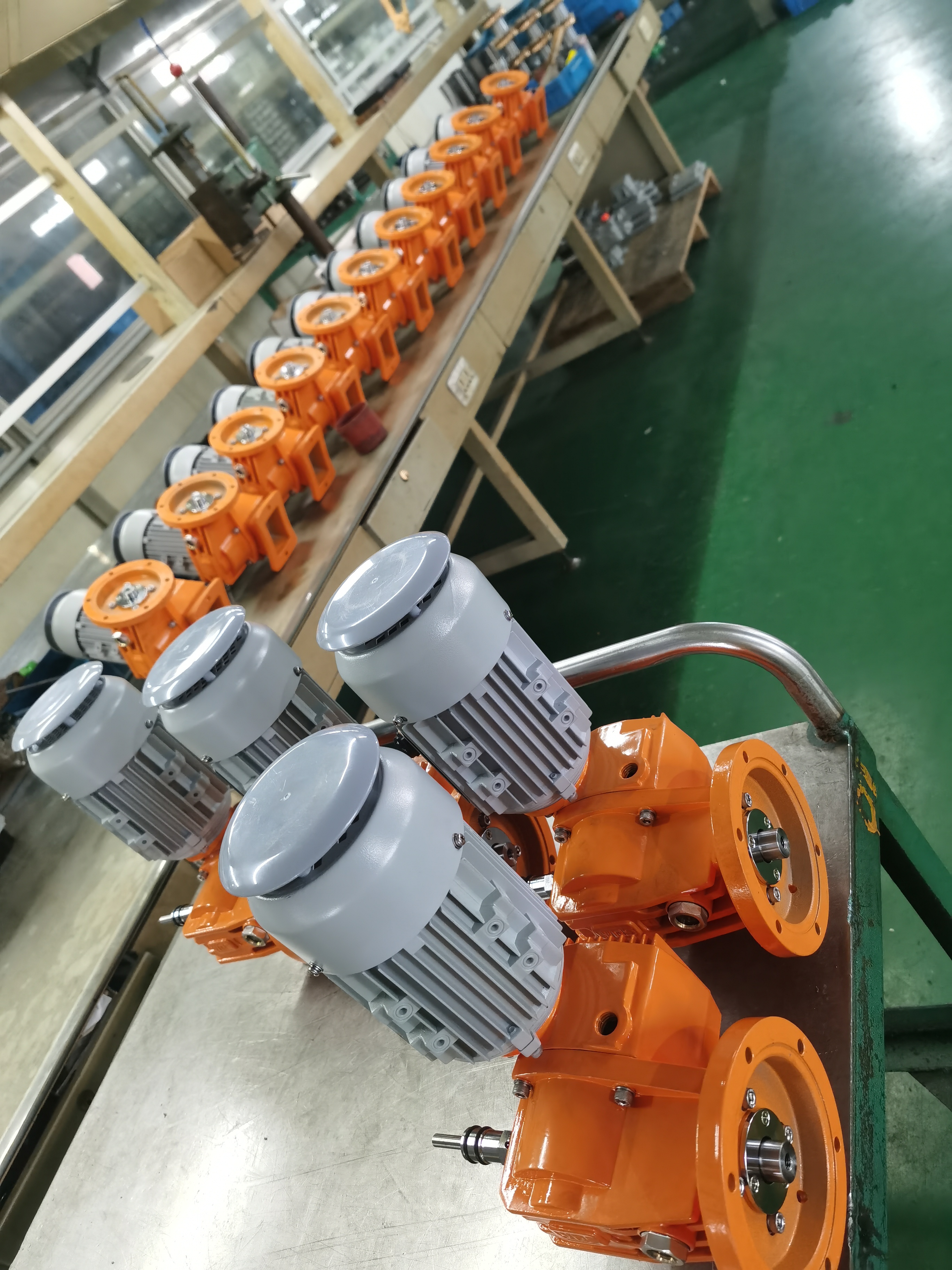
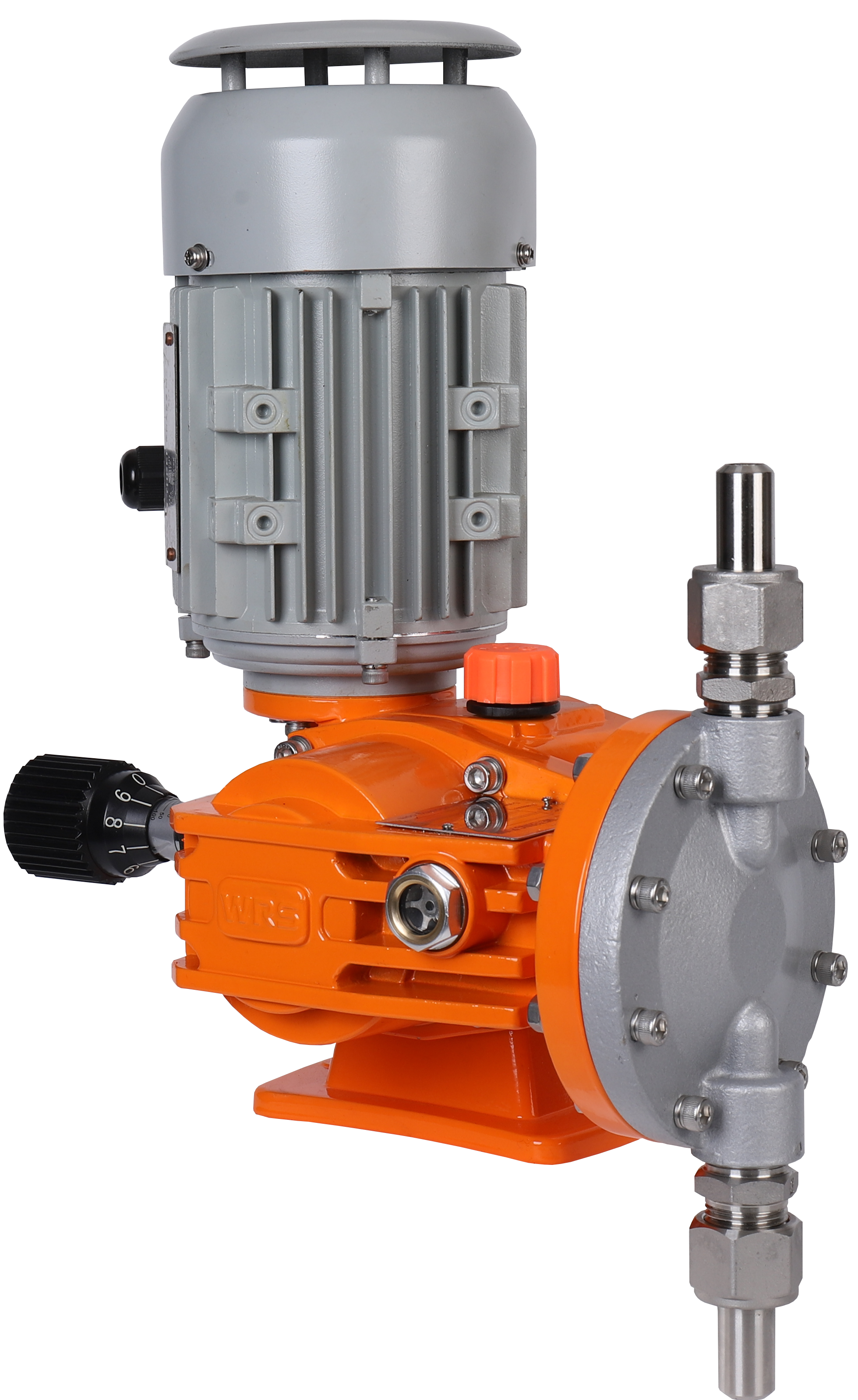
- Hydraulic metering pump — a diaphragm is deflected by hydraulic pressure, so the process liquid is separated from the drive by a diaphragm and a hydraulic circuit. WRS describes its hydraulic metering pump models with a zero-leakage design and suitability for toxic and hazardous media.
- Piston dosing pump — a reciprocating piston or plunger displaces the liquid directly. The documented WRS models are listed for high-viscosity duty, high dosing accuracy and easy maintenance.
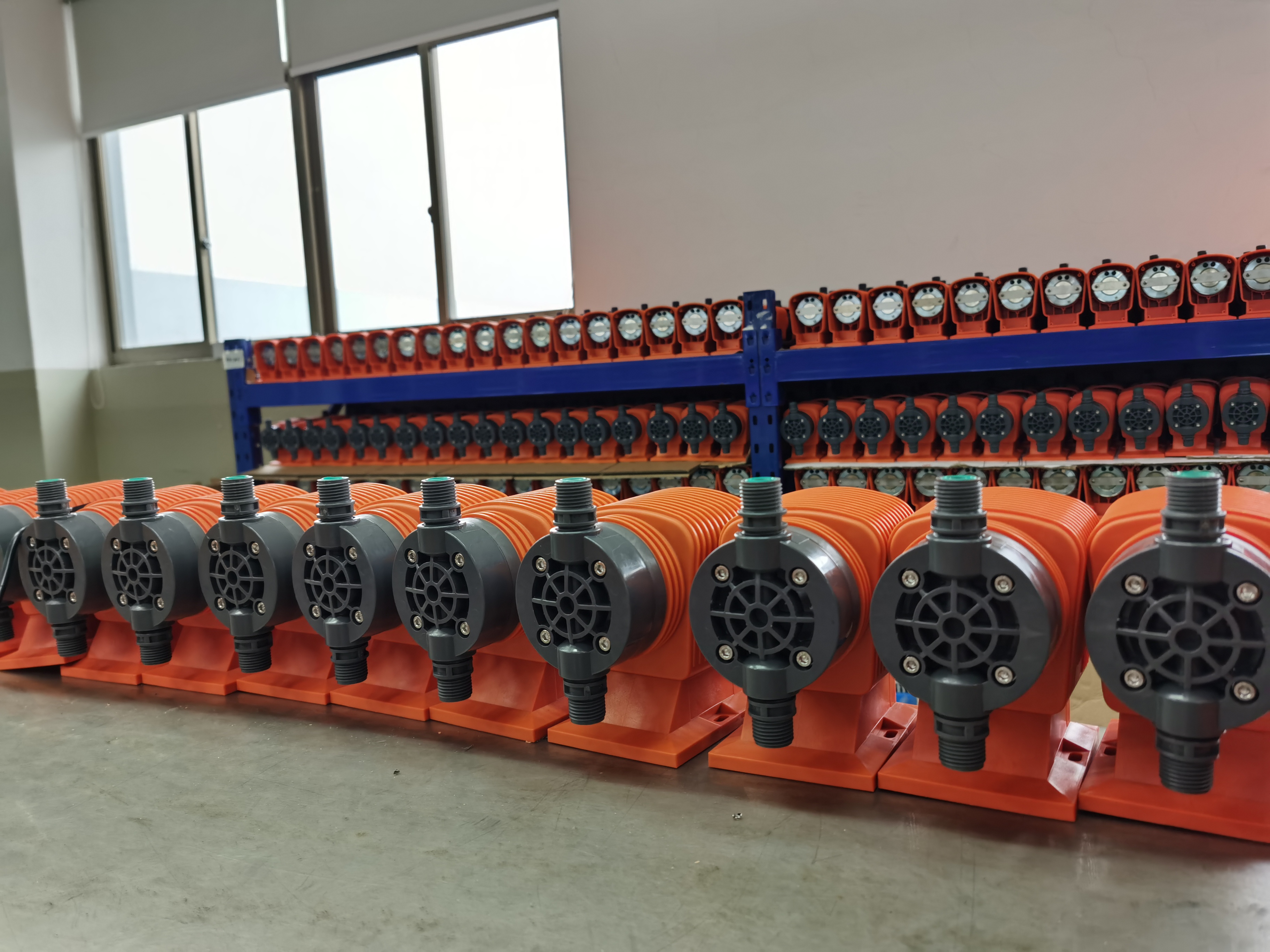
- Solenoid dosing pump — an electromagnetic actuator strokes a small diaphragm. This is the compact, low-flow end of the range, typically 1–20 L/H at 1–10 bar in the WRS catalogue.
- Motor-driven diaphragm dosing pump — a motor and eccentric drive the diaphragm. WRS lists mechanical diaphragm models from 15–150 L/H up to 250–1800 L/H.
- Digital dosing pump — a control and communication layer (4–20 mA, pulse signal, Modbus RS-485) applied to a diaphragm liquid end, with direct flowrate display, a 1:1000 ratio range and stated precision under 1% on the WRS digital models. It is a specification choice, not a separate way of moving liquid.
Keeping that distinction in view prevents the most common procurement error in this category: comparing a solenoid pump against a hydraulic pump on flow rate alone, when the two are being asked to survive different pressures, different media and different maintenance regimes.
Six criteria a buyer can verify before committing
Verification, not preference, is what separates a shortlist from a guess. The criteria below can be resolved from a data sheet and a written declaration, and each one can change the answer.
| Criterion | Why it decides the shortlist | What to request in writing |
|---|---|---|
| Duty point | A flow figure without its matching pressure is not a specification. 1600 L/H at 6 bar and 2 L/H at 200 bar sit in the same family. | Required flow at required discharge pressure, with the media named. |
| Wetted materials | Material availability narrows the field faster than capacity. Hydraulic and piston models in the WRS range are documented in SS316; diaphragm and solenoid models are offered in PVC, PVDF and SS316. | Pump head, valve, diaphragm and seal materials, part by part. |
| Viscosity and solids | High-viscosity capability is claimed for hydraulic and piston designs; small solenoid units are low-flow, low-pressure devices. | Media viscosity, suspended solids and any abrasive content, stated as site conditions. |
| Leakage path | A diaphragm design contains the medium behind a barrier; a piston design relies on a reciprocating seal that becomes a maintenance point. | Containment concept, plus rupture or leak sensing where offered. A diaphragm rupture sensor is listed as an option on WRS hydraulic models. |
| Control interface | Manual adjustment, remote 4–20 mA / pulse control and RS-485 communication are different products, not options on one lead time. | Signal type, communication protocol and the loop test procedure. |
| Environment and protection | An enclosure rating agreed verbally is a dispute waiting to happen. | IP rating, ambient conditions, and motor type where a hazardous area applies. |
| Wear parts and spares | Diaphragms, check valves and seals determine the cost of year two, not year one. | Recommended spares list and replacement parts identification. |
| Documentation | Without a declared document set, acceptance becomes an opinion. | Data sheet, nameplate data, material declaration, test record, packing list. |
Documented duty envelopes, side by side
The table below uses published WRS model data so the comparison rests on declared figures rather than on design intention. It is a map of what each family is documented to do, not a ranking.
| Family | Documented model | Flow | Pressure | Wetted material | Drive / control note |
|---|---|---|---|---|---|
| Hydraulic metering pump | HL090S0P01F11 | 1600 L/H | 6 bar | SS316 | 1.5 kW; DN50 flange; frequency and explosion-proof motor available |
| Hydraulic metering pump | HS008S0P01S11 | 2 L/H | 200 bar | SS316 | 0.37 kW; DN6 bevel end welding tube |
| Piston dosing pump | PD105SS1PFN11 | 600 L/H | 8 bar | SS316 | 4.0 kW; DN50 flange |
| Piston dosing pump | PM060SS1PFN11 | 600 L/H | 8 bar | SS316 | 0.75 kW; DN25 flange |
| Solenoid dosing pump | ML0008PR1C | 1–20 L/H | 1–10 bar | PVC, PVDF, SS316 | Manual control; IP65; 220V/110V |
| Solenoid dosing pump | EML0020PR1C | 1–20 L/H | 1–10 bar | PVC, PVDF, SS316 | Remote 4–20 mA / pulse / Modbus RS-485; IP65; 1% accuracy |
| Mechanical diaphragm | MG0150PQ11 | 15–150 L/H | 5–10 bar | PVC, PVDF, SS316 | Motor per customer request |
| Mechanical diaphragm | MA0120PQ11 | 15–500 L/H | 5–10 bar | PVC, PVDF, SS316 | Frequency and explosion-proof motor available |
| Mechanical diaphragm | MB1800PQ11 | 250–1800 L/H | 3–10 bar | PVC, PVDF, SS316 | Frequency and explosion-proof motor available; multi-layer diaphragm |
| Digital dosing pump | EMML0060FP1E | 60 L/H | 4 bar | PVC, PVDF, SS316L | 20 W; IP65; under 1% precision; 1:1000 ratio |
| Digital dosing pump | EMGP0200FP1C | 200 L/H | 4 bar | PVC, PVDF, SS316 | 60 W; IP65; PTFE diaphragm |
| Digital dosing pump | EMAP1000PQ1C | 1000 L/H | 4 bar | PVC, PVDF | 20 W; DN25 socket; full PTFE diaphragm |
Which family fits which duty
Reading the table by duty rather than by capacity is what turns it into a decision. Four patterns recur.
- Very low flow at very high pressure. The documented hydraulic range covers 2 L/H at 200 bar (HS008S0P01S11). Nothing in the solenoid range approaches that pressure; solenoid models are listed at 1–10 bar. If the duty point sits in the hundreds of bar, the comparison is effectively over before materials are discussed.
- High flow at modest pressure. At 1600 L/H and 6 bar (HL090S0P01F11), the hydraulic design competes directly with large mechanical diaphragm units such as MB1800PQ11 at 250–1800 L/H and 3–10 bar. Media risk usually decides between them.
- Viscous or demanding media at moderate pressure. Piston models at 600 L/H and 8 bar are documented for high-viscosity duty, with a lower-power option (PM060SS1PFN11 at 0.75 kW) available against the same 600 L/H and 8 bar headline figures.
- Simple low-flow dosing into water or process lines. The solenoid family carries the small-duty work: manual adjustment on ML0008PR1C, or remote 4–20 mA / pulse / Modbus control on EML0020PR1C for a loop that has to be automated.
- Automated, ratio-based dosing. Digital models combine the diaphragm liquid end with flowrate display, 4–20 mA or pulse input, RS-485 communication and a 1:1000 ratio range, from 60 L/H to 1000 L/H at 4 bar.
Where each family stops being the right answer
A comparison that lists only strengths is a brochure. The boundaries matter more, because they are what a buyer discovers too late.
- Hydraulic. The zero-leakage claim and the toxic-media suitability come with a more complex build — hydraulic circuit, diaphragm and, where specified, a rupture sensor. In the documented WRS models the wetted material is SS316 only, so a requirement for PVC or PVDF removes these pumps from the shortlist regardless of their pressure capability.
- Piston. Accurate and robust with viscous media, but the liquid is displaced by a reciprocating piston, so the piston seal is a maintenance item to plan for rather than an incidental. Documented WRS piston models are SS316, and abrasive solids in suspension are not a good match for a close-tolerance reciprocating element.
- Solenoid. The documented envelope is 1–20 L/H at 1–10 bar with IP65 protection. It is the wrong instrument for high pressure, high viscosity or large volume, and its accuracy claim (1% on WRS models, supported by a double-ball check valve on inlet and outlet) depends on the suction line being properly installed with a foot valve and strainer.
- Mechanical diaphragm. The diaphragm is a wear part, and multi-layer construction is presented as a way to extend life rather than to remove the replacement task. Pulsation is inherent to reciprocating displacement, so a pulse dampener belongs in the system scope where smooth injection matters.
- Digital. Electronics bring control, and also a protection requirement. Documented models sit at IP65 and 4 bar, with 20–60 W power; heat, moisture and washdown conditions must be checked against the enclosure rating rather than assumed.
One documented project makes the point better than any general statement. For a livestock nutrient-dosing application in Russia, the working condition was described as a harsh, humid farm environment, operating 24/7 on an automatic system, with IP67 protection listed as the special requirement. The pumps matched to that project — EMML0060FP1E and ML0008PR1C — carry an IP65 protection rating in their published parameters. That gap belongs in the technical annex at quotation stage, not in a dispute at delivery.
Writing purchasing terms so the comparison survives the order
The value of a comparison collapses if the purchase order only states model, quantity and price. A technical annex of a single page can carry the criteria above into the contract.
- State the duty point, not the model alone. Flow required at discharge pressure, with the medium named and the site conditions included — the same information that made the IP gap visible.
- Declare wetted materials part by part. Pump head, valve, diaphragm and seal, in writing, so a substitution is a deviation rather than a surprise.
- Fix the control interface. Manual, 4–20 mA, pulse or Modbus RS-485; the interface determines the wiring and the commissioning test.
- List accessories explicitly. Check valve, pulse dampener, foot valve, injection valve, safety valve and tubing are frequently optional and frequently omitted. On WRS manual solenoid models the accessory set — PE tube, foot valve, weight, injection valve and safety valve — is stated as supplied, which is a useful benchmark for what the order should name.
- Specify the motor. Standard, frequency-controlled or explosion-proof, because the motor choice affects lead time and certification, and the WRS hydraulic, piston and mechanical diaphragm ranges list both frequency and explosion-proof options.
- Name the standards that apply. API 675 is the primary international standard for positive displacement reciprocating pumps with integrated controlled capacity; ISO 14847:1999 sets technical requirements for rotary positive displacement pumps. For units placed on the EU market, the Machinery Regulation that replaces 2006/42/EC from 2027 requires CE marking.
- Define the document pack. Data sheet, nameplate data, material declaration, factory test record, packing list and recommended spares list.
- Set the warranty boundary in operational terms. Diaphragms, seals and check valves are wear parts; the terms should say what is covered and what is consumable.
Acceptance at handover: what to check and how
Acceptance is a sequence of comparisons, each one cheap if done at the right moment.
- Nameplate against order. Model code, flow, pressure, motor power and connection size — the figures printed on the pump should match the annex line by line.
- Material confirmation. Pump head and wetted parts identified physically or by declaration, particularly where PVC, PVDF and SS316 options exist in the same model family.
- Flow verification at the set point. Run at the ordered duty point and compare with the data sheet, not with a running impression of the discharge.
- Pressure hold and leak check. Most important on designs with a reciprocating seal, and on any assembly where flange or welding-tube connections were made at the factory.
- Control loop test. Drive the 4–20 mA or pulse input and confirm the flowrate display and the pump response through the full ratio range.
- Protection and wiring inspection. Enclosure rating as ordered, cable entries sealed, PCB protection in place on solenoid units.
- Accessory inventory. Check valve, pulse dampener, tubing, injection valve and safety valve counted against the packing list.
- Spares and documents handed over. Recommended spare parts identified by name and part, with the test record filed alongside.
Strongly corrosive liquids: one material decision reshapes the shortlist
Material selection is usually treated as a refinement at the end of the comparison. For aggressive chemistry it belongs at the start, because it can exclude entire pump families before capacity is discussed.
The practical rule stated in WRS technical guidance is straightforward: different media have different materials available for selection, and for highly corrosive media a PVDF pump head is recommended. The material options across the range follow that logic — PVC, PVDF and SS316 on solenoid and mechanical diaphragm models, PVC and PVDF on the digital models that use a full PTFE diaphragm, and PVC, PVDF or SS316L on the EMML0060FP1E.
What that does to a shortlist is immediate. If a PVDF wetted path is mandatory, the hydraulic and piston models documented here — both SS316 — drop out, and the remaining candidates are the solenoid, mechanical diaphragm and digital families. If instead the medium is compatible with stainless steel and the pressure is high, the same decision reverses the outcome and pushes the diaphragm and solenoid options out.
Two secondary details follow the same rule. A check valve in an incompatible material defeats a correctly specified pump head, so valve and seal materials must be confirmed alongside the head. A pulse dampener, where fitted, adds another wetted surface. Selection sequence still starts with flow, then pressure, then pump head material and motor — but on corrosive duty the material step is the one that decides which suppliers can even quote.
What the market data says about where these families are heading
The dosing pump market was valued at approximately USD 8.86 billion in 2024, according to Grand View Research. That headline figure is not settled: published estimates differ substantially because some studies count complete chemical injection systems while others count component-level pumps, and the chemical injection pump segment alone was valued at USD 3.5 billion in 2024 by HTF Market Intelligence.
Two structural signals are more useful to a buyer than the total. First, Asia Pacific held a 41.8% revenue share of the dosing pump market in 2024, which is consistent with the export depth of the region — China's liquid pump exports, including dosing types, reached USD 14.3 billion in 2024 according to OEC. Second, diaphragm dosing pumps accounted for 55.7% of revenue in 2024, and motor-driven metering pumps held 54.45% of the metering pump market in 2025 per Mordor Intelligence, which explains why most shortlists converge on diaphragm-based designs even when the drive differs.
The solenoid segment is the one expected to move fastest, with a projected CAGR of 5.88% through 2031. Applications reinforce that: water and wastewater treatment holds a 23.2% share of metering pump applications, where small flows, simple control and low capital cost dominate the specification.
Where WRS sits in this comparison
WRS — ZHEJIANG WRS MACHINERY EQUIPMENT CO., LTD — is a Hangzhou-based equipment manufacturer founded in 2016, operating a 15,000 m² facility with 120 employees, an annual output documented at 30,000 units, a 15-engineer R&D team, and an export ratio of 20% covering Southeast Asia, Russia and South America, with local after-sales service established in more than 10 countries including Singapore, Thailand, Malaysia, Vietnam, South Korea, Japan, Russia, Chile, South Africa, Angola and Turkey.
Its relevance to this comparison is coverage rather than a single best model. The range spans all of the families discussed: hydraulic metering pumps, piston dosing pumps, solenoid dosing pumps, mechanical and digital diaphragm dosing pumps, plus dosing pump check valves, dosing pump pulse dampeners, chemical dosing systems, chemical injection pumps and a streaming current monitoring system — the last of which matters when a purchase order covers a dosing skid rather than a single unit. The series has been moved to digital control across the range, with 4–20 mA, pulse and Modbus RS-485 interfaces on the digital models, and the stated product philosophy is summarised as “Every Drop. SMART Control”.
Manufacturing evidence available for verification includes a test platform, an assembly workshop, a three-dimensional coordinate measuring machine, CNC machining centres and a spare parts warehouse, and documented applications run across water treatment, electroplating and surface treatment, chemical, oil and gas, hydrogen power generation, paper and pulp, semiconductor, mining and livestock operations. For a buyer, the practical significance is that a mixed shortlist — for example one low-flow solenoid pump and one high-pressure hydraulic pump for the same plant — can be sourced with a single material declaration and a single documentation standard.
Frequently asked questions
What is the difference between a hydraulic pump, a piston pump and a solenoid dosing pump?
A hydraulic metering pump deflects a diaphragm using hydraulic pressure, so the process liquid stays behind a diaphragm barrier; WRS documents a zero-leakage design for these models. A piston dosing pump displaces liquid directly with a reciprocating piston, and the documented WRS models are aimed at high-viscosity duty with high dosing accuracy. A solenoid dosing pump strokes a small diaphragm with an electromagnetic actuator, which confines it to low flow and moderate pressure — 1–20 L/H at 1–10 bar in the documented range.
Which pump type should be shortlisted for a small flow at high pressure?
In the documented WRS range, the hydraulic metering pump HS008S0P01S11 delivers 2 L/H at 200 bar with SS316 wetted parts, a DN6 bevel end welding tube connection and a 0.37 kW motor, with frequency and explosion-proof motor options available. Solenoid models cover 1–20 L/H but only 1–10 bar, so they fall outside the duty point. Flow is normally the first selection parameter, with pressure, pump head material and motor used to refine the choice.
How should acceptance criteria be written for a dosing pump order?
Acceptance criteria should be written as comparisons against named documents: nameplate data against the order annex, flow at the ordered duty point against the data sheet, wetted materials against the material declaration, control response across the full signal range, enclosure rating as specified, and the accessory and spares inventory against the packing list. Each item should reference the document it is checked against, so the test is repeatable by a third party.
How is the material chosen for strongly corrosive liquids?
Different media have different materials available for selection, and for highly corrosive media a PVDF pump head material is recommended. Because material availability differs by pump family — SS316 only on the documented hydraulic and piston models, PVC, PVDF and SS316 on solenoid and mechanical diaphragm models, PVC and PVDF on the digital models with full PTFE diaphragms — the material decision can eliminate whole families before flow and pressure are compared.
Which standards and regulations apply to metering pump units?
API 675 is the primary international standard for positive displacement reciprocating pumps with integrated controlled capacity, and ISO 14847:1999 specifies technical requirements for rotary positive displacement pumps. For units placed on the EU market, CE marking is mandated under the EU Machinery Regulation that repeals 2006/42/EC from 2027. These references belong in the technical annex so that compliance is checkable at handover.
Do a dosing pump check valve and pulse dampener affect acceptance?
Yes, in two ways. The check valve is part of the accuracy claim — WRS solenoid models use a double-ball check valve on both inlet and outlet to support a 1% dosing accuracy figure — so an incompatible or missing valve changes performance. A pulse dampener adds a wetted surface and belongs in the accessory inventory checked at handover. Where discharge flow drops or becomes unstable, blocked inlet or outlet is the documented first cause to investigate, starting with the strainer, tubing and valves.
The manufacturer's product brochure, including the diaphragm range and accessories, can be downloaded here: WRS product brochure (PDF).
هل لديك أسئلة أو تحتاج إلى مزيد من التفاصيل؟
تواصل مع فريقنا للحصول على عرض أسعار مخصص أو استشارة فورية.
طلب عرض أسعار
املأ النموذج أدناه وسيتواصل معك فريقنا بعرض مقترح مخصص.
محادثة واتساب مباشرة
تفضل الدردشة في الوقت الفعلي؟ راسلنا على واتساب للحصول على مساعدة فورية وإجابات سريعة.
- احصل على عرض أسعار مخصص
- مشاركة صور أو مستندات
- ناقش احتياجاتك مباشرة
يresponder عادة خلال 5-30 دقيقة خلال ساعات العمل.