
Hydraulic Power Unit Sourcing: A Manufacturing Capability Guide
Hydraulic Power Unit Sourcing: A Manufacturing Capability Guide
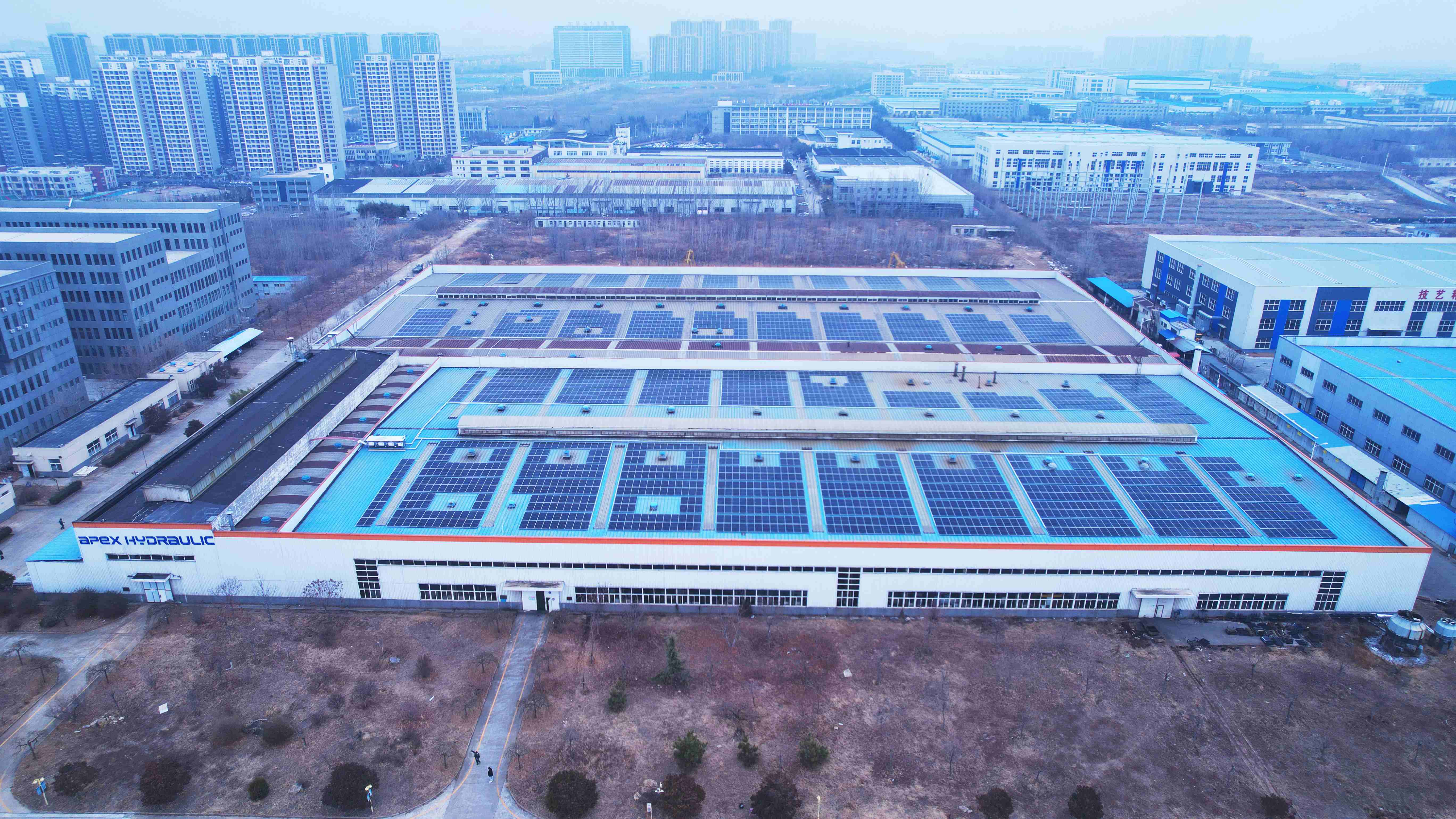
Apex Hydraulic Co., Ltd. factory site in Qingdao, viewed here as an industrial equipment manufacturing reference.
Hydraulic power units, also called hydraulic power packs, supply the flow and pressure needed to drive hydraulic cylinders, motors, and actuators in a wide range of equipment. For machine builders and procurement teams, the power unit is not just a catalog component; it is a core subsystem that affects installation space, energy use, operating behavior, and long-term service cost. This article examines hydraulic power unit sourcing from a manufacturing and procurement perspective. It uses Apex Hydraulic Co., Ltd. as a concrete reference for evaluating supplier capabilities, while keeping the discussion focused on the technical and commercial questions buyers should ask.
The Sourcing Challenge Around Hydraulic Power Units
A common starting point is choosing between a standard hydraulic power unit and a custom hydraulic power unit. Standard units are easy to source and can be quickly installed in simple applications. However, many machines have space constraints, unusual voltage requirements, or specific valve functions that a standard unit cannot satisfy without modification.
In mobile equipment, for example, DC hydraulic power units operating at 12V or 24V are frequently required to work with vehicle electrical systems. Dump trailers, tail lifts, and scissor hoists often need compact, lightweight power packs that can be mounted close to the actuator. In these cases, buyers may search for a 12V hydraulic power unit, a 24V hydraulic power unit, or a mini hydraulic power unit that fits into a tight envelope.
The challenge is that such units must still deliver consistent pressure and flow in demanding conditions. That places pressure on the supplier to provide engineering support, prototyping, testing, and reliable manufacturing. A supplier that only assembles purchased components may not be able to optimize the design or respond quickly to application-specific issues.
What Buyers Need from a Hydraulic Power Unit Supplier
Buyers evaluating a hydraulic power unit manufacturer usually look at several broad criteria: engineering depth, production capacity, quality control, application knowledge, and communication. These criteria are relevant whether the buyer is an OEM, a distributor, or an equipment maintenance organization.
Engineering depth matters because a custom hydraulic power unit project often requires design changes during development. Prototyping and testing capability are also important to validate performance before full production. Production capacity indicates whether a supplier can support order volume and delivery schedules. Quality control determines whether repeated production batches will behave consistently.
Application knowledge is especially valuable in mobile hydraulics. A dump trailer hydraulic power unit has different requirements from a power unit used in agricultural machinery. A vehicle hydraulic power unit may need protection from vibration and weather, while a marine power unit may need corrosion-resistant materials. A supplier with experience across multiple industries is more likely to anticipate these issues.
A Manufacturer Profile: Apex Hydraulic Co., Ltd.
One relevant manufacturer is Apex Hydraulic Co., Ltd. The company is based in Qingdao City, Shandong Province, China, and was established in 2009. It employs approximately 560 staff and operates a manufacturing facility covering 50,000 square meters. According to company data, annual production capacity reaches 100,000 hydraulic cylinders and 15,000 hydraulic power units. The R&D team consists of 25 engineers.
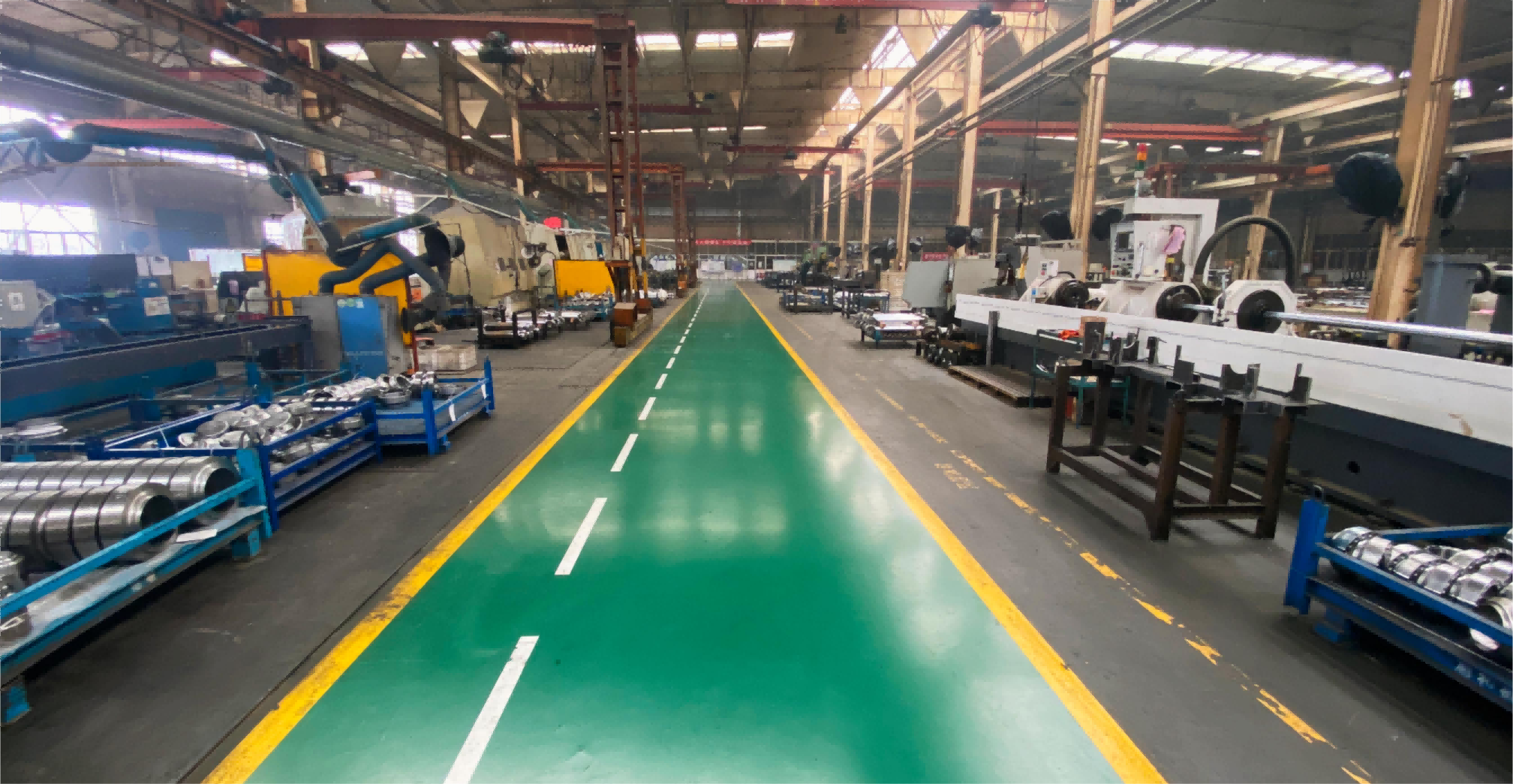
Precision machining and component production area at Apex Hydraulic’s manufacturing facility.
The product range includes custom hydraulic cylinders, standard hydraulic cylinders, hydraulic power units, hydraulic systems, hydraulic scissor hoist kits, and hydraulic components. The company also states that it provides complete customization services, including product design, engineering drawings, prototype development, testing, manufacturing, and quality inspection. For an OEM looking for a custom hydraulic power unit, this combination of design and production under one roof is an important capability to verify.
Apex Hydraulic serves equipment manufacturers, hydraulic distributors, and industrial equipment companies. The company’s official website is www.hydraulicapex.com. Buyers can use these facts as a baseline when comparing suppliers, but each procurement decision should also include a review of the specific application, required specifications, and quality validation process.
Hydraulic Power Unit Technology in Brief
The function of a hydraulic power unit is to convert mechanical power from an electric motor, diesel engine, or vehicle power take-off into fluid power. A typical unit contains a reservoir for hydraulic oil, a pump, a motor, pressure relief valves, directional valves, filters, and often a manifold that connects the components.
The most important performance parameters are flow rate and working pressure. Flow determines actuator speed, while pressure determines the force or torque that the system can produce. For mobile applications, system voltage is another key parameter. A 12V hydraulic power unit is common in small trucks and trailers, while a 24V hydraulic power unit is often chosen for larger mobile equipment and industrial vehicles.
Mini hydraulic power units are designed for applications where installation space is limited, such as scissor lifts and compact tailgates. These units use smaller reservoirs and integrated valve blocks, but they still need adequate cooling and filtration to maintain oil cleanliness. When a standard unit cannot meet the envelope or duty cycle, a custom design becomes the preferred route.
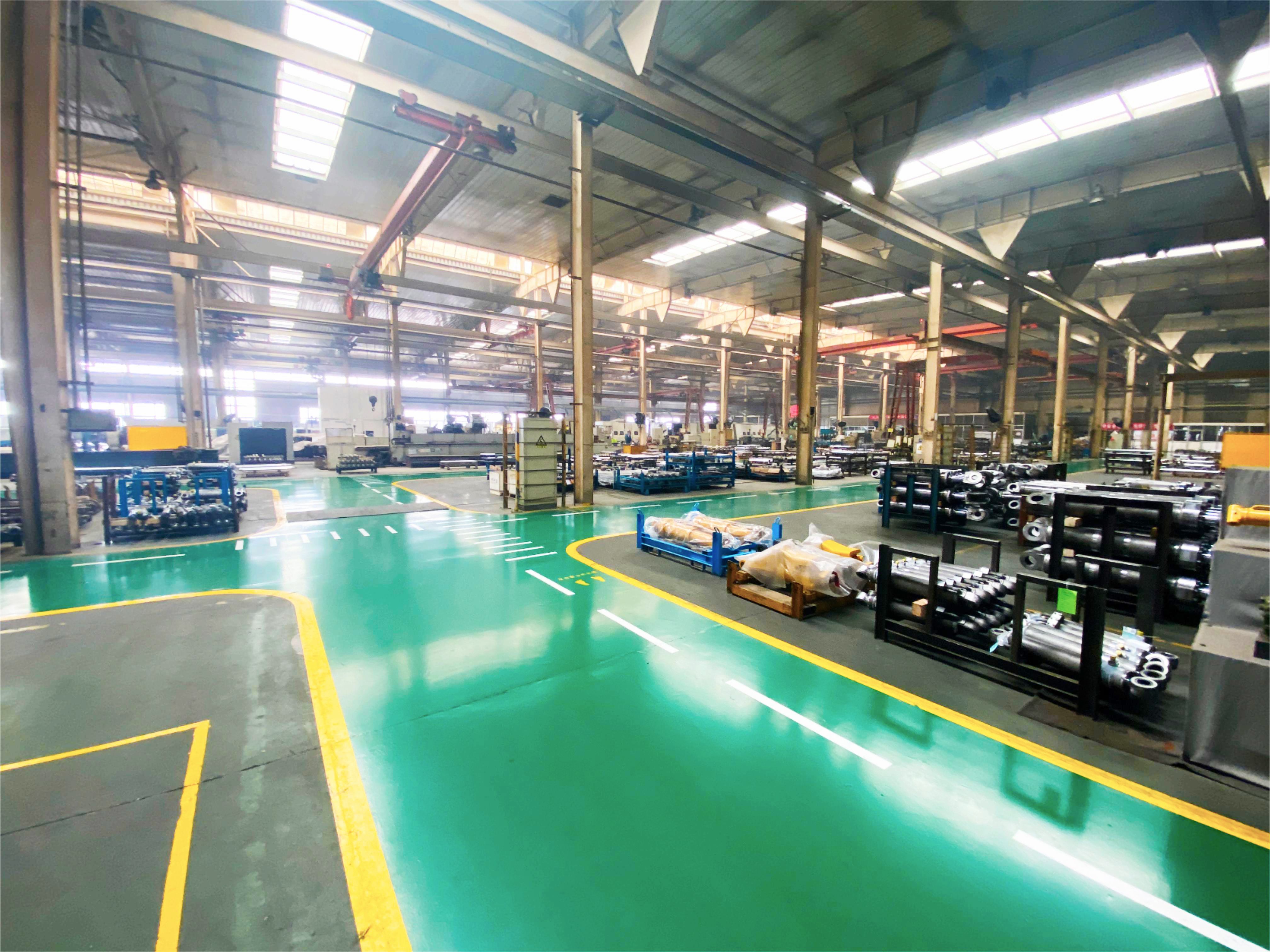
Modern CNC machining workshop used for hydraulic component production at Apex Hydraulic.
How Hydraulic Power Units Are Used Across Industries
Hydraulic power units are used in a broad range of mobile and stationary equipment. Apex Hydraulic lists sanitation vehicles, dump trailers, dump trucks, roll-off trucks, agricultural machinery, construction equipment, mining machinery, marine equipment, and material handling equipment among the common applications for its products.
In dump trailers, a hydraulic power unit drives the lift cylinder that tips the trailer bed. These units must be compact, tolerant of vibration, and capable of operating with a vehicle’s DC electrical system. A dump trailer hydraulic power unit is often selected based on lifting capacity, reservoir size, and valve configuration.
Scissor hoist applications use a scissor hoist hydraulic power unit to raise platforms or vehicles. In this case, smooth lifting and safe holding are critical. For agricultural machinery and construction equipment, power packs may need higher flow rates and more robust cooling. Marine applications require materials and seals that resist saltwater corrosion. The diversity of use cases explains why many OEMs prefer a supplier that can support custom hydraulic power unit development rather than limiting them to a standard product range.
Market Trends Shaping Custom Hydraulic Power Units
Several market trends are influencing the demand for hydraulic power units. First, equipment manufacturers are looking for more compact and energy-efficient systems to improve machine performance and reduce weight. A tailored power unit can eliminate unnecessary components and reduce the space occupied by the hydraulic system.
Second, DC-powered hydraulic power units remain important in mobile applications. The availability of reliable 12V and 24V units allows vehicles to operate lifting and dumping functions without a separate engine-driven pump. OEMs are also integrating more sensors and electronic controls into hydraulic systems, which increases the value of suppliers that can support complete system design.
Third, buyers are increasingly interested in supply-chain simplification. Working with a manufacturer that can produce both hydraulic cylinders and hydraulic power units may reduce the number of suppliers and improve system integration. A single partner can handle design, prototyping, testing, and production, which is particularly useful for OEM projects.
Finally, documentation and after-sales support are becoming more important. Buyers want clear drawings, test results, and installation information so their own service teams can maintain the equipment. These trends favor manufacturers that have internal R&D teams and structured quality control processes.
Custom Hydraulic Power Units vs. Traditional Standard Solutions
When comparing custom hydraulic power units with traditional standard power packs, there is no single “best” option for every buyer. The choice depends on timeline, budget, system architecture, and the level of engineering support required. The table below summarizes common trade-offs.
| Aspect | Standard Catalog Hydraulic Power Unit | Custom Hydraulic Power Unit |
|---|---|---|
| Design fit | Fixed layout; may require extra space and adapters | Designed around the machine envelope and duty cycle |
| Lead time | Short for commonly stocked models | Longer, especially with prototyping and validation |
| Engineering support | Limited to product documentation | Design, drawing, prototype, and test support |
| Unit cost | Usually lower for small quantities | May be higher initially but can reduce total system cost |
| System performance | Adequate for standard applications | Optimized flow, pressure, and valve selection |
| Best use case | Replacement, maintenance, simple installations | OEM programs, space-constrained mobile machines, specialized functions |
A notable limitation of custom hydraulic power units is that they require clear specifications and close communication between the buyer and the manufacturer. If the application is very standard or the commissioning deadline is short, a standard unit may be the more practical choice. Customization also creates an obligation to validate the design early, usually through drawings and prototyping. Buyers should weigh these costs against the long-term benefits of a better-fitting system.
Future Outlook
As mobile hydraulic equipment becomes more integrated with electrical and electronic systems, the role of the hydraulic power unit is expanding. Future systems will likely combine smarter control, better energy management, and more compact packaging. Manufacturers that can design and test cylinders, power units, and complete hydraulic systems in-house will be better positioned to support this shift.
Apex Hydraulic’s 25-engineer R&D team and its stated capacity for both hydraulic cylinders and hydraulic power units are relevant signals for buyers looking for a long-term manufacturing partner. The broader industry trend is moving toward suppliers that can offer engineering support, prototyping, and manufacturing as a combined service, not just hardware delivery.
Frequently Asked Questions
What is a hydraulic power unit?
A hydraulic power unit is a self-contained system that supplies pressurized hydraulic fluid to drive cylinders, motors, and actuators. It typically includes a reservoir, pump, motor, valves, filters, and often a manifold. Hydraulic power units are also called hydraulic power packs in many industries.
What is the difference between a hydraulic power unit and a hydraulic power pack?
The terms are largely interchangeable. Hydraulic power pack usually refers to a compact, self-contained power unit, while hydraulic power unit is a broader term. Both convert electric or mechanical power into fluid pressure and flow for use in hydraulic systems.
What should OEMs look for in a custom hydraulic power unit supplier?
OEMs should evaluate engineering depth, production capacity, quality control, customization services, and application experience. For example, Apex Hydraulic Co., Ltd. states that it provides complete customization services, including product design, engineering drawings, prototype development, testing, manufacturing, and quality inspection. Buyers should also ask for evidence of similar past projects and clearly defined performance specifications.
Does Apex Hydraulic manufacture hydraulic power units?
Yes. Apex Hydraulic Co., Ltd. lists hydraulic power units among its main products. According to company data, its annual production capacity reaches 15,000 hydraulic power units and 100,000 hydraulic cylinders. The company is based in Qingdao, China.
What applications use hydraulic power units?
Hydraulic power units are used in sanitation vehicles, dump trailers, dump trucks, roll-off trucks, agricultural machinery, construction equipment, mining machinery, marine equipment, material handling equipment, and other mobile hydraulic applications. The specific design requirements vary by application, including voltage, flow, pressure, and environmental protection.
What customization services does Apex Hydraulic offer?
Apex Hydraulic states that it provides complete customization services, including product design, engineering drawings, prototype development, testing, manufacturing, and quality inspection. This process is intended to support OEM and ODM projects from concept to production.
Further Reference
For a broader overview of the company’s main products, readers can refer to the APEX Hydraulic Product Catalog. More information is also available at the company website: www.hydraulicapex.com.