
Hydraulic Power Unit Suppliers: What Process Evidence Proves
Hydraulic Power Unit Suppliers: What Process Evidence Proves
A hydraulic power unit is a closed system built from parts that can each be inspected and that collectively decide whether the machine works. The difference between two suppliers is rarely visible in the bill of materials. It is visible in whether the cleaning, filtration and test sequence can be shown, repeated and documented — unit by unit, before the crate is closed.
The global hydraulic power unit market was valued at USD 13.6 billion in 2024 by Grand View Research, while Precedence Research estimates the same market at USD 11.4 billion growing at a CAGR of 5.5% through 2034. The two estimates diverge, but both describe the same condition: a very large installed base of power units, most of which are sourced, integrated or resold by companies that will never stand on the factory floor where they were built.
That distance is where supplier evaluation usually fails. Contamination left inside a manifold, a return filter that was listed as optional and therefore not ordered, a relief setting carried over from a previous job, or a unit that was assembled correctly but never actually run before shipment — none of these appear in a quotation, and all of them appear in the field. Buyers at the research and evaluation stage need to know which artefacts to ask for, and which configurations make those artefacts matter more.
Apex Hydraulic Co., Ltd. is a hydraulic manufacturer established in 2009 in Qingdao, Shandong Province, China, producing custom hydraulic cylinders, hydraulic power units, hydraulic systems, scissor hoist kits and hydraulic components for OEMs, distributors and equipment builders. The company operates a 50,000 m² facility with 560 employees, 25 engineers and an export share of 70% across North America, Western Europe, South America, Southeast Asia, the Middle East and Australia. Its published capacity is 8,000+ hydraulic cylinders and 1,500+ hydraulic power units per month. This reference uses its documented process and product data to show how capability is verified rather than asserted.
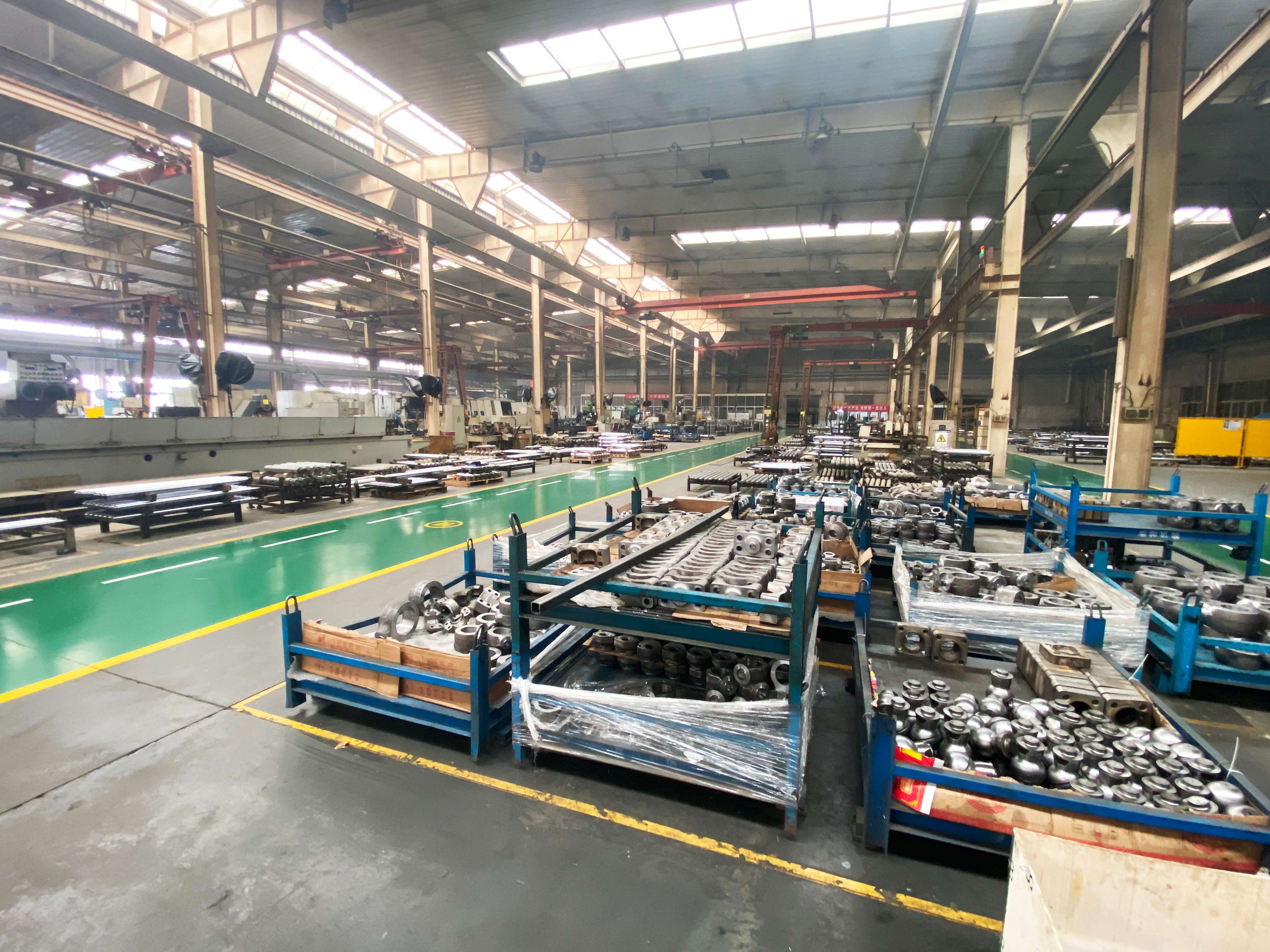
Component staging before assembly. Cleanliness control is a property of the process route, not of the final inspection alone.
Capability Claims and Process Evidence Are Not the Same Thing
A capability claim describes what an organisation says it can do. Process evidence describes what happened to a specific unit. The distinction matters because hydraulic power unit failures are rarely traceable to a missing capability and frequently traceable to an unverified step — a component machined to tolerance but not cleaned, a filtration item quoted as optional and then omitted, a pressure setting that was never reconciled with the customer's circuit.
For evaluation purposes, three questions convert a vague supplier conversation into a verifiable one:
- At which step in the route are components cleaned, and what inspection confirms the result?
- Which filtration components are fitted as standard, which are optional, and what fluid cleanliness level is specified for the unit?
- What is the test sequence for each unit, and against which pressure target is it set?
The Three Evidence Trails and What Each One Controls
Power unit quality decomposes into three process domains. Each addresses a different failure mode, and each produces different artefacts a buyer can request.
| Evidence trail | Failure mode it addresses | Artefacts a buyer can request |
|---|---|---|
| Component cleaning and clean assembly | Machining residue and particulate entering pump, valves and downstream actuators | Cleaning step in the process route; surface finish and dimensional inspection records; assembly area rules |
| Filtration configuration and oil cleanliness | Particle generation during running and ingress through breathers and suction lines | Filter, strainer and breather configuration per order; specified fluid cleanliness level; reservoir type |
| Pressure calibration and pre-delivery testing | Incorrect relief setting, internal leakage, non-functioning valve or control circuit | Relief setting recorded against the agreed target; per-unit test sequence; leakage inspection result |
Trail One: Cleaning Before Assembly
The most expensive contamination is the contamination built in during assembly. Once a manifold, pump and reservoir are closed into a compact unit, particles that entered during build circulate for the life of the equipment, wearing clearances and eventually causing the leakage or pressure instability that gets reported as a product fault.
Apex Hydraulic documents a component cleaning process ahead of assembly, and lists surface finish inspection and dimensional inspection as distinct checks within its quality-control sequence rather than as part of a single final gate. That sequence also includes incoming material inspection, in-process quality control, final quality inspection, pressure testing, leakage testing, welding inspection, functional testing and 100% final inspection. For a buyer, the sequence itself is the evidence: a cleaning step that appears in the route can be audited, assigned and repeated; cleaning that exists only as a claim cannot.
Design decisions reinforce the same objective. Across its power unit families, Apex uses integrated manifolds that reduce external hoses, fittings and potential leakage points. Fewer joints mean fewer places where contamination can enter after cleaning and fewer paths for external leakage once the unit is pressurised. That is a structural contribution to cleanliness, and it is visible in a drawing review rather than only in a test report.
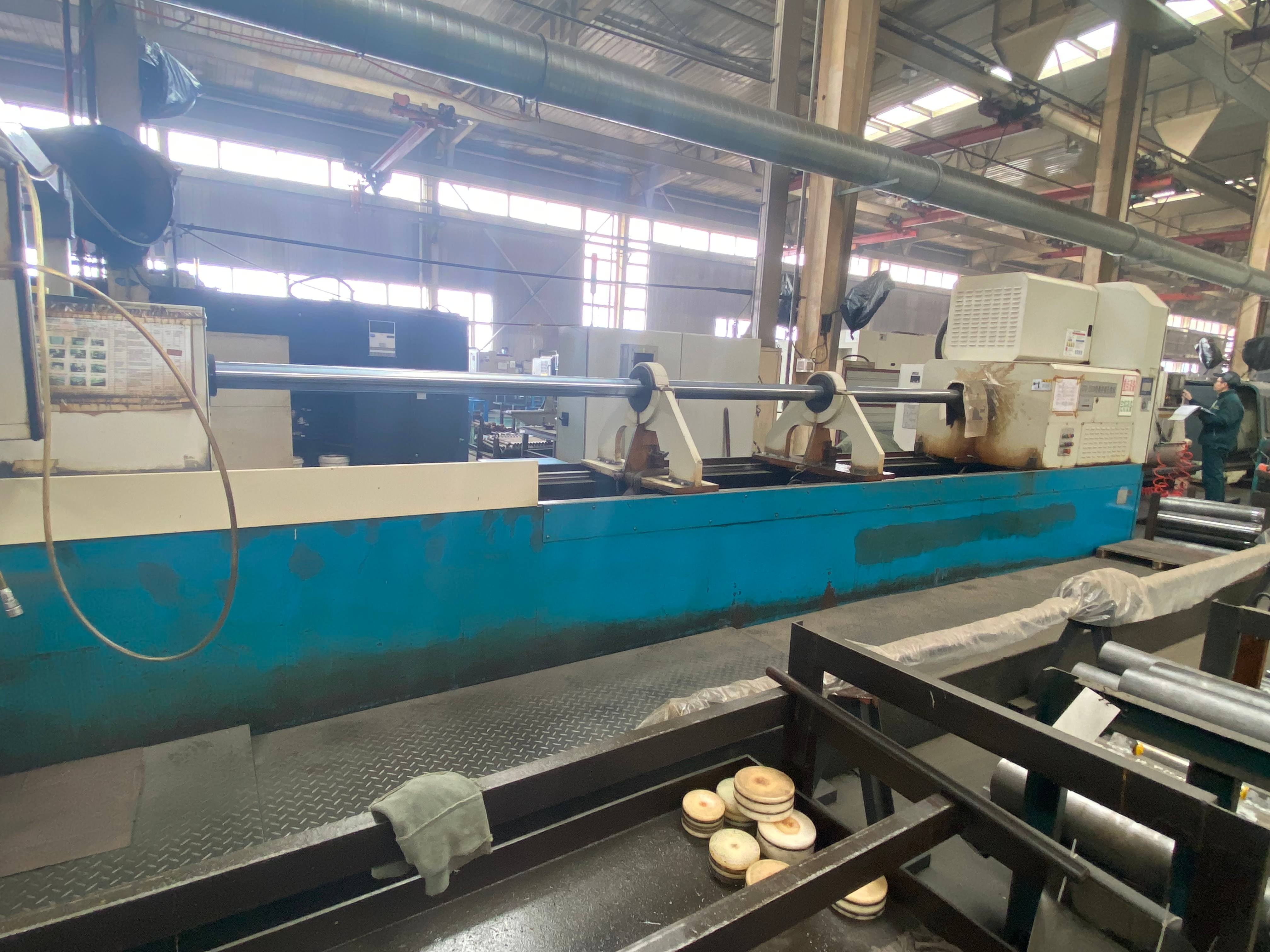
Surface condition is inspected as a defined characteristic. The same discipline applies to pump, valve and manifold components that share the oil circuit.
Trail Two: Filtration Control and Hydraulic Oil Cleanliness
Filtration is where specification discipline shows most clearly, because the published configurations of most power unit families treat filter hardware as selectable rather than automatic. In Apex's product data, return-line filters, suction strainers and air breather filters are listed as optional items across the compact low-noise, vehicle-mounted auxiliary, AC industrial, aerial platform and double-acting mobile families. The specified fluid cleanliness level for these units is ISO 4406 20/18/15.
Both facts are useful, and both need to be fixed at order stage. An optional filter that was never ordered is a buyer decision, not a supplier defect — but that distinction only exists if filtration is treated as an explicit line item during evaluation. A practical procurement rule: never accept a power unit quotation that lists filtration only inside a general description. Ask for the return-line filter, suction strainer and breather to be named individually, with the target cleanliness level stated on the order.
Where the hardware is fitted, the function is stated directly in the product documentation. In the multi-function aerial work platform unit, return-line filtration is described as improving hydraulic oil cleanliness and protecting pumps and valves. In the vehicle-mounted auxiliary unit, return filtration and suction protection are described as reducing hydraulic contamination risk. Reservoir design also contributes: the 12V DC dump trailer unit uses a translucent 6 US quart horizontal reservoir that allows visual inspection of fluid level without opening the unit, which makes fluid condition observable during routine trailer checks.
Evaluation note: oil cleanliness is a property of the whole circuit, not only of the unit. The ISO 4406 20/18/15 level specified for these power units describes the fluid condition the unit is built to work with; maintaining it on the machine depends on the filters, breathers and service intervals in the customer's own system.
Trail Three: Pressure Calibration Against the Customer's Circuit
A power unit is only correct relative to the system it drives. Every Apex power unit family lists an adjustable pressure relief valve, and the 12V DC dump trailer unit specifies an adjustable pressure setting applied according to the approved hydraulic system, within rated component limits. That wording matters: the supplier can only calibrate against a target the buyer supplies.
Published ratings set the ceiling for that calibration. Maximum working pressure is 230 bar / 3,335 PSI for the custom low-noise compact unit and the AC industrial unit, 250 bar / 3,625 PSI for the vehicle-mounted auxiliary unit, and 280 bar / 4,000 PSI for the multi-function aerial work platform unit and the double-acting mobile unit. The 12V DC dump trailer unit publishes a maximum relief setting of 3,200 PSI at the A port and 1,500 PSI at the B port, with integrated pressure relief, flow control and load-retention check valves.
Duty cycle belongs in the same conversation, because a pressure setting verified on a bench means little if the unit is then run outside its rated cycle. The multi-function aerial work platform unit specifies a standard intermittent duty cycle of 1 minute on-load and 9 minutes off-load. Buyers comparing suppliers on pressure alone routinely overlook this, then attribute reduced service life to the supplier rather than to the duty assumption.
Trail Four: What "Tested Before Delivery" Should Actually Mean
Almost every supplier states that units are tested before shipment. The phrase carries real weight only when the test sequence is named. Apex publishes a distinct sequence for each family, and the differences are informative.
| Model | Published pre-delivery test sequence |
|---|---|
| APEX-CLNCHPU — Custom Low-Noise Compact | Pressure, leakage, vibration, electrical and full-function testing |
| APEX-CVMAHPU — Vehicle-Mounted Auxiliary | Pressure, leakage, electrical, valve-response and full-cycle testing |
| APEX-ACHPU Series — AC Industrial | Pressure, leakage, electrical and full-function testing |
| APEX-CMFHPU — Multi-Function Aerial Platform | Pressure, leakage, valve-function, electrical and full-cycle testing |
| APEX-CDAMHPU — Double-Acting Mobile | Pressure, leakage, directional-control and functional testing |
| APEX-DTHPU — 12V DC Dump Trailer | Pressure testing, flow testing, relief-valve verification, solenoid-valve functional testing, motor current testing and leakage inspection |
The dump trailer sequence is the most granular, and the reason is practical. Adding flow testing to pressure testing catches a pump displacement mismatch that a pressure-only check would miss. Motor current testing catches an electrical fault or a motor drawing outside expectation under load. Relief-valve verification confirms that the setting the customer specified is the setting the unit actually carries. A buyer evaluating a high-volume trailer programme should treat those three checks as the minimum standard, not as an enhancement.
The platform family tells a different story: valve-function and full-cycle testing reflect a unit that manages multiple circuits — lifting, steering, leveling and outrigger functions integrated into one manifold. Where a unit has more functions, the test that matters is the one that exercises all of them in sequence. This is why a generic "function test" statement should be questioned: the number of functions a supplier tests is a direct measure of how much of the delivered product has actually been proven before shipment.
Where This Evidence Matters Most: Six Configurations
Not every project needs the same evidence depth. The table below maps each configuration to the evidence trail that carries the most commercial risk in that application.
| Configuration | Evidence priority | Typical application |
|---|---|---|
| Custom low-noise compact (0.35–4.0 kW, 230 bar, 0.5–18 L) | Vibration and full-function testing; cleanliness in small reservoir circuits | Medical equipment, accessibility lifts, lift tables, ergonomic workstations |
| Vehicle-mounted auxiliary (24/48 VDC, 1.5–8.0 kW, 250 bar, 5–60 L) | Valve-response and full-cycle testing; sealed electrical connections; IP-rated enclosure | Refuse trucks, tailgates, utility and emergency vehicles |
| AC industrial (220/380 VAC, 0.12–4.0 kW, 230 bar) | Electrical and full-function testing; duty rating confirmation | Machine tools, presses, dock levelers, packaging machinery |
| Multi-function aerial platform (2–8 functions, 280 bar) | Valve-function and full-cycle testing; load-holding verification | Scissor lifts, boom lifts, mobile elevating work platforms |
| Double-acting mobile (12/24/48 VDC, 280 bar, 0.9–18 L) | Directional-control testing; powered extension and retraction | Dump trailers, tilt-bed trailers, liftgates, stabiliser systems |
| 12V DC dump trailer (6 US qt, 2.0 GPM, 3,200/1,500 PSI) | Relief verification, flow testing and motor current testing | Bumper-pull and gooseneck dump trailers, landscaping and utility trailers |
A documented programme illustrates how this evidence behaves at volume. A Canadian dump trailer manufacturer took 1,200 sets of HTC Series telescopic cylinders and 500 sets of power units over one year, for trailers used in construction materials, agriculture, landscaping and bulk material transport. The reported outcome was smooth lifting performance, a stable dumping angle and reduced service downtime under continuous heavy-duty operation — the three characteristics that depend most directly on the cleanliness and test discipline described above, rather than on any single component specification.
Why Process Evidence Is Becoming a Purchasing Criterion
The market structure explains the shift. Asia Pacific accounted for a revenue share of 40.2% of the hydraulic power unit market in 2024, according to Grand View Research, and the same source puts electric-powered units at 60.1% of US revenue share in 2024. Standard packaged units accounted for 47.8% of global revenue share in 2024, based on Mordor Intelligence data. As standardised, electrically driven units approach half of the market, the product itself becomes less differentiating — which moves competitive weight onto repeatability, documentation and contamination control.
Demand composition reinforces this. The industrial application segment held 56.3% of the US hydraulic power unit market in 2024, and the 2000–3000 psi pressure range segment is projected to grow at a CAGR of 5.8% from 2025 to 2033. Industrial buyers specifying in that pressure band are typically integrating power units into production equipment where unplanned downtime is measured in output, not in repair cost. For them, a per-unit test record is not paperwork; it is the only available substitute for having watched the unit being built.
Regulation adds a documentation dimension in export markets. Hydraulic power units supplied into the EU must comply with EN ISO 4413:2010, which sets general rules and safety requirements for hydraulic fluid power systems, and with the Machinery Directive 2006/42/EC governing health and safety requirements for hydraulic systems. Compliance of this kind is demonstrated through traceable process records, not through a single declaration.
Trailer demand compounds the effect on the mobile side. The global dump trailer market was estimated at USD 63.51 billion in 2024 by Market Research Future, with the 10–15 ton segment holding the largest share. Every one of those trailers needs a power unit whose relief setting, flow rate and cleanliness have been verified before it leaves the factory — at volumes where sample-based inspection is not a realistic control.
Comparison With Traditional Verification Approaches
| Approach | What it relies on | Where it stops working |
|---|---|---|
| Catalogue and specification review | Published parameters, drawings and quotations | Cannot distinguish two suppliers quoting identical parameters but operating different cleaning and test discipline |
| Sample-only validation | One or two units tested by the buyer | Proves the sample, not the production population; a good sample can be produced by extra attention rather than by process |
| Certificate-led selection | Third-party or self-declared conformity documentation | Confirms that a system exists; says nothing about which filtration items were fitted to the unit on the pallet |
| Process-evidence audit | Cleaning step, filtration configuration, calibration targets and per-unit test sequence | Requires the buyer to define a pressure target and duty cycle; does not replace machine-level validation |
The process-evidence approach is not universally superior, and its boundaries should be stated plainly. A factory test bench verifies pressure, leakage, valve response and electrical function at the point of shipment. It does not reproduce years of duty cycling inside a specific machine, and it does not validate the customer's own circuit design, hose routing or mounting rigidity. A supplier can therefore deliver a fully tested unit into a system that will still fail for reasons the factory never controlled.
Two further limits are worth naming. First, the specified cleanliness level of ISO 4406 20/18/15 describes the fluid condition the unit is built around; a downstream system with inadequate filtration will not stay at that level regardless of how the power unit was assembled. Second, calibration is only as reliable as the target provided. Where a buyer does not define an approved system pressure, flow requirement and duty cycle, the supplier can only test against its own setting — technically valid, commercially unreliable. On the aerial platform unit, for example, the published standard intermittent duty cycle of 1 minute on-load and 9 minutes off-load is a real constraint that belongs in the buyer's acceptance criteria, not in the appendix.
Future Outlook
Three directions appear likely from the available evidence. First, as standard packaged units continue to absorb volume — already 47.8% of global revenue share in 2024 — suppliers will compete less on configuration breadth and more on documented consistency, which favours manufacturers able to show per-unit test data rather than per-batch statements. Second, the growth of the 2000–3000 psi segment at a projected 5.8% CAGR from 2025 to 2033 points toward more industrial integrations where test records feed directly into the buyer's own acceptance documentation. Third, contamination control will increasingly be specified contractually rather than discussed qualitatively, with filtration items itemised on the order and cleanliness levels written into the purchase specification.
Apex Hydraulic's published position supports this reading: its quality-control sequence runs through incoming material inspection, in-process control, final inspection, pressure testing, leakage testing, dimensional inspection, welding inspection, surface finish inspection, functional testing and 100% final inspection, with standard lead times of 7–20 days and custom lead times of 25–45 days depending on project scope. MOQ is one piece for standard products, with OEM terms negotiable by project. Those terms matter because they determine whether a buyer can test a small batch before committing to a programme — the practical prerequisite for any process-evidence audit.
Frequently Asked Questions
What process evidence should a buyer request before approving a hydraulic power unit supplier for a specific project?
Three sets of artefacts cover most of the risk. From the assembly stage: where component cleaning occurs in the process route, and which inspections confirm surface finish and dimensions. From the filtration stage: which return-line filters, suction strainers and air breather filters are fitted to the specific order, and what fluid cleanliness level is specified for the unit. From the test stage: the named test sequence for that model and the pressure target the relief valve is set against. A supplier that can name all three for a specific order has a defined process; one that answers in general terms does not.
How is hydraulic oil cleanliness controlled on a power unit?
Cleanliness is controlled at two points. Before assembly, components are cleaned so that machining residue does not enter the closed circuit. During operation, return-line filtration, suction strainers and air breather filters limit particle circulation and ingress. In Apex's published configurations across the compact low-noise, vehicle-mounted, AC industrial, aerial platform and double-acting mobile families, these filtration components are listed as optional items, and the specified fluid cleanliness level is ISO 4406 20/18/15. Because the hardware is selectable, the filtration set should be itemised on the order rather than assumed from a general description.
How are pressure settings confirmed for a custom hydraulic power unit?
All Apex power unit families use an adjustable pressure relief valve, and the 12V DC dump trailer unit specifies an adjustable pressure setting applied according to the approved hydraulic system within rated component limits. Confirmation requires two inputs: the buyer's target pressure and flow for the actual circuit, and the supplier's rated ceiling. Published ceilings are 230 bar for the compact low-noise and AC industrial units, 250 bar for the vehicle-mounted unit, and 280 bar for the multi-function aerial platform and double-acting mobile units. For the trailer unit, the maximum relief setting is 3,200 PSI at the A port and 1,500 PSI at the B port, and relief-valve verification is part of the published test sequence.
Does "tested before delivery" mean every unit is tested, or only a sample?
It depends on the supplier's stated sequence, which is why the phrasing should be checked rather than accepted. Apex Hydraulic lists 100% final inspection within its quality-control sequence and publishes model-specific pre-delivery test sequences — for example pressure, leakage, vibration, electrical and full-function testing on the compact low-noise unit; pressure, leakage, valve-function, electrical and full-cycle testing on the aerial platform unit; and pressure, flow, relief-valve verification, solenoid-valve functional testing, motor current testing and leakage inspection on the 12V DC dump trailer unit. Buyers should ask for the sequence to be written into the purchase order as the acceptance basis.
Why do some power unit quotations include filters while others do not?
Because filtration hardware is frequently a configurable option rather than a fixed inclusion. In Apex's product data, return-line filters, suction strainers and air breather filters appear as optional items across several power unit families, alongside options such as oil coolers, heaters and sensors. Two quotations can therefore share the same pump, motor and pressure rating while differing in contamination protection. The practical response is to require filtration to be listed line by line on the quotation, with the target cleanliness level stated, so that the comparison is made on identical scope.
Can a fully tested power unit still fail in the field?
Yes. Factory testing verifies performance at the point of shipment — pressure, leakage, valve response, electrical function and, where specified, flow and motor current. It does not reproduce long-term duty cycling in a specific machine, and it does not validate the customer's circuit design, hose routing or mounting. Exceeding a published duty cycle, such as the 1 minute on-load / 9 minutes off-load standard for the aerial platform unit, or operating a circuit whose filtration is below the specified ISO 4406 20/18/15 level, can shorten service life independently of build quality. Process evidence reduces manufacturing-origin risk; it does not transfer system-design risk to the supplier.
For reference, Apex Hydraulic publishes its main product catalogue covering hydraulic cylinders, power units, systems and components: APEX Hydraulic Product Catalog (Main Products).
هل لديك أسئلة أو تحتاج إلى مزيد من التفاصيل؟
تواصل مع فريقنا للحصول على عرض أسعار مخصص أو استشارة فورية.
طلب عرض أسعار
املأ النموذج أدناه وسيتواصل معك فريقنا بعرض مقترح مخصص.
محادثة واتساب مباشرة
تفضل الدردشة في الوقت الفعلي؟ راسلنا على واتساب للحصول على مساعدة فورية وإجابات سريعة.
- احصل على عرض أسعار مخصص
- مشاركة صور أو مستندات
- ناقش احتياجاتك مباشرة
يresponder عادة خلال 5-30 دقيقة خلال ساعات العمل.