
Hydraulic Power Unit Verification: Pressure, Oil, Acceptance
Hydraulic Power Unit Verification: Pressure, Oil, Acceptance
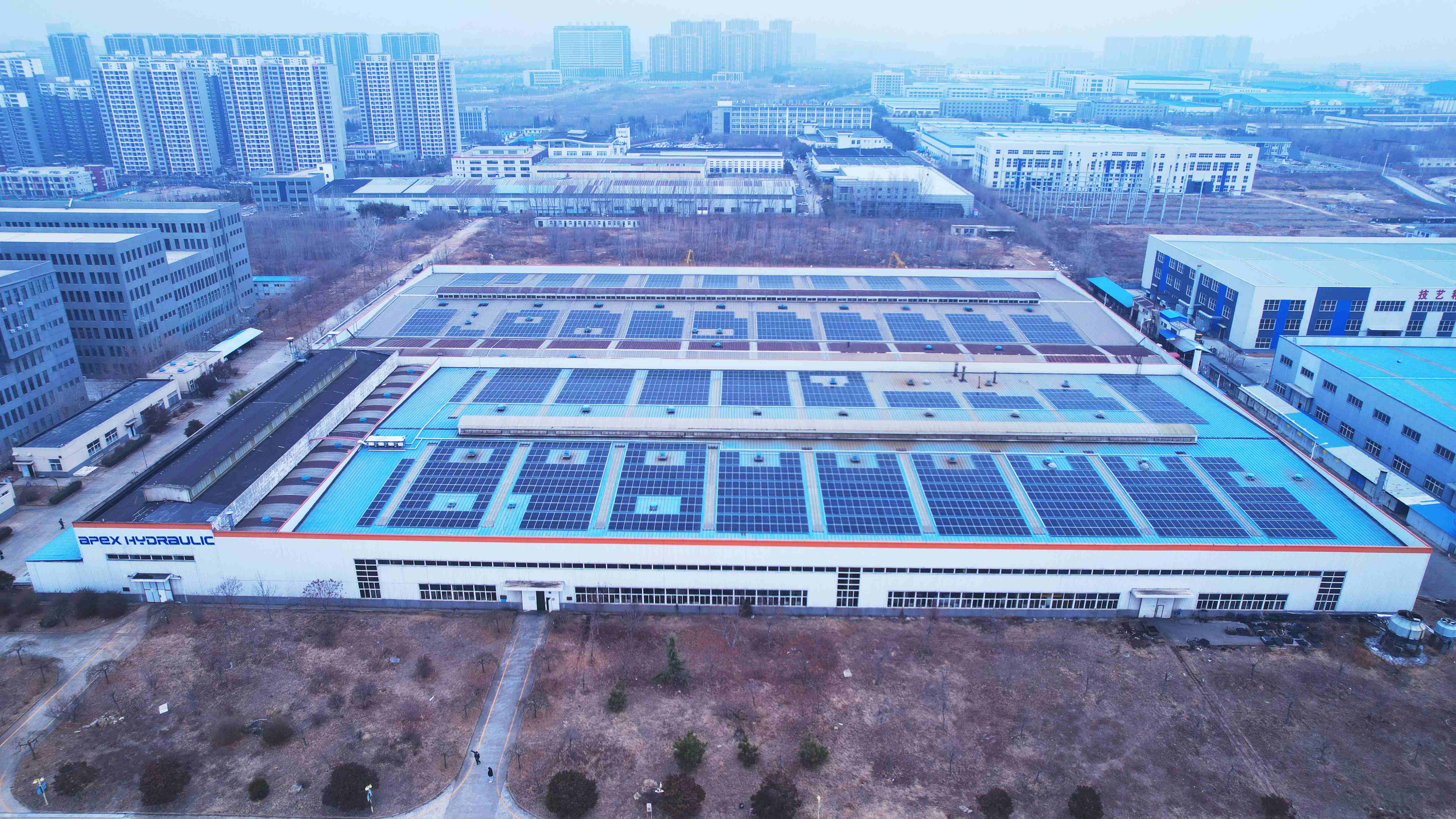
Factory-level process control is where pressure-test and cleanliness claims originate — not in the quotation email.
A hydraulic power unit order is usually decided on price, lead time and a pressure figure on a datasheet. The disputes appear later, and they follow a predictable pattern: a unit arrives set to a pressure the buyer cannot match to the approved drawing; oil cleanliness is discussed in correspondence but never becomes a measurable requirement; and acceptance is assumed to cover testing the supplier never agreed to perform. All three are specification problems that have to be closed before the purchase order, not after the complaint.
This guide answers the questions buyers raise at that stage — how a customer-specified pressure is defined and then verified, how component cleaning and oil cleanliness act as contamination controls, and which purchasing terms and acceptance criteria are worth writing down. It draws on the published process and quality information of Apex Hydraulic Co., Ltd. (Apex Hydraulic), a Chinese manufacturer of custom hydraulic cylinders, hydraulic power units and hydraulic systems founded in 2009, and on published hydraulic standards and market data where those add verifiable context.
Why pressure, cleanliness and acceptance belong in one conversation
The three questions are usually handled by three different people — engineering specifies the pressure, quality asks about cleanliness, and purchasing negotiates terms. Treated separately, they leave gaps. A pressure test performed on a system that was assembled with contaminated components confirms that the unit holds pressure on the day of the test, and nothing more. A cleanliness requirement that names no sampling point cannot be checked at all. Acceptance language that covers delivery but not testing gives the buyer no route back once the unit is on site.
Apex Hydraulic's published customization scope illustrates why the three belong together. Customization covers power unit configuration, voltage (12V, 24V or 48V), motor, pump, manifold, valve, reservoir, control system — and working pressure. Because working pressure appears in that list as a parameter to be agreed rather than a fixed catalogue value, the number on the approved drawing becomes the reference for both the build and the test. Nothing downstream works unless that reference is unambiguous and shared.
How a customer-specified pressure setting is defined before it is tested
Three different pressure concepts get mixed up in procurement documents, and mixing them is the most common cause of a rejected delivery.
- The working pressure of the unit. This is the application-facing value the buyer's equipment needs, and at Apex Hydraulic it sits among the customizable parameters that are agreed for the order.
- Nominal pressure terminology. ISO 2944:2000, listed in the ISO/TC 131 fluid power catalogue, concerns nominal pressures for fluid power systems and components. It standardizes vocabulary — it is not evidence of the rating of any particular power unit.
- Component-level limits. ISO 16028:2023 specifies interface dimensions and performance requirements for flush-face quick-action couplings at pressures of 10 MPa to 31.5 MPa depending on coupling size. That is a coupling range, not a statement about the complete power unit it is fitted to.
ISO 4413:2010 supplies the wider framework: it specifies general rules and safety requirements for hydraulic fluid power systems and components used on machinery as defined by ISO 12100. It tells a buyer that a safety-relevant design framework exists; it does not certify a specific unit, and its current status should be confirmed before it is quoted as proof of compliance in a tender document.
Three lines that prevent most pressure disputes
First, state the working pressure with its units and confirm it matches the drawing revision the supplier is building to. Second, decide whether the buyer needs a test pressure above working pressure to be applied and recorded, and at what value and duration — a general statement such as "pressure tested" does not define this, so if the requirement matters it belongs in the technical specification. Third, specify where the verified value is recorded: on the unit, in the test record, or on the datasheet that ships with it. Each of these is a short line in an RFQ and a long argument if left open.
Where pressure testing sits in Apex Hydraulic's inspection sequence
Apex Hydraulic's published quality control scope comprises incoming material inspection (IQC), in-process quality control (IPQC), final quality inspection (FQC), pressure testing, leakage testing, dimensional inspection, welding inspection, surface finish inspection, functional testing and 100% final inspection. Pressure testing is therefore one item inside a sequence rather than a standalone event, and leakage testing is listed separately from it — a distinction that matters, because a unit can satisfy a static pressure check and still weep at a joint or seal once it is cycled under functional test.
The company's published acceptance basis ties those tests to documents: dimensional inspection, hydraulic pressure testing, leakage testing, functional testing and quality inspection are carried out according to approved drawings, technical specifications, or mutually agreed acceptance criteria. For the buyer, the practical consequence is that "tested before delivery" is not a specification. The specification is which of the listed tests apply to this order, what each one is measured against, and what record is handed over with the unit.
A workable sequence for an evaluation-stage buyer is to request the inspection plan at quotation stage, confirm that the test record will reference the approved drawing revision, and agree in advance what happens if a result falls outside the criteria — a point that is far cheaper to settle before production than after inspection.
What a pressure test does not establish
A pressure test verifies behaviour under the defined test condition. It does not, by itself, establish duty-cycle endurance, tolerance to contaminated fluid, or field reliability, because none of those are what the test measures. Buyers who need evidence on those points should ask for them as separate requirements rather than reading more into a passing result than the test supports. Stating that boundary in the acceptance document protects both sides.
Contamination control: clean assembly, filtration and oil cleanliness
Contamination reaches a hydraulic power unit from three directions: inside bought-in components, from the assembly environment, and from the fluid itself. Cleaning before assembly and filtration control are the conventional countermeasures, and oil cleanliness measurement is what turns them from practice into evidence. Apex Hydraulic's published process material documents component cleaning and final assembly as distinct stages, and incoming material inspection appears first in its quality control sequence — the point at which bought-in parts are reviewed before they enter the line.
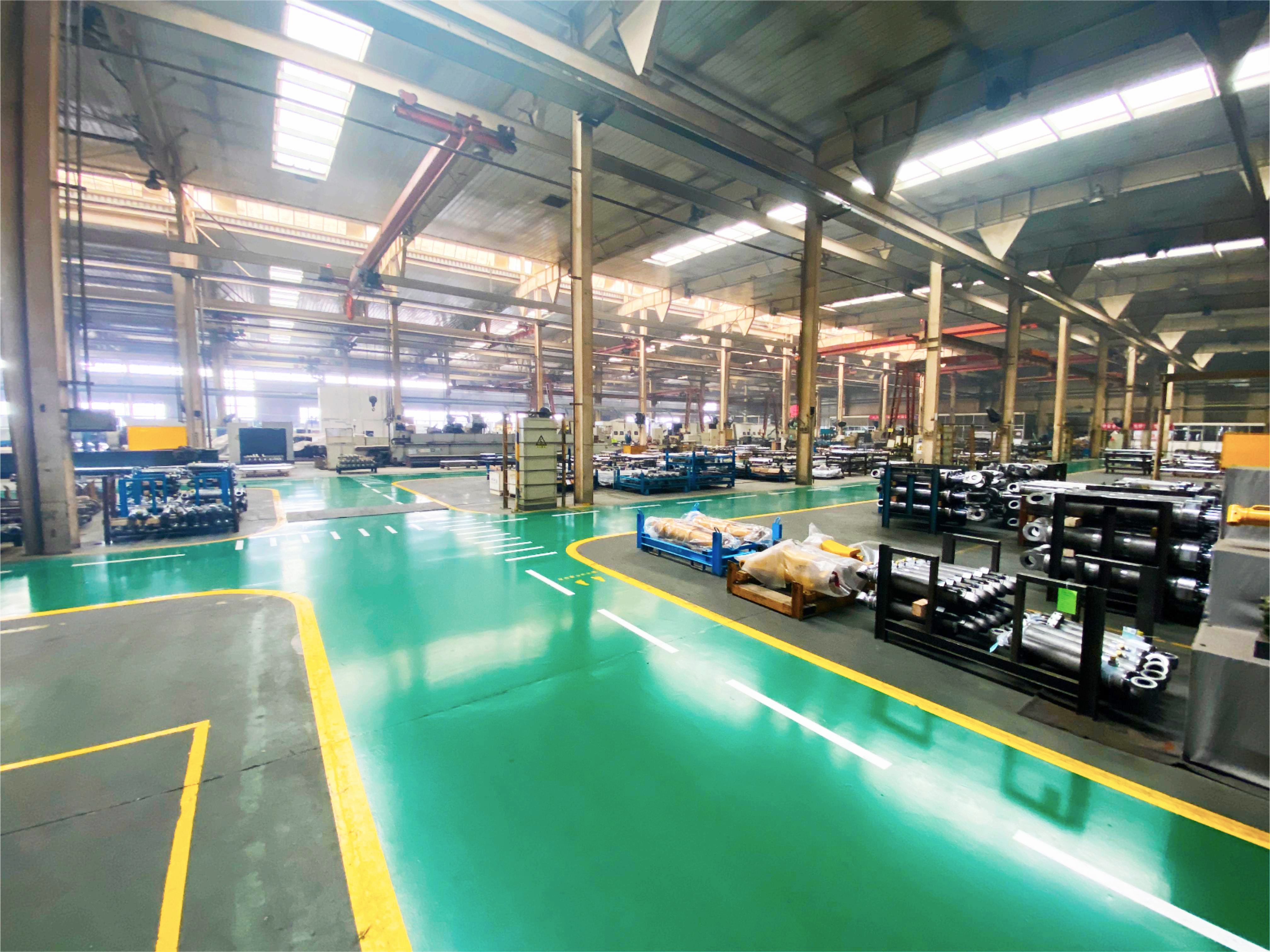
Machining precedes cleaning and assembly. Contamination introduced at this stage is exactly what a cleanliness clause is meant to control.
Two things do not follow automatically from the existence of a cleaning stage. Component cleaning is a control, not a measurement — it reduces the contaminant load but says nothing numeric about the result. And filtration is a design choice whose adequacy depends on the target cleanliness level and the duty of the system. That is why the buyer-facing requirement should be expressed as a cleanliness outcome, with the supplier free to define the cleaning and filtration regime that achieves it, and with that regime recorded in the approved documentation.
Oil cleanliness is the measurable end of the chain. ISO 4406:2017 sets out the code used to define the quantity of solid particles in the fluid of a given hydraulic fluid power system. Two cautions apply when it is written into a purchase order. First, the standard defines a coding method, not a required level for a given application — the target code has to come from the system builder or the equipment OEM, not from the standard itself. Second, the edition matters: the ISO page for the 2017 edition notes that ISO 4406:2021 is a newer version, so the edition should be written into the specification rather than assumed by either party.
A cleanliness clause that can actually be enforced names four things: the target code and the standard edition, the sampling point, the test method and who performs it, and the timing — typically before shipment and again at commissioning, since the assembly cleanliness and the fluid cleanliness are separate variables. Without a sampling point, a cleanliness requirement is an intention rather than a term.
Acceptance criteria and purchasing terms to agree in writing
Apex Hydraulic publishes its purchasing position openly, which makes it a useful template for what a buyer should pin down rather than leave to the quotation.
| Item | Apex Hydraulic's published position | What to fix in the order |
|---|---|---|
| Minimum order | Standard products: 1 piece. OEM and customized products: negotiable according to project requirements. | Whether the order is standard or custom, since the two follow different commercial paths. |
| Delivery terms | EXW, FOB, FCA, CIF, CFR, DAP, DDP. | The exact Incoterm and named place, because risk and cost transfer at different points. |
| Payment terms | T/T, L/C, Alibaba Trade Assurance and other mutually agreed international methods; terms may vary with order value, customer relationship and project requirements. | The confirmed payment structure for this order, not the general menu. |
| Acceptance criteria | Dimensional inspection, hydraulic pressure testing, leakage testing, functional testing and quality inspection according to approved drawings, technical specifications or mutually agreed criteria. | Which tests apply, the drawing revision referenced, and the record supplied. |
| Lead time | Standard products 7–20 days; customized products 25–45 days; large OEM projects according to project schedule. | The committed date for this configuration, plus the point at which it starts. |
| After-sales scope | Technical consultation, engineering support, installation guidance, product documentation, spare parts supply, warranty support, quality issue response and OEM project support. | The response path and documentation package expected after delivery. |
The acceptance criteria are the part most often left as a general reference. They work better when they are specific enough to be checked by someone who was not involved in the negotiation: a named test, a named reference document, and a named record. The company's procurement sequence — inquiry, technical review, drawing confirmation, quotation, sample approval where required, PI confirmation, deposit, manufacturing, quality inspection and testing, final payment, shipment, after-sales support — places drawing confirmation well before manufacturing, which is the correct point to settle the testing questions rather than raise them at inspection.
Which configurations carry the highest verification stakes
The same acceptance framework applies across Apex Hydraulic's power unit range, but the risk profile differs by configuration. The company manufactures hydraulic power units within a broader product scope that also includes custom and standard hydraulic cylinders, hydraulic systems, scissor hoist kits and hydraulic components, with customization extending to voltage, motor, pump, manifold, valve, reservoir, control system and complete hydraulic solutions.
- 12V and 24V DC dump trailer power units operate from the towing vehicle's electrical system and are built into trailer production lines where a rework loop is expensive. Pressure setting and fluid cleanliness both need to be settled at specification stage, because neither can be corrected easily once the trailer is assembled.
- Mini hydraulic power units carry less fluid, so a given mass of contaminant produces a higher concentration than in a large reservoir. A cleanliness requirement expressed only as a particle count, without reference to the system volume and sampling point, can therefore mean different things on a mini pack and on a large industrial unit.
- Vehicle-mounted and scissor hoist power units are integrated into equipment where service access is limited, which raises the cost of any post-delivery correction and increases the value of a complete test record at shipment.
- Custom AC industrial power units typically run longer duty cycles and give the buyer more reason to treat cleanliness as a performance variable rather than a formality.
Apex Hydraulic reports a one-year program for a Canadian dump trailer manufacturer covering 1,200 HTC series telescopic cylinders and 500 power units, with the company-reported result of smooth lifting performance, a stable dumping angle and reduced service downtime under continuous heavy-duty operation. That describes one program and one configuration. It is useful as context for how trailers and power units are specified together; it is not a prediction of the outcome in a different trailer design.
The commercial context behind the questions
Two published data sets frame why buyers are asking these questions more precisely. Grand View Research projects the global hydraulic power unit market to reach USD 16.45 billion by 2030, and places Asia-Pacific at 40.2% of global revenue share in 2024; the same source identifies the 10–15 tonne dump trailer segment as a primary consumer of 12V DC power units. Separately, EU imports of hydraulic power units from outside the EU were valued at €79.2 million in 2025, with China supplying 28% (€22.2 million), based on Eurostat data for CN 84135020 reported through industry media.
These figures come from different kinds of source — commercial market research on one side, customs-derived trade data on the other — and they use different product definitions. They should not be added together or used to size the same thing twice. Read structurally, they indicate a supply base concentrated in Asia-Pacific and a European market that imports a meaningful share of its units. For a buyer, the practical implication is that acceptance documentation which travels with the goods matters more, not less, when the supplier is remote and a site visit is not routine.
Quote-only purchasing versus documented acceptance
The comparison is not between good and bad suppliers. It is between two purchasing behaviours that any buyer can choose between, regardless of who the supplier is.
| Dimension | Quote-and-price purchase | Purchase with documented acceptance |
|---|---|---|
| Pressure | A figure on a quotation or datasheet | Working pressure on the approved drawing, plus the test that verified it |
| Cleanliness | An assurance given in correspondence | A target ISO 4406 code with edition, sampling point, method and timing |
| Test scope | "Pressure tested" as a general statement | Named tests — dimensional, pressure, leakage, functional — against agreed criteria |
| Dispute route | Reopened at the complaint stage | Resolved against criteria referenced in the purchase order |
| Cost | Less specification work up front | More engineering and administrative effort before the order |
The second column is not free, and it does not guarantee performance — it guarantees that a defined question has a defined answer. Buyers with a short delivery window sometimes reasonably choose a narrower set of tests, provided they choose it deliberately and know what they are not checking.
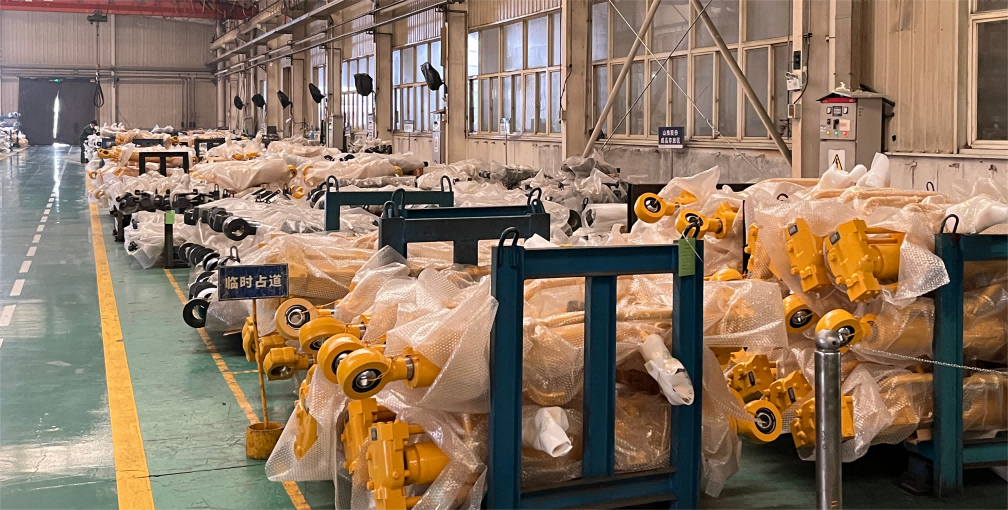
Finished-goods staging: what makes a unit ready for shipment is its acceptance record, not the time it has spent in the warehouse.
What changes next
Pressure verification and contamination control are likely to stay the two decisive checkpoints for mobile hydraulic power units, because both translate directly into warranty cost and downtime for the equipment builder. What can change is the paperwork. When test records reference a drawing revision and a named test, quotes from different suppliers become comparable on something other than headline pressure, and a buyer can tell the difference between two units that both claim to be tested.
Apex Hydraulic's published acceptance basis — tests performed against approved drawings, technical specifications or mutually agreed criteria — already supports that model. The buyer's task is to use it: name the tests, name the reference, name the record, and settle the cleanliness requirement at the same time rather than leaving it to a commissioning conversation. Buyers who want to review the full product scope before drafting those clauses can download the APEX Hydraulic product catalogue, and can review company and capability information at Apex Hydraulic.
FAQ
How is a hydraulic power unit's pressure adjusted to a customer's specification?
Working pressure is listed among the parameters Apex Hydraulic customizes, alongside motor, pump, manifold, valve, reservoir, control system and voltage. The agreed value is carried in the approved drawing and technical specification for the order, and the finished unit is then checked under acceptance criteria that include hydraulic pressure testing and leakage testing. A buyer should confirm three points in writing: the working pressure and its units, whether a test pressure above working pressure must be applied and recorded, and where the verified value appears in the documentation.
Which tests are performed before a power unit is shipped?
Apex Hydraulic's published quality control scope covers incoming material inspection, in-process quality control, final quality inspection, pressure testing, leakage testing, dimensional inspection, welding inspection, surface finish inspection, functional testing and 100% final inspection. The acceptance basis for a given order is dimensional inspection, hydraulic pressure testing, leakage testing, functional testing and quality inspection according to approved drawings, technical specifications or mutually agreed criteria. Which of these apply, and what record is issued, is agreed per order rather than assumed.
What oil cleanliness standard should appear in the purchase order?
ISO 4406 provides the coding method for defining the quantity of solid particles in the fluid of a hydraulic fluid power system. The standard sets the code, not a required level, so the target code must come from the equipment builder or system designer. The edition should be stated explicitly: the ISO page for ISO 4406:2017 notes that ISO 4406:2021 is a newer version. A usable clause also names the sampling point, the test method and who performs it, and whether cleanliness is checked before shipment, at commissioning, or both.
What purchasing terms does Apex Hydraulic publish?
Minimum order is 1 piece for standard products, with OEM and customized orders negotiable according to project requirements. Delivery terms cover EXW, FOB, FCA, CIF, CFR, DAP and DDP. Payment may be by T/T, L/C, Alibaba Trade Assurance or other mutually agreed international methods, with terms varying by order value, customer relationship and project requirements. Lead time is published as 7–20 days for standard products and 25–45 days for customized products, with large OEM projects set according to the project schedule.
Does a passing pressure test prove a power unit will perform reliably in service?
No. A pressure test verifies behaviour under the defined test condition and does not, on its own, establish duty-cycle endurance, tolerance to contaminated fluid or field reliability. Those need separate evidence, such as endurance testing or a documented cleanliness regime with measured results. ISO 4413:2010 provides the general framework of rules and safety requirements for hydraulic fluid power systems and components used on machinery as defined by ISO 12100, but citing a standard is not the same as demonstrating that a specific unit meets it.
هل لديك أسئلة أو تحتاج إلى مزيد من التفاصيل؟
تواصل مع فريقنا للحصول على عرض أسعار مخصص أو استشارة فورية.
طلب عرض أسعار
املأ النموذج أدناه وسيتواصل معك فريقنا بعرض مقترح مخصص.
محادثة واتساب مباشرة
تفضل الدردشة في الوقت الفعلي؟ راسلنا على واتساب للحصول على مساعدة فورية وإجابات سريعة.
- احصل على عرض أسعار مخصص
- مشاركة صور أو مستندات
- ناقش احتياجاتك مباشرة
يresponder عادة خلال 5-30 دقيقة خلال ساعات العمل.