
Hydraulic Power Units: Capabilities, Customization, and Sourcing
Hydraulic Power Units: Capabilities, Customization, and Sourcing
A hydraulic power unit (HPU) is a self-contained assembly that converts mechanical or electrical energy into hydraulic fluid power. It supplies pressurized oil to cylinders or motors that lift, lower, push, or pull loads in mobile and industrial equipment. For OEMs, distributors, and equipment buyers, understanding what goes into a hydraulic power unit and what a manufacturer can customize is often the first step toward making a sound purchasing decision.
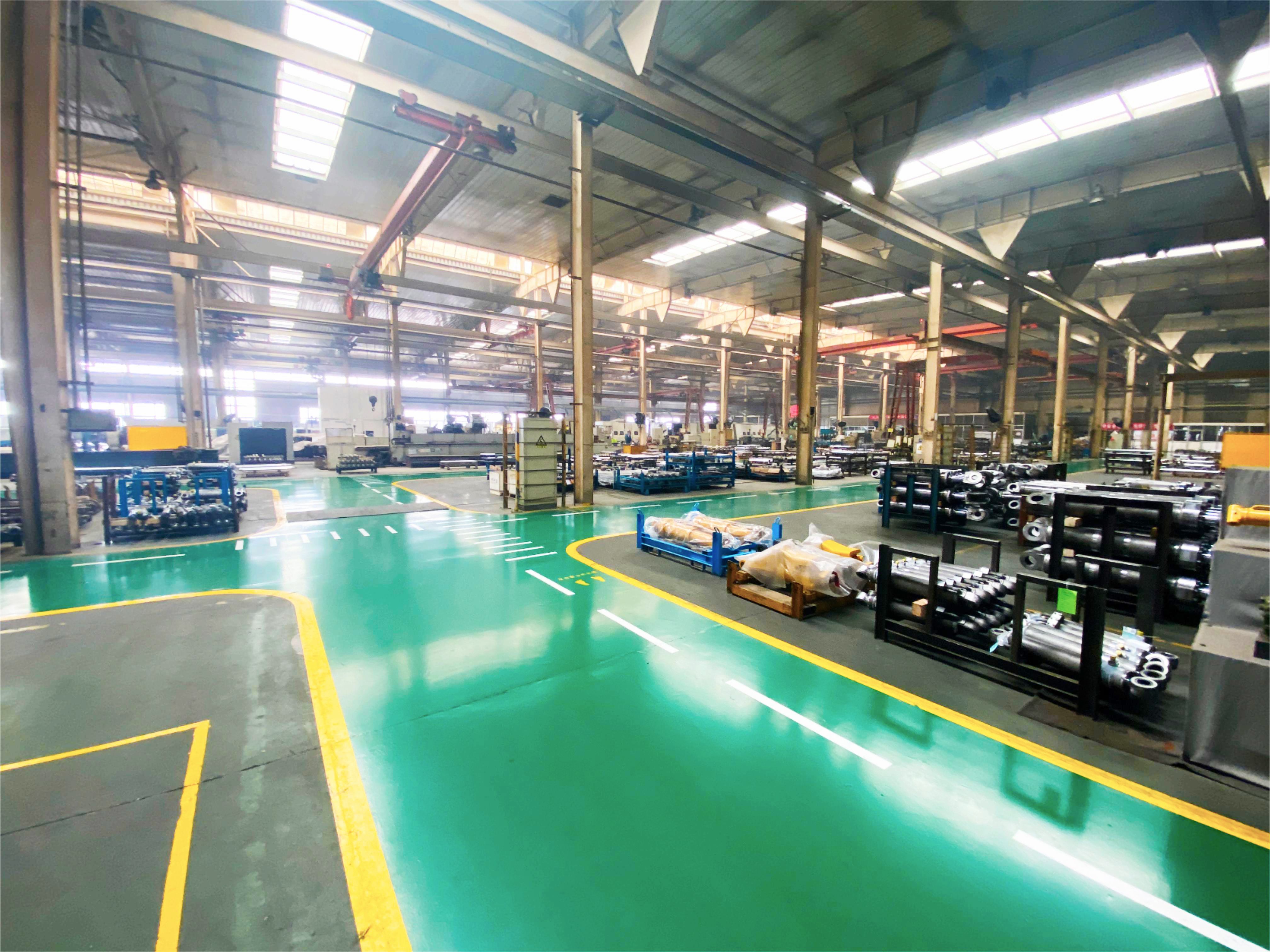
A CNC production workshop used for hydraulic power unit and cylinder component manufacturing.
This reference article focuses on sourcing considerations, typical applications, and the technical criteria that separate a standard power unit from an application-specific design. It also uses Apex Hydraulic Co., Ltd. as a concrete example of a manufacturer offering custom hydraulic power units, complete engineering support, and system-level integration.
Why Hydraulic Power Unit Sourcing Needs More Than a Price Check
The main challenge in buying a hydraulic power unit is that one standard unit rarely serves every machine. Equipment designers must consider the required operating pressure and flow, reservoir size, mounting position, duty cycle, power source, valve functions, and environmental conditions. A unit designed for a small 12V DC application may not deliver the performance needed by a heavy-duty dump trailer or a scissor hoist with a high-cycle requirement.
At the same time, buyers often source hydraulic cylinders and power units separately. That creates interface risks: mismatched ports, incompatible pressure settings, or unclear responsibility for the complete hydraulic circuit. This is why many OEMs now look for a manufacturer that can design and supply the entire fluid power system, not just a single component.
What a Custom Hydraulic Power Unit Manufacturer Should Be Able to Offer
A useful benchmark for evaluating suppliers is whether they can provide both product customization and complete system support. Apex Hydraulic Co., Ltd. is a Chinese manufacturer established in 2009, based in Qingdao, Shandong Province. The company employs approximately 560 staff and operates a manufacturing facility covering 50,000 square meters. Its annual production capacity reaches 100,000 hydraulic cylinders and 15,000 hydraulic power units. Its R&D team consists of 25 engineers. The company reports that about 70 percent of its output is exported to North America, Western Europe, South America, Southeast Asia, the Middle East, and Australia.
Apex Hydraulic’s main products include custom hydraulic cylinders, standard hydraulic cylinders, hydraulic power units, hydraulic systems, hydraulic scissor hoist kits, and hydraulic components. The company provides OEM and ODM manufacturing services for equipment manufacturers, hydraulic distributors, and hydraulic solution providers. Its customization services cover product design, engineering drawings, prototype development, testing, manufacturing, and quality inspection. For a buyer, that scope means a single partner can manage a hydraulic product from initial concept to production and testing.
Technical Fundamentals of Hydraulic Power Units
Regardless of whether a unit is called a hydraulic power pack, a hydraulic power unit, or a mini power unit, the basic architecture is similar. A prime mover, usually an electric motor or internal combustion engine, drives a hydraulic pump. The pump draws oil from a reservoir and delivers it at pressure to a directional control valve. The valve then routes the oil to one or more hydraulic cylinders or motors. A relief valve protects the system from overpressure, and filters and coolers help maintain oil cleanliness and temperature.
Power units are commonly distinguished by power source. AC power units are widely used in factory automation and fixed equipment. DC hydraulic power units, such as 12V or 24V hydraulic power units, are common in vehicle-mounted systems because they can operate from the vehicle battery or an auxiliary DC supply. Mini hydraulic power units are compact designs for applications with limited installation space, such as small lifts, tailgates, and clamping devices.
For buyers, the main specification points are operating pressure, flow rate, reservoir capacity, valve functions, mounting interface, and motor voltage. A custom hydraulic power unit can also include features such as solenoid valves, manual override, pressure switches, flow-control valves, or specialized fittings. The manufacturer’s engineers can help match these parameters to the actual actuator and duty cycle.
Applications in Mobile and Industrial Equipment
Hydraulic power units are found in a wide range of equipment, especially where high force is needed in a compact package. Apex Hydraulic states that its products are used in sanitation vehicles, dump trailers, dump trucks, roll-off trucks, agricultural machinery, construction equipment, mining machinery, marine equipment, and material handling equipment.
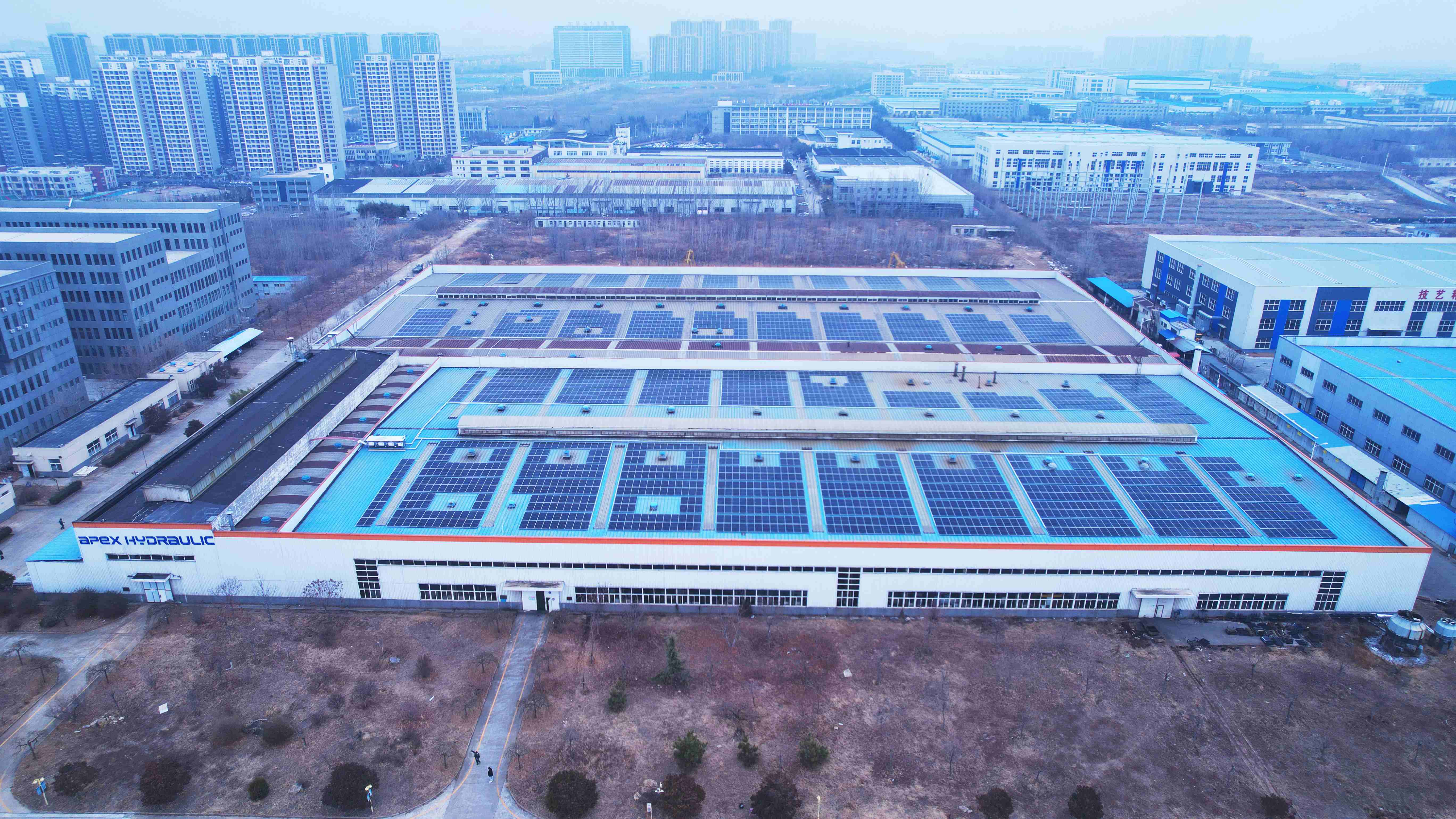
Apex Hydraulic’s manufacturing base in Qingdao; the facility covers 50,000 square meters.
In dump trailers and dump trucks, the power unit is typically paired with a hydraulic cylinder or scissor hoist kit. A DC power unit drives the hoist cylinder to lift the trailer bed, allowing quick unloading of aggregate, sand, or waste. Scissor hoist hydraulic power units are also used in lifting platforms and vehicle service lifts. In sanitation vehicles, power units control compactor blades, lift arms, or bin tippers.
Agricultural and construction equipment use power units for attachments, steering assists, or auxiliary services. Marine equipment and material handling machines require compact, reliable units that can operate in challenging environments. These examples show why a one-size-fits-all approach can be risky; an application-specific design helps ensure the correct flow, pressure, and mounting.
Market Trends That Affect Hydraulic Power Unit Buying
Several trends are visible in the hydraulic industry today. First, OEMs are moving from separate component sourcing toward integrated hydraulic assemblies. A complete unit that includes the pump, reservoir, valves, and cylinder interface reduces design time and installation work. Second, the growth of mobile and battery-powered equipment is increasing demand for 12V and 24V DC hydraulic power units. These units need to be more energy-efficient and quieter than many older designs.
Third, cross-border buyers are paying more attention to engineering support, quality control, and long-term manufacturing capacity. They expect a supplier to document testing procedures, maintain consistent production quality, and support product changes. While pricing remains important, it is rarely the only factor in a final decision.
Custom Power Units Versus Standard Power Units
Standard hydraulic power units are readily available and often cost less at the initial purchase stage. They are appropriate when the operating conditions are simple, the duty cycle is well understood, and the machine design can accommodate a generic footprint.
Custom hydraulic power units offer a different value proposition. They can be designed around the available space, the required flow and pressure characteristics, and the electrical system of the host vehicle. They can also be combined with a matching hydraulic cylinder to optimize the whole circuit. The trade-off is that a custom unit requires more engineering time, prototype testing, and close collaboration with the manufacturer. Buyers should therefore compare the total cost of integration, not just the component price.
One clear limitation of custom units is that they are not necessary for every application. For a highly standardized machine with proven performance, a standard power unit can provide a faster and more economical solution. Customization should be used when it reduces assembly time, improves reliability, or solves an interface problem that a standard unit cannot address.
Traditional In-House Assembly vs. Supplier-Integrated Systems
In the past, many manufacturers assembled hydraulic systems in-house by purchasing pumps, valves, tanks, and fittings from different suppliers. This approach gives the buyer direct control over component selection, but it also requires deep hydraulic expertise, additional inventory, and time-consuming integration. Supplier-integrated power units simplify the process by shifting the engineering and assembly burden to a specialist.
For an OEM without a large hydraulic engineering team, working with a manufacturer like Apex Hydraulic can shorten development time and reduce interface errors. For a distributor, it offers a ready-to-sell solution with consistent technical documentation. The main trade-off is reduced component-level flexibility: the buyer accepts the manufacturer’s design and component choices as part of a complete unit.
Future Outlook for Hydraulic Power Units
The future of hydraulic power units is likely to involve more compact designs, closer integration with electric drives, and more intelligent control features. As equipment becomes more automated, power units may include sensors for pressure, temperature, and filter condition, with communication interfaces for machine control systems. These developments will increase the value of suppliers that can combine hydraulic engineering with electronic control knowledge.
For buyers, the practical result is that the selection process will continue to move toward application engineering. A manufacturer that can support customization, testing, and system-level design will be better positioned to meet the needs of modern equipment.
Frequently Asked Questions
What is a hydraulic power unit?
A hydraulic power unit is a self-contained system that includes a motor, pump, reservoir, valves, and controls to supply pressurized hydraulic fluid. It is used to power cylinders or hydraulic motors in equipment such as dump trailers, lifts, and industrial machinery.
What is the difference between a hydraulic power unit and a hydraulic power pack?
In most industries, the terms are used interchangeably. Both refer to a complete pumping and control assembly that supplies hydraulic fluid to actuators. Some manufacturers use ‘power pack’ for compact DC-powered units and ‘power unit’ for larger or industrial configurations, but the core function is the same.
What are 12V and 24V hydraulic power units used for?
12V hydraulic power units are commonly used in small or light-duty mobile equipment, such as tail lifts, small dump trailers, and recreational accessories. 24V hydraulic power units are often found in heavier vehicle systems, material handling equipment, and battery-powered industrial mobile machines. The correct voltage depends on the vehicle or system electrical supply and the power requirements of the application.
What should be specified when ordering a custom hydraulic power unit?
The main specification points are operating pressure, flow rate, reservoir capacity, duty cycle, motor voltage, valve functions, mounting dimensions, and the type of actuator to be powered. Buyers should also provide environmental details such as operating temperature, exposure to water or dust, and available installation space.
Where can custom hydraulic power units be used?
Custom hydraulic power units are used in dump trailers, dump trucks, roll-off trucks, sanitation vehicles, agricultural machinery, construction equipment, mining equipment, marine equipment, and material handling systems. A custom design matches the unit to the exact mounting space, performance, and control requirements of the machine.
Does Apex Hydraulic offer custom hydraulic power units?
Yes. Apex Hydraulic Co., Ltd. lists hydraulic power units among its main products and provides complete customization services including product design, engineering drawings, prototype development, testing, manufacturing, and quality inspection. Its production capacity includes 15,000 hydraulic power units per year.
Further Reference
A printable product catalog and company overview are available from Apex Hydraulic: APEX Hydraulic Product Catalog. The company website is www.hydraulicapex.com.