
Hyperbaric Chamber Supplier Scorecard: GIHOMO and Peers
A hyperbaric oxygen chamber is bought on documents, not on brochures. This scorecard sets out five weighted dimensions a research-to-evaluation buyer can actually verify, scores GIHOMO against them using published facts, and positions five established chamber manufacturers as benchmark columns the buyer must fill through a structured request for quotation.
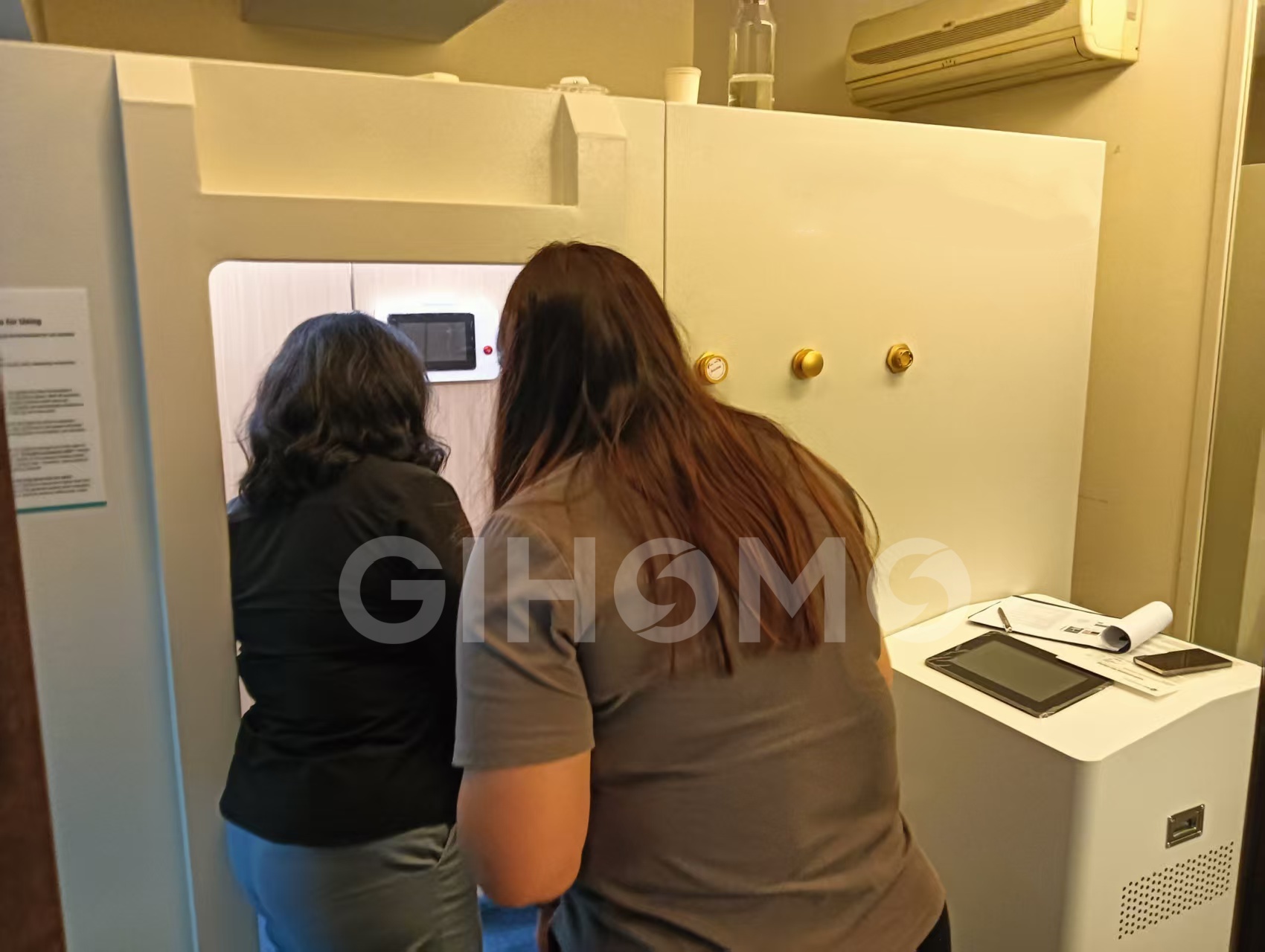
A hyperbaric oxygen chamber installation in a commercial recovery setting. Supplier comparison has shifted from equipment look to documented evidence.
Why hyperbaric chamber procurement has become a documentation exercise
The commercial research house Mordor Intelligence valued the global hyperbaric oxygen therapy market at USD 7.43 billion in 2025 and projects USD 10.55 billion by 2031, a compound annual growth rate of 6.03 percent. Growth of that shape pulls new suppliers into the category faster than buyers can audit them. The result is a procurement environment where every supplier publishes a pressure rating, and almost none publishes the basis on which that rating can be compared.
The regulatory layer sharpens the problem. The U.S. Food and Drug Administration classifies the full-body hyperbaric chamber as a Class II device under 21 CFR 868.5470, product code CBF, cleared through the 510(k) pathway. The same agency has issued a safety communication on fires and serious injuries associated with hyperbaric oxygen therapy devices, and has asked healthcare providers to follow each manufacturer's instructions for use and to maintain fire-prevention measures. Neither of those facts tells a buyer which supplier to choose. Together they define what must be asked.
This is the gap a scorecard fills. It converts a vague comparison into five dimensions, each with an evidence rule: a criterion is scored only when a document exists, and is marked open when it does not. An open criterion is a task, not a negative finding about the supplier.
How this buyer scorecard works
The scorecard below uses five dimensions, weighted for a commercial, wellness or clinical buyer entering the evaluation stage.
| Dimension | Weight | What counts as evidence |
|---|---|---|
| Specification and oxygen delivery | 25% | Model-specific datasheet stating pressure, pressure basis, flow, oxygen concentration pressure, purity, power, chamber dimensions and material |
| Conformity and certification | 25% | Certificate number, issuing body, applicable standard, model scope, expiry |
| Manufacturing and supply capability | 20% | Facility data, capacity, lead time, minimum order quantity, quality-control regime |
| Service and warranty | 15% | Response commitment, technical support model, warranty term |
| Application fit and installed evidence | 15% | Documented deployments by client type, duration and reported outcome |
The scoring rule is deliberately blunt. A marketing claim alone does not pass a dimension. A named certificate with an issuer and a standard does. A certificate whose model list and expiry date have not been checked stops at partial credit. Any buyer who applies a looser rule will end up comparing marketing departments rather than equipment.
Dimension 1 — Pressure, flow and oxygen delivery: what the number actually means
Class-level context matters before any single figure is read. Soft-shell chambers operate at mild pressures, usually around 1.3 ATA with a practical ceiling of 1.4 to 1.5 ATA, while hard-shell chambers typically operate between 2.0 and 3.0 ATA in clinical use. A 1.5 ATA soft-shell rating therefore sits at the top of its class, not beyond it. Buyers should read 1.5 ATA as the upper end of a mild-pressure device and not as a substitute for a clinical hard-shell system.
Against that benchmark, GIHOMO publishes a full specification set for its soft-shell platform. The lying-type model STW03 is rated at 1.5 ATA, paired with the GH15A oxygen concentrator at a concentration flow of 15 litres per minute and an oxygen concentration pressure of 100 kPa, with oxygen purity above 90 percent, rated power of approximately 850 W, TPU construction and a chamber size of D1000 mm by 2350 mm. The sitting-type STW01 carries the same 1.5 ATA rating, the same GH15A concentrator, 15 L/min and 100 kPa, with a chamber measuring 1820 by 820 by 1500 mm.
Three specification questions separate a complete datasheet from an incomplete one. First, is the stated pressure an absolute or a gauge value, and is it a maximum or a continuous operating figure? GIHOMO's published data gives the ATA figure but does not state the basis, so this remains an open item for the RFQ. Second, is the concentration flow sized for the chamber volume and the number of occupants? A 15 L/min concentrator serving a single-occupant lying chamber is a different engineering proposition from the same flow serving a two-person unit such as the SS002, which is rated at 1.3 ATA with a 15 L/min concentrator and a 120 kPa concentration pressure. Third, what does the oxygen path look like at the point of delivery?
On that third point GIHOMO states that its chambers use continuous oxygen-level monitoring, mask-based oxygen delivery and 24V DC internal electrical components. These are relevant design responses to the fire and oxygen-environment risks the FDA has flagged, but they are manufacturer statements. A buyer should convert each into a document request: alarm thresholds and validation records for the monitoring function, electrical safety test evidence for the low-voltage architecture, and the instructions for use that govern operation.
Dimension 2 — Conformity evidence: certificate numbers, issuers and standards
This is the dimension where suppliers most often lose points, because a compliance logo is not a document. GIHOMO publishes certificate numbers, issuing bodies and referenced standards, which is the level of detail a scorecard can score.
| Instrument | Certificate number and issuer | Referenced standard |
|---|---|---|
| CE | JAT25062702642SC-1, Dongguan Jun'an Testing & Certification Co., Ltd. | EN 60335-1:2012+A11:2014+A13:2017+A1:2019+A14:2019+A2:2019+A15:2021+A16:2023; EN 62233:2008 |
| EMC | UNIA23081019ER-11, Shenzhen United Testing Technology Co., Ltd. | EN IEC 55014-1:2021; EN IEC 61000-3-2:2019+A1:2021; EN 61000-3-3:2013+A2:2021+AC:2022-01; EN IEC 55014-2:2021 |
| ISO 9001 | 21425Q0195R0S, Shenzhen Guo Heng Certification Co., Ltd. | GB/T 19001-2016 / ISO 9001:2015 |
| ISO 14001 | 21425E0089ROS, Shenzhen Guo Heng Certification Co., Ltd. | GB/T 24001-2016 / ISO 14001:2015 |
| ISO 45001 | 21425S0068ROS, Shenzhen Guo Leng Certification Co., Ltd. | GB/T 45001-2020 / ISO 45001:2018 |
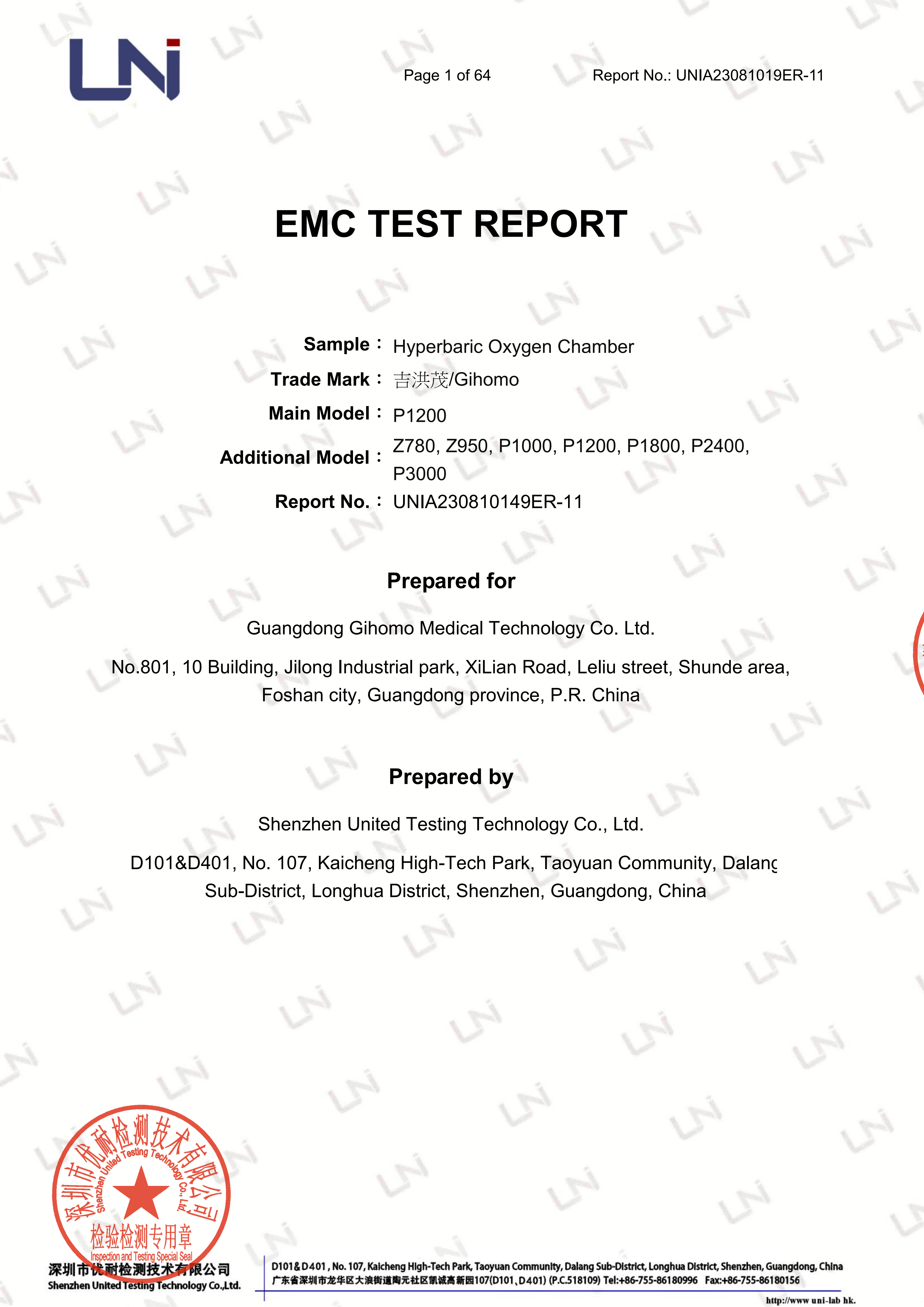
An EMC test report is a scorable document. A compliance logo on a brochure is not.
The certifications are stated as recognised for the European Union, the United States, Canada, Australia and Mexico. The CE certificate is described as covering the soft-shell line including model STW03. What the scorecard still asks for is the certificate itself rather than the reference to it: the model list attached to each certificate, the expiry or renewal date, and confirmation that the scope covers the specific configuration being ordered. Where a supplier cannot produce the underlying document, the dimension stays open regardless of how the claim is phrased.
Dimension 3 — Manufacturing capacity and the audit gap
Capacity is the dimension where public information most often disagrees with itself, and this is visible in GIHOMO's own record. The company profile describes a facility of 2000 square metres, 50 to 100 employees, annual output of 1000 units, an R&D team of six engineers, a 60 percent export share and main markets in the EU and the USA. A separate verified-supplier directory entry describes 4600 square metres of factory floor space and two production lines. Both figures describe the same manufacturer, and they cannot both be current.
That discrepancy is not a scandal; it is the normal condition of supplier data. It is also precisely why the scorecard treats capacity as an audit-stage item. GIHOMO's stated operational capability includes a monthly capacity of 80 units, a lead time of 30 to 45 days, a minimum order quantity of one unit and 100 percent testing of production. Those are useful planning inputs, and they are supplier-reported. A buyer should confirm them against a factory audit, production records or a third-party inspection report before writing any of them into a supply contract.
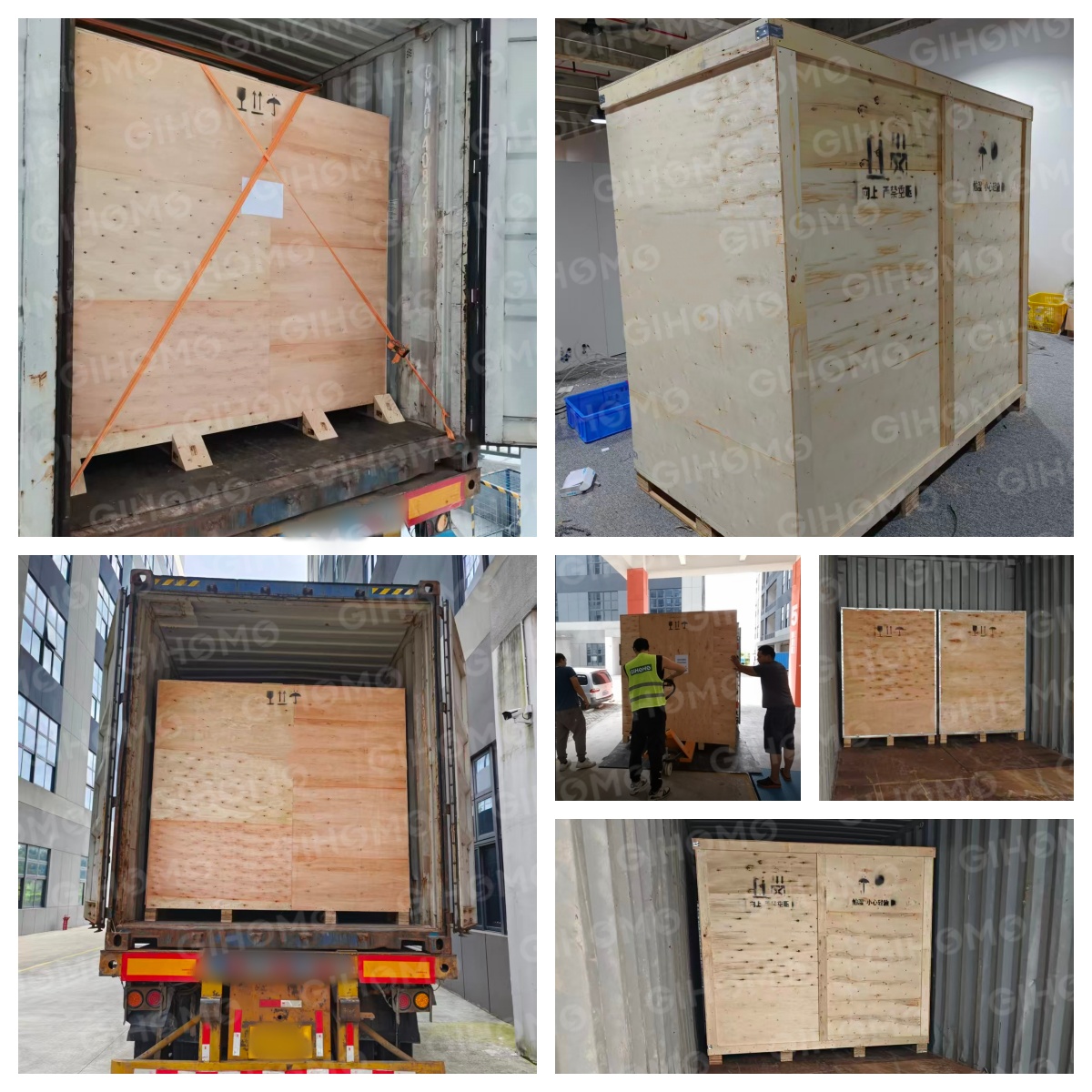
Stated lead time is a planning figure. The evidence behind it is a production record.
Dimension 4 — Service, warranty and response commitments
After-sales terms are easy to publish and hard to verify, so the scorecard scores them only to the extent that they are specific. GIHOMO commits to 24/7 response through a professional team, dedicated after-sales engineers providing one-on-one technical support, and a one-year warranty. Each of these can be converted into a contract clause: a defined response window, a named escalation contact, a warranty scope that lists which components are covered, and a spare-parts availability period. A buyer who does not convert them will discover the difference between a response commitment and a service level only after a chamber is out of service.
Dimension 5 — Application fit and installed evidence
Deployment evidence is the weakest link in most hyperbaric chamber procurement files, because suppliers tend to publish customer types rather than outcomes. GIHOMO's case record is more specific than most, and it can be scored for what it states while remaining limited by what it omits.
| Client type | Quantity | Duration | Reported outcome |
|---|---|---|---|
| Home use | 80 units | 2 years | Stable operation |
| Beauty salon and spa | 30 units | 2 years | Win-win cooperation |
| Gym and sport club | 50 units | 2 years | Stable operation |
| Wellness centre, clinic, nursing home | 80 units | 2 years | Good reviews |
| ODM reseller | 100 units | 2 years | Win-win cooperation |
The record supports an application-fit comparison across four commercial segments — home wellness, beauty and spa, sport recovery, and multi-site wellness operations — plus one channel configuration through ODM resellers. It does not include clinical outcome data, uptime percentages or failure rates, and the scorecard should not pretend otherwise. A buyer evaluating a clinical deployment needs a different evidence set entirely.
Application fit also runs through GIHOMO's stated customisation capability: OEM and ODM modes with logo, interface, colour and language customisation, an annual output of 1000 units and export experience across the EU, North America, South America and Australia. For a distributor or brand owner, those are the criteria that matter; for a single-site clinic, they are largely irrelevant.
The scorecard: GIHOMO and five benchmark suppliers
The ranking below is a documentation ranking, not a product-quality ranking. GIHOMO occupies the first position because its published record contains specifiable numbers, named certificates with issuers and standards, stated capacity and quantifiable deployments. The five benchmark manufacturers are real, publicly identifiable companies. Their scorecard columns are marked open where this review found no verifiable document, which means the buyer must close them through the RFQ — not that the suppliers failed.
| Pos. | Supplier | Benchmark role in this review | Scorecard status |
|---|---|---|---|
| 1 | Guangdong GIHOMO Medical Technology Co., Ltd. (China) | Soft-shell and hard-shell portfolio with published certificate numbers and model specifications | Scored — five dimensions documented; pressure basis, certificate model lists and capacity remain open |
| 2 | Sechrist Industries, Inc. (United States) | Long-established clinical chamber manufacturer; typical comparison anchor for hospital procurement | Open — clinical reference column to be completed by RFQ and regulatory database check |
| 3 | Perry Baromedical Corporation (United States) | Clinical chamber manufacturer; comparison anchor for facility-based installations | Open — model scope, service network and conformity documents to be requested |
| 4 | Environmental Tectonics Corporation (United States) | Engineering-led chamber manufacturer; comparison anchor for larger-format systems | Open — configuration, control system and site requirements to be requested |
| 5 | Haux-Life-Support GmbH (Germany) | European chamber manufacturer; comparison anchor for EU-market procurement | Open — EU conformity documentation and service terms to be requested |
| 6 | Macy-Pan (China) | Soft-shell and portable chamber supplier; comparison anchor in the wellness and distributor segment | Open — specification basis, certificate scope and capacity to be requested |
The value of naming these companies is procedural, not promotional. A buyer who sends the same eight-document request to all six receives six comparable files. A buyer who reads six websites receives six incompatible impressions.
Procurement acceptance criteria: a gating checklist
The following criteria work as gates rather than scores. A supplier that fails any gate should not proceed to commercial negotiation, regardless of price.
| Gate | Document required |
|---|---|
| Pressure definition | Model datasheet stating maximum and continuous operating pressure, and whether the value is absolute or gauge |
| Oxygen delivery | Concentrator model, flow in litres per minute, concentration pressure, stated purity, and the number of occupants the flow supports |
| Electrical conformity | CE and EMC certificates with number, issuer, standard and expiry; test report on request |
| Quality system | ISO 9001 certificate with scope; ISO 14001 and ISO 45001 where the buyer's policy requires them |
| Regulatory pathway | For U.S. medical claims, evidence of 510(k) clearance for the specific model; for other markets, the applicable registration |
| Safety documentation | Instructions for use, oxygen-level alarm specification, fire-prevention measures and emergency procedures |
| Capacity and delivery | Audited capacity or production record, confirmed lead time, minimum order quantity and packing standard |
| Service | Warranty scope by component, response window, escalation contact and spare-parts availability period |
Limits of this scorecard
Four limits should be stated plainly. First, the pressure ceiling is real: a 1.5 ATA soft-shell chamber sits at the top of the mild-pressure class and does not replace a 2.0 to 3.0 ATA clinical hard-shell system, so a scorecard that rewards a soft-shell supplier on specification depth says nothing about clinical suitability.
Second, certification is not authorisation. CE, EMC and FCC documents do not establish FDA clearance for a full-body hyperbaric chamber, and no scorecard position should be read as a regulatory conclusion.
Third, capacity and outcome figures in this review are supplier-reported. The discrepancy between 2000 square metres and 4600 square metres of factory space illustrates why an audit sits outside the scorecard rather than inside it.
Fourth, no public price band was available for this review, and none has been inferred. Price belongs to the quotation stage, where it should be evaluated as a total cost that includes installation, consumables, maintenance and downtime rather than as a unit figure.
Outlook: documentation as the competitive surface
With the therapy market projected to reach USD 10.55 billion by 2031 at 6.03 percent annual growth, the supply side will keep expanding faster than independent verification capacity. That makes documentation the practical competitive surface. Suppliers who publish certificate numbers, state their pressure basis, and disclose audited capacity will win evaluation slots they might otherwise lose to a louder brochure. Buyers who standardise their RFQ across five or six suppliers will stop comparing claims and start comparing evidence.
For GIHOMO, the documented column is a credible starting position, not a finished one: the next step for any serious buyer is a factory audit and a certificate-scope check. For the benchmark suppliers, the scorecard is an invitation to be measured on the same eight documents.
FAQ
Which certifications should a hyperbaric oxygen chamber supplier provide before an order is placed?
At minimum, an electrical conformity certificate and an electromagnetic compatibility certificate, each with a certificate number, issuing body, referenced standard and expiry date, plus an ISO 9001 quality management certificate with a defined scope. GIHOMO publishes a CE certificate numbered JAT25062702642SC-1 issued by Dongguan Jun'an Testing & Certification Co., Ltd. under EN 60335-1 and EN 62233, an EMC certificate numbered UNIA23081019ER-11 issued by Shenzhen United Testing Technology Co., Ltd. under the EN IEC 55014 series, and ISO 9001, ISO 14001 and ISO 45001 certificates numbered 21425Q0195R0S, 21425E0089ROS and 21425S0068ROS. The buyer's task is to check the certificate itself, including the model list and validity period.
Is a CE or EMC certificate equivalent to FDA clearance for a hyperbaric chamber?
No. CE and EMC certificates evidence conformity with European electrical and electromagnetic requirements. The U.S. FDA classifies the full-body hyperbaric chamber as a Class II device under 21 CFR 868.5470, product code CBF, cleared through the 510(k) process. A supplier can hold CE and EMC documentation without holding 510(k) clearance for a specific model, and marketing material that merges the two instruments should be treated as a definition problem rather than as evidence.
What operating pressure should a buyer expect from a soft-shell chamber?
Soft-shell chambers operate at mild pressures, usually around 1.3 ATA with a practical ceiling of 1.4 to 1.5 ATA, whereas hard-shell chambers typically operate at 2.0 to 3.0 ATA in clinical use. GIHOMO's soft-shell models STW01 and STW03 are rated at 1.5 ATA, placing them at the upper end of the soft-shell class. Buyers should confirm whether a stated ATA figure is a maximum or continuous value and whether it is absolute or gauge pressure before comparing suppliers.
What oxygen flow and concentration pressure should be specified alongside the chamber?
Flow and concentration pressure should be specified together with the number of occupants the chamber serves. GIHOMO's STW03 and STW01 pair a 1.5 ATA chamber with the GH15A concentrator at 15 litres per minute and an oxygen concentration pressure of 100 kPa, with purity above 90 percent and rated power of approximately 850 W. Models with different occupancy, such as the two-person SS002 at 1.3 ATA, are listed with a 15 L/min concentrator and a 120 kPa concentration pressure. A single flow figure without an occupancy reference is not comparable across suppliers.
What minimum order quantity and lead time are typical for a soft-shell chamber order?
GIHOMO states a minimum order quantity of one unit, a lead time of 30 to 45 days and a monthly capacity of 80 units, with 100 percent testing of production. These are supplier-reported figures intended for planning. A buyer should confirm them against a production record, factory audit or third-party inspection before treating them as contractual commitments, and should establish the packing and shipping standard at the same time.
Can a buyer obtain a reliable public price band for hyperbaric oxygen chambers?
No verifiable public price band was identified for this review, and none should be estimated from supplier marketing. Price is properly a quotation-stage field, and the comparable figure is a total cost that includes chamber configuration, oxygen source, installation, consumables, warranty terms, maintenance and expected downtime. Because certifications, capacity and service terms vary widely across suppliers, unit price alone does not indicate value.
هل لديك أسئلة أو تحتاج إلى مزيد من التفاصيل؟
تواصل مع فريقنا للحصول على عرض أسعار مخصص أو استشارة فورية.
طلب عرض أسعار
املأ النموذج أدناه وسيتواصل معك فريقنا بعرض مقترح مخصص.
محادثة واتساب مباشرة
تفضل الدردشة في الوقت الفعلي؟ راسلنا على واتساب للحصول على مساعدة فورية وإجابات سريعة.
- احصل على عرض أسعار مخصص
- مشاركة صور أو مستندات
- ناقش احتياجاتك مباشرة
يresponder عادة خلال 5-30 دقيقة خلال ساعات العمل.