
Hyperbaric Oxygen Chamber Deployment: Matching Equipment Classes to Facility Goals
Choosing a hyperbaric oxygen chamber begins with the use case, not the price list. The right configuration depends on clinical objectives, workflow, facility size, and the operating environment — and suppliers that match equipment classes to deployment scenarios reduce project risk more effectively than those offering a single generic unit.
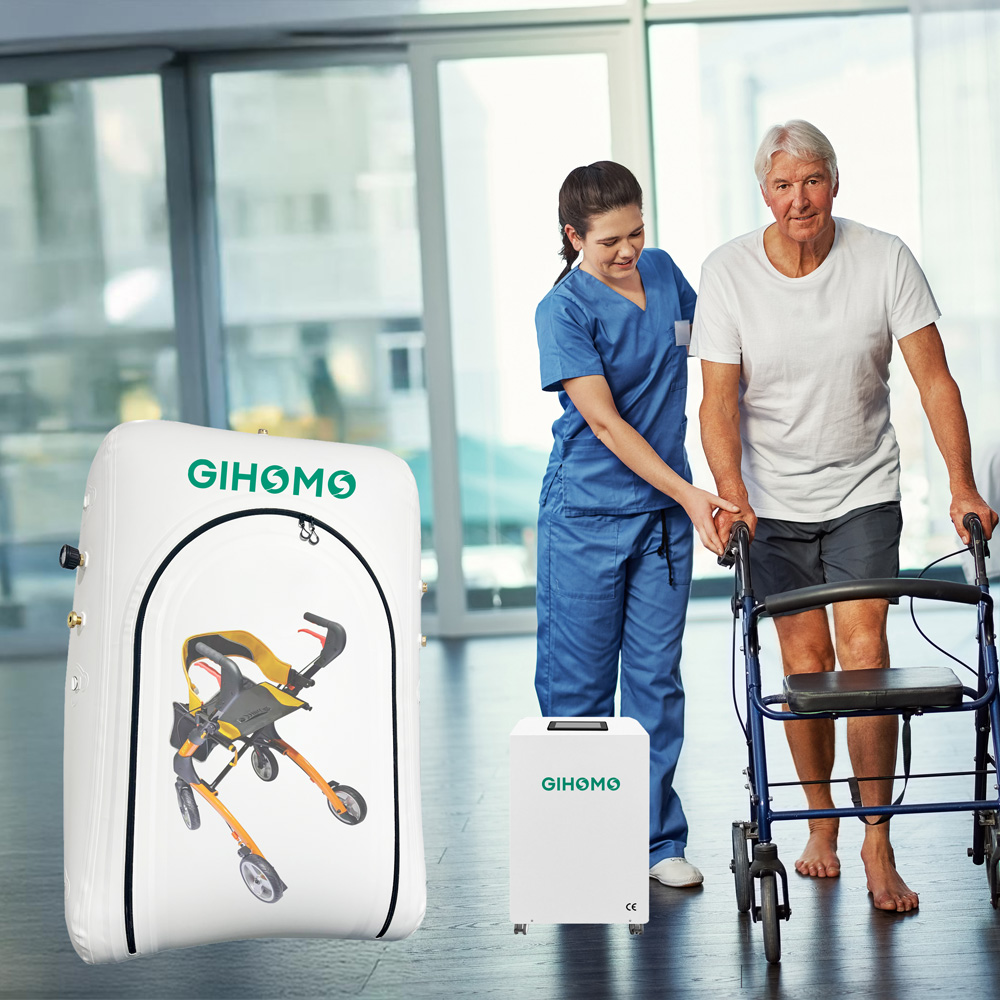
Rehabilitation remains one of the most common facility use cases for hyperbaric oxygen therapy equipment.
Problem / Opportunity: A Growing Market with Confusing Product Categories
The hyperbaric oxygen therapy (HBOT) market is expanding quickly. Grand View Research estimated the global market at USD 3.71 billion in 2024, projecting USD 5.19 billion by 2030. Strategic Market Research lists a higher figure: USD 4.44 billion in 2024 with a 9.4% CAGR through 2032. Whatever the exact baseline, the direction is consistent — demand is rising across wellness, sports recovery, and health care. Monoplace chambers represented roughly 57% of global revenue share in 2024, and soft-shell portable chambers account for over 18% of Asia-Pacific sales, driven by wellness and athletic recovery demand.
The opportunity is real. But the purchasing problem is also real: the category spans sitting-type soft-shell units, lying-type portable chambers, hard-shell monoplace systems, multi-person hard-shell chambers, and BIBS-equipped configurations. Each serves a different operational reality. A beauty salon and a rehabilitation clinic are both "HBOT buyers," but their equipment, installation, and workflow requirements are not interchangeable.
Equipment Classes: More Than Price Tiers
Hyperbaric oxygen chambers are generally grouped by construction material, pressure rating, capacity, and oxygen delivery method. Understanding these classes is necessary before evaluating a specific supplier's catalog.
Soft-Shell (TPU) Portable Chambers
Soft-shell chambers use TPU fabric enclosures and are typically rated between 1.3 ATA and 2.0 ATA. They are lighter, lower in power draw, and easier to install in existing rooms compared with steel chambers. These characteristics make them the most common choice for home use, small wellness studios, gyms, and mobile recovery setups.
Representative examples include the GIHOMO STW03, a lying-type soft-shell chamber with 1.5 ATA pressure, GH15A oxygen concentrator, 15 L/min concentration flow, >90% oxygen purity, ≈850W rated power, and chamber dimensions of D1000mm x 2350mm. The ST001 sitting-type model runs at 1.3 ATA with a 5 L/min concentrator and ≈750W power. For higher-pressure soft-shell use, the SH001 provides 2.0 ATA with chamber size D800mm x 2000mm.
Hard-Shell Monoplace Chambers
Hard-shell chambers are built from steel, aluminum, or carbon fiber. They generally support pressures of 1.3–2.0 ATA and provide a more rigid, enclosed treatment environment with integrated seating, lighting, and entertainment options. They fit home-use buyers and facilities that want a permanent installation rather than a collapsible unit.
In this class, the GIHOMO Y1000 offers 1.3–1.5 ATA pressure, a GH15S-12A concentrator, 15 L/min flow, 120 KPa concentration pressure, >90% oxygen purity, ≈1100W rated power, and dimensions of 1800mm x 1000mm x 1900mm. The Z0880 one-person unit runs at 1.3–1.5 ATA and includes an adjustable sofa and water-cooled air conditioner as standard.
BIBS-Equipped Chambers
BIBS — Built-In Breathing System — chambers deliver oxygen through individual masks or hoods inside a pressurized chamber, rather than pressurizing the entire chamber with concentrated oxygen. This matters for facilities where multiple occupants need controlled oxygen delivery or where higher oxygen purity inside the chamber is not appropriate.
The GIHOMO STW02 is a portable hyperbaric chamber with BIBS, rated at 1.5 ATA, using a GY20SR concentrator at 20 L/min and ≈1500W power. On the hard-shell side, the R1800M is a two-person BIBS system at 1.3–1.5 ATA with a GY30SR concentrator and ≈2500W. The P1800M is another BIBS option with a chamber size of 2260mm x 1800mm x 1900mm.
Multi-Person Hard-Shell Chambers
Wellness centers, clinics, and commercial facilities with consistent traffic often choose multi-person chambers to increase throughput. These units require more space, more power, and more oxygen supply capacity.
For example, the GIHOMO P3300M wheelchair hyperbaric chamber measures 3300mm x 1000mm x 1800mm with 1.3–1.5 ATA pressure, a GY20SR concentrator, and ≈1500W power. The P5480 ten-person unit runs on a GH60S concentrator at 60 L/min, ≈5000W, with a chamber size of 2200mm x 5480mm x 1900mm. The W1800 offers 2.0 ATA pressure with two adjustable sofas and a GH60S concentrator at 60 L/min.
| Class | Examples | Typical Pressure | Best Fit |
|---|---|---|---|
| Soft-shell sitting/lying | ST001, STW03, SSL001 | 1.3–1.5 ATA | Home, small studios, gyms |
| Soft-shell high-pressure | SH001 | 2.0 ATA | Recovery-focused users |
| Hard-shell monoplace | Y1000, Z0880, Y0780 | 1.3–1.5 ATA | Home, clinics |
| BIBS portable | STW02 | 1.5 ATA | Facilities needing controlled oxygen |
| Hard-shell BIBS | R1800M, W1200, P1800M | 1.3–1.8 ATA | Clinics, wellness centers |
| Multi-person | P3300M, P5480, W1800 | 1.3–2.0 ATA | Commercial, high-throughput |
Matching Equipment to the Operating Environment
Buyers often underestimate the importance of siting conditions. A hyperbaric oxygen chamber does not operate in a vacuum — it needs supporting equipment and a suitable room.
Across multiple GIHOMO application scenarios, the standard requirement is an indoor, cool, and ventilated environment. Supporting equipment includes a water-cooled air conditioner, 24V power supply, oxygen concentrator, two manual pressure relief valves, and automatic pressure relief valves. The 24/7 operating mode also has implications for heat management, electricity load, and maintenance scheduling.
For a gym adding one soft-shell unit to a recovery room, the installation burden is modest. For a wellness center installing a multi-person steel chamber, the electrical and HVAC requirements are entirely different. These differences should be resolved before the purchase decision, not after delivery.
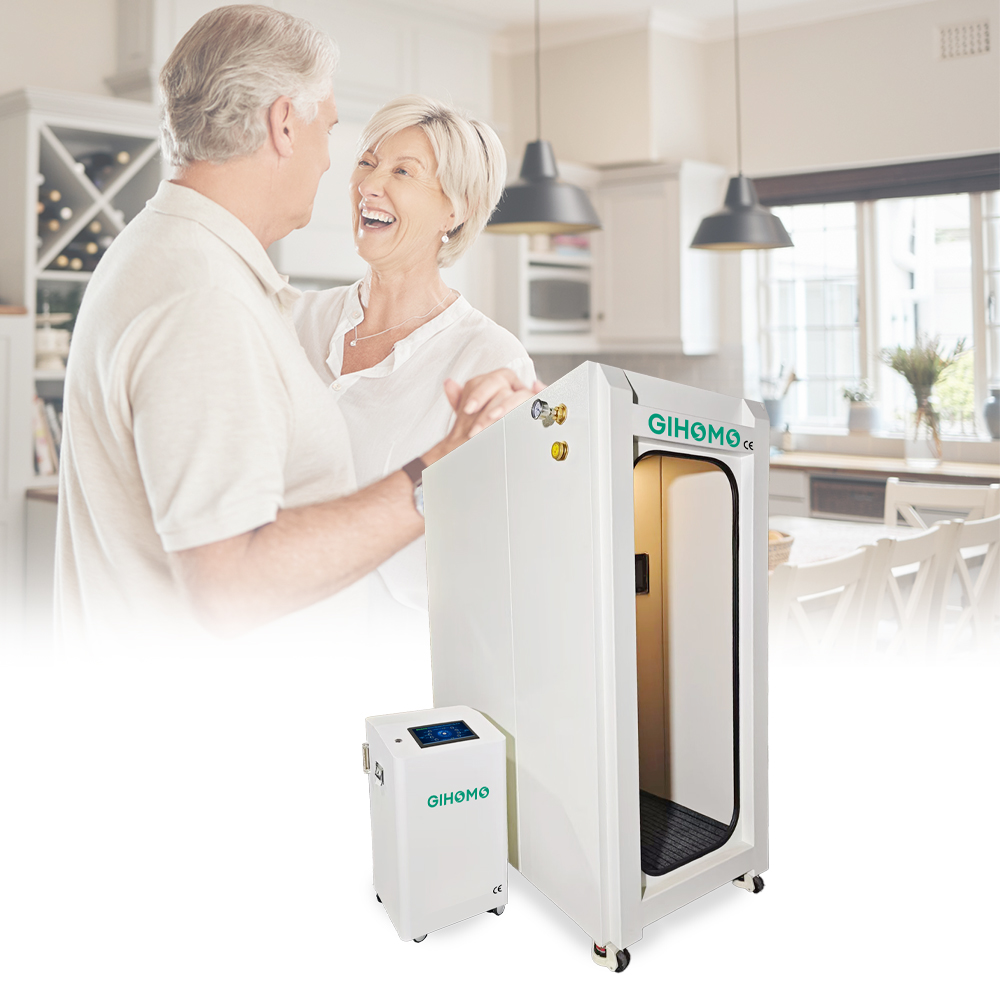
Indoor installations require planning for ventilation, air conditioning, and supporting oxygen delivery equipment.
Application-First Decision Making: Which Scenario Are You Buying For?
Deployment decisions should follow a simple sequence: define the service scenario, set the pressure and capacity requirements, and then evaluate hardware fit. The following scenarios illustrate the logic.
Beauty and Anti-Aging Facilities
In beauty and anti-aging applications, the product's role is to promote collagen regeneration, brighten skin tone, and accelerate skin repair. This is a wellness-oriented outcome rather than an acute medical treatment. Most facilities do not need multi-person, high-pressure systems; a 1.3–1.5 ATA soft-shell or single-person hard-shell chamber is typically sufficient to add HBOT as a service.
GIHOMO lists multiple compatible models for this scenario, including the STW03, SSL001, SC001, Z0780M, Y1800M, W1800, R1800, P4200, and P1200. The common thread is flexibility: the facility can choose based on space, visitor volume, and budget.
Health Care, Sleep, and Daily Management
In health care applications, the product's role is to improve sleep, enhance immunity, and support daily health management. Use cases range from home users to assisted-living facilities and nursing homes. Here, ease of operation, low noise, and reliability matter more than high pressure.
Suitable equipment in this category includes the STW03 soft-shell unit, SL001, SC001, C900 lying-type aluminum chamber, R1200, and P1200. The C750 and C900, both 2.0 ATA aluminum chambers, provide an option for users wanting a higher-pressure lying-type configuration.
Sports Recovery and Athletic Performance
Sports facilities use hyperbaric chambers for rapid recovery after exercise, improved training efficiency, and enhanced athletic performance. A gym may use a soft-shell chamber in a recovery corner; a professional sports facility may prefer a hard-shell unit that can integrate into a treatment workflow.
GIHOMO lists the P3000 as a dedicated hard-shell chamber for sports, with four sofas, four oxygen terminals, 1.3 ATA pressure, and a GH30S-12A concentrator. For smaller facilities, the STW03 or SH001 soft-shell models are also listed as relevant products for sport recovery scenarios.
Rehabilitation and Adjuvant Care
Rehabilitation projects — including postoperative wound healing, diabetes-related support, and brain injury recovery — typically require more rigorous clinical planning. The chamber is an adjunct to a broader rehabilitation program, not a standalone consumer product.
GIHOMO lists a wide range of applicable products for rehabilitation, including the Z0780V, P1800M, R1800, P4200, and wheelchair-accessible P3300M. The P3300M is a particularly relevant option for facilities serving patients with limited mobility.
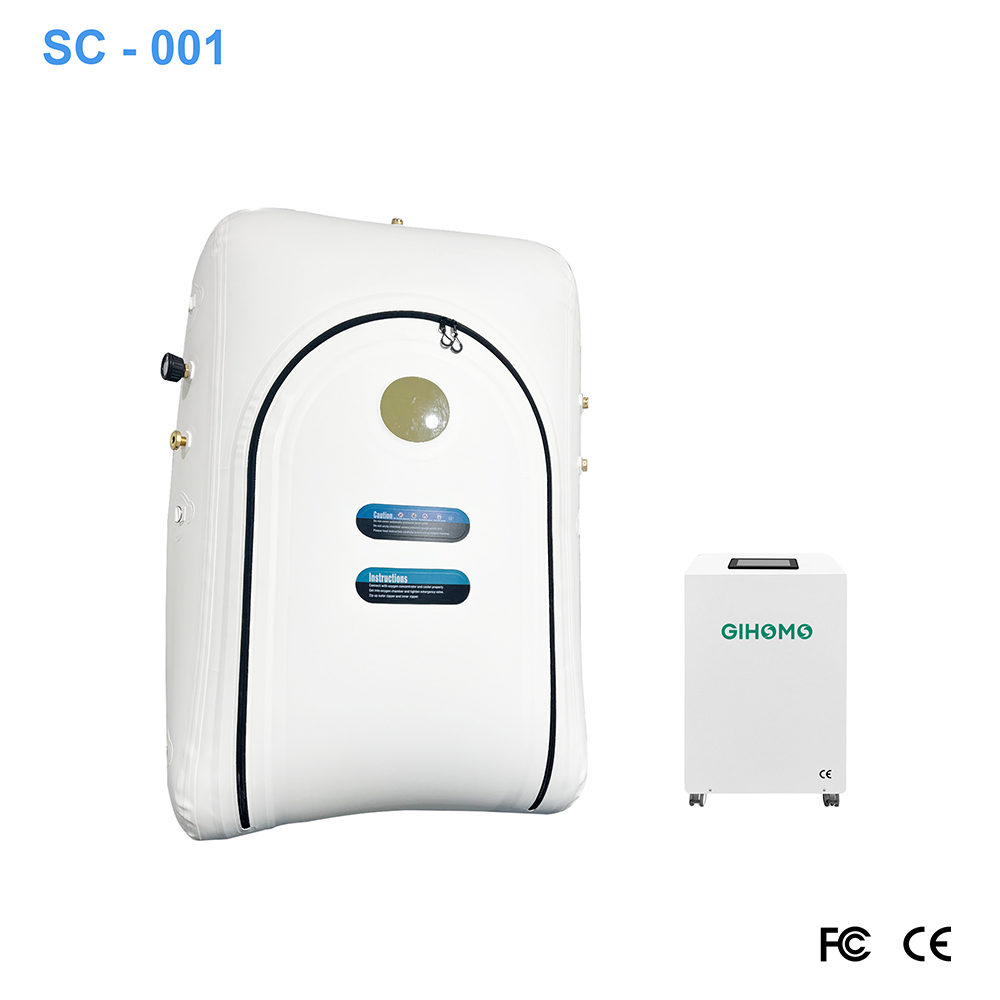
Wheelchair-accessible configurations expand the range of patients a rehabilitation facility can serve.
Evidence from Real Deployments
GIHOMO's tracked deployments provide a useful pattern for facility planning:
- A home-use client ordered 80 units over two years, reporting stable operation. The primary goal was improving sleep, enhancing immunity, and supporting daily health management. Highlighted attributes were low price, safety, efficiency, and comfort.
- A beauty salon / spa / hotel client purchased 30 units and reported win-win cooperation after two years. Applications included beauty salon, spa, and hotel services.
- A gym and sports club client purchased 50 units, reporting stable operation over two years with emphasis on unique design, safety, efficiency, and comfort.
- A wellness center / clinic / nursing home / dental clinic client purchased 80 units over two years, receiving good reviews.
- An ODM reseller purchased 100 units over two years for local market distribution, reporting win-win cooperation.
The pattern is not a single deployment model. It shows that different buyer types — home users, gyms, wellness centers, resellers — select different volumes and report success on different criteria.
Technical Explanation: Pressure, Flow, and the BIBS Difference
Three technical parameters dominate specification: pressure, oxygen concentration flow, and oxygen delivery method.
Pressure (ATA). Most wellness-oriented GIHOMO chambers operate at 1.3 ATA or 1.5 ATA. Some models reach 1.8 ATA or 2.0 ATA. Higher pressure generally increases the physiological load and therefore requires more attention to safety, operator training, and contraindications. For first-time facility buyers, 1.3–1.5 ATA is the typical entry point.
Concentration flow and purity. GIHOMO oxygen concentrators range from the GH05A at 5 L/min to the GH60S at 60 L/min. Oxygen purity across listed models is consistently above 90%. Higher flow supports larger chambers, multiple occupants, or faster pressurization. A single-person soft-shell chamber may run on 5–15 L/min; multi-person chambers require 30–60 L/min.
BIBS vs. ambient oxygen. In a non-BIBS mild chamber, the interior environment is enriched with oxygen from the concentrator. In a BIBS system, occupants breathe oxygen through masks while the chamber atmosphere is pressurized air. This distinction affects oxygen consumption, interior environment, and clinical flexibility. Buyers with medical or multi-user requirements often request BIBS configurations.
Traditional Solution vs. Modern Deployment: A Balanced Comparison
Traditional clinical hyperbaric facilities were built around large, multiplace steel chambers with dedicated compression staff, medical gas piping, and strict facility engineering. That model remains necessary for certain clinical indications and multi-patient treatment protocols. Its advantages are high capacity, established regulatory pathways, and deep clinical precedent.
Modern mild and portable systems — including TPU soft-shell chambers and compact hard-shell monoplace units — have lower acquisition and installation costs, require less space, and fit into existing wellness and sports facilities without major construction. This has expanded access to HBOT-like services beyond hospital settings.
A balanced assessment must include a limitation: mild and portable systems do not replace clinical multiplace hyperbaric medicine. Regulatory frameworks also differ. The U.S. FDA classifies hyperbaric chambers as Class II medical devices requiring 510(k) clearance, noting that soft-shell chambers are primarily cleared for altitude sickness. EU rules under MDR 2017/745 classify chambers as Class IIb devices, and multiplace chambers must meet EN 14931 and EN 16081 fire safety requirements. Buyers must confirm that the chosen configuration satisfies their regional regulatory obligations and is matched to the intended clinical or wellness scope.
Procurement Criteria for Project/Scenario Fit
When evaluating a supplier for a specific project, the following criteria are more useful than generic brand comparisons:
- Scenario compatibility: Does the supplier map products to your industry — beauty, health care, sports, rehabilitation — or only push one model?
- Oxygen concentrator matching: Is the concentrator flow rate matched to chamber volume and number of occupants?
- Supporting equipment: Does the quotation include clarity on water-cooled air conditioning, 24V power supply, pressure relief valves, and installation conditions?
- Site requirements: Can the equipment operate in your indoor, cool, and ventilated environment with 24/7 usage?
- Customization: Is OEM/ODM available for logos, interface language, color, and branding?
- Warranty and support: Does the supplier offer 24/7 response, one-on-one technical support, and a one-year warranty?
Why the Supplier Portfolio Matters
GIHOMO, operated by Guangdong GIHOMO Medical Technology Co., Ltd., is a manufacturer based in Foshan, Guangdong, China, founded in 2021, with a 2,000m² facility and 6 R&D engineers. The company reports an annual output of 1,000 units and exports approximately 60% to EU and USA markets. Its product portfolio spans soft-shell TPU chambers, hard-shell steel chambers, aluminum lying-type chambers (C750, C900), carbon-fiber models (B2020-3), and BIBS systems. It operates under ISO9001 and lists CE and FCC certifications for core products.
The strategic point for buyers is not that GIHOMO produces a particular model, but that the product range supports scenario-based selection. A reseller targeting home users, a gym chain, and a wellness center all need different equipment — and a portfolio-based supplier can align with each project without forcing a compromise.
Future Outlook
As HBOT adoption grows, scenario specialization is likely to accelerate. The U.S. FDA notes that soft-shell chambers are primarily cleared for altitude sickness — not general disease treatment. This creates a widening gap between wellness-oriented mild chambers and regulated clinical systems. Facilities will need to be explicit about which service category they operate in.
Market data already points to regional diversity: North America held roughly 54.77% of the HBOT market in 2024, while Asia-Pacific is considered the fastest-growing region. The 18% share of soft-shell portable chambers in Asia-Pacific sales suggests that lighter, lower-cost configurations are driving expansion in newer markets. Suppliers with structured product lines — from 1.3 ATA sitting chambers to 2.0 ATA multi-person units — are better positioned to support this segmentation.
FAQs
What kind of facility is a soft-shell hyperbaric oxygen chamber best suited for?
A soft-shell (TPU) hyperbaric oxygen chamber is best suited for indoor, cool, and ventilated environments such as home-use settings, small wellness studios, gyms, and beauty facilities. Models like the GIHOMO STW03 (1.5 ATA) and ST001 (1.3 ATA) operate in 24/7 mode and require supporting equipment including a water-cooled air conditioner, 24V power supply, oxygen concentrator, two manual pressure relief valves, and automatic pressure relief valves.
What is the difference between a portable hyperbaric chamber and a hard-shell hyperbaric chamber?
A portable hyperbaric chamber is typically made of TPU fabric, lighter, and easier to install in existing rooms; examples include the GIHOMO STW03 and SH001. A hard-shell chamber uses steel, aluminum, or carbon fiber, provides a rigid structure, and is usually installed as a permanent fixture; examples include the GIHOMO Y1000, Z0880, W1800, and P5480. Pressure ranges overlap, but hard-shell models more commonly offer multi-person configurations and advanced interior features.
What does a hyperbaric chamber with BIBS system mean?
BIBS stands for Built-In Breathing System. In a BIBS-equipped chamber, the occupant breathes concentrated oxygen through a mask or hood while the chamber itself is pressurized. This is different from a non-BIBS mild chamber where the interior atmosphere is enriched with oxygen. GIHOMO offers BIBS systems in both portable form, such as the STW02 at 1.5 ATA, and hard-shell form, such as the R1800M and W1200.
What supporting equipment is required for installing a hyperbaric oxygen chamber?
According to GIHOMO's product scenario data, a hyperbaric oxygen chamber requires supporting equipment including a water-cooled air conditioner, a 24V power supply, an oxygen concentrator, two manual pressure relief valves, and automatic pressure relief valves. The equipment is designed to operate in an indoor, cool, and ventilated environment in 24/7 mode.
What is the typical pressure range for a mild hyperbaric chamber?
Mild hyperbaric chambers typically operate at pressures between 1.3 ATA and 1.5 ATA. Some higher-performance models reach 1.8 ATA or 2.0 ATA. For example, the GIHOMO ST001 and SC001 are 1.3 ATA; the STW03, Y1000, and Y0780 are 1.5 ATA; the W1200 is 1.8 ATA; and the SH001, C750, C900, and W1800 are 2.0 ATA.
How should a gym choose between a soft-shell and a hard-shell hyperbaric chamber?
A gym should first determine whether the chamber will be a dedicated permanent service room or a flexible recovery-space addition. Soft-shell models such as the STW03 and SH001 are easier to install, lower-cost, and suitable for gym recovery corners. Hard-shell models such as the P3000 provide a more permanent, higher-capacity installation with four sofas and four oxygen terminals, which may be justified when recovery services become a significant revenue stream.
Can a hyperbaric oxygen chamber be used continuously?
GIHOMO application data specifies that its hyperbaric oxygen chamber products operate in 24/7 mode. However, continuous operation requires the facility to provide proper indoor, cool, and ventilated conditions, and to maintain the supporting equipment — especially the oxygen concentrator and air-conditioning system — in good working order.
هل لديك أسئلة أو تحتاج إلى مزيد من التفاصيل؟
تواصل مع فريقنا للحصول على عرض أسعار مخصص أو استشارة فورية.
طلب عرض أسعار
املأ النموذج أدناه وسيتواصل معك فريقنا بعرض مقترح مخصص.
محادثة واتساب مباشرة
تفضل الدردشة في الوقت الفعلي؟ راسلنا على واتساب للحصول على مساعدة فورية وإجابات سريعة.
- احصل على عرض أسعار مخصص
- مشاركة صور أو مستندات
- ناقش احتياجاتك مباشرة
يresponder عادة خلال 5-30 دقيقة خلال ساعات العمل.