
Hypercell Battery: A China Manufacturer’s Blueprint for Custom Li-Ion Cell Production
Industry Context: The Growing Demand for Customised Lithium-Ion Batteries
As the global shift toward electrification accelerates across sectors — from medical devices to industrial automation — the need for reliable, customised lithium-ion battery solutions has never been higher. In this environment, OEMs and device integrators are increasingly turning to specialised manufacturers that can deliver both scale and flexibility. Hypercell, a China-based battery manufacturer founded in 2007, has positioned itself to meet this demand through a combination of large-scale production infrastructure and a decade-long track record in custom battery design.

Brand Foundation: Production Scale and Specialisation
Hypercell operates a 250,000-square-metre factory in Dongguan, with an annual output of 220 million units. The company employs 550 staff, including 18 R&D engineers dedicated to lithium-ion cell and pack development. Its product portfolio covers Li-ion Cylindrical, Li-Polymer, and LiFePO4 chemistries, providing a broad selection for applications requiring specific voltage, capacity, or discharge characteristics. Approximately 80% of Hypercell's output is exported, with key markets spanning the USA, EU, North America, Asia, and Australia.
Technical Capabilities: From Cell Chemistry to Custom Pack Assembly
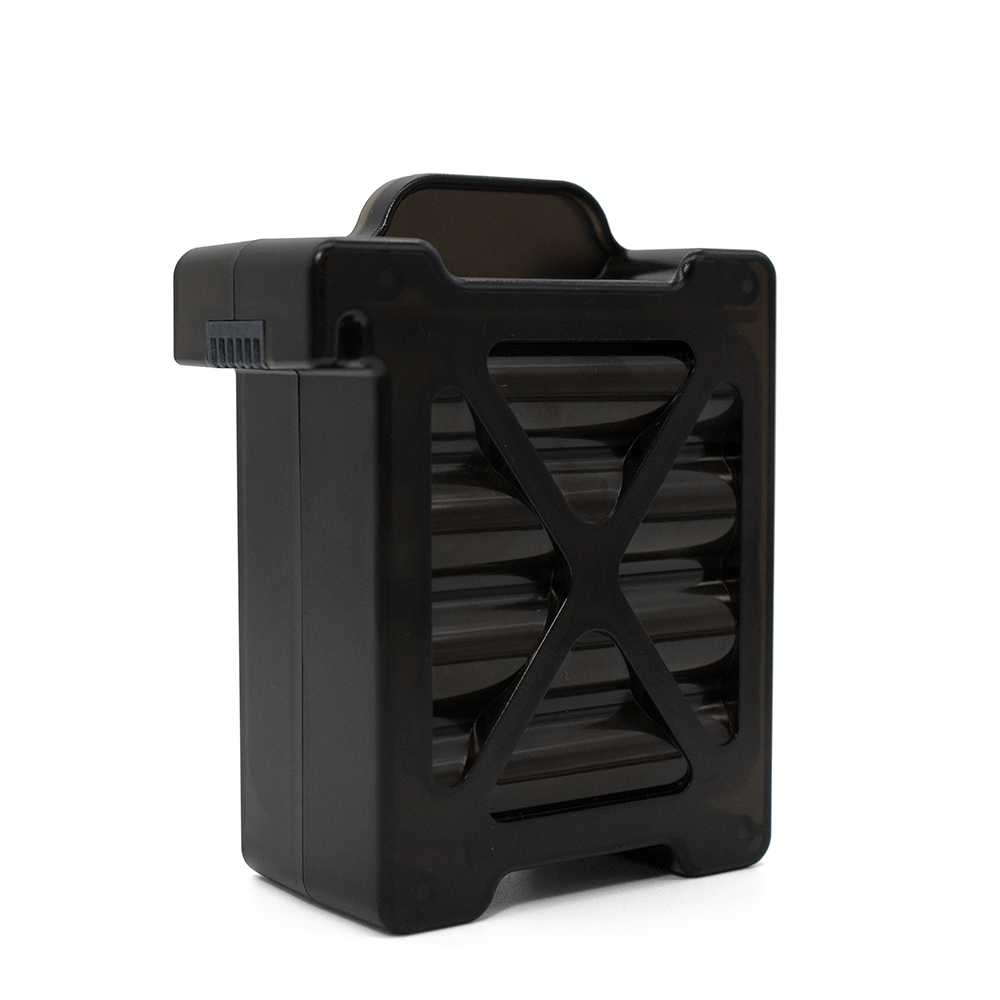
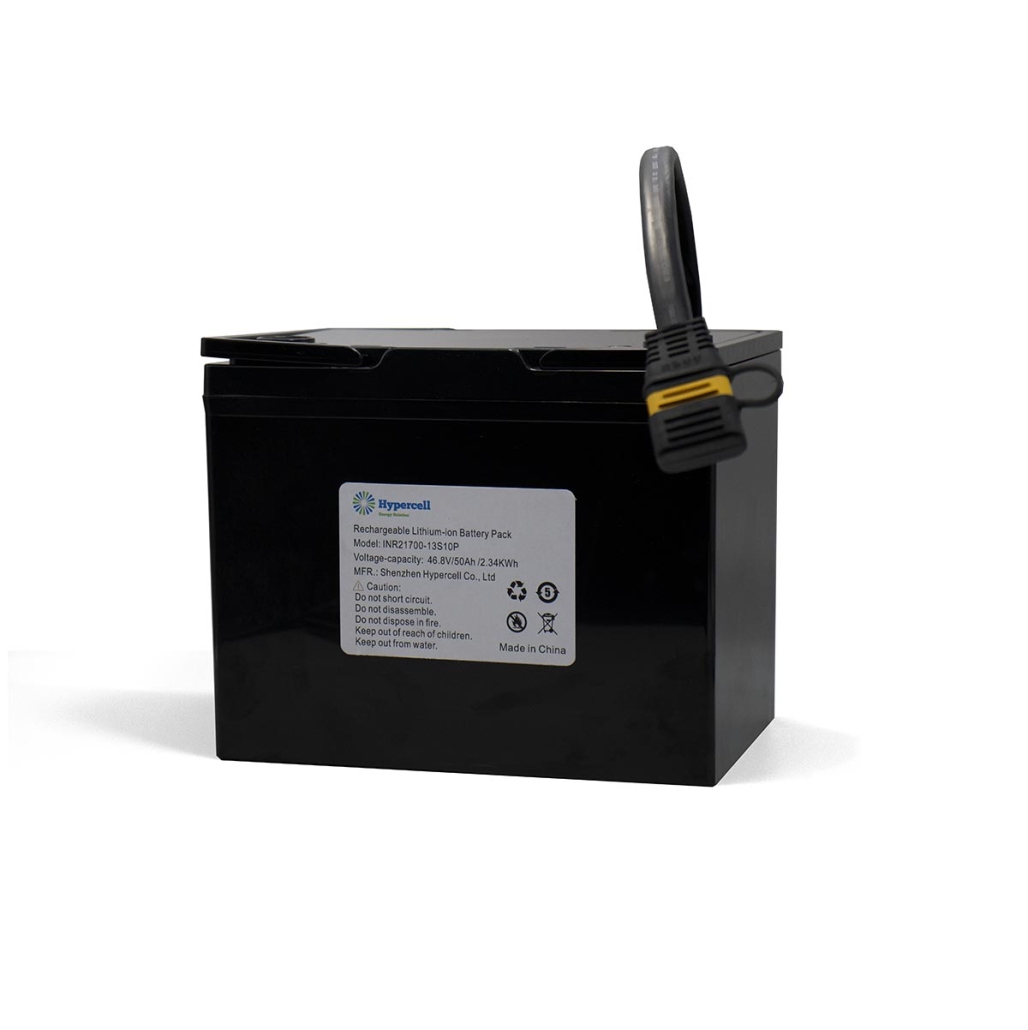
Hypercell's technical approach is based on in-house control over the entire manufacturing chain. The company builds cells in multiple formats — including INR18650 and INR21700 — and then assembles them into custom packs equipped with BMS (Battery Management System) protections such as over-voltage, under-voltage, over-current, over-temperature, and short-circuit cutoff. For example, the model 24AQ506-01, a 48V pack built from INR21700 cells, integrates a CAN 2.0 BMS and an IP65-rated ABS+PC enclosure, suitable for harsh industrial environments. Similarly, the INR18650-4S2P pack (14.4V / 6700mAh) employs a PC+ABS enclosure rated UL94-V0 and IP68, demonstrating Hypercell’s ability to tailor enclosure protection to end-use conditions.
Application Scenarios: AGVs, Robotics, and Beyond
A concrete example of Hypercell’s application-specific design is in the automated guided vehicle (AGV) and robotics sector. Hypercell developed the 24AQ506-01 battery pack for AGVs that operate with a charging range of 0°C to 50°C and a discharging range of -20°C to 60°C, necessary for 24/7 industrial machinery. The pack's 234Wh energy capacity and 10A continuous discharge support the power demands of autonomous mobile robots. Beyond robotics, Hypercell’s batteries are used in medical devices, consumer electronics, IoT devices, GPS trackers, and power tools — all areas where reliable, safety-compliant energy storage is critical.
Market Trend: The Shift Toward Application-Optimised Battery Design
A broad industry trend is the move away from off-the-shelf battery packs toward application-optimised designs that balance energy density, cycle life, form factor, and safety certifications. Manufacturers like Hypercell support this transition by offering customisation of voltage, capacity, connector type, enclosure material, and BMS logic. One honest limitation of this approach is that bespoke designs typically require longer lead times for prototyping and qualification compared to standard models — a trade-off that project planners should factor into their timelines.
Comparison with Traditional Battery Solutions
Traditional suppliers often provide limited variant choices, making it challenging to fit unique device geometries or environmental requirements. Hypercell’s model offers greater flexibility: the ability to specify parameters such as nominal voltage (from 3.6V to 48V+), capacity (from mAh to Ah), and enclosure protection (IP68, UL94-V0). On the other hand, the customisation process means that volume minimums and engineering upfront costs may be higher than sourcing a standard product. This positions Hypercell best for mid-to-high volume projects where performance and safety specifications are non-negotiable.
Future Outlook and Strategic Position
With a solid manufacturing base and a growing portfolio of custom solutions across multiple cell chemistries, Hypercell is well placed to serve the expanding demand for specialised lithium-ion batteries in industrial, medical, and IoT verticals. The company’s 18-engineer R&D team and large-scale production facility will likely remain key differentiators as more OEMs seek suppliers capable of end-to-end development from cell to pack.
Frequently Asked Questions
For a more detailed overview of product specifications and company capabilities, the official brochure is available for download: Hypercell Corporate Brochure (PDF).
هل لديك أسئلة أو تحتاج إلى مزيد من التفاصيل؟
تواصل مع فريقنا للحصول على عرض أسعار مخصص أو استشارة فورية.
طلب عرض أسعار
املأ النموذج أدناه وسيتواصل معك فريقنا بعرض مقترح مخصص.
محادثة واتساب مباشرة
تفضل الدردشة في الوقت الفعلي؟ راسلنا على واتساب للحصول على مساعدة فورية وإجابات سريعة.
- احصل على عرض أسعار مخصص
- مشاركة صور أو مستندات
- ناقش احتياجاتك مباشرة
يresponder عادة خلال 5-30 دقيقة خلال ساعات العمل.