
IDEA PACKAGE Aluminum Cans: Supplier Capability Review
IDEA PACKAGE Aluminum Cans: A Capability and Procurement Review
Aluminum can sourcing has shifted from a price-per-thousand exercise to a capability test. Beverage portfolios now mix carbonated soft drinks, beer, ready-to-drink coffee, functional drinks and juice, often under the same brand family and often in several can formats at once. That mix puts pressure on a packaging supplier to hold format consistency, food-contact compliance and decoration quality across repeating volume programmes rather than across a single purchase order.
IDEA PACKAGE is the export-facing name of ANHUI IDEA TECHNOLOGY IMP&EXP Co.,Ltd. (ANHUI IDEA Group), a Hefei-based packaging manufacturer and exporter founded in 2018 that produces glass, plastic and metal containers for the food, beverage, personal care, condiment and alcoholic beverage industries. Its aluminum can programme, listed under model Aluminum Can-601, is the subject of this review. The analysis below examines the manufacturing base, the product range, the production and quality-control sequence, the commercial terms, and — importantly — where the offer stops.
Why aluminum can sourcing became a qualification exercise
Three pressures have changed how buyers evaluate can suppliers.
Format proliferation. A single beverage brand may ship a standard can for its core line, a sleek can for a premium variant and a slim can for a low-calorie entry. Each format interacts differently with filling and seaming equipment, and each requires its own artwork and print setup. A supplier that can only cover one format forces the buyer into a multi-vendor structure.
Compliance documentation. Food-contact questions no longer arrive only from regulators; they arrive from retail customers and from the brand's own quality team. Buyers increasingly want evidence of coating specification, incoming material verification and seal integrity testing before the first shipment, not after.
Decoration as differentiation. On a shelf where the container is often the most visible brand asset, print quality, matte or glossy finishes and specialty sleeves are part of the product, not an afterthought. Decoration capability therefore belongs in the supplier evaluation, alongside can-making.
Entity snapshot: what IDEA PACKAGE is
IDEA PACKAGE operates as a one-stop packaging solutions provider rather than a single-material can maker. The group states that its manufacturing ecosystem comprises three dedicated facilities focused respectively on glass, plastic and metal packaging, supported by an in-house technical engineering team. For a beverage buyer, that structure matters mainly because it allows a single commercial relationship to cover multiple container types.
| Attribute | Detail |
|---|---|
| Legal entity | ANHUI IDEA TECHNOLOGY IMP&EXP Co.,Ltd. (ANHUI IDEA Group) |
| Brand used in export markets | IDEA PACKAGE |
| Founded | 2018 |
| Headquarters | Hefei, Anhui Province, China |
| Production structure | Three specialized facilities for glass, plastic and metal packaging |
| Employees | 250 |
| Engineering team | 15 engineers |
| Annual output | CNY 180,000,000 |
| Export ratio | 50% |
| Markets served | Global; products exported to more than 150 countries and regions |
| Client base | More than 2,500 clients worldwide |
| Certifications stated | ISO 9001, FDA, CE |
| International sales hub | Rocsun Eco, Hong Kong |
| Corporate website | www.ideabottles.com |
Read as a set, these figures describe a mid-volume specialist rather than a commodity giant: 250 employees and CNY 180 million in annual output are consistent with a focused packaging operation serving export accounts, and the 50% export ratio indicates that international orders are a core activity rather than an occasional add-on. The stated certifications are the ones most frequently requested in beverage and food packaging procurement.
The aluminum can range: formats, ends and decoration
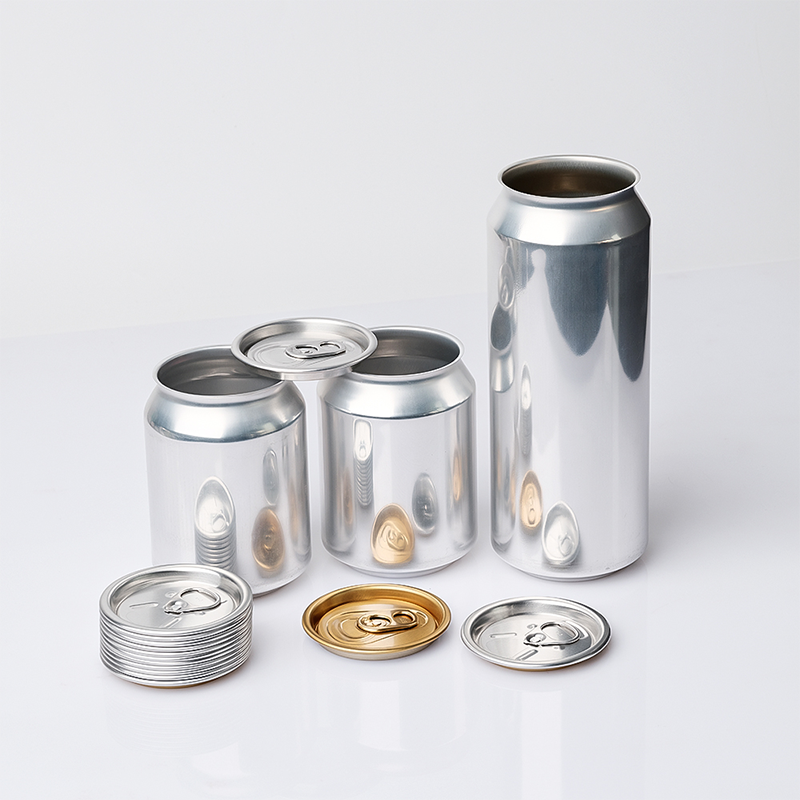
The aluminum can line is built around three industry-standard body types — standard, sleek and slim — with capacities of 250 ml, 330 ml, 355 ml, 473 ml and 500 ml, and can-end diameters of 202# and 206#. Standardized dimensions allow the buyer to select a format against the filling line and the retail channel rather than against a bespoke tooling programme.
| Specification area | Available options |
|---|---|
| Product model | Aluminum Can-601 |
| Can type | Slim / Sleek / Standard (plus aluminum beer bottle format) |
| Capacity | 250 ml, 330 ml, 355 ml, 473 ml, 500 ml |
| Can end size | 202# / 206# (lid diameter) |
| Material | Food-grade aluminum alloy |
| Internal coating | BPA-free |
| Appearance | Natural aluminum, white-base printing, full-color printing |
| Surface finish | UV printing, shrink sleeve, self-adhesive label; matte / glossy / metallic options |
| Lid type | SOT (stay-on tab), EOE (easy-open end), full-open end; standard, wide, high and special end variants |
| Customization | Client logo and full-can graphics, with graphic design and prototyping support |
| Target categories | Beer, carbonated drinks, fruit juice, coffee, functional drinks, canned food |
The lid configuration is often the most under-specified item in an inquiry. IDEA PACKAGE offers SOT, EOE and full-open ends, with standard, wide, high and special end variants, and describes smooth-opening pull tabs, reinforced rivet structures and integrated sealing gaskets as the basis for airtight performance. For buyers running pressurized products, the end specification should be fixed in writing before artwork is approved, because the end is where pressure resistance and opening experience are decided.
Inside the production sequence: from coil to finished can
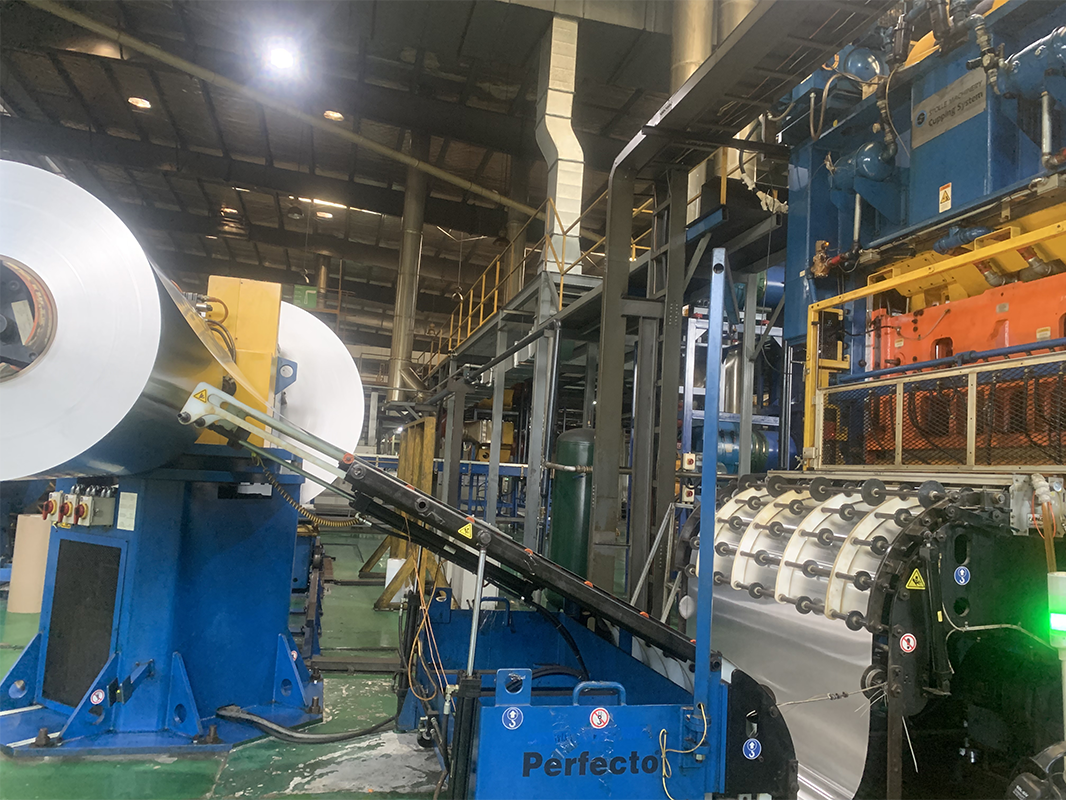
Aluminum can quality is largely determined by process control at the forming stages, not by final visual inspection alone. The production flow documented across the company's metal packaging operations runs from raw material intake through coil stamping, cup formation, deep drawing into the finished can body, printing, drying and can cleaning, followed by finished-can compliance inspection and logo verification.
Each stage has a specific failure mode attached to it. Stamping and deep drawing determine wall thickness distribution, base formation and the smoothness of the can opening; the company specifies burr-free openings and solid base formation as quality criteria. Printing and drying determine decoration durability and color consistency across a print run, which is why drying is treated as a distinct stage rather than an appendage to printing. Cleaning precedes filling, and the finished-can inspection step checks compliance against the agreed specification rather than simply counting units.
Two details are worth flagging for engineers. First, the 202# and 206# end diameters are the mechanical interface with the seamer, so end specification and seaming equipment must be matched at the sampling stage. Second, the company states high pressure resistance as a design property across batches — a point that should be verified against the buyer's own carbonation level during pre-shipment testing rather than assumed.
Food-contact safety and batch-level quality control
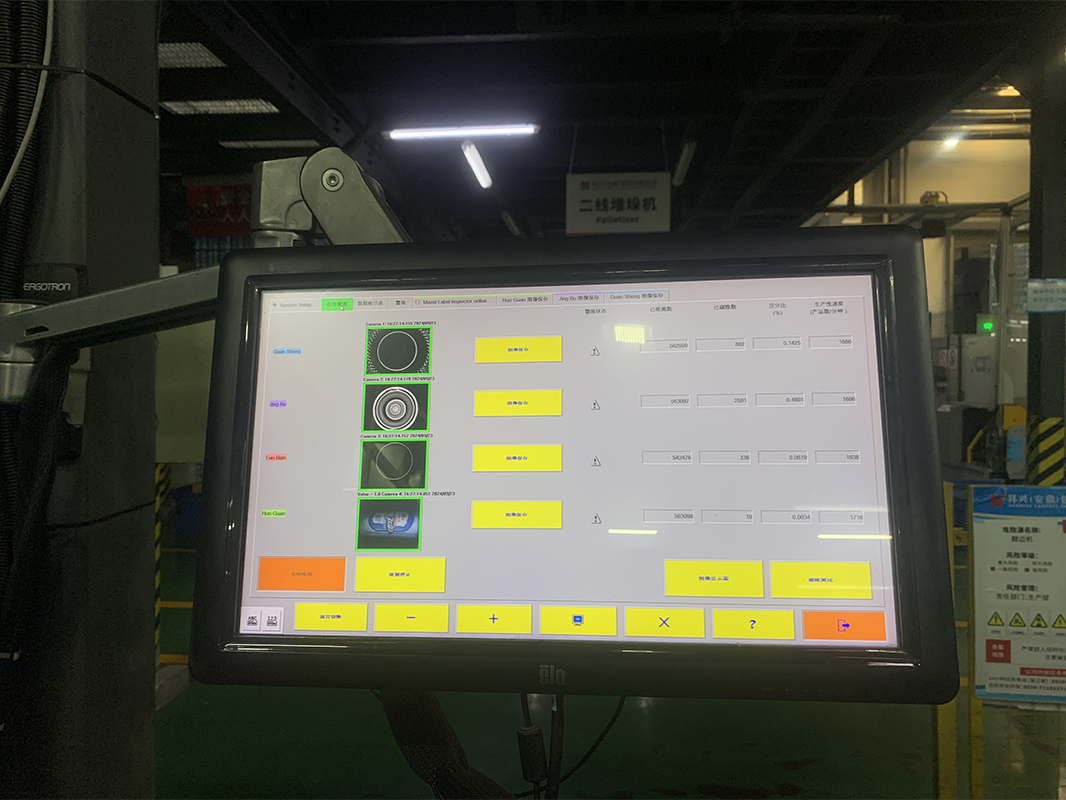
Food-contact risk in aluminum cans concentrates in three areas: migration from the internal coating, seal failure, and coating delamination. IDEA PACKAGE addresses each with a named control rather than a general assurance.
- Coating specification: the internal lining is BPA-free by specification, and each incoming batch is checked against its Certificate of Analysis (COA) before production begins.
- Traceability: a batch retention sample management system is maintained, so a production lot can be referenced after shipment.
- Seal integrity: every unit passes a 100% airtightness test before shipment, supported by cap torque control.
- Coating adhesion: adhesion testing verifies bond strength between coating and aluminum substrate.
- Pre-shipment verification: goods are inspected by a pre-shipment test before leaving, with the test report provided; test items and AQL level are agreed with the buyer before production starts.
The company also publishes a use instruction that is relevant to reusable or refillable formats: hand-wash with a soft sponge and avoid steel wool or harsh abrasives, because mechanical abrasion is the main route to coating damage after filling. Buyers distributing into markets where cans are refilled or reused should carry that instruction through to the end user.
Commercial terms: MOQ, inspection, Incoterms and payment
Commercial structure is often the deciding factor at the research stage, because it determines whether a supplier is compatible with a buyer's order rhythm at all. IDEA PACKAGE publishes the following terms.
| Term | Detail |
|---|---|
| Minimum order quantity | 100,000 pcs for standard mass-production pricing |
| Incoterms offered | FOB, CIF, EXW |
| Inspection | Pre-shipment test before dispatch, with test report; test items and AQL agreed before production |
| Payment | 30% T/T deposit before production, 70% T/T against a copy of the B/L |
| Packing and shipping | Export cartons and pallets; large-scale wholesale support; global shipping |
The 100,000-piece threshold is the single most important filter in this commercial profile. It suits established beverage producers, private-label programmes and distributors consolidating volume, and it is a poor fit for sampling-stage startups, trial runs or craft-scale releases. Buyers below that threshold should treat the aluminum can line as a future option rather than a current one.
Application fit: filling lines, matched equipment and storage
The documented application for the aluminum can range is a beverage packaging production line operating indoors at normal temperature, using an automatic high-speed filling and seaming line, with matched equipment comprising a can filling machine, a seamer and an ink printing machine. The stated functional requirements are beverage containment, airtight preservation and pressure resistance, with a BPA-free food-grade inner coating and high airtightness as the special requirements.
In practice, that means the buyer's own line capability is part of the fit assessment. A supplier can guarantee can geometry and coating performance; it cannot compensate for a seamer that is not set to the specified end. Buyers should therefore run a line trial on the selected format and end combination before committing to a full volume programme.
Storage conditions are equally part of the specification: dry warehouse storage at normal temperature. Cans stored in humid or fluctuating conditions can compromise both the external print finish and, over long periods, the integrity of the packed product.
Where IDEA PACKAGE sits in the packaging supply market
On the available evidence, the group occupies a specific position: an export-oriented, multi-material packaging specialist with in-house metal forming and decoration, rather than a single-product trader. Three factors support that reading.
Material breadth. Glass, plastic and metal capability under one group structure allows a beverage brand to keep its cans and its premium glass variants within a single supplier relationship, which reduces coordination overhead and simplifies documentation.
Documentation maturity. ISO 9001, FDA and CE certifications, combined with COA verification, retention samples and 100% airtightness testing, indicate a quality system designed to answer buyer audits rather than only satisfy internal production needs.
Export orientation. A 50% export ratio, activity in more than 150 countries and a Hong Kong-based international sales hub point to logistics and documentation processes built around cross-border orders.
The same evidence also defines the ceiling. With 250 employees and CNY 180 million in annual output, this is a specialist mid-volume supplier; buyers running very large multi-region can programmes with dedicated line-dedicated tooling may still evaluate larger can-making groups in parallel. IDEA PACKAGE's advantage sits in format breadth, decoration and integrated multi-material sourcing, not in scale alone.
Integrated sourcing versus the traditional multi-vendor model
Most beverage brands still assemble packaging through separate relationships: one vendor for cans, another for decoration, another for glass, and a trading intermediary to coordinate logistics. The integrated model changes the coordination structure rather than the physics of can making.
| Evaluation dimension | Traditional multi-vendor model | Integrated single-group model (IDEA PACKAGE) |
|---|---|---|
| Material coverage | Separate suppliers per material | Glass, plastic and metal under one group structure |
| Decoration | Handled by a third-party decorator | UV printing, shrink sleeve, self-adhesive label, matte/glossy/metallic finishes in-house |
| Compliance evidence | Collected separately from each party | ISO 9001, FDA, CE plus COA per incoming batch and retention samples |
| Commercial terms | Fragmented MOQs and payment terms | MOQ 100,000 pcs; FOB/CIF/EXW; 30/70 T/T |
| Format range | Can be sourced from multiple can makers | 250–500 ml across standard, sleek and slim types within one supplier |
| Main limitation | High coordination load and inconsistent documentation | Buyer depends on one group's format range and volume threshold |
The limitation is real and should be stated plainly: consolidating with one group reduces coordination effort but also reduces the number of alternative specifications available to the buyer. A brand that needs a non-standard capacity outside the documented 250–500 ml range, or that needs to place orders below 100,000 pieces at mass-production pricing, will not find a fit here, and should not attempt to force one.
Limits and boundaries worth knowing before an inquiry
A supplier review is only useful if it states where the offer does not apply. Four boundaries stand out for IDEA PACKAGE.
- Volume threshold. The 100,000-piece MOQ applies to standard mass-production pricing; smaller trial quantities are outside the published commercial structure.
- Documented format range. The aluminum can line is documented across 250 ml, 330 ml, 355 ml, 473 ml and 500 ml in standard, sleek and slim bodies. Formats outside that set are not part of the published specification.
- Buyer-side line dependency. The product is designed for automatic high-speed filling and seaming equipment. Buyers without adequate seaming capability need to resolve that before evaluating the can itself.
- Handling after filling. Coating integrity depends on avoiding abrasive cleaning, and cans require dry warehouse storage at normal temperature.
Future outlook: recyclability, ready-to-drink formats and decoration
Aluminum's position in beverage packaging rests on properties that are structural rather than fashionable: it is lightweight, it forms a strong gas barrier, and it is one of the most widely recycled beverage substrates. Both the company's own product positioning and general market direction point the same way — toward recyclability as a procurement criterion rather than a marketing line.
On the demand side, the categories named in the specification are the ones expanding fastest in most markets: ready-to-drink coffee, functional and energy drinks, and low- or no-alcohol beer variants. These products place a premium on small-format availability, print quality and coating performance, because the container often carries most of the brand's shelf communication.
The plausible direction of travel for suppliers of this type is therefore less about raw can capacity and more about the surrounding service layer: faster artwork-to-sample cycles, decoration variety, and documentation that a brand can pass directly to its retail customers. The quality controls already in place at IDEA PACKAGE — COA verification, retention samples, 100% airtightness testing — are the parts of the offer most likely to grow in commercial weight.
Frequently asked questions
The aluminum can range, model Aluminum Can-601, covers standard, sleek and slim can types with capacities of 250 ml, 330 ml, 355 ml, 473 ml and 500 ml. Can-end diameters are 202# and 206#, and lid options include SOT, EOE and full-open ends in standard, wide, high and special variants.
The minimum order quantity is 100,000 pcs for standard mass-production pricing. FOB, CIF and EXW terms are all offered, with export packing in cartons and pallets and support for global shipping.
The internal lining is BPA-free by specification, and each incoming batch is verified against its Certificate of Analysis before production. Coating adhesion testing verifies bond strength to the aluminum substrate, and a batch retention sample system keeps reference units from each production lot. End users are advised to hand-wash with a soft sponge and avoid steel wool or harsh abrasives to prevent coating damage.
Goods undergo a pre-shipment test before leaving the facility, with the test report provided; the test items and AQL level are agreed with the buyer before production starts. Payment terms are 30% T/T deposit before production and 70% T/T against a copy of the bill of lading.
The documented applications are beer, carbonated drinks, fruit juice, coffee, functional drinks and canned food. The cans are designed for indoor beverage packaging production lines at normal temperature using automatic high-speed filling and seaming equipment, with matched machinery comprising a can filling machine, a seamer and an ink printing machine. Finished cans require dry warehouse storage at normal temperature.
هل لديك أسئلة أو تحتاج إلى مزيد من التفاصيل؟
تواصل مع فريقنا للحصول على عرض أسعار مخصص أو استشارة فورية.
طلب عرض أسعار
املأ النموذج أدناه وسيتواصل معك فريقنا بعرض مقترح مخصص.
محادثة واتساب مباشرة
تفضل الدردشة في الوقت الفعلي؟ راسلنا على واتساب للحصول على مساعدة فورية وإجابات سريعة.
- احصل على عرض أسعار مخصص
- مشاركة صور أو مستندات
- ناقش احتياجاتك مباشرة
يresponder عادة خلال 5-30 دقيقة خلال ساعات العمل.