
IEC 61439 Claim to Copper and PC: A 250A MCB Pan Assembly
IEC 61439 Claim to Copper and PC: A 250A MCB Pan Assembly
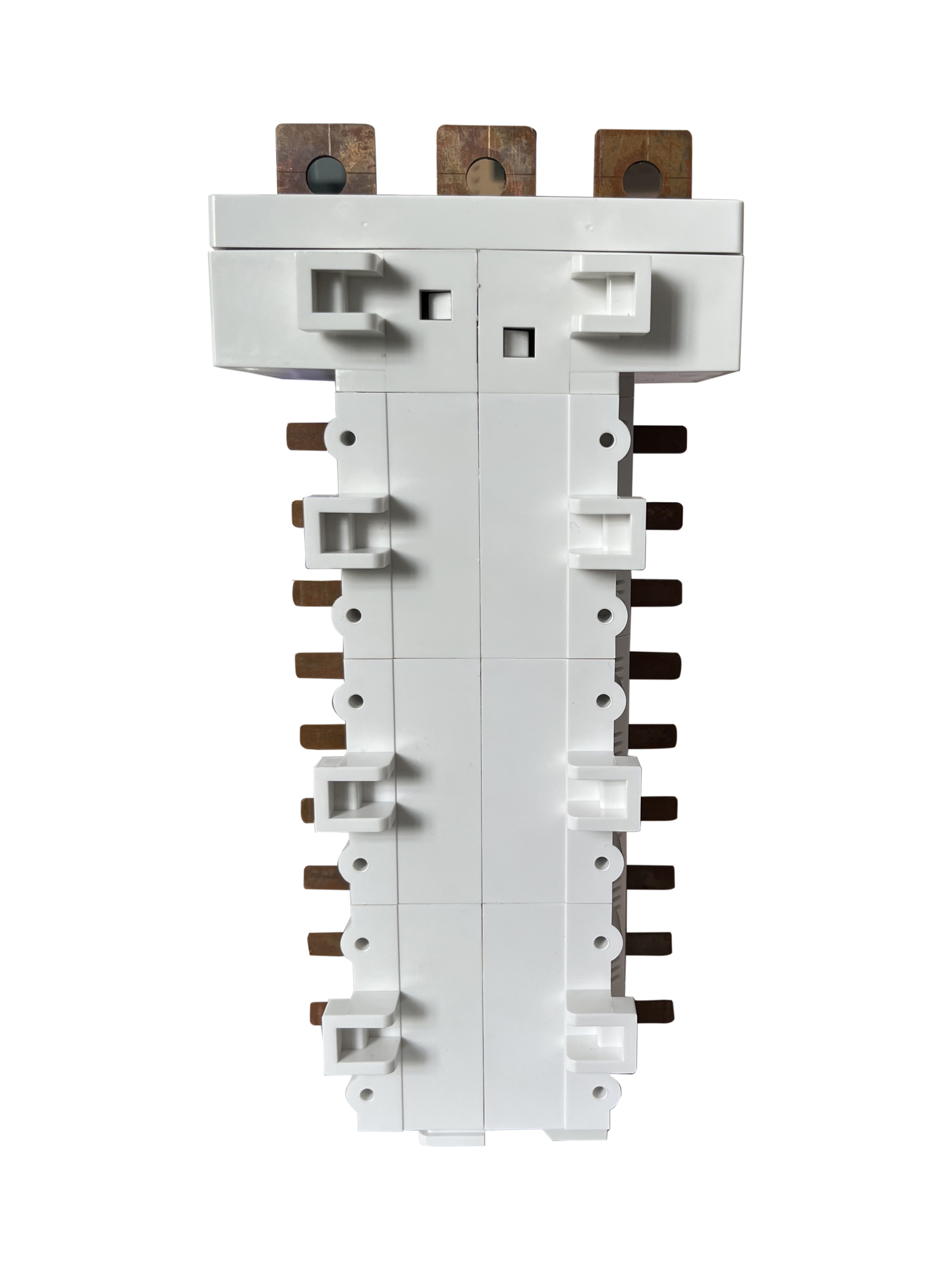
A compliance statement is only as useful as the specification it is attached to. When a product entry says that a 250A MCB pan assembly complies with IEC 61439 and AS/NZS, that sentence is not the proof — it is a pointer to proof that has to be located, read and matched. The BP6 MCB pan assembly busbar from Yueqing Barfuse Electric Co., Ltd. (BARFUSES) makes a compact worked example: one standards reference, one rated current, two terminal figures and a two-material construction, each of which carries a different weight of evidence.
This article sets out a repeatable way to test such a claim against the physical specification it is supposed to cover. The procedure is not specific to one supplier and does not require specialist laboratory access. It requires reading four things together — the sentence, the part of the standard, the document that names the model, and the parameters that describe the object being sold — and then recording honestly what has been proven and what has not.
1. The claim as written: what the BP6 entry actually commits to
The BP6 product entry is short enough to read in one pass. It identifies an MCB pan assembly busbar under model designation BP6, in the MCB 3P chassis busbar category, intended for industrial application and commercial building electric management. It gives a rated current of 250A. It gives an outgoing terminal width of 6.5 × 12 mm and an incoming terminal width of 21 × 22 mm. The listed material is copper plus PC parts, and the mounting plate can be customised according to the outgoing MCB. Alongside these parameters sits the statement that the product complies with IEC 61439 and AS/NZS standards.
That is five different kinds of information stacked in one place: an identity (BP6), a rating (250A), a geometry (two terminal figures), a construction (copper and PC), and a conformity statement (IEC 61439, AS/NZS). Only the last is a claim about standards and verification. The others are parameters. The most common reading error is to let the conformity statement spread backwards over the parameters, so that "compliant" is silently taken to mean "type-tested at 250A with these terminal dimensions in this material." Nothing in the entry says that. The statement and the parameters sit side by side; the work is to establish how, and how far, they connect.
2. IEC 61439 is a series, not a single badge
The BP6 statement names IEC 61439 without a part number and without an edition, and names AS/NZS without a document number. In a product listing that is normal shorthand. In a procurement file it is an incomplete pointer, because IEC 61439 is published in parts, and the part determines which assembly type and which verification requirements are in view.
The series is actively maintained. The IEC catalogue record for IEC 61439-6:2025, which covers busbar trunking systems, lists the document as active with an effective date of 1 December 2025 — a reminder that part-level references carry editions that move. Barfuse's own type test documentation is more specific than the product entry: it cites IEC 61439-2:2011 and EN 61439-2:2011. Part 2 is the part that applies to low-voltage switchgear and controlgear assemblies generally, which is the relevant family for a pan assembly busbar built into a distribution board.
None of this makes the BP6 sentence wrong. It makes it under-specified for anyone who has to file it against a project specification. The question to put to the supplier is narrow and answerable: which part and which edition is the compliance statement written against, does the referenced document name this model, and what configuration was in place when the evidence was generated?
3. Reading the certificate you actually hold: DEKRA scope and ISO 9001 scope
The third-party type test certificate in Barfuse's documentation is issued by DEKRA Certification B.V. under numbers 3309992.100 and 3309992.101, with an issue date of 5 September 2016 and an expiry of 5 September 2099. Its scope reads, in substance: low-voltage switchgear and controlgear assembly — busbar, models BP1-125 and BP1-250, brand BARFUSES, series BFSe, open-type assembly without enclosure, tested to IEC 61439-2:2011 and EN 61439-2:2011.
Two conclusions follow, and both matter. First, the certificate is specific and well-formed: it names a standard, a brand, a series, an enclosure condition and two models. Second, BP6 is not one of those models. A 250A busbar does appear inside the certificate scope — BP1-250 — but it is a different model in a different family, and the geometry differs in ways that matter to a panel builder. BP1 is specified with a connection size of 2.0 × 5 mm and an outline size of 2.0 × 20 mm; BP6 is specified through 6.5 × 12 mm outgoing terminals and 21 × 22 mm incoming terminals. Citing the BP1-250 certificate as if it answered a question about BP6 is precisely the over-read this method is designed to catch.
The second document is a management system certificate. ISO 9001 certificate 62724Q1160R0S is issued by Jingxin Certification (Beijing) Co., Ltd. against GB/T19001-2016 idt ISO 9001:2015, issued on 8 November 2024 and valid to 7 November 2027. Its scope covers manufacturing and export of strip fuse disconnectors, load disconnectors, busbar systems including MCCB and MPCB busbars, and distribution boxes. That certificate is genuinely useful — it tells a buyer that the factory operates a documented quality system across those activities — but it is not a product conformity record. It does not report temperature-rise behaviour, short-circuit withstand or terminal torque for any individual busbar model, and a buyer who treats it as a substitute for a type test has answered the wrong question.
4. From 250A to 6.5 × 12 mm and 21 × 22 mm
Rated current 250A is the most quoted figure in the entry and the least self-explanatory. On a pan assembly, a current rating is a system property: it depends on conductor cross-section, the number and distribution of outgoing ways, the ambient temperature inside the enclosure, the mounting arrangement and the devices fitted. The BP6 entry states the number without the conditions attached to it. That is common across pan assembly listings, but it fixes what the number may legitimately be used for. It is a filter for matching an incomer and a busbar family. It is not a thermal verification of an assembled board.
The two terminal figures are more informative than they look, because geometry is the part of a pan assembly that most often decides whether a project works. Outgoing terminal width is given as 6.5 × 12 mm; incoming terminal width is given as 21 × 22 mm. Both are stated as pairs rather than as single widths, and the entry does not label which figure is width and which is the second dimension. A buyer should not assume the orientation: request the drawing or inspect a sample, because a fit check done on the wrong axis is worth nothing.
What the figures do support is a fit check. The outgoing terminals must accept the outgoing MCB terminals at the pitch on which the breakers are arranged; the incoming terminals must accept the supply connection, whether that is a cable lug, a bar or a device terminal. What the figures do not support is any inference about current capacity, plating, clamping force, tightening torque or short-circuit withstand. Two assemblies with identical terminal figures can differ in all of those.
There is a further qualification in the entry itself: the mounting plate can be customised according to the outgoing MCB. BP6 is therefore not one fixed article. Two orders can share the model designation and carry different mounting plates for different breaker arrangements. Any qualification statement has to be attached to a configuration, not to a model number alone — a distinction that matters most when a project specifies an unusual outgoing mix.
5. Copper and PC: what the material statement can and cannot settle
The material line reads "copper + PC parts". That separates the assembly into a conductive system and an insulating system: copper carries current, PC — polycarbonate — forms the moulded insulating parts that hold and separate the conductors. For a specifier this is the first real technical commitment in the entry, because it fixes the material class on both sides of the insulation barrier.
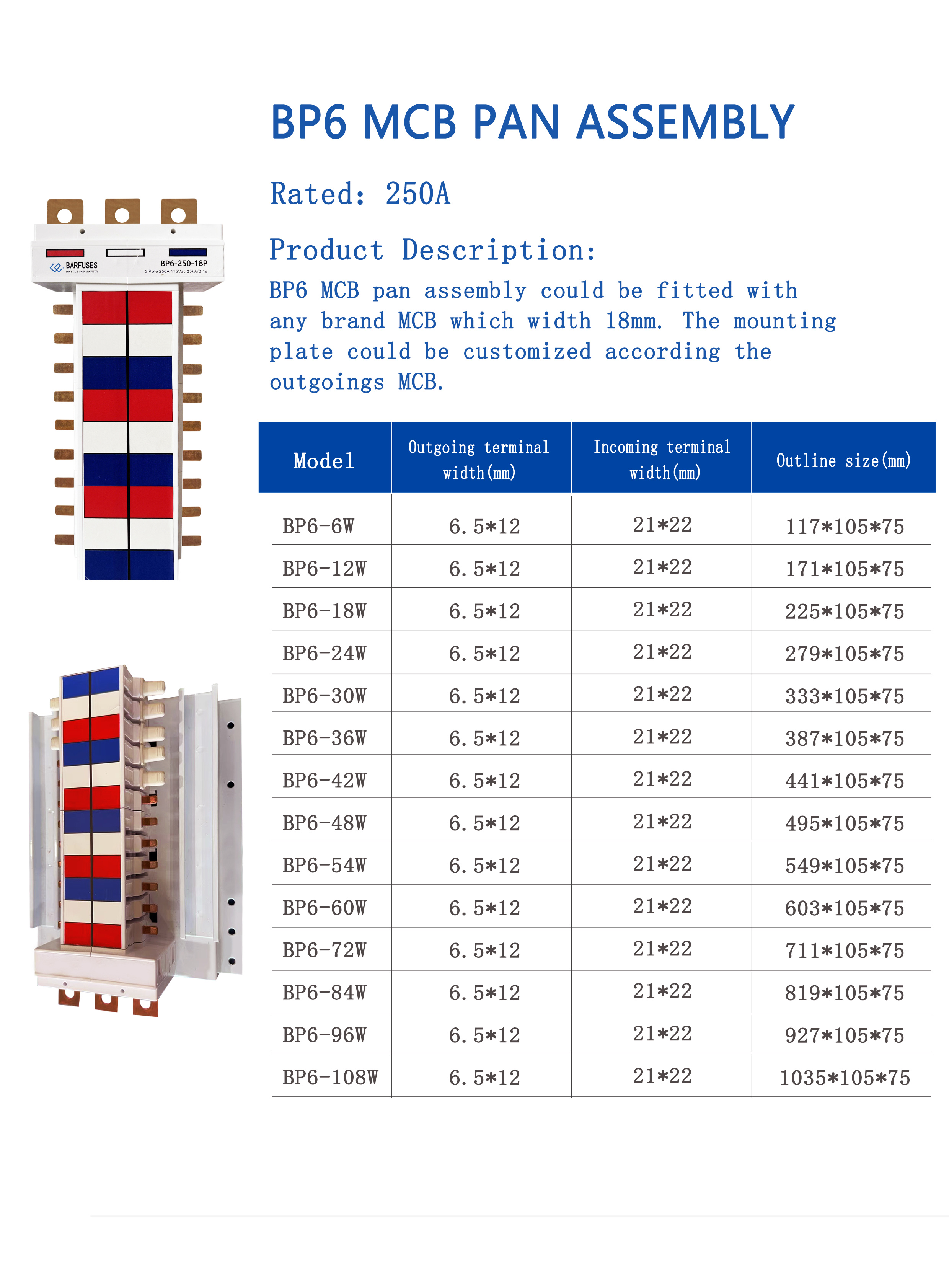
What it does not fix is everything that determines performance inside that class. The entry does not state copper cross-section, plating (bare, tin or silver), joint method, or the number and spacing of outgoing teeth. PC is a family of grades that differ in flame behaviour, heat deflection temperature and tracking resistance; the entry names neither a grade nor a flame class. These are exactly the values a temperature-rise or fault-level study needs, and they are the natural content of a follow-up request rather than a reason to reject the product.
The BP6 description also refers to high short-circuit withstand capability. The entry does not attach a numeric value, a test condition or a clause reference to that phrase. A buyer should convert it into a request: what is the conditional short-circuit rating, under which protective device, at which rated current? That is a documentation question, not a criticism of the assembly.
Material choice is also a live commercial trade-off rather than a settled default. Precedence Research puts copper at 62.8% of 2025 busbar market share, within a global busbar market it sizes at USD 19.83 billion for the same year in a report published in March 2026. The same source forecasts aluminium busbars growing at 6.9% CAGR over 2026–2035, attributing that pace to weight and cost advantages in large infrastructure. Market estimates for the same year differ by source — Stratview Research reports USD 15.72 billion for 2025 while IMARC reports USD 20.3 billion — a spread generally explained by whether locally fabricated busbars are counted alongside factory-assembled systems. Any figure used in a specification should carry its source and its scope.
6. A six-step method for qualifying any pan assembly claim
The procedure below can be applied to any pan assembly datasheet. It is written so that the output is a short written record, not an opinion.
- Isolate the sentence. Copy the conformity statement exactly as published, together with the model and the standard it names. Do not paraphrase it into something stronger.
- Name the part and edition. Convert "IEC 61439" into a part and a year, or record that the supplier has not done so. Do the same for the AS/NZS reference.
- Name the document and its scope. Record certificate number, issuing body, models named, assembly condition, standard and validity dates.
- Match the model and the configuration. Confirm that the model you are buying appears in the scope, and that the mounting plate or outgoing arrangement you need is the one that was covered.
- Match the parameters to the project. Compare rated current with the incomer, terminal figures with the devices and lugs, and material with the environment.
- Record the gap and request it. State plainly which of the six items is unproven and ask for the specific document that would close it.
| Claim element | BP6 entry | What it establishes | What it does not establish |
|---|---|---|---|
| Standards reference | Complies with IEC 61439 and AS/NZS standards | A conformity intention stated by the manufacturer | Which part, which edition, and whether a third party verified it for this model |
| Certificate on file | DEKRA 3309992.100 / .101 to IEC 61439-2:2011 and EN 61439-2:2011 | Type-tested evidence for models BP1-125 and BP1-250, open-type assembly without enclosure | Anything about BP6, whose model is not in the scope |
| Management system | ISO 9001 certificate 62724Q1160R0S, valid to 7 November 2027 | A documented quality system across the listed manufacturing and export activities | Product-level performance, temperature rise or short-circuit values |
| Rated current | 250A | A matching figure against an incomer or board rating | The conditions behind the rating: ways, ambient, arrangement, device pairing |
| Terminal geometry | Outgoing 6.5 × 12 mm; incoming 21 × 22 mm | A fit and pitch check against breakers, lugs and bars | Clamping force, torque, plating, current capacity |
| Construction | Copper plus PC parts | Material class for conductors and insulation | Cross-section, plating, PC grade, flame class, fault withstand |
7. Fitting a 250A MCB pan assembly to an enclosure
BP6 is listed for industrial application and commercial building electric management, which is the environment where a 250A figure is usually tested against a real board. Within Barfuse's own range the natural companion is DB01, a distribution box with a steel sheet body and a copper pan assembly busbar, MCB branch circuits, 2W to 32W configurations and incomer options of MCCB 250A, MCCB 125A or MCB 63A. A 250A pan assembly sits at the top of that stated incomer range.
The MCCB counterpart, DB02, lists incomers of 800A, 630A, 400A, 250A and 125A with MCCB branch devices across 2W to 16W ways, and pairs with the MCCB pan assembly family — BP3, for example, is offered with incoming ratings of 250A, 400A, 630A and 800A and outgoing ratings of 125A, 250A and 400A, for breakers with 25 mm, 30 mm, 35 mm or 45 mm pole distance. Reading the two enclosure families side by side shows why a claim must be tied to a product line: the busbar inside a 250A MCB board and the busbar inside a 250A MCCB board are different components with different terminal geometry, even when the current number matches.
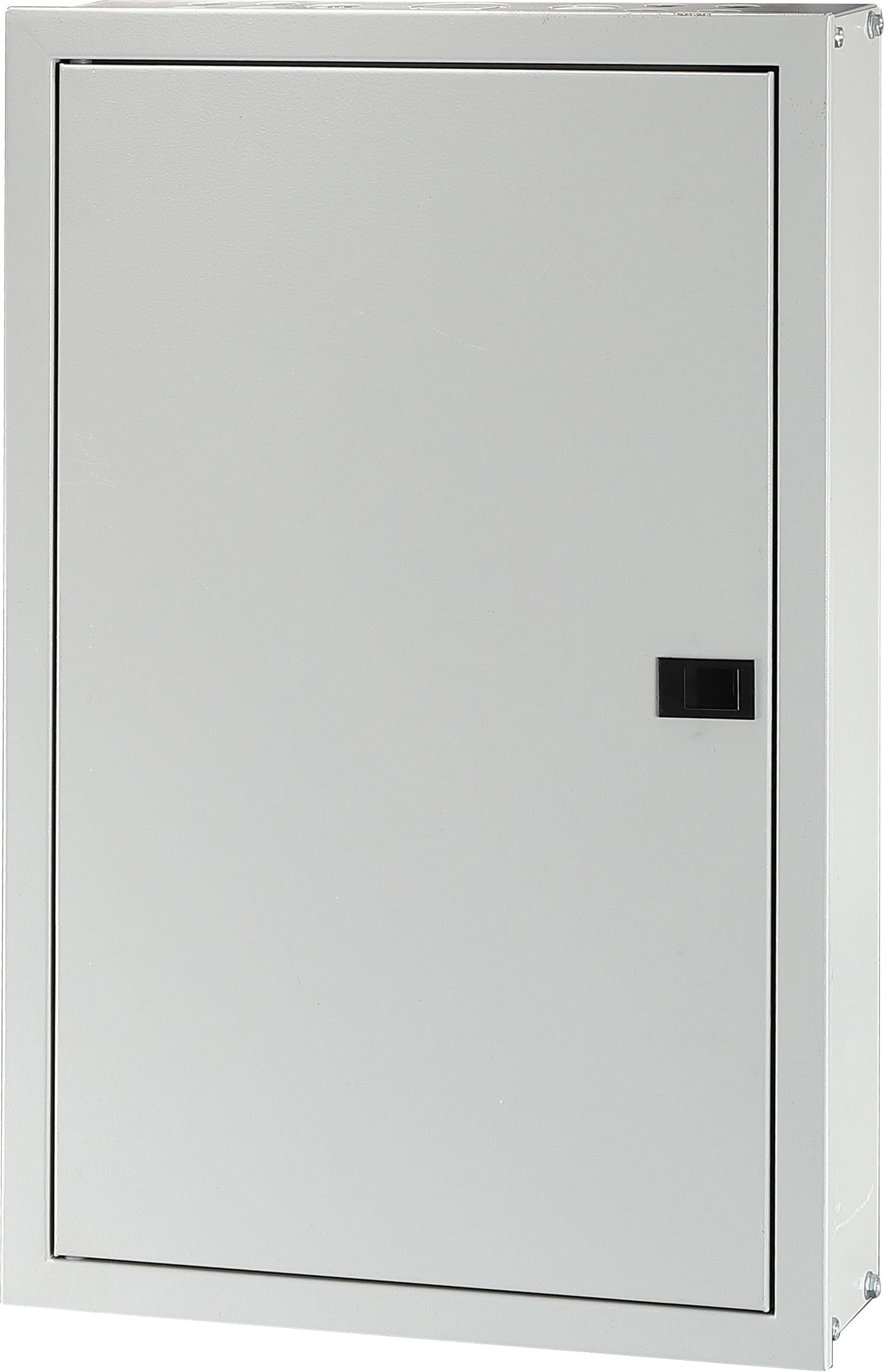
This is where the method earns its keep. A 250A pan assembly matched to a 250A incomer is a starting filter, not a compatibility conclusion. The buyer still has to confirm the mounting arrangement, the outgoing breaker mix that the customised mounting plate was cut for, the cable or bar entry at 21 × 22 mm, and the thermal behaviour of the finished board under its actual load profile.
8. Where the qualification stops: boundaries worth writing down
A qualification exercise that only lists what is proven is half-finished. The BP6 documentation, as supplied, supports a fit-and-material assessment and a matching exercise against an incomer. It does not, on its own, support four things, and a buyer should say so in the project file.
- A model-named type test for BP6. The DEKRA certificate on file names BP1-125 and BP1-250. Where a specification requires a type-tested assembly with the purchased model inside the scope, the document that names BP6 has to be requested.
- A numeric short-circuit rating. The description refers to short-circuit withstand without a value or condition. Boards with high prospective fault levels need the number, not the phrase.
- The tested arrangement under customisation. Because the mounting plate is made to the outgoing MCB, a heavily customised BP6 is not automatically the same object as a standard one. The configuration should be pinned in the order documents.
- Weight- or cost-driven substitution. Where aluminium is being considered on weight or cost grounds, the comparison is between stated cross-sections and stated duty, not between material names. Aluminium busbar growth is forecast at 6.9% CAGR over 2026–2035 by Precedence Research, but that is a market-level figure and says nothing about any individual assembly.
9. Why this documentation discipline is worth the effort
Busbar is a large and geographically concentrated category, and the paperwork burden grows with it. Precedence Research sizes the global busbar market at USD 19.83 billion for 2025, and Congruence Market Insights notes that China accounts for more than 30% of global copper processing capacity and produces over 11 million metric tonnes of refined copper annually. For a buyer sourcing pan assemblies across regions, that combination — a large category, concentrated supply, and highly customised components — is exactly where a loosely worded compliance claim travels furthest and is checked least.
A one-page qualification record per model changes the economics of that risk. It also makes supplier comparison possible on equal terms: two suppliers can both claim IEC 61439 compliance, but only one may be able to name the part, the certificate number and the model in scope. The comparison is then between documents rather than between adjectives.
10. Outlook
The direction of travel in standards documentation is toward specificity. The IEC 61439 series continues to be maintained part by part, with IEC 61439-6:2025 listed as active from 1 December 2025, and each revision pushes verification questions back to the level of the part, the assembly type and the tested arrangement rather than the family name.
For a panel builder or an importer, the practical consequence is conditional but clear: where a project specification already names a part and an edition, a model-level document will be requested sooner or later, and holding it in advance shortens the approval cycle. Where a specification still accepts a general statement, the buyer who records which part, which model and which configuration the statement covers is protected against the more expensive outcome — discovering the gap after the board is built.
FAQ
Does the BP6 pan assembly hold a DEKRA certificate?
Not according to the documentation supplied. The DEKRA type test certificates 3309992.100 and 3309992.101, issued by DEKRA Certification B.V. against IEC 61439-2:2011 and EN 61439-2:2011, name models BP1-125 and BP1-250 in an open-type assembly without enclosure. BP6 is not within that scope. The BP6 product entry separately states compliance with IEC 61439 and AS/NZS standards but does not cite a certificate number, so a buyer who needs model-level evidence should request the test document that names BP6.
Is ISO 9001 certification the same as IEC 61439 conformity?
No. ISO 9001 certificate 62724Q1160R0S, issued by Jingxin Certification (Beijing) Co., Ltd. against GB/T19001-2016 idt ISO 9001:2015, is valid from 8 November 2024 to 7 November 2027 and covers manufacturing and export of busbar systems, distribution boxes and related products. It describes the management system governing production. It does not report type-test results, temperature rise or short-circuit withstand for a specific busbar model, so it cannot stand in for a product conformity record.
What do the 6.5 × 12 mm and 21 × 22 mm terminal figures actually tell a buyer?
They describe terminal geometry: 6.5 × 12 mm at the outgoing side and 21 × 22 mm at the incoming side, as stated in the BP6 entry. They allow a panel builder to check whether outgoing MCB terminals and incoming lugs or bars will fit, and whether the pitch matches the breaker arrangement. They do not state current capacity, plating, torque or short-circuit withstand. The entry also gives each dimension as a pair without labelling which figure is width and which is the second dimension, so a drawing or sample should confirm orientation before a fit check is accepted.
Why does the material line say copper and PC, and what is missing from it?
It identifies copper as the conductive material and PC, polycarbonate, as the material of the moulded insulating parts. That fixes the material class on both sides of the insulation barrier and is enough to begin a specification review. It does not state copper cross-section, plating, joint method, the number and spacing of outgoing teeth, the PC grade, or its flame behaviour. Those values are what a temperature-rise or fault-level study requires, and they are normally obtained through a follow-up technical request rather than a datasheet.
How should a 250A rating be checked against a distribution box?
Compare the pan assembly's rated current with the enclosure's stated incomer options. DB01, for example, lists incoming MCCB 250A, MCCB 125A or MCB 63A with MCB branch circuits in 2W to 32W configurations, so a 250A pan assembly sits at the top of that stated range. Matching numbers is a filter, not proof of compatibility. The buyer still has to confirm the mounting arrangement, the outgoing breaker mix the customised mounting plate was made for, and the thermal performance of the assembled board under its real load.
What changes when the mounting plate is customised?
The BP6 mounting plate can be customised according to the outgoing MCB, so the model designation alone does not fully describe the article being shipped. Two orders can carry the same designation with different plates for different breaker arrangements. A qualification statement should therefore be attached to a configuration — model, mounting plate and outgoing device mix — rather than to the model number on its own.
The manufacturer's full product catalogue, including pan assembly and distribution box ranges, is available for download: Barfuse Catalogue (PDF).
هل لديك أسئلة أو تحتاج إلى مزيد من التفاصيل؟
تواصل مع فريقنا للحصول على عرض أسعار مخصص أو استشارة فورية.
طلب عرض أسعار
املأ النموذج أدناه وسيتواصل معك فريقنا بعرض مقترح مخصص.
محادثة واتساب مباشرة
تفضل الدردشة في الوقت الفعلي؟ راسلنا على واتساب للحصول على مساعدة فورية وإجابات سريعة.
- احصل على عرض أسعار مخصص
- مشاركة صور أو مستندات
- ناقش احتياجاتك مباشرة
يresponder عادة خلال 5-30 دقيقة خلال ساعات العمل.