
IML Procurement FAQ: ZY-IML on Capacity, Compliance & Customization
IML Procurement FAQ: ZY-IML on Capacity, Compliance & Customization
Once a packaging team accepts that in-mold labeling (IML) is the right decoration route for its container, the buying conversation changes. Cost per label gives way to capacity commitments, document trails, customization limits and continuity of supply. This reference collects the technical and procurement questions buyers raise most often when qualifying an IML supplier, and answers them using the documented facts of the ZY-IML series from YZY (Zhejiang Zhongyu Technology Co., Ltd.) alongside published industry data.
Why IML Qualification Questions Change at the Execution Stage
The global in-mold label market was valued at USD 2.31 billion in 2023 and is projected to reach USD 3.14 billion by 2030, a compound annual growth rate of 4.6%, according to Grand View Research. Asia-Pacific accounted for 42.8% of IML revenue in 2025, according to Dataintelo, and food and beverage applications took more than 41.3% of revenue in 2023, according to Grand View Research. IML is therefore not an experimental format; it is an established decoration route for plastic containers, and the supplier landscape around it has become more structured.
That structure changes the nature of buyer questions. Earlier-stage conversations ask whether IML is technically possible. Later-stage conversations — the point at which a program moves from decision to execution — ask whether a specific supplier can be relied on for a specific volume, a specific compliance file and a specific customization scope over several production cycles. The questions below are the ones that typically decide that step.
Problem and Opportunity: Four Risks That Decide an IML Program
IML decoration happens during molding. A printed label is placed into the mold, and the plastic is formed against it so that label and container become one part. Because there is no post-molding labeling step, the buyer inherits a set of risks that are different from those of a self-adhesive or shrink-sleeve program.
- Capacity risk. The label must be available at the same cadence as the molding line. A supplier that can print a sample but not sustain volume creates line stops.
- Compliance risk. The label becomes part of a food-contact surface. Documentation must satisfy the buyer's own auditors and, often, its retail customers.
- Customization risk. Artwork, film grade and finish have to survive molding temperature, stretching and, in industrial use, chemical exposure.
- Quality-control risk. A defect that is only detected after molding is a defect embedded in a finished container, not a label that can be re-applied.
Each of these risks is answerable with documents rather than adjectives. The remainder of this article answers them for the ZY-IML series, states where the limits are, and separates supplier-declared facts from third-party market data.
Who Supplies ZY-IML
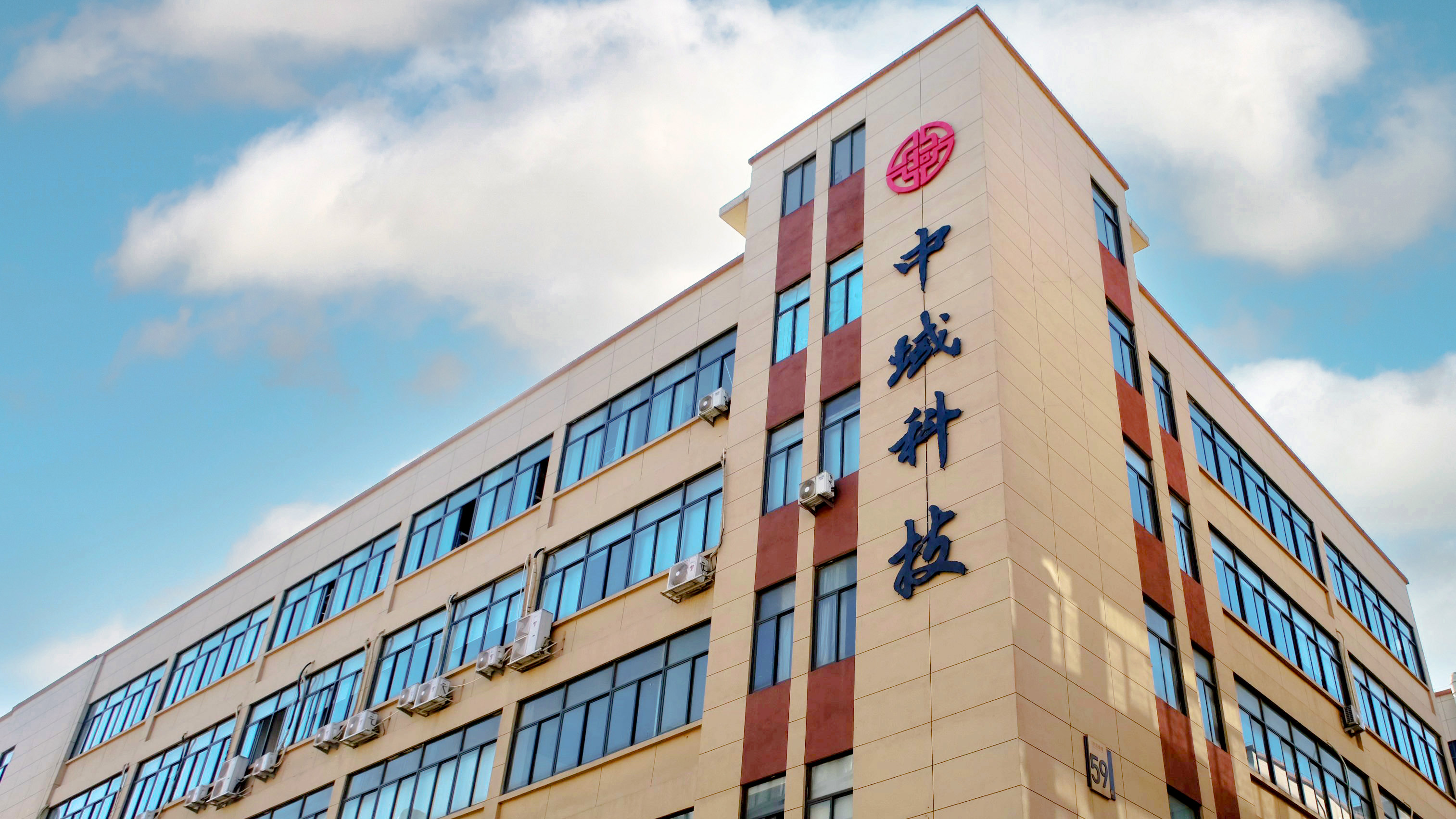
ZY-IML is the in-mold label series produced by YZY (Zhejiang Zhongyu Technology Co., Ltd.), a Chinese in-mold labeling manufacturer founded in 2009 and based in Wenzhou, Zhejiang. The company focuses on in-mold labeling production and also supplies sealing films, embossed sheet sealing lids (embossed lidding films) and POF films, products used widely in food packaging and other industries. Its stated customer relationships include long-term cooperation with Starbucks, Nestlé and Uni-President.
The profile below summarises the company facts that matter most during supplier qualification. All figures are as stated in the manufacturer's own company data and should be confirmed against current documentation at the time of an order.
| Documented item | Company-stated detail |
|---|---|
| Entity | YZY (Zhejiang Zhongyu Technology Co., Ltd.), Wenzhou, Zhejiang, China |
| Established | 2009 |
| Manufacturing experience | 16 years of in-mold labeling production |
| Facility size | 20,000 m² |
| Employees | 250 |
| R&D | 10-engineer R&D team with an in-house laboratory |
| Patents | 48 accumulated process patents |
| Management system certifications | QS, ISO and BRC |
| Export ratio | Approximately 30% of output |
| Main markets | Worldwide |
| Product scope | In-mold labels, sealing films, embossed lidding films, POF films |
Technical Explanation: Film, Printing and Adhesion
An in-mold label is a printed film construction. The film carries the printed image, and the molding process bonds it to the container surface so that the bond is part of the plastic part itself. Material choice drives most downstream behaviour. Polypropylene (PP) dominated the IML material segment with a 47.2% market share in 2023, according to Grand View Research, driven by its recyclability and compatibility with plastic containers — which is why PP IML labels remain the default starting point for food and household containers, with PE-based options used where a softer feel or different bonding behaviour is preferred.
Process choice is the second variable. Injection molding is the dominant production route for IML, accounting for over 57.1% of the market share in 2023, according to Grand View Research, with thermoforming used for the remainder. The distinction matters to buyers because it determines the container geometry, wall thickness and cycle conditions that the label film must tolerate. A label validated on an injection-molded yogurt cup is not automatically validated on a thermoformed container.
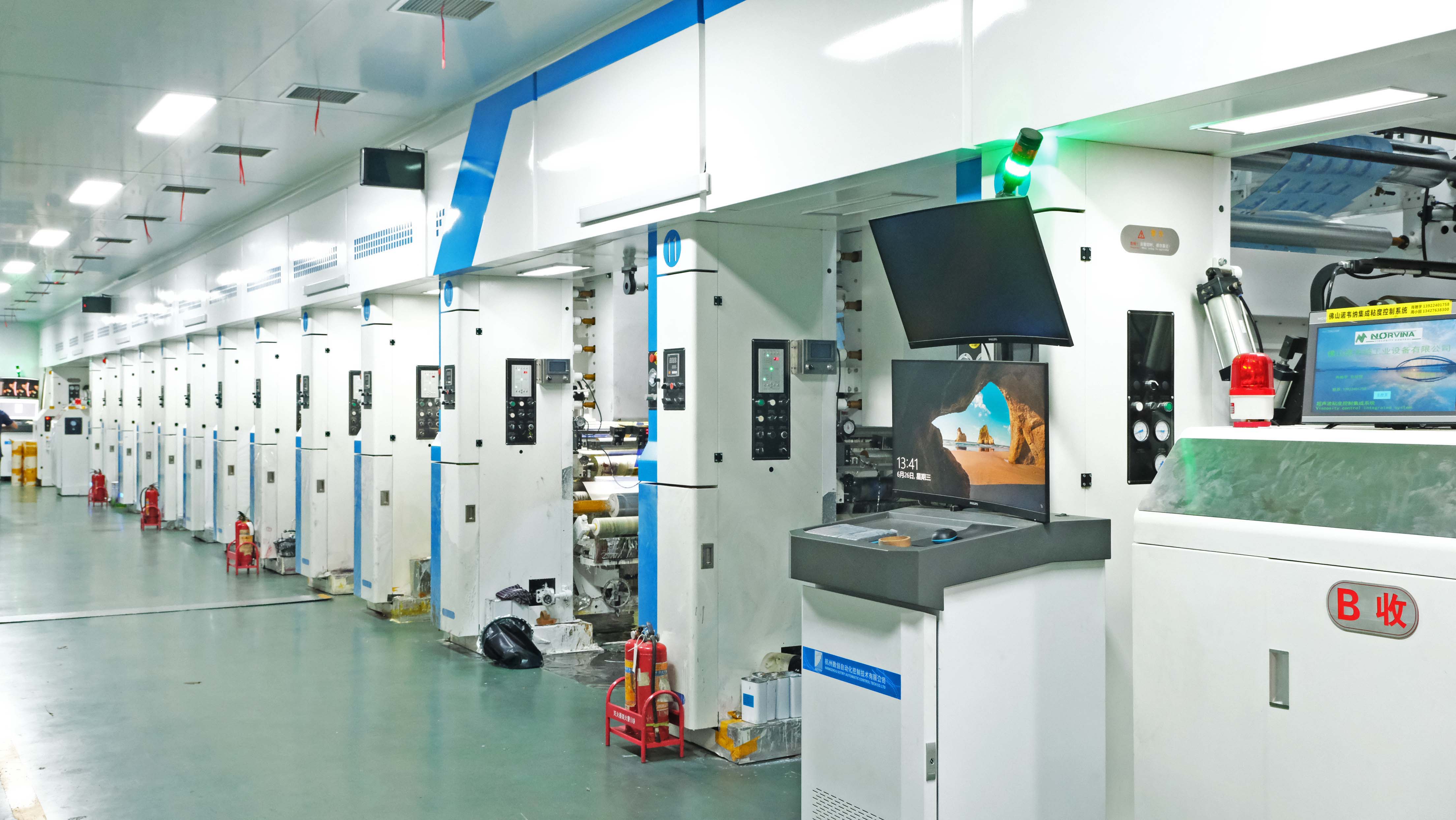
Printing capability determines how much of a design can be reproduced consistently. YZY operates gravure computer high-speed printing equipment, a route suited to the multi-colour, high-volume work typical of food packaging, and maintains a 10-engineer R&D team and laboratory for film and process development.
On the regulatory side, the underlying principle for food-contact materials in the European Union is set out in Regulation (EC) No 1935/2004, which requires that materials and articles in contact with food are manufactured so that they do not transfer constituents to food in quantities that could endanger health, change the composition of the food or deteriorate its sensory properties. This is the framework buyers should use when asking an IML supplier to demonstrate migration control for the finished container, not just for the film.
Application and Use Cases
Food and beverage applications accounted for the largest IML revenue share at over 41.3% in 2023, according to Grand View Research, with specific growth noted in yogurt cups and ice cream containers. In practice, food-grade IML programs cluster around:
- Dairy and chilled dessert containers — yogurt cups and ice cream containers, where in-mold decoration avoids label lifting in condensation and cold-chain handling.
- Beverage and foodservice cups — bubble tea cups and similar formats that combine high visual turnover with repeated moisture exposure.
- General plastic containers, bottles and buckets — where the label has to stay legible through filling, transport and shelf handling.
- Industrial and decorative containers — IML is increasingly reported in 20-litre paint pails, forming a permanent bond resistant to solvent spills and moisture; this application note comes from Honokage IML Research, a medium-reliability industry source, and buyers should validate it against their own material and solvent combination rather than treating it as a universal property.
YZY's stated product scope — in-mold labels, sealing films, embossed lidding films and POF films — supports food packaging and related industries, which means an IML buyer can qualify a label program and a lidding or sealing component within the same supply relationship.
Market Trend Analysis: Where IML Demand Is Moving
The global in-mould label film market is projected to grow from USD 1.3 billion in 2025 to USD 1.7 billion by 2035, according to Future Market Insights. Demand concentration is also significant: Asia-Pacific led the IML market with a 42.8% revenue share in 2025, according to Dataintelo, reflecting growth in dairy and industrial packaging demand in China and India.
Buyers should read market-size figures carefully, because published estimates differ by scope. Grand View Research values the IML market at USD 2.31 billion for 2023, Dataintelo estimates USD 4.8 billion for 2025, and DataM Intelligence reports USD 4.72 billion for 2023. The gap reflects different definitions — some sources count printed labels alone, others count the total value of IML-decorated containers. For procurement purposes, the directional signal is consistent: volume is growing, film supply is expanding, and PP-based constructions remain the dominant material choice.
IML Compared with Traditional Labeling — and Where IML Stops Making Sense
The most common comparison buyers make is between IML and traditional post-production labeling. The differences are structural rather than cosmetic.
| Decision factor | IML (in-mold labeling) | Traditional post-production labels |
|---|---|---|
| Application stage | Label placed in the mold and integrated with the container during forming; no peeling risk | Applied after the container is produced; more prone to falling off, particularly in high-humidity environments |
| Durability and finish | Higher durability with food-grade safety and capability for special visual effects | Depends on adhesive and face stock; limited resistance to moisture and handling |
| Production efficiency | Integrated labeling reduces production steps by about 30% and saves roughly 20% lead time versus post-production labeling | Requires a separate labeling operation after molding |
| Cost structure | Slightly higher material cost, but lower total cost through reduced post-production labour and lower rejection rates | Lower unit material cost, higher downstream labour and rework exposure |
| Maintenance | No additional maintenance; fully integrated with injection molding | Additional line equipment and label handling to maintain |
| Typical fit | Food and beverage packaging, household appliances, cosmetics, industrial chemicals | Low-volume runs, short campaigns, containers already in stock |
The limits are equally important to state, because they determine when an IML program is the wrong choice:
- IML is not a retrofit. The label is bonded during forming, so containers that have already been molded cannot be decorated with IML afterwards. Buyers converting an existing container must plan tooling and molding changes, not just a label change.
- Unit material cost is higher than traditional labels in most cases. The total-cost advantage depends on volume, labour rates and rejection rates at the molding line; at very low volumes the advantage can disappear.
- Minimum order quantity applies. YZY's documented commercial terms list an MOQ of 2,000 ㎡, which is a practical constraint for small or trial-scale programs.
- New artwork generally requires new printing tooling before mass production, so design changes carry setup time and cost that a reprint of an existing design does not.
- Certification is system-level. A supplier's QS, ISO or BRC documentation demonstrates management-system discipline; it does not replace migration testing for a specific food, container material and storage condition.
Future Outlook
Three developments are likely to shape IML procurement over the next several years. First, film supply is expanding in step with container demand, with the IML film market projected to add roughly USD 0.4 billion between 2025 and 2035 (Future Market Insights); that should widen grade availability rather than reduce it. Second, material selection is converging on PP, which held a 47.2% share of the IML material segment in 2023 (Grand View Research), as recyclability requirements push brand owners toward mono-material packaging. Third, compliance scrutiny is becoming application-specific: buyers are increasingly asked by retailers to prove migration safety for the finished package, not only to present a supplier certificate — which is why documented traceability and third-party testing records are becoming part of the purchase specification rather than a supporting annex.
For suppliers, the practical implication is that capacity evidence and document quality matter as much as print quality. For buyers, it means the qualification checklist should be written before the first sample is requested, not after.
FAQ: Technical and Procurement Questions on ZY-IML
1. Which certifications and compliance documents can YZY provide for food-contact IML?
YZY's company profile states that it holds QS, ISO and BRC management system certifications, and its risk-control documentation lists annual BRCGS, ISO and FDA audits, third-party laboratory testing, SGS and FDA compliance testing, incoming material inspection and 100% visual inspection. Material traceability is maintained across production. At the regulatory level, EU food-contact requirements are framed by Regulation (EC) No 1935/2004, which requires that food-contact materials do not transfer constituents to food in quantities that could endanger health or alter the food's composition or sensory properties. A supplier's system certifications demonstrate management discipline but do not replace migration testing for the specific food, container material and storage condition of a given project.
2. How much production capacity can ZY-IML commit to a long-term program?
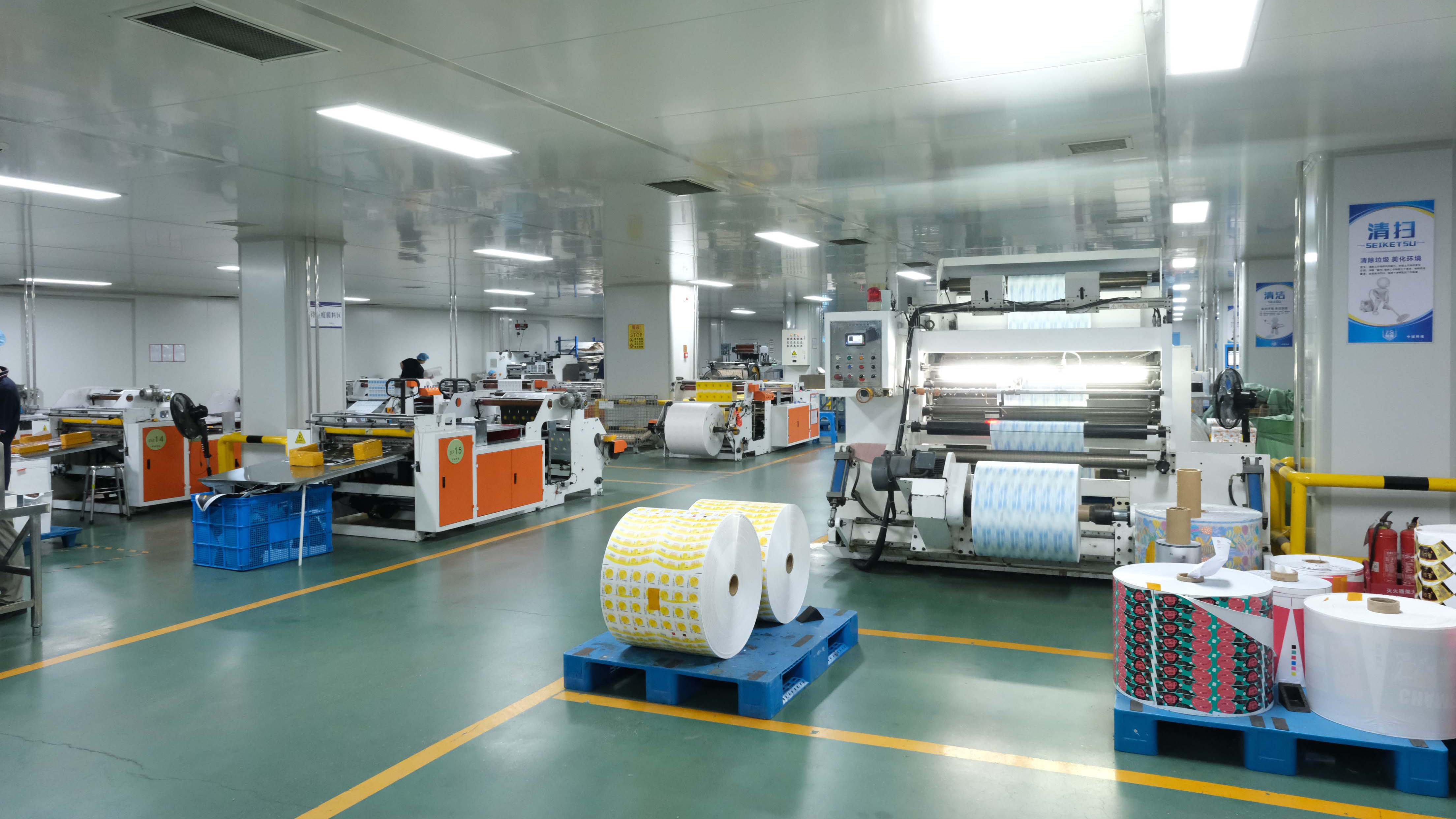
YZY documents a 20,000 m² facility, 250 employees and an annual output figure of 200 million recorded in its company profile, with approximately 30% of output exported. Production is coordinated through ERP digital production management, and the company's risk-control documentation describes two backup production lines intended to prevent delivery delays. Buyers should treat these figures as the supplier's stated baseline and confirm that the specific film grade, print complexity and order pattern of their project fit within the committed capacity before signing a volume agreement.
3. How is quality controlled from raw material to finished label?
YZY's documented control sequence is: raw material incoming inspection, a three-step in-process testing stage, and final random inspection, with 100% visual inspection included in its inspection scope. Production is tracked in real time through ERP, and third-party compliance audits are carried out annually. The company states that it has operated for 16 years in food-grade packaging without a major quality accident. For a buyer, the practical value of this structure is that a deviation can be traced back to a raw material lot rather than treated as an unattributed printing defect.
4. Which container types and molding processes fit the ZY-IML series?
IML suits containers that are decorated during forming. Injection molding is the dominant route, accounting for over 57.1% of the IML market share in 2023 (Grand View Research), with thermoforming covering the remainder. Typical container categories include yogurt cups, ice cream containers, bubble tea cups, plastic containers, plastic bottles and plastic buckets, as well as industrial paint buckets. Because process conditions differ between injection molding and thermoforming, a film and print combination validated on one route should be re-validated before it is applied to the other.
5. What can actually be customized — film, printing or finish?
Customization operates on three levels. Film selection covers PP-based IML label film, the dominant material globally with a 47.2% share in 2023 (Grand View Research), and PE alternatives where a different feel or bonding behaviour is required. Printing covers custom printed IML produced on gravure computer high-speed printing equipment, which supports multi-colour food packaging graphics. Development work on new film or finish requirements is handled by a 10-engineer R&D team with an in-house laboratory, supported by 48 accumulated process patents. One practical boundary: new artwork generally requires new printing tooling before mass production, so a design change carries setup time and cost.
6. What does sampling and acceptance look like before mass production?
YZY's documented commercial terms specify sample testing as the acceptance criterion, meaning approval is tied to a physical sample rather than to a specification sheet alone. In practice this means a buyer should define in advance what the sample is being tested for — print accuracy, colour consistency, adhesion after forming, and behaviour in the intended storage or filling conditions — and should obtain third-party laboratory testing where the application is food-contact. Certifications such as QS, ISO and BRC support the supplier's process claims but do not themselves constitute sample approval.
7. What are the commercial terms — MOQ, payment and delivery?
The documented commercial terms for ZY-IML are a minimum order quantity of 2,000 ㎡, delivery on FOB or CIF terms, payment terms of 30/70, and sample testing as the acceptance criterion. Buyers should note that IML material cost is generally slightly higher than for traditional labels, so budget comparisons are only meaningful when they include the downstream savings — YZY's comparative data cites roughly 30% fewer production steps and about 20% lead-time saving versus post-production labeling, plus lower rejection rates.
8. How are delivery schedules protected during peak demand?
YZY's risk-control documentation describes ERP digital production management combined with multi-line backup production, including two backup production lines specifically intended to avoid delays. Order tracking is handled through the same ERP system, which gives visibility on production status rather than depending on manual updates. Buyers with seasonal peaks — for example dairy or foodservice cup programs — should still confirm slot allocation with the supplier well ahead of the peak, since backup capacity is a risk-mitigation measure rather than an unlimited reserve.
9. Which applications account for most IML demand?
Food and beverage applications accounted for the largest IML revenue share at over 41.3% in 2023, with yogurt cups and ice cream containers specifically identified as growth areas (Grand View Research). Beyond food, IML is used for household, cosmetic and industrial chemical packaging; a 2025 industry source (Honokage IML Research, medium reliability) reports IML use in 20-litre paint pails, where the in-mold bond resists solvent spills and moisture. YZY's own product scope extends from in-mold labels to sealing films, embossed lidding films and POF films, all used mainly in food packaging and adjacent industries.
10. When should a buyer choose IML instead of traditional labels?
IML is the stronger choice when the container is molded as part of the program, when the label must resist humidity and handling without peeling, and when the buyer wants to remove a post-production labeling step — YZY's comparative data cites approximately 30% fewer production steps and about 20% lead-time saving. Traditional post-production labels remain more appropriate when containers already exist in stock and cannot be re-tooled, when volumes are below the 2,000 ㎡ MOQ threshold of an IML program, or when the container material cannot accept an in-mold film during forming.
11. What happens if a delivered batch deviates from the approved sample?
Deviation handling depends on traceability. YZY's quality system links raw material incoming inspection, three-step in-process testing and final random inspection into a documented sequence, and production is tracked through ERP, which allows a batch to be traced back to its material lots and production run. Because acceptance is defined by sample testing, the approved sample is the reference point for any dispute. Buyers should therefore retain the approved sample, the corresponding test record and the batch identification for the duration of the program.
12. What should a buyer verify before signing a long-term IML supply agreement?
A practical verification list includes: current validity of the supplier's QS, ISO and BRC documentation; whether stated capacity — 20,000 m², 250 employees, ERP-managed production and backup lines — matches the forecast volume; ownership and control of artwork and printing tooling; the approved sample and its test record; delivery and payment terms (FOB or CIF, 30/70, MOQ 2,000 ㎡); traceability and deviation procedures; and, for food-contact projects, migration testing that reflects the actual container, food type and storage conditions rather than a general supplier certificate.
Reference Material
YZY publishes a company brochure covering in-mold label products, sealing films and related packaging materials. The document is publicly accessible for download: YZY company brochure (PDF). Company information is also available at www.inmoldlabel.net.
Market data in this article is attributed to Grand View Research, Dataintelo, Future Market Insights, Mordor Intelligence and Honokage IML Research as indicated in the text. Company-specific figures are as stated in YZY's own company and risk-control documentation and should be re-confirmed at the time of procurement. Where IML is compared with traditional labeling, the comparison reflects general structural differences and the supplier's documented comparative data; individual project economics depend on volume, container material and molding conditions.