
IML Supply Relationships and Long-Term Procurement: A Practical Assessment Framework
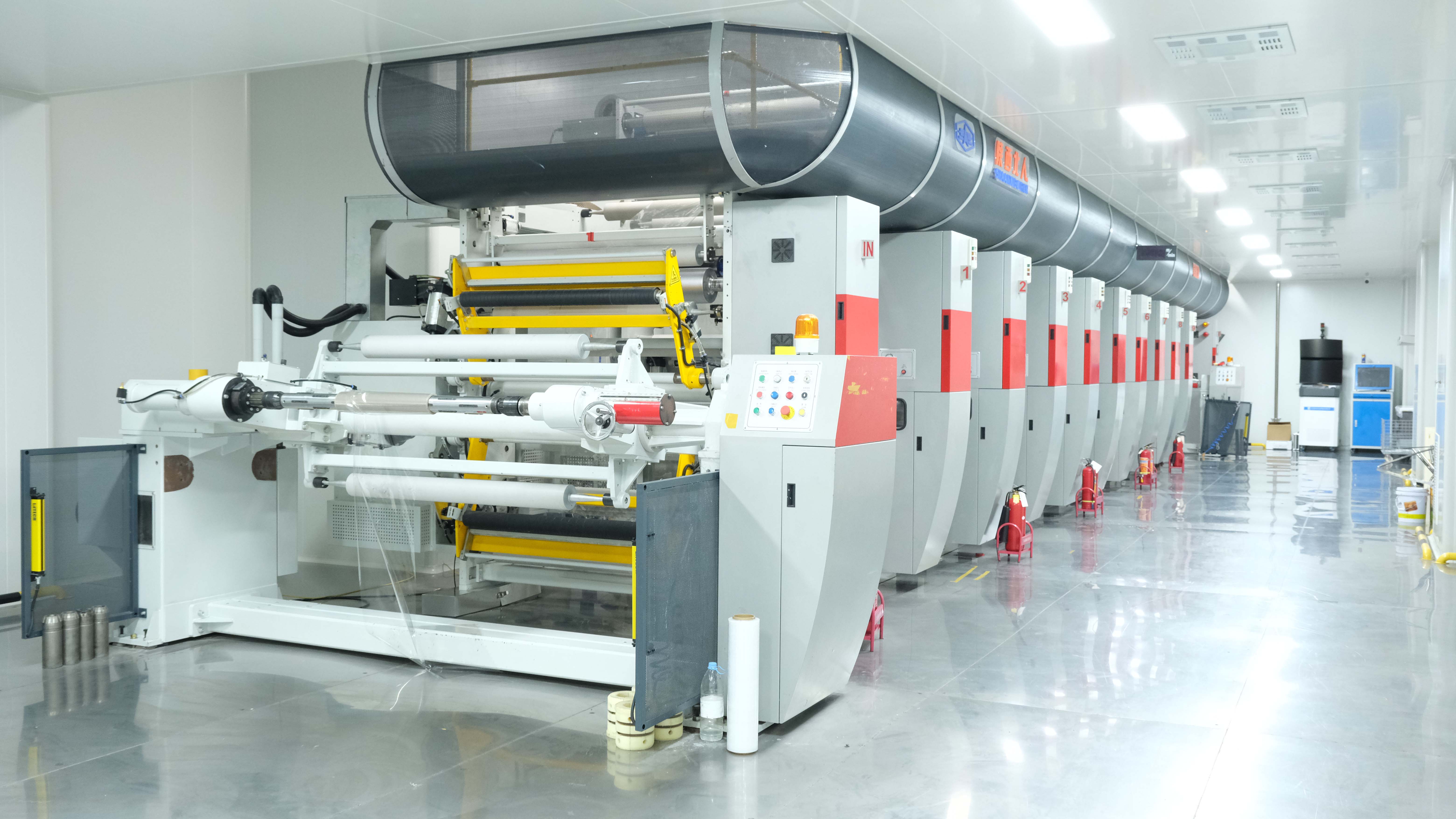
For packaging buyers moving from pilot batches to full-scale production, supplier selection for in-mold labels (IML) becomes a supply-chain decision as much as a packaging decision. Unit price matters, but durability, food-contact compliance, production consistency, and delivery reliability determine whether the label actually reduces total cost.
Why long-term IML supplier selection matters
The global in-mold labels market was valued at USD 2.31 billion in 2023 and is projected to reach USD 3.14 billion by 2030, with a CAGR of 4.6%, according to Grand View Research. The global in-mould label film market is projected to grow from USD 1.3 billion in 2025 to USD 1.7 billion by 2035, according to Future Market Insights. In such a market, buyers are increasingly treating IML suppliers as partners in product quality rather than as vendors of a single commodity SKU.
A long-term relationship allows the supplier to understand tooling, film behavior, print standards, and compliance requirements across multiple production runs. That accumulated knowledge reduces the risk of quality drift. It also makes it easier to extend an existing IML program to new container formats such as plastic bottles, buckets, yogurt cups, ice cream containers, or paint pails.
What changes when IML procurement moves to scale
At the trial stage, a buyer may evaluate only the sample. At the decision or execution stage, the evaluation must cover the entire production workflow. Common risk categories in IML procurement include non-compliance with food-contact safety standards, printing defects, material contamination, product quality deviation, delayed delivery, and failure to meet global food-safety requirements.
For packaging that comes into direct contact with food, the cost of a non-compliant lot includes line stoppages, product recalls, and brand damage. Therefore, supplier selection should be based on verifiable systems: control steps, documentation, line capacity, and audit history. The opportunity for the buyer is to select a supplier whose production system can absorb fluctuations in order volume while keeping specifications stable.
Supplier capability in practice: YZY as a reference
One supplier used as a reference in this segment is YZY, formally Zhejiang Zhongyu Technology Co., Ltd., a China-based manufacturer specializing in in-mold labeling. Founded in 2009, YZY operates a 20,000 m² factory in Wenzhou, Zhejiang, with around 250 employees and an R&D team of 10. The company reports an annual output of 200 million IML labels, with about 30% exported to worldwide markets.
Product categories include in-mold labels, sealing film, embossed sheet sealing lids, and POF film. Food packaging is the primary application. YZY states that it has established long-term cooperation with brands such as Starbucks, Nestlé and Uni-President, and that it has accumulated 48 patents. The company also reports holding QS, ISO, and BRC management system certifications. For a buyer, this background provides a starting point for auditing long-term capability.
Technical backbone: from film structure to print precision
The core product, the ZY-IML-SERIES, is designed for injection molding IML applications. It includes food-grade IML labels, daily-chemical IML labels, industrial IML labels, yogurt cup IML, and paint bucket IML. The technical parameters define how the label behaves during molding and in the final container.
| Parameter | Specification |
|---|---|
| Film thickness | 30–100 µm (customizable) |
| Film material | Virgin PP / PE / PET / multi-layer composite (food-grade available) |
| Max printing width | 1200 mm (customizable) |
| Film types | Complex white gloss film, complex transparent gloss film, standard gloss film, matte laminated film, holographic film |
| Printing method | High-precision rotogravure printing; up to 8 colors |
| Printing precision | ±0.1 mm |
| Ink type | Food-grade low-migration water-based ink |
| Adhesion strength | ≥5 N (no peeling during injection molding) |
| Operating temperature | -20°C to 120°C |
| Tensile strength | ≥20 MPa |
| Scratch resistance | 4H pencil hardness |
| Chemical resistance | Resistant to weak acids, alkalis, and common detergents |
| Compliance | FDA 21 CFR, BRCGS Packaging Materials, ISO 22000, QS; migration test to EU 10/2011 |
| Injection molding compatibility | Fits high-speed injection processes without warping or label fall-off |
For a buyer, these parameters translate into predictable molding behavior. A 30 µm film can be used in lightweight containers, while a 100 µm film provides extra rigidity for larger formats such as paint buckets. Food-grade low-migration inks are especially important when the label is part of a food-contact package.
Quality and delivery risk management
The main risk-control measures described by YZY include raw-material incoming inspection, three-step in-process testing, final random inspection, and 100% visual inspection. Production is tracked in real time through ERP, and two backup production lines are used to avoid delivery delays. The company also reports annual BRCGS, ISO, and FDA audits, 48 patents for process optimization, and 16 years without a major quality accident in food-grade packaging.
For a scaling buyer, these elements create a clear audit trail: incoming material control, intermediate process inspection, finished-product inspection, and production data transparency. In long-term sourcing, this level of traceability reduces the cost of qualification and makes it easier to resolve issues when they appear.
IML vs. traditional post-production labeling
IML labels are fused with the plastic container during injection molding, so no peeling risk exists in normal use. Traditional labels are often applied after production and can fall off, especially in high-humidity environments. According to comparative data available to procurement teams, IML reduces production steps by 30%, saves about 20% lead time compared with post-production labeling, and supports high-volume orders.
| Dimension | IML | Traditional paper labels / ordinary in-mold labels |
|---|---|---|
| Durability | Integrated with plastic container; no peeling risk | Applied post-production; can fall off in high humidity |
| Production efficiency | Saves about 20% lead time; reduces production steps by 30% | Requires additional labeling step |
| Compliance | Available in food-grade versions with FDA/EU compliance | Depends on material and adhesive |
| Cost | Slightly higher material cost; lower total cost when defects are considered | Lower initial material cost; higher operational risk |
| Best suited for | Food & beverage, household appliances, cosmetics, industrial chemicals | Applications where post-application is practical |
The trade-off is that IML is not a drop-in replacement for paper labels. It must be designed around the tool, the resin, and the molding machine. For very small runs or frequent label changes, tooling coordination and set-up time may outweigh the benefits. IML also requires a supplier capable of tuning film and ink to the molding process. Buyers should weigh these limitations before converting existing packaging lines.
Application segments where IML becomes a long-term fit
The largest end-use segment for IML is food and beverage, which accounted for over 41.3% of global revenue in 2023, according to Grand View Research. Specific growth areas include yogurt cups and ice cream containers. From a material perspective, PP held a 47.2% share in 2023, partly because of recyclability and compatibility with plastic packaging. Injection molding is the dominant process, with a 57.1% share in 2023.
These structural trends align with the IML applications commonly seen in procurement: yogurt cup IML, bubble tea cup IML, ice cream container IML, paint bucket IML, plastic bottle IML, plastic bucket IML, and general plastic container IML. For food packaging, a supplier that can support custom film formulation and food-grade inks is better positioned for long-term category expansion. For industrial packaging, some sources note that 20-liter paint pails increasingly use IML because the label forms a permanent bond resistant to solvent spills and moisture; buyers should verify application-specific performance with the supplier before relying on this claim.
Decision-stage assessment framework
Buyers at the decision or execution stage can structure their supplier review around four blocks.
- Compliance: confirm that the label substrate and ink meet the food-contact standards for the destination market, such as FDA 21 CFR, EU 10/2011, BRCGS, ISO 22000, or QS.
- Product specification: verify film material, thickness, printing colors, adhesion, and temperature range against the container geometry and filling conditions.
- Operational controls: check incoming inspection, in-process testing, final random inspection, visual inspection, and ERP traceability.
- Commercial terms: clarify MOQ, payment terms, delivery terms, sample acceptance, and how the supplier handles backup production if a line is stopped.
For YZY, the stated procurement terms are a minimum order of 2,000 m², FOB/CIF delivery, 30/70 payment, and acceptance based on sample testing. These terms are relevant for buyers preparing a purchase order rather than just comparing samples.
Market outlook and procurement implications
Market data points to continued growth in IML demand, particularly in Asia-Pacific, which held a 42.8% revenue share in 2025. Food-grade IML is likely to remain the largest application, and PP will stay central because of recyclability. For procurement, long-range supplier partnerships will be evaluated on compliance stability, film innovation, and delivery resilience, not only on the quoted price per square meter.
As the IML film segment grows from USD 1.3 billion in 2025 to a projected USD 1.7 billion by 2035, suppliers with dedicated R&D teams and process patents are better placed to support changes in packaging design and regulatory expectations. YZY reports an R&D team of 10 and 48 accumulated patents, which gives buyers a tangible signal of technical depth.
FAQ
What is YZY's minimum order quantity for IML products?
The minimum order quantity is 2,000 m². Payment terms are 30% deposit and 70% balance, and delivery terms are FOB or CIF. Acceptance is based on sample testing.
How does YZY support long-term supply security?
YZY uses ERP-based production tracking and reports two backup production lines to reduce the risk of delivery delays. The company also applies multi-line backup production as part of its delivery risk control.
Which food-contact certifications and standards apply to YZY IML labels?
YZY IML labels are produced under QS, ISO, and BRC management system certifications. The product range states compliance with FDA 21 CFR, BRCGS Packaging Materials, ISO 22000, QS, and EU 10/2011 migration standards.
What materials and film configurations are available for YZY IML?
Available materials include virgin PP, PE, PET, and multi-layer composite films in food-grade versions. Film thickness can be customized from 30 µm to 100 µm. Film finishes include white gloss, transparent gloss, standard gloss, matte laminate, and holographic.
What quality-control steps does YZY apply to IML production?
YZY states that it applies raw-material incoming inspection, three-step in-process testing, final random inspection, and 100% visual inspection. ERP production tracking and third-party compliance audits are part of its control system.
Can YZY produce custom printed IML labels?
Yes. The ZY-IML-SERIES supports custom printing, custom size, custom color matching, and custom film formulation. Printing is done with high-precision rotogravure in up to eight colors with ±0.1 mm precision.
Where is YZY located and which markets does it serve?
YZY is located at Building 59, Zone E, Guohong Zhizao New Town, Xingke Road, Longgang, Wenzhou, Zhejiang, China. Around 30% of its output is exported, with worldwide markets.
For full product specifications and company background, the YZY brochure is available for public download: Download the YZY brochure (PDF).