
INB Miniature Bearings for Dental Handpieces: P4 at 160 °C
How P4 precision, SUS440 stainless steel and a –50 °C to 160 °C thermal envelope translate into dental handpiece reliability — and where the specification stops being the whole story.
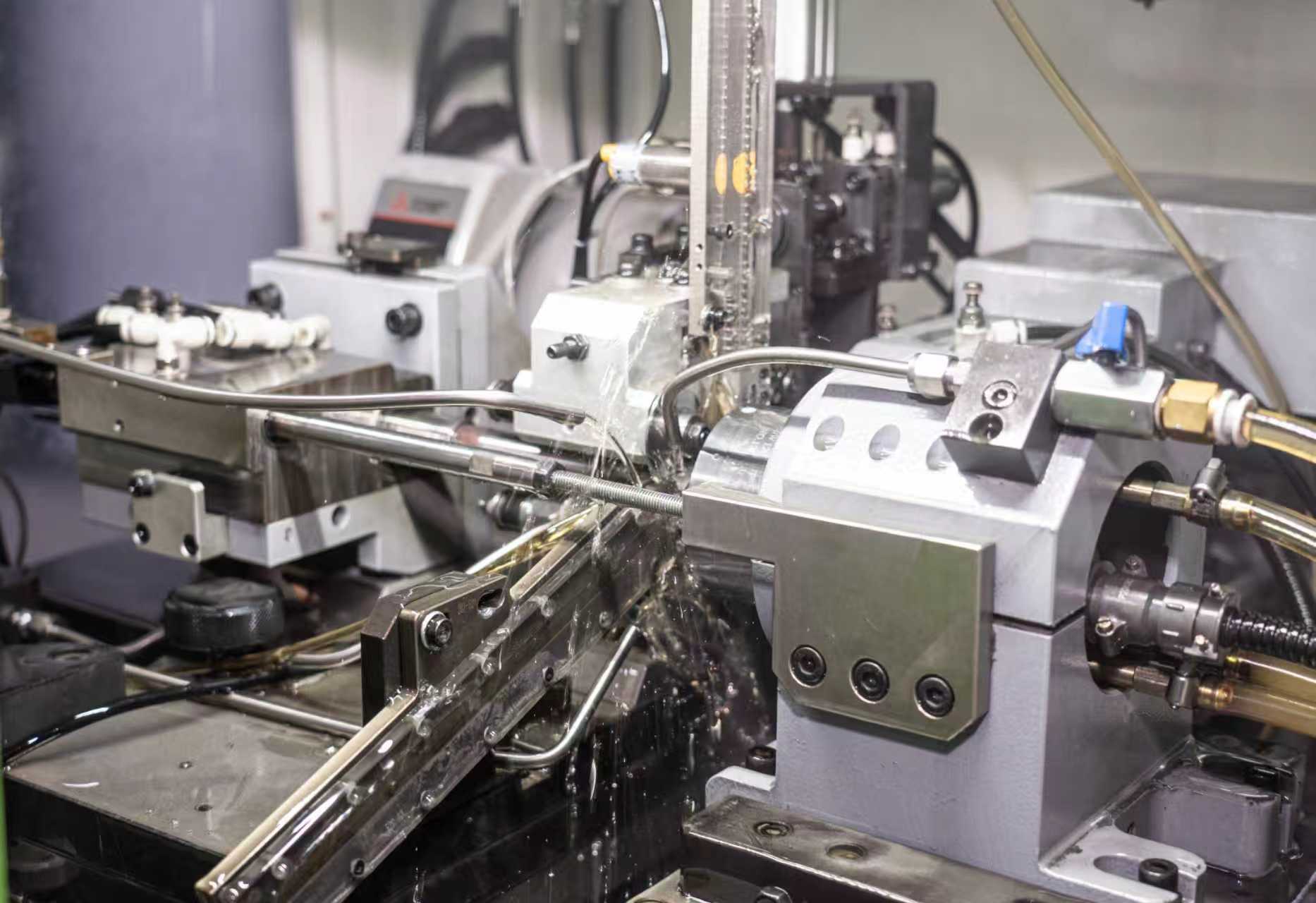
Precision inspection on a VMS-2010F workstation — the stage where P4 tolerance claims for dental handpiece miniature bearings are checked before shipment.
A miniature bearing problem that only appears at full duty cycle
A dental handpiece is one of the few instruments in routine clinical use where a bearing smaller than a fingernail is expected to spin at very high speed, survive repeated heat exposure, and stay quiet against a patient. Each requirement is manageable on its own. Together they define a specification window narrow enough that buyers rarely settle a purchase on unit price alone.
For an OEM at the decision stage, the useful question is not which miniature bearing is best in the abstract — that question has no single answer — but which combination of precision grade, material, lubricant and validation evidence holds its performance from the first sterilization cycle to the last. This article examines one such combination in detail: dental handpiece miniature bearings built to P4 precision in SUS440 stainless steel, validated across a thermal cycle range of –50 °C to 160 °C, and intended for assemblies with limiting speeds up to 400,000 rpm.
INB is a miniature bearing brand established in 2014 and produced in Ningbo, Zhejiang Province, China, by an ISO 9001-certified bearing enterprise. Its dental-oriented models include the SR133TL and the SMR144ZTLP4 W2.38, both of which sit inside the specification window described above.
Why the dental handpiece is a hard bearing environment
Three stressors define the application, and each one narrows the list of viable bearings.
Rotational speed. Air-turbine and high-speed electric handpieces run well above the speeds of most general-purpose miniature bearing applications. At those speeds, centrifugal loading, cage stability and lubricant behaviour stop being secondary details and become the limiting factors. A bearing that is dimensionally correct at low speed can still be unsuitable at working speed.
Thermal cycling. Instruments are reprocessed between patients. Steam sterilization exposes the assembled instrument to elevated temperature and moisture, after which the bearing returns to ambient conditions. Repeated cycles test material stability, lubricant retention and internal clearance control — the three things that quietly determine how long a handpiece spindle stays acceptable.
Noise and vibration. The handpiece is held against the patient. Bearing runout, raceway finish and ball quality are perceived directly as noise and vibration, which is why low-noise miniature bearing performance is treated as a functional specification in this sector rather than a comfort feature.
Add infection-control requirements — the bearing sits inside an instrument that is repeatedly cleaned — and the material choice narrows further still.
What P4 precision actually controls
Precision grades are not marketing labels; they map to published tolerance systems. Miniature bearing precision is governed by global standards including ABMA ABEC (1–9), ISO 492 (P0–P2) and DIN 620, where higher ABEC numbers correspond to tighter tolerances. A P4-class bearing therefore sits near the tight end of the ISO band, with reduced dimensional and running tolerance compared with P6 or P0 product.
In a handpiece spindle, tightening the class changes three things that matter:
- Runout — which shows up as vibration at the bur rather than as a number on a datasheet.
- Raceway and ball geometry consistency — which sets the noise floor of the assembly.
- Clearance stability — which determines how the bearing behaves as it heats and cools through a clinical day.
INB produces precision grades from P6 to P4, with inner bore diameters from 2 mm to 8 mm. That band covers typical dental handpiece spindle sizes and extends into the micro-motor applications the company also serves.
SUS440 stainless steel and the –50 °C to 160 °C thermal window
Stainless steel — specifically 440C — is the primary material class for miniature bearings used in medical and food-processing applications, because it resists the moisture and chemical exposure that would degrade standard bearing steel. INB builds its dental handpiece range from SUS440 stainless steel, the Japanese Industrial Standards designation for the same high-carbon martensitic family. The choice is driven by two requirements at once: corrosion resistance during reprocessing, and dimensional stability across the working temperature range.
The thermal envelope is managed rather than assumed. INB's thermal-fatigue control measures combine high-temperature-resistant bearing material selection, an optimised heat-conduction structure, a real-time temperature monitoring module, and thermal cycle life testing across the –50 °C to 160 °C range. The testing exists because thermal fatigue and overheating are the failure modes most likely to remain invisible until they present clinically.
Three risk controls behind the specification
Thermal fatigue and overheating — addressed through material selection, an optimised heat-conduction structure, a real-time temperature monitoring module, and thermal cycle life testing from –50 °C to 160 °C.
Over-speeding — addressed through a built-in mechanical speed limiter, a high-precision Hall effect speed sensor, 100% speed performance validation before shipment, and compliance with medical device speed safety standards.
Premature wear and lubrication failure — addressed through medical-grade permanent lubricant filling, a fully sealed labyrinth structure, wear-resistant alloy material, and periodic friction and wear performance testing.
For a buyer, these three areas are the practical checkpoints to raise in a supplier audit. A datasheet can list a limiting speed; only the validation method tells you whether that speed is a laboratory maximum or a shipped guarantee.
Where the bearings are specified
Dental handpieces are the primary application. The requirement set there — small bore, high speed, low noise, tolerance of repeated sterilization — is what the P4, SUS440 and sealed-lubrication combination was assembled for.
The same architecture also suits micro-motors and other medical device assemblies, where the operating pattern tends to be continuous rotation rather than intermittent bursts. In those applications the emphasis shifts: thermal cycling is usually less severe, while noise and service life over long running hours become the dominant selection criteria. A high-precision miniature bearing sized for a micro-motor is chosen on different evidence than one sized for a turbine handpiece, even when the two share a material and a precision class.
Bearing form matters as much as class. Depending on the housing, buyers specify plain small miniature bearings, flanged stainless steel miniature bearings where axial location is required, thin-wall miniature bearings where radial space is constrained, and imperial miniature bearings where existing spindle geometry is inch-based. Because INB's range covers inner bore diameters from 2 mm to 8 mm, the specification exercise is generally about selecting the right form and precision class inside that band rather than about availability.
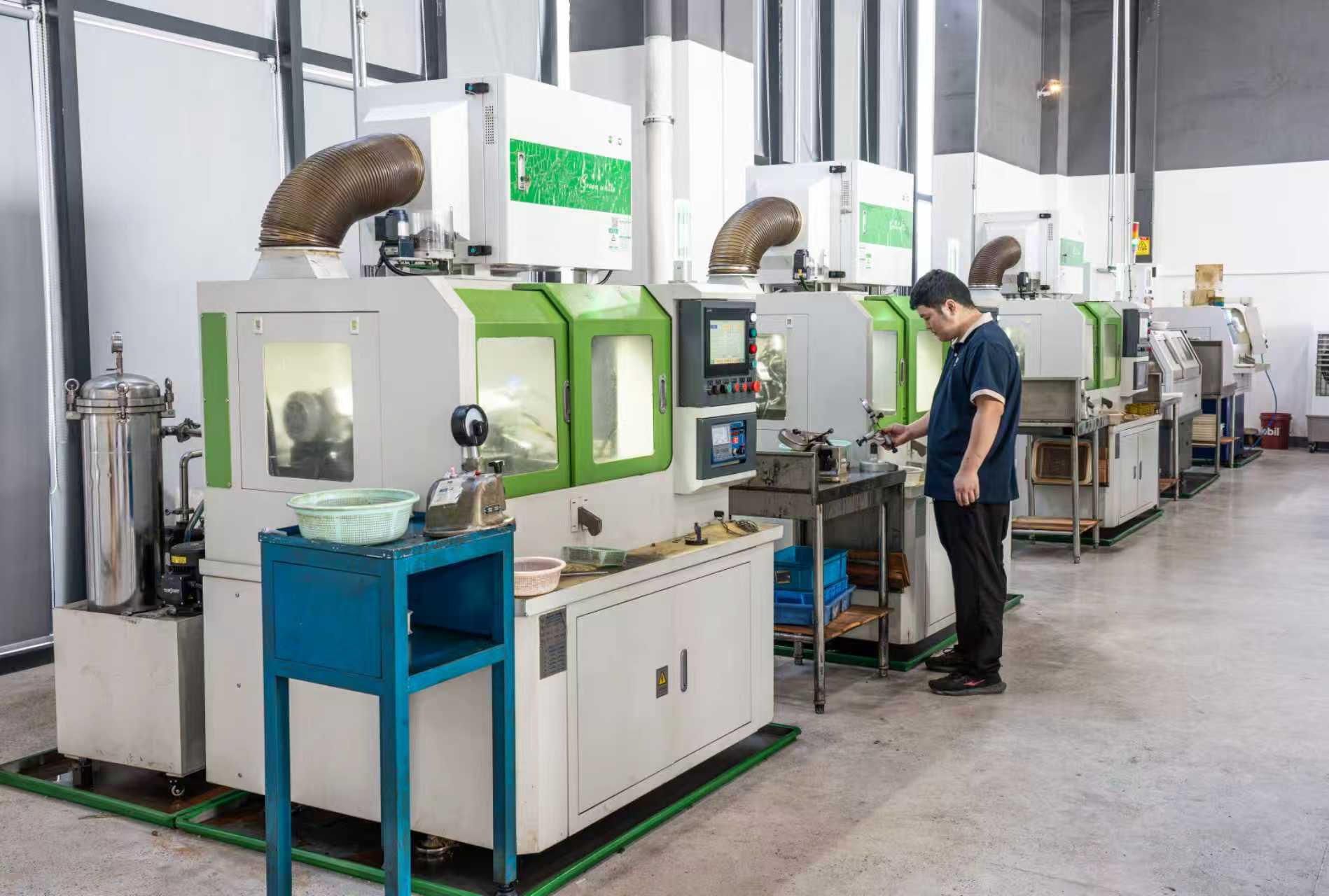
Automated assembly of miniature bearing units. Cleanliness and lubricant dosing at this stage determine the noise floor of the finished handpiece spindle.
Market context: a component category that keeps expanding
Miniature ball bearings are a growing category largely because more products now contain small rotating parts. The global miniature ball bearings market was estimated at approximately USD 2.25 billion in 2025 by Future Market Insights, driven by demand in medical devices and robotics. Estimates vary between research firms — Precedence Research published a higher figure and IMARC Group a lower one — so the directional reading is more reliable than any single number.
Two structural facts are more stable. Asia Pacific dominated the miniature ball bearings market in 2025 with a revenue share of approximately 60%, with China as the largest regional producer and consumer. Separately, China's bearing exports grew 7.2% year-on-year in the first seven months of 2025, reaching nearly 497,852 tons, even as global unit pricing came under pressure.
The automotive segment remains the largest single application area at roughly 39% of the market, driven by EV motor and sensor applications. Medical devices are a smaller but considerably more specification-sensitive slice — which is precisely the slice where precision grade, material data and validation documentation decide the order.
Comparison: INB dental handpiece bearings, the SMR144Z reference, and the wider field
The miniature bearing sector's best-known global manufacturers include MinebeaMitsumi, NSK, SKF and Schaeffler (Barden). INB competes inside the dental handpiece niche rather than across the entire miniature bearing market, and that framing matters when reading any comparison.
Against the SMR144Z reference, INB's published comparison states a longer expected lifespan, a lower initial cost of approximately 10%, and improved noise levels below 20 dB. The same material describes a low friction coefficient, low heat generation and high transmission efficiency, which reduces energy consumption in the driven equipment, while high speed, low noise and low heat generation are presented as reducing operating and maintenance cost.
| Decision dimension | INB P4 / SUS440 dental handpiece bearing | SMR144Z reference | What it means for the buyer |
|---|---|---|---|
| Precision class | P4 (INB range spans P6 to P4; bores 2–8 mm) | Baseline for comparison | Tighter class reduces runout and vibration at the bur |
| Material | SUS440 stainless steel | Not stated | Corrosion resistance across repeated reprocessing |
| Thermal validation | Thermal cycle life testing, –50 °C to 160 °C | Not stated | The claim to verify during qualification |
| Noise | Below 20 dB | Baseline for comparison | Perceived directly by the patient |
| Expected service life | Longer expected lifespan | Baseline for comparison | Lower replacement and service frequency |
| Initial cost | Approximately 10% lower | Baseline for comparison | Improves handpiece bill-of-materials position |
| Friction and heat | Low friction coefficient, low heat generation, high transmission efficiency | Not stated | Reduces energy consumption in the driven equipment |
| Maintenance profile | High speed, low noise, low heat generation | Not stated | Lower operating and maintenance cost |
Where the fit has boundaries
No supplier specification is complete without its limits, and three are worth stating plainly.
Product scope. INB's bore range runs from 2 mm to 8 mm with precision grades from P6 to P4. Buyers who need larger bearings, or classes beyond P4 in the tighter direction, fall outside this range and will need a different supplier for those lines.
Scale and supply geography. The enterprise operates a 2,000 m² facility with around 30 employees and annual output of approximately 6,000,000 units. Its export ratio is about 5%, and its main market is China. For an overseas buyer, that shapes the qualification programme: documentation flow, sample lead times and logistics planning carry more weight than they would with a supplier whose export business is already the majority of its volume. A dual-source strategy is a reasonable default for programme-critical parts.
Claim specificity. Comparative performance claims — expected lifespan, noise below 20 dB, approximately 10% lower initial cost — are tied to the tested configuration and the stated reference model. They are a starting point for incoming inspection, not a substitute for it.
Future outlook
Two directions look likely. First, the medical device share of miniature bearing demand should continue expanding as more instruments become motorised and as sterilization requirements tighten. That shifts specification decisions toward documented thermal validation and traceable material data rather than catalogue speed ratings alone. Second, the supplier field is becoming more specialised: large manufacturers cover the broad market, while smaller specialists compete on holding one demanding application — such as the dental handpiece — inside a narrow specification window. For buyers, that specialisation is an advantage only when the evidence behind it can be verified independently.
FAQ
What does P4 precision mean when comparing miniature bearings for dental handpieces?
P4 is a precision class within the ISO 492 tolerance system, which sits alongside the ABMA ABEC (1–9) and DIN 620 systems that govern miniature bearing precision. Higher ABEC numbers correspond to tighter tolerances, and P4 sits near the tight end of the ISO band. In a handpiece spindle, the practical effect is reduced runout, more consistent raceway and ball geometry, and more stable internal clearance as the bearing heats. INB manufactures precision grades from P6 to P4 with inner bore diameters from 2 mm to 8 mm.
How does a –50 °C to 160 °C rating affect handpiece sterilization planning?
The rating describes the range over which INB performs thermal cycle life testing, supported by high-temperature-resistant material selection, an optimised heat-conduction structure and a real-time temperature monitoring module. For a buyer, the useful step is to compare that tested range against the actual peak temperature and number of cycles in the intended reprocessing protocol, rather than assuming that any stainless steel bearing will behave the same way after repeated exposure.
How do INB dental handpiece bearings compare with the SMR144Z reference?
INB's published comparison states a longer expected lifespan, an initial cost approximately 10% lower, and noise below 20 dB. It also describes a low friction coefficient, low heat generation and high transmission efficiency, which reduces energy consumption in the driven equipment, with high speed, low noise and low heat generation contributing to lower operating and maintenance cost. These claims relate to the tested configuration and should be confirmed against incoming inspection results.
What should a buyer compare across miniature bearing suppliers for this application?
Six dimensions cover most of the decision: precision class within a recognised tolerance system; bearing material and its corrosion behaviour during reprocessing; documented thermal validation range; speed validation method, including whether testing is performed on 100% of shipped units; lubrication and sealing architecture, such as a fully sealed labyrinth structure with medical-grade permanent lubricant; and supply scale, lead time and service coverage in the buyer's own market.
Does a China-based supplier with a low export ratio limit procurement flexibility?
It changes the procurement plan rather than ruling the supplier out. INB's export ratio is approximately 5% and its main market is China, with a 2,000 m² facility, around 30 employees and annual output of approximately 6,000,000 units. Buyers outside China should expect to invest more in qualification documentation, sample validation and logistics planning, and should consider dual sourcing for lines where continuity is critical.
Are high-speed miniature bearings and low-noise miniature bearings the same thing?
They are related but not identical requirements. High-speed capability depends on cage stability, lubricant behaviour and validation of the limiting speed, while low-noise performance depends on runout, raceway finish and assembly cleanliness. In dental handpieces the two overlap because both are observed simultaneously at the working spindle, and a specification such as noise below 20 dB describes an outcome rather than the design measures that produce it.
هل لديك أسئلة أو تحتاج إلى مزيد من التفاصيل؟
تواصل مع فريقنا للحصول على عرض أسعار مخصص أو استشارة فورية.
طلب عرض أسعار
املأ النموذج أدناه وسيتواصل معك فريقنا بعرض مقترح مخصص.
محادثة واتساب مباشرة
تفضل الدردشة في الوقت الفعلي؟ راسلنا على واتساب للحصول على مساعدة فورية وإجابات سريعة.
- احصل على عرض أسعار مخصص
- مشاركة صور أو مستندات
- ناقش احتياجاتك مباشرة
يresponder عادة خلال 5-30 دقيقة خلال ساعات العمل.