
IP Ratings Explained: Choosing Waterproof Displays for Outdoor Compliance
Waterproofing is usually the last specification a buyer discusses and the first one a project discovers it got wrong. Outdoor commercial displays tend to fail at cable entries, seams, filter housings and ventilation paths rather than in the middle of the panel, and the specification intended to prevent those failures is the IP (Ingress Protection) rating. The IP code is a defined and testable claim — but it is a claim about a specific enclosure under specific conditions, not a general promise that a display is waterproof.
This guide explains what the IP code actually covers for commercial displays, how to translate an installation's real exposure into a protection requirement, and where GZKEDRO's outdoor series sit inside that framework. GZKEDRO, legally Guangzhou Kedro Electronics Technology Co., Ltd., is a commercial display manufacturer founded in 2013, with research and development centres in Guangzhou and Shenzhen and an export ratio of 80% of its output.
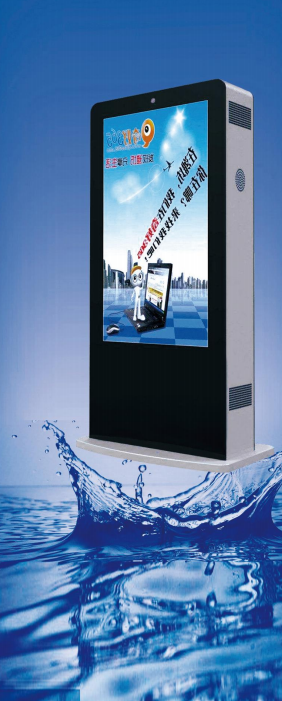
Outdoor and semi-exposed commercial display installations place enclosure protection, thermal management and mounting orientation on the same decision sheet.
Why Ingress Protection Has Become a Procurement Question
In 2024 the global commercial display market was estimated at USD 53.65 billion, with digital signage accounting for more than 53.73% of revenue, according to Grand View Research. Within the same market, North America held a 35.6% revenue share of global digital signage in 2025, the largest regional market. The industrial display segment — the portion closest to transport, infrastructure and manufacturing deployments — was estimated at USD 5.90 billion in 2024, driven by IIoT and HMI device penetration.
As display hardware moves from climate-controlled interiors into transport hubs, commercial districts and smart city projects, the specification conversation changes. A representative project requirement profile recorded for outdoor commercial display applications lists special requirements including IP65 waterproofing, high brightness, remote CMS playback, 24/7 continuous operation, and high temperature and outdoor exposure conditions. Those clauses are frequently copied between tenders — and that is exactly where the risk sits.
The procurement problem is rarely about whether a supplier can build an outdoor display. It is about whether the protection level written into a tender matches the protection level documented for the exact model being quoted, in the orientation in which it will be mounted. Resolving that mismatch after installation is expensive; resolving it before the specification is frozen costs nothing.
What an IP Code Certifies — and What It Does Not
An IP code contains two digits. The first digit describes protection against solid objects and dust, on a scale from 0 to 6, where 5 means dust protected and 6 means dust tight. The second digit describes protection against water, on a scale from 0 to 8, where 5 means protection against water jets and 6 means protection against more powerful water jets, with 7 and 8 covering immersion conditions. The structure is defined within the IEC 60529 framework.
Applied to real products, that produces distinctions that matter commercially:
| Rating | Solids | Water | Practical implication |
|---|---|---|---|
| IP55 | Dust protected — limited ingress permitted without harmful deposit | Protected against directed water jets | Suits sheltered to semi-exposed positions with spray and dust exposure |
| IP65 | Dust tight — no dust ingress | Protected against directed water jets | Same water-jet performance as IP55 with stronger dust control |
| IP66 | Dust tight | Protected against powerful water jets | Higher margin for exposed positions with wind-driven water at speed |
| IP67 / IP68 | Dust tight | Immersion, temporary or continuous | Not typically required for surface-mounted displays; relevant to submerged or wash-down contexts |
The more important question for buyers is what the IP code does not address. An IP rating covers dust and water entry only. It does not cover condensation and humidity cycling, ambient or internal temperature limits, UV degradation, salt and corrosion, impact or vandalism, cleaning chemicals and pressure washing beyond the tested conditions, or the long-term aging of seal materials. It is also a type test performed on a representative unit, not a per-unit guarantee of every enclosure that leaves a production line.
That gap explains why an outdoor display can carry a valid IP rating and still fail on a coastal or high-humidity site. GZKEDRO's outdoor product documentation treats these as separate variables: the KD-OD Series is specified for operating humidity of 10% to 90% RH, non-condensing, and operating temperature of -20°C to 50°C. The non-condensing qualifier is not a formality — it identifies condensation control as a mounting and duty-cycle consideration rather than something the IP rating resolves.
Matching Installation Exposure to a Protection Level
Protection level should be selected against the worst case the enclosure will face in its mounted orientation, not against the average weather at the site. The table below converts common commercial display positions into protection and verification requirements.
| Exposure class | Typical installation | Dominant ingress risks | What to specify and verify |
|---|---|---|---|
| Class 1 — Fully sheltered interior | Shopping mall, hotel lobby, corporate office, classroom | Dust build-up, cleaning splash | IP rating is secondary; focus on thermal envelope, cleaning method and screen protection |
| Class 2 — Covered walkway or arcade | Station concourse edge, covered retail frontage, exhibition centre | Wind-driven spray, dust, humidity cycling | Directed water-jet protection, dust-protected enclosure, condensation management |
| Class 3 — Semi-exposed facade under canopy | Transit shelter, building entrance, forecourt canopy | Driving rain on exposed faces, dust, temperature swing | Dust-protected to dust-tight enclosure, verified operating temperature range, sealed cable entries |
| Class 4 — Fully exposed outdoor | Roadside advertising unit, smart city pole, open forecourt | Direct rainfall, wind-driven water at speed, dust, UV, heat load | Dust-tight enclosure, water-jet protection with margin, active thermal management, drainage-aware mounting |
| Class 5 — Coastal, heavy dust or extreme thermal | Seafront promenade, industrial zone, desert highway | Salt corrosion, abrasive dust, wide temperature delta | Enclosure material and coating review, higher protection margin, shorter inspection intervals |
Two decision rules follow from this framework. First, the second digit should be driven by whether water arrives under pressure — wind-driven rain at a fully exposed pole is a different condition from rain falling past a covered arcade. Second, any position that combines exposure with a temperature or humidity condition outside the product's rated envelope is a protection problem the IP code will not solve.
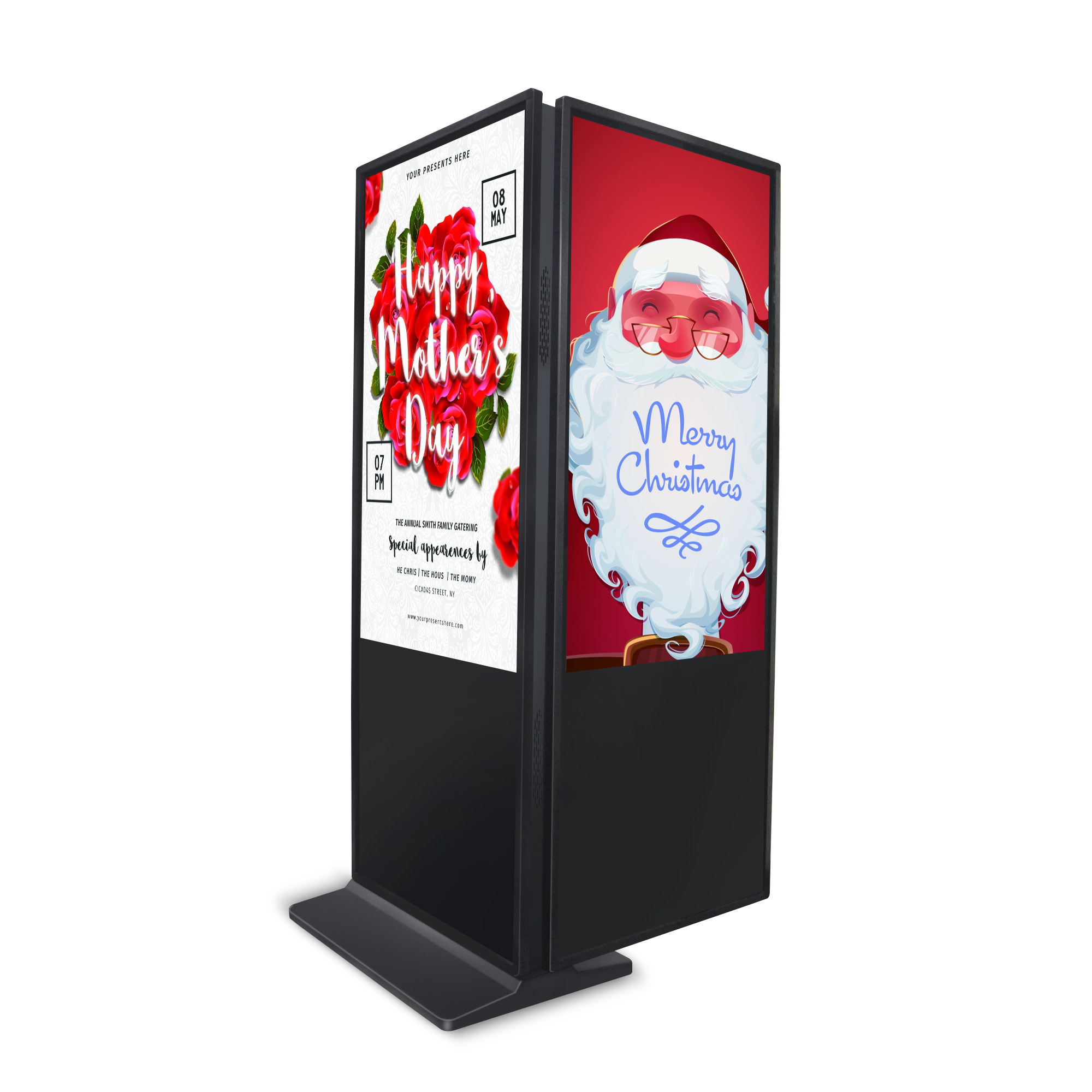
Dual-screen outdoor units place the enclosure, interface access points and heat dissipation path under continuous load.
How IP55 Translates into Practice: the KD-OD and KD-DSA Series
GZKEDRO's outdoor range is built around two platforms that share a display core but differ in construction. The KD-OD Series is an outdoor waterproof display documented with a protection level of IP55. Its published specification includes a 1080 × 1920 resolution on a display area of 680.4 × 1209.6 mm with a 0.630 × 0.630 mm pixel pitch, 2,000 cd/m² brightness, a 3000:1 contrast ratio, 178°/178° viewing angles and a 6 ms response time. The enclosure uses a tempered glass front with an iron steel sheet housing, and thermal management is handled by an air-cooled heat dissipation system. Power input is 100 V to 240 V AC at 50/60 Hz with total power of ≤500 W and standby consumption below 5 W. Control and connectivity are provided by an RK3288 quad-core Cortex-A17 processor at 1.8 GHz with Mali-T764 graphics, 2 GB RAM and 16 GB storage, RJ45 10M/100M adaptive networking, Wi-Fi supporting 802.11b/g/n and Bluetooth 4.0, with HDMI OUT, LAN, USB, TF card and SIM card interfaces. Deployment targets are transport hubs, commercial districts and smart city projects.
The KD-DSA Series is a dual-screen outdoor advertising machine built on the same display platform: 1080 × 1920 resolution, 2,000 cd/m² brightness, 3000:1 contrast, 178°/178° viewing angles, 6 ms response time, 8-bit / 16.7M colour, the same RK3288 processor with Mali-T764 graphics, 2 GB RAM and 16 GB storage, the same RJ45, Wi-Fi and Bluetooth 4.0 networking, the same HDMI OUT, LAN, USB, TF and SIM interfaces, and the same 100 V to 240 V AC input with ≤500 W total power and standby below 5 W. Its housing combines tempered glass with aluminium alloy, and it is specified for transport hubs, commercial districts and smart city projects.
| Parameter | KD-OD Series | KD-DSA Series |
|---|---|---|
| Product type | Outdoor waterproof display | Dual-screen outdoor advertising machine |
| Documented protection level | IP55 | No IP number stated in the published specification |
| Housing materials | Tempered glass / iron steel sheet | Tempered glass / aluminium alloy |
| Brightness and contrast | 2,000 cd/m² / 3000:1 | 2,000 cd/m² / 3000:1 |
| Resolution and pixel pitch | 1080 × 1920 / 0.630 × 0.630 mm | 1080 × 1920 / 0.630 × 0.630 mm |
| Power | ≤500 W total, <5 W standby | ≤500 W total, <5 W standby |
| Target deployments | Transport hub, commercial district, smart city project | Transport hub, commercial district, smart city project |
The same number can be appropriate in one position and insufficient in another. GZKEDRO also documents IP55 protection on the KD-ISS Series interactive slider screen, deployed in exhibition centres, hotel lobbies and commercial districts where the exposure profile is splash and dust rather than direct rainfall. That is a useful illustration of the framework: IP55 is a protection level, not a category, and its suitability depends on the position it is installed into.
Protection claims are only as strong as the production discipline behind them. GZKEDRO's documented quality control covers 100% aging test and functional inspection, including brightness testing, waterproof testing, touch testing, temperature testing and continuous operation testing before shipment. For an outdoor unit, the waterproof test and the continuous operation test are the two that most directly underwrite an ingress claim — the first checks enclosure integrity, the second checks that thermal behaviour does not degrade that integrity under sustained duty. Commercial parameters are documented as a monthly capacity of 2,000–5,000 units, a lead time of 15–30 days, an MOQ of 2–5 units depending on product size, and customisation across logo, colour, software, UI interface, packaging and voltage, as well as screen size, brightness, housing and system configuration. After-sales support includes remote technical support, online technical guidance and 24/7 technical assistance.
Verifying a Protection Claim Before You Specify It
Protection verification is a document exercise that prevents a field exercise. A practical sequence for evaluation-stage buyers:
- Match the rating to the position, not the product. Decide the exposure class first, then check which models document a protection level consistent with it.
- Request a model-level statement. Ask for the protection level stated against the exact model and SKU being quoted, not the product family in general.
- Confirm the mounted orientation. A rating applies to the enclosure as tested; a rotated, recessed or partially shrouded installation can change the water path.
- Review every interface and access point. Cable glands, HDMI and LAN ports, USB covers and card slots such as TF and SIM openings are the typical entry paths and need sealing detail.
- Check the operating envelope against site data. Compare the published temperature and humidity range — including the non-condensing qualifier — with the site's real seasonal extremes.
- Read the construction materials. Tempered glass, iron steel sheet and aluminium alloy behave differently under salt, abrasive dust and temperature cycling.
- Ask what is tested in production. Aging, waterproof, temperature and continuous operation testing before shipment indicate whether the claim survives volume manufacturing.
- Define a seal inspection interval. Seals age; a protection rating is a design condition, not a lifetime warranty.
IP-Rated Displays Compared with Traditional Outdoor Solutions
Traditional outdoor advertising relies on printed substrates and static structures that carry no electrical enclosure, no thermal load and no ingress specification. Moving to a dynamic commercial display adds power, connectivity, heat generation and content management — and with them, an enclosure that must be specified rather than assumed. The trade-off is real and should be budgeted for.
The limits are worth naming. An IP-rated enclosure increases unit cost and weight, and an outdoor unit needs airflow clearance and drainage-aware mounting, which constrains structural design. The rating itself does not improve sunlight readability — brightness and contrast are separate specifications, which is why outdoor-class panels in GZKEDRO's range are documented at 2,000 cd/m² rather than interior levels. Nor does the rating address electrical safety, which sits under a separate compliance track: IEC 62368-1 is the primary safety standard for commercial displays as AV and IT equipment, replacing the legacy IEC 60950-1 and IEC 60065 standards. A complete outdoor specification therefore carries at least two compliance threads — ingress protection and product safety — and a supplier that can document only one of them leaves a gap in the project file.
There is also a case for not over-specifying. In a fully sheltered interior position, paying for jet-resistant sealing changes cost without changing the failure modes the installation will actually encounter. In a fully exposed coastal position, an IP55 enclosure may be the wrong starting point regardless of brand, because salt exposure and wind-driven water demand a different enclosure review. Protection level is a matching decision, not a ranking.
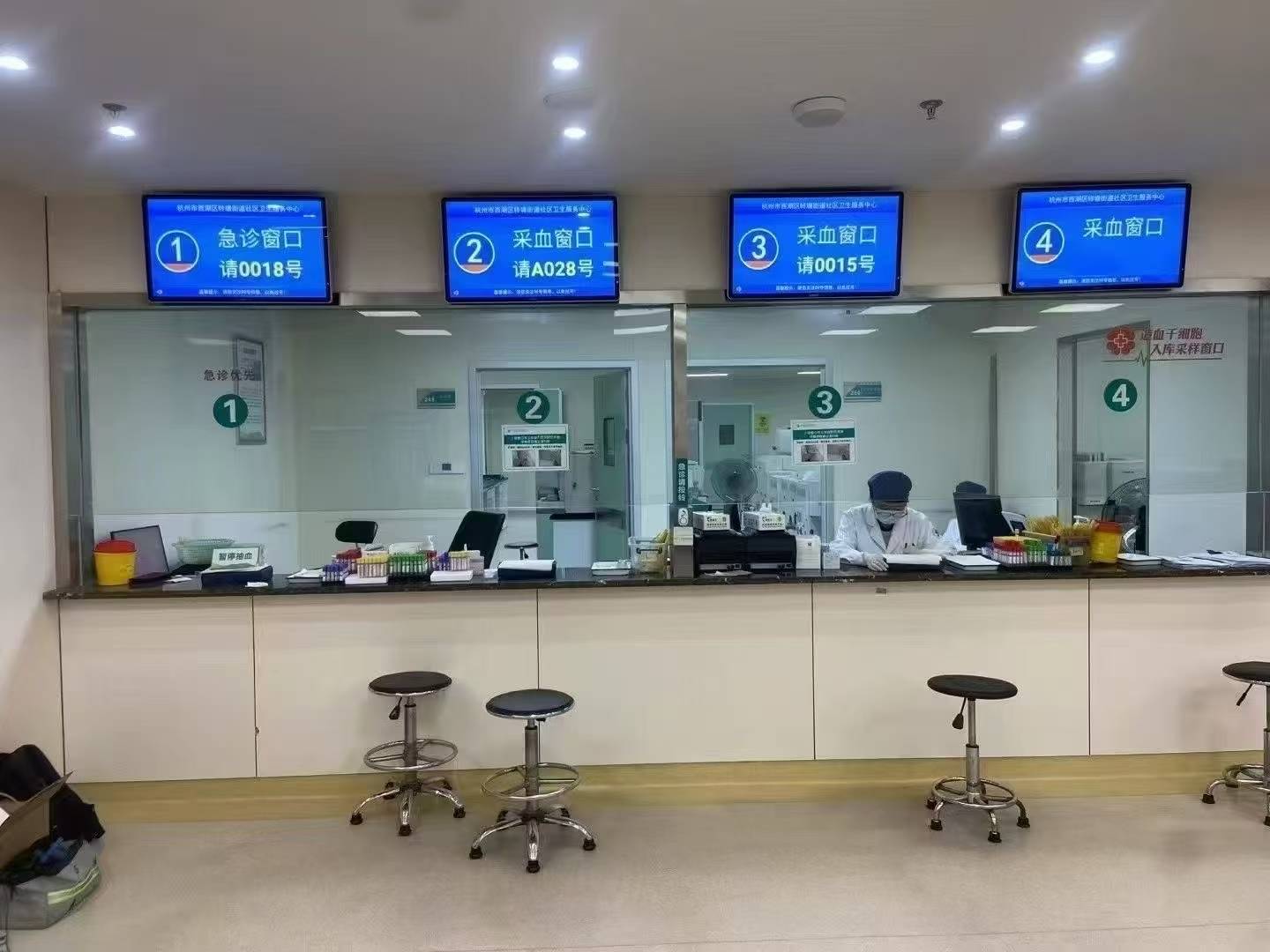
Public information and smart city programmes typically fix protection requirements in the tender document, which makes pre-order verification the decisive step.
Market Signals Shaping Outdoor Display Specification
Three signals are visible in published market data. First, scale: a USD 53.65 billion commercial display market in 2024 with digital signage above 53.73% of revenue share means outdoor and semi-outdoor signage is no longer a niche application class. Second, geography: North America's 35.6% revenue share of global digital signage in 2025 makes it the largest single regional market, which is consistent with tenders that specify protection levels explicitly. Third, adjacent demand: the industrial display segment, estimated at USD 5.90 billion in 2024 and driven by IIoT and HMI device penetration, is pulling commercial display hardware into environments where dust, temperature and moisture are permanent operating conditions rather than occasional events.
The compliance signal is less visible in market sizing but more consequential for procurement. As the safety standard landscape consolidates around IEC 62368-1, buyers increasingly treat documentation as a filter rather than a formality. In that environment, a stated protection level without a matching production test protocol is a weaker claim than a modest protection level with documented waterproof and continuous-operation testing behind it.
Future Outlook
The direction of travel is toward model-level documentation. Requirements written as a single IP number in a tender will increasingly need to be resolved against the exact unit, housing material and mounting orientation quoted, because those variables determine whether the rating holds. Buyers should expect to see protection level, operating temperature and humidity envelope, housing materials and production test protocol presented together — and should treat their absence as a question to ask rather than a detail to overlook.
For manufacturers, the competitive advantage sits less in higher digits and more in consistency: the ability to document what a specific enclosure does, prove it in production, and support it in the field over a multi-year deployment. That is a narrower claim than "fully waterproof", and a far more useful one for anyone signing an outdoor project specification.
FAQ
What does an IP55 rating actually mean on a commercial display?
In IP55, the first digit indicates that the enclosure is dust protected — limited dust ingress is permitted provided it does not interfere with operation. The second digit indicates protection against directed water jets. IP55 therefore does not indicate dust tightness, which is a first digit of 6, and it does not indicate protection against immersion.
Is IP55 sufficient for a fully exposed outdoor installation?
Suitability depends on exposure, not on the label. IP55 addresses dust deposits and directed water jets. A fully exposed position — roadside unit, open forecourt or unsheltered facade — adds wind-driven water at speed, direct rainfall and often a higher thermal load. Buyers should confirm that the required protection level for that position is met by the specific mounted unit and orientation, and where a tender states IP65, that requirement should be resolved against model-level documentation before ordering.
What is the practical difference between IP55 and IP65?
Both share the second digit 5, meaning protection against directed water jets. The difference is the first digit: 5 is dust protected and 6 is dust tight. IP65 therefore suits dust-heavy positions better than IP55 while offering comparable water-jet performance. Neither rating covers immersion, which falls in the 7 and 8 range, and neither covers condensation.
Which GZKEDRO display series document a protection rating?
The KD-OD Series outdoor waterproof display is documented with a protection level of IP55, and the KD-ISS Series interactive slider screen is also documented at IP55 for exhibition centre, hotel lobby and commercial district deployments. The KD-DSA Series dual-screen outdoor advertising machine is specified for transport hub, commercial district and smart city projects with a tempered glass and aluminium alloy housing, but its published specification does not state an IP rating. Buyers requiring a rated level for a tender should request written confirmation for the exact model.
How can a buyer verify an ingress protection claim before ordering?
Four items are useful: the protection level stated against the exact model and SKU; confirmation of the mounted orientation to which the rating applies; enclosure details covering seals, cable glands and access points such as TF and SIM slots; and the published operating temperature and humidity envelope compared with site data. On the production side, GZKEDRO documents 100% aging test and functional inspection including brightness testing, waterproof testing, touch testing, temperature testing and continuous operation testing. Buyers should also agree a seal inspection interval, since protection ratings describe a design condition rather than a lifetime condition.
What does an IP rating not cover?
An IP rating covers dust and water entry only. It does not cover condensation and humidity cycling, ambient or internal temperature limits, UV degradation, salt and corrosion, impact or vandalism, cleaning chemicals and pressure washing beyond the tested conditions, or the long-term aging of seals. A display can hold a valid IP rating and still fail on a coastal or high-humidity site if those factors are not addressed in the enclosure design, the mounting method and the maintenance plan.
Model-level specifications, interface details and operating envelopes for GZKEDRO's commercial display range — including outdoor, indoor, interactive and transparent series — are compiled in the English-language product catalogue: Kedro Product Catalog (English Edition).